在海拔600米山间,在洞穴悬崖喝咖啡,激活了江南山水的春天Drinking coffee in caves and cliffs at an altitude of 600 meters in the mountains has activated the spring of Jiangnan's landscape
我们不是在做艺术,我们在解决一个问题:如何让一个被遗忘的地方,重新被人看见。
“为了一间咖啡馆,我去爬了一座山。”
正值春日踏青,越来越多的时髦年轻人跃跃欲试——只为一座600米悬崖上的绝美咖啡馆。
在巨大的悬崖洞穴里,点一杯拿铁,看日光透过岩隙,在粗粝的洞壁上投下变幻的光影,脚下是云海翻腾、深谷万丈……
它满足了年轻人的社交需求,又情绪价值拉满。
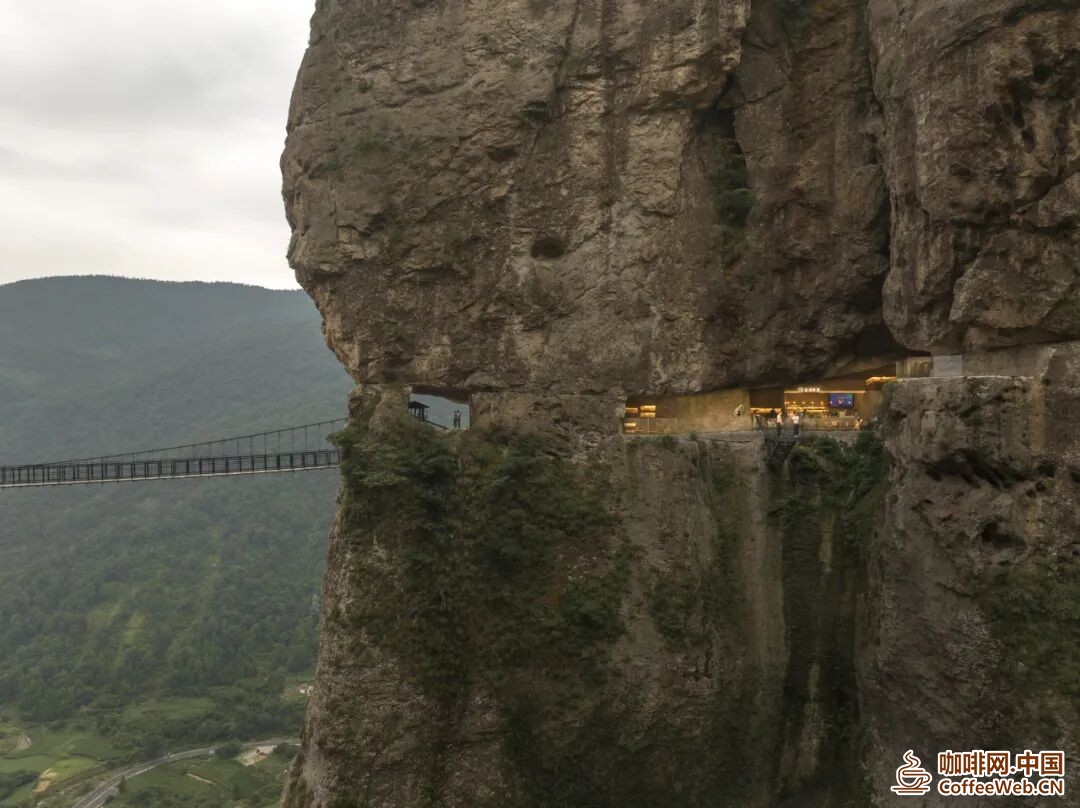
这是雁荡山“悬崖咖啡”的场景。自开业以来,它迅速成为社交媒体的宠儿,作为新晋打卡地,日均能卖出近千杯饮品。
它是一次网红式的偶然爆红,还是一场精心酝酿的必然?
在它的背后,徐晶磊既是主创设计师,又是操盘手,却格外低调。
去年年底,他拿下Andrew Martin国际室内设计大奖的全球年度大奖。这份来自设计界“奥斯卡”的肯定,也印证了悬崖咖啡馆并非普通的网红空间。
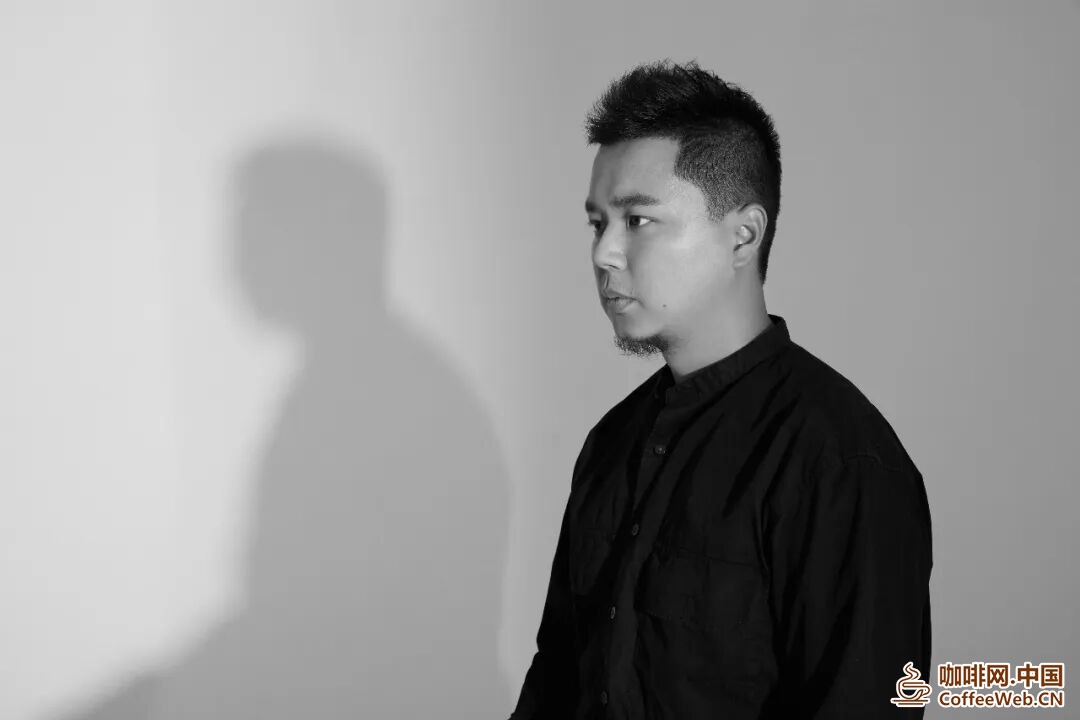
今年3月,在“设计上海”的现场,我们见到了徐晶磊——慢珊瑚设计的创始人。
他把“悬崖咖啡”定义为传统景区焕新的一场实践,其真正的价值,并不止于设计本身。
在洞穴里喝一杯咖啡
坐拥云海和日落的松弛
对于江浙沪的人来说,雁荡山既熟悉又陌生。
它曾登上美国《国家地理》杂志,2005年被联合国教科文组织列为世界地质公园。
在这里,你能看到云海在山峦间翻涌,亿万年的火山流纹岩与晨光交织的奇景,但实在很难吸引新一代的年轻人。
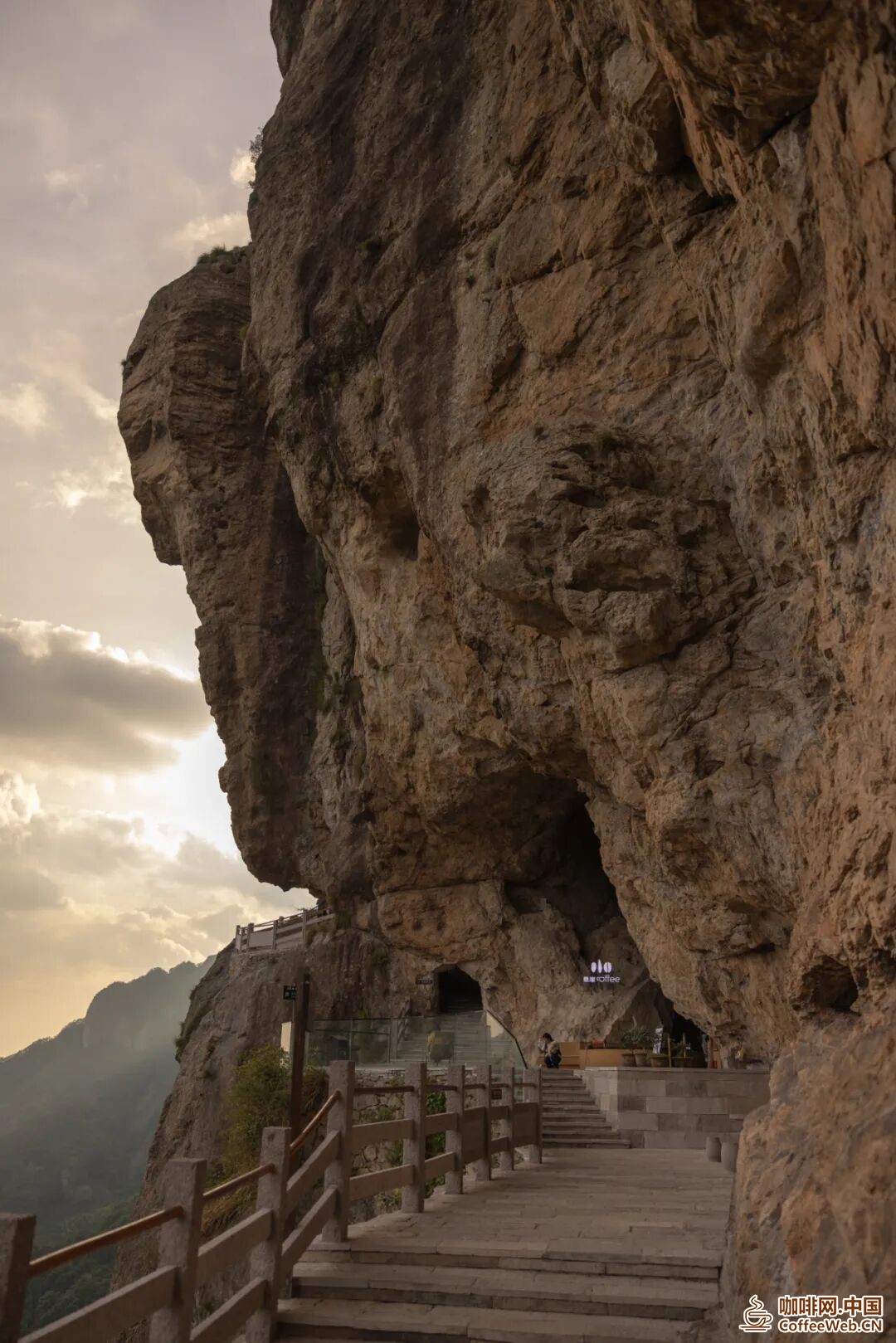
但是,如今当你坐缆车进入方洞景区,步行15分钟左右,就一定会遇到“悬崖Coffee”。众多时髦小姐姐在这里寄情山水,一座难求。
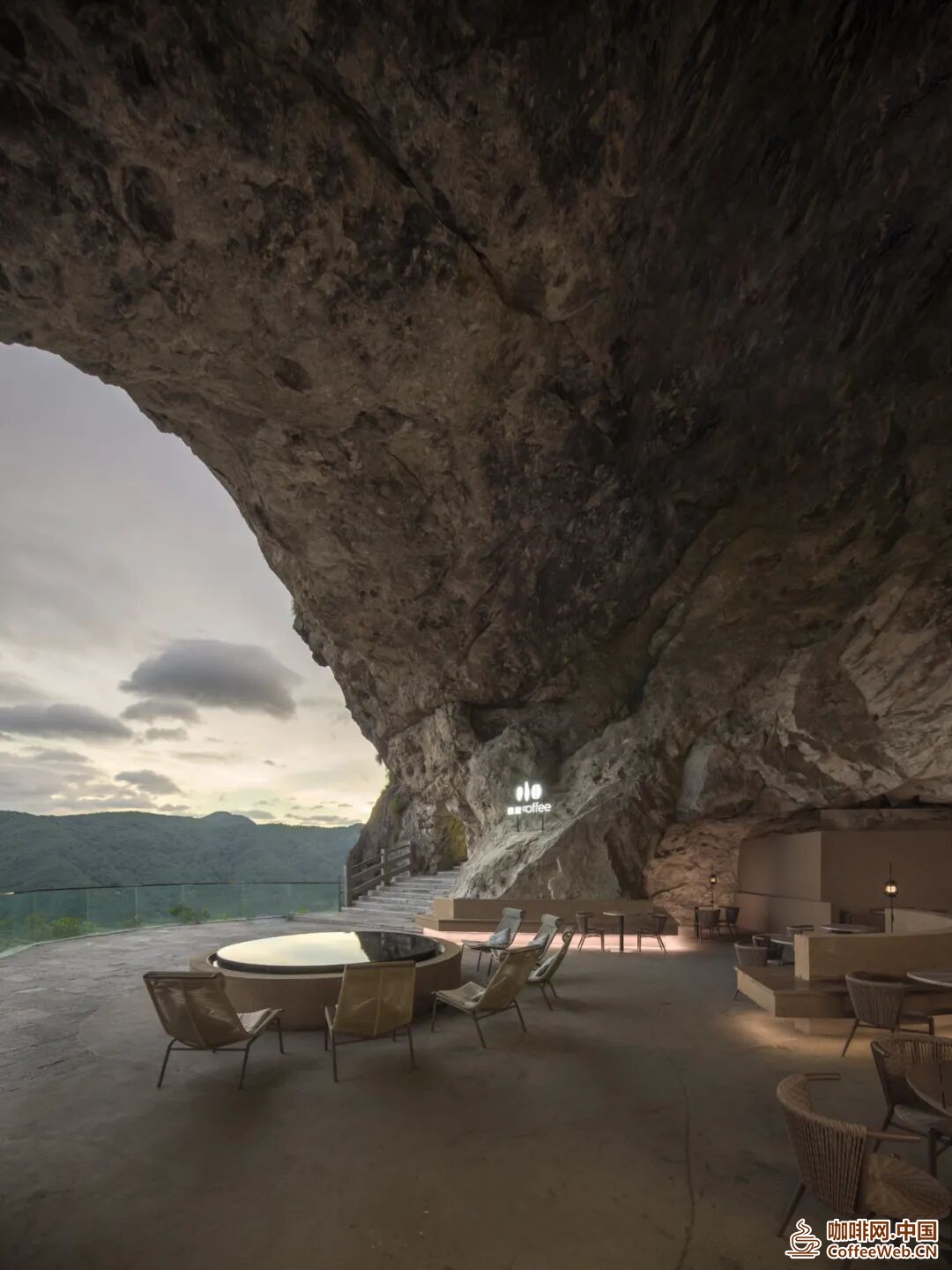
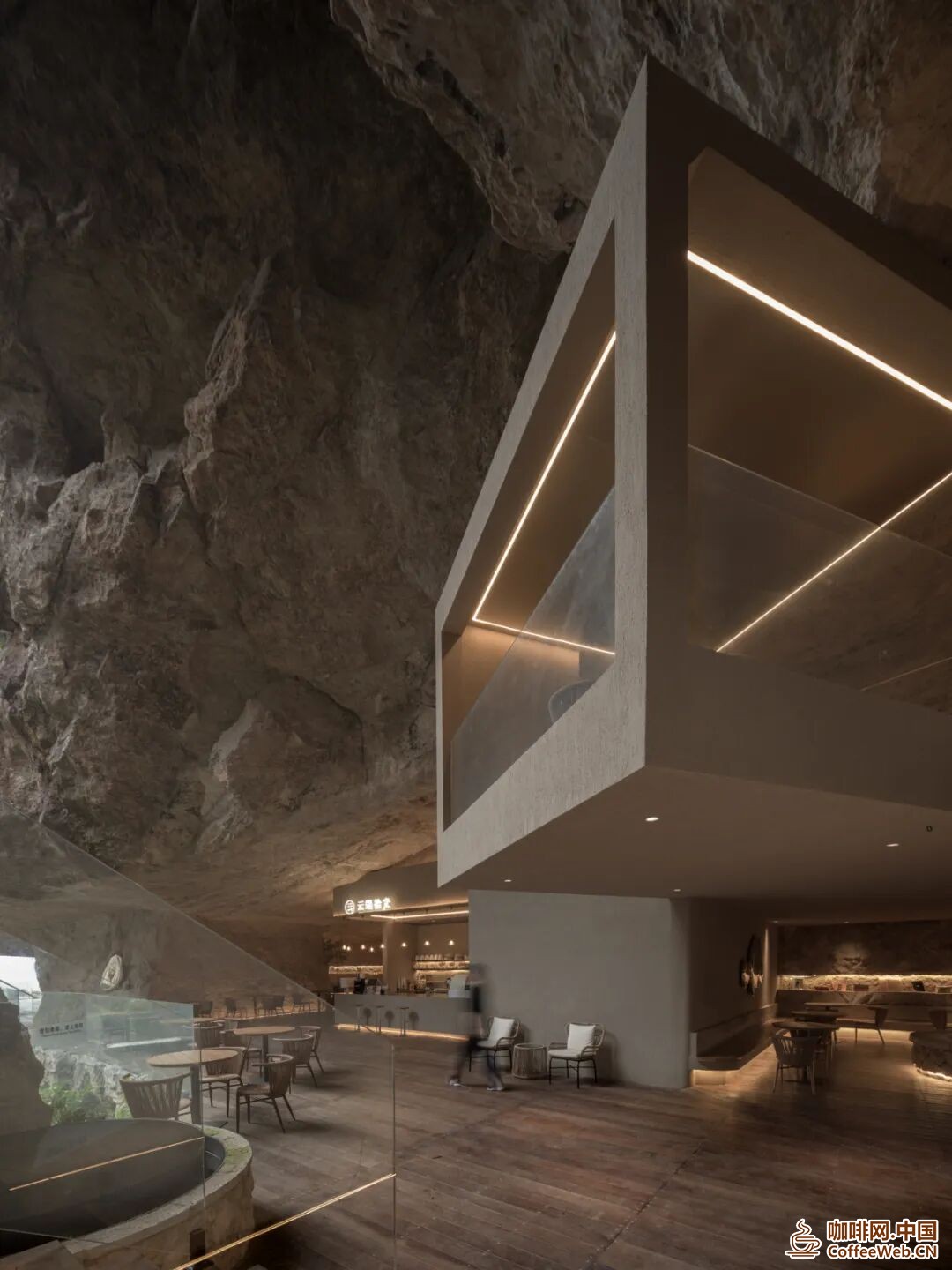
它身处在巨大的洞穴内,对所有人开放。吧台与座椅区谦逊地嵌入岩壁的凹陷处,一湾“镜水面”倒映着岩顶与天光。
徐晶磊将设计退隐至背后,在20多天的时间里,只用最简洁的材质、现代简约的线条,去凸显天然洞穴粗犷、天然的美感。
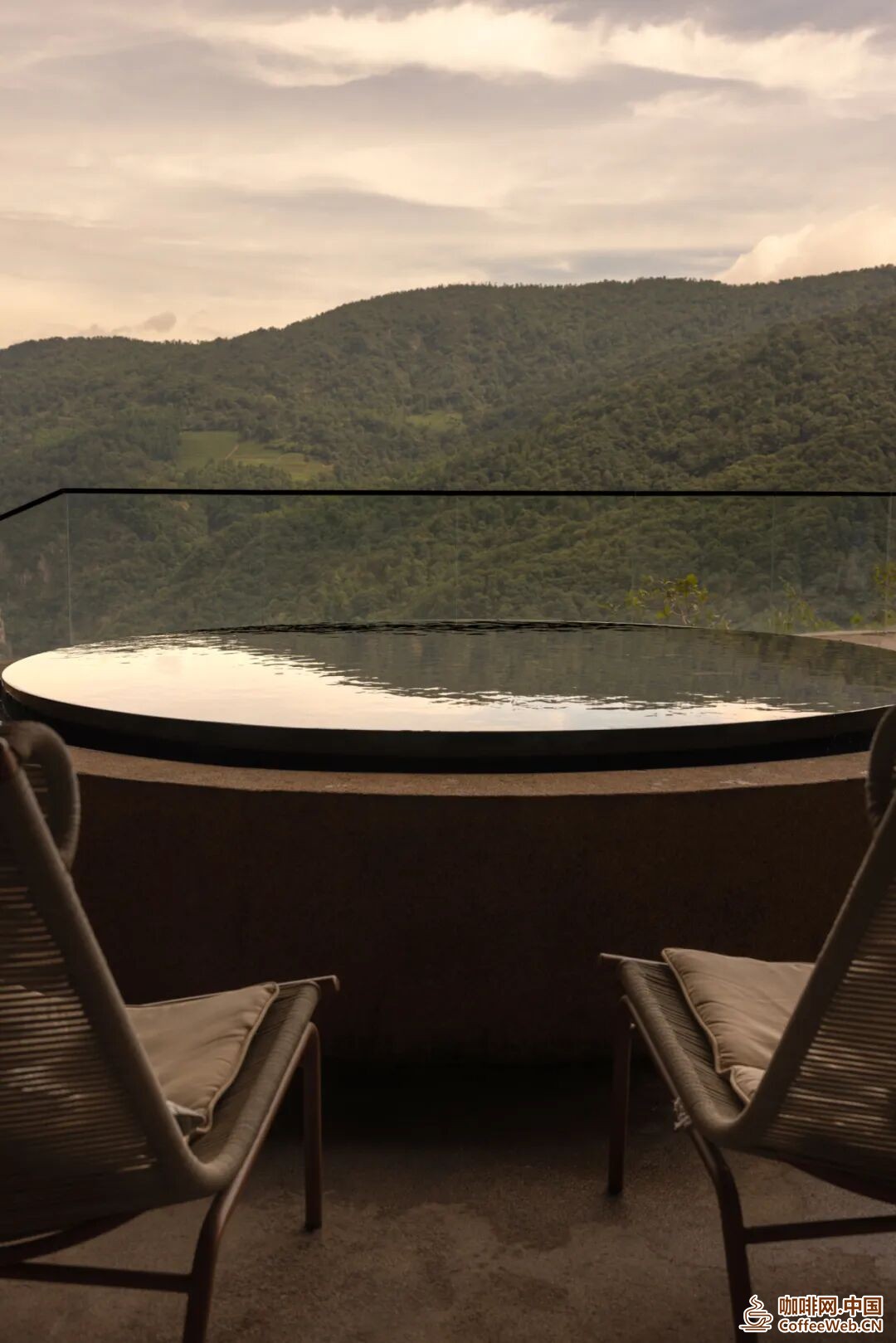
一边是悬崖峭壁的洞穴肌理,一边是雁荡山的奇峰秀水,抬头可见洞顶的钟乳石,低头能赏水面的波光,岩洞的轮廓形状就成了最佳取景框。
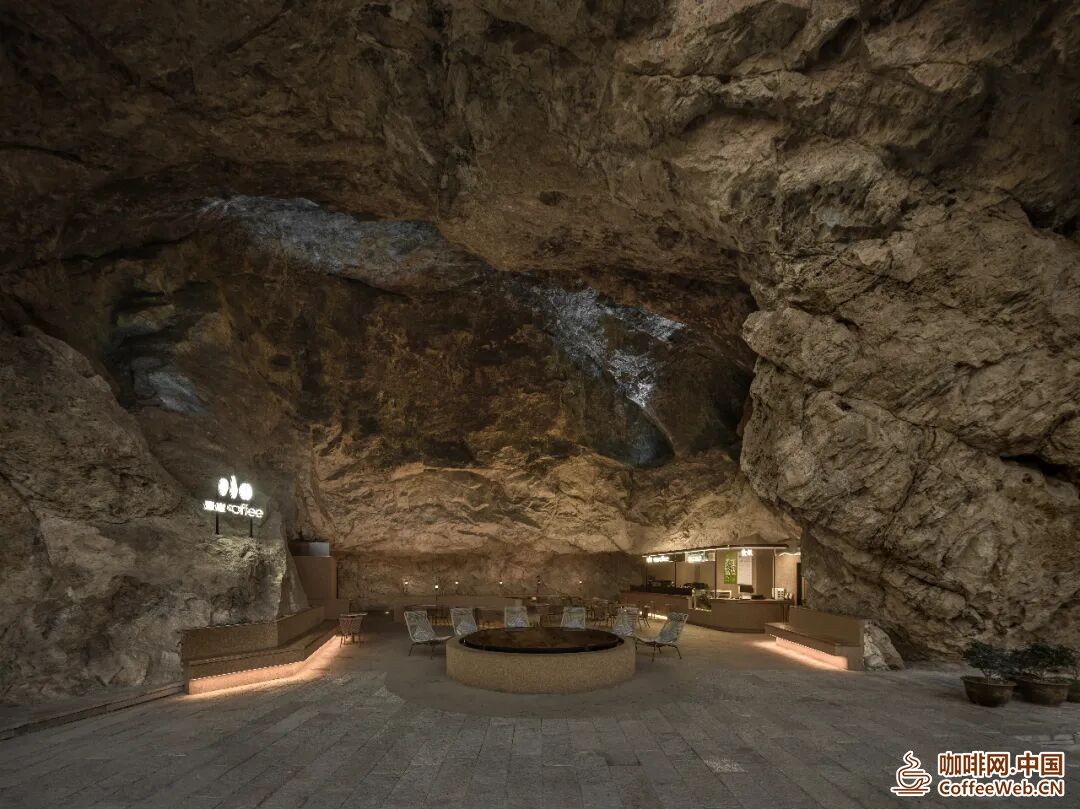
春日里的早晨,坐在恢宏岩洞中,俯瞰山间,可以看云海,风景独好;午后,能晒着温煦的阳光。
难怪有人说在这里,喝得不是咖啡,而是一口浸润了山灵云魄的“仙气”。
它不仅是登山途中完美的休憩点,更是一个能让人“与云同坐,与山共饮”的沉浸式场域,彻底改变着年轻人对传统景区的认知。
继续往前走,你会遇到“云端拾光”,它矗立在通往灵岩景区的锁链桥附近的岩洞里,选址独到。
这里的设计更有艺术层次感,在洞穴中引入游园的概念,你可以在有限的空间里,上下错层中走动,享受探索岩洞的趣味。
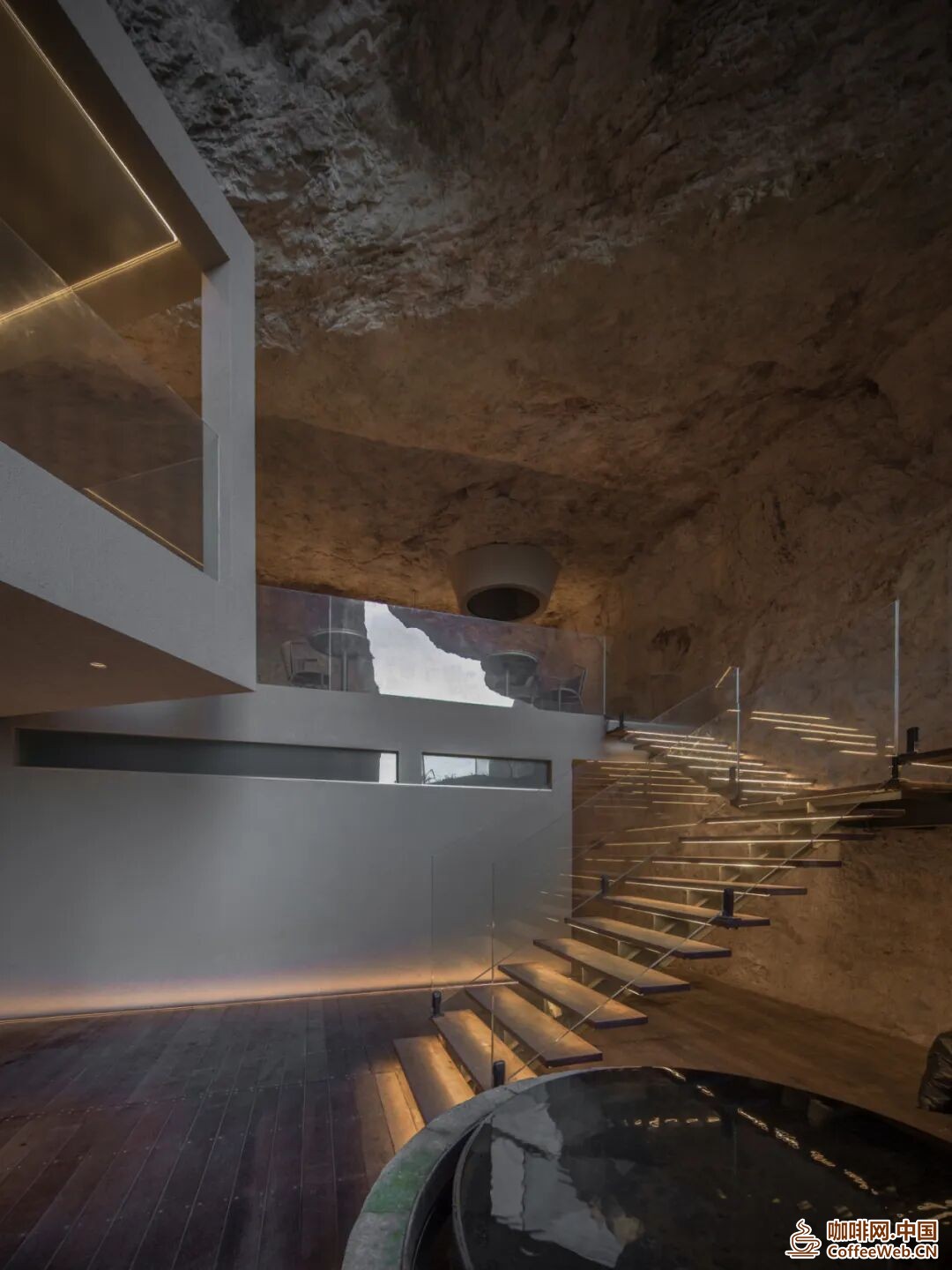
最受欢迎的自然是凌空的玻璃观景台,极简线条与洞穴原始的粗粝肌理形成对话,光影在阶梯上勾勒出时间的形状,让人与自然完美融合。
而在卫生间里,它依然保留着山体的岩石,与木质、石板呼应,粗粝中透着细腻入微的人文关怀。
许多设计从业者到此都忍不住感叹:初见是视觉的震撼,细品则是被这份细腻所包裹。
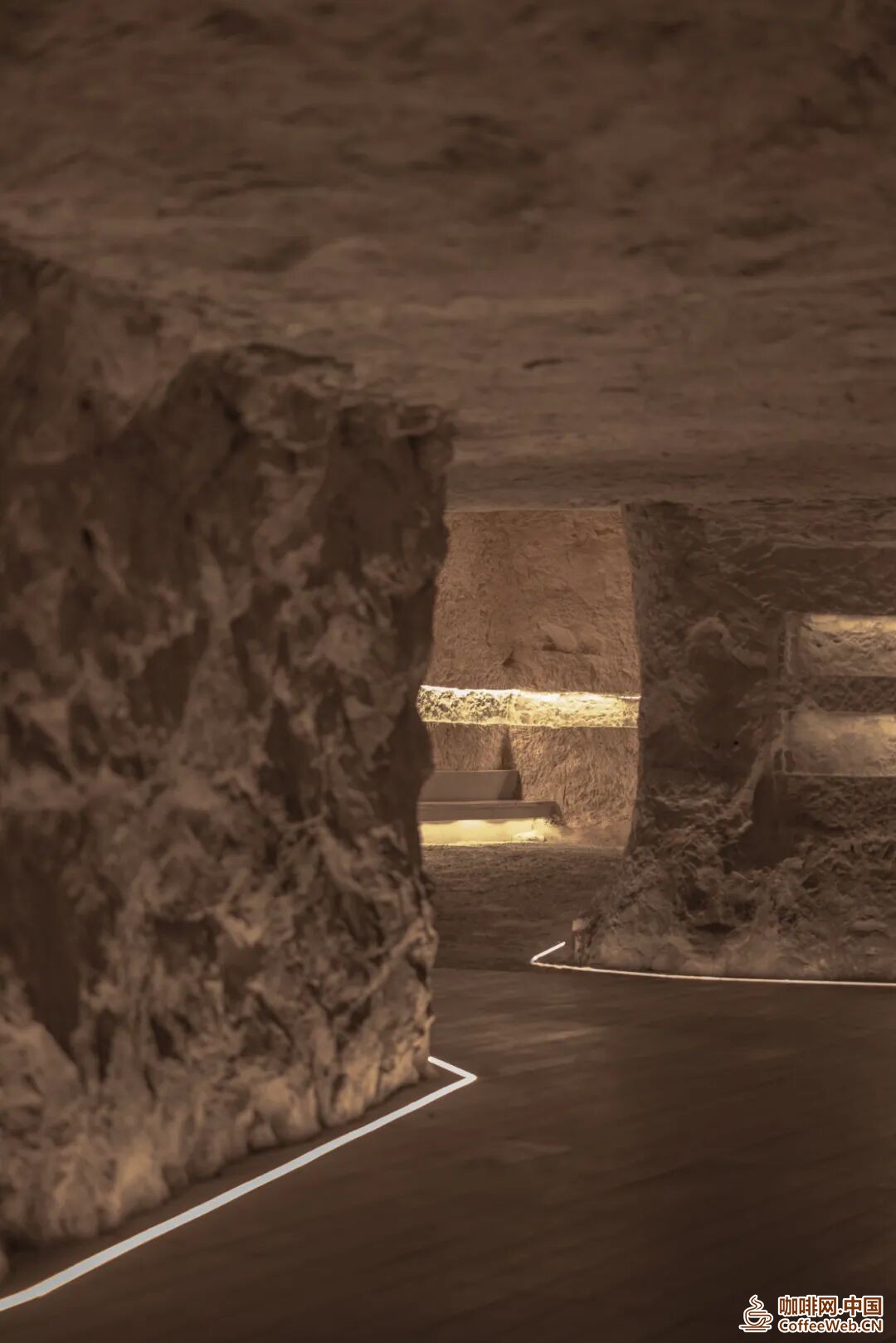
在徐晶磊看来,文旅并不需要堆砌设计手法,更多的是要为这块土地创造鲜活的生命力,让人能够在这个环境中,尽力用自己的五感与自然对话。
这两座悬崖咖啡都藏身于海拔数百米的洞穴之中。
它们的走红,始于一个看似偶然的时间点。
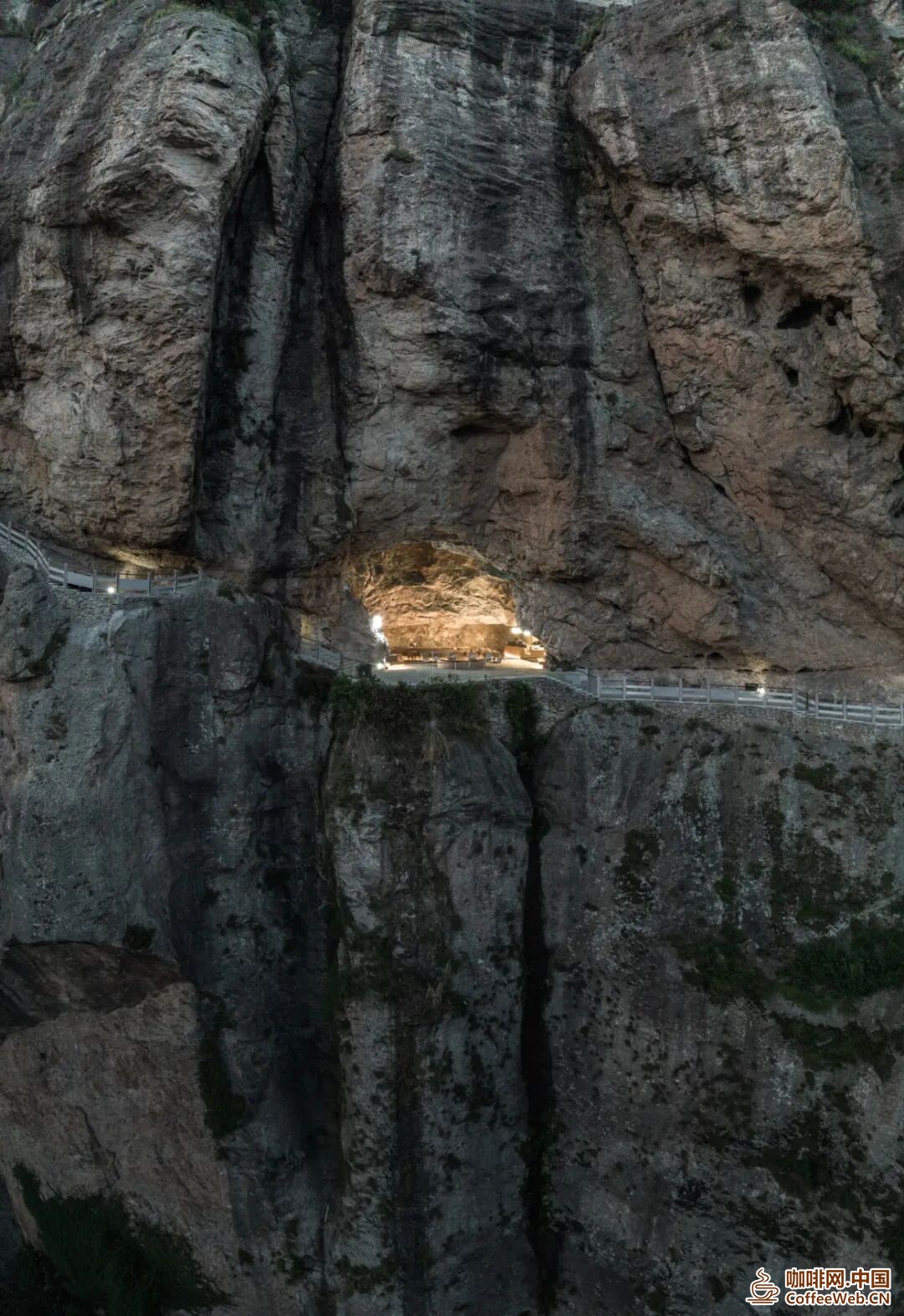
徐晶磊回忆,项目在2024年农历新年第一天开业,恰逢温州的返乡潮。
当地晨练的居民像往常一样爬山,无意间走入这个他们熟悉却又感到陌生的岩洞,发现“整个场景和营造出的精神气韵完全不同”。
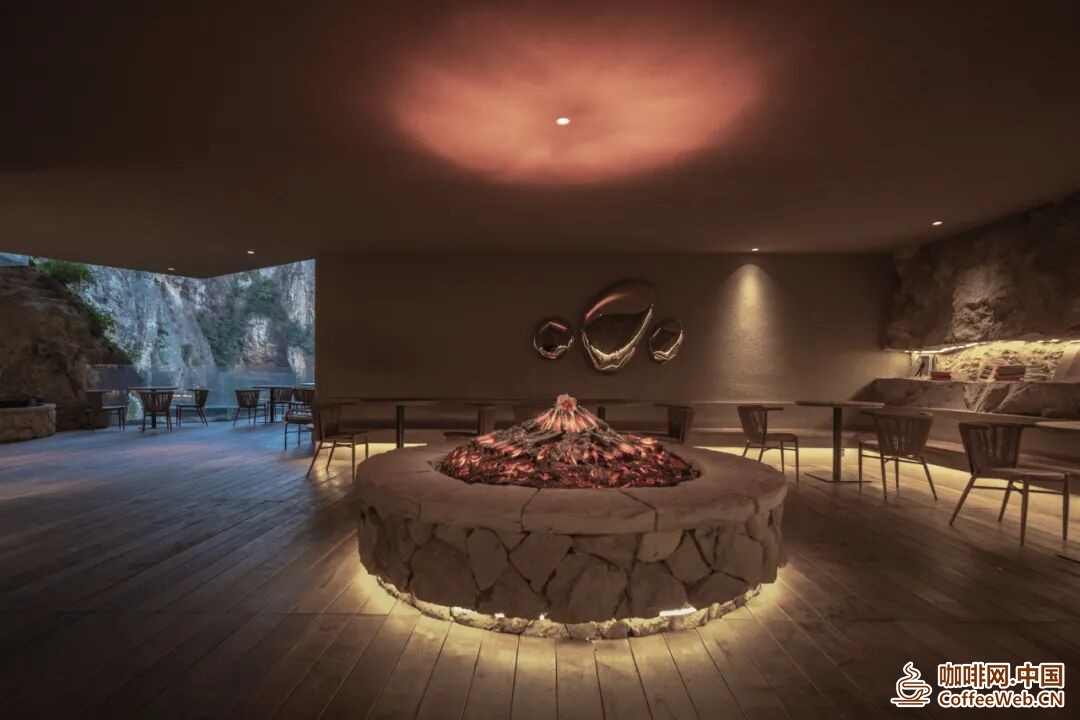
惊讶与惊喜之后,经由口耳相传与社交媒体的裂变,这个空间迅速成为话题。
“他们很诧异,什么时候我们这边这么传统的景区也会有这么大胆的破局。”徐晶磊说,“流量自然引爆了。”
最美的反而没人抬头看
老龄化景区如何吸引年轻人
与诸多标榜“绝景”的网红餐饮项目不同,慢珊瑚团队踏入雁荡山的那一刻,就并非单纯的设计方,而是带着运营者、景区更新者的复合视角。
彼时的雁荡山,是众多传统景区的典型代表,游客老龄化、业态单一。
如何让这座世界级地质公园重新焕发活力,让年轻人能走进来,是摆在徐晶磊眼前最重要的难题。
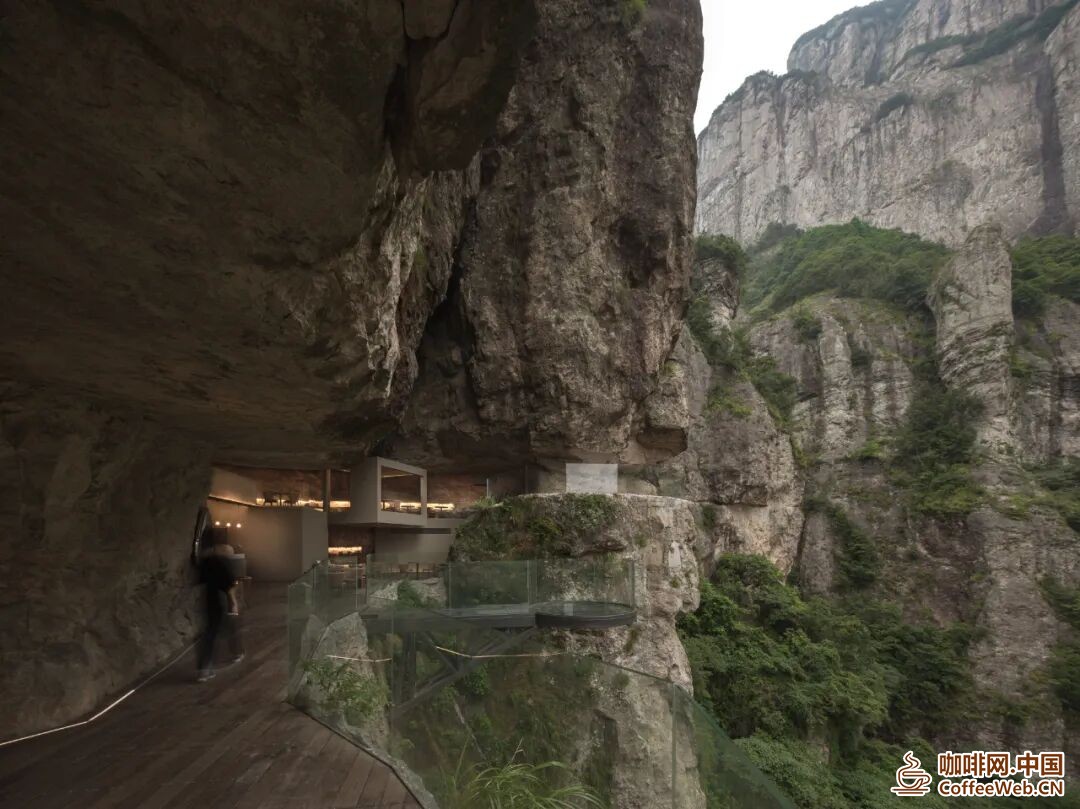
在踏勘中,徐晶磊发现这座藏在方洞景区主入口附近的岩洞,长久以来只是游客匆匆路过的通道。
原本鬼斧神工的自然景观被后期堆砌的格子铺遮蔽,无人驻足停留。
“在这里做任何东西都是多余的。”徐晶磊坦言,团队当即做出大胆决定:拆除所有后期加建的累赘,把岩洞本体“还”给自然与人。
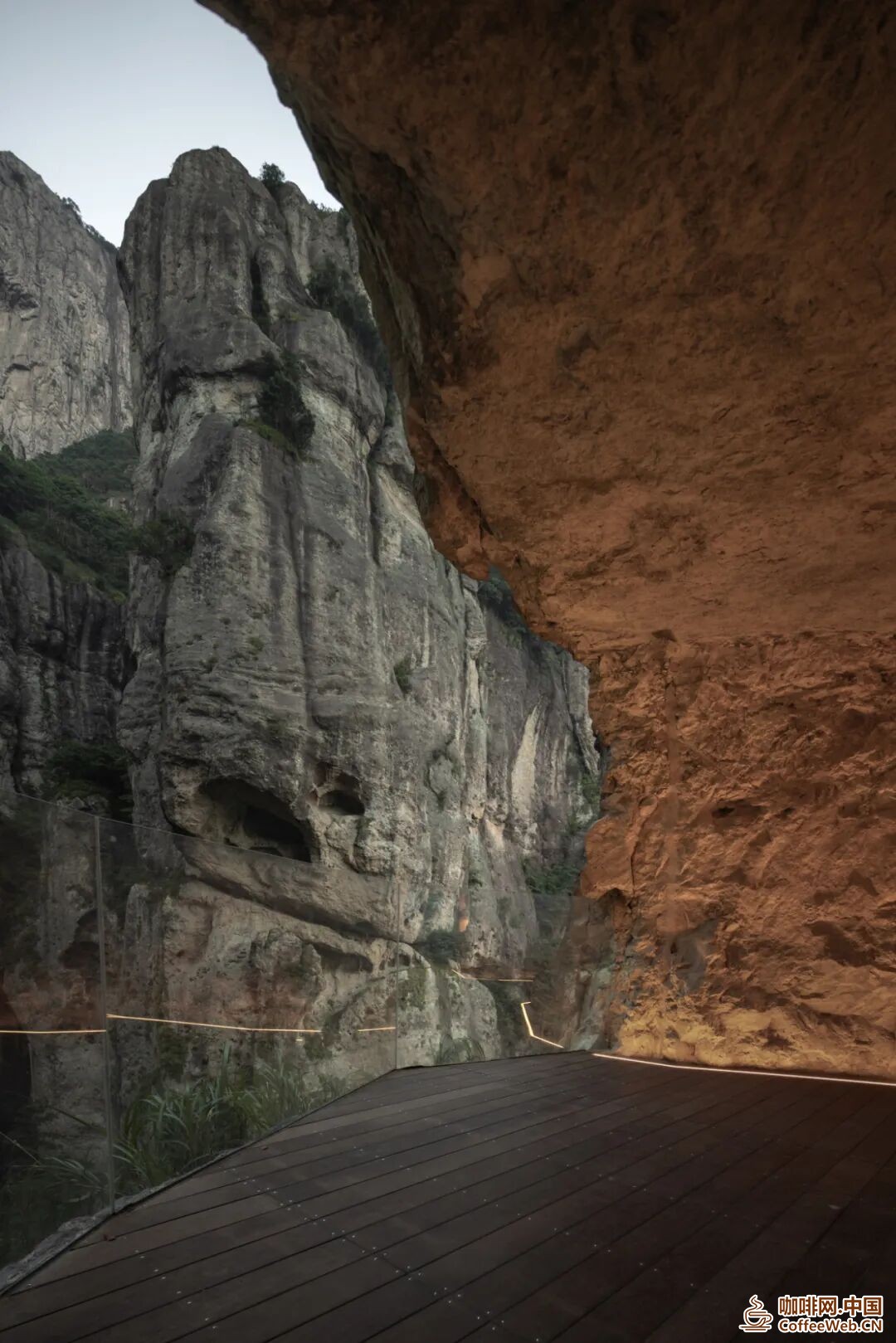
他们用了二十几天时间进行清理,当原始、宏伟的洞穴肌理完全裸露时,团队被深深震撼了。
“我们想让所有人能够抬头看——很多人向前看、向外看,但没有人抬头看。”
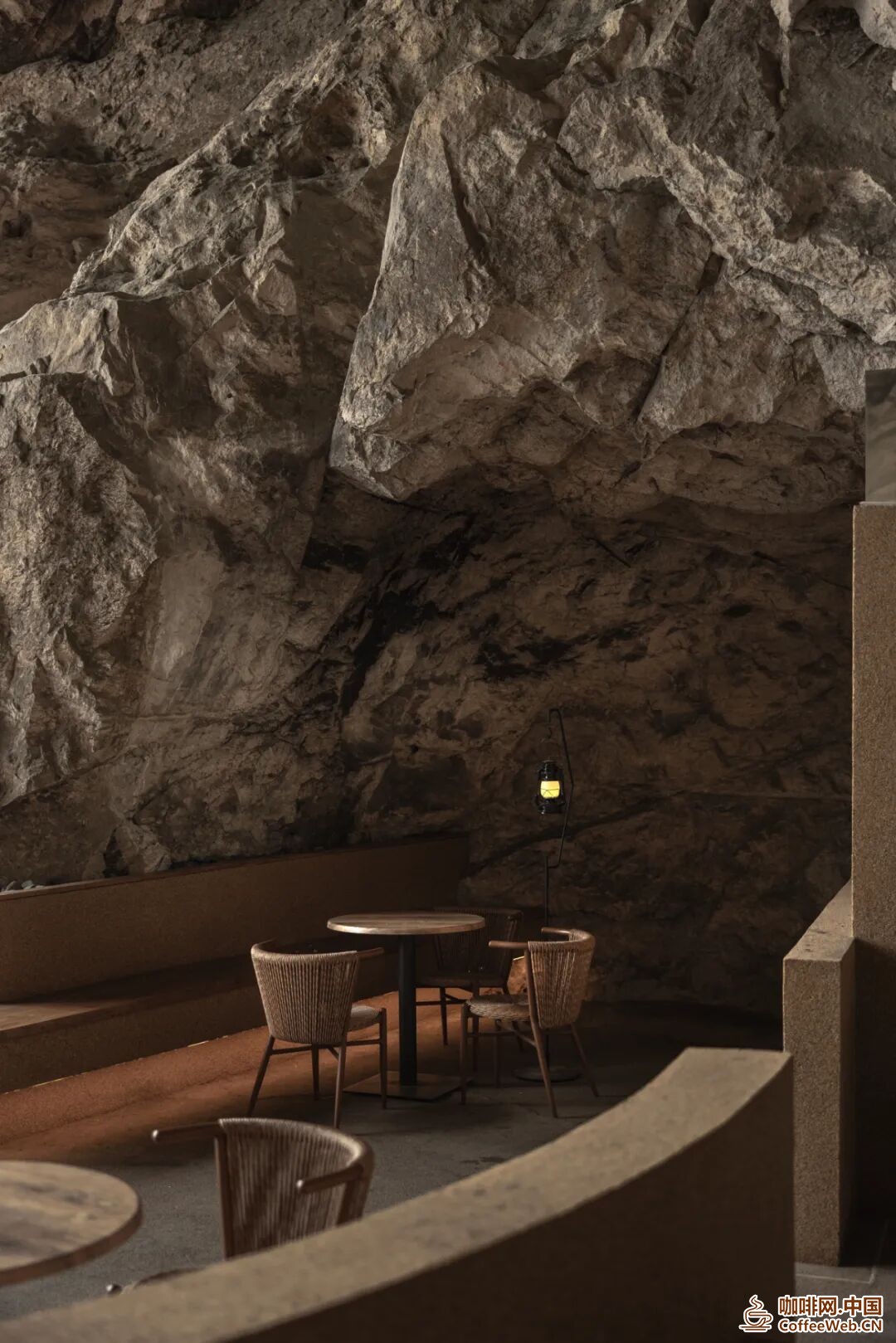
设计在此刻成为一种“减法”和“引导”。
团队没有急于植入咖啡业态,而是先打造了“洞穴剧场”:
打通封闭的空间,设置极简的卡座与吧台,巧妙引入“镜水面”,让游客能从水面倒影这一全新维度,凝视这座地质奇观。
所有的人为介入都轻巧而克制。
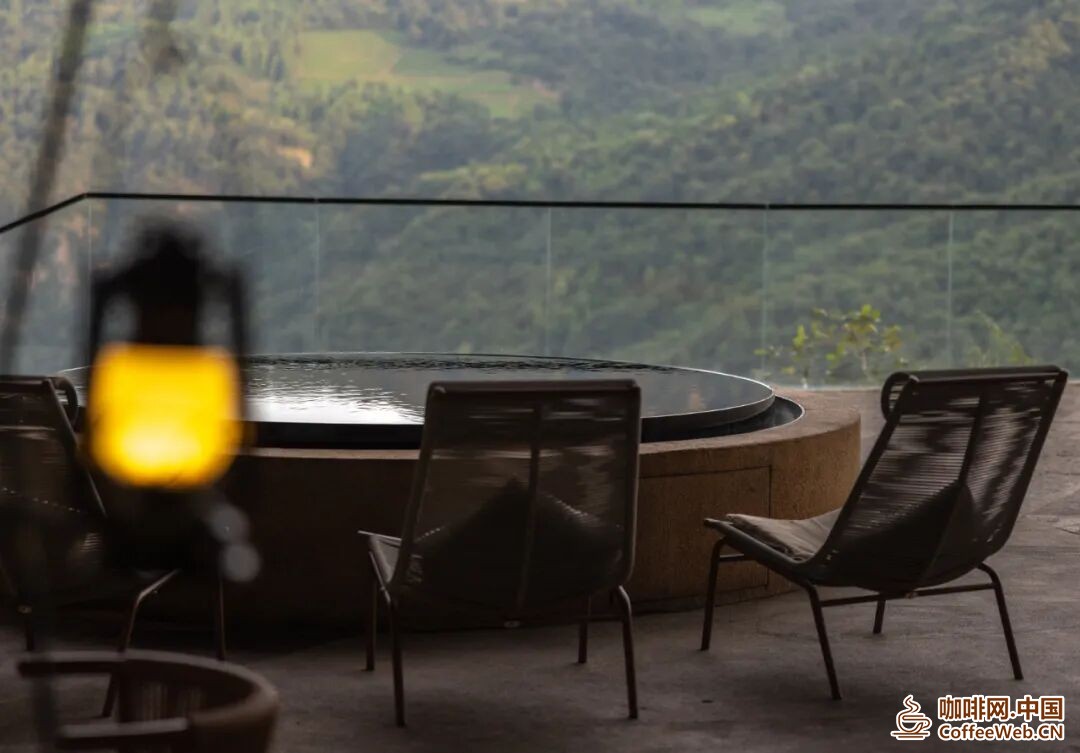
咖啡,是团队最后才考虑引入的。
徐晶磊透露,当时这个想法被视为一个巨大的挑战,毕竟在年轻人鲜少踏足、登山者多为晨练老人的雁荡山,谁会专程来喝一杯咖啡?
现在,年轻人不仅来了,还愿意为这样的体验买单。曾有数据统计,方洞景区过去黄金周日均客流约6000人次,如今高峰期可达16000人次。
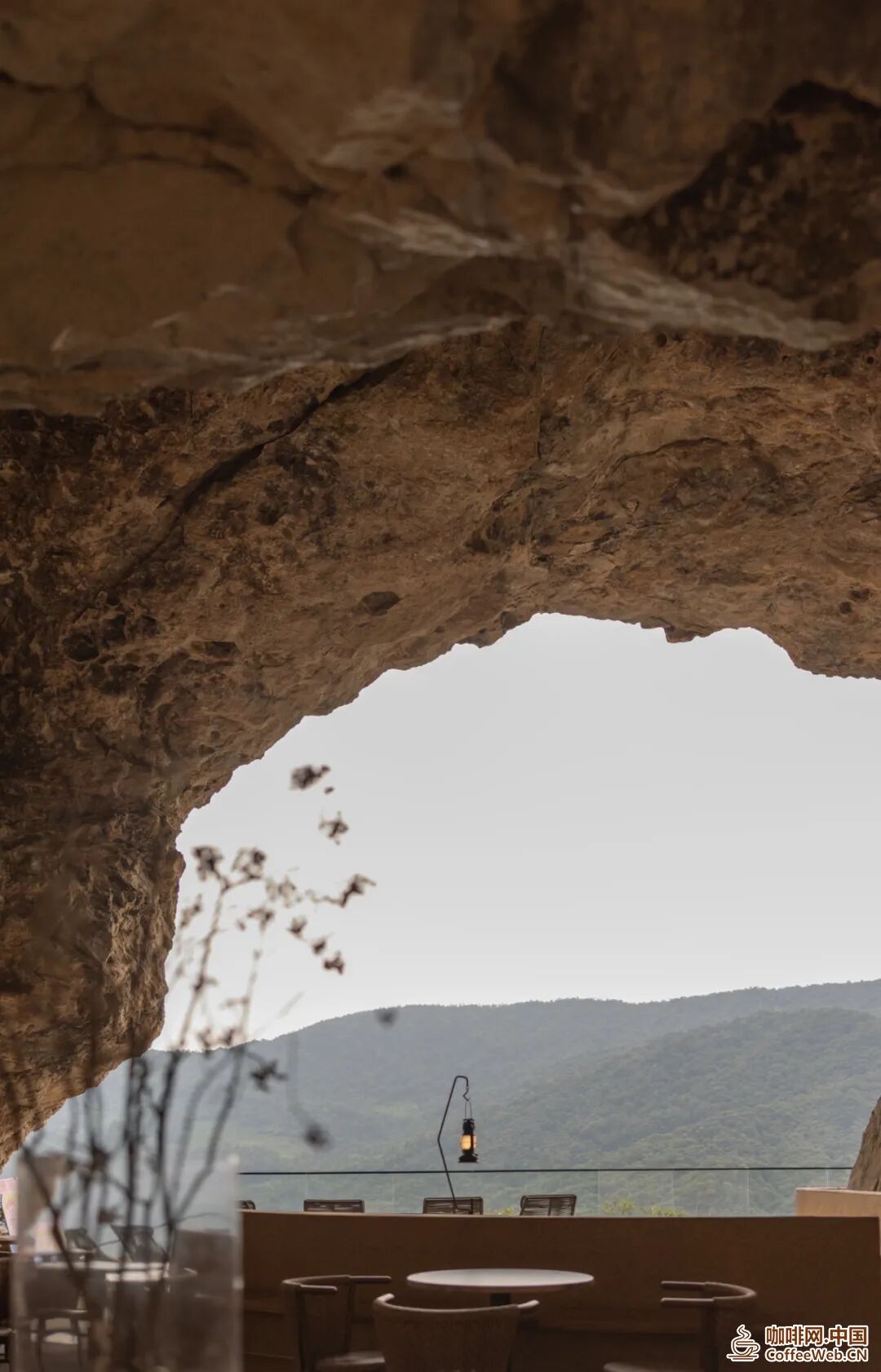
而Andrew Martin国际室内设计大奖的创始人、英国室内设计教父马丁·沃勒,在评价雁荡山悬崖咖啡项目时说:
“它堪称文旅振兴典范,通过对中国乡村闲置场地的活化利用,成功吸引年轻群体并提升社会经济价值。”
悬崖咖啡的爆火,也引来些许争议。由于店内不限制非消费顾客,旺季时大量拍照打卡的人群,让只想安静喝杯咖啡、看看风景的人感到环境嘈杂。
在徐晶磊看来,做这个项目的初衷是“激活”,并非希望项目本身火爆,而是希望它的火爆能激活整个风景区。
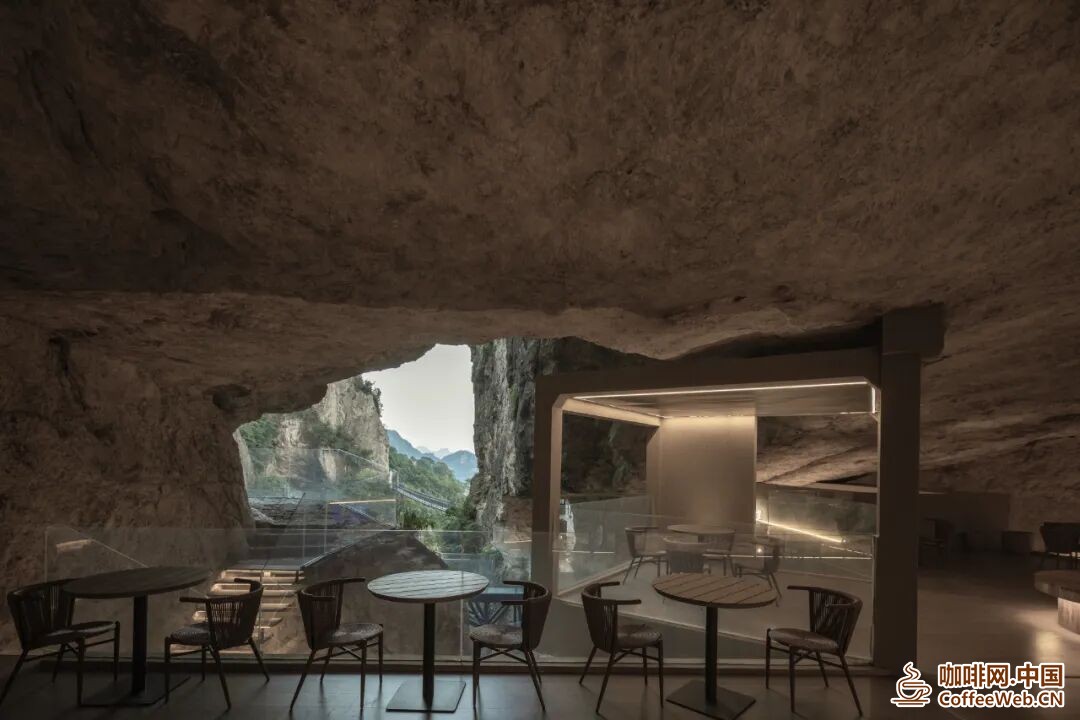
“悬崖咖啡”只是雁荡山沿线规划中的节点之一。
在徐晶磊的规划中,通过持续打造多个这样的“针灸点”,将涌来的巨大人流自然分散到整个景区及周边村庄,形成良性循环。
流量,在这里被视作一种可引导的、用于盘活全局的资源,而非终极目标。
设计不止是制造奇观
文旅也不简单是一杯咖啡
悬崖咖啡的成功,让“慢珊瑚”这个名字从设计圈走向了大众视野。
但这背后,是徐晶磊和慢珊瑚在文旅中摸索出来的一套设计哲学。
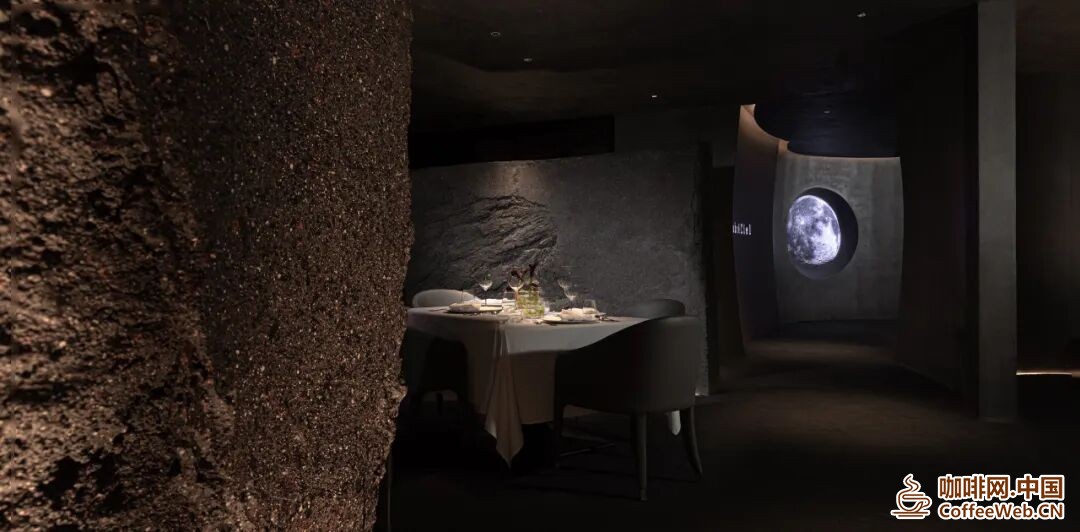
徐晶磊过往设计过众多精美的高端餐厅,但他的方式更多在考量空间的底蕴,如何和周围自然环境融为一体,而不是如何让室内的装修金碧辉煌。
最典型的是设计一个高端法餐厅,人均消费高达3000元的场域。
徐晶磊摒弃了一眼显贵的所有材质,反而用塑胶地板、仿石涂料,营造出静谧克制的氛围,让食客的注意力从表面的装修,回归食材与服务本身。
徐晶磊的设计里,从来都不是要把空间堆满,而是在运营和消费过程中,让空间场域的底蕴慢慢叠加。
直到雁荡山悬崖咖啡的彻底出圈,徐晶磊再一次感受到,文旅项目必须摒弃大而全、重投资的一次性开发模式。
设计师要像中医针灸一般,将力量集中于一个个微小而精准的点位,以最小的人为介入,激发整个区域的文旅活力。
他把这称为“针灸业态”,也带着这样的理念开始进入更多目的地,试图去唤醒更多的地方。
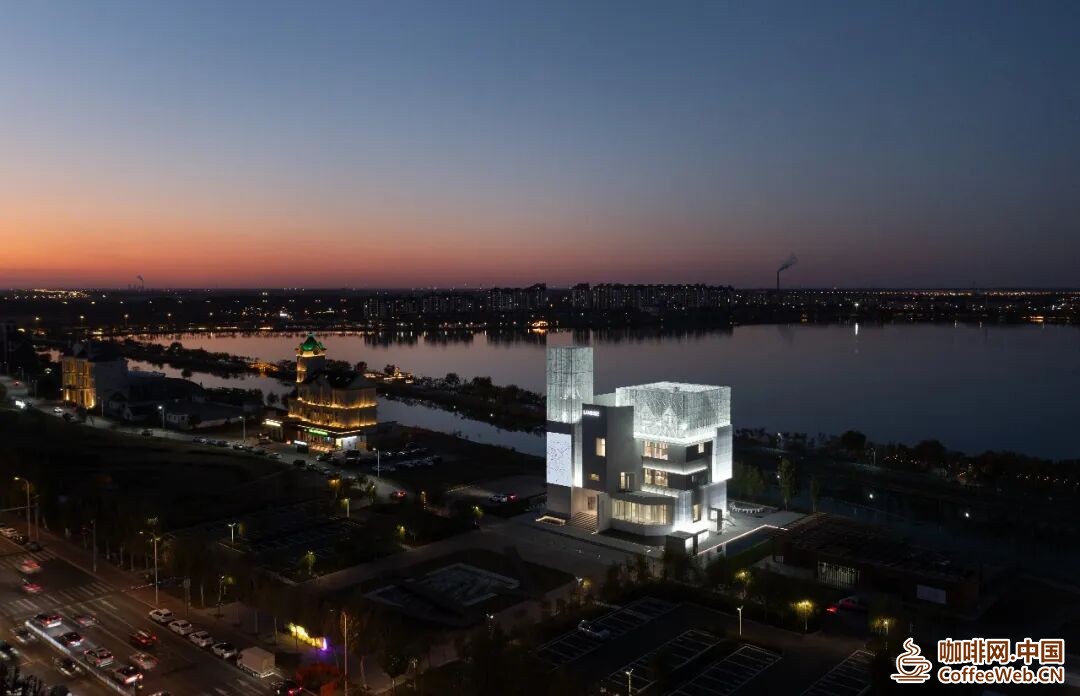
在大庆,这座因石油而兴、却因年轻人流失而日渐沉寂的工业城市,徐晶磊选取行将废弃的“边角料”空间,落地微型更新项目。
在这里,他打造设计的咖啡品牌“猛咖”,灵感来源于当地的猛犸象化石,已经成功植入到大庆当地的学校、医院、政府,成为吸引年轻人回流的新磁极。
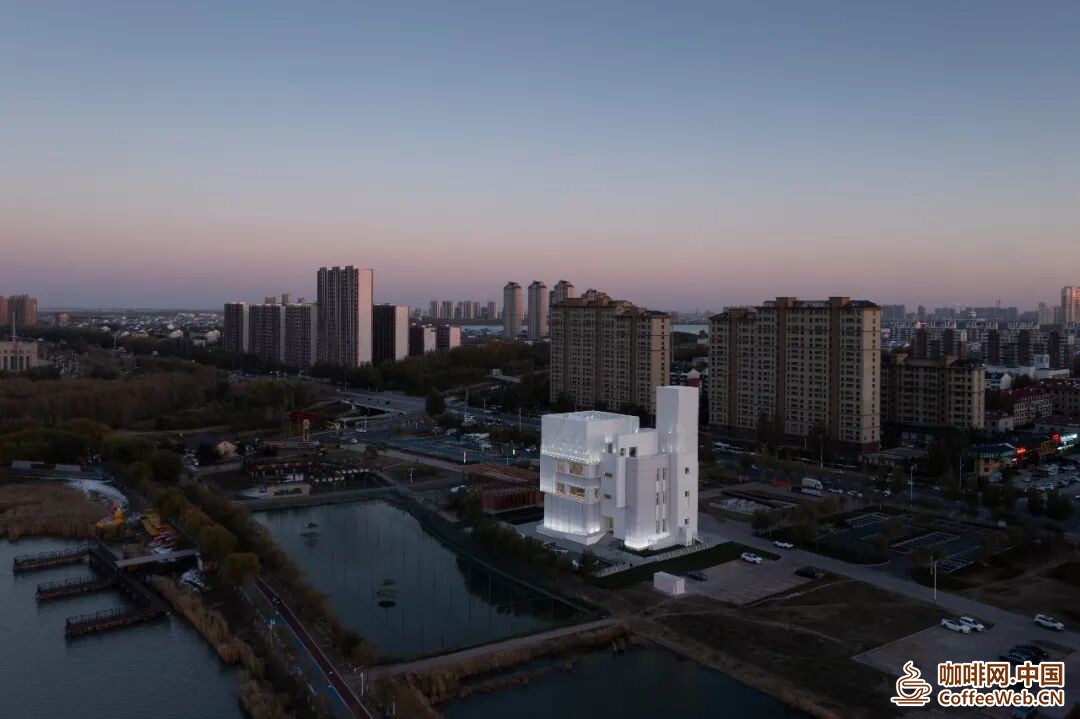
“大庆这个城市有100多个湖,每个湖都有跑道,但年轻人都不愿意留下来,”徐晶磊说,“我们做了一个咖啡馆、做了一个公共空间,很多人来了,他们说:原来我们城市也可以这样。”
这听起来有点浪漫。但徐晶磊说,他们做的事情其实很实际。
“我们不是在做艺术,我们在解决一个问题:如何让一个被遗忘的地方,重新被人看见。”
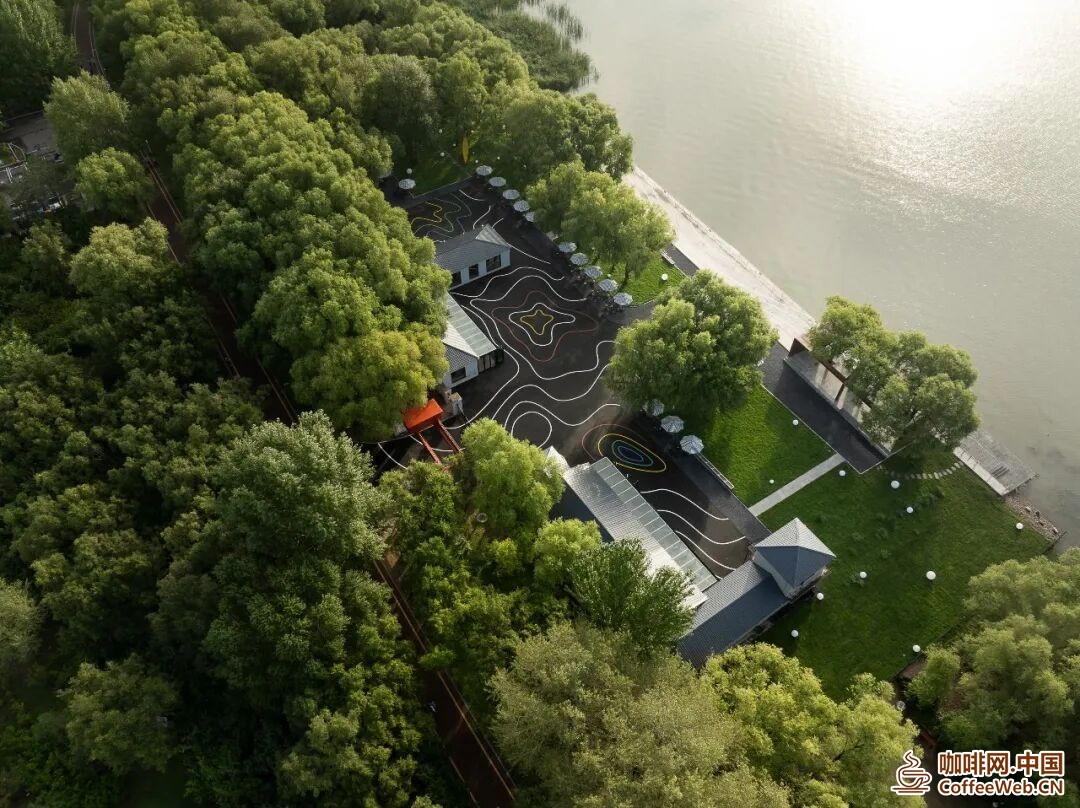
在雁荡山的后续规划中,团队沿着山脊线持续布点,将一个个原本被忽视的闲置空间转化为观景平台、轻量茶室与艺术装置。
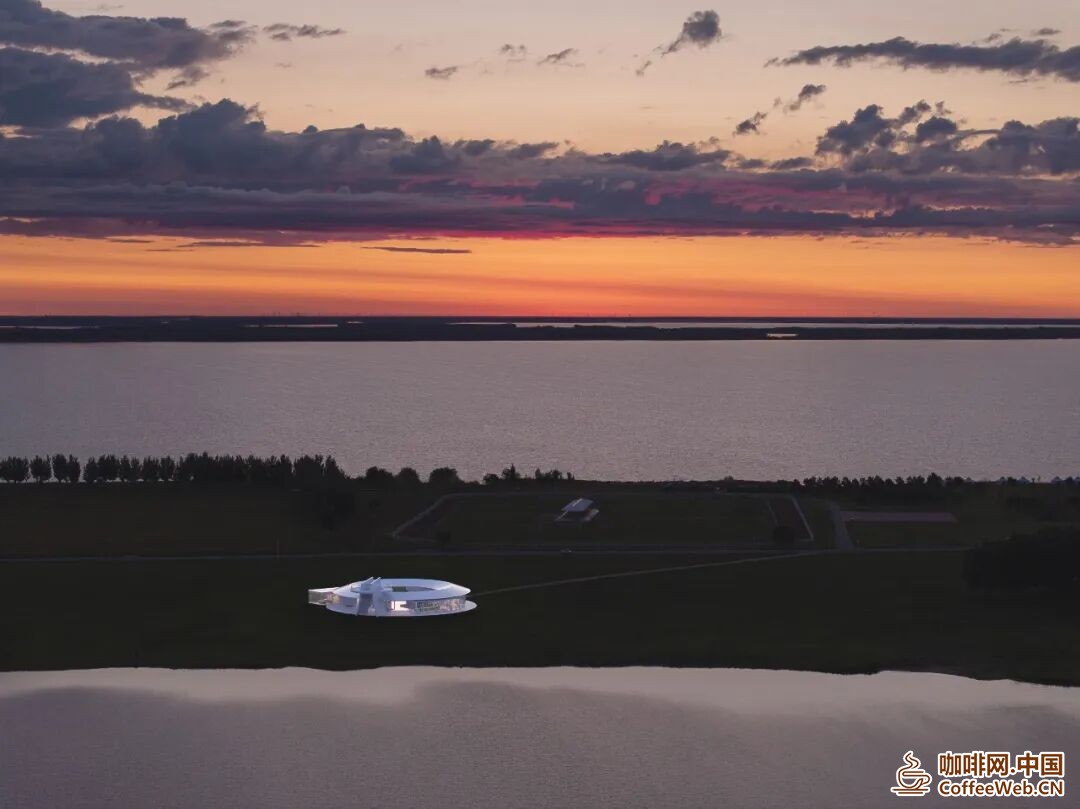
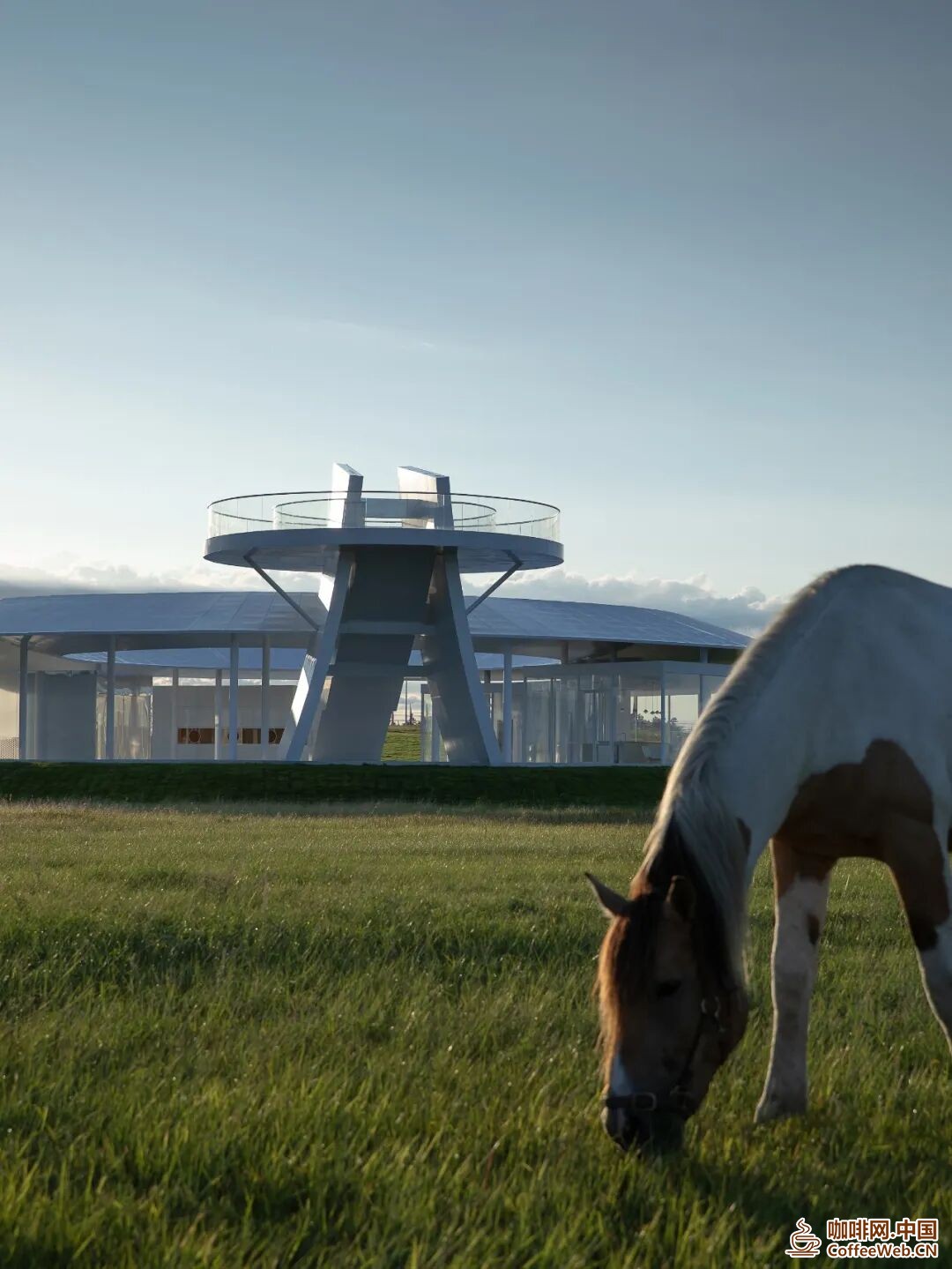
在草原方舟项目中,他们在黑龙江大庆阿木塔风景区打造了“阿木塔之眼”,设计灵感源于蒙古包的环状图腾,以现代建筑语言进行转译。
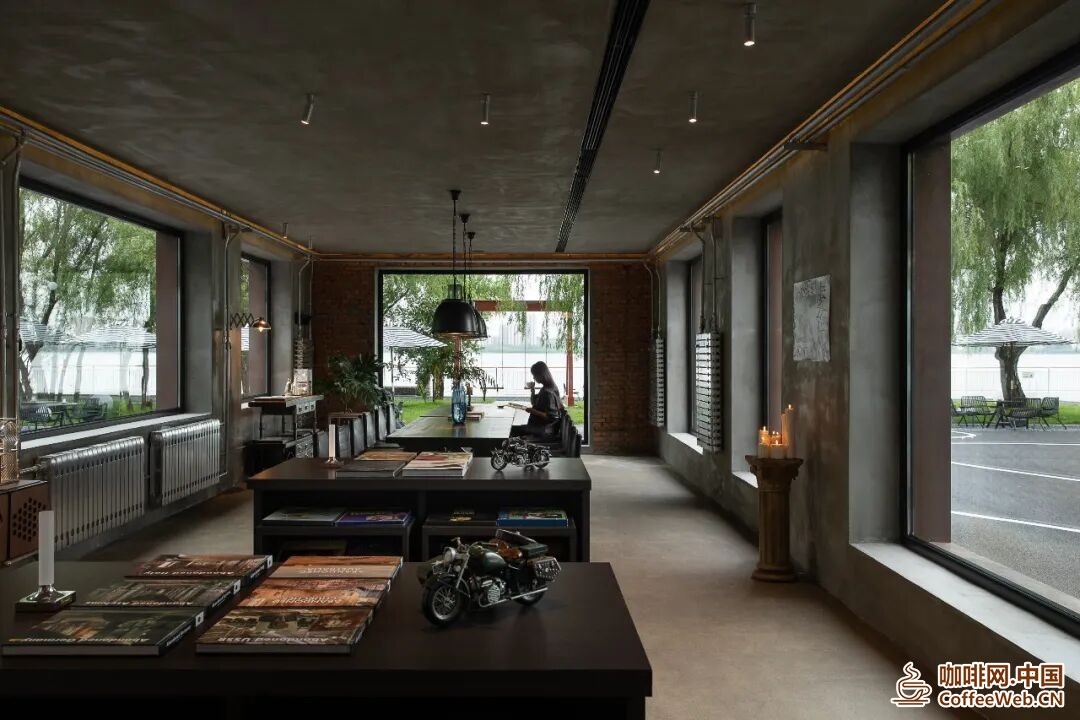
在神仙居咖啡,他们将一处半完工的配套用房改造为咖啡馆,保留原有红砖墙与人字梁结构,引入当地“蝌蚪纹”图腾,并以耐候钢板与布幕系统柔化空间。
作为设计师,徐晶磊说在设计的过程中,最关键的是“退让”。
“我们做的东西,要让当地人觉得,这是他们本来就有的,只是我们帮他们重新发现了。”徐晶磊说。
没有固定的风格标签,意味着每个项目都需要从零开始理解土地。
选择文旅赛道,就注定无法在同质化中寻求安全。支撑他走下去的,与其说是对设计本身的热爱,不如说是“热爱自然的心态和状态”。
徐晶磊自己就是资深的户外爱好者,爬山、徒步、骑行、桨板都是他的日常。他生长于杭州千岛湖的山水中,从小便懂得与自然共生。
在他看来,只有亲身感受自然、敬畏自然,才能在做项目时怀着一颗“退让”的心,以轻介入的方式,唤醒那些沉睡的美好。
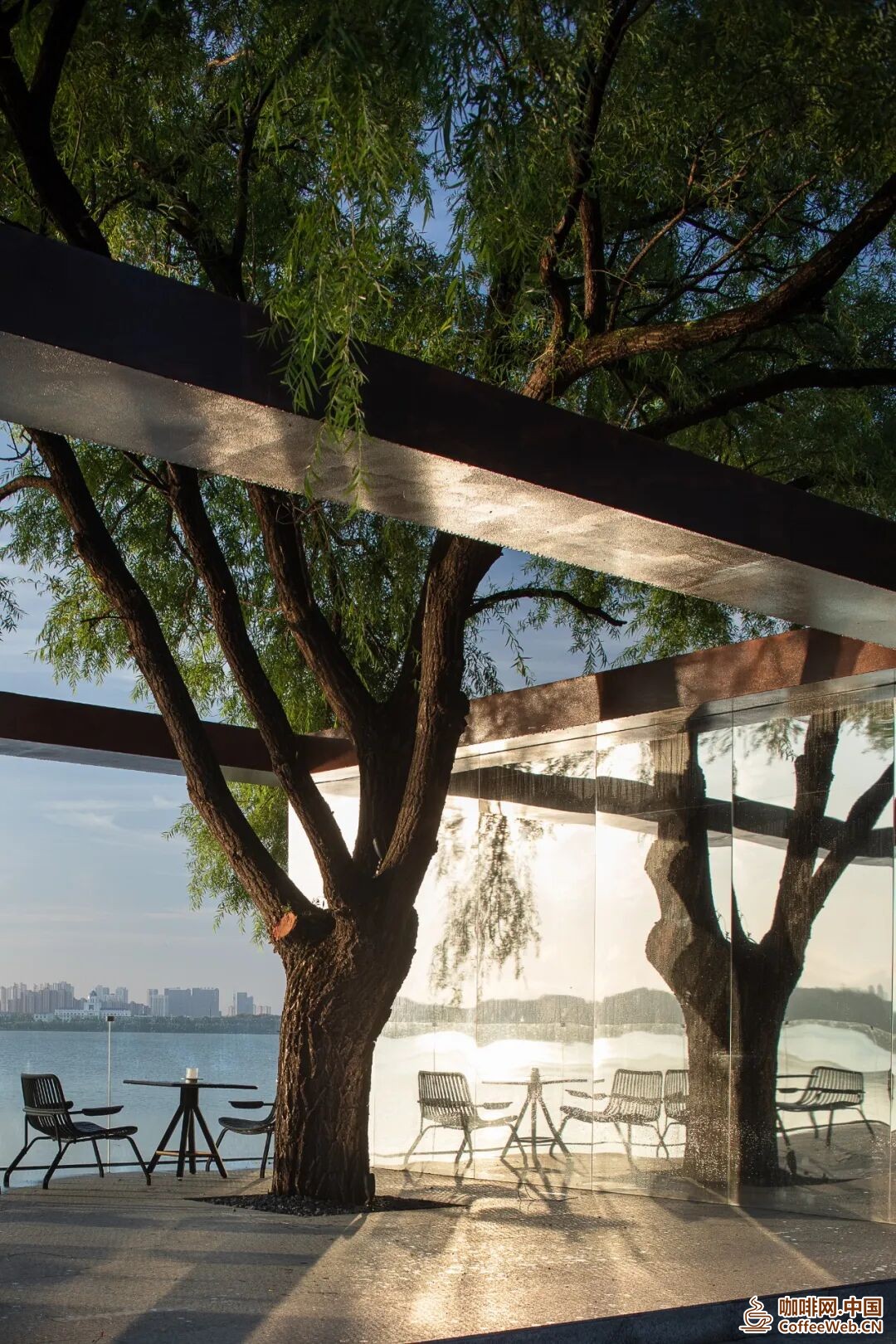
这份与自然共生的理念,也驱动着慢珊瑚设计走向新的阶段。
接下来,城市微度假酒店也将陆续出炉。在他们手中,城市中闲置的粮仓、旧船厂等工业遗存,将被改造为复合型消费场景的酒店。
具体在哪座城市呢?让我们期待一下吧。
当设计不再仅仅是创造奇观,而成为一种连接人与自然、过去与未来、个体与社区的温和媒介,它所承载的,便远不止一杯咖啡的醇香。
在徐晶磊看来,这是一场关于本土文旅复兴的微观实践。
他和慢珊瑚,正以一个个“针灸点”,参与着这场宏大而细腻的复苏进程。
文、编辑 /夏天
图片来自慢珊瑚工作室
©外滩TheBund
原标题:《在海拔600米山间,在洞穴悬崖喝咖啡,激活了江南山水的春天》
We are not doing art, we are solving a problem: how to make a forgotten place see again.
I climbed a mountain for a coffee shop
During the spring outing, more and more fashionable young people are eager to try - just for a stunning coffee shop on a 600 meter cliff.
In the huge cliff cave, order a latte and watch the sunlight penetrate through the crevices, casting changing light and shadow on the rough cave walls. Underneath your feet is a sea of clouds churning and deep valleys stretching thousands of feet
It meets the social needs of young people and maximizes their emotional value.
This is the scene of "Cliff Coffee" in Yandang Mountain. Since its opening, it has quickly become a darling of social media, selling nearly a thousand drinks per day as a new check-in destination.
Is it an accidental internet celebrity style explosion, or a carefully crafted inevitability?
Behind it, Xu Jinglei is both the chief designer and the operator, but he is particularly low-key.
At the end of last year, he won the global annual award at the Andrew Martin International Interior Design Awards. This recognition from the design industry's "Oscar" also confirms that Cliff Cafe is not an ordinary internet celebrity space.
In March of this year, at the "Design Shanghai" event, we met Xu Jinglei, the founder of Slow Coral Design.
He defined "Cliff Coffee" as a practice of revitalizing traditional scenic spots, and its true value goes beyond the design itself.
Drinking a cup of coffee in the cave
Enjoying the relaxation of a sea of clouds and sunset
For people from Jiangsu, Zhejiang, and Shanghai, Yandang Mountain is both familiar and unfamiliar.
It was featured in National Geographic magazine and was listed as a World Geopark by UNESCO in 2005.
Here, you can see the sea of clouds surging among the mountains, the strange scenery of billions of years of volcanic rhyolite intertwined with morning light, but it is really difficult to attract the new generation of young people.
However, nowadays when you take the cable car into Fangdong Scenic Area and walk for about 15 minutes, you will definitely encounter "Cliff Coffee". Many fashionable girls are here to express their love for the scenery, and one is hard to find.
It is located in a huge cave and open to everyone. The bar counter and seating area are humbly embedded in the depression of the rock wall, with a bay of "mirror water surface" reflecting the top of the rock and the sky.
Xu Jinglei withdrew his design from the background and spent over 20 days using only the simplest materials and modern minimalist lines to highlight the rugged and natural beauty of the natural cave.
On one side is the cave texture of cliffs and steep cliffs, and on the other side is the beautiful peaks and waters of Yandang Mountain. Looking up, you can see the stalactites on the cave roof, and looking down, you can enjoy the waves on the water surface. The outline shape of the cave becomes the best framing frame.
On a spring morning, sitting in a magnificent cave overlooking the mountains, one can see the sea of clouds and enjoy a unique scenery; In the afternoon, one can bask in the warm sunshine.
No wonder some people say that here, drinking is not coffee, but a sip of "immortal qi" infused with mountain spirit and cloud spirit.
It is not only a perfect resting place during mountain climbing, but also an immersive field that allows people to "sit with the clouds and drink with the mountains", completely changing young people's perception of traditional scenic spots.
Continuing forward, you will encounter 'Cloud Picking Light', which stands in a cave near the Chain Bridge leading to the Lingyan Scenic Area, with a unique location.
The design here has a more artistic sense, introducing the concept of a garden in the cave. You can walk up and down in a limited space, enjoying the fun of exploring the cave.
The most popular natural feature is the soaring glass observation deck, where minimalist lines and the rough texture of the cave create a dialogue. Light and shadow outline the shape of time on the stairs, allowing people to blend perfectly with nature.
In the bathroom, it still retains the rocks of the mountain, echoing with the wood and stone slabs, with a rough yet delicate humanistic care.
Many design practitioners can't help but exclaim here: at first glance, it's a visual shock, but in detail, it's enveloped by this delicacy.
In Xu Jinglei's view, cultural tourism does not require piling up design techniques, but rather to create vibrant vitality for this land, allowing people to use their five senses to communicate with nature in this environment.
These two cliff cafes are hidden in caves at an altitude of several hundred meters.
Their popularity began at a seemingly accidental point in time.
Xu Jinglei recalled that the project opened on the first day of the Lunar New Year in 2024, coinciding with the wave of returning home in Wenzhou.
The local morning exercise residents climbed the mountain as usual and accidentally walked into this familiar yet unfamiliar cave, discovering that "the whole scene and the spiritual atmosphere created were completely different".
After being surprised and pleasantly surprised, this space quickly became a topic of conversation through word-of-mouth and the proliferation of social media.
They were surprised when such a traditional scenic spot in our area would have such a bold breakthrough, "Xu Jinglei said." The traffic naturally exploded
The most beautiful thing is that no one looks up
How to attract young people to aging scenic spots
Unlike many internet famous catering projects that boast of "stunning scenery", the moment the Slow Coral team stepped into Yandang Mountain, they were not simply designers, but brought a composite perspective of operators and scenic area updates.
At that time, Yandang Mountain was a typical representative of many traditional scenic spots, with an aging population of tourists and a single business model.
How to revitalize this world-class geological park and allow young people to enter is the most important challenge in front of Xu Jinglei.
During the survey, Xu Jinglei discovered that this cave hidden near the main entrance of Fangdong Scenic Area has long been just a passage for tourists to pass by hastily.
The natural landscape, which was originally exquisitely crafted, was obscured by the later stacked grid paving, and no one stopped to stop.
Anything done here is redundant, "Xu Jinglei admitted, and the team immediately made a bold decision: to remove all the later added burdens and" return "the cave body to nature and humans.
They spent more than twenty days cleaning, and when the original and magnificent cave texture was completely exposed, the team was deeply shocked.
We want everyone to be able to look up - many people look forward and outward, but no one looks up
Design has become a form of subtraction and guidance at this moment.
The team did not rush to implant the coffee industry, but first created a "cave theater":
Open up the enclosed space, set up minimalist booths and bars, and cleverly introduce a "mirror water surface", allowing visitors to gaze at this geological wonder from the new dimension of water reflection.
All human intervention is light and restrained.
Coffee was the last thing the team considered introducing.
Xu Jinglei revealed that at that time, this idea was seen as a huge challenge, after all, in Yandang Mountain, where young people rarely set foot and climbers are mostly elderly people doing morning exercises, who would come specifically for a cup of coffee?
Now, young people are not only here, but also willing to pay for such experiences. According to statistics, the Fangdong Scenic Area used to have an average of about 6000 visitors on golden Sundays, but now it can reach 16000 visitors during peak hours.
And Martin Waller, the founder of the Andrew Martin International Interior Design Award and the father of British interior design, said in his evaluation of the Yandang Mountain Cliff Coffee project:
It can be regarded as a model of cultural and tourism revitalization, successfully attracting young people and enhancing social and economic value through the revitalization and utilization of idle rural land in China
The explosion of Cliff Coffee has also sparked some controversy. Due to the unrestricted non consumer customers in the store, a large number of people taking photos and checking in during peak seasons make the environment noisy for those who only want to have a quiet cup of coffee and enjoy the scenery.
In Xu Jinglei's view, the original intention of doing this project is to "activate" it, not to make the project itself popular, but to make it popular and activate the entire scenic area.
Cliff Coffee "is just one of the nodes planned along the Yandang Mountain.
In Xu Jinglei's planning, by continuously creating multiple such "acupuncture and moxibustion points", the huge flow of people will naturally be dispersed to the whole scenic spot and surrounding villages, forming a virtuous circle.
Traffic is seen here as a differentiable resource used to activate the overall situation, rather than the ultimate goal.
Design is not just about creating wonders
Tourism is not just a cup of coffee
The success of Cliff Coffee has brought the name "Slow Coral" from the design circle to the public eye.
But behind this is a design philosophy that Xu Jinglei and Slow Coral have explored in their cultural tourism.
Xu Jinglei has designed numerous exquisite high-end restaurants in the past, but his approach is more focused on considering the depth of the space, how to integrate with the surrounding natural environment, rather than how to make the interior decoration magnificent.
The most typical example is designing a high-end French restaurant with an average consumption of up to 3000 yuan per person.
Xu Jinglei has abandoned all the materials that are eye-catching, instead using plastic flooring and imitation stone paint to create a quiet and restrained atmosphere, allowing diners' attention to return from surface decoration to the ingredients and service itself.
In Xu Jinglei's designs, it has never been about filling up the space, but rather gradually stacking the essence of the spatial field in the process of operation and consumption.
Until the complete emergence of Yandang Mountain Cliff Coffee, Xu Jinglei once again felt that cultural and tourism projects must abandon the one-time development model of large and comprehensive investment.
Like acupuncture and moxibustion in traditional Chinese medicine, designers should focus their efforts on small and precise points, and use the smallest human intervention to stimulate the cultural and tourism vitality of the whole region.
He called this "acupuncture and moxibustion business", and with this concept, he began to enter more destinations, trying to wake up more places.
In Daqing, an industrial city that flourished due to oil but gradually fell silent due to the loss of young people, Xu Jinglei chose the soon to be abandoned "corner material" space to launch a micro renovation project.
Here, he created the coffee brand "Mengka" inspired by local mammoth fossils, which have been successfully implanted into schools, hospitals, and governments in Daqing, becoming a new magnet for attracting young people to return.
There are over 100 lakes in Daqing, each with a running track, but young people are unwilling to stay, "Xu Jinglei said." We have built a caf é and a public space, and many people have come here, saying, "So our city can do the same
This sounds a bit romantic. But Xu Jinglei said that what they are doing is actually very practical.
We are not doing art, we are solving a problem: how to make a forgotten place see again
In the subsequent planning of Yandang Mountain, the team continued to deploy points along the ridge line, transforming previously overlooked idle spaces into viewing platforms, lightweight tea rooms, and art installations.
In the Grassland Ark project, they created the "Eye of Amuta" in the Amuta Scenic Area of Daqing, Heilongjiang Province, inspired by the circular totem of the Mongolian yurt, translated into modern architectural language.
At Shenxianju Coffee, they transformed a semi completed supporting building into a caf é, retaining the original red brick wall and herringbone beam structure, introducing local "tadpole pattern" totems, and softening the space with weather resistant steel plates and curtain systems.
As a designer, Xu Jinglei said that in the design process, the most crucial thing is to "compromise".
What we do should make the locals feel that it is something they already have, but we have helped them rediscover it, "said Xu Jinglei.
There is no fixed style label, which means that every project needs to understand the land from scratch.
Choosing the cultural and tourism track is destined to make it impossible to seek safety in homogenization. What supports him to keep going is not so much his love for design itself, but rather his attitude and state of loving nature.
Xu Jinglei himself is a seasoned outdoor enthusiast, with mountain climbing, hiking, cycling, and paddleboarding being his daily routine. He grew up in the mountains and waters of Qiandao Lake in Hangzhou and learned to coexist with nature from a young age.
In his opinion, only by experiencing nature firsthand and revering nature can one approach projects with a heart of "concession" and awaken the dormant beauty through gentle intervention.
This concept of symbiosis with nature is also driving slow coral design to a new stage.
Next, urban micro vacation hotels will also be gradually released. In their hands, idle industrial relics such as grain warehouses and old shipyards in the city will be transformed into hotels with complex consumption scenarios.
Which city is it specifically located in? Let's look forward to it.
When design is no longer just about creating wonders, but becomes a gentle medium that connects people and nature, the past and the future, individuals and communities, it carries far more than the aroma of a cup of coffee.
In Xu Jinglei's view, this is a micro practice about the revival of local cultural tourism.
He and slow coral are participating in this grand and delicate recovery process with "acupuncture and moxibustion points" one by one.
Literature and Editing/Summer
Image from Slow Coral Studio
© The Bund
Original title: "Drinking coffee in caves and cliffs at an altitude of 600 meters in the mountains activates the spring of Jiangnan scenery"