


每天喝咖啡VS从不喝,身体差别有多大?What is the physical difference between drinking coffee every day and never drinking it?
众所周知,咖啡是个“健康明星”。
除了可以提神之外,大量流行病学研究表明,喝咖啡还与降低2型糖尿病、帕金森病、肝病和死亡风险相关。
然而,咖啡中有数百种生物活性成分,对于这些成分如何影响人体从而带来这些好处,科学界仍在拼凑庞大的机制拼图。
▲咖啡豆的成分参考资料 石胁智广《你不懂咖啡》
最近发表的一项芬兰大型人群研究,为我们理解这个问题提供了一个新的线索:咖啡对健康的种种益处背后,背后可能藏着一条由“性激素和内分泌”通路搭建的桥梁梁[1]。
爱喝咖啡的人
脂肪更少,肌肉相对更多
芬兰Oulu大学的研究人员对来自“北芬兰1966出生队列”的2264名参与者(平均年龄46岁,47%是男性)的数据进行了分析。
研究人员不仅询问了他们喝多少咖啡,还做了相当全面的身体检查。包括身体组成、血压、血脂、空腹血糖和胰岛素、口服葡萄糖耐量试验,以及总睾酮、游离睾酮和性激素结合球蛋白等激素指标。
结果发现,从传统指标看,不同咖啡摄入组的BMI、腰围和腰臀比没有明显差别。但更高精度的分析显示,咖啡喝得较多的人:
体脂率更低
总脂肪量更少
内脏脂肪面积更小
骨骼肌量更高
也就是说,即便两个人体重和 BMI 完全相同,常喝咖啡的那位,体内很可能“脂少肌多”。

▲卡内makafood:
研究还发现,在男女参与者中,咖啡摄入较多都与较低的循环支链氨基酸水平有关。
过去不少研究发现,血液中的支链氨基酸长期偏高,与肥胖、胰岛素抵抗、2型糖尿病和脂肪肝风险上升有关[2]。这表明,咖啡可能通过影响氨基酸代谢,为血糖稳定保驾护航。
喝咖啡,连激素也变了
更令人瞩目的发现,在于咖啡对性激素网络的调控。
这种差异在男性身上更为明显。
研究发现,在男性参与者中,咖啡摄入量越高:
胰岛素反应和胰岛素敏感性越有利;
总睾酮和生物可利用睾酮水平越高,
性激素结合球蛋白(SHBG)浓度较高。
游离睾酮、游离雄激素指数略有降低
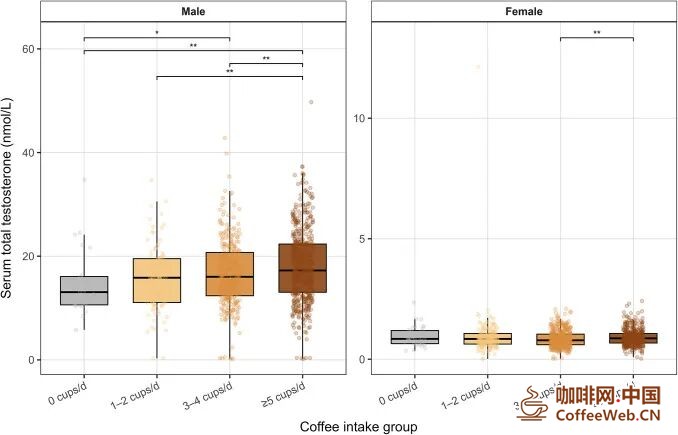
▲在男性中,血清总睾酮水平随着咖啡摄入量的增加而升高。与不饮用咖啡者相比,中等摄入量(p <0.05)和高摄入量(p <0.01)的男性睾酮水平显著更高。图:参考资料[1]
女性的变化没有那么明显。
在女性参与者中,咖啡摄入较多主要与SHBG升高,以及游离性激素水平降低有关。
在扣除了BMI、运动、吸烟和饮食等生活方式的影响后,这种激素印记依然稳固存在。这意味着,咖啡摄入量较高的人,体内呈现出一种非常特殊的内分泌特征。
咖啡为什么健康?
激素提供新线索
这里需要认识一下这个反复出现的指标:性激素结核球蛋白。
简单来说,它就像血液里的“激素搬运工”,主要由肝脏制造,专门抓取并运输睾酮、雌激素等性激素,调控它们在体内的活性。
但这个“搬运工”的作用,远不止运输那么简单。研究发现,它还是身体代谢健康的“预警器”
以往研究发现,男性总睾酮和SHBG偏低,常常与肥胖、胰岛素抵抗和代谢综合征同时出现;在男性和女性中,较低的SHBG也都与较高的2型糖尿病风险有关[3,4]。
研究人员推测,咖啡中富含的绿原酸等抗氧化成分,可能悄悄刺激了肝脏生产更多这样的“搬运工”,让体内的激素分布更合理,从而间接改善了体脂和血糖健康。
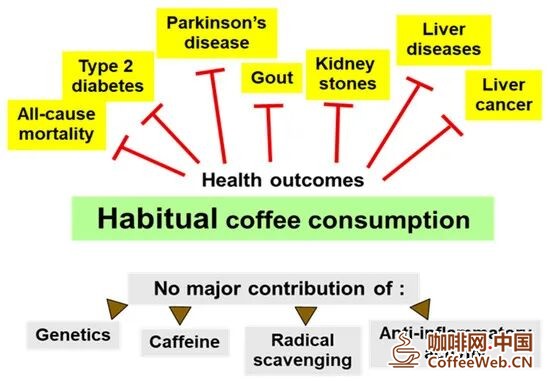
▲前瞻性流行病学研究一致发现,习惯性饮用咖啡与多种临床结局和全因死亡风险降低相关。包括降低2型糖尿病、帕金森病、痛风、肝纤维化、非酒精性脂肪肝、肝硬化、肝癌和慢性肝病的发生率。图源:参考资料[5]
不过需要提醒的是,这是一项观察性研究,它发现的是一种“健康巧合”(相关性),并不等于喝咖啡就一定能直接治病或强行改变激素(因果关系)。
所以,不用把它当成“灵丹妙药”狂喝。对于大多数人来说,只要喝了不心慌、不影响睡眠,每天适量喝上1~2 杯无糖少奶的黑咖啡,在提神的同时顺便享受这份代谢红利,就是最舒服、最健康的选择!
编辑 | 山楂
设计 | 柚子
❝
以上信息仅为科普,不应视为诊疗建议
不能取代医生对特定患者的个体化判断
❞
原标题:《每天喝咖啡 VS 从不喝,身体差别有多大?》
As is well known, coffee is a 'health star'.
In addition to refreshing, a large number of epidemiological studies have shown that coffee drinking is also associated with reducing the risk of type 2 diabetes, Parkinson's disease, liver disease and death.
However, coffee contains hundreds of bioactive ingredients, and the scientific community is still piecing together a vast puzzle of how these ingredients affect the human body and bring these benefits.
▲ Reference materials for coffee bean ingredients: Tomohiro Ishiwaki's "You Don't Understand Coffee"
A recently published large-scale population study in Finland provides a new clue to our understanding of this issue: behind the various health benefits of coffee, there may be a bridge constructed by the "sex hormone and endocrine" pathways.
People who love to drink coffee
Less fat, relatively more muscle
Researchers from Oulu University in Finland analyzed data from 2264 participants (average age 46, 47% male) from the "Northern Finland 1966 Birth Cohort".
The researchers not only asked them how much coffee they drank, but also conducted a fairly comprehensive physical examination. This includes body composition, blood pressure, blood lipids, fasting blood glucose and insulin, oral glucose tolerance test, as well as hormone indicators such as total testosterone, free testosterone, and sex hormone binding globulin.
As a result, it was found that there were no significant differences in BMI, waist circumference, and waist to hip ratio among different coffee intake groups based on traditional indicators. But higher precision analysis shows that people who drink more coffee:
Lower body fat percentage
Less total fat mass
Smaller visceral fat area
Higher skeletal muscle mass
That is to say, even if two people have exactly the same weight and BMI, the one who drinks coffee regularly is likely to have "less fat and more muscle" in their body.
▲ Card made food:
The study also found that higher coffee intake was associated with lower levels of circulating branched chain amino acids in both male and female participants.
In the past, many studies have found that the BCAA in blood is high for a long time, which is related to the increased risk of obesity, insulin resistance, type 2 diabetes and fatty liver [2]. This indicates that coffee may protect blood sugar stability by affecting amino acid metabolism.
Drinking coffee, even hormones have changed
A more remarkable discovery is the regulation of the sex hormone network by coffee.
This difference is more pronounced in males.
Research has found that among male participants, the higher the coffee intake:
The more favorable the insulin response and insulin sensitivity are;
The higher the levels of total testosterone and bioavailable testosterone,
The concentration of sex hormone binding globulin (SHBG) is relatively high.
Free testosterone and free androgen index slightly decreased
In males, serum total testosterone levels increase with increasing coffee intake. Compared with non coffee drinkers, men with moderate intake (p<0.05) and high intake (p<0.01) had significantly higher levels of testosterone. Image: Reference [1]
The changes in women are not as obvious.
Among female participants, higher coffee intake is mainly associated with increased SHBG and decreased levels of free sex hormones.
After deducting the effects of lifestyle factors such as BMI, exercise, smoking, and diet, this hormone imprint still persists. This means that people with higher coffee intake exhibit a very unique endocrine characteristic in their bodies.
Why is coffee healthy?
Hormones provide new clues
Here we need to recognize this recurring indicator: the sex hormone tuberculosis globulin.
Simply put, it is like a "hormone transporter" in the blood, mainly produced by the liver, specialized in capturing and transporting sex hormones such as testosterone and estrogen, regulating their activity in the body.
But the role of this' porter 'is far more than just transportation. Research has found that it is also a "warning device" for the body's metabolic health
Previous studies have found that low levels of total testosterone and SHBG in males are often associated with obesity, insulin resistance, and metabolic syndrome; In both men and women, lower SHBG is also associated with a higher risk of type 2 diabetes [3,4].
Researchers speculate that the antioxidant components such as chlorogenic acid found in coffee may quietly stimulate the liver to produce more such "transporters", leading to a more rational distribution of hormones in the body and indirectly improving body fat and blood sugar health.
Prospective epidemiological studies have consistently found that habitual coffee consumption is associated with multiple clinical outcomes and a reduced risk of all-cause mortality. This includes reducing the incidence of type 2 diabetes, Parkinson's disease, gout, liver fibrosis, non-alcoholic fatty liver, cirrhosis, liver cancer and chronic liver disease. Source: Reference [5]
However, it should be noted that this is an observational study that found a "health coincidence" (correlation), which does not necessarily mean that drinking coffee can directly cure the disease or forcibly change hormones (causal relationship).
So, don't drink it recklessly as a "miracle drug". For most people, as long as they don't feel flustered or affect their sleep, drinking 1-2 cups of sugar free and low milk black coffee in moderation every day, while also enjoying this metabolic dividend, is the most comfortable and healthy choice!
Editor | Hawthorn
Design | Yuzu
❝
The above information is only for popular science and should not be considered as medical advice
Cannot replace the individualized judgment of doctors on specific patients
❞
Original title: "What is the physical difference between drinking coffee every day and never drinking