彩云之南万千气象|“中国咖啡第一村”如何靠一粒豆撬动亿元产值South of Colorful Clouds, Countless Meteorology - How "China's First Coffee Village" can leverage billions of yuan in output value with just one bean
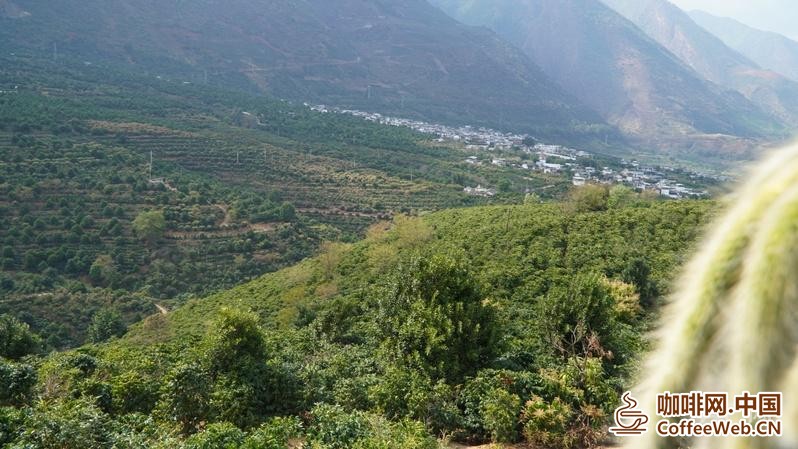
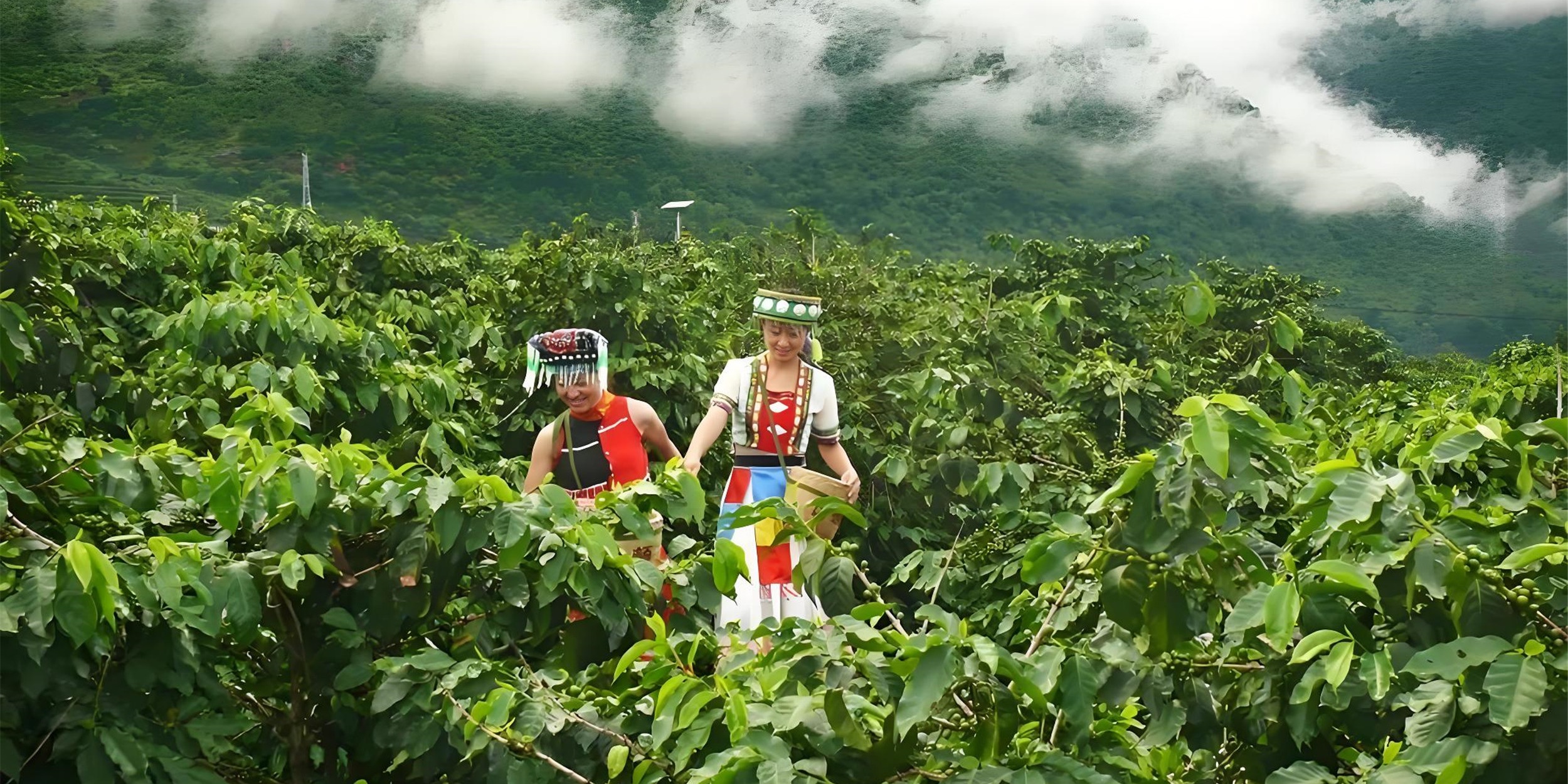
On March 29th, China National Radio reported that in the middle of spring, at the eastern foot of Gaoligong Mountain, the 13600 mu coffee forest in Xinzhai Village, Lujiang Town, Longyang District, Baoshan City, is in full bloom. The branches are adorned with white and elegant coffee flowers, and the fragrant aroma spreads with the wind.
In this Xinzhai Village, known as the "Number One Coffee Village in China", beneath every flower lies a cocoon breaking story of a bean from "forgotten" to "sought after". Nowadays, it is spreading a picture of industrial prosperity, rural beauty, and village prosperity with the fragrance of full grain curry.
The coffee trees covering the mountains and fields in Xinzhai Village (photo by Wei Wenqing, a reporter from China National Radio)
Surviving in dire straits: from "cutting down trees as firewood" to "turning beans into gold"
Xinzhai Village has a coffee planting history of over 70 years, but it has long remained in the primary stage of "planting coffee and selling beans". Due to aging varieties, extensive management, and fluctuations in international market prices, coffee farmers' profits once hit rock bottom.
At that time, we had to pay one yuan for picking one pound of fresh fruit. The people were disheartened and even wanted to chop down the trees to use as firewood, "recalled Shao Weibin, the secretary of the Xinzhai Village Party Branch. The hardest new sprouts grow in desperate situations. In order to preserve this pot, the village committee led party members to carry out reforms. Shao Weibin remembers that at that time, standardized planting was implemented, requiring a reduction in the number of plants per acre from over 400 to 300, and "cutting down one row in three rows and removing one tree in three rows".
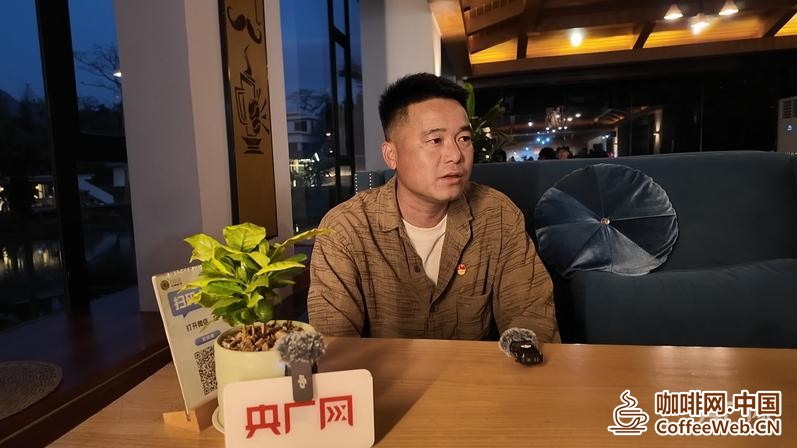
Shao Weibin accepted an interview with reporters (photo by Wei Wenqing, a reporter from China National Radio)
This "self harming" improvement initially made coffee farmers cry with pain, but the result was shocking: the density decreased, the lighting and ventilation increased, the yield did not decrease, but the quality turned around.
In 2017, while ordinary green beans were still hovering around a few yuan per kilogram, the first batch of high-quality beans harvested with high standards in Xinzhai Village sold for 60 yuan per kilogram. The ten fold price difference, like a fire, instantly ignited the confidence of the whole village to transform into high-quality products.
Nowadays, the village has introduced high-quality seedlings and steadily promoted premium varieties such as Tiepika, Bobang, and Guixia. Only by producing high-quality products can we control pricing power, "said Shao Weibin. The premium coffee rate in Xinzhai Village has increased from 10% to 65%. By 2025, the total coffee bean production in the village will reach over 4200 tons, and the agricultural output value will exceed 160 million yuan. The small coffee beans will truly become the "golden beans" in the hands of the villagers.
Cultural and tourism empowerment: from "raw material production areas" to "3A scenic spots"
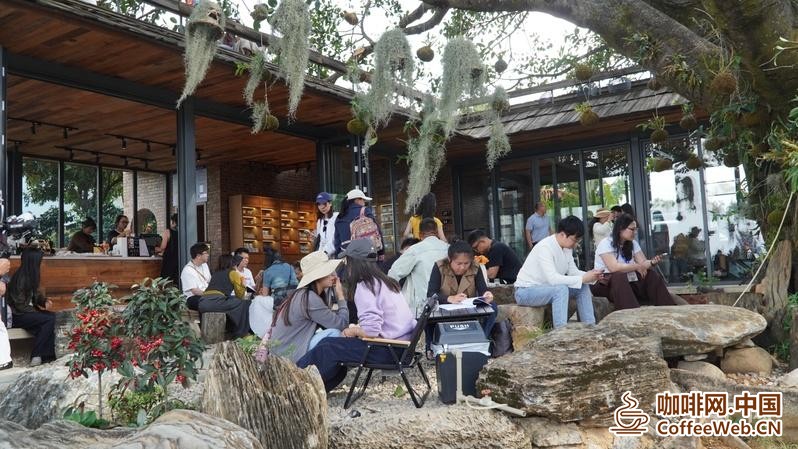
Entering Xinzhai Village now, it's hard to see it as just an ordinary countryside. At the Gongjiang Coffee Plantation in the village, a century old banyan tree hangs a huge crown. Tourists are sitting under the shade of trees tasting coffee - this is a new popular check-in spot for internet celebrities. The estate barista Zheng Hai introduced that the entire process from seeds to cups has been achieved here. Tourists can enter the coffee forest to see red fruits hanging on the branches, watch the roasting machine and listen to the crackling of beans, and then slowly enjoy a pot of "the taste of the distant mountain forest". Not long ago, coffee beans grown with Yunnan olives sold for a good price of 1000 yuan per kilogram, and this coffee has become a star product in the store.
Under the ancient banyan tree, tourists enjoy coffee time (Photo by Wei Wenqing, a reporter from China National Radio)
Following the concept of "reshaping the coffee industry throughout the entire chain", Xinzhai Village has introduced 10 coffee enterprises and built 6 distinctive boutique coffee estates, forming a contiguous industrial cluster. Transforming from a single place of origin to a national AAA level tourist attraction, Xinzhai Village has become increasingly diverse in terms of business formats: the "coffee tree adoption" model has enabled over 3300 coffee trees to be adopted across mountains and seas; The coffee marathon and brewing competition have attracted global attention; Coffee soap, coffee dyed cloth and other cultural and creative products are highly favored.
By 2025, Xinzhai Village will receive over 300000 visitors. The booming cultural and tourism consumption has directly driven the sales of catering, accommodation, and agricultural products. Villager Wang Youchun smiled and said, "Now our villagers not only know how to grow coffee, but also tell coffee stories. In the future, we also need to learn a few English sentences to facilitate doing business with foreigners
Yunnan coffee represents China. This encouragement has given Xinzhai Village more confidence in its development. The village actively explores the model of "village committee+enterprise+cooperative+base+farmers", and integrates all 502 farmers into the industrial chain. The village has also registered a trademark and opened a "silent courtyard" to provide employment opportunities for people with disabilities.
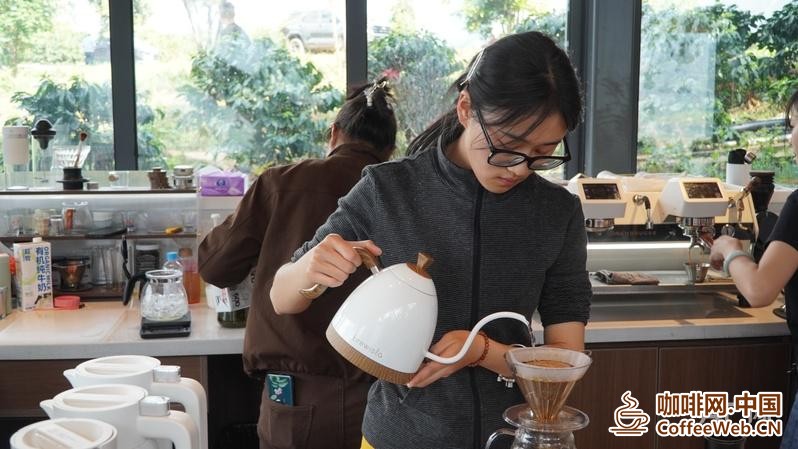
The baristas employed in the village are brewing coffee (Photo by Wei Wenqing, a reporter from China National Radio)
The upgrading of industries has led young people like Shao Weibin, who had previously traveled far away, to return one after another. Nowadays, the per capita disposable income of villagers has exceeded 40000 yuan, which is 15 times that of more than 10 years ago.
From an unknown source of raw materials to a rising force in the fine coffee industry, Xinzhai Village is adding the warmest and most down-to-earth Chinese red to rural revitalization with a cup of steaming coffee. This small seed is carrying hope deep in the mountains, drifting towards a wider world.