云南咖啡:打一场由“苦”变“甜”的“翻身仗”|总书记关心的“土特产”Yunnan Coffee: A 'turning point' from 'bitter' to 'sweet' - General Secretary's concern about 'local specialties'
“产业振兴是乡村振兴的重中之重,要落实产业帮扶政策,做好‘土特产’文章”。习近平总书记曾形象而深刻地指出,各地推动产业振兴,要把“土特产”这3个字琢磨透。在赴各地考察时,他多次走进田间地头、关心当地特色产业,为农民致富找门路,为乡村振兴拓新路。云南咖啡、柞水木耳、大同黄花、新疆棉花、茂名荔枝……来自乡野田间的“土特产”,不仅蕴含着浓浓乡情,也寄托着习近平总书记对于乡村振兴的殷切期望。为生动展现特色产业赋能乡村振兴的生动实践,农视网上线“总书记关心的‘土特产’”专栏。专栏将聚焦各地“土特产”的成长故事,记录特色产业向优向好的发展轨迹,展现乡土资源转化为富民优势的鲜活样本。本期为大家分享的是,2025年3月,习近平总书记在云南丽江考察时点赞过的云南咖啡。
咖啡作为提神醒脑的饮品,早已融入大众的日常生活。2025年中国咖啡豆总消耗量近40万吨,是全球十大咖啡消费国,展现出强劲的市场活力与消费潜力。
2025年3月,习近平总书记在云南丽江考察时强调,云南咖啡还是代表着中国的,现在国外也是受欢迎的。这句高度评价,不仅是对云南咖啡品质的权威认证,更是对这片土地上从业者们辛勤耕耘的赞美。
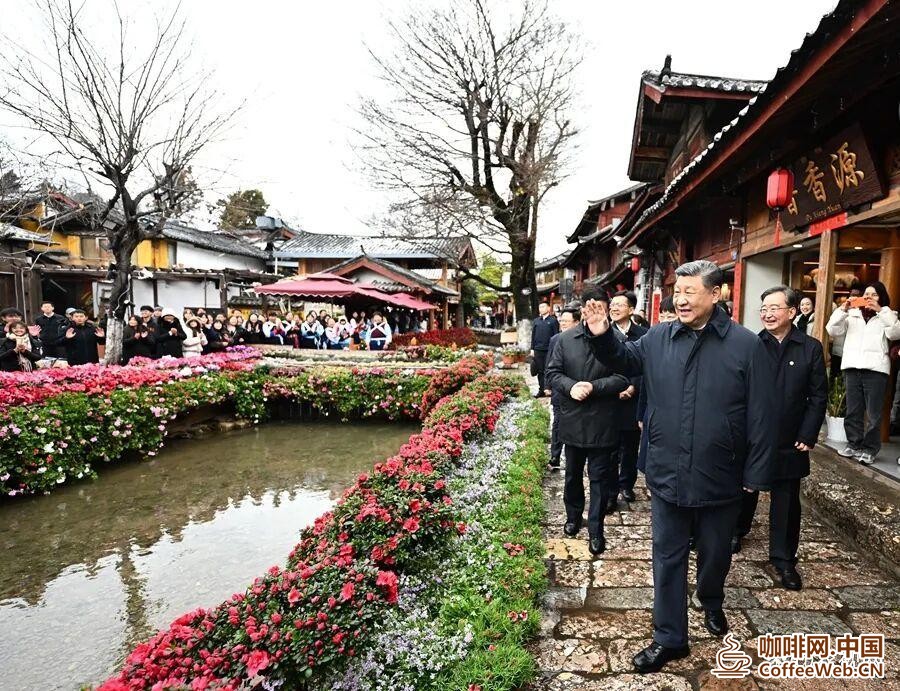
2025年3月19日下午,习近平在丽江古城考察时,与居民、游客互动交流。图源:新华社
究竟是什么样的水土孕育了云南咖啡独特的风味?又是如何从“原料供应”迈向“精品品牌”的进阶之路的?今天,让我们将目光投向七彩云南,一同探寻云南咖啡的独特魅力与产业传奇。

从“洋种子”变“土特产”
咖啡虽与茶、可可并称世界三大饮料,但对云南而言,一开始咖啡只是“洋种子”。1892年,一位法国人将咖啡种子带到云南大理宾川县并种下。从此,咖啡便在这片红土地上生根发芽,历经一个多世纪的发展,成为云南常见的“土特产”。
云南之所以能成为咖啡生长的乐土,是因为其得天独厚的自然条件。它与哥伦比亚、埃塞俄比亚同处全球咖啡种植黄金区域,是世界公认的中国最适合种植咖啡的地区。这里低纬度、高海拔,昼夜温差显著,加之土壤肥沃且呈弱酸性,为咖啡生长提供了绝佳环境。
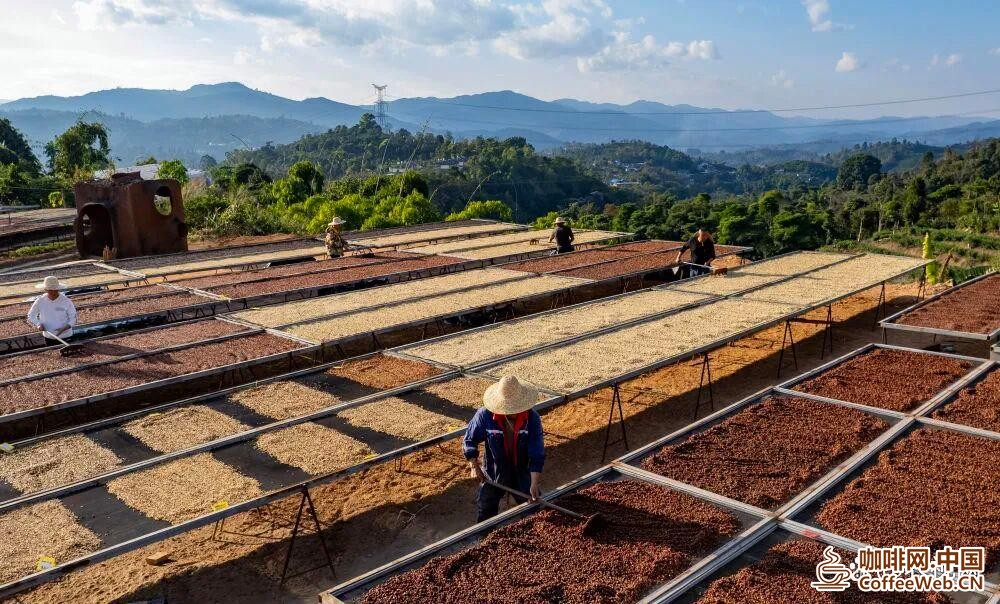
2025年1月7日,工人在普洱市思茅区一家咖啡庄园翻晒咖啡(无人机照片)。图源:新华社
一百多年来,经过不断地驯化、培育和推广种植,云南已成为中国重要的咖啡主产区,种植区域从大理拓展到普洱、保山、德宏、临沧、西双版纳、怒江等地。据统计,2025年,云南省咖啡种植面积达146.3万亩,生豆产量13.89万吨,面积和产量均居全国首位,可以说98%以上的中国咖啡,来自云南。这里生长的咖啡“浓而不苦、香而不烈、略带果酸”,因此受到国内外消费者的欢迎,多个连锁咖啡品牌也相继推出了以云南咖啡豆为原材料的产品,让云南咖啡正式走入大众视野,飘香世界。
从供应原材料到打造精品品牌
云南咖啡产业发展并非一帆风顺。过去,云南咖啡主要以大宗商品生豆出口国外,但由于种植水平和加工能力不高,导致云南咖啡的品质和产量在国际市场上不占优势,自然失去了定价权,一度面临着“卖一斤咖啡豆的钱,买不起一杯咖啡”的困境,许多农户因此选择弃管、弃种,甚至是改种其他经济作物。
面对困境,云南发起一场面向精品化咖啡的“突围”。2022年,云南省农业农村厅等多部门联合印发了《关于推动咖啡精品率和精深加工率提升若干政策措施》,提出了六项支持政策,从品种更新、鲜果加工、精深加工、品牌打造等方面入手,助力云南咖啡走向精品化,提高影响力,扩大市场占有量。如今,云南咖啡在良种良法的普及、加工升级和品牌打造上有了突破性进展。
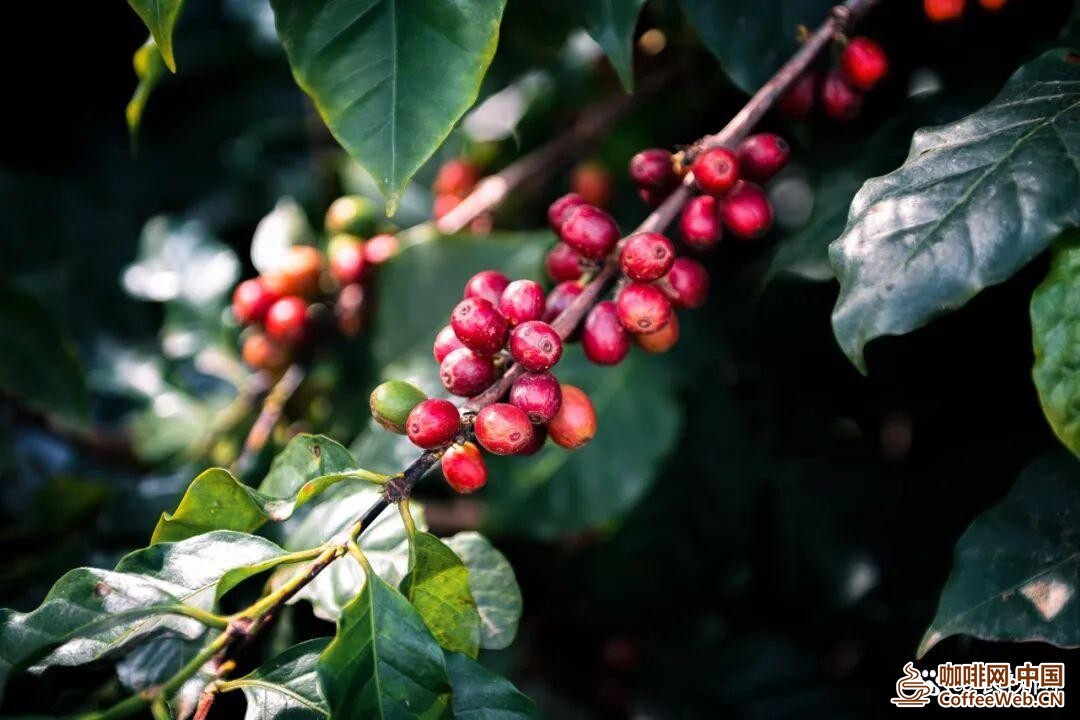
图源:图虫创意
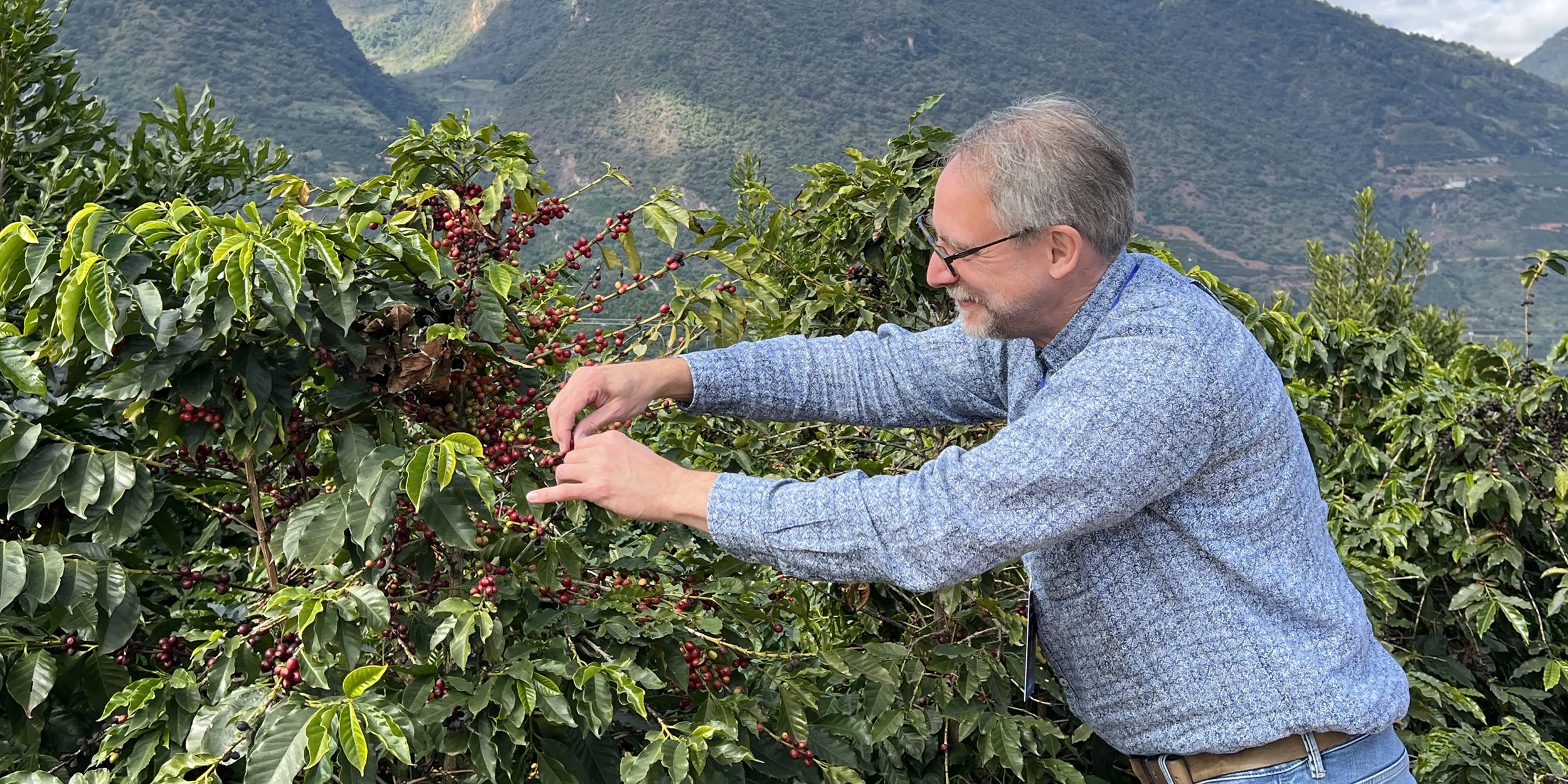
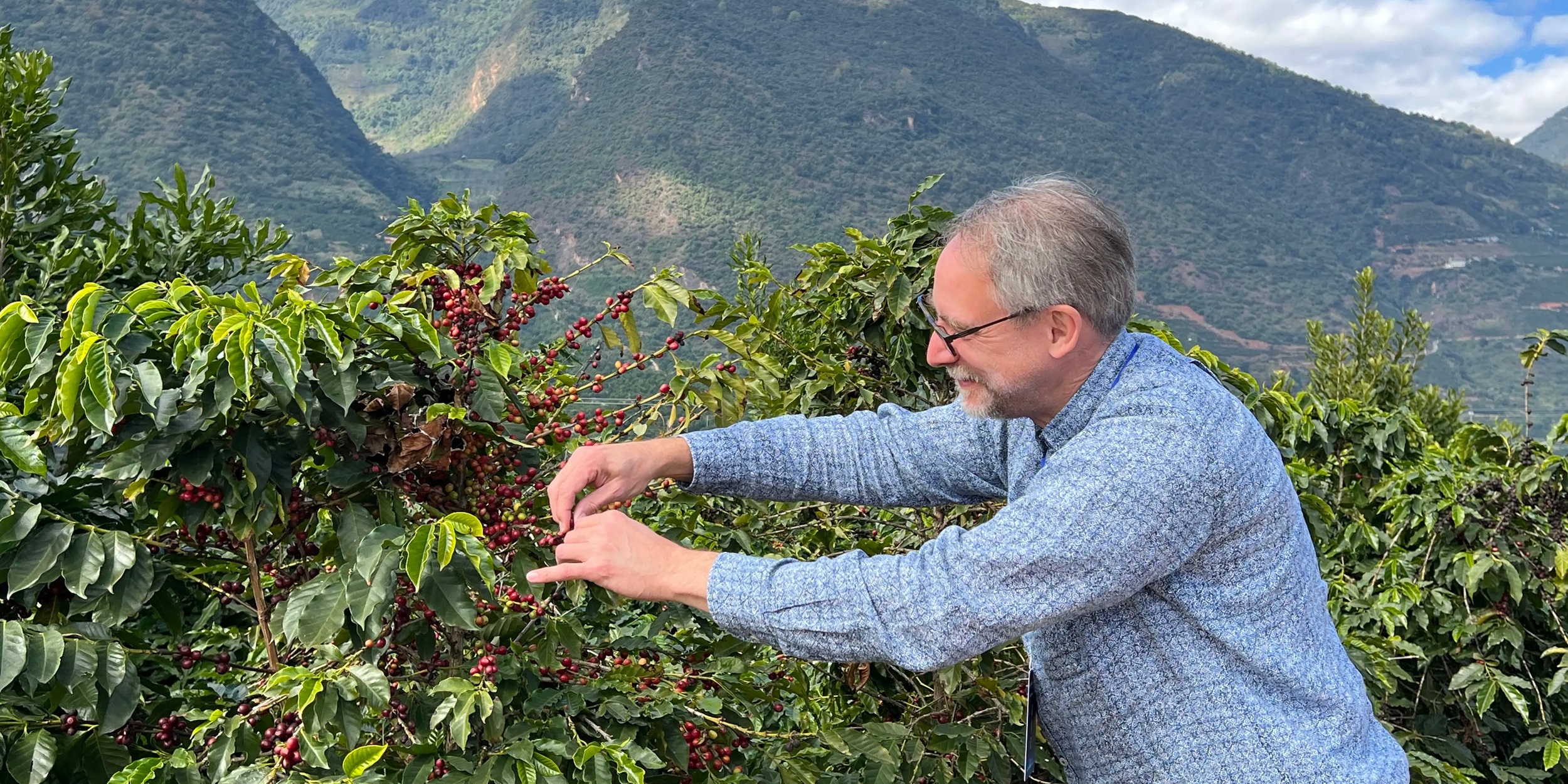
在良种良法上,云南已建成全国种质资源最多、规模最大、品种最全的咖啡种质资源圃,为品种改良奠定坚实基础。通过持续优化育种技术,攻克产业关键技术难题,全省优质品种种植面积达到16.2万亩。云南省农业农村厅相继编印了《云南省精品咖啡种植区划》《云南省咖啡优质品种推荐地图》,按照“适地适品适种”的基本原则,推荐农户种植瑰夏、铁皮卡、卡杜艾、德热等优良品种,从源头提升品质。
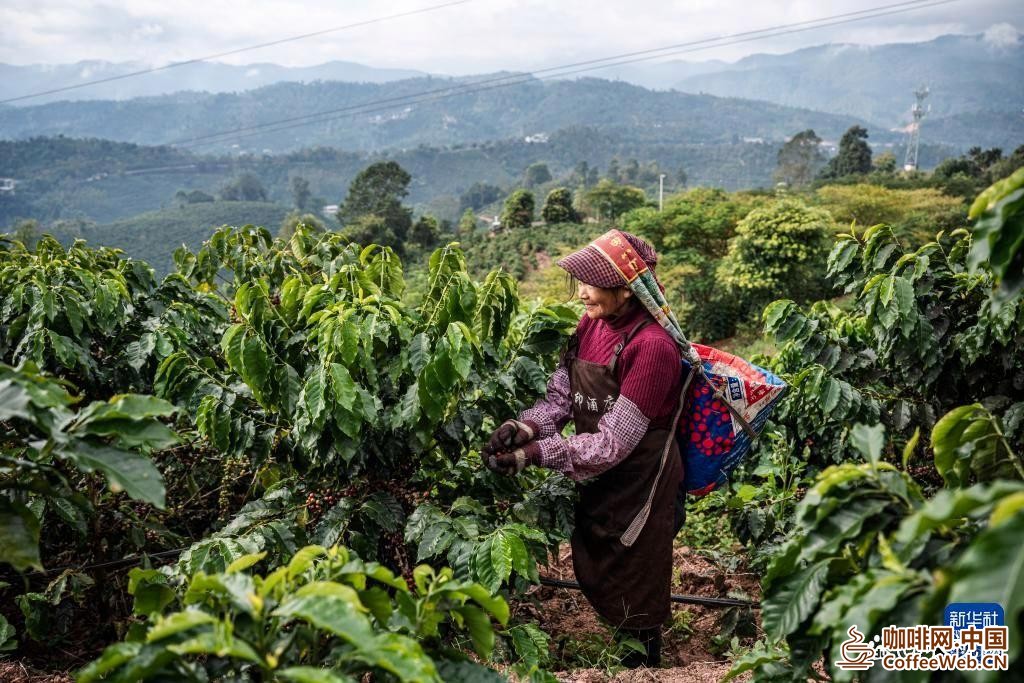
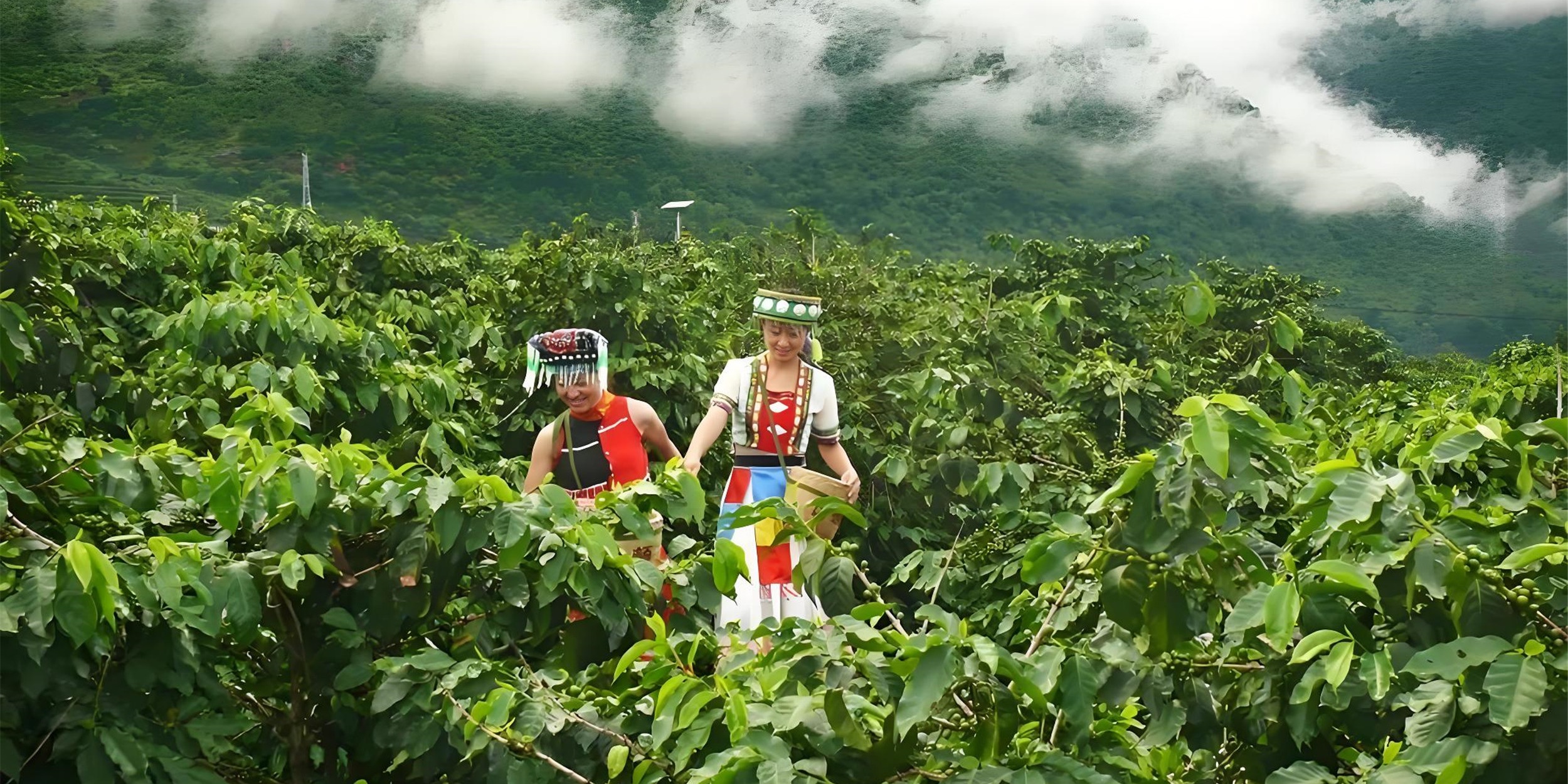
2025年12月6日,农民在云南省普洱市一处咖啡田采摘咖啡鲜果。图源:新华社
在加工升级上,云南咖啡产业实现从初加工到精深加工的全面进阶。初加工环节中,绿色环保鲜果集中处理工艺设备取得突破,生豆品质稳定性显著提升。精深加工领域,当地开发出烘焙豆、浓缩液、速溶粉、冻干粉等多种产品,甚至连咖啡果皮也被加工成果皮茶。目前,云南省精深加工产能近10万吨,占全国三分之一。
在品牌打造上,云南咖啡正加速由“卖原料”向“卖品质、卖品牌”转型。打造区域公共品牌,既与国内外知名饮料企业合作,又培育了四只猫、辛鹿等本土品牌。深化“咖啡+文旅”“咖啡+非遗”“咖啡+乡村振兴”融合发展,打造一批国家级咖啡主题旅游景区与乡村旅游重点村,让咖啡成为云南文旅的新名片。云南省已建成近60家精品咖啡庄园,这里不仅是咖啡生产基地,更是融合咖啡体验、游学、文创等热门的旅游目的地。
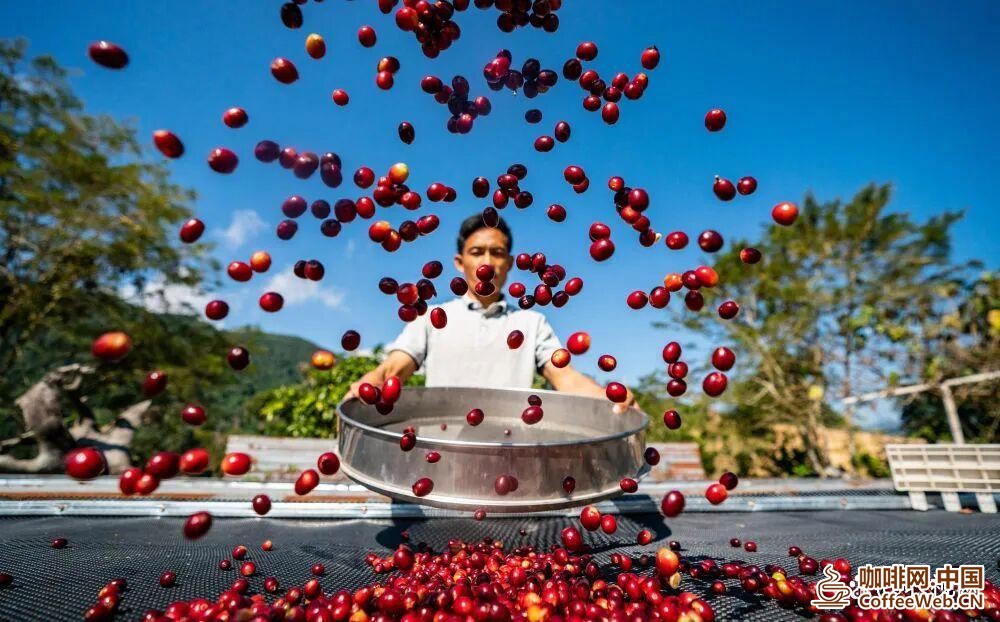
2022年11月16日,云南省普洱市一名农民在晾晒咖啡果。图源:新华社
由苦变“甜”的“金豆子”
2026年云南省政府工作报告明确指出,要“巩固云南咖啡代表中国的产业地位”。这不仅为产业未来发展指明了方向,更蕴含着通过做强咖啡产业为百姓增收的坚定初心。
随着云南咖啡的产量和品质不断提高,咖啡豆价格一路飞升,百姓的腰包也越来越鼓。2018年,云南咖啡豆价格仅为14.78元/公斤;到了2025年,这一数字首次突破60元/公斤。2026年全国两会期间,云南省委书记王宁在云南省代表团举行的开放日活动上公布了一串数据:“5年前,全省种咖啡的农民户均收入仅1万多元;如今翻了好几倍,户均年收入超3万元,高的甚至达几十万元。”目前,云南咖啡产业已惠及20余万户农户、近100万从业人员。曾经“守着咖啡过苦日子”的局面彻底改变,交出了一份满意的民生答卷。
亮眼成绩的背后,一方面是持续创新联农带农机制,各地通过帮助咖农提高种植技术与管理水平,引导咖啡产业向精深加工延伸,将更多附加值留在当地;另一方面,“咖啡+乡村旅游”“咖啡+研学”等多元业态纷纷在乡村里驻扎,带动了当地餐饮、住宿、交通等相关行业的发展,许多村民通过培训,从传统咖农转型为民宿管家、咖啡师、体验导师等新职业,实现在家门口就业,为乡村振兴注入了持久动能。
在被誉为“中国咖啡第一村”的云南保山新寨村,这种变化尤为生动。地处怒江江畔、高黎贡山脚下的新寨,咖啡已经成为一种情绪价值、文化符号与生活方式。游客在此可见证从咖啡生豆变成一杯咖啡的全过程,亲手体验烘焙咖啡豆、品尝手冲咖啡、认养咖啡树等活动。

图源:文旅隆阳
“云南的咖啡,不仅喝着香,还让老百姓的日子过得更甜蜜了、更幸福了。”咖农们朴实的言论,背后是对幸福生活的赞美。一粒小小的咖啡豆,早已不只是普通的农产品,更是撬动乡村发展的“金豆子”。云南咖啡在代表中国走向世界的同时,也造福了一方百姓,成为助力共同富裕、书写乡村振兴新篇章的生动实践。
编辑 | 薛加怡
责编 | 赵宁宁
主编 | 张 越
来源 | 农视网综合新华网、云南日报、云南网、21世纪经济报道、中国网等
部分素材来源网络,如有侵权请联系删除
Industrial revitalization is the top priority of rural revitalization, and it is necessary to implement industrial assistance policies and do a good job in promoting local specialties. General Secretary Xi Jinping once vividly and profoundly pointed out that in promoting industrial revitalization in various regions, the three words "local specialties" should be thoroughly understood. During his visits to various places, he repeatedly ventured into the fields and showed concern for local characteristic industries, seeking ways for farmers to become prosperous and exploring new paths for rural revitalization. Yunnan coffee, oak water fungus, Datong yellow flower, Xinjiang cotton, Maoming lychee... These "local specialties" from rural fields not only contain strong local sentiments, but also embody General Secretary Xi Jinping's earnest expectations for rural revitalization. To vividly demonstrate the practice of empowering rural revitalization with characteristic industries, the online column "General Secretary's Concerns about 'Local Specialties'" on Nongshi is published. The column will focus on the growth stories of "local specialties" in various regions, record the development trajectory of characteristic industries towards excellence, and showcase vivid examples of the transformation of local resources into advantages for enriching the people.
Coffee, as a refreshing drink, has long been integrated into people's daily lives. By 2025, the total consumption of coffee beans in China will be nearly 400000 tons, making it one of the top ten coffee consuming countries in the world, demonstrating strong market vitality and consumption potential.
In March 2025, General Secretary Xi Jinping emphasized during his inspection in Lijiang, Yunnan that Yunnan coffee still represents China and is now popular abroad. This high praise is not only an authoritative certification of the quality of Yunnan coffee, but also a praise for the hard work of practitioners on this land.
Image source: Xinhua News Agency
What kind of soil and water has nurtured the unique flavor of Yunnan coffee? How did it progress from "raw material supply" to "boutique brand"? Today, let's turn our attention to Colorful Yunnan and explore the unique charm and industry legend of Yunnan coffee together.
From 'foreign seeds' to' local specialties'
Although coffee is considered one of the world's three major beverages along with tea and cocoa, for Yunnan, coffee was initially just a "foreign seed". In 1892, a Frenchman brought coffee seeds to Binchuan County, Dali, Yunnan and planted them. From then on, coffee took root and sprouted on this red soil, and after more than a century of development, it became a common "local specialty" in Yunnan.
Yunnan has become a paradise for coffee growth due to its unique natural conditions. It is located in the golden region of global coffee cultivation, along with Colombia and Ethiopia, and is widely recognized as the most suitable area for coffee cultivation in China. Here, with low latitude and high altitude, there is a significant temperature difference between day and night. In addition, the fertile and weakly acidic soil provides an excellent environment for coffee growth.
On January 7, 2025, workers were flipping through coffee at a coffee plantation in Simao District, Pu'er City (drone photo). Image source: Xinhua News Agency
For over a hundred years, through continuous domestication, cultivation, and promotion of planting, Yunnan has become an important coffee producing area in China. The planting areas have expanded from Dali to Pu'er, Baoshan, Dehong, Lincang, Xishuangbanna, Nujiang, and other places. According to statistics, by 2025, the coffee planting area in Yunnan Province will reach 1.463 million mu, with a green bean production of 138900 tons, ranking first in both area and output in the country. It can be said that more than 98% of Chinese coffee comes from Yunnan. The coffee grown here is "strong but not bitter, fragrant but not strong, with a slight acidity", which is why it is popular among domestic and foreign consumers. Multiple chain coffee brands have also launched products made from Yunnan coffee beans, officially bringing Yunnan coffee into the public eye and spreading its fragrance around the world.
From supplying raw materials to building premium brands
The development of Yunnan's coffee industry has not been smooth sailing. In the past, Yunnan coffee was mainly exported as bulk commodity beans to foreign countries. However, due to low planting level and processing capacity, the quality and yield of Yunnan coffee did not have an advantage in the international market, naturally losing its pricing power. At one point, it faced the dilemma of "selling one pound of coffee beans for money, unable to afford a cup of coffee", and many farmers chose to abandon management, planting, or even switch to other economic crops.
Faced with difficulties, Yunnan has launched a "breakthrough" towards boutique coffee. In 2022, the Department of Agriculture and Rural Affairs of Yunnan Province and other departments jointly issued the "Several Policy Measures to Promote the Increase of Coffee Premium Rate and Deep Processing Rate", proposing six support policies, starting from variety updates, fresh fruit processing, deep processing, brand building, etc., to help Yunnan coffee move towards premium, improve influence, and expand market share. Nowadays, Yunnan coffee has made breakthrough progress in the popularization, processing upgrading, and brand building of high-quality varieties and methods.
Image source: Tu Chong Creative
In terms of good varieties and methods, Yunnan has built the largest and most comprehensive coffee germplasm resource nursery in China, laying a solid foundation for variety improvement. By continuously optimizing breeding techniques and overcoming key technical challenges in the industry, the planting area of high-quality varieties in the province has reached 162000 mu. The Department of Agriculture and Rural Affairs of Yunnan Province has successively compiled and printed the "Yunnan Province Fine Coffee Planting Zoning" and "Yunnan Province High Quality Coffee Variety Recommendation Map". According to the basic principle of "suitable place, suitable product, suitable variety", it recommends farmers to plant excellent varieties such as Guixia, Tiepika, Kaduai, and Dere, in order to improve quality from the source.
On December 6, 2025, farmers picked fresh coffee fruits from a coffee field in Pu'er City, Yunnan Province. Image source: Xinhua News Agency
In terms of processing upgrading, Yunnan's coffee industry has achieved comprehensive advancement from initial processing to deep processing. In the initial processing stage, breakthroughs have been made in the centralized processing technology and equipment for green and environmentally friendly fresh fruits, significantly improving the stability of green bean quality. In the field of deep processing, various products such as roasted beans, concentrated liquids, instant powders, freeze-dried powders, etc. have been developed locally, and even coffee peels have been processed into fruit tea. At present, Yunnan Province has a deep processing capacity of nearly 100000 tons, accounting for one-third of the country's total.
In terms of brand building, Yunnan Coffee is accelerating its transformation from "selling raw materials" to "selling quality and brand". Building regional public brands, we have collaborated with well-known beverage companies both domestically and internationally, as well as cultivated local brands such as Four Cats and Xinlu. Deepen the integrated development of "coffee+cultural tourism", "coffee+intangible cultural heritage", and "coffee+rural revitalization", create a number of national level coffee themed tourist attractions and key rural tourism villages, and make coffee a new business card for Yunnan's cultural tourism. Yunnan Province has built nearly 60 boutique coffee plantations, which are not only coffee production bases, but also popular tourist destinations that integrate coffee experience, study tours, cultural and creative industries.
On November 16, 2022, a farmer in Pu'er City, Yunnan Province was drying coffee fruits. Image source: Xinhua News Agency
The 'golden beans' that turn from bitterness to sweetness
The 2026 Yunnan Provincial Government Work Report clearly states that it is necessary to "consolidate the industrial position of Yunnan coffee as a representative of China". This not only points out the direction for the future development of the industry, but also contains a firm original intention to increase people's income by strengthening the coffee industry.
With the continuous improvement of coffee production and quality in Yunnan, the price of coffee beans has skyrocketed, and the wallets of the people have become increasingly prosperous. In 2018, the price of coffee beans in Yunnan was only 14.78 yuan/kg; By 2025, this number will surpass 60 yuan/kg for the first time. During the National People's Congress and Chinese People's Political Consultative Conference in 2026, Wang Ning, Secretary of the Yunnan Provincial Party Committee, announced a series of data at an open day event held by the Yunnan Provincial Delegation: "Five years ago, the average household income of coffee farmers in the province was only over 10000 yuan; now it has multiplied several times, and the average annual household income exceeds 30000 yuan, with some even reaching hundreds of thousands of yuan." Currently, Yunnan's coffee industry has benefited more than 200000 households and nearly 1 million employees. The situation of "living a difficult life with coffee" has completely changed, and a satisfactory answer to people's livelihood has been handed over.
Behind the impressive achievements, on the one hand, there is continuous innovation in the mechanism of linking agriculture and supporting agriculture. Various regions have helped coffee farmers improve their planting technology and management level, guided the coffee industry to extend towards deep processing, and kept more added value in the local area; On the other hand, diversified formats such as "coffee+rural tourism" and "coffee+study tours" have been stationed in rural areas, driving the development of related industries such as catering, accommodation, and transportation. Many villagers have transformed from traditional coffee farmers to new professions such as homestay butlers, baristas, and experience guides through training, achieving employment at their doorstep and injecting lasting momentum into rural revitalization.
This change is particularly vivid in Xinzhai Village, Baoshan, Yunnan, known as the "Number One Coffee Village in China". Located by the Nu River and at the foot of Gaoligong Mountain, Xinzhai has become an emotional value, cultural symbol, and way of life for coffee. Tourists can witness the entire process of transforming green coffee beans into a cup of coffee here, experiencing firsthand activities such as roasting coffee beans, tasting hand brewed coffee, and adopting coffee trees.
Source: Culture and Tourism Longyang
Yunnan's coffee not only tastes fragrant, but also makes people's lives sweeter and happier. "The simple remarks of coffee farmers are a praise for a happy life. A small coffee bean is no longer just an ordinary agricultural product, but also a "golden bean" that drives rural development. Yunnan coffee not only represents China's entry into the world, but also benefits the local people, becoming a vivid practice to help achieve common prosperity and write a new chapter in rural revitalization.
Editor | Xue Jiayi
Editor | Zhao Ningning
Editor in Chief | Zhang Yue
Source | Agricultural Television Network Comprehensive Xinhua News Agency, Yunnan Daily, Yunnan Net, 21st Century Business Herald, China Net, etc
Some of the materials are sourced from the internet. If there is any infringement, please contact us for deletion