让每一杯咖啡的香气延续更长久旅程Let the aroma of every cup of coffee continue on a longer journey
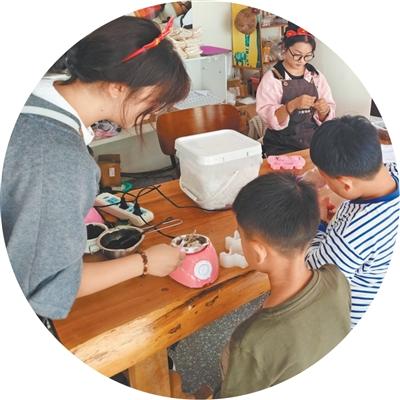
游客在大象精品咖啡庄园体验文创制作。
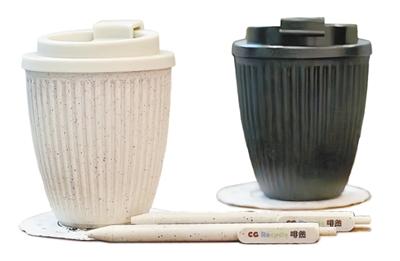
天津商业大学“啡同小科”团队利用咖啡渣制作的环保随行杯。
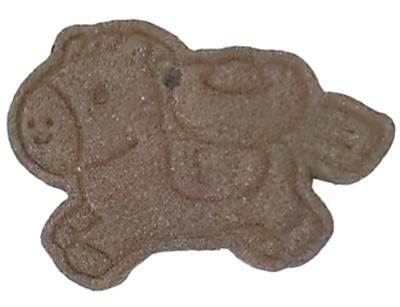
大象精品咖啡庄园的咖啡渣香牌。

天津商业大学“啡同小科”团队利用咖啡渣制作的环保杯垫。以上图片均为受访者提供

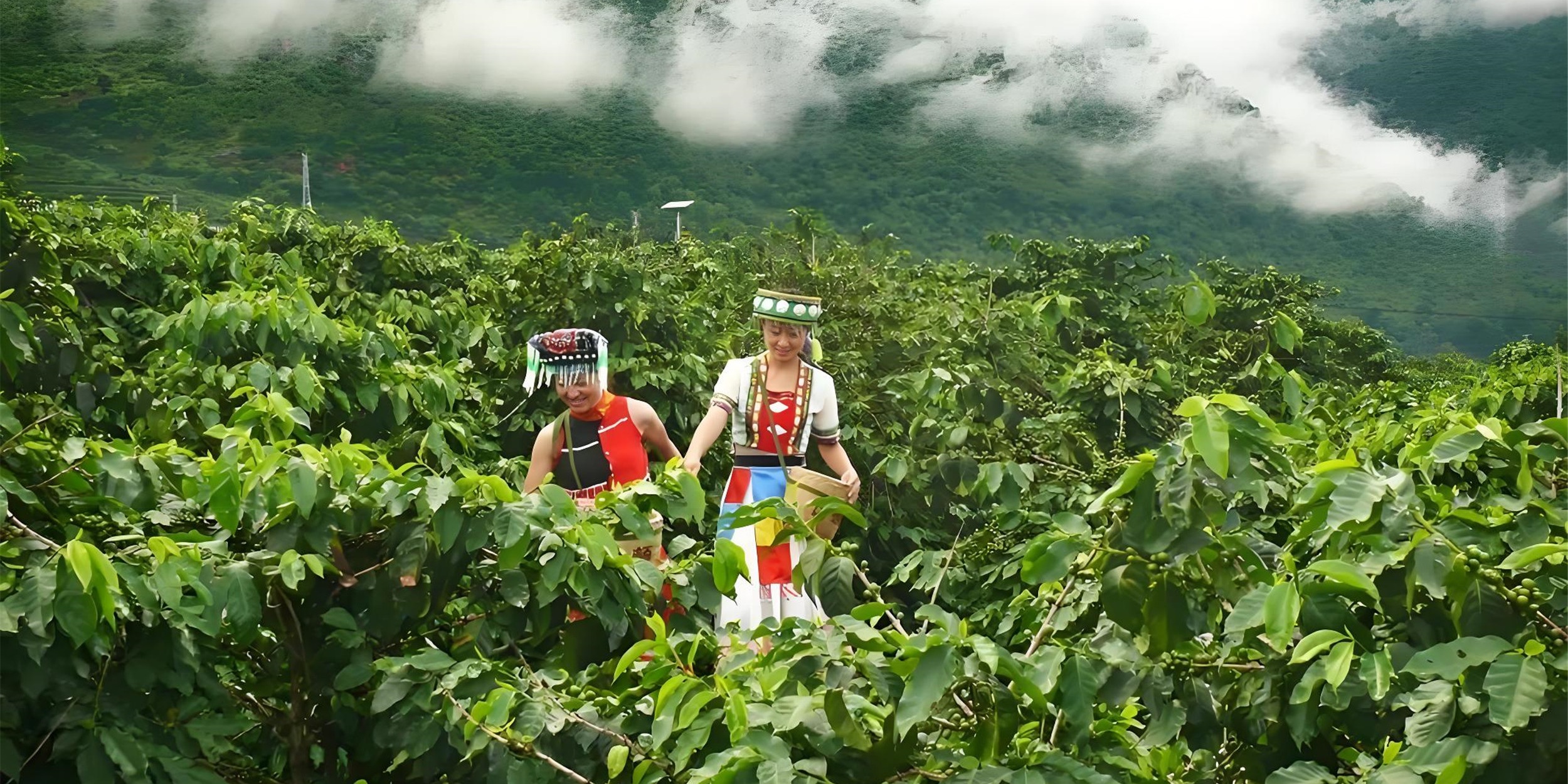
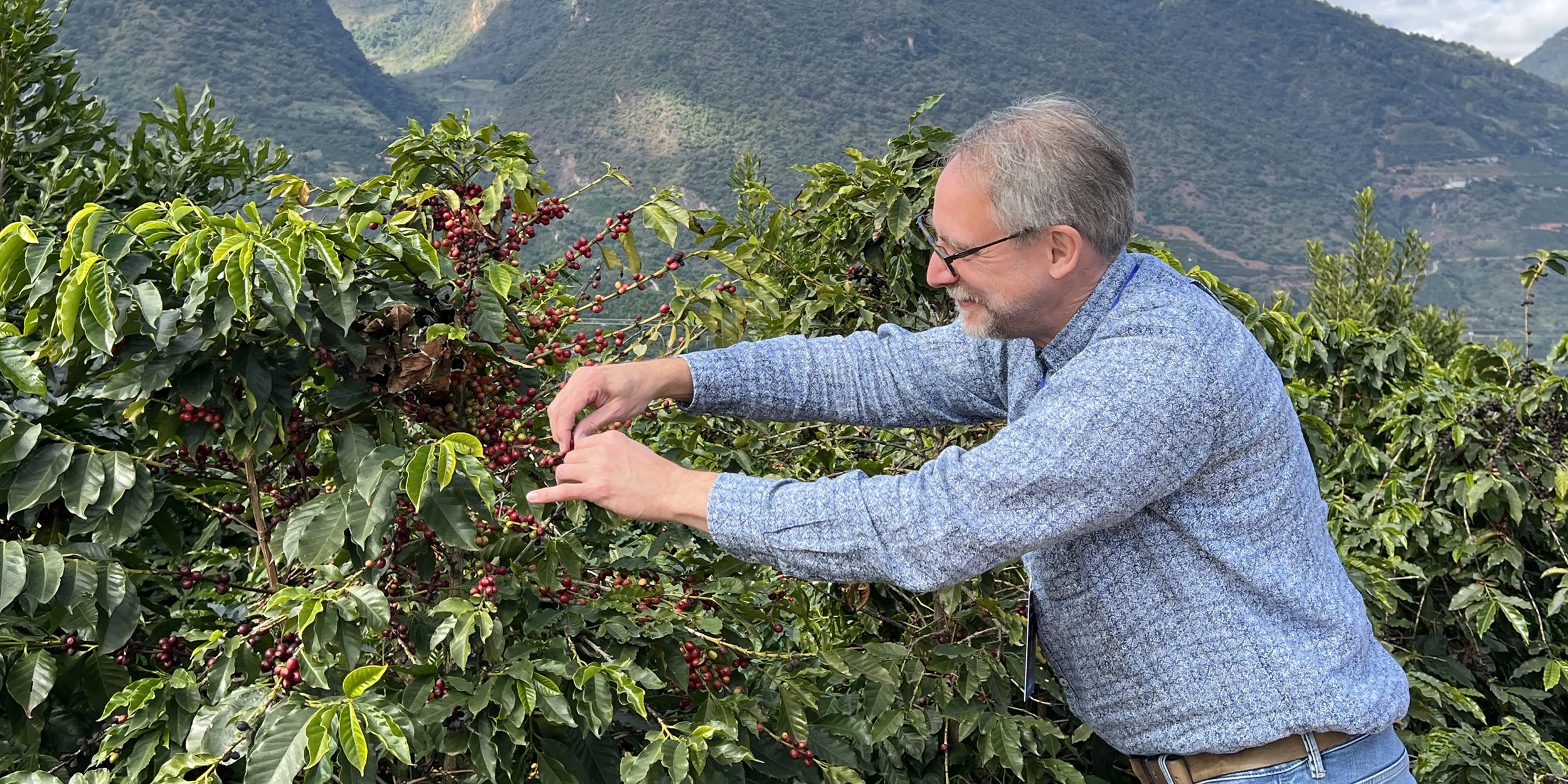
这个清明小长假,位于云南普洱市思茅区六顺镇南邦河村的大象精品咖啡庄园热度持续走高,园内的民宿早早便全线订满。除了留宿的游客,还有不少市民游客专程前来打卡游玩,只为品鉴庄园的咖啡。
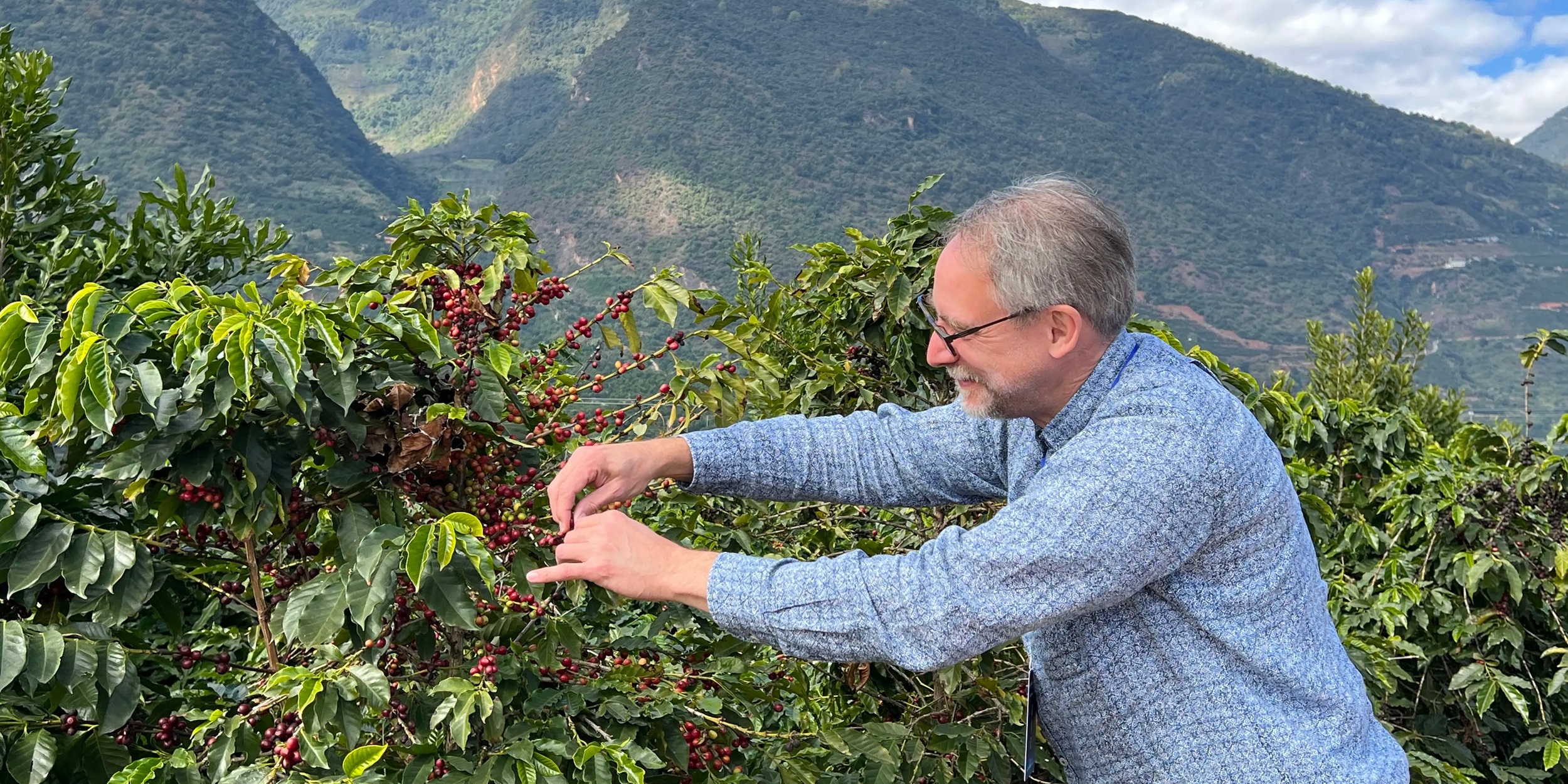
就在不久前,庄园刚刚完成本季的咖啡鲜果采摘工作,趁着新采的果子鲜度尚佳,工坊里的工人们马不停蹄地烘制咖啡豆,让客人能第一时间品尝当季新鲜咖啡豆现制的醇香咖啡。
庞大的产量背后,是海量咖啡渣的处理压力,也有着巨大的资源再利用潜力
午后的阳光透过玻璃窗,洒在品鉴台上,大象精品咖啡庄园创始人陈平仙正熟练地冲泡手冲咖啡。
水流缓缓淋过研磨细腻的咖啡粉,醇厚的香气瞬间散开,“快来尝下我们新鲜的精品豆,自家种自家烘出来的,口感特别好!”陈平仙笑着招呼前来体验的游客,手中的动作不停。
冲泡完毕,她将滤纸上的咖啡渣收集起来。这些咖啡渣,在她眼里过去是废料,现在可是“宝贝”,不能浪费。
陈平仙的庄园自有种植面积200亩,加上与周边咖农合作,种植面积超4000亩,每年销售生豆约20吨,吸引全国各地的咖啡爱好者慕名而来。
庄园的咖啡香越来越浓,咖啡渣的烦恼也随之而来。
“以前咖啡渣都是随手丢,天热的时候,放久了会臭,还占地方,周边农户也有意见。”她说,那时,每天都会产生不少咖啡渣,丢在田间地头,不仅污染环境,还浪费了资源。
这样的困扰,并非陈平仙独有,在咖啡产量巨大的云南,这是许多咖啡从业者共同面临的难题。
2025年,云南全省咖啡生豆产量13.89万吨。相关数据显示,每吨咖啡豆能产生650千克咖啡渣,也就是说,每制作1杯300毫升咖啡,大概会产生13克咖啡渣。而每15克咖啡豆在制成咖啡时,会产生约0.4千克二氧化碳当量,相当于一辆普通燃油车行驶2公里。庞大的产量背后,是海量咖啡渣的处理压力,也暗藏着巨大的资源再利用潜力。
蕴含烟火气和环保理念的咖啡渣文创,一经推出便深受欢迎
如何利用这一资源?陈平仙开始探索咖啡渣的处理方式。她反复琢磨咖啡渣的特性,心里渐渐有了主意:“咖啡渣有淡淡的天然香气、质地细腻,说不定能做成文创产品,既环保又有纪念意义!”收集咖啡渣,晒干处理,从简单的香牌入手,她开始尝试制作咖啡文创。
香牌、手串、小摆件,一系列咖啡渣文创产品陆续推出,让陈平仙没想到的是,这些蕴含烟火气和环保理念的文创,一经推出便深受游客欢迎。很多游客来到庄园,喝完咖啡,都会主动体验亲手制作咖啡渣文创的乐趣。
除了咖啡渣,咖啡果皮也被充分利用。陈平仙带着员工将果皮清洗、晒干,制作成果皮茶,售价与咖啡豆相当,清甜解腻且带咖啡香,很受游客喜爱。“果皮发酵后能调节土壤酸碱度,还能为咖啡树提供养分,一举两得。”她说。
但陈平仙并不满足于现状,就在她希望进一步突破却缺乏技术支撑时,天津商业大学“啡同小科”团队主动联系了她。
“我们在调研中发现,云南很多咖啡庄园都面临咖啡渣处理难、附加值低的问题。”“啡同小科”团队负责人李嘉榕介绍,传统填埋咖啡渣的方式会产生甲烷,焚烧则会释放二氧化碳和颗粒物,而回收利用可构建闭环生态,减少污染与资源浪费。
团队通过“酶解—微波耦合技术”,将咖啡渣中绿原酸保留率从30%提升至75%,实现高附加值利用。李嘉榕说,“我们能用咖啡渣制作咖啡杯、家具,还能提取咖啡精油,想用专业技术赋能乡村产业。”
李嘉榕介绍,采用好氧堆肥工艺,能大幅减少碳排放,若搭配生物燃料进行协同堆肥,每处理1吨咖啡渣可实现约100千克二氧化碳当量的减排,“我们也想推进咖啡渣有机肥试点,反哺咖啡园,减少化肥使用,让咖啡更原生态,同时对接碳普惠体系,让降碳效益更可量化。”
让咖啡渣实现深度资源化利用,拓宽当地群众增收渠道
“目前团队在云南设计了‘城乡双网回收、集中处理再加工、多元销售’的闭环流程,计划在普洱设立生态回收站,对接本地代工厂实现规模化加工。”李嘉榕说,他们还与咖啡店签订“三日回收协议”,创新“碳积分循环机制”,城市用户捐赠咖啡渣可兑换产品券,认养咖啡树可获咖啡豆及碳积分,实现共赢。
陈平仙对合作充满期待:“我们希望在庄园设小型加工厂,跟着高校学技术,培养本地人才。”她还计划联合开发更多咖啡主题文创,让产品承载更多咖啡文化。
除了大象精品咖啡庄园和天津高校团队的探索,普洱市西盟佤族自治县针对咖啡渣处理,也走出了一条独具特色的再生之路,利用咖啡渣制纱线、织锦缎。
依托云南丰富的咖啡资源,当地主动对接相关企业,攻克技术难关,将原本被丢弃的咖啡渣加工成细腻柔软的纱线,创新运用到佤族织锦的制作中。这样的尝试,既为千年传承的佤族织锦增添了环保新卖点,也让咖啡渣实现了深度资源化利用,进一步拓宽了当地群众的增收渠道。
陈平仙的庄园里,DIY体验区依旧热闹,游客们跟着陈平仙研磨咖啡渣、制作香牌,咖啡香与欢声笑语交织。从“废弃累赘”到“增收宝贝”,咖啡渣实现“逆袭”。未来,我们相信,咖啡渣再生产品将走进更多人的生活,让每一杯咖啡的香气,都能延续更长久的旅程。(记者 李茂颖)
来源:人民日报
Tourists experience cultural and creative production at Elephant Boutique Coffee Estate.
The team of "Yutong Xiaoke" at Tianjin University of Commerce uses coffee grounds to make environmentally friendly travel cups.
The coffee grounds fragrance brand of Elephant Boutique Coffee Estate.
The "Coffee Tong Xiaoke" team at Tianjin University of Commerce uses coffee grounds to make environmentally friendly coasters. The above pictures are provided by the interviewees
During this Qingming Festival holiday, the popularity of Elephant Boutique Coffee Manor located in Nanbanghe Village, Liushun Town, Simao District, Pu'er City, Yunnan Province continued to rise, and all the homestays in the park were fully booked early on. In addition to overnight tourists, there are also many citizens and tourists who come specifically to check-in and play, just to taste the coffee in the estate.
Not long ago, the estate just completed the fresh coffee fruit picking work for this season. Taking advantage of the good freshness of the newly harvested fruits, the workers in the workshop worked tirelessly to roast coffee beans, allowing customers to taste the rich and fragrant freshly brewed coffee of the season at the first time.
Behind the huge production, there is the pressure of processing massive amounts of coffee grounds, as well as enormous potential for resource reuse
The afternoon sun shone through the glass window and onto the tasting table, as Chen Pingxian, the founder of Elephant Boutique Coffee Farm, skillfully brewed hand brewed coffee.
The water slowly dripped over the finely ground coffee powder, and the rich aroma instantly dissipated. "Come and taste our fresh boutique beans, grown and roasted at home, with a particularly good taste!" Chen Pingxian smiled and greeted the tourists who came to experience it, moving his hands non-stop.
After brewing, she collected the coffee grounds on the filter paper. These coffee grounds used to be waste in her eyes, but now they are "treasures" that cannot be wasted.
Chen Pingxian's estate has a self owned planting area of 200 acres, and with cooperation with surrounding coffee farmers, the planting area exceeds 4000 acres. It sells about 20 tons of green beans every year, attracting coffee enthusiasts from all over the country.
The aroma of coffee in the estate is becoming stronger and stronger, and the annoyance of coffee grounds also follows.
In the past, coffee grounds were just thrown away casually. When it was hot, they would smell bad and take up space for a long time. Surrounding farmers also had objections. She said that at that time, a lot of coffee grounds were produced every day and thrown into the fields, which not only polluted the environment but also wasted resources.
This kind of dilemma is not unique to Chen Pingxian. In Yunnan, where coffee production is huge, it is a common problem faced by many coffee practitioners.
In 2025, Yunnan Province will produce 138900 tons of coffee beans. According to relevant data, each ton of coffee beans can produce 650 kilograms of coffee grounds, which means that for every 300 milliliters of coffee made, approximately 13 grams of coffee grounds are produced. And for every 15 grams of coffee beans used to make coffee, about 0.4 kilograms of carbon dioxide equivalent is produced, which is equivalent to driving a regular gasoline car for 2 kilometers. Behind the huge production is the pressure of processing massive amounts of coffee grounds, as well as the enormous potential for resource reuse.
The coffee grounds cultural and creative industry, which embodies the concept of fireworks and environmental protection, has been well received since its launch
How to utilize this resource? Chen Pingxian began exploring ways to handle coffee grounds. She pondered over the characteristics of coffee grounds repeatedly and gradually had an idea in her mind: "Coffee grounds have a faint natural aroma and delicate texture. Maybe they can be made into creative products that are both environmentally friendly and memorable!" Collecting coffee grounds, drying them, and starting with simple fragrance brands, she began to try making coffee cultural and creative products.
Xiang Pai, bracelets, small ornaments, and a series of coffee grounds cultural and creative products have been launched one after another. What Chen Pingxian did not expect was that these cultural and creative products, which contain fireworks and environmental protection concepts, have been well received by tourists since their launch. Many tourists come to the estate and after drinking coffee, they will actively experience the fun of making coffee grounds by themselves.
In addition to coffee grounds, coffee peels are also fully utilized. Chen Pingxian led his staff to clean and dry the fruit peels, producing fruit peel tea that is priced similarly to coffee beans. It is sweet, refreshing, and has a coffee aroma, making it very popular among tourists. After fermentation, the fruit peel can regulate soil pH and provide nutrients for coffee trees, killing two birds with one stone, "she said.
But Chen Pingxian was not satisfied with the status quo. Just when she hoped to make further breakthroughs but lacked technical support, the "Feitong Xiaoke" team at Tianjin University of Commerce took the initiative to contact her.
In our research, we found that many coffee plantations in Yunnan are facing the problem of difficult coffee grounds processing and low added value. "Li Jiarong, the leader of the" Coffee Same Small Science "team, introduced that the traditional method of landfilling coffee grounds produces methane, and incineration releases carbon dioxide and particulate matter. Recycling and utilization can build a closed-loop ecology, reduce pollution and resource waste.
The team has increased the retention rate of chlorogenic acid in coffee grounds from 30% to 75% through "enzymatic hydrolysis microwave coupling technology", achieving high value-added utilization. Li Jiarong said, "We can use coffee grounds to make coffee cups, furniture, and extract coffee essential oils. We want to empower rural industries with professional technology
Li Jiarong introduced that using aerobic composting technology can significantly reduce carbon emissions. If combined with biofuels for co composting, each ton of coffee grounds can achieve a reduction of about 100 kilograms of carbon dioxide equivalent per treatment. "We also want to promote the pilot of organic fertilizer for coffee grounds, feed back to coffee gardens, reduce the use of chemical fertilizers, make coffee more ecological, and connect with the carbon inclusive system to make the carbon reduction benefits more quantifiable
Realizing deep resource utilization of coffee grounds and expanding channels for local residents to increase income
At present, the team has designed a closed-loop process of 'urban and rural dual network recycling, centralized processing and reprocessing, and diversified sales' in Yunnan. They plan to set up an ecological recycling station in Pu'er and connect with local contract factories to achieve large-scale processing. Li Jiarong said that they have also signed a' three-day recycling agreement 'with coffee shops, innovated the' carbon point recycling mechanism ', and urban users can donate coffee grounds to exchange for product coupons. Adopting coffee trees can earn coffee beans and carbon points, achieving a win-win situation.
Chen Pingxian is full of expectations for cooperation: "We hope to set up a small processing plant in the estate, learn technology from universities, and cultivate local talents." She also plans to jointly develop more coffee themed cultural and creative products to carry more coffee culture.
In addition to the exploration of Elephant Boutique Coffee Plantation and Tianjin University team, Ximeng Va Autonomous County in Pu'er City has also embarked on a unique path of regeneration for coffee grounds treatment, using coffee grounds to make yarn and weave brocade.
Relying on Yunnan's abundant coffee resources, the local government actively connects with relevant enterprises, overcomes technical difficulties, and processes discarded coffee grounds into delicate and soft yarn, innovatively applying it to the production of Wa ethnic brocade. This attempt not only adds new environmental selling points to the millennium old Wa ethnic brocade, but also enables the deep resource utilization of coffee grounds, further expanding the income channels for local people.
In Chen Pingxian's estate, the DIY experience area is still bustling, with tourists following Chen Pingxian to grind coffee grounds and make incense plaques, where the aroma of coffee intertwines with laughter and joy. From 'abandoned burden' to 'increased income treasure', coffee grounds have achieved a 'comeback'. In the future, we believe that coffee grounds recycling products will enter more people's lives, allowing the aroma of every cup of coffee to continue a longer journey. (Reporter Li Maoying)
Source: People's Daily