上海正撑起咖啡设备全链江湖Shanghai is supporting the entire chain of coffee equipment
界面新闻记者 | 李烨
界面新闻编辑 | 牙韩翔
今年上海国际咖啡节北外滩主场,到来的200多家品牌里,有一块区域较往年不同,这里不卖豆子也不做咖啡,而是集中了制作咖啡的设备。
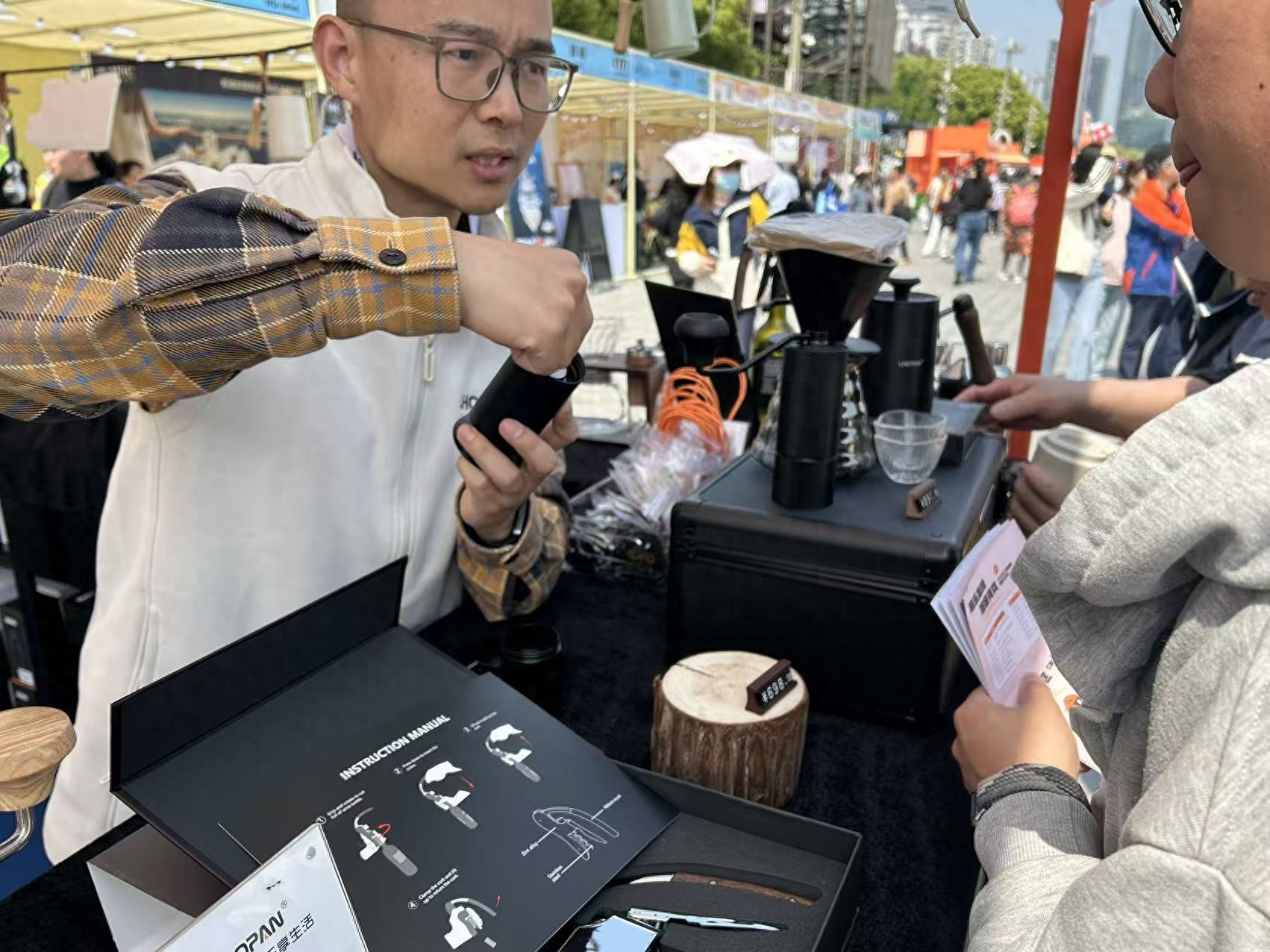
其中一家名叫“LHOPAN(欧烹)”的国产磨豆机品牌把展位设在陆家嘴的天际线下,这款售价只要168元的磨豆机定位家庭日常使用,工作人员正向驻足的人介绍他们的产品。
现场一位咖啡爱好者称,“平时喝咖啡比较随性,什么风味都喝一点”,然后颇有兴致地听完了欧烹工作人员的讲解。
这个场景或许能说明上海咖啡产业正在发生的变化。
咖啡节不再只是一个喝咖啡的市集,咖啡设备也不再只是咖啡馆里的专业工具。随着咖啡消费在上海持续普及,咖啡机、磨豆机、烘焙设备等产业链环节,正在被推到更日常的位置,并推动全国相关产业的发展。
4月30日发布的《2026中国城市咖啡发展报告》显示,2025年中国咖啡产业规模达3549亿元,同比增长13.3%;上海咖啡店数量已达10336家,正式跨过万店门槛。对一座拥有万家咖啡店的城市来说,咖啡消费的外溢已经不仅体现在门店数量上,也体现在设备、供应链和服务公司的集聚上。
一位咖啡行业人士对界面新闻表示,上海一直是中国咖啡设备贸易和服务体系最重要的集散地之一。
“很多知名咖啡设备贸易公司、代理商、系统服务商都注册或设立在上海,并以这里为窗口服务全国市场。”他告诉界面新闻,“原因在于,上海既有最早一批高端酒店、西餐厅和国际连锁咖啡品牌,也有后来快速成长起来的精品咖啡馆、烘焙门店和企业咖啡场景。”
不过这也经历了一个相对较长的过程。
拥有多年经验的进口咖啡设备行业人士王俊对界面新闻表示,90年代时一台全自动商用咖啡机价格约在10万元,只有高级酒店才能买得起。而那时候的咖啡机多数也只是为了装点门面、营造情调放在酒店餐厅,很少被拿来做咖啡,“客人们不会喝,也喝不懂。”
随着星巴克进入中国,意式浓缩咖啡机开始流行。“以卡布奇诺为例,90年代时的上海,用意式机器的星巴克可以通过蒸汽棒打出绵密的奶沫,而其他咖啡机器打不出,只能放点奶油在上面,口感不伦不类。这种机械化、自动化的方式,在当时是引领了浪潮的。”一位“80后”咖啡爱好者向界面新闻回忆道。
但真正推动咖啡机普及的,并不只是少数国际连锁品牌,而是在上海不断涌现的本土连锁与独立精品咖啡。
随着以上海为大本营的独立咖啡馆、精品烘焙工作室兴起,商用意式咖啡机开始出现全自动、半自动等不同选择。前者能一键出品,后者则需要咖啡师手动操作。
多年从事咖啡饮品系统服务供应的王力咖啡告诉界面新闻,这一时期的咖啡机需求明显从此前的“大量级标准化需求”,转向“去精英化的个性风味需求”。
这样的趋势延伸到现在,事实上,多年下来,市场上进口咖啡设备的数量已显著增加,尽管没有宏观统计数字,但从其客户群来看,范围已明显扩大。
以上海为例,据王力咖啡向界面新闻提供的信息,90年代的代表客户是部分国际快餐、西餐、高端商务酒店;2010年-2018年,独立店、跨界店客户大增;从2019年至今,新加入的客户则包括社区店、校园店、便利店、超市、茶饮、烘焙等几乎全业态。
“以瑞士全自动咖啡机Thermoplan为例,这样的机器单价高,早期只有全球顶级连锁与少数跨国餐饮才用得起,偏向大规模标准化出品,现在则是追求顶级稳定、标准化的品牌都在纳入,包括国内头部腰部咖啡连锁,高端茶饮烘焙,商务综合体,大型机场高铁等。”王力咖啡表示。
在咖啡市场持续扩容的推动下,咖啡机也开始从商业空间进入家庭场景。
过去,家庭咖啡更多依赖速溶、挂耳或胶囊产品,专业咖啡机和磨豆机的使用门槛较高。但随着上海咖啡馆密度提高、精品咖啡教育普及,以及消费者对拿铁、美式、手冲等不同咖啡品类的接受度提升,越来越多人开始把咖啡馆里的消费习惯带回家。
除了咖啡店之外,上海的各类咖啡节、展会和线下体验活动也让原本藏在吧台后的咖啡机、磨豆机、手冲器具直接面对普通消费者。咖啡设备由此不再只是咖啡师的工具,而逐渐成为家庭和办公室上的消费品。
这也解释了为什么今年上海国际咖啡节,会专门把设备推到更显眼的位置。
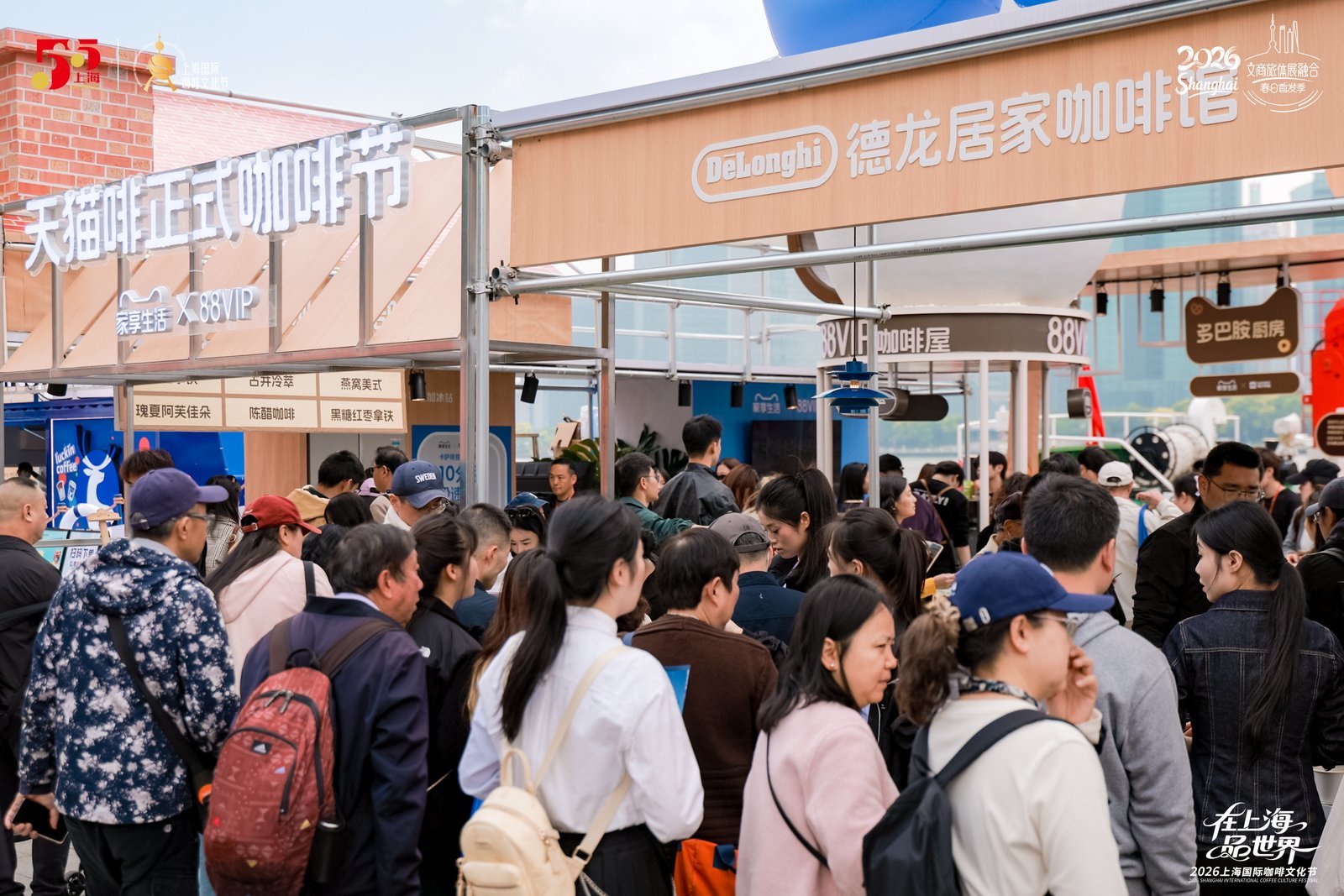
上海市文化创意产业促进会对界面新闻表示,早期的咖啡节更像一个“咖啡馆大集合”,但产业链上游的企业参与热情越来越高,今年咖啡节专门设置烘焙及加工设备、器具与配件、咖啡原料与辅料等区域,咖啡及咖啡产业相关板块占比达60%,咖啡节的功能从“喝一杯”,到了“做一整条链”。
市场和消费者对于咖啡设备的关注,也正是上海咖啡产业链进一步成熟的信号。
一方面,上海庞大的咖啡消费市场,为设备企业提供了密集的应用场景。无论是连锁品牌测试新设备,还是精品店尝试新萃取方案,或者家庭消费者购买磨豆机和半自动咖啡机,上海都能提供足够丰富的需求样本。
另一方面,上海也是大量咖啡设备贸易公司和服务商的集聚地。许多进口咖啡机品牌通过上海进入中国市场,设备代理商、培训机构和配件供应商在这里形成网络,再把产品和服务辐射到全国。随着中国咖啡门店快速扩张,上海也成为不少设备企业观察中国市场、调整产品策略的重要窗口。
市场扩容后的又一个新变化是,国产的咖啡设备也正在崛起。
界面新闻在上海国际咖啡文化节现场看到,有不少国产设备的展商。在强大制造力与扩增的需求面前,不少国产咖啡机设备开始冲击平价消费带。
王力咖啡向界面新闻透露,过去几万到十几万的进口中端机型占很大份额,而现在国产机器则在稳定性、功能、智能化、本土化、价格及服务上快速追上。目前高端市场依然是进口设备主导,但也在加速迭代,推出更适配中国的机型。
那位在LHOPAN(欧烹)展位前驻足的咖啡爱好者,最终扫下了品牌二维码,将设备购入。这样的场景在过去或许比较少见:一台售价168元的国产磨豆机,在陆家嘴天际线下参与国际咖啡节的展示,并被普通消费者带回家中。
这些细节和变化的背后,事实上是上海咖啡消费的普及,也是咖啡设备产业链不断升级的结果。上海的咖啡故事,已经不只关乎咖啡店的数量,也在于这些咖啡背后正在成长起来的设备贸易和产业体系。
Interface News Reporter | Li Ye
Interface News Editor | Ya Hanxiang
This year, the main venue of the Shanghai International Coffee Festival on the North Bund attracted over 200 brands. Among them, there is an area that is different from previous years. It does not sell beans or make coffee, but instead gathers coffee making equipment.
One of the domestic grinder brands, LHOPAN, has set up its booth under the skyline of Lujiazui. This grinder, priced at only 168 yuan, is designed for daily household use, and its staff is introducing their products to those who stop by.
A coffee enthusiast on site said, 'I usually drink coffee casually and have a little bit of any flavor,' and then listened to the explanation from the European cooking staff with great interest.
This scene may illustrate the changes happening in the coffee industry in Shanghai.
The coffee festival is no longer just a coffee market, and coffee equipment is no longer just professional tools in coffee shops. With the continuous popularization of coffee consumption in Shanghai, the industrial chain links such as coffee machines, grinders, and roasting equipment are being pushed to a more daily position and promoting the development of related industries nationwide.
At the Shanghai 2026 International Coffee Festival, a coffee equipment company is introducing its products to consumers. Photo shoot: Interface News by Li Ye
The "2026 China Urban Coffee Development Report" released on April 30th shows that the scale of China's coffee industry will reach 354.9 billion yuan by 2025, a year-on-year increase of 13.3%; The number of coffee shops in Shanghai has reached 10336, officially crossing the threshold of 10000 stores. For a city with thousands of coffee shops, the spillover of coffee consumption is not only reflected in the number of stores, but also in the aggregation of equipment, supply chains, and service companies.
A coffee industry insider told Interface News that Shanghai has always been one of the most important distribution centers for China's coffee equipment trade and service system.
Many well-known coffee equipment trading companies, agents, and system service providers are registered or established in Shanghai, and use this as a window to serve the national market, "he told Interface News." The reason is that Shanghai has not only the earliest batch of high-end hotels, Western restaurants, and international chain coffee brands, but also boutique cafes, bakeries, and corporate coffee scenes that have grown rapidly later
However, this has also gone through a relatively long process.
Wang Jun, an experienced expert in the imported coffee equipment industry, told Interface News that in the 1990s, the price of a fully automatic commercial coffee machine was about 100000 yuan, which only high-end hotels could afford. At that time, most coffee machines were only placed in hotel restaurants to show off and create an atmosphere, and were rarely used to make coffee. "Guests don't know how to drink, and they don't understand
With Starbucks entering China, Italian espresso machines have become popular. Taking cappuccino as an example, in the 1990s in Shanghai, Starbucks, which used Italian style machines, could produce dense foam through steam sticks, while other coffee machines could not produce it and could only add some cream on top, resulting in a unique taste. This mechanized and automated approach was the trend at the time, "recalled a coffee enthusiast born in the 1980s to Jiemian News.
But it is not just a few international chain brands that are truly driving the popularity of coffee machines, but the emerging local chain and independent boutique coffee in Shanghai.
With the rise of independent coffee shops and boutique baking studios based in Shanghai, commercial Italian coffee machines have begun to offer different options such as fully automatic and semi-automatic. The former can be produced with just one click, while the latter requires manual operation by a barista.
Wang Li Coffee, who has been engaged in the supply of coffee beverage system services for many years, told Interface News that the demand for coffee machines during this period has clearly shifted from the previous "large-scale standardized demand" to "de elite personalized flavor demand".
This trend extends to the present day. In fact, over the years, the number of imported coffee equipment in the market has significantly increased. Although there are no macro statistics, the scope has clearly expanded from its customer base.
Taking Shanghai as an example, according to information provided by Wang Li Coffee to Interface News, the representative customers in the 1990s were some international fast food, Western cuisine, and high-end business hotels; From 2010 to 2018, there was a significant increase in customers for independent and cross-border stores; Since 2019, the newly added customers include community stores, campus stores, convenience stores, supermarkets, tea drinks, baking and almost all other formats.
Taking the Swiss fully automatic coffee machine Thermoplan as an example, this type of machine has a high unit price. In the early days, only the world's top chains and a few multinational restaurants could afford it, leaning towards large-scale standardized production. Now, brands that pursue top-level stability and standardization are being included, including domestic top waist coffee chains, high-end tea beverage baking, business complexes, large airport high-speed trains, etc. ”Wang Li Coffee said.
Driven by the continuous expansion of the coffee market, coffee machines have also begun to move from commercial spaces into household settings.
In the past, home coffee relied more on instant, ear hanging, or capsule products, and the threshold for using professional coffee machines and grinders was relatively high. But with the increase in the density of coffee shops in Shanghai, the popularization of boutique coffee education, and the increasing acceptance of different coffee categories such as latte, American, and hand wash by consumers, more and more people are starting to bring home their consumption habits from coffee shops.
In addition to coffee shops, various coffee festivals, exhibitions, and offline experiential activities in Shanghai also allow coffee machines, grinders, and hand washing utensils that were originally hidden behind the bar to directly face ordinary consumers. Coffee equipment is no longer just a tool for baristas, but gradually becomes a consumer product in homes and offices.
This also explains why this year's Shanghai International Coffee Festival will specifically push the equipment to a more prominent position.
The Shanghai Cultural and Creative Industry Promotion Association told Interface News that in the early days, the coffee festival was more like a "gathering of coffee shops", but the participation enthusiasm of upstream enterprises in the industry chain was increasing. This year, the coffee festival specifically set up areas for baking and processing equipment, utensils and accessories, coffee raw materials and accessories, etc. The proportion of coffee and coffee industry related sectors reached 60%. The function of the coffee festival has changed from "drinking a cup" to "making a whole chain".
Equipment Exhibition Area at Shanghai International Coffee Culture Festival
The market and consumers' attention to coffee equipment is also a signal of the further maturity of the Shanghai coffee industry chain.
On the one hand, Shanghai's vast coffee consumption market provides equipment companies with intensive application scenarios. Whether it's testing new equipment for chain brands, trying new extraction solutions for boutique stores, or purchasing grinders and semi-automatic coffee machines for home consumers, Shanghai can provide a sufficiently rich sample of demand.
On the other hand, Shanghai is also a gathering place for a large number of coffee equipment trading companies and service providers. Many imported coffee machine brands enter the Chinese market through Shanghai, where equipment agents, training institutions, and accessory suppliers form a network and radiate their products and services nationwide. With the rapid expansion of coffee shops in China, Shanghai has also become an important window for many equipment companies to observe the Chinese market and adjust product strategies.
Another new change after market expansion is the rise of domestically produced coffee equipment.
Interface News saw at the Shanghai International Coffee Culture Festival that there were many exhibitors of domestic equipment. In the face of strong manufacturing power and increasing demand, many domestic coffee machine equipment have begun to impact the affordable consumer market.
Wang Li Coffee revealed to Interface News that in the past, imported mid-range models ranging from tens of thousands to tens of thousands accounted for a large share, while now domestic machines are rapidly catching up in terms of stability, functionality, intelligence, localization, price, and service. At present, the high-end market is still dominated by imported equipment, but it is also accelerating iteration and launching models that are more suitable for China.
The coffee enthusiast who stopped in front of the LHOPAN booth ultimately scanned the brand's QR code and purchased the equipment. This scene may have been relatively rare in the past: a domestically produced grinder priced at 168 yuan participated in the International Coffee Festival exhibition under the skyline of Lujiazui and was brought home by ordinary consumers.
Behind these details and changes is actually the popularization of coffee consumption in Shanghai, as well as the result of the continuous upgrading of the coffee equipment industry chain. The coffee story in Shanghai is no longer just about the number of coffee shops, but also about the growing equipment trade and industrial system behind these coffees.