南博十年·链动世界|从原料到品牌:一杯保山咖啡的“精品化破局”Ten Years of Nanbo · Chain World - From Raw Materials to Brand: A Cup of Baoshan Coffee's "Boutique Breakthrough"
On the morning of June 6th, the Nujiang Canyon was shrouded in mist, according to the news from CCTV Baoshan (Reporter Zhao Beibei). 53 year old 'Uncle Coffee' Li Jinhe lit a spray gun at a roadside caf é by Shuanghong Bridge, causing the coffee powder in the siphon pot to stir with the boiling water, and the misty aroma of coffee to spread out. This unique "roasted coffee" extraction method has become popular on the internet, attracting numerous tourists and coffee enthusiasts to come and "check in".
In Xinzhai Village, Lujiang Town, downstream of the Nu River, the village party secretary Shao Weibin is also busy preparing for the upcoming South China International Fair. Our village has collectively established a new coffee agricultural tourism development company, and a product called 'Branch Secretary Coffee' is planned to be showcased at the South China International Fair, "said Shao Weibin.
From Li Jinhe's roadside caf é to the 10000 acre coffee forest in Xinzhai Village, from traditional extensive cultivation to boutique and brand transformation, Baoshan Xiaoli Coffee is embarking on a path of "breaking through the monopoly of boutique". The South China International Fair is becoming an important window for Yunnan coffee to connect the world.
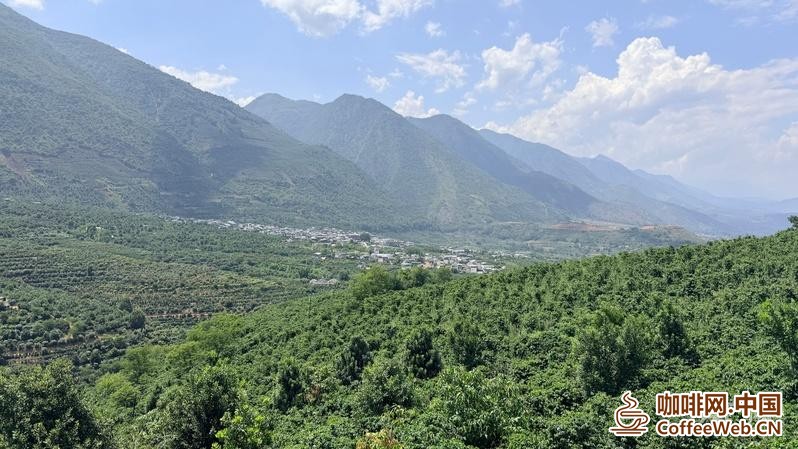
Overlooking Xinzhai Village (Photo by Zhao Beibei, a reporter from China National Radio)
From 'pricing by quantity' to 'striving for strength through quality'
Xinzhai Village is located to the west of Gaoligong Mountain and to the east of Nujiang River. It belongs to a subtropical dry and hot valley climate with an average annual temperature of 21.5 ℃. There are 502 households and 2082 people in the village, planting 13600 acres of coffee, known as the "Number One Coffee Village in China". But this' first village 'has also experienced pain. In the past, the income of ordinary people growing coffee was determined by the yield, "Shao Weibin told reporters. In the past, coffee farmers did not care about the variety, and sold them at the general price after harvesting. The" red fruit "and" green fruit "were picked and baked together, and the extensive production led to uneven quality and long-term low prices.
The transformation began in 2016. Xinzhai Village has begun to propose the development of premium coffee, focusing on planting and building an integrated development model of "selection, planting, harvesting, and adding". Shao Weibin introduced that the village is guiding coffee farmers to reduce planting density, with no more than 300 plants per acre, and at the same time introducing high-yield varieties such as Guixia, Bourbon, and Sachim. Currently, the coverage rate of good varieties has reached 98%. In the picking process, implement graded picking, graded pricing, and fine processing, and strictly control the quality. The data confirms the changes: the price of green coffee beans has increased from 4 yuan per kilogram in 2016 to 65 yuan per kilogram in 2025; The coffee premium rate has also increased from 10% in 2021 to 80% in 2025, and the total coffee output value of the village will reach 250 million yuan in 2025.
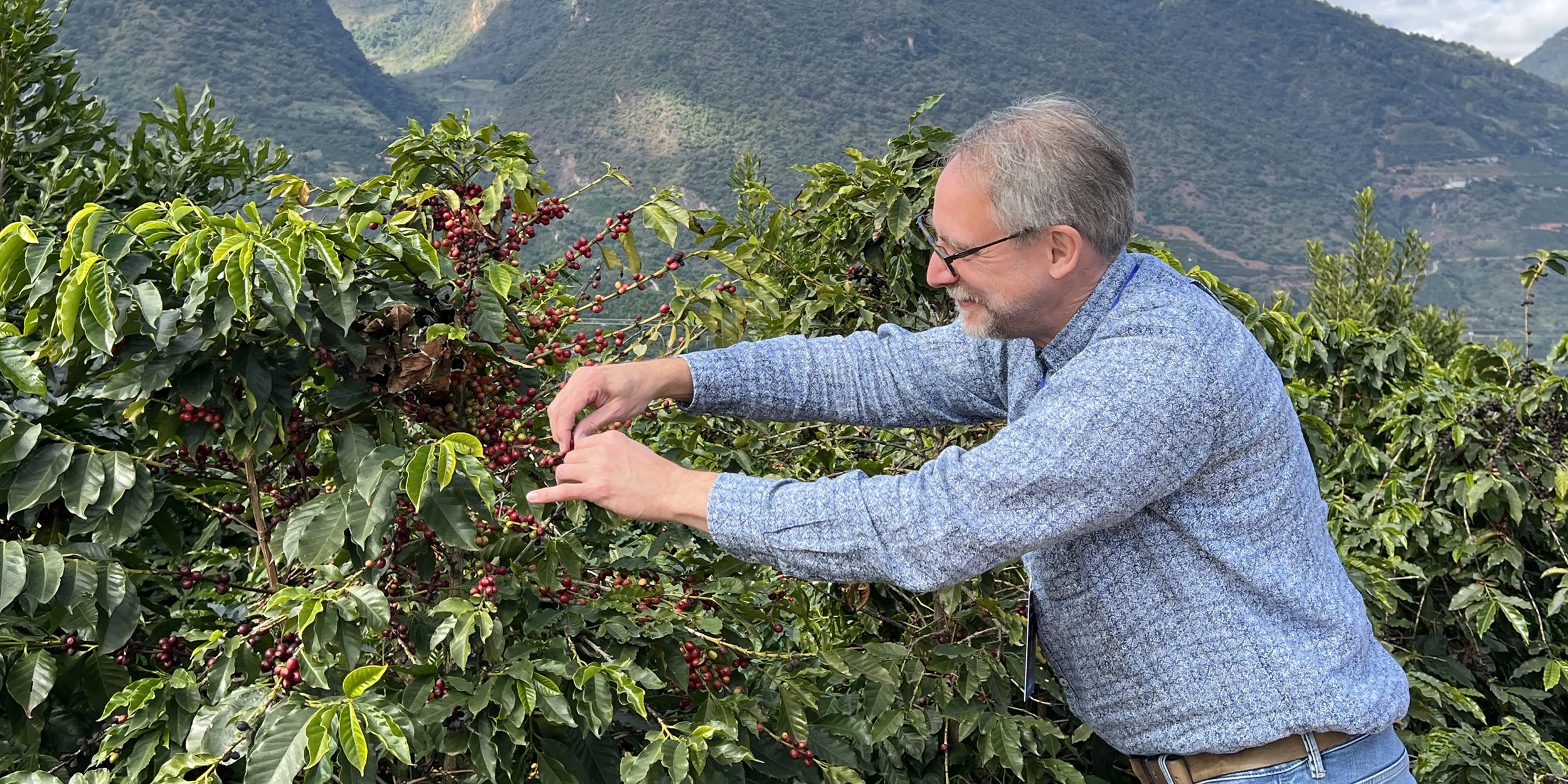
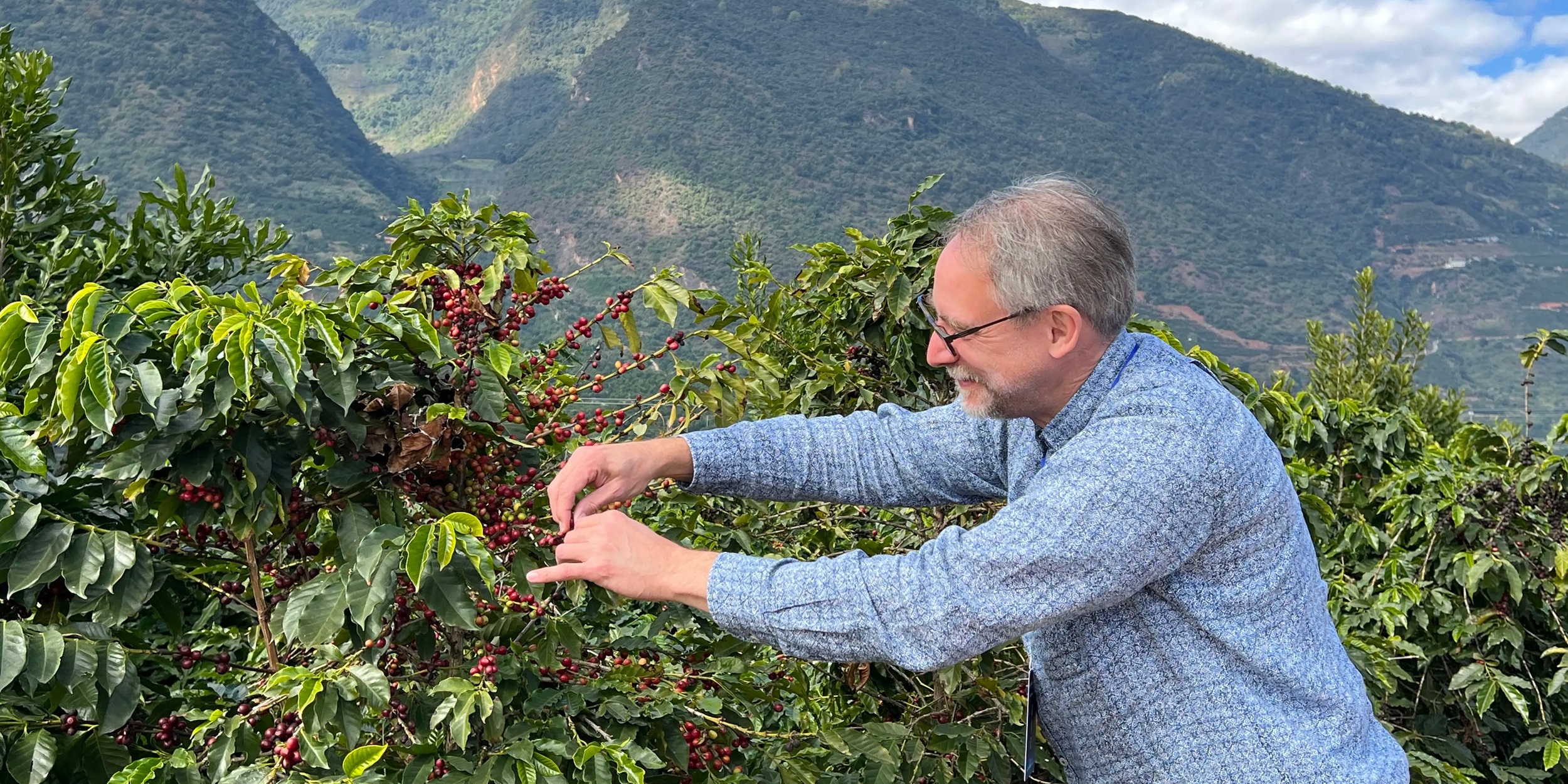
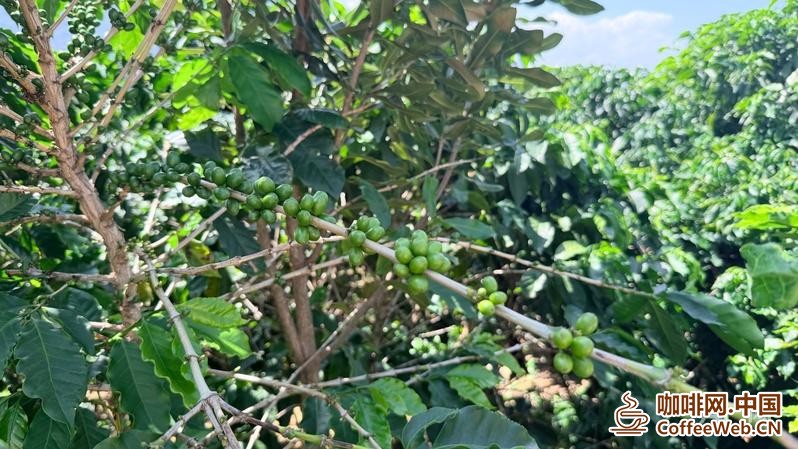
A coffee fruit tree that has just produced "green fruit" (Photo by Zhao Beibei, a reporter from China National Radio)
At the lowest point in the past, one acre of coffee didn't even earn 300 yuan in income, "Li Jinhe recalled. Now that he has grown 100 acres of coffee himself, he has also driven surrounding coffee farmers to improve the quality together. Only by taking the boutique and high-end routes can Baoshan Small Grain Coffee achieve development
From 'a bean' to 'a chain'
High quality cultivation is just the first step. How to make this bean generate greater value? The answer for Xinzhai Village is to reshape the entire coffee industry chain.
Shao Weibin introduced that the village adheres to the overall plan of "one axis, four rings, and ten points", and plans to build 10 boutique coffee plantations. At present, six boutique coffee estates have been built, integrating processing experience, cultural exhibition, tourism and sightseeing, and homestay vacation. One of them has been selected as a boutique coffee estate in Yunnan Province. At the same time, Xinzhai Village has explored the "manor+" business development model of "village committee+enterprise+cooperative+base+farmers", promoting the integration of primary, secondary and tertiary industries.
By 2025, the village will receive 260000 tourists, a year-on-year increase of 20%, and successfully create a national 3A level tourist attraction. In terms of extending the industrial chain, Xinzhai Village has registered the "Branch Secretary Coffee" brand and developed more than 10 products including roasted beans, hanging ear coffee, freeze-dried powder, etc. The village party branch took the lead in establishing the "Baoshan Xinka Agricultural Tourism Development Co., Ltd." to promote the transformation of "resources into assets and villagers into shareholders", and all 502 households were brought into the industrial chain.
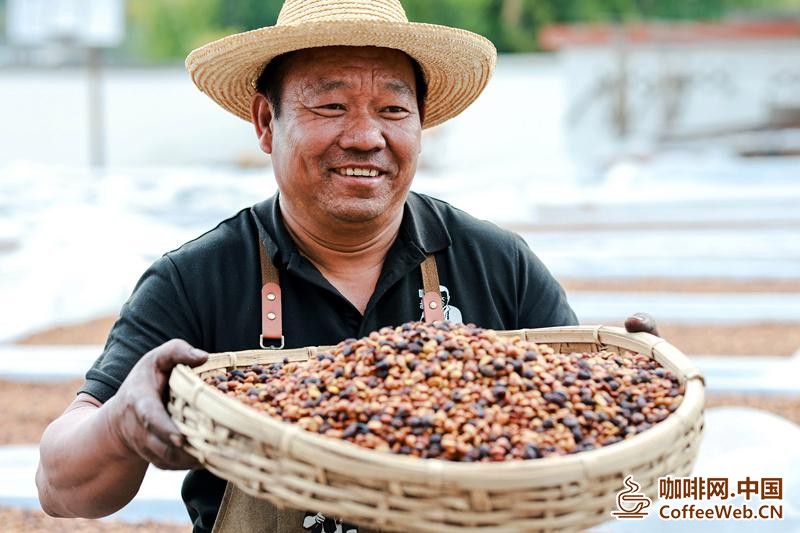
Li Jinhe, the "Uncle Coffee" with a smile on his face, displays coffee beans (photographed by Yang Lei on China National Radio)
And Li Jinhe used a spray gun to "burn" his own brand. From slowly boiling with an alcohol lamp at the beginning, to later attempting to extract quickly with a spray gun, he spent nearly half a year and burned more than 50 siphon pots to form a stable "fire coffee" production system. Many professionals come to taste it and recognize my method - it is indeed tastier than alcohol, with high acidity, bitterness, richness, and purity, "said Li Jinhe. This unique extraction method combines visual and gustatory experiences, attracting many tourists to come and admire it. At present, baristas from all over the country are coming to visit Li Jinhe to learn from him. Don't be conservative or keep things hidden. One person can't recommend the beans from Gaoligong Mountain alone. This matter requires more people to work hard
From 'Mountain Treasures' to' World Coffee Fragrance '
The boutique transformation of Baoshan small grain coffee is moving from an isolated case to an industry consensus.
Lujiang Town is located in the "heart of Chinese coffee" at 24 ° N latitude, with 86500 acres of national geographical indication product "Baoshan small grain coffee" planted. It produces 15300 tons of high-quality coffee beans annually, with an agricultural output value exceeding 1 billion yuan and a total industry chain output value exceeding 6 billion yuan. 25% of coffee beans have passed organic certification, becoming a high-quality raw material base for many international coffee brands. In 2024, the planting area of "Baoshan Small Grain Coffee" will be 144900 mu, with a yield of 24200 tons and a comprehensive output value of 9.068 billion yuan. The coffee quality rate will increase to 70% and the deep processing rate will increase to 85%.
The South China International Fair has become an important platform for Baoshan Coffee to showcase its products to the public. Shao Weibin told reporters that some large-scale growers in the village spontaneously exhibited their products at the South China International Fair this year. "We hope that coffee enthusiasts and distributors from home and abroad can come to Xinzhai Village to learn about our coffee industry
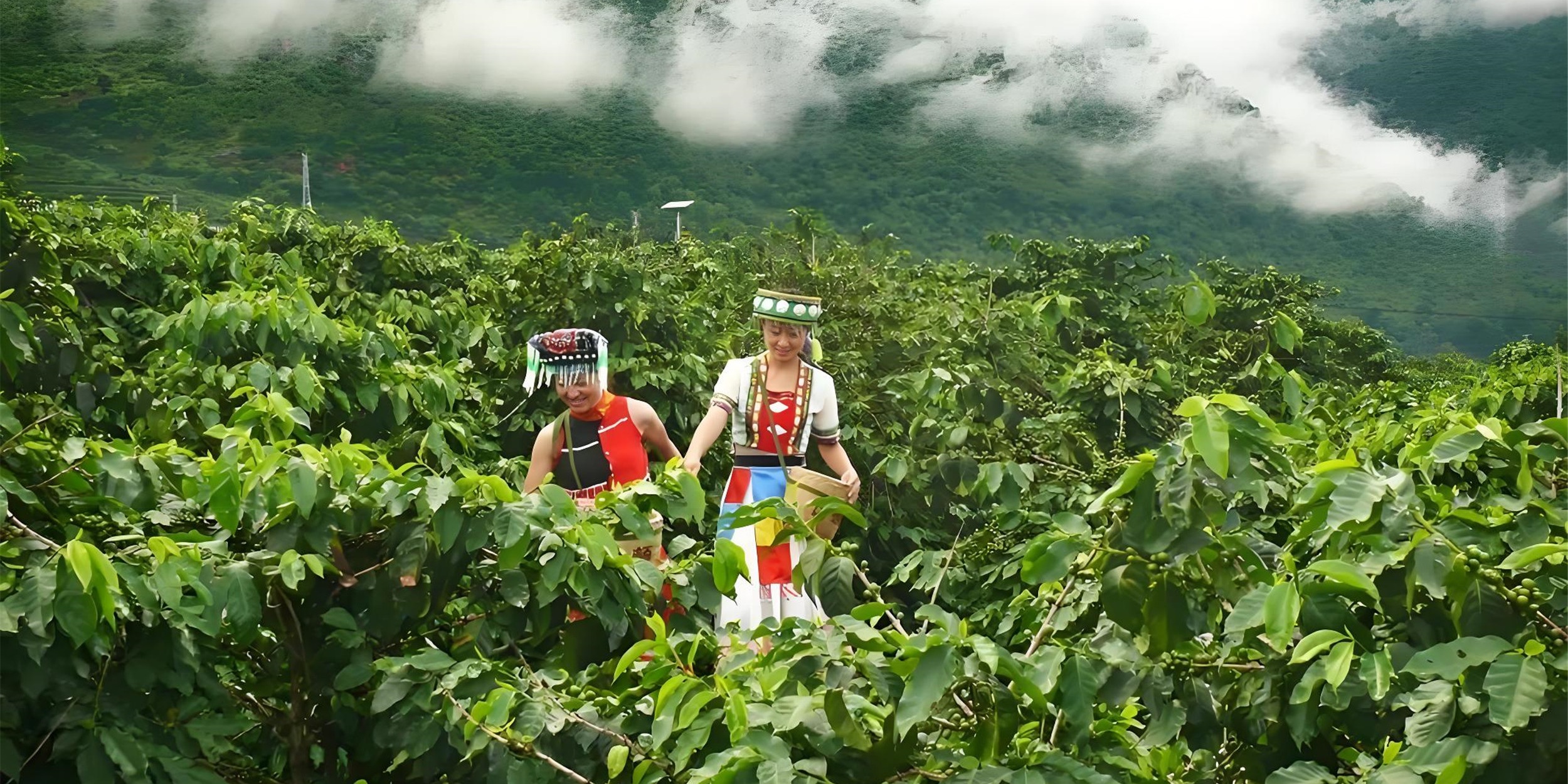
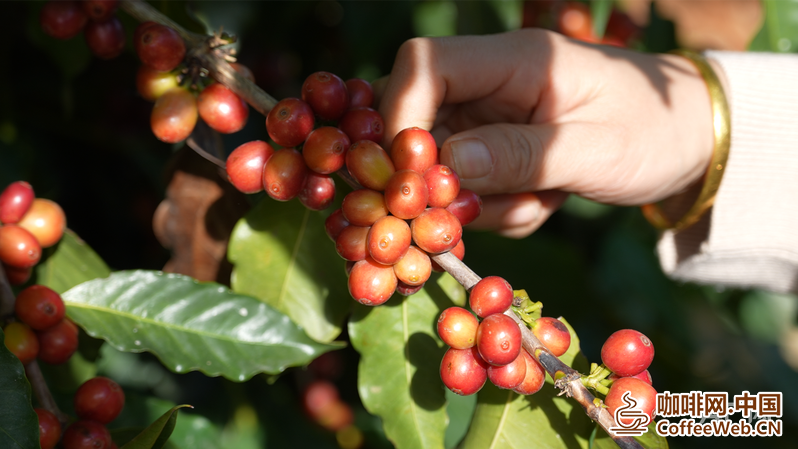
Coffee farmers picking fresh coffee fruits (photo provided by the Propaganda Department of Longyang District Committee, China National Radio and Television Network)
At the same time, Li Jinhe is also preparing to bring two coffee products to the conference. He once represented Baoshan Honey at the South China International Fair, but now his identity has changed from a beekeeper to a coffee promoter. Back then, Baoshan small grain coffee was grown in Lujiangba. We need more coffee enthusiasts, including those from China and around the world, to come to Baoshan to learn about and taste Baoshan small grain coffee and Yunnan coffee
From the 10000 acre coffee forest in Xinzhai Village to Li Jinhe's roadside caf é, from traditional planting to boutique and brand transformation, from raw material output to the development of the entire industry chain, the "boutique breakthrough" of a cup of Baoshan coffee reflects the leap of China's coffee industry from "well planted" to "selling well", from "raw material base" to "brand highland". The South China International Fair, as an open door, is allowing this scent of plateau coffee to drift further into the world.