不产咖啡豆的江门成为中国咖啡之都 华侨漂洋过海带回来的咖啡,“无中生有”长出一条产业链Jiangmen, which does not produce coffee beans, has become the coffee capital of China The coffee brought back by overseas Chinese drifting over seaweed has grown an industrial chain out of nothing
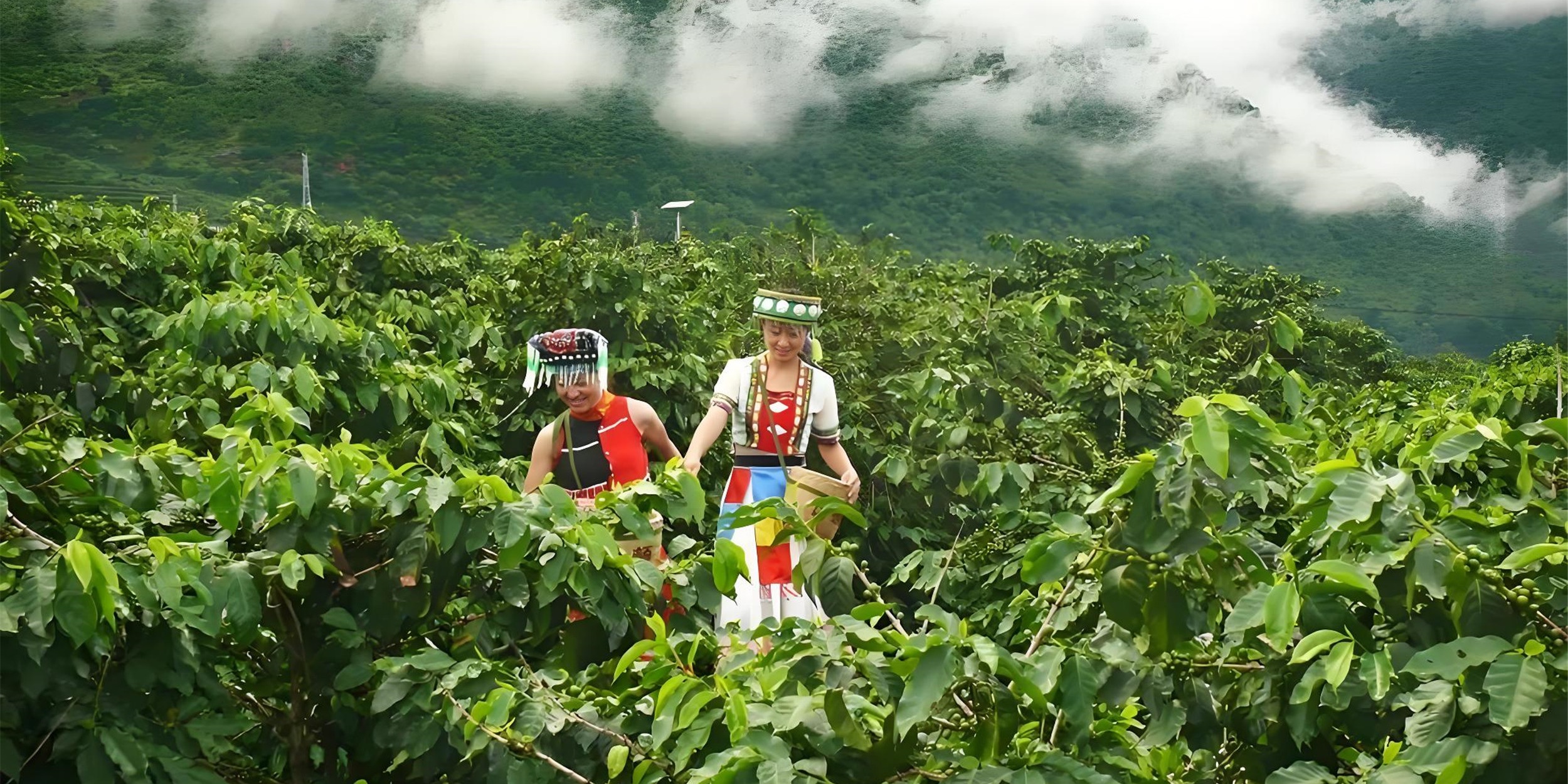
进入盛夏,江门种下的9万多棵咖啡树,进入生长黄金期。3年后,这里将会量产出本土第一批咖啡鲜果,补上三产链条的最后一环。
咖啡豆天生挑剔,偏爱海拔高、日照长、昼夜温差大的地方。热带是传统咖啡产区,比如南美、东南亚,以及中国云南。在位于亚热带的江门,自古没有规模化种植咖啡的历史,却凭着百年华侨积淀的咖啡情缘,硬生生长出一条完备的咖啡全产业链。
精品咖啡豆烘焙产量约占全国十分之一、出口占全国五分之一,咖啡器具及零配件生产企业超过350家,每万人拥有咖啡店数位列全国前五,每年培养输送各类咖啡人才超3000人……曾经不产一颗咖啡豆的江门,“无中生有”成为年产值超30亿元的咖啡产业高地。
这是新晋“中国咖啡之都”的非典型的逆袭之路。
埋种子 一封“华侨情书”
100多年前,在海外打拼的五邑华侨,有的往家乡寄来“给阿嬷的情书”,有的把舶来品塞进行李箱,带回家乡。江门第一颗咖啡豆,就是这样来的。
江门是著名侨乡,530多万江门籍港澳台同胞和海外侨胞遍布全球。在台山市博物馆的华侨历史文化陈列展柜里,放置着1906年出产的希尔兄弟咖啡粉盒,见证着江门人与咖啡结缘的开端。
当地作家黄春燕曾在文章中如此描述:“这样舶来的咖啡用具在台山的侨屋里经常能见到,有咖啡壶、咖啡杯、磨豆机等,有的是屋主几代人一直在使用,有的早已蒙尘。”
喝惯了咖啡的华侨,不仅回到家乡依然要喝好咖啡,还让在国内生活的侨眷培养出了喝咖啡的习惯,由此催生出了江门第一批咖啡店。当地人回忆,早在80年前,台山街头就有很多冰室,喝咖啡已经成为不少市民的生活习惯。
这个习惯,成了江门发展咖啡产业的一颗种子。但真正让这颗种子生根发芽,还要等到世纪之交。
2000年前后,在改革开放的大潮中,一批港澳咖啡企业看中了内地的成本优势和市场蓝海,催生了“前店后厂”的模式——与香港地缘相近、人缘相亲的江门,是优选地。
“当时香港咖啡界,很多大咖都是江门籍的,刚入行的时候全靠这些前辈和老乡关照,教会我卖咖啡的门道。”2003年,华盛咖啡总经理钟达荣决定把总部迁到江门。一来,这里是他的家乡,二来这里的港口布局、发展空间、用工成本、外贸政策优势都很明显。
这个时期,澳门诚品,香港香记和华盛等咖啡品牌相继落户,让江门成为内地最早的咖啡烘焙基地之一。
然而,当时国内咖啡饮用市场才刚刚起步,消费者还没有养成喝咖啡的习惯。江门市商业协会常务副会长及咖啡专委会主席、诚品咖啡品牌创始人汤锦卿回忆,当时她把咖啡豆卖到广州、深圳、中山、珠海、江门,每个城市的月销售额大概只有4000元。
从18世纪60年代华侨与咖啡结缘,到世纪之交有了第一批咖啡烘焙企业,江门走过了200多年。而之后从产业萌芽到爆发式增长,江门只用了十分之一的时间。
被看见 炼成“隐藏大佬”
跟烘焙企业同一时期入局江门咖啡产业的,还有一群“隐形的”器具制造企业。
江门不锈钢制品产业起步于20世纪70年代,80年代中期凭借“三来一补”逐步壮大,其中新会司前镇聚集着大量不锈钢厂,在当地被称为“银色走廊”。
同样在世纪之交,海外客商带着咖啡器具样品,慕名来到这个“不锈钢小镇”寻求代工。凯宇等一批不锈钢厂抓住机会,转型切入了咖啡器具赛道,通过代工完成了原始的技术积累。
所有的量变,在过去十年迎来了质变。
从2010年起,中国的咖啡消费量以年均超15%的速度增长,远超过全球年均约2%的增长率。其中2023年咖啡相关企业注册量创下近十年高峰,同比大增66.17%,达到6.06万家。
在江门,咖啡店也如雨后春笋般冒出。
目前江门拥有近2000家咖啡店,数量位居全国前列,仅2022年就新增了370家,平均每天新增一家咖啡店。与一线城市连锁店林立不同,江门的独立咖啡店各具风格。商圈、景区、社区,甚至工业园区,都能看到主理人的身影。消费者开始讨论,喜茶“老家”江门,原来有这么多咖啡店。
伴随着中国咖啡消费市场的崛起,江门最早入行咖啡二产的人,尝到了先发优势。
最直观的红利,无论是烘焙加工,还是器具制造,江门的咖啡产业迎来了产销量大涨。汤锦卿透露,以前一个月卖100多磅(约90斤)咖啡豆,现在能卖上百吨。凯宇创立了自己的品牌,咖啡器具年销量达到100万件,位列行业前茅。
风口之上,2022年江门市商业协会咖啡专业委员会成立,产业链在政府的引导下开始“抱团发展”。次年,江门提出“侨都咖啡”概念,接连举办了第一届中国侨都(江门)咖啡文化周、啡尝侨都“侨”见世界文化周、侨都咖啡师职业技能竞赛。
江门咖啡产业链,以二三产融合的姿态,进入了大众视野。
在短短20年间,原来只是港澳咖啡企业生产基地的江门,如今已经走上台前,修炼成了咖啡界的“隐藏大佬”。
闯世界 做成“全球生意”
今年初,江门发布《侨都咖啡白皮书》。出乎所有人的意料,不种咖啡的江门,竟然真的从无到有,打磨出了一条布局完整、发展成熟的咖啡产业链。
江门市商务局相关负责人介绍,上游,江门汇聚起巴西、埃塞俄比亚、哥伦比亚等产地300多种精品咖啡生豆,年进口额超3000万元。中游,江门拥有21家获证烘焙企业,年产能超1万吨,出口量占全国的20%;咖啡器具及零配件生产企业超过350家,是粤港澳大湾区重要的咖啡加工生产基地和出口基地。下游,贸易、文旅、文创、人才培训等服务业全产业链,已经跑通。
而江门的目标还远不止于此。
放眼全球,一批批咖啡生豆,从南美洲、非洲、东南亚等咖啡产区出发,跨越大洋远道而来,抵达江门。经过烘焙、包装,附加咖啡器具的配套,这些拥有了风味的咖啡熟豆再次踏上征程,运往全国以及世界各地的咖啡店,完成了一次环球旅行。
从世界中来,是江门咖啡的发家史,回到世界中去,是江门咖啡的未来。
今年3月,第四届中国侨都(江门)咖啡节举行。摊位是世界级的,全球330余个品牌齐聚,世界顶级咖啡赛事冠军亮相,吸引超51万人次赴约。采购商是世界级的,江门本土企业与马来西亚、乌干达、埃塞俄比亚、巴西等咖啡产区代表签约合作,十多个非洲国家驻穗领团代表到访品尝。比赛也是世界级的,粤港澳大湾区咖啡师职业技能大赛、世界咖啡拼豆师大赛全球总决赛,华侨华人咖啡冲煮大赛轮番上演,越来越多咖啡师从这里走向世界舞台。
现在,江门还要做一件“莫名其妙”的事情——种咖啡。
江门市商务局相关负责人表示,近日《江门市促进“侨都咖啡”产业高质量发展行动方案》印发,规划在天露山打造精品咖啡种植产业带,发展农文旅融合项目。目前,江门已建成12个咖啡种植点位,累计种植面积2062亩,合计9.09万株。
这意味着,曾经不产咖啡豆的江门,很快就能把这块空白补上,实现一二三产全面开花。
没有靠山吃山的禀赋,江门就把自己变成高山。华侨留下的,不仅是咖啡,更是刻在血脉里白手起家、敢闯敢先的侨乡风骨。
■亲历者说
首届广东省咖啡师职业技能大赛冠军廖泽华——
汽修小哥跨界当上咖啡导师
如果没有接触咖啡,廖泽华现在可能还在广州,做汽修小工。
2018年以前,廖泽华对经历的概括很简单:读书成绩一般,父亲帮他报读了技师学院的汽修专业,希望他学一门手艺,以后不怕没工作——其实他心里并不喜欢。
一次偶然的机会,他见识了咖啡拉花。牛奶经过打发,在咖啡液面勾勒出各种图案,唤醒了埋藏心底多年的绘画热爱。这一试改变了他的人生。
在朋友的介绍下,廖泽华入职了一家咖啡店打工。一开始,他并没有资格进入吧台,只能在没客人的时候,拿着拉花缸在水池练习拉花动作。“牛奶也不舍得买,用水练。”
一天店里很忙,吧台的咖啡师人手不够,同事让他帮忙拉个花。他到现在都记得,当时自己比后来任何一次正式比赛都要紧张。萃咖啡液、打奶泡、融合、拉花,出乎所有人的意料,他成功拉出一个标准的“大白心”。
在咖啡店做得越久,他越意识到,自己需要更大的进步。2020年前后,他坚定地做了两件事:一是跟店里请假,到重庆找当时的中国拉花冠军梁凡,上了5天拉花课,他发现自己拉花还有很大的进步空间。二是花了两个月工资,报名了诚品咖啡办的Q-Grander(国际咖啡质量品鉴师)培训班,学习咖啡感官品鉴,因为不想再让别人说他“只会拉花”。
是被激发的天赋,也是每天苦练的结果,他在Q-Grander考试中,一次通过。这个证书,让他获得了比“加工资”更多的收获,诚品咖啡向他发出邀请,他成为一名咖啡培训师,迎来事业的“第二春”。
这两年,廖泽华在国内各种咖啡比赛中崭露头角,是2025年广东省咖啡师职业技能大赛冠军,也是全国首创的粤港澳咖啡师职业“一试三证”技能评价项目的考评员。
数读
烘焙
江门汇聚了巴西、埃塞俄比亚、哥伦比亚等主要产地的300多种精品咖啡生豆,年进口额超3000万元。全市拥有21家获证烘焙企业,年产能超1万吨,精品咖啡豆烘焙产量约占全国十分之一、出口量占全国五分之一。
器具
咖啡器具及零配件生产企业超过350家,是粤港澳大湾区重要的咖啡加工生产基地和出口基地。
消费
江门拥有近2000家咖啡店,每万人拥有咖啡店数达5.64家,位列全国第五,超越广州、深圳等一线城市。江门连续举办四届中国侨都(江门)咖啡节,活动规模逐年跃升,四届活动累计吸引客流超过150万人次。
人才
截至目前,江门推行“一试三证”项目,已有248名粤港澳技能人才受益,其中咖啡师145人,通过“一试三证”项目获得粤港澳三地四本证书,拓宽了在粤港澳大湾区的就业之路。
种植
江门已建成12个咖啡种植点位,累计种植面积2062亩,合计9.09万株。

Entering the height of summer, over 90000 coffee trees planted in Jiangmen have entered their golden period of growth. In 3 years, this place will produce the first batch of local coffee fresh fruits, filling the last link in the tertiary production chain.
Coffee beans are naturally picky and prefer places with high altitude, long sunshine, and large temperature differences between day and night. Tropical regions are traditional coffee producing areas, such as South America, Southeast Asia, and Yunnan, China. In Jiangmen, located in the subtropical region, there has never been a history of large-scale coffee cultivation since ancient times. However, relying on the century long coffee love accumulated by overseas Chinese, a complete coffee industry chain has been forcefully developed.
The roasting production of premium coffee beans accounts for about one tenth of the country's total, and exports account for one-fifth of the country's total. There are over 350 coffee equipment and spare parts manufacturing enterprises, and the number of coffee shops per 10000 people ranks among the top five in the country. Every year, more than 3000 coffee professionals are trained and transported... Jiangmen, which used to not produce a single coffee bean, has become a highland of the coffee industry with an annual output value of over 3 billion yuan.
This is an atypical path of counterattack for the newly established 'Coffee Capital of China'.
Planting Seeds: A Love Letter from Overseas Chinese
More than 100 years ago, overseas Chinese from Wuyi sent "love letters to grandma" to their hometowns, while others stuffed imported goods into suitcases and brought them back to their hometowns. The first coffee bean in Jiangmen came from this way.
Jiangmen is a famous hometown of overseas Chinese, with over 5.3 million compatriots from Jiangmen, Hong Kong, Macao, Taiwan, and overseas living all over the world. In the display cabinet of overseas Chinese history and culture at Taishan Museum, there is a 1906 Hill Brothers coffee powder box, witnessing the beginning of the connection between Jiangmen people and coffee.
Local writer Huang Chunyan once described in an article: "Such imported coffee utensils can often be seen in the overseas Chinese houses in Taishan, including coffee pots, cups, grinders, etc. Some have been used by the owners for several generations, while others have long been covered in dust
Overseas Chinese who were used to drinking coffee not only returned to their hometowns to drink good coffee, but also cultivated the habit of drinking coffee among overseas Chinese living in China, which gave birth to the first batch of coffee shops in Jiangmen. Local people recall that as early as 80 years ago, there were many ice rinks on the streets of Taishan, and drinking coffee had become a daily habit for many citizens.
This habit has become a seed for the development of the coffee industry in Jiangmen. But it won't take until the turn of the century for this seed to truly take root and sprout.
Around 2000, during the wave of reform and opening up, a group of Hong Kong and Macau coffee companies recognized the cost advantage and market blue ocean of the mainland, giving rise to the "front store, back factory" model - Jiangmen, which is geographically close to Hong Kong and has a close relationship with people, is the preferred location.
At that time, many big names in the Hong Kong coffee industry were from Jiangmen. When I first entered the industry, I relied on the care of these seniors and fellow villagers to teach me how to sell coffee. "In 2003, Zhong Darong, the general manager of Huasheng Coffee, decided to move his headquarters to Jiangmen. Firstly, this is his hometown, and secondly, the port layout, development space, labor costs, and foreign trade policy advantages here are very obvious.
During this period, coffee brands such as Macau's Eslite, Hong Kong's Xiangji, and Huasheng successively settled in Jiangmen, making it one of the earliest coffee roasting bases in mainland China.
However, at that time, the domestic coffee drinking market was just beginning, and consumers had not yet developed the habit of drinking coffee. Tang Jinqing, Executive Vice President of Jiangmen Commercial Association and Chairman of Coffee Special Committee, founder of Eslite Coffee brand, recalled that at that time, she sold coffee beans to Guangzhou, Shenzhen, Zhongshan, Zhuhai, and Jiangmen, with monthly sales of only about 4000 yuan per city.
From the 1860s when overseas Chinese became acquainted with coffee, to the emergence of the first batch of coffee roasting enterprises at the turn of the century, Jiangmen has gone through more than 200 years. And afterwards, from the budding of the industry to explosive growth, Jiangmen only took one tenth of the time.
Being seen refining into a 'hidden boss'
At the same time as baking companies entered the Jiangmen coffee industry, there was also a group of "invisible" equipment manufacturing enterprises.
The stainless steel products industry in Jiangmen started in the 1970s and gradually grew in the mid-1980s with the "three processing and one supplement" strategy. Among them, Xinhuisi Qianzhen gathered a large number of stainless steel factories, known locally as the "Silver Corridor".
At the turn of the century, overseas merchants brought coffee utensils samples and came to this "stainless steel town" to seek OEM services. Kaiyu and a group of stainless steel factories seized the opportunity and transformed into the coffee utensil track, completing their original technological accumulation through OEM manufacturing.
All quantitative changes have undergone qualitative changes in the past decade.
Since 2010, coffee consumption in China has been growing at an average annual rate of over 15%, far exceeding the global average annual growth rate of about 2%. In 2023, the registration volume of coffee related enterprises reached a nearly ten-year peak, with a year-on-year increase of 66.17%, reaching 60600.
In Jiangmen, coffee shops have also sprung up like mushrooms after rain.
At present, Jiangmen has nearly 2000 coffee shops, ranking among the top in the country in terms of quantity. In 2022 alone, 370 new coffee shops were added, averaging one new coffee shop per day. Unlike the numerous chain stores in first tier cities, independent coffee shops in Jiangmen have their own styles. Business districts, scenic spots, communities, and even industrial parks can all see the presence of managers. Consumers began to discuss that Heytea's "hometown" Jiangmen used to have so many coffee shops.
With the rise of China's coffee consumption market, those who first entered the coffee secondary industry in Jiangmen tasted the first mover advantage.
The most obvious dividend is that the coffee industry in Jiangmen has seen a significant increase in production and sales, whether it is baking and processing or equipment manufacturing. Tang Jinqing revealed that in the past, he sold over 100 pounds (about 90 pounds) of coffee beans per month, but now he can sell hundreds of tons. Kaiyu has established its own brand, with an annual sales volume of 1 million coffee utensils, ranking among the top in the industry.
Above the wind, the Coffee Professional Committee of Jiangmen Commercial Association was established in 2022, and the industry chain began to develop in groups under the guidance of the government. The following year, Jiangmen proposed the concept of "Qiaodu Coffee" and successively held the first China Qiaodu (Jiangmen) Coffee Culture Week, Coffee Tasting Qiaodu "Qiaodu" World Culture Week, and Qiaodu Coffee Master Vocational Skills Competition.
The coffee industry chain in Jiangmen has entered the public eye with the integration of secondary and tertiary industries.
In just 20 years, Jiangmen, which used to be a production base for coffee companies in Hong Kong and Macau, has now become a hidden giant in the coffee industry.
Explore the world and make a 'global business'
At the beginning of this year, Jiangmen released the "Qiaodu Coffee White Paper". To everyone's surprise, Jiangmen, which does not grow coffee, has truly developed a complete and mature coffee industry chain from scratch.
The relevant person in charge of Jiangmen Municipal Bureau of Commerce introduced that upstream, Jiangmen gathers more than 300 kinds of high-quality coffee beans from Brazil, Ethiopia, Colombia and other production areas, with an annual import value of over 30 million yuan. In the middle reaches, Jiangmen has 21 certified baking enterprises with an annual production capacity of over 10000 tons, accounting for 20% of the country's exports; There are over 350 coffee utensils and spare parts manufacturing enterprises, making it an important coffee processing and production base and export base in the Guangdong Hong Kong Macao Greater Bay Area. The entire service industry chain, including trade, cultural tourism, cultural and creative industries, and talent training, has been fully operational downstream.
And Jiangmen's goal is far more than that.
Looking at the world, batches of green coffee beans depart from coffee producing areas in South America, Africa, Southeast Asia, and travel across the ocean to reach Jiangmen. After baking, packaging, and matching with coffee utensils, these flavored coffee beans once again embarked on a journey to coffee shops across the country and around the world, completing a global journey.
Coming from the world is the history of Jiangmen Coffee's success, returning to the world is the future of Jiangmen Coffee.
The 4th China Overseas Chinese Capital (Jiangmen) Coffee Festival was held in March this year. The booth is world-class, with more than 330 brands from around the world gathered, and the world's top coffee competition champion appeared, attracting over 510000 attendees. The purchaser is world-class, and local enterprises in Jiangmen have signed cooperation agreements with representatives from coffee producing areas such as Malaysia, Uganda, Ethiopia, and Brazil. Representatives from more than ten African countries stationed in Guangzhou have visited and tasted the coffee. The competition is also world-class, with the Guangdong Hong Kong Macao Greater Bay Area Barista Professional Skills Competition, the World Coffee Collar Competition Global Finals, and the Overseas Chinese Coffee Brewing Competition taking place in rotation. More and more baristas are stepping onto the world stage here.
Now, Jiangmen still has to do something 'inexplicable' - grow coffee.
The relevant person in charge of the Jiangmen Municipal Bureau of Commerce stated that the "Jiangmen City Action Plan for Promoting High Quality Development of the 'Qiaodu Coffee' Industry" has recently been issued, which plans to create a boutique coffee planting industry belt in Tianlu Mountain and develop integrated agricultural, cultural and tourism projects. At present, 12 coffee planting sites have been built in Jiangmen, with a cumulative planting area of 2062 acres and a total of 90900 plants.
This means that Jiangmen, which used to not produce coffee beans, will soon be able to fill this gap and achieve comprehensive flowering of primary, secondary, and tertiary industries.
Without the natural endowment of relying on mountains to eat, Jiangmen has turned itself into a high mountain. What overseas Chinese have left behind is not only coffee, but also the spirit of starting from scratch and daring to take the lead in their hometown, engraved in their bloodline.
■ Witnesses say
Liao Zehua, the champion of the first Guangdong Province Barista Vocational Skills Competition——
Auto repair guy crosses over to become a coffee mentor
If he hadn't been exposed to coffee, Liao Zehua might still be working as an auto mechanic in Guangzhou now.
Before 2018, Liao Zehua's summary of his experience was simple: his academic performance was average, and his father helped him enroll in the auto repair major at a technician college, hoping that he would learn a craft and not be afraid of not having a job in the future - in fact, he didn't like it in his heart.
By chance, he witnessed coffee latte art. The milk, after being whipped, outlines various patterns on the coffee surface, awakening the long buried love for painting in my heart. This attempt changed his life.
With the introduction of a friend, Liao Zehua started working at a coffee shop. At first, he was not qualified to enter the bar and could only practice latte art in the sink with a latte art cylinder when there were no customers. I don't want to buy milk either, I train with water
The store was very busy one day, and the barista at the bar was understaffed. A colleague asked him to help pull a flower. He still remembers that he was more nervous than any official competition later on. To everyone's surprise, he successfully pulled out a standard "big white heart" by extracting coffee, frothing milk, blending, and pulling flowers.
The longer he worked in the coffee shop, the more he realized that he needed greater progress. Around 2020, he firmly did two things: one was to take a leave of absence from the store and go to Chongqing to find the then Chinese flower pulling champion Liang Fan. He attended a 5-day flower pulling class and found that he still had a lot of room for improvement in flower pulling. Secondly, I spent two months' salary and signed up for the Q-Grander (International Coffee Quality Appraiser) training course organized by Eslite Coffee to learn about coffee sensory tasting, because I didn't want others to say that he was "only good at latte art" anymore.
It is a talent that has been stimulated and the result of daily hard work. He passed the Q-Grander exam once. This certificate gave him more rewards than just a salary increase. Eslite Coffee invited him to become a coffee trainer, ushering in a "second spring" of his career.
In the past two years, Liao Zehua has made a name for himself in various coffee competitions in China. He is the champion of the 2025 Guangdong Province Barista Professional Skills Competition and also the evaluator of the country's first Guangdong Hong Kong Macao Barista Professional "One Test Three Certificates" skill evaluation project.
Numerical Reading
baking
Jiangmen gathers over 300 types of premium coffee beans from major production areas such as Brazil, Ethiopia, and Colombia, with an annual import value exceeding 30 million yuan. There are 21 certified roasting enterprises in the city with an annual production capacity of over 10000 tons. The roasting output of premium coffee beans accounts for about one tenth of the national total, and the export volume accounts for one-fifth of the national total.
utensil
There are over 350 coffee utensils and spare parts manufacturing enterprises, making it an important coffee processing and production base and export base in the Guangdong Hong Kong Macao Greater Bay Area.
consumption
Jiangmen has nearly 2000 coffee shops, with 5.64 coffee shops per 10000 people, ranking fifth in the country and surpassing first tier cities such as Guangzhou and Shenzhen. Jiangmen has held four consecutive sessions of the China Overseas Chinese Capital (Jiangmen) Coffee Festival, with the scale of the event increasing year by year. The four sessions have attracted over 1.5 million visitors.
talent
As of now, Jiangmen has implemented the "One Test, Three Certificates" project, benefiting 248 skilled talents from Guangdong, Hong Kong, and Macao. Among them, 145 baristas have obtained four certificates from Guangdong, Hong Kong, and Macao through the "One Test, Three Certificates" project, expanding their employment opportunities in the Guangdong Hong Kong Macao Greater Bay Area.
planting
Jiangmen has built 12 coffee planting sites, with a cumulative planting area of 2062 acres and a total of 90900 plants.