一杯咖啡的“后半生”,在上海的五原路被安顿The 'second half of a cup of coffee' settled on Wuyuan Road in Shanghai
上观新闻。武康—安福风貌街区争取让每一只咖啡杯都“不落地”的努力,“浓缩”在了五原路236号的“循环空间”里。
在管理员的引导下,手捧着咖啡杯的路人走入“循环空间”,把杯内残余的咖啡倒进水斗,冲洗干净后,将塑料杯盖投放到专用收集桶左边的收集器内,再将内侧有防水膜的杯身投放到右边的收集器内,最后将擦嘴擦手的纸巾和装咖啡杯的袋子投放到中间的干垃圾桶内。专用收集桶两侧的可回收物将进入相应的渠道循环利用,干垃圾桶内的干垃圾则送去焚烧厂无害化处理。
废品点变身便民空间
在“循环空间”内“重生”的还有周边居民、咖啡店产生的咖啡渣、过期咖啡豆。
今天(8月25日)上午,董悦然专门从附近咖啡馆要来了一杯热乎乎的咖啡渣,递给“循环空间”运营负责人陈嘉敏。
“正好妈妈带着我在附近喝饮料,我就把店里今天的咖啡渣拿过来了。”董悦然很喜欢闻手上残余的咖啡香味,她说这些咖啡渣很干净,晒干后能用来画画,还能做香囊、肥料、肥皂、黏土、冰箱贴、扩香石、小提包等手工;咖啡豆能做手串、项链,觉得很有意思。
顺着小悦然手指的方向看去,是“循环空间”内的手工桌,住在复兴西路上的居民刘东东带着5岁的双胞胎“心心”“念念”,正在做咖啡豆手串和咖啡渣香囊。“以前这里是收废品的地方,去年底有一次逛过来,发现装修一新,变成了有更多功能的便民空间。”刘东东说,这里离家很近,恰巧孩子很喜欢和艺术有关的东西,在这里做手工还能学习环保知识,所以经常来。
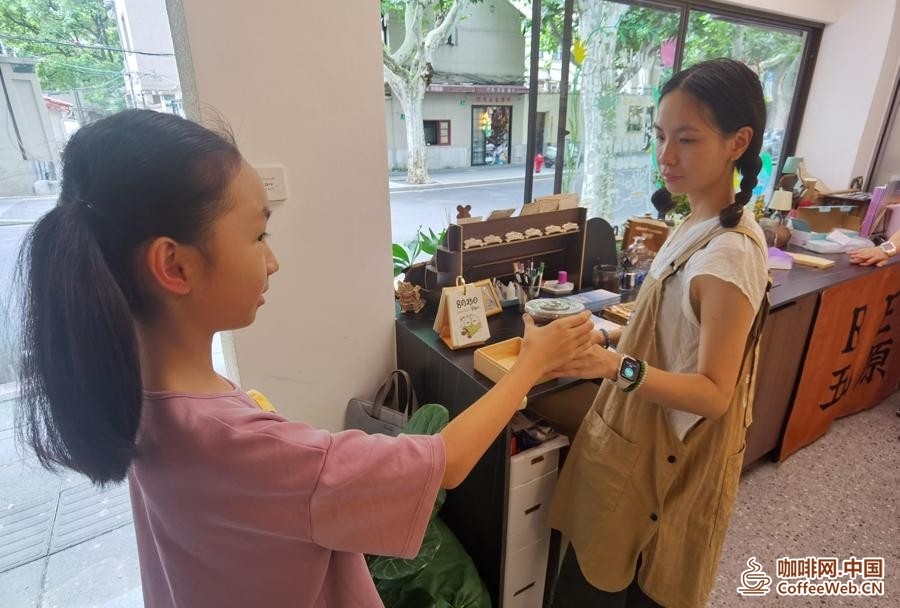
周边居民定期来投放干净的咖啡渣。 陈玺撼摄
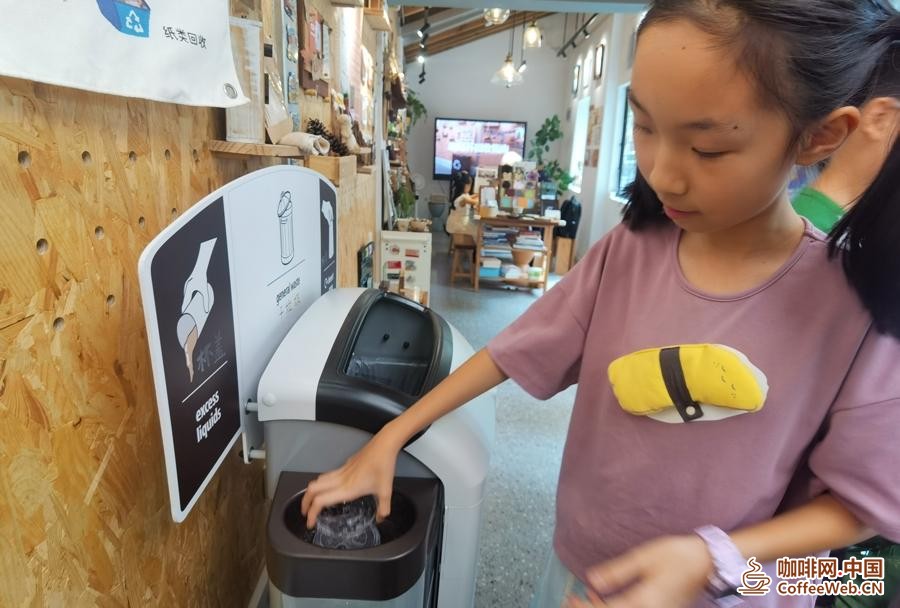
把杯内残余的咖啡倒进水斗,冲洗干净后,将塑料杯盖投放到专用收集桶左边的收集器内。 陈玺撼摄
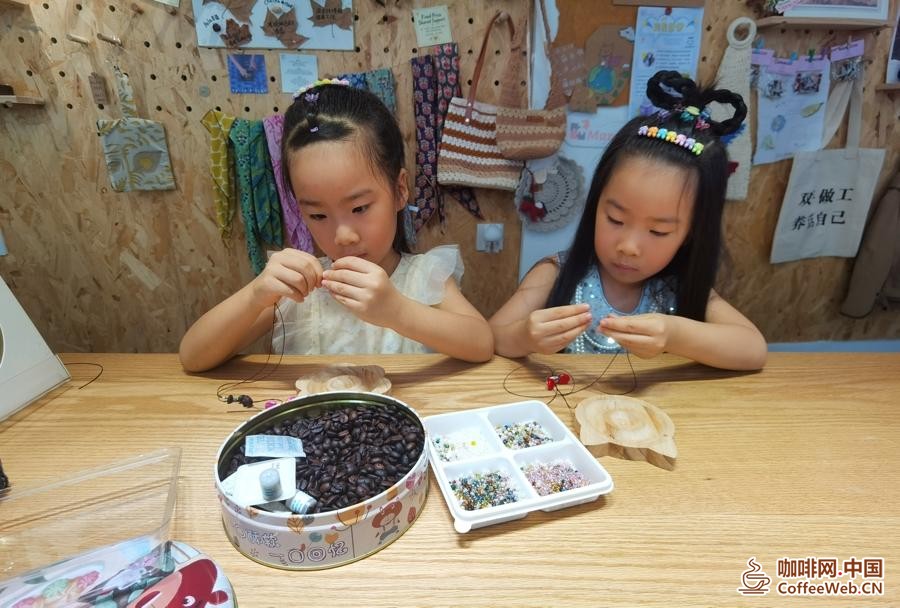
“心心”“念念”做咖啡豆手串和咖啡渣香囊。 陈玺撼摄
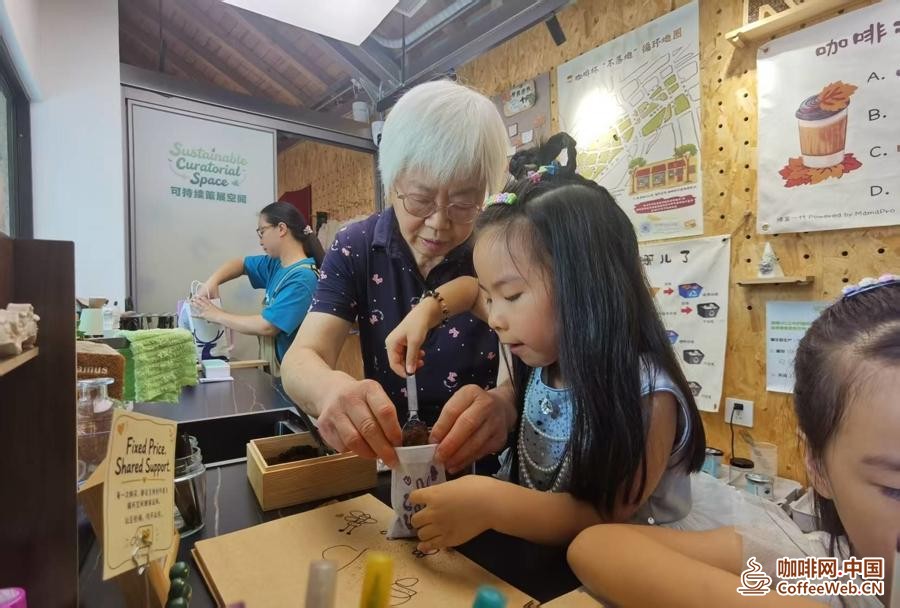
“心心”“念念”做咖啡豆手串和咖啡渣香囊。 陈玺撼摄
居民和咖啡店都喜欢
废品收集点变身便民空间,动机源于过去街区的一个难题:由于周边咖啡店众多,不少游客喝完咖啡后,将杯子随手放在窗台、花坛、共享单车车筐里,甚至直接扔在街边。
“这并不是一个简单的游客素质问题。”徐汇区绿化市容局副局长曹丹俊表示,在这个现象背后,环卫部门也要反思自己的工作有没有做到位,尤其是公共废物箱的设置是否足够合理、废物箱满溢后是否及时清理,还有,周边居民、商户以及游客是否充分认同“咖啡杯不落地”的价值。
从去年开始,武康—安福风貌街区已对公共废物箱采取了更精细的管理。一方面,给废物箱加装满溢传感器,一旦桶内垃圾达到三分之二的容量,系统便提前发出预警,提醒环卫单位及时清理;另一方面,针对武康大楼附近如潮汐般起伏的客流,环卫部门在每天9时至21时,灵活增放可移动式垃圾箱,增强高峰时段的垃圾收集能力。
让咖啡杯扔起来方便,这有效缓解了高峰时段“咖啡杯落地”的问题,但要做到彻底“不落地”,关键功夫在于“心”,也就是促进公众充分认同“咖啡杯不落地”的价值,确保咖啡杯能够投放到正确的渠道,从而得到变废为宝的机会,“循环空间”应运而生。
“咖啡相关废弃物的量其实不小,有精细化分类和单独收集处置的必要。”陈嘉敏告诉记者一项环卫公司统计的数据,武康—安福风貌街区日均产生的1吨多垃圾中,有上千只咖啡杯,还有不少藏在湿垃圾里的咖啡渣,没办法单独分类统计,这些垃圾“落地”将影响市容环境,“循环空间”便通过展示或邀请公众体验各类咖啡相关废弃物变废为宝的过程,让大家感到新鲜有趣,进而了解并认同精细分类咖啡相关废弃物的价值。
大半年来,“循环空间”光咖啡渣就已收集了上百公斤,有些妈妈养成了“囤咖啡渣”的习惯,定期把家中晒干脱水的咖啡渣打包带来,十多家附近的咖啡店也主动加入“咖啡杯不落地联盟”,游客不用四处寻找垃圾桶,只需将空杯交还至任意挂有统一标识的参与商户,积累到一定程度,通过微信小程序提交清运需求,环卫车辆接到指令后20分钟内到店收取。
记者走访了两家咖啡店,门店负责人均表示有坚持下去的动力。集雅五原路店的店长表示,每年要为运输处置咖啡渣、咖啡杯支付一笔费用,如果街区能形成稳定且公益的咖啡渣、咖啡杯就地收集处置闭环,的确能帮门店节省一笔开支。永福路大鹅咖啡店的蔡店长告诉记者,门店每天要产生两三斤的咖啡渣,每晚闭店后要拎着收集袋跑六七分钟到指定的湿垃圾投放点,“如果有志愿者定期来收集,确保它们物尽其用,我们相当欢迎”。
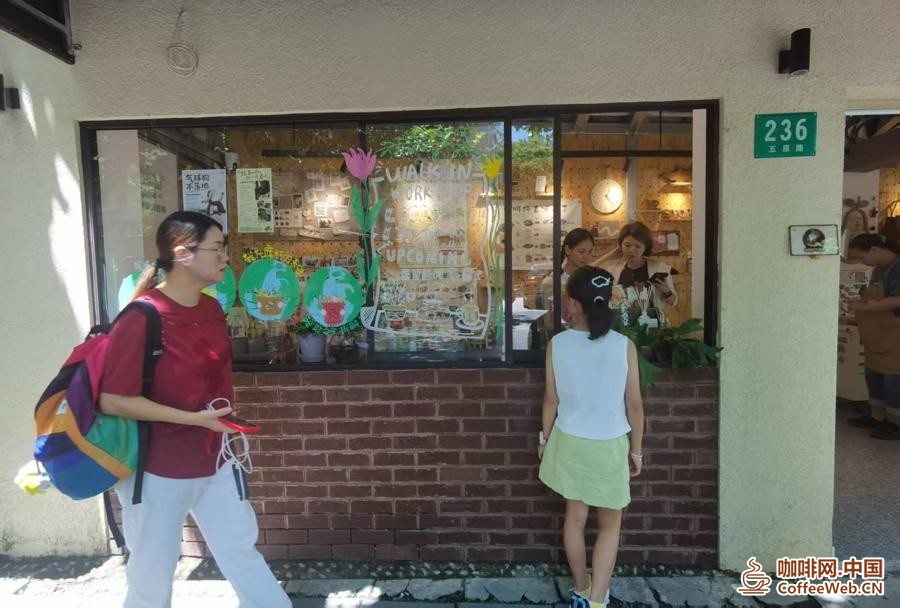
五原路236号的“循环空间”。 陈玺撼摄
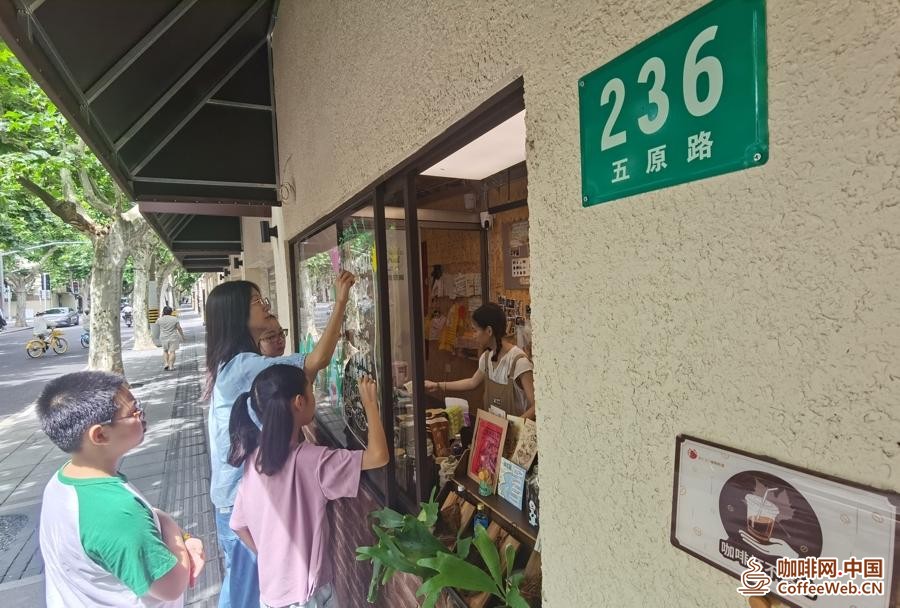
五原路236号的“循环空间”。 陈玺撼摄
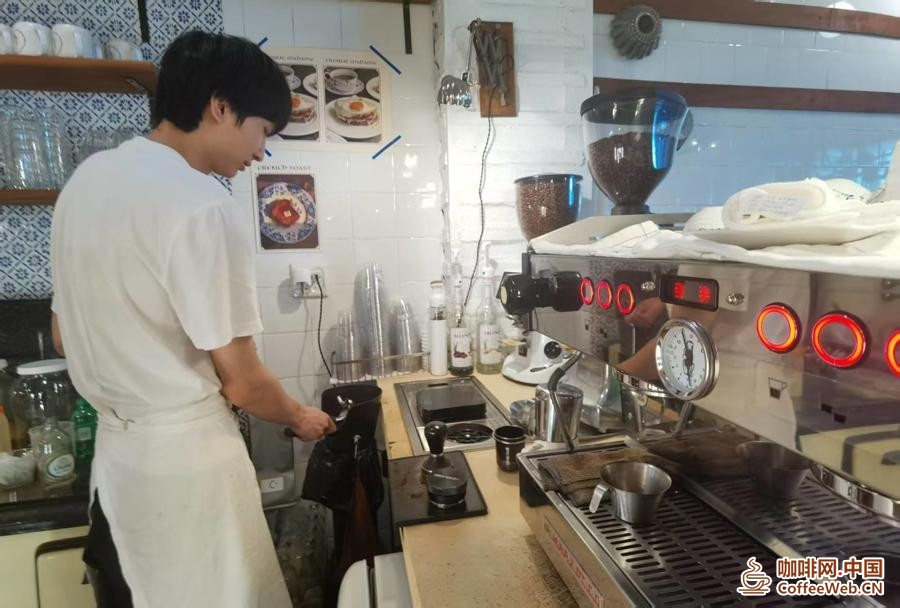
永福路大鹅咖啡店将咖啡渣倒进专用的收集袋。 陈玺撼摄
上海有699个“无废细胞”
放眼全上海,咖啡消费文化繁荣的同时,咖啡相关废弃物的收运处置却是一个相对冷门的话题。
长期关注可持续领域的宜斯建科技负责人周蓓尔推算了上海咖啡渣的产生量:根据《2025中国城市咖啡发展报告》,2024年中国人均咖啡年饮用数提升至22.24杯,如果上海人均咖啡年饮用数是此数据的两倍,并假设咖啡豆全部转化为湿咖啡渣,保守估计,上海日均咖啡渣产生量在40吨至50吨。如果它们全部就地物尽其用,一年可以替代一万多吨的原材料,并大幅降低采购运输原材料和生产加工相关产品产生的碳排放。
咖啡相关废弃物的潜力巨大,但关键在于形成一个可持续的就近变废为宝闭环。“我们知道,垃圾分类越细致,变废为宝的价值就越大,但精细化分拣和收运,需要较大的投入来确保体系有效长期运转,希望全社会更多力量参与进来,让咖啡相关废弃物物尽其用。”陈嘉敏表示。
记者了解到,五原路“循环空间”已经成为上海699个“无废城市细胞”中的一个。“无废城市细胞”是指贯彻落实“无废城市”建设相关理念,采取有效技术手段和管理措施,推广绿色生产生活方式,追求固体废物减量化、资源化和无害化的社会生活单位。“无废城市”的愿景,正通过这些细微处的创新与坚持,在咖啡香气中生根发芽。而每一只杯子的“不落地”,都是这座城市向绿色未来迈出的坚实一步。
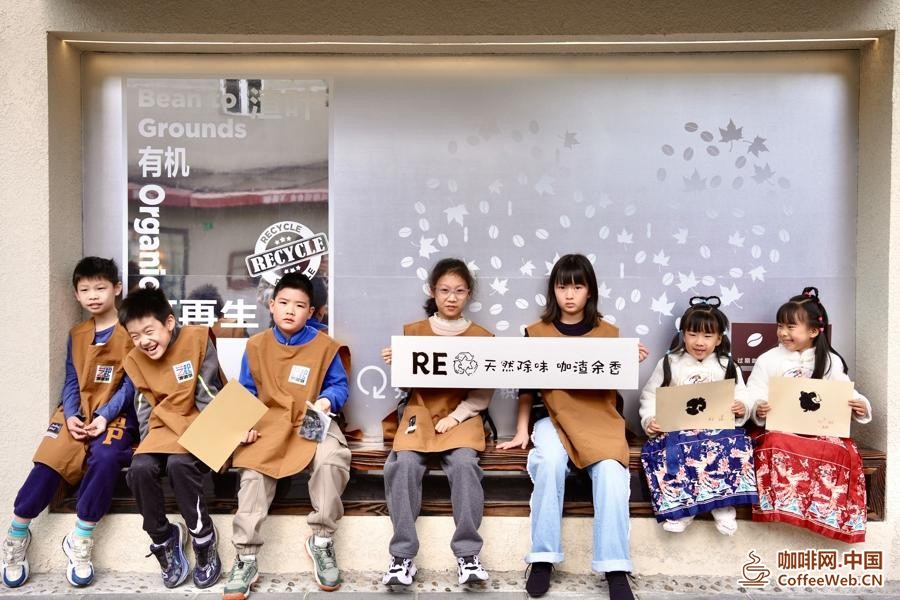
去年底,循环空间刚开放时,孩子们为空间创作的咖啡渣“店招”。 陈玺撼摄
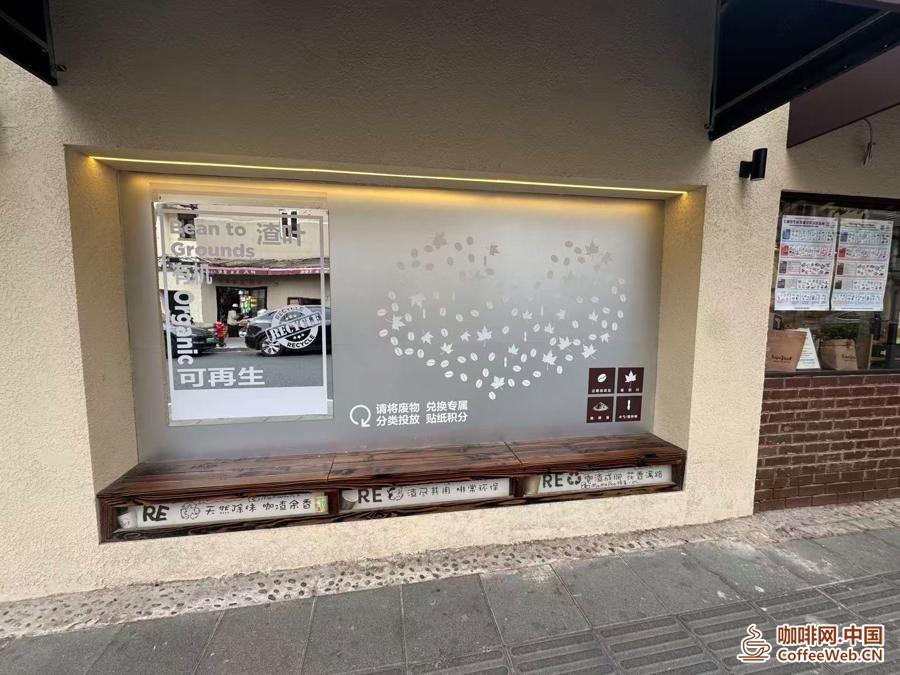
咖啡渣“店招”嵌在朝向街区的便民公共座椅下。 陈玺撼摄
原标题:《一杯咖啡的“后半生”,在上海的五原路被安顿》
Watch the news above. The efforts of the Wukang Anfu style block to ensure that every coffee cup does not fall to the ground have been condensed into the "circular space" at 236 Wuyuan Road.
Under the guidance of the administrator, a passerby holding a coffee cup walked into the "circulation space", poured the remaining coffee in the cup into the water bucket, rinsed it clean, put the plastic cup lid into the collector on the left side of the dedicated collection bin, then put the cup body with waterproof film on the inside into the collector on the right side, and finally put the tissues for wiping the mouth and hands and the bag for holding the coffee cup into the dry garbage bin in the middle. The recyclable materials on both sides of the dedicated collection bin will enter the corresponding channels for recycling, while the dry garbage in the dry garbage bin will be sent to the incineration plant for harmless treatment.
Transforming waste points into convenient spaces for the public
Within the 'circular space', there are also surrounding residents, coffee grounds produced by coffee shops, and expired coffee beans that are 'reborn'.
This morning (August 25th), Dong Yueran specially brought a cup of hot coffee grounds from a nearby caf é and handed it to Chen Jiamin, the head of the "Circular Space" operation.
Coincidentally, my mom was taking me for a drink nearby, so I brought over today's coffee grounds from the shop. Dong Yueran really likes to smell the residual coffee aroma on her hands. She said that these coffee grounds are very clean and can be used for painting after drying. They can also be used to make sachets, fertilizers, soap, clay, ice box stickers, spice stones, small handbags and other handmade items; Coffee beans can be used to make bracelets and necklaces, which I find very interesting.
Looking in the direction of Xiao Yueran's fingers, there is a handmade table in the "Circular Space". Liu Dongdong, a resident living on Fuxing West Road, is making coffee bean bracelets and coffee grounds sachets with his 5-year-old twins "Xin Xin" and "Nian Nian". This used to be a place for collecting waste, but when I came here at the end of last year, I found that it had been renovated and turned into a convenient space with more functions. Liu Dongdong said that this place is very close to home, and coincidentally, children love things related to art. They can also learn environmental protection knowledge by doing handicrafts here, so they often come here.
Surrounding residents regularly come to drop clean coffee grounds. Photo by Chen Xihong
Pour the remaining coffee in the cup into the water bucket, rinse it clean, and then place the plastic cup lid into the collector on the left side of the dedicated collection bucket. Photo by Chen Xihong
Heart to heart and mind to make coffee bean bracelets and coffee grounds sachets. Photo by Chen Xihong
Heart to heart and mind to make coffee bean bracelets and coffee grounds sachets. Photo by Chen Xihong
Both residents and coffee shops enjoy it
The motivation for transforming the waste collection point into a convenient space stems from a problem in the past neighborhood: due to the large number of coffee shops in the surrounding area, many tourists casually put their cups on windowsills, flower beds, shared bicycle baskets, or even throw them directly on the street after drinking coffee.
This is not a simple issue of tourist quality, "said Cao Danjun, Deputy Director of the Greening and City Appearance Bureau of Xuhui District. Behind this phenomenon, the environmental sanitation department also needs to reflect on whether its work has been done properly, especially whether the setting of public waste bins is reasonable enough, whether the waste bins are cleaned up in a timely manner after overflowing, and whether the surrounding residents, merchants, and tourists fully recognize the value of" coffee cups not falling to the ground ".
Since last year, the Wukang Anfu style neighborhood has implemented more refined management of public waste bins. On the one hand, installing overflow sensors on waste bins will alert environmental sanitation units in advance once the garbage in the bin reaches two-thirds of its capacity, reminding them to clean up in a timely manner; On the other hand, in response to the tidal like fluctuations in passenger flow near the Wukang Building, the sanitation department flexibly increases the placement of movable garbage bins from 9:00 to 21:00 every day to enhance the garbage collection capacity during peak hours.
Making it convenient to throw up coffee cups effectively alleviates the problem of "coffee cup landing" during peak hours, but the key to achieving complete "no landing" lies in the "heart", which is to promote public recognition of the value of "coffee cup landing", ensure that coffee cups can be placed in the right channels, and thus have the opportunity to turn waste into treasure. "Circular space" has emerged.
The amount of coffee related waste is actually not small, and there is a need for refined classification and separate collection and disposal, "Chen Jiamin told reporters. According to statistics from an environmental sanitation company, in the daily production of more than 1 ton of garbage in the Wukang Anfu style block, there are thousands of coffee cups and many coffee grounds hidden in wet garbage that cannot be classified and counted separately. These garbage" landed "will affect the urban environment." Circular Space "showcases or invites the public to experience the process of turning various types of coffee related waste into treasure, making everyone feel fresh and interesting, and thus understanding and recognizing the value of refined classification of coffee related waste.
In the past six months, the "Circular Space" has collected hundreds of kilograms of coffee grounds alone. Some mothers have developed the habit of "hoarding coffee grounds" and regularly pack up the dried and dehydrated coffee grounds at home. More than ten nearby coffee shops have also actively joined the "Coffee Cup Non Landing Alliance". Tourists do not need to search for trash cans everywhere, just return empty cups to any participating merchant with a unified logo. When accumulated to a certain extent, they submit a cleaning request through the WeChat mini program, and the sanitation vehicle will collect them from the store within 20 minutes after receiving the instruction.
The reporter visited two coffee shops, and the store managers expressed that they have the motivation to persist. The manager of Jiya Wuyuan Road store said that they have to pay a fee for transporting and disposing of coffee grounds and coffee cups every year. If the neighborhood can form a stable and public welfare closed loop for collecting and disposing of coffee grounds and coffee cups on site, it can indeed help the store save some expenses. Mr. Cai, the manager of Yongfu Road Big Goose Coffee Shop, told reporters that the shop produces two to three pounds of coffee grounds every day. After closing each night, they have to carry a collection bag and run for six to seven minutes to the designated wet garbage disposal point. "If volunteers come regularly to collect and ensure that they make the best use of their resources, we would be very welcome," he said.
The 'Circular Space' at 236 Wuyuan Road. Photo by Chen Xihong
The 'Circular Space' at 236 Wuyuan Road. Photo by Chen Xihong
Yongfu Road Goose Coffee Shop pours coffee grounds into a dedicated collection bag. Photo by Chen Xihong
Shanghai has 699 'waste free cells'
Looking at Shanghai as a whole, while coffee consumption culture is thriving, the collection, transportation, and disposal of coffee related waste is a relatively niche topic.
Zhou Beier, the head of Yishijian Technology, who has long been concerned about the sustainable field, calculated the amount of coffee grounds produced in Shanghai: according to the "2025 China Urban Coffee Development Report", the per capita annual coffee consumption in China will increase to 22.24 cups in 2024. If the per capita annual coffee consumption in Shanghai is twice this number, and assuming that all coffee beans are converted into wet coffee grounds, conservatively estimating, the daily average coffee grounds production in Shanghai is between 40 and 50 tons. If they are all used to their fullest potential, they can replace over 10000 tons of raw materials annually and significantly reduce carbon emissions from purchasing, transporting raw materials, and producing and processing related products.
The potential of coffee related waste is enormous, but the key is to form a sustainable closed-loop system that turns waste into treasure nearby. We know that the more detailed the garbage classification, the greater the value of turning waste into treasure. However, fine sorting and collection require significant investment to ensure the effective long-term operation of the system. We hope that more forces from the whole society can participate and make full use of coffee related waste, "said Chen Jiamin.
The reporter learned that the "Circular Space" on Wuyuan Road has become one of the 699 "waste free urban cells" in Shanghai. 'Waste free city cells' refer to social living units that implement the relevant concepts of' waste free city 'construction, adopt effective technical means and management measures, promote green production and lifestyle, and pursue solid waste reduction, resource utilization, and harmlessness. The vision of a 'waste free city' is taking root and sprouting in the aroma of coffee through these subtle innovations and persistence. And each cup's' not falling 'is a solid step taken by this city towards a green future.
At the end of last year, when the circular space first opened, children created a coffee grounds "shop sign" for the space. Photo by Chen Xihong
The coffee grounds "shop sign" is embedded under the convenient public seats facing the block. Photo by Chen Xihong
Original title: "The 'Second Half' of a Cup of Coffee, Settled on Wuyuan Road in Shanghai"