咖啡+早餐,撑起古茗上半年单店增长Coffee and breakfast support the single store growth of Guming in the first half of the year
【大河财立方记者郝楠楠何凤娟】8月26日晚间,古茗(HK1364)发布2026年上半年业绩公告,交出一份营收、经调整利润双增的成绩单。与此同时,古茗(HK1364)在主动放缓开店节奏,咖啡、早餐等新品类成为这家万店茶饮撑起单店增长的新支点。
营收、利润双增,古茗上半年运营效率稳步提升
财报显示,2026年上半年,古茗(HK1364)实现收入74.7亿元,同比增长31.9%;经调整利润(非国际财务报告准则计量)为15.7亿元,同比增长44.4%;毛利率亦由2025年同期的31.5%增至33.4%,同比提升1.9个百分点。
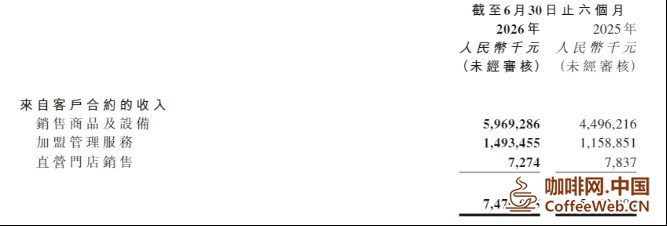
从收入构成来看,销售商品及设备占比近八成。2026年上半年,古茗(HK1364)销售商品及设备收入达59.69亿元,同比增长32.8%,占总收入79.9%;加盟管理服务收入为14.93亿元,同比增长28.9%,占总收入20.0%;直营门店收入为727.4万元,同比微降7.2%。
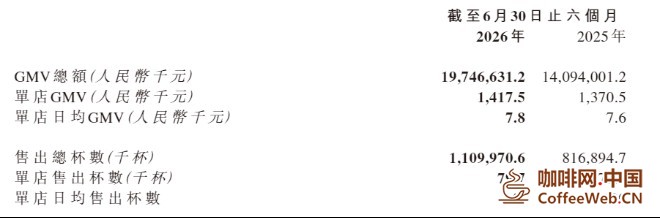
门店表现上,2026年上半年,古茗(HK1364)GMV总额达197.47亿元,同比增长40.1%。单店日均GMV由去年同期的7600元提升至7800元;单店日均售出杯数增长1杯,从439杯增至440杯;由此来看,GMV增量更多来自新开门店贡献及客单价提升,经计算,今年上半年古茗(HK1364)单店客单价由约17.3元升至约17.7元。
会员规模方面,截至报告期末,古茗(HK1364)小程序注册会员数已突破2.36亿,其中季度活跃会员约5900万名。
开店减速,低线深耕与高线突破并行
截至2026年6月30日,古茗(HK1364)门店总数达14351家。期内新开门店1318家,较上年同期的1570家减少252家,同比下降16.1%;关闭门店521家,较上年同期的305家增加216家,同比增加70.8%。
公司表示,新店增速放缓主要系公司日益注重门店质量,优先推进现有门店升级为第六代门店,同时对新开门店执行更为严格的选址标准;闭店数量上升主要因期初门店基数较高所致。
从城市线级分布来看,古茗(HK1364)在下沉市场的优势持续巩固,同时积极布局高线城市。
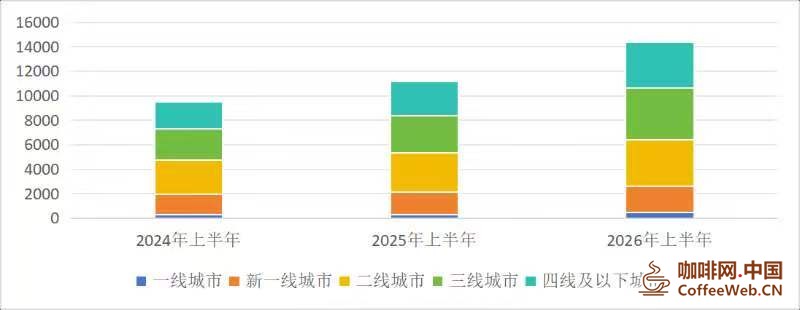
截至2026年6月30日,二线及以下城市仍是基本盘,门店数量共计11739家,占比达82%。其中二线城市3811家,同比增长18.8%;三线城市达4208家,同比增长37.4%;四线及以下城市达3720家,同比增长33.9%。
从2026年上半年净增门店数量来看,各线级城市呈现明显分化。一线城市净增43家,较2025年上半年的36家同比增加7家,是唯一净增数量同比扩大的市场;新一线城市净增由上年同期的131家降至74家;二线城市由347家大幅降至70家;三线城市由395家降至323家;四线及以下城市由356家降至287家。
值得关注的是,一线城市门店数量增幅虽然领跑各线级城市,同比增长达44.3%,但体量相对较小,仅有459家,占门店总量的3.2%。
另外,从区域分布来看,古茗(HK1364)门店主要集中在华东、华中及华南区域。红餐大数据显示,在“大本营”浙江省,古茗(HK1364)门店已超2600家,广东门店近2000家,福建、江西门店亦突破1000家,核心优势区域稳固。在深耕优势区域的同时,古茗(HK1364)亦在有序推进全国化布局,据公开报道,古茗(HK1364)对外宣布2026年计划新开约4000家门店,将在云贵川渝、河北、山东等非强势区域加速拓店,同时在优势区域持续优化点位、加密布局。
对于古茗(HK1364)深耕二线及以下城市且区域集中度高的差异化拓店策略,艾媒咨询CEO兼首席分析师张毅在接受大河财立方记者采访时分析,低线城市人力等各项成本更低,对于门店的快速扩张是有帮助的;若门店经营稳定,密集的门店网络还能在区域内筑起高壁垒。
“但需要注意的是,低线市场本身的消费(883434)能力有限,市场扩容空间容易触及天花板。”张毅说。此外,在当下行业竞争加剧环境下,古茗(HK1364)向高线及北方市场突破时可能存在难点,如高线城市成本高企,会挤压性价比模型的利润;本土高端茶饮品牌的心智占位在先等。跨区域扩张尤其是进入北方市场,还要迈过两道坎,即供应链基建配套的完整性以及消费(883434)的季节性。
咖啡机装进九成门店,撑起单店增长的不是奶茶
今年上半年,古茗(HK1364)在产品侧的动作密集:推咖啡、卖早餐,还试水瓶装饮品。
业绩公告中有这样一组数据:截至2026年6月30日止六个月,古茗(HK1364)推出了51款新品。值得注意的是,其中有12款是新咖啡饮品,占新品比重达23.5%。另外,截至6月30日,约有13500家古茗(HK1364)门店已配备咖啡机,覆盖率约94%。
此外,古茗(HK1364)在上半年,进一步拓展消费(883434)场景,部分门店上线了早餐烘焙线,在杭州等区域部分门店售卖牛肉卷、三明治、蛋挞等产品。
咖啡+早餐的业务线,为古茗(HK1364)带来了可观的收益。公告显示,今年上半年古茗(HK1364)的单店GMV、单店日均GMV、单店售出杯数及单店日均售出杯数较去年同期大致保持稳定,主要由于丰富咖啡饮品种类及拓展至早餐场景。
古茗(HK1364)产品线甚至走出门店,走向超市货架。今年6月,古茗(HK1364)HPP瓶装果汁进入商超、零食店、便利店等零售渠道。
谈及万店茶饮品牌的多品类延伸,张毅认为,其核心价值在于抢占更多消费(883434)时段,把固定成本和供应链成本摊得更薄,“更重要的是提升坪效、客单价等经营指标”。
目前来看,古茗(HK1364)的咖啡品类取得了重要突破,此前上线的苦尽柑来拿铁等产品在社交平台走红,古茗(HK1364)还提出了“30天鲜豆”标准,以提升咖啡消费(883434)体验。
“新茶饮品牌跨界做咖啡,也不见得很轻松。”张毅说,瑞幸、库迪、幸运咖等专业品牌在供应链效率、价格、品牌心智上都更有优势,茶饮品牌若硬拼传统咖啡赛道,未必具备更强的竞争力。在他看来,茶咖等创新品类才是茶饮品牌的机会所在,关键还是要靠产品创新。
责编:李文玉|审校:陈筱娟|审核:李震|监审:古筝
On the evening of August 26th, Gu Ming (HK1364) released its performance announcement for the first half of 2026, delivering a report of both increased revenue and adjusted profit. At the same time, Guming (HK1364) is actively slowing down its store opening pace, with new categories such as coffee and breakfast becoming the new pivot for this Wandian tea beverage to support its single store growth.
Revenue and profit both increased, and Guming's operational efficiency steadily improved in the first half of the year
According to the financial report, in the first half of 2026, Guming (HK1364) achieved a revenue of 7.47 billion yuan, a year-on-year increase of 31.9%; Adjusted profit (not measured by International Financial Reporting Standards) was 1.57 billion yuan, a year-on-year increase of 44.4%; The gross profit margin also increased from 31.5% in the same period of 2025 to 33.4%, a year-on-year increase of 1.9 percentage points.
From the perspective of income composition, sales of goods and equipment account for nearly 80%. In the first half of 2026, Guming (HK1364)'s sales revenue from goods and equipment reached 5.969 billion yuan, a year-on-year increase of 32.8%, accounting for 79.9% of the total revenue; The revenue from franchise management services was 1.493 billion yuan, a year-on-year increase of 28.9%, accounting for 20.0% of the total revenue; The revenue of directly operated stores was 7.274 million yuan, a slight decrease of 7.2% year-on-year.
In terms of store performance, in the first half of 2026, the total GMV of Guming (HK1364) reached 19.747 billion yuan, a year-on-year increase of 40.1%. The daily GMV of a single store has increased from 7600 yuan in the same period last year to 7800 yuan; The daily average number of cups sold in a single store increased by 1 cup, from 439 cups to 440 cups; From this perspective, the increase in GMV comes more from the contribution of newly opened stores and the increase in average customer value. According to calculations, the average customer value per store of Guming (HK1364) increased from about 17.3 yuan to about 17.7 yuan in the first half of this year.
In terms of membership size, as of the end of the reporting period, the number of registered members on the Gu Ming (HK1364) mini program has exceeded 236 million, with approximately 59 million quarterly active members.
Slow down opening stores, parallel deepening of low line cultivation and breakthrough of high line
As of June 30, 2026, the total number of Gu Ming (HK1364) stores reached 14351. During the period, 1318 new stores were opened, a decrease of 252 from 1570 in the same period last year, a year-on-year decrease of 16.1%; 521 stores were closed, an increase of 216 stores compared to the same period last year, a year-on-year increase of 70.8%.
The company stated that the slowdown in new store growth is mainly due to the company's increasing focus on store quality, prioritizing the upgrading of existing stores to sixth generation stores, and implementing stricter site selection standards for new stores; The increase in the number of closed stores is mainly due to a high initial store base.
From the perspective of urban line level distribution, Guming (HK1364) continues to consolidate its advantages in the lower tier market and actively layout in higher tier cities.
As of June 30, 2026, second tier and below cities are still the basic market, with a total of 11739 stores, accounting for 82%. Among them, there are 3811 second tier cities, a year-on-year increase of 18.8%; The number of third tier cities reached 4208, a year-on-year increase of 37.4%; There are 3720 cities in the fourth tier and below, a year-on-year increase of 33.9%.
From the net increase in the number of stores in the first half of 2026, there is a clear differentiation among various tier cities. First tier cities saw a net increase of 43, an increase of 7 compared to the 36 in the first half of 2025, making it the only market with a year-on-year expansion in net increase; The net increase of new first tier cities decreased from 131 in the same period last year to 74; The number of second tier cities has significantly decreased from 347 to 70; The number of third tier cities has decreased from 395 to 323; The number of cities in the fourth tier and below has decreased from 356 to 287.
It is worth noting that although the growth rate of the number of stores in first tier cities leads all tier cities, with a year-on-year increase of 44.3%, the volume is relatively small, only 459, accounting for 3.2% of the total number of stores.
Furthermore, in terms of regional distribution, Guming (HK1364) stores are mainly concentrated in the East, Central, and South China regions. Red Food Big Data shows that in its "headquarters" in Zhejiang Province, Guming (HK1364) has over 2600 stores, nearly 2000 stores in Guangdong, and over 1000 stores in Fujian and Jiangxi. Its core advantage areas are stable. While deeply cultivating advantageous regions, Guming (HK1364) is also orderly promoting nationwide layout. According to public reports, Guming (HK1364) announced plans to open about 4000 new stores by 2026, accelerating store expansion in non dominant regions such as Yunnan, Guizhou, Sichuan, Chongqing, Hebei, and Shandong, while continuously optimizing locations and increasing layout in advantageous regions.
Regarding Gu Ming (HK1364)'s differentiated store expansion strategy of deep cultivation in second tier and lower tier cities with high regional concentration, Zhang Yi, CEO and Chief Analyst of iMedia Consulting, analyzed in an interview with Dahe Caili reporters that the lower costs of labor and other aspects in lower tier cities are helpful for the rapid expansion of stores; If the store operation is stable, a dense network of stores can still build high barriers within the region.
However, it should be noted that the consumption capacity of the low-end market itself (883434) is limited, and the market expansion space is easily reaching the ceiling, "said Zhang Yi. In addition, in the current environment of intensified industry competition, there may be difficulties for Guming (HK1364) to break through to the high-end and northern markets, such as high costs in high-end cities, which will squeeze the profits of the cost-effectiveness model; The mindset of local high-end tea beverage brands takes priority. Cross regional expansion, especially entering the northern market, requires overcoming two hurdles: the completeness of supply chain infrastructure and the seasonality of consumption (883434).
Coffee machines are installed in 90% of stores, and it's not milk tea that supports single store growth
In the first half of this year, Guming (HK1364) had intensive actions on the product side: promoting coffee, selling breakfast, and even trying bottled drinks.
In the performance announcement, there is a set of data: as of June 30, 2026, for the six months ended, Guming (HK1364) has launched 51 new products. It is worth noting that 12 of them are new coffee drinks, accounting for 23.5% of the new products. In addition, as of June 30th, about 13500 Guming (HK1364) stores have been equipped with coffee machines, with a coverage rate of about 94%.
In addition, in the first half of the year, Guming (HK1364) further expanded its consumption (883434) scene, with some stores launching breakfast baking lines and some stores selling beef rolls, sandwiches, egg tarts and other products in Hangzhou and other regions.
The coffee+breakfast business line has brought considerable revenue to Guming (HK1364). The announcement shows that in the first half of this year, the GMV per store, average daily GMV per store, number of cups sold per store, and average daily number of cups sold per store of Guming (HK1364) remained relatively stable compared to the same period last year, mainly due to the diversification of coffee beverage types and the expansion to breakfast scenes.
The product line of Guming (HK1364) has even gone out of stores and onto supermarket shelves. In June of this year, Guming (HK1364) HPP bottled juice entered retail channels such as supermarkets, snack shops, and convenience stores.
When it comes to the multi category extension of Wandian tea beverage brand, Zhang Yi believes that its core value lies in seizing more consumption periods (883434), spreading fixed costs and supply chain costs more thinly, and "more importantly, improving operational indicators such as floor area efficiency and average customer price".
At present, Guming (HK1364) has made significant breakthroughs in its coffee category. Its previously launched products such as Kuji Ganlai Latte have become popular on social media. Guming (HK1364) has also proposed the "30 day fresh bean" standard to enhance the coffee consumption experience (883434).
It may not be easy for new tea beverage brands to cross over and make coffee, "said Zhang Yi. Professional brands such as Luckin Coffee, Kudi Coffee, and Lucky Coffee have advantages in supply chain efficiency, price, and brand awareness. If tea beverage brands compete with traditional coffee brands, they may not necessarily have stronger competitiveness. In his opinion, innovative categories such as tea and coffee are the opportunities for tea beverage brands, and the key still lies in product innovation.
Editor in Chief: Li Wenyu | Reviewer: Chen Xiaojuan | Reviewer: Li Zhen | Supervisor: Guzheng