蹲点调查丨一杯咖啡的奇幻“鲁”途Survey - The Fantastic Journey of a Cup of Coffee

在滨州邹平一处并不起眼的工业园里,十几米高的钢制塔体拔地而起,纵横交错的管道连接着密密麻麻的阀门。淡绿色的咖啡生豆被送入这套庞然大物,经过烘焙、萃取、分离、浓缩、干燥,变成细密馥郁的速溶咖啡粉。
他踩中的,是国内咖啡市场一阵空前猛烈的风口。
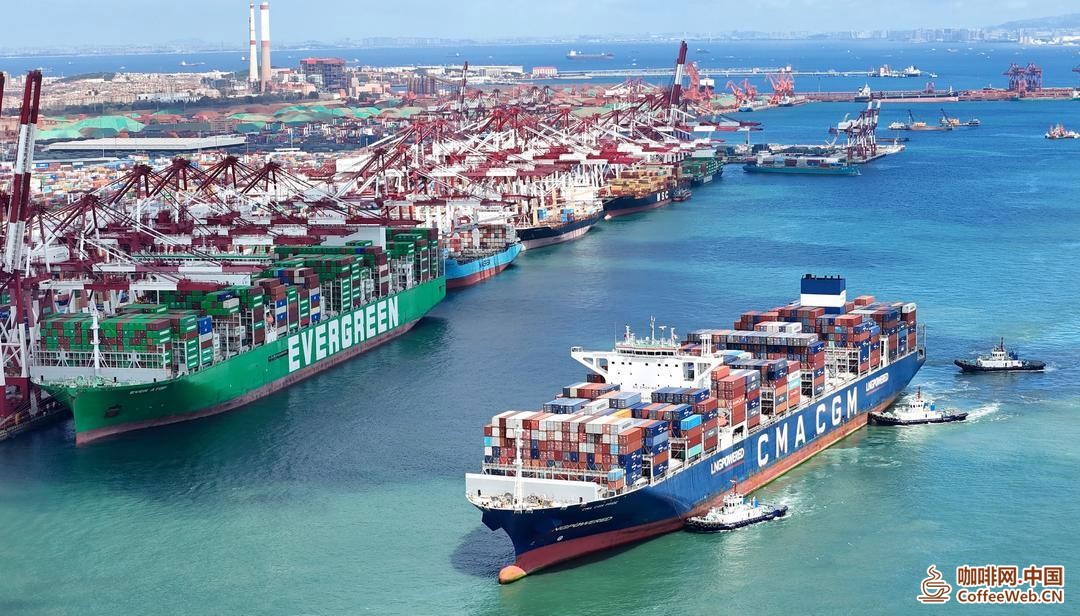
这正是青岛港的价值所在。青岛海关数据显示,2025年,青岛口岸进口咖啡豆货值8.6亿元,同比增长14.7%。今年上半年,山东进口咖啡货值达3.87亿元,覆盖越南、巴西、埃塞俄比亚等多个咖啡主产区。
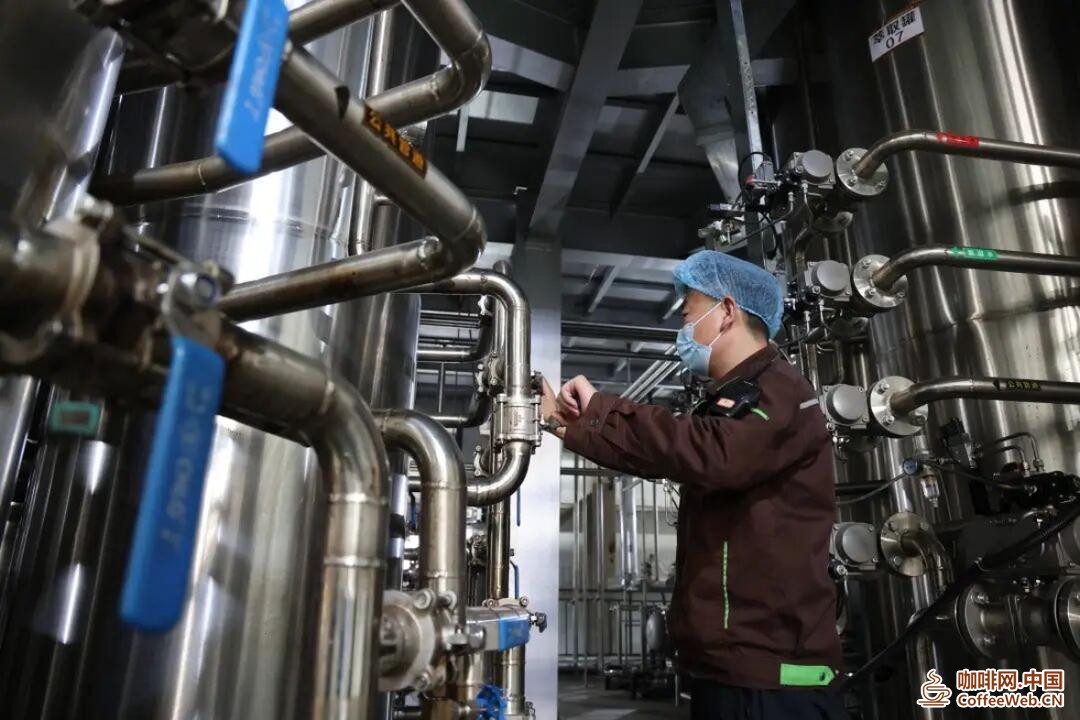
“优然把双飞的设备转化为产能、产品和订单;优然在生产中积累的数据,又反过来帮助双飞改进技术。客户来考察时,优然的工厂就是双飞最直观的产品展厅。”郑高飞说,这对“搭档”正从两个方向,深入全球咖啡供应链——
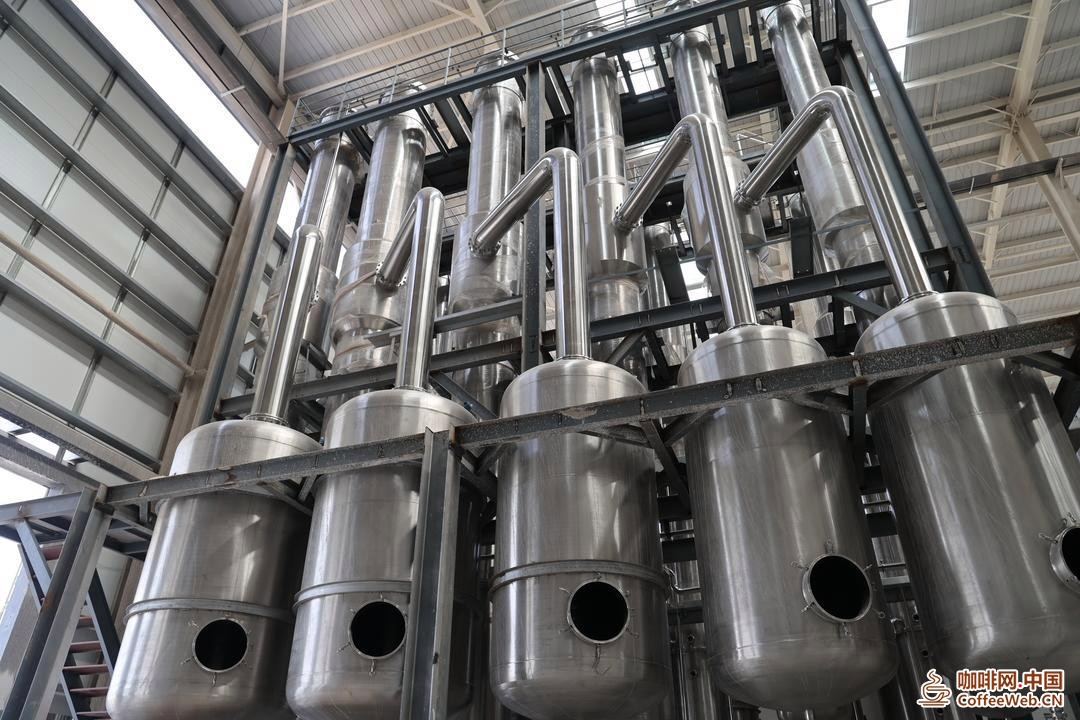
但性能过关,只意味着国产设备拿到了市场竞争的“入场券”。与进口设备相比,双飞真正的“护城河”,在于成本和效率。

威士特咖啡山东分公司相关负责人王秀娜看到的则是另一面:“市场在增长,落地的新店反而少了。以前每月能服务3至5家新开咖啡店,最近只有一两家。不少小型本土连锁品牌也在收缩甚至退出。”
四种路径,同一套逻辑:从既有优势出发,向上下游延伸,而非凭空拼出一条“大而全”的产业链。由此回过头来审视山东,“成链”的关键不在于照搬哪个地区的思路,而在于找准自己的“牛鼻子”。
In an inconspicuous industrial park in Zouping, Binzhou, a steel tower over ten meters high rises from the ground, with criss crossing pipelines connected to densely packed valves. The light green coffee beans are fed into this behemoth, and after baking, extraction, separation, concentration, and drying, they become a fine and rich instant coffee powder.
This production line is designed to have an annual capacity of 12000 tons and can brew approximately 5 billion cups of coffee. It is currently the world's largest single unit instant coffee production project.
Surprisingly, the complete production line that supports the operation of the project also comes from Zouping. About 98% of the large-scale instant coffee production capacity in China uses equipment from this company; Its production line is also exported to Indonesia, Vietnam, Russia and other places, forming about 10% of the global total production capacity.
Shandong does not produce a single coffee bean, nor is it a traditional coffee consumption center, but it has emerged as a rising star in this global business——
By 2025, the import volume of green coffee beans in Qingdao Port will account for about 13% of the national total, making it the largest coffee import gateway in northern China; During the same period, Shandong exported approximately 823 tons of coffee and related products with a value of 6.7 million US dollars, ranking sixth in the country in terms of export volume. As of the end of July this year, the number of coffee related enterprises in the province reached 11500, ranking first among northern provinces.
From raw materials and equipment to processing and consumption, multiple stages required for a cup of coffee have all landed in Shandong.
The first gateway to northern coffee
Shandong, which does not produce a single coffee bean, has caught the fresh beans that have drifted across the sea, as well as the new production capacity of Nestle and Luckin Coffee
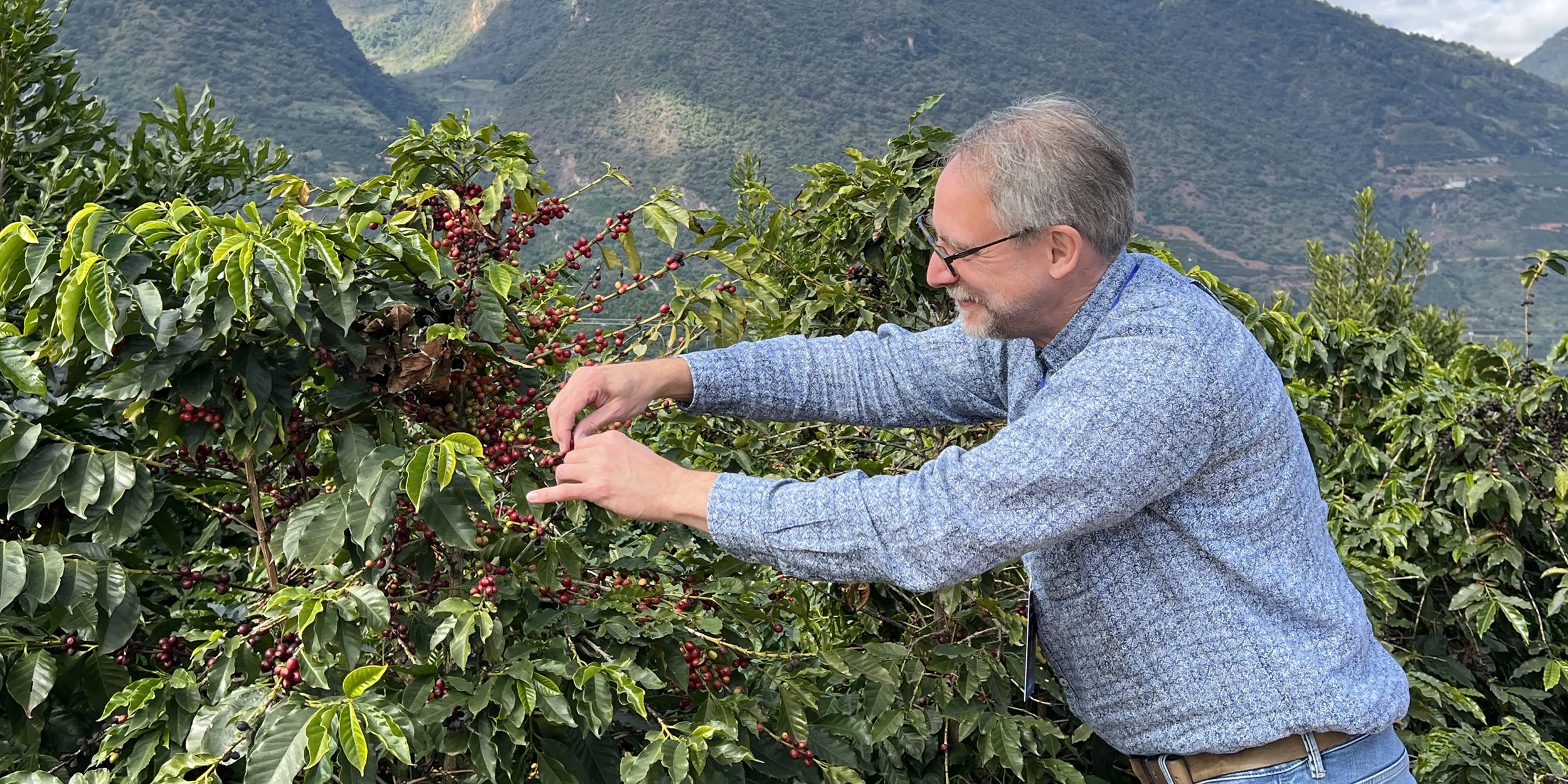
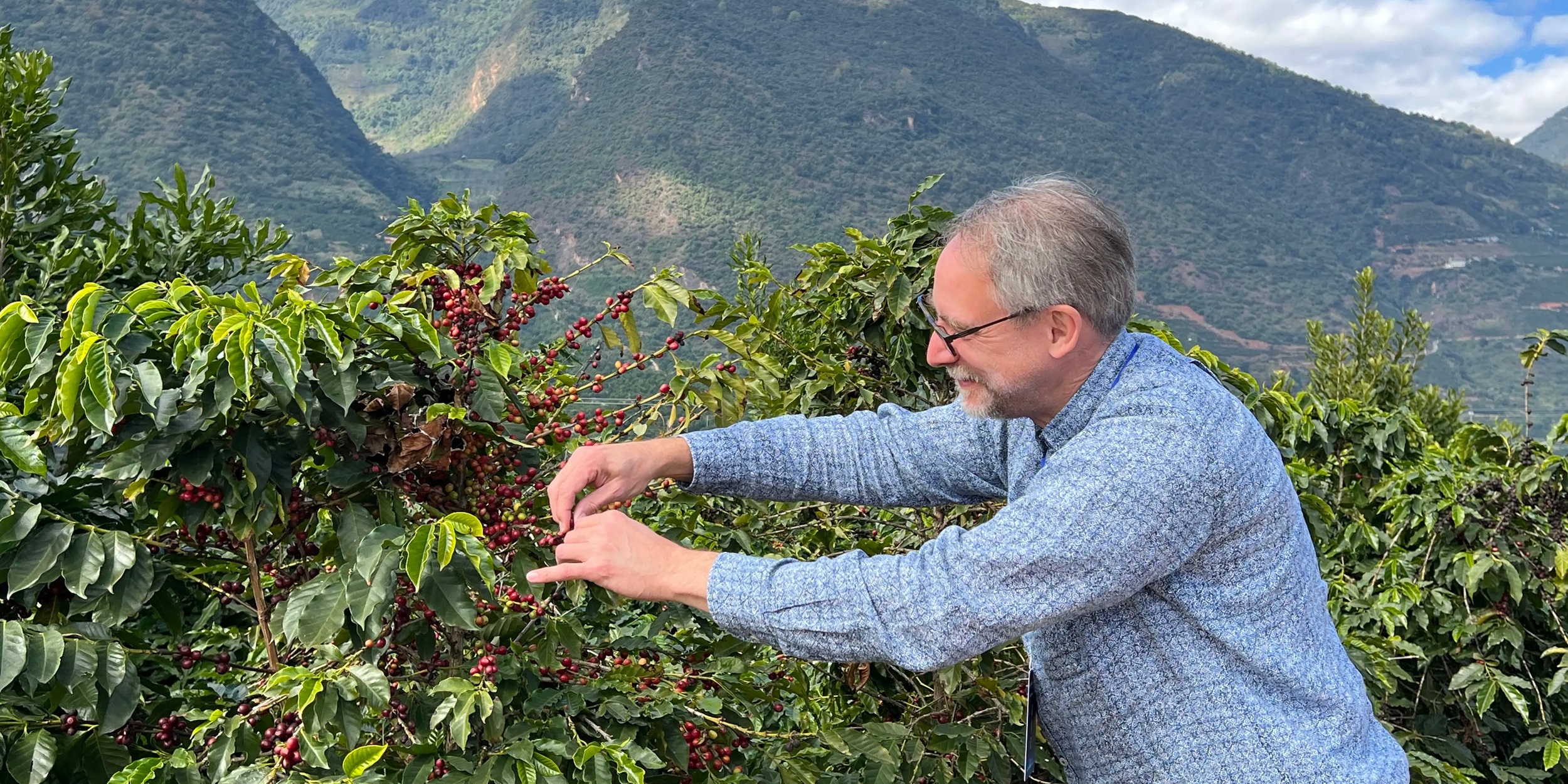
On the morning of August 27th local time, in a coffee plantation in southern India, Wu Mugao bent down to pick up a freshly picked coffee fruit and sniffed it at the tip of his nose.
This coffee green bean trader from Jinan travels to multiple coffee producing areas in Southeast Asia and South Asia every month, searching for suitable sources for domestic coffee deep processing enterprises and chain brands.
Where, when, and at what price beans are bought will ultimately affect the cup of coffee in the hands of consumers, "said Wu Mugao. In 2022, when he first established his coffee green bean trading company, the annual trading volume was less than 300 tons; Now, this number has approached 2000 tons.
He stepped on an unprecedentedly fierce trend in the domestic coffee market.
Industry reports show that by 2025, the scale of China's coffee industry will reach 354.9 billion yuan, with an average annual compound growth rate of over 23% from 2020 to 2024, which is about six times the long-term growth rate of the global coffee market. The US Department of Agriculture's Overseas Agricultural Service publicly announced in January this year that China has become one of the fastest-growing coffee markets in the world.
Coffee is known as the world's second largest traded commodity after oil. Throughout centuries of global trade history, coffee cultivation has gradually become concentrated in a few tropical countries and regions, while consumption has spread throughout the world. The spatial separation of origin and market naturally gives coffee the industrial characteristics of cross-border circulation and remote processing.
Although China does not completely produce coffee beans, the areas suitable for large-scale cultivation are extremely limited, with Yunnan province accounting for over 98% of the country's production. In recent years, even with the continuous improvement of local planting capacity, the yield still cannot catch up with the rapidly increasing domestic demand for raw materials. In 2025, China will import approximately 223800 tons of green coffee beans, which is about 1.6 times the production of Yunnan during the same period.
In other words, whoever controls the import channel will be stuck in the upstream throat of the coffee industry chain.
This is precisely where the value of Qingdao Port lies. According to data from Qingdao Customs, the value of imported coffee beans at Qingdao Port is 860 million yuan in 2025, a year-on-year increase of 14.7%. In the first half of this year, the value of imported coffee in Shandong reached 387 million yuan, covering multiple coffee producing areas such as Vietnam, Brazil, and Ethiopia.
As the Chinese coffee market continues to expand, the dependence on imported green beans will continue to rise, "said Liu Lei, President of the Shandong Coffee Beverage Chamber of Commerce. As a support for connecting overseas production areas with local factories, Qingdao Port is a crucial" raw material entrance "for the development of Shandong's coffee industry.
Since October last year, the surrounding areas of Qingdao Port have successively welcomed new coffee processing capacity: Nestle Laixi factory has put into operation two new production lines for UHT ultra-high temperature sterilized milk and 1.8g coffee small strip bags; The Luckin Coffee Qingdao Innovation Production Center, with a total investment of approximately 3 billion yuan, has been completed and put into operation. The project is equipped with three of the world's largest single unit coffee roasting machines.
Guo Jinyi, co-founder and CEO of Luckin Coffee, attributed the reason for its layout in Qingdao to its advantages in port logistics, bonded processing, and multimodal transportation.
From the world's largest single unit instant coffee production project to the world's largest single unit coffee roasting machine, the frequent occurrence of 'world's largest' in Shandong is not accidental. Liu Lei believes that the 'front port, back factory' model shortens the distance of raw material transportation and production turnover time, and also improves supply chain efficiency.
But converting port traffic into industrial "reserve" cannot rely solely on importing a few more ships of coffee beans. Whether raw beans can enter the trading, processing, and supply chain service system locally after entering the port determines whether Qingdao only gains logistics channel benefits or higher value-added industrial benefits. This is also the essence of the extension of productive service industry towards specialization and high-end.
The hidden equipment behind the 'world's largest'
From import dependence to domestic substitution and then to global output, 98% of the domestic and 10% of the global instant coffee production capacity rely on Shandong equipment
A considerable portion of the coffee beans unloaded from Qingdao Port are heading west to Zouping and entering the production line of the world's largest single unit instant coffee production project.
In mid July, Nataraj, the chief engineer of Aolan, a leading global instant coffee producer, made a special trip from Singapore to Zouping. What attracted him was not only the coffee factory, but also the entire set of Chinese equipment behind it.
This factory is constructed and operated by Shandong Youran Coffee Co., Ltd. (hereinafter referred to as "Youran"), and the complete equipment is provided by Zouping Shuangfei Complete Equipment Co., Ltd. (hereinafter referred to as "Shuangfei"). Both companies were founded by Zheng Gaofei, one making products and the other making equipment, forming a special coffee "partnership".
Yuran transforms Shuangfei's equipment into production capacity, products, and orders; the data accumulated by Yuran in production, in turn, helps Shuangfei improve its technology. When customers come to inspect, Yuran's factory is Shuangfei's most intuitive product showroom. "Zheng Gaofei said that these" partners "are deepening into the global coffee supply chain from two directions——
Yuran exports instant coffee powder to the outside world.
The Youran project started production at the end of April this year and has established partnerships with over 40 domestic coffee companies and multiple overseas clients. This year, the company is expected to achieve a revenue of 800 million yuan, of which exports account for more than 60%. Among the main customers, Aolan purchases about 3000 tons of instant coffee powder annually, while Vietnam Youxuan purchases about 7500 tons annually.
Shuangfei exports a complete set of production lines to the outside world.
Zheng Gaofei calculated that the annual production capacity of large-scale instant coffee projects in China is about 93000 tons, of which about 91000 tons are supported by the Shuangfei production line, accounting for nearly 98%. Overseas, the Shuangfei production line has entered multiple countries, with a cumulative export value of about 400 million US dollars, forming an annual production capacity for instant coffee that accounts for about 10% of the world's total; In the past five years, about half of the world's new growth rate dissolved coffee projects have used dual flight production lines.
For a long time in the past, the production of instant coffee in China could only rely on imported equipment. In 2005, our team carried out technological research and development, and after four years of hard work, we finally achieved import substitution. Speaking of this experience, Zheng Gaofei still couldn't hide his excitement.
From import dependence, to domestic substitution, and then to global output, what supports this leap is Shandong's solid industrial foundation - possessing all 41 major industrial categories; From mechanical processing and chemical equipment to automatic control and engineering design, the long-term accumulated industrial foundation and collaborative capabilities provide the soil for technological breakthroughs and industrial applications of coffee equipment.
According to third-party appraisal, the Shuangfei equipment has reached the international advanced level in relevant core indicators. As of now, Shuangfei has obtained a total of 60 patents of various types, including 12 invention patents, and another 7 are under application.
But achieving satisfactory performance only means that domestic devices have obtained the "entry ticket" to market competition. Compared with imported equipment, Shuangfei's true "moat" lies in cost and efficiency.
Zheng Gaofei introduced that the price of Shuangfei equipment is only 20% of imported similar equipment, and it has saved more than 1.9 billion yuan in equipment investment for domestic instant coffee deep processing enterprises so far; Compared to the 3-year delivery cycle of imported equipment, Shuangfei can compress the time to 10 months.
This is the most basic competitiveness of Chinese manufacturing.
However, the import substitution of traditional instant coffee equipment is far from the end. Shuangfei's eyes have turned to new fields with higher technological barriers.
Cold extracted freeze-dried coffee and coffee liquid are rapidly rising in China. But Zheng Gaofei sees a problem: many freeze-dried coffee producers, in order to reduce costs, add hot extraction in addition to cold extraction and use hot evaporation concentration, which greatly reduces the quality. The root cause lies in the immaturity of domestic equipment and the high cost of imported equipment
He revealed that the complete set of equipment for cold extraction and freeze-drying coffee from Shuangfei has entered the final trial and industrialization stage, and is expected to be launched this year; The complete set of coffee liquid equipment is also being synchronously promoted.
A freeze-dried coffee production line with an annual output of 5000 tons overseas is priced at about 530 million yuan; Shuangfei is expected to be priced at around 100 million yuan, less than 20% off. Zheng Gaofei said that if China's per capita consumption of freeze-dried coffee reaches the current level in Europe in the future, Shuangfei's equipment can save tens of billions of yuan in investment for domestic enterprises.
It is not difficult to see that Shuangfei's exploration is opening up greater value-added space - expanding high-end product lines, strengthening the international influence of Chinese coffee equipment, and gradually transforming from equipment suppliers to process technology and production solution providers.
This also provides another imagination for Shandong coffee manufacturing: the value of processing and equipment is not only in the factory and production capacity, but also in the research and development, design, technical services, and brand behind it. With these high value-added links gathering locally, Shandong's role in the global coffee industry chain is expected to shift from simple production and manufacturing to technology and standard output.
Breakthrough in the consumption of a cup of coffee
Local brands dare to take a step forward, and their confidence comes from the multi-level consumer market. But can Shandong cultivate its own nationally renowned coffee brand?
Industrial growth is driven by both supply capacity and consumer demand.
Zhongheng Mall, located in Tianqiao District, Jinan City, has the largest one-stop coffee procurement platform in Jiangbei. Products such as coffee beans, filter cups, hand drawn kettles, coffee machines, and auxiliary ingredients are gathered here, radiating to major coffee shops and catering enterprises in the province, with an annual transaction volume of over 100 million yuan. It is a window to observe the coffee consumption market in Shandong.
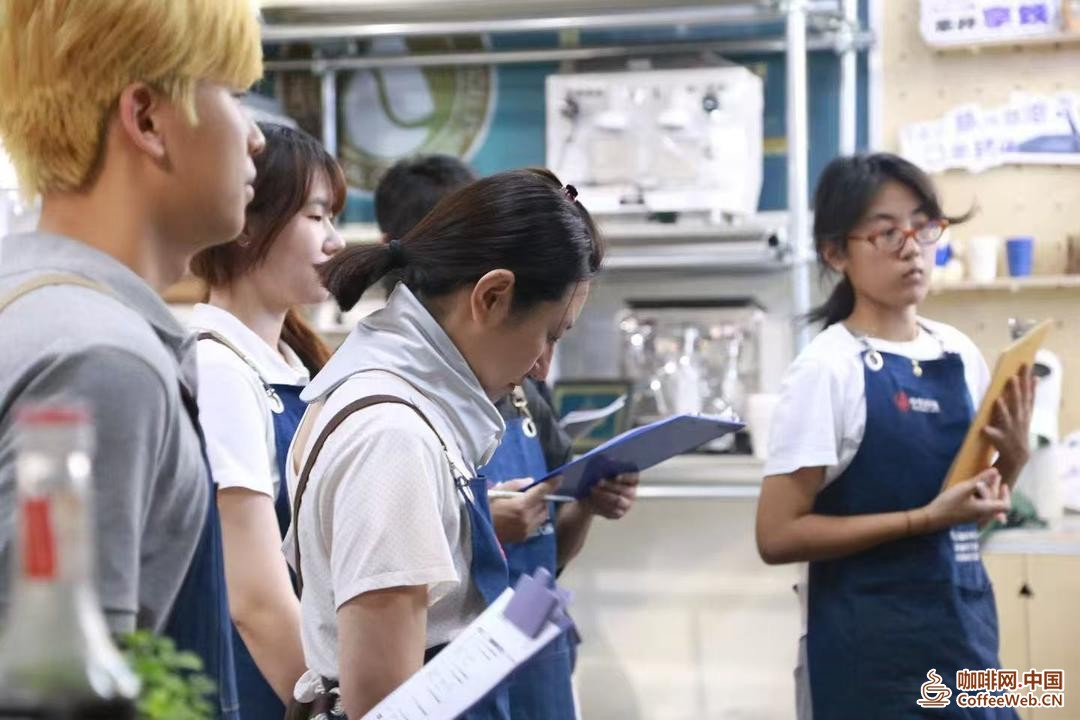
On the morning of August 28th at 10 o'clock, in the coffee shop on the second floor of the mall, owner Zhang Deli was guiding students to practice latte art. Having been in contact with coffee for 26 years, he witnessed the entire process of coffee transitioning from niche to everyday.
Around 2005, a cup of coffee was priced at 20-30 yuan or even higher, and consumers were not buying the drink, but the environment and identity, "said Zhang Deli. Nowadays, coffee has shed its identity color and become a high-frequency daily beverage, attracting more and more young entrepreneurs to enter the market.
Since the beginning of this year, we have trained over 200 students from within the province, and many of them have returned to their hometowns to open their own coffee shops, "said Zhang Deli.
The increasing demand for entrepreneurship has also driven the continuous refinement of related supporting services. Whist Coffee, adjacent to Coffee, specializes in coffee equipment and raw material supply. In the past two years, the company has extended its business to menu design, taste adjustment, equipment configuration, and bar layout, helping customers transform their store opening ideas into executable specific plans.
Wang Xiuna, the person in charge of Wister Coffee Shandong Branch, sees another side: "The market is growing, but there are fewer new stores landing. Previously, we could serve 3 to 5 new coffee shops per month, but recently we only have one or two. Many small local chain brands are also shrinking or even withdrawing
Independent operators face barriers constructed by chain brands based on scale. Taking Luckin Coffee as an example, the global net increase in stores exceeded 5000 in the first half of this year. According to Qichacha data, as of April, Luckin Coffee had 332 stores in Jinan, of which 42 were newly opened this year.
Under pressure, some local brands choose to actively expand their scale and extend their business boundaries. In July, Jinan coffee brand Keyz Coffee opened a new store in Warehouse 2 of the Geological and Mining Complex, and now queuing on weekends has become a norm. This year, the brand has opened 5 stores in Jinan, and the new stores sell about 400 cups of premium coffee per day.
Local brands dare to take a step forward, and their confidence comes from the multi-level consumer market in Shandong. As a province with a large population and high consumption, Shandong has both central cities such as Jinan and Qingdao, as well as a group of prefecture level cities and county-level markets with active consumption. The consumption gradient formed by different levels of markets provides rich validation scenarios and growth space for the sinking of chain brands and the growth of local brands.
A question worth asking is: Can Shandong cultivate its own nationally renowned coffee brand?
Shandong does not lack a consumer base, but the key is to transform market size into brand growth ability, "said Zhao Haichuan, a professor at the School of Management and head of the Department of Marketing and International Business at Shandong University." Local brands can first validate their products, prices, and store models in different levels of the market within the province, form a mature product system, operating model, and supply chain capabilities, and then expand outside the province. The key to going nationwide is not to quickly expand stores, but to first deepen and penetrate the regional market
The chain is there, but has it become a 'chain'?
The most differentiated and difficult to replicate ability in Shandong is the deep integration capability of the supply chain of "using heavy industry logic to do light consumption"
According to data from Qichacha, as of the end of July, there were 11500 coffee related enterprises in Shandong, ranking sixth in the country. Last year, there were 3043 newly registered coffee related enterprises in the province, a year-on-year increase of 49.90%; Since the beginning of this year, there have been 1221 new additions.
To judge the development level of the coffee industry in a region, the completeness of the industry chain should be considered for the production area, while the processing capacity or consumption scale should be considered for the non production area, "said Huang Jiaxiong, Chief Scientist of Yunnan Fine Coffee Association.
Observing several major coffee industry highlands in China from this perspective, it can be found that they have different "chain building" paths——
As the main producing area of coffee beans in China, Yunnan starts with land and coffee beans, promotes the upgrading of commercial beans to high-quality beans, and retains value in the production area through deep processing;
As an international consumption center city, Shanghai leads the coffee consumption trend with nearly 10000 stores, high-density consumption, and international activities;
Kunshan, as a strong manufacturing city and an open economic highland, relies on leading projects and processing clusters to attract top coffee enterprises and extend supply chain services around the processing link;
As a traditional commercial center and port city, Guangzhou's port trade and professional market develop in synergy. The commercial network connects business entities such as equipment, appliances, and components, forming a specialized division of labor.
Four paths, the same logic: starting from existing advantages, extending upstream and downstream, rather than piecing together a "large and complete" industrial chain out of thin air. Looking back at Shandong, the key to "forming a chain" lies not in blindly copying the ideas of any region, but in finding one's own "bull's nose".
The most differentiated and difficult to replicate ability in Shandong is not a single port or factory, but the deep integration ability of the supply chain of 'using heavy industry logic to make light consumption'. This is a chemical reaction generated by the synergy of 'complete industrial categories+world-class ports+huge hinterland', "Huang Jiaxiong analyzed.
He suggested that Shandong should sort out the coffee industry base at the provincial level, clarify the functional positioning and key supply chain directions of each region, focus on the actual needs of enterprises in raw material procurement, technology research and development, standard certification, financing, and market development, improve policy support and public services, and promote the formation of more stable cooperative relationships between ports, factories, equipment enterprises, and consumer markets.
Every link in the industrial chain must strive to increase added value, "Zhao Haichuan pointed out. Raw material imports should not be limited to port transportation, but should also extend to warehousing, trading, testing, and supply chain services; Processing and manufacturing cannot be limited to OEM production, but should also expand into product research and development, process output, and brand cultivation; On the consumer side, it is necessary to cultivate brand capabilities and keep more industrial added value and consumer spending locally.
In the future, what Shandong really wants to compete for is not just the market for a cup of coffee, but to connect its advantages in ports, manufacturing, equipment, and consumption to form a global coffee industry capability and become an irreplaceable supporting force in the coffee industry system.
(Wang Heying, a journalist from Popular News)