一万座上海咖啡馆“喝”出长三角咖啡经济带 Ten thousand Shanghai coffee shops' drink 'out of the Yangtze River Delta coffee economic belt
界面新闻记者 | 范易成
界面新闻编辑 | 庄键
上海虹口北外滩滨江2.3公里的江岸线今天变身咖啡“主题乐园”,为期5天的2026上海国际咖啡文化节在此拉开帷幕。300多家咖啡品牌与产业链企业集结于此,将举行50余场标杆性活动及40余场咖啡专业赛事。
“早期咖啡节更像一个‘咖啡馆大集合’,大家来摆摊卖咖啡。但最近几年咖啡产业链上游企业参与热情越来越高。”主办方上海市文化创意产业促进会相关负责人告诉界面新闻,今年参展品牌及企业中约有一半来自长三角等周边城市。
与此前相比,咖啡节的参与者不只是卖咖啡的店铺,还涉及咖啡豆、咖啡机、咖啡器具等产业链不同环节的各类企业。除了销售产品,咖啡节也成为了行业交流、技术切磋和上下游对接的绝佳场所。
在上述负责人看来,咖啡节的功能对消费者来说是“喝一杯”,而对咖啡从业者来说,则是“跑通一条链”。
热闹的咖啡节背后,有着更深层的区域经济命题:作为全球咖啡“第一城”,上海的咖啡消费需求,资本、以及品牌输出,正带动长三角地区咖啡产业链飞速发展,展现了咖啡经济强大的溢出效应。
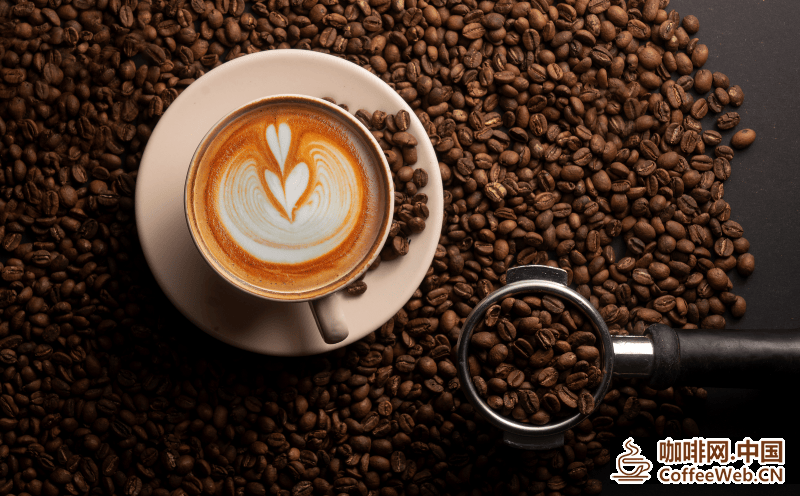
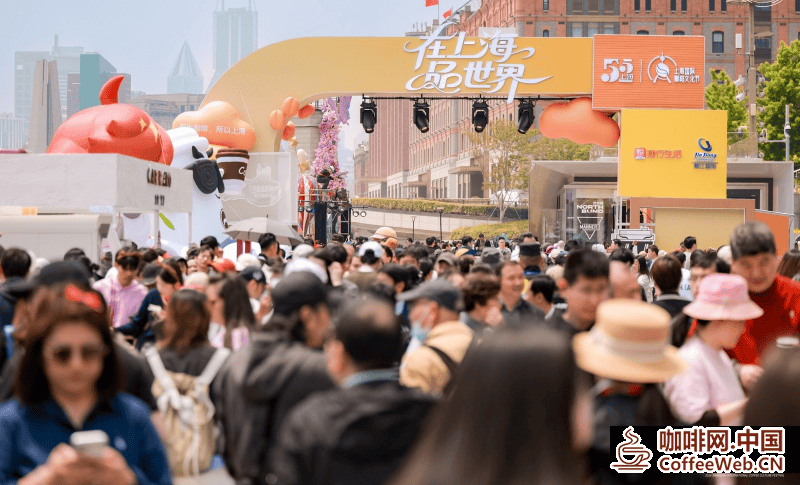
2026上海国际咖啡文化节 图片来源:受访者提供
咖啡节期间发布的《2026中国城市咖啡发展报告》显示,2025年中国咖啡产业规模达3549亿元,同比增长13.3%。而上海咖啡门店数已从2021年的6193家增长到2025年的10336家,跨越了万店门槛。
如此庞大的消费市场,必然催生对上游供应链的巨大需求。与上海仅相距60公里的昆山,无疑是一个绝佳的观察样本。
曾几何时,昆山是一座“不产一粒生豆”的制造业城市。但今天行走在昆山开发区,星巴克、瑞幸等咖啡巨头的烘焙基地密集分布,特色咖啡馆林立。短短数年间,其已变身“国际咖啡产业之都”。
上述变化始于2017年,当时既非咖啡豆产地也缺乏产业基础的昆山,凭借靠近上海咖啡消费市场的地理优势和制造业基础,试水引入了第一家咖啡企业——定位生豆加工的亿政咖啡,为产业发展埋下了“种子”。
2020年,占地面积约8万平方米、总投资1.3亿美元的星巴克中国咖啡创新产业园落户昆山开发区。同年11月,具有9000吨生豆仓储及2.3万吨咖啡烘焙产能的亿政食品投产。
2021年,昆山成立了综保区咖啡产业招商团队,主动出击对接行业企业,依托一批咖啡行业“头雁”带动,吸引了更多上下游企业落户,产生了集聚效应。
一年后的2022年,瑞幸咖啡投资1.2亿美元在昆山建设烘焙工厂,年产能3万吨,是瑞幸迄今最大的一笔生产性投资。
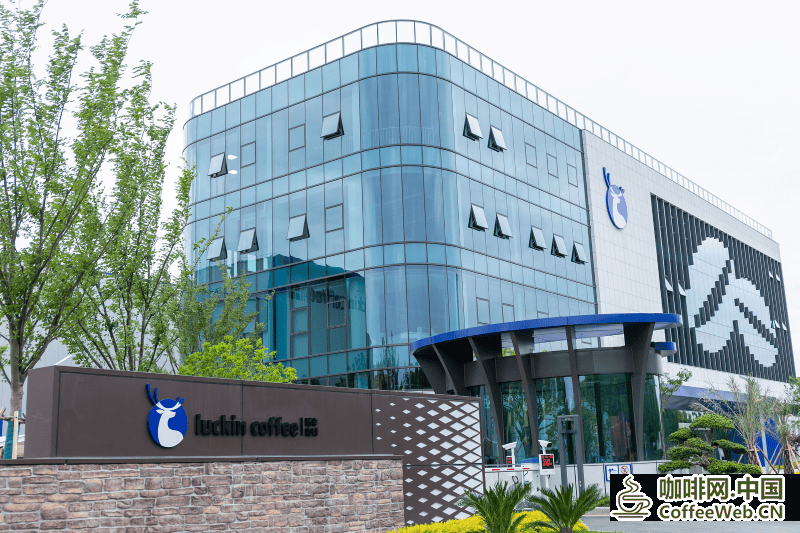
瑞幸咖啡昆山烘焙基地 图片来源:视觉中国
这些项目的落地,都与上海消费市场密不可分。以瑞幸为例,截至2025年末,其在上海拥有门店超1600家,是瑞幸在全球门店最多的城市。
在长三角地区,瑞幸将供应链的重心放在昆山,通过整合创建垂直供应链,掌控从一颗生豆到一杯咖啡的全生产环节品质,以此来支撑其未来更长远的发展目标。
界面新闻从昆山开发区获悉,截至2025年,昆山开发区累计培育和引进包括星巴克、瑞幸、越南中原传奇、瑞士苏可菲纳在内的咖啡头部企业43家。2025年全年咖啡产业营收超100亿元,同比增长超20%。
昆山已建设生豆贸易分拨、平台交易、研发烘焙、品牌销售等载体,实现了“一颗生豆到一杯咖啡”的“全链条”布局。
咖啡产业链包含上游种植、中游加工和下游流通三个环节,而昆山聚焦发力的正是中游的贸易、烘焙与深加工。
目前昆山拥有咖啡烘焙类企业12家,龙头引领效应显著,星巴克、瑞幸、亿政、真金四家烘焙企业在昆山总投资近80亿元,厂房面积超30万平方米,2025年合计咖啡烘焙量约9.3万吨,同比增长约35%。
昆山开发区相关负责人向界面新闻透露,下一阶段,昆山的咖啡烘焙企业将持续扩能,年产4.6万吨的亿升咖啡项目年底即将竣工,预计年底投产。此外,柯乐、轩睿等中小企业也将逐渐向1000吨级扩能。
今年3月,挪瓦咖啡在浙江宁波正式开建年产能高达两万吨的烘焙工厂。对于这家2019年诞生于上海的咖啡企业而言,这一步意义重大。
挪瓦咖啡相关负责人告诉界面新闻,公司此前在宁波已有一座年产能千吨的烘焙工厂,而新厂的产能将达到前者的20倍。“自建供应链是构筑长期壁垒的关键,有助于更好控制成本,为加盟商带来更多利润空间。”该负责人说道。
挪瓦的扩张历程,可以视为上海咖啡品牌借助长三角产业链实现规模化跃迁的代表。2025年底,其官宣门店数量突破10000家,成为继瑞幸、库迪、幸运咖之后,中国第4家门店破万的连锁咖啡品牌。
支撑其万店规模的,正是对供应链的深度布局。在这一过程中,与宁波国资的合作可谓双赢。
宁波国企甬山控股在与挪瓦咖啡的合作中,通过“股权投资+厂房代建”的创新模式,支持其在本地建设涵盖烘焙加工、研发、物流及文化展示的咖啡全产业链中心,带动了宁波咖啡相关配套产业的发展。
江苏、浙江之外,溢出效应同样也在安徽体现。库迪咖啡位于安徽的全球供应链基地于2023年下半年投产,总投资约2亿美元。拥有包含咖啡烘焙、食品原料、包装材料及其他配套的供应链项目。
去年7月,库迪咖啡全球供应链基地内的超级工厂宣布开工建设。其总建筑面积约34万平方米,规划年产能40亿杯现制饮品,将成为全球咖啡行业单体产量最大、品类最全的综合性工厂之一。
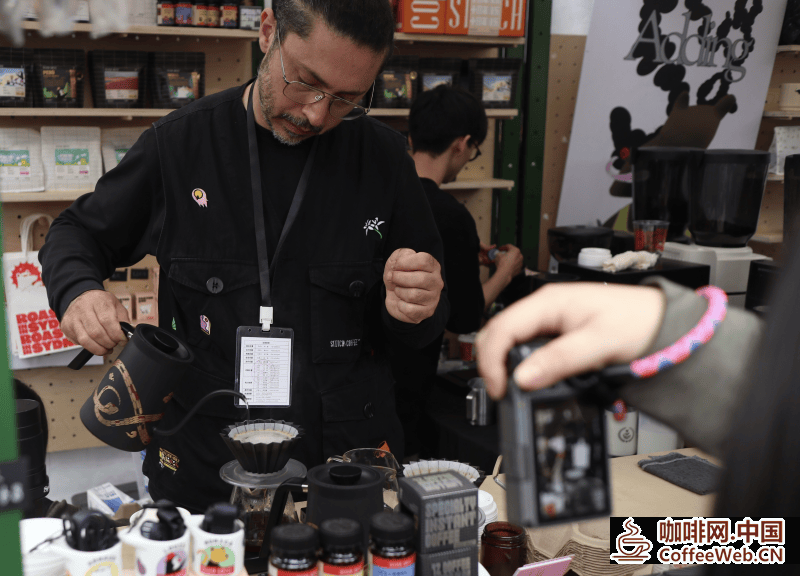
众多咖啡节在上海举行 界面新闻记者 范易成 摄
在长三角咖啡加工产业链身后,坐落于上海的虹桥国际咖啡港,扮演着咖啡贸易枢纽的角色。
“上海每卖出两杯咖啡,就有一杯的咖啡豆来自咖啡港。”在上海虹桥国际进口商品展销有限公司副总经理朱菁看来,虹桥国际咖啡港的形态本身就是溢出效应的载体,它既吸引全球咖啡豆汇聚上海,又辐射长三角的咖啡加工企业和消费市场。
朱菁在接受界面新闻采访时表示,上海近万家的咖啡馆每天产生巨量、稳定的原料需求。这种规模化订单直接支撑了江苏、浙江等地烘焙工厂的运转,使长三角咖啡产业链实现了从生豆仓储、烘焙加工到品牌分销的完整闭环,推动了整个产业带从碎片化走向规模化。
虹桥国际咖啡港所在的上海,也是国内最大的进口咖啡豆集散地。2025年,上海咖啡豆进口金额超过30亿元,蝉联全国首位。
“我们有完整的全球采购渠道,而长三角地区有着全国最强的烘焙加工集群,这种功能互补在全国是独一无二的。”朱菁介绍,虹桥国际咖啡港汇目前聚了约60个国家的咖啡豆,200多家咖啡相关企业入驻,年带动贸易额约30亿元。
虹桥国际咖啡港也与昆山建立了深层联动,过去一年,已帮助多家昆山烘焙工厂拓展了生豆采购渠道和烘焙加工订单,在推动昆山烘焙产能加速释放的同时,也支撑了上海市场的咖啡供应。目前,虹桥国际咖啡港昆山分中心也已揭牌运营。
去年,8家来自长三角的咖啡上下游企业共同发起倡议的“虹桥国际咖啡产业联盟”正式成立,联盟以虹桥国际咖啡港为核心平台,联动全域产业资源,着力推动咖啡产业集群建设、专业技能人才培养和本土品牌竞争力提升。
经过一年的建设运营,“虹桥国际咖啡产业联盟”已经从最初的8家企业,逐步发展成为一个涵盖生豆贸易、设备制造、品牌运营、数字化平台、金融服务、标准制定、国际合作的产业生态圈。
今年咖啡节期间,随着与亚洲咖啡协会的签约落地,联盟的国际化程度和产业协同层级将迈向新的高度。“我们有信心以此为契机,推动长三角乃至全国的咖啡产业链实现更高水平的开放合作和更高质量的发展。”朱菁说道。
上海街头的一杯咖啡延伸出横跨沪苏浙皖的产业链,其背后折射的不仅是消费升级的市场浪潮,更是长三角经济的深度协同。从昆山的烘焙集群到宁波的供应链基地,从虹桥的贸易枢纽到安徽的超级工厂,一条以市场分工为牵引的“咖啡经济带”正在加速成型。
Interface News Reporter | Fan Yicheng
Interface News Editor | Zhuang Key
The 2.3-kilometer riverside line of Hongkou North Bund in Shanghai has transformed into a coffee "theme park" today, marking the opening of the 5-day 2026 Shanghai International Coffee Culture Festival. More than 300 coffee brands and industry chain enterprises gather here to hold over 50 benchmark events and over 40 professional coffee competitions.
In the early days, the coffee festival was more like a 'coffee shop gathering' where everyone set up stalls to sell coffee. However, in recent years, the enthusiasm of upstream enterprises in the coffee industry chain has been increasing. "The relevant person in charge of the Shanghai Cultural and Creative Industry Promotion Association, the organizer, told Interface News that about half of the participating brands and enterprises this year come from surrounding cities such as the Yangtze River Delta.
Compared to before, the participants of the coffee festival are not only coffee shops, but also various enterprises in different links of the industry chain such as coffee beans, coffee machines, and coffee utensils. In addition to selling products, the coffee festival has also become an excellent place for industry exchanges, technical exchanges, and upstream and downstream docking.
In the view of the above-mentioned person in charge, the function of the coffee festival is to "have a drink" for consumers, while for coffee practitioners, it is to "run a chain".
Behind the lively coffee festival lies a deeper regional economic proposition: as the "number one coffee city" in the world, Shanghai's coffee consumption demand, capital, and brand output are driving the rapid development of the coffee industry chain in the Yangtze River Delta region, demonstrating the strong spillover effects of the coffee economy.
2026 Shanghai International Coffee Culture Festival Photo source: Provided by the interviewee
The "2026 China Urban Coffee Development Report" released during the Coffee Festival shows that the scale of China's coffee industry will reach 354.9 billion yuan by 2025, a year-on-year increase of 13.3%. The number of coffee shops in Shanghai has increased from 6193 in 2021 to 10336 in 2025, surpassing the threshold of 10000 shops.
Such a huge consumer market will inevitably generate a huge demand for upstream supply chains. Kunshan, which is only 60 kilometers away from Shanghai, is undoubtedly an excellent observation sample.
Once upon a time, Kunshan was a manufacturing city that did not produce a single green bean. But today, walking in Kunshan Development Zone, coffee giants such as Starbucks and Luckin Coffee have densely distributed roasting bases and numerous specialty cafes. In just a few years, it has transformed into the "capital of the international coffee industry".
The above changes began in 2017, when Kunshan, which was neither a coffee bean producing area nor had an industrial foundation, took advantage of its proximity to the Shanghai coffee consumption market and manufacturing base to test the waters and introduce the first coffee enterprise - Yizheng Coffee, which positioned itself as a green bean processing company, laying the "seeds" for the development of the industry.
In 2020, Starbucks China Coffee Innovation Industrial Park, covering an area of approximately 80000 square meters with a total investment of 130 million US dollars, settled in Kunshan Development Zone. In November of the same year, Yizheng Food, with a storage capacity of 9000 tons of raw beans and a roasting capacity of 23000 tons of coffee, was put into operation.
In 2021, Kunshan established a comprehensive protection zone coffee industry investment promotion team, actively connecting with industry enterprises, relying on a group of "leading geese" in the coffee industry to attract more upstream and downstream enterprises to settle down, generating a clustering effect.
In 2022, one year later, Luckin Coffee invested $120 million to build a roasting factory in Kunshan with an annual production capacity of 30000 tons, making it Luckin Coffee's largest productive investment to date.
Luckin Coffee Kunshan Baking Base Image Source: Visual China
The implementation of these projects is closely related to the Shanghai consumer market. Taking Luckin as an example, by the end of 2025, it has over 1600 stores in Shanghai, making it the city with the most Luckin stores worldwide.
In the Yangtze River Delta region, Luckin Coffee focuses its supply chain on Kunshan, integrating and creating a vertical supply chain to control the quality of the entire production process from a green bean to a cup of coffee, in order to support its future and longer-term development goals.
According to Interface News, as of 2025, Kunshan Development Zone has cultivated and introduced a total of 43 leading coffee companies, including Starbucks, Luckin Coffee, Vietnam's Zhongyuan Legend, and Switzerland's Suquefina. In 2025, the annual revenue of the coffee industry will exceed 10 billion yuan, with a year-on-year growth of over 20%.
Kunshan has established carriers for green bean trade distribution, platform trading, research and development baking, brand sales, etc., achieving a "full chain" layout of "one green bean to one cup of coffee".
The coffee industry chain includes three links: upstream planting, midstream processing, and downstream circulation, and Kunshan focuses on the midstream trade, baking, and deep processing.
At present, Kunshan has 12 coffee roasting enterprises, with significant leading effects. Starbucks, Luckin Coffee, Yizheng, and Zhenjin, four roasting enterprises, have a total investment of nearly 8 billion yuan in Kunshan, with a factory area of over 300000 square meters. By 2025, the total coffee roasting volume will be about 93000 tons, a year-on-year increase of about 35%.
The person in charge of Kunshan Development Zone revealed to Interface News that in the next stage, coffee roasting enterprises in Kunshan will continue to expand their capacity. The billion liter coffee project with an annual output of 46000 tons will be completed by the end of the year and is expected to be put into operation by the end of the year. In addition, small and medium-sized enterprises such as Koehler and Xuanrui will gradually expand their capacity to the 1000 ton level.
In March of this year, Novacoffee officially opened a roasting factory with an annual production capacity of up to 20000 tons in Ningbo, Zhejiang. For this coffee company born in Shanghai in 2019, this step is of great significance.
The person in charge of Novacoffee told Interface News that the company already has a roasting factory with an annual production capacity of 1000 tons in Ningbo, and the new factory's production capacity will reach 20 times that of the former. Building a self built supply chain is the key to building long-term barriers, which helps to better control costs and bring more profit margins to franchisees, "said the person in charge.
The expansion process of Novartis can be seen as a representative of Shanghai coffee brands achieving scale transition by leveraging the Yangtze River Delta industrial chain. By the end of 2025, its officially announced store count will exceed 10000, becoming the fourth chain coffee brand in China to surpass 10000 stores, following Luckin Coffee, Kudi Coffee, and Lucky Coffee.
What supports its scale of ten thousand stores is the deep layout of the supply chain. In this process, cooperation with Ningbo State owned Assets can be described as a win-win situation.
Ningbo state-owned enterprise Yongshan Holdings has supported the local construction of a coffee industry chain center covering roasting and processing, research and development, logistics, and cultural display through an innovative model of "equity investment+factory construction" in its cooperation with Novacoffee, driving the development of Ningbo's coffee related supporting industries.
Besides Jiangsu and Zhejiang, spillover effects are also reflected in Anhui. Kudi Coffee's global supply chain base in Anhui will start production in the second half of 2023, with a total investment of approximately 200 million US dollars. We have a supply chain project that includes coffee roasting, food ingredients, packaging materials, and other supporting facilities.
Last July, the super factory within the global supply chain base of Kudi Coffee announced the start of construction. Its total construction area is about 340000 square meters, with a planned annual production capacity of 4 billion cups of freshly made beverages. It will become one of the largest and most comprehensive factories in the global coffee industry in terms of individual production and product categories.
Numerous coffee festivals are held in Shanghai. Photo by journalist Fan Yicheng
Behind the coffee processing industry chain in the Yangtze River Delta, Hongqiao International Coffee Port located in Shanghai plays the role of a coffee trade hub.
For every two cups of coffee sold in Shanghai, one cup of coffee beans comes from the coffee port. "In the view of Zhu Jing, Deputy General Manager of Shanghai Hongqiao International Import Commodity Exhibition and Sales Co., Ltd., the form of Hongqiao International Coffee Port itself is a carrier of spillover effects. It not only attracts global coffee beans to gather in Shanghai, but also radiates to coffee processing enterprises and consumer markets in the Yangtze River Delta.
Zhu Jing stated in an interview with Jiemian News that nearly ten thousand coffee shops in Shanghai generate a huge and stable demand for raw materials every day. This large-scale order directly supports the operation of roasting factories in Jiangsu, Zhejiang and other places, enabling the coffee industry chain in the Yangtze River Delta to achieve a complete closed loop from raw bean storage, roasting and processing to brand distribution, and promoting the entire industry belt from fragmentation to scale.
Shanghai, where Hongqiao International Coffee Port is located, is also the largest distribution center for imported coffee beans in China. By 2025, the import amount of coffee beans in Shanghai will exceed 3 billion yuan, ranking first in the country.
We have a complete global procurement channel, and the Yangtze River Delta region has the strongest baking and processing cluster in the country. This complementary function is unique in the whole country, "said Zhu Jing. Hongqiao International Coffee Port currently gathers coffee beans from about 60 countries, with more than 200 coffee related enterprises settled in, driving an annual trade volume of about 3 billion yuan.
Hongqiao International Coffee Port has also established deep linkage with Kunshan. In the past year, it has helped multiple Kunshan roasting factories expand their raw bean procurement channels and roasting processing orders, accelerating the release of roasting capacity in Kunshan and supporting coffee supply in the Shanghai market. At present, the Kunshan branch of Hongqiao International Coffee Port has also been unveiled and put into operation.
Last year, the "Hongqiao International Coffee Industry Alliance" jointly initiated by eight coffee upstream and downstream enterprises from the Yangtze River Delta was officially established. The alliance takes Hongqiao International Coffee Port as the core platform, links the entire industry resources, and focuses on promoting the construction of coffee industry clusters, the cultivation of professional skilled talents, and the enhancement of local brand competitiveness.
After one year of construction and operation, the "Hongqiao International Coffee Industry Alliance" has gradually developed from the initial 8 enterprises into an industrial ecosystem covering green bean trade, equipment manufacturing, brand operation, digital platform, financial services, standard setting, and international cooperation.
During this year's coffee festival, with the signing and implementation of the contract with the Asian Coffee Association, the internationalization level and industry collaboration level of the alliance will reach new heights. We are confident that this will be an opportunity to promote higher-level open cooperation and higher quality development of the coffee industry chain in the Yangtze River Delta and even across the country, "said Zhu Jing.
A cup of coffee on the streets of Shanghai extends across the industrial chain of Shanghai, Jiangsu, Zhejiang, and Anhui, reflecting not only the market wave of consumer upgrading, but also the deep synergy of the Yangtze River Delta economy. From the baking cluster in Kunshan to the supply chain base in Ningbo, from the trade hub in Hongqiao to the super factory in Anhui, a "coffee economic belt" driven by market division of labor is accelerating its formation.