小咖啡撬动大产业Small coffee drives big industries
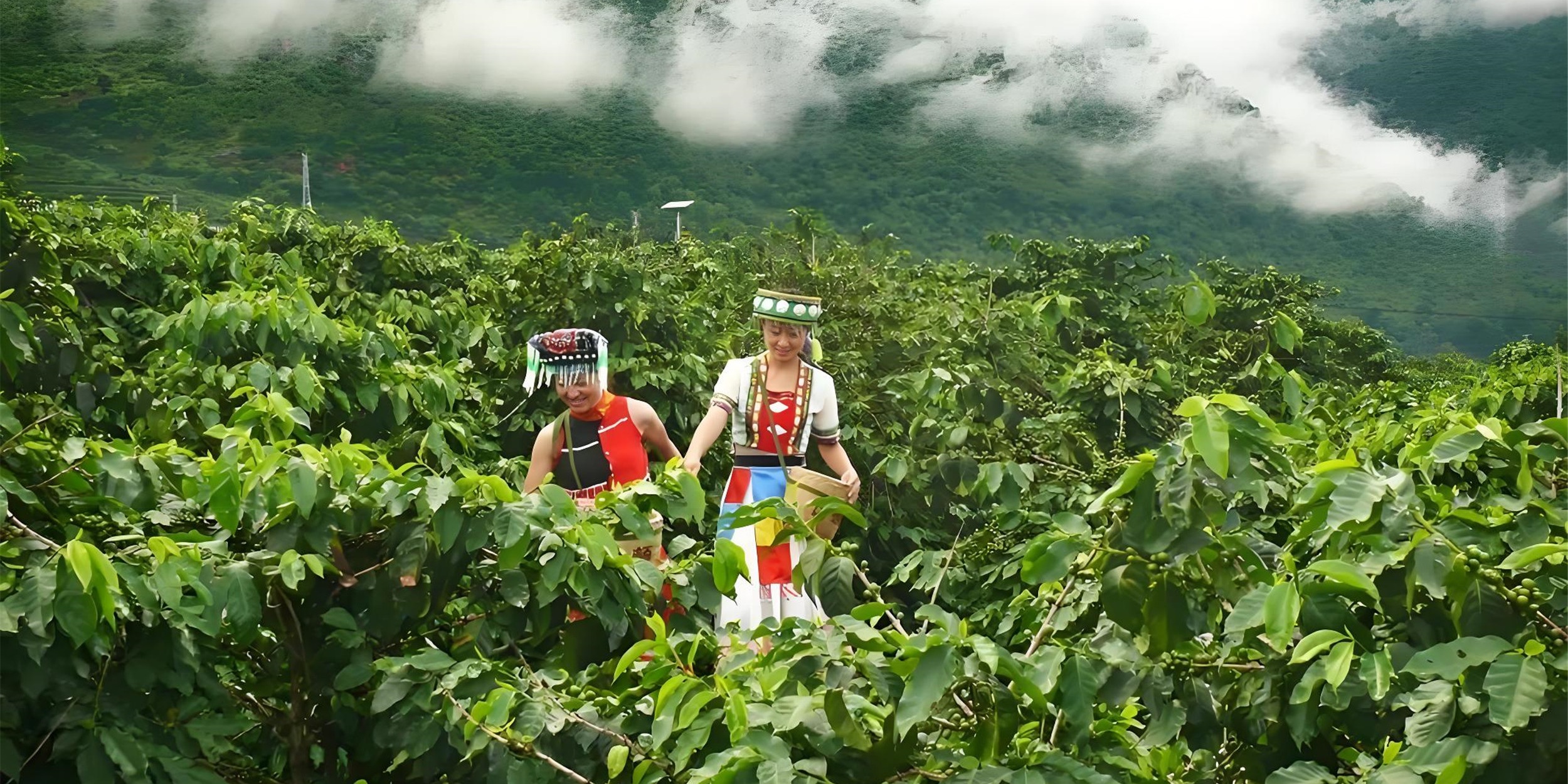
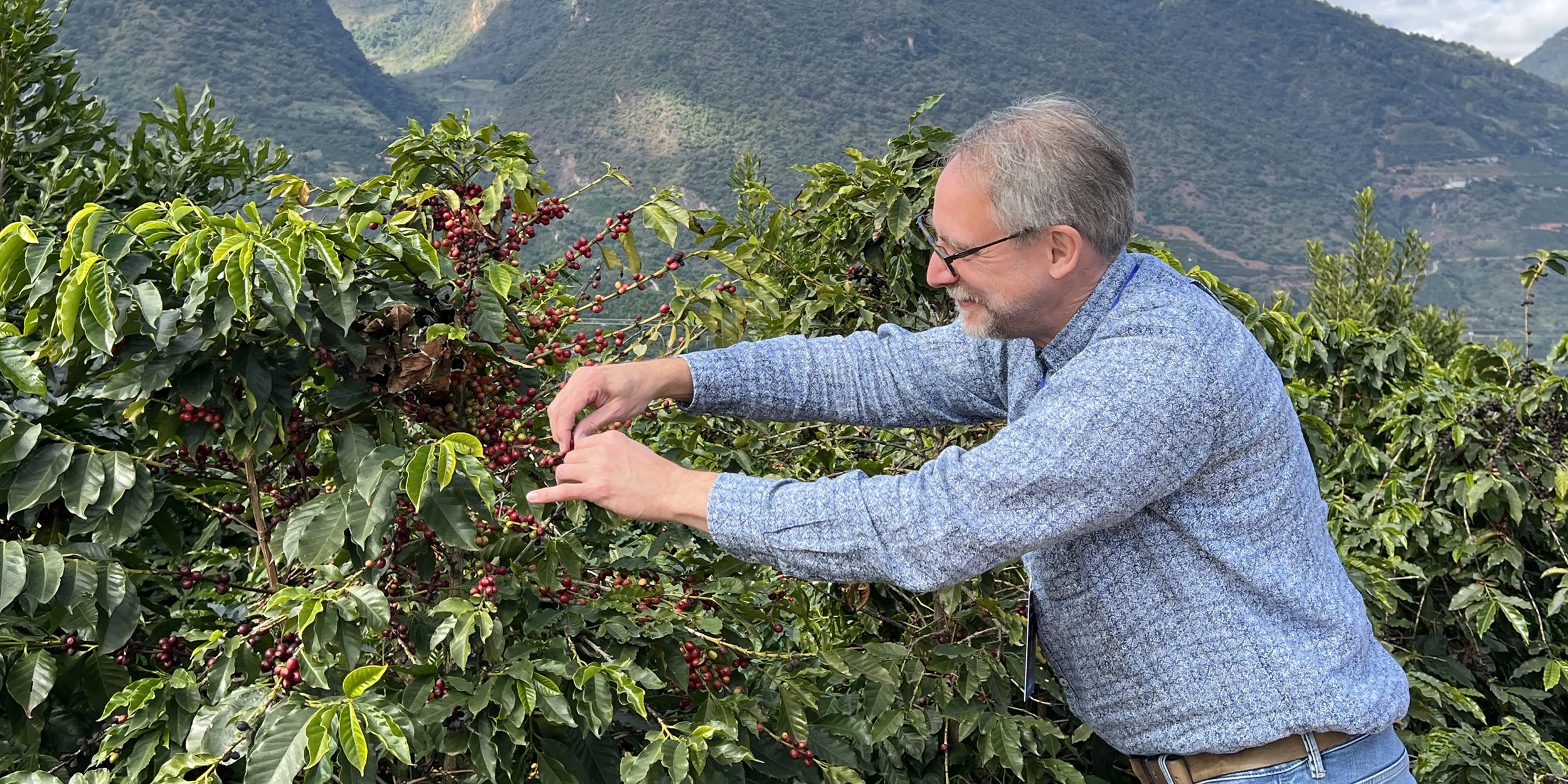
The land of Bagui is filled with joy. Recently, in the coffee base in Puhe Township, Xilin County, Baise City, Guangxi, bright red fresh fruits adorn the branches, welcoming the joy of a bountiful harvest. The Katim variety we mainly promote is thick but not bitter, fragrant but not strong, and even sweeter when cooled, "said Nongqian Chao, the general manager of Guangxi Jujing Coffee Development and Trade Co., Ltd., as he inspected the condition of the fruit
This scent of coffee is a vivid portrayal of the development of the coffee industry in Guangxi. Qin Jianfeng, director of Guangxi Coffee Research Center, said, "Relying on the full industry chain research platform, Guangxi is allowing 'small coffee' to give birth to the 'great potential' of rural revitalization and the development of characteristic industries
Technology breeding builds a solid foundation for the industry
My coffee career began with an attempt that I was not satisfied with, "recalled Nong Qianchao. In 2018, his parents failed to introduce coffee from Yunnan, and he suffered frost after taking over. In the end, only two seedlings survived. Later, after multiple trials, he gradually explored suitable planting areas and varieties. This experience made Nong Qianchao deeply realize that in order for the industry to develop in the long run, relying solely on "local methods" is far from enough, and technological support must keep up in a timely manner.
The turning point will occur in 2024. With the increasing emphasis on the development of the coffee industry in Guangxi, the Guangxi Coffee Research Center has emerged. The center, relying on the Guangxi Subtropical Crop Research Institute, has built a scientific research platform covering the entire coffee industry chain, including germplasm resource collection, variety selection, cultivation technology, and processing research and development, injecting strong support into the development of the industry.
Entering the Seed Breeding Research Base of Guangxi Coffee Research Center, more than 80 breeding materials are being neatly cultivated, and researchers are bending down to observe the growth status of plants. Bin Zhenjun, Executive Deputy Director of Guangxi Coffee Research Center, told reporters that these materials, which gather high-quality resources at home and abroad, are the "hope seeds" for the localization and breeding of coffee varieties in Guangxi.
Coffee breeding is a slow process, cultivating a mature and stable new variety often requires years of continuous breeding and testing, "said Bin Zhenjun. At present, the center has preserved 112 coffee germplasm resources and built the first coffee germplasm resource garden in Guangxi. Not only that, the three major professional teams of breeding, cultivation, and processing at the center are also tackling the challenge simultaneously: 25000 experimental seedlings are used in the breeding area, and the survival rate of bagged seedlings after transplantation reaches 98%; Innovatively cultivating two-year old seedlings, making coffee trees more resistant to stress and fruiting earlier, significantly shortening the return cycle for farmers; The cultivation team is tackling the integration of water and fertilizer technology, striving to form a standardized cultivation system that can be replicated and promoted.
From the two remaining seedlings of the past to the strong support of the current scientific research platform, Nongqian Dynasty is full of confidence in the future of the industry. He looked ahead and said, "We will continue to work closely with the research institute to further screen and cultivate local varieties with stronger adaptability and better flavor
Whole chain innovation strengthens distinctive brands
Scientific research support is accelerating its transformation into industrial power. Nowadays, the coffee planting area in Xilin County has reached 2100 acres. The low investment and high return have greatly boosted the enthusiasm of farmers for planting, "said Nong Qianchao.
Looking at the entire region, the coffee planting area in Guangxi has exceeded 3700 acres, with an average growth rate of 48.62% in the past five years. Dongxing Coffee has been included in the national list of famous and excellent new agricultural products, and places such as Rong County, Nanning, and Chongzuo are also steadily promoting planting exploration.
What is the future direction for the continuous expansion of the industrial scale? Guangxi does not make a 'replica version' of Yunnan and Hainan, but a distinctive 'innovative version', "said Qin Jianfeng. As an emerging production area, Guangxi avoids the competition of scale and focuses on the direction of high-value and high-quality development.
In order to promote the high-quality development of the coffee industry in Guangxi, in December 2025, the Agriculture and Rural Affairs Department of Guangxi Zhuang Autonomous Region announced the "Development Plan for the Coffee Industry in Guangxi Zhuang Autonomous Region (2025-2030)" (draft for soliciting opinions) and publicly solicited opinions and suggestions from the society.
Based on the planning concept, Guangxi Coffee Research Center focuses on building a regional public brand and designing a visual identity of "Big Coffee Snow Cup" that combines the pun of "coffee" and "big coffee". In the processing stage, the research platform has collaborated with enterprises to accelerate technological breakthroughs and break through key technologies in the production of hanging ear coffee and solid coffee beverages. A total of 7 coffee products have been developed, of which 4 have been industrialized and applied. In addition, the locally innovative "flower coffee" series products such as osmanthus and jasmine deeply integrate Guangxi's characteristic flowers with coffee flavors, further enriching the product system.
More innovative is the "Coffee Research Estate" model pioneered by Guangxi. The person in charge of the Subtropical Crop Research Institute of Guangxi Zhuang Autonomous Region introduced that this model integrates scientific research, demonstration, experience, and cultural tourism, showcasing intelligent planting technology and allowing tourists to immerse themselves in the entire process from coffee and fresh fruit picking to drinks. At the same time, the estate is also a talent training base, providing professional talents through training courses, and promoting the coffee industry in Guangxi to move towards high-quality and high added value. Reporter Wei Qiuying, Liu Hao, Correspondent Liu Sichao