咖啡增长放缓后,瑞幸开始“卖醉”After coffee growth slows down, Luckin Coffee begins to 'sell drunkenness'
中国“咖啡一哥”瑞幸不光致力于让人“清醒”,还盯上了“微醺”生意。
图源:瑞幸
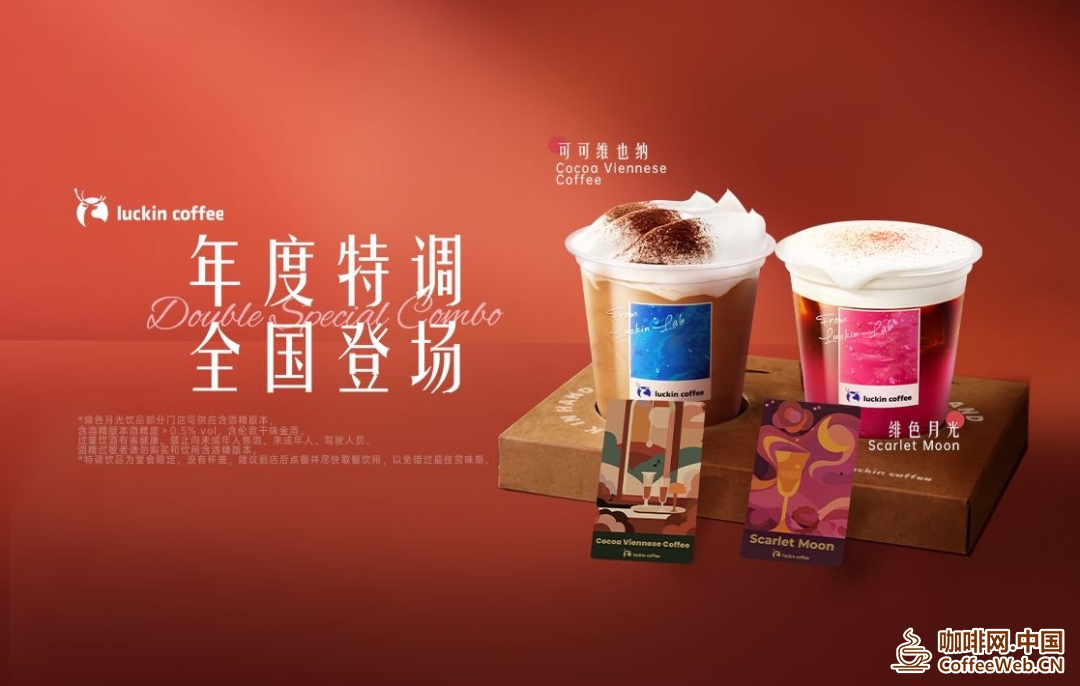
2026年5月18日,瑞幸推出两款含酒精特调饮品“绯色月光”和“可可维也纳”,容量均为355ml,每杯添加约15ml烈酒原液,售价15.9元。
其实早在2023年9月,瑞幸就曾与茅台携手打造现象级含酒精咖啡饮品“酱香拿铁”。不过需要注意的是,虽然“酱香拿铁”中会添加53度飞天茅台酒,但酒精度低于0.5%vol,并非酒精饮料,而是具有“茅台风味”的咖啡饮品。
此番瑞幸推出的含酒精特调饮品,酒精度明确标注高于0.5%vol,因而需要按酒类进行管理,仅支持线下到店自提,严禁向未成年人销售。
识礁Farsight认为,虽然“酱香拿铁”与“绯色月光”都属于含酒精类咖啡饮品,但由于酒精含量与消费场景存在明显差异,瑞幸推出这两类产品的战略诉求并不相同。
此前布局“酱香拿铁”时,瑞幸仅仅致力于挖掘咖啡饮品的“剩余价值”。如今布局含酒精特调饮品,则昭示出瑞幸希望切入全新市场的野望。
依托数万家线下门店,含酒精特调饮品确实可以快速触达消费者,但如何缝合主营现制咖啡与酒精饮品之间的裂痕,将成为瑞幸难以回避的问题。
现制咖啡红利消逝,瑞幸逼近成长天花板
作为一家创办不足十年的咖啡新势力,瑞幸取得的成绩无疑值得肯定,其不光早已回正现金流,更撼动了星巴克在华市场的根基,令后者陷入寻求资本整合的被动局面。

图源:瑞幸2026年Q1财报
不过所谓花无百日红,透过最新财报来看,瑞幸咖啡的经营质量已出现恶化迹象。财报显示,2026年Q1,瑞幸营收119.95亿元,同比增长35.3%;净利润5.06亿元,同比下跌3.6%;GAAP营业利润率为6%,同比下降2.3个百分点,出现“增收不增利”问题。
图源:艾媒咨询
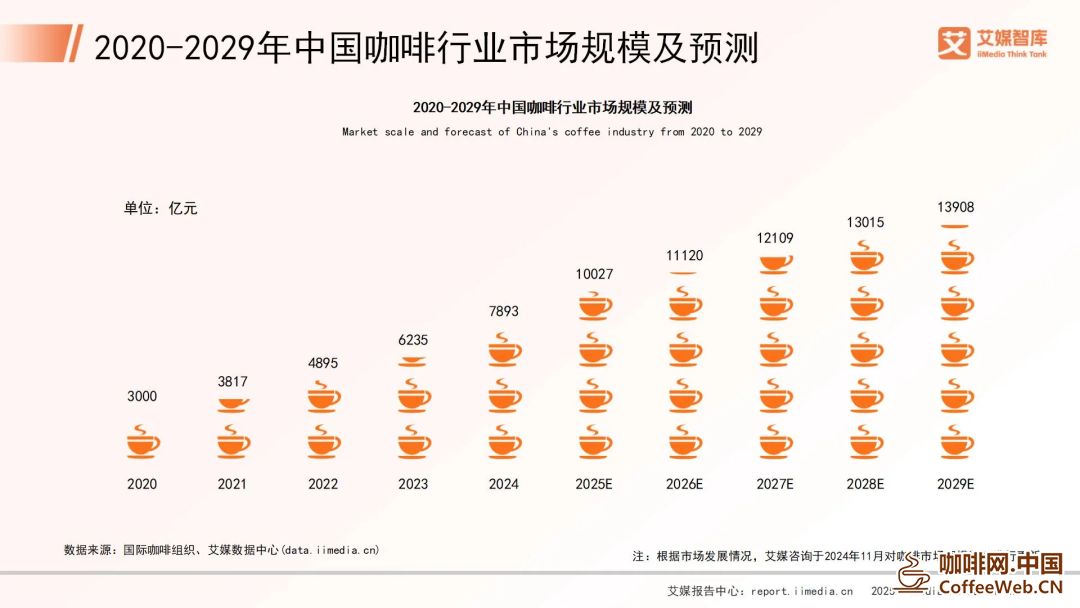
究其原因,随着中国咖啡市场红利消逝,瑞幸正不可避免地触及增长天花板。艾媒咨询披露的研报显示,预计2025年-2029年,中国咖啡市场规模将从1万亿元增长至1.39万亿元,复合年均增长率仅为8.52%,远低于此前的双位数增速。
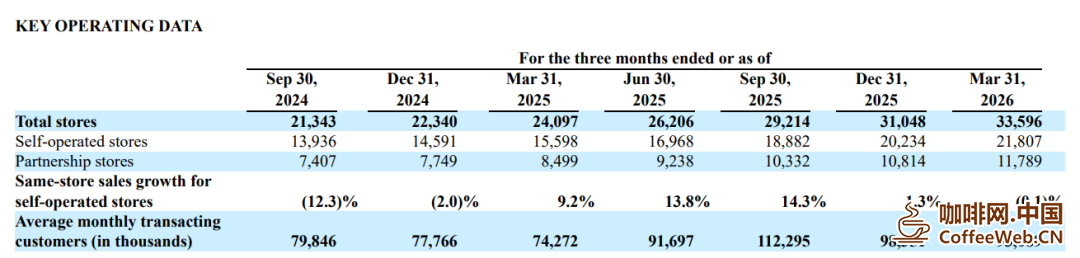
为了抢夺为数不多的增量红利,瑞幸致力于铺设更多门店。截至2026年Q1末,瑞幸全球门店总数达3.36万家,环比增长8.21%。
与之相应,为了俘获更多消费者,瑞幸在配送、营销层面投入了更高的成本。2026年Q1,瑞幸配送费用13.08亿元,同比上涨89.8%;销售与营销费用7.32亿元,同比增长47.5%。
更多门店确实可以覆盖更广泛的消费人群,但需要注意的是,随着众多品牌密集开店、新玩家不断入局,如今中国现制咖啡市场的新增需求正趋于饱和。在此背景下,虽然瑞幸为高密度门店投入了更多成本,但难以扭转单店经营效率下滑的困局。
图源:瑞幸2026年Q1财报
财报显示,2025年Q2-2026年Q1,瑞幸自营同店销售增长率分别为13.8%、14.3%、1.3%以及-0.1%,不光增速日趋衰减,甚至已转为负增长。
华源证券曾在研报中指出,以2024年城镇居民人均可支配收入为基准计算,瑞幸在中国市场的理论开店数量上限约为3.9万家。虽然现阶段瑞幸的门店数量尚未达到理论上限,但自营同店销售增长率一路走低,很大程度上说明,其已触及增长瓶颈。
走出咖啡舒适区,瑞幸想靠多元化解困
其实瑞幸早已意识到,随着需求逐渐饱和,现制咖啡饮品业务已很难再单纯依靠扩店实现增长。有鉴于此,瑞幸选择发力多元饮品。
2024年8月,瑞幸上线“上午咖啡下午茶——送你1亿杯9.9元下午茶”活动,陆续推出轻轻茉莉、轻轻乌龙、生椰锡兰等轻乳茶产品,将触手伸向现制茶饮赛道。此后,瑞幸又接连推出果茶、抹茶、酸奶等产品,全面发力新茶饮业务。
图源:瑞幸
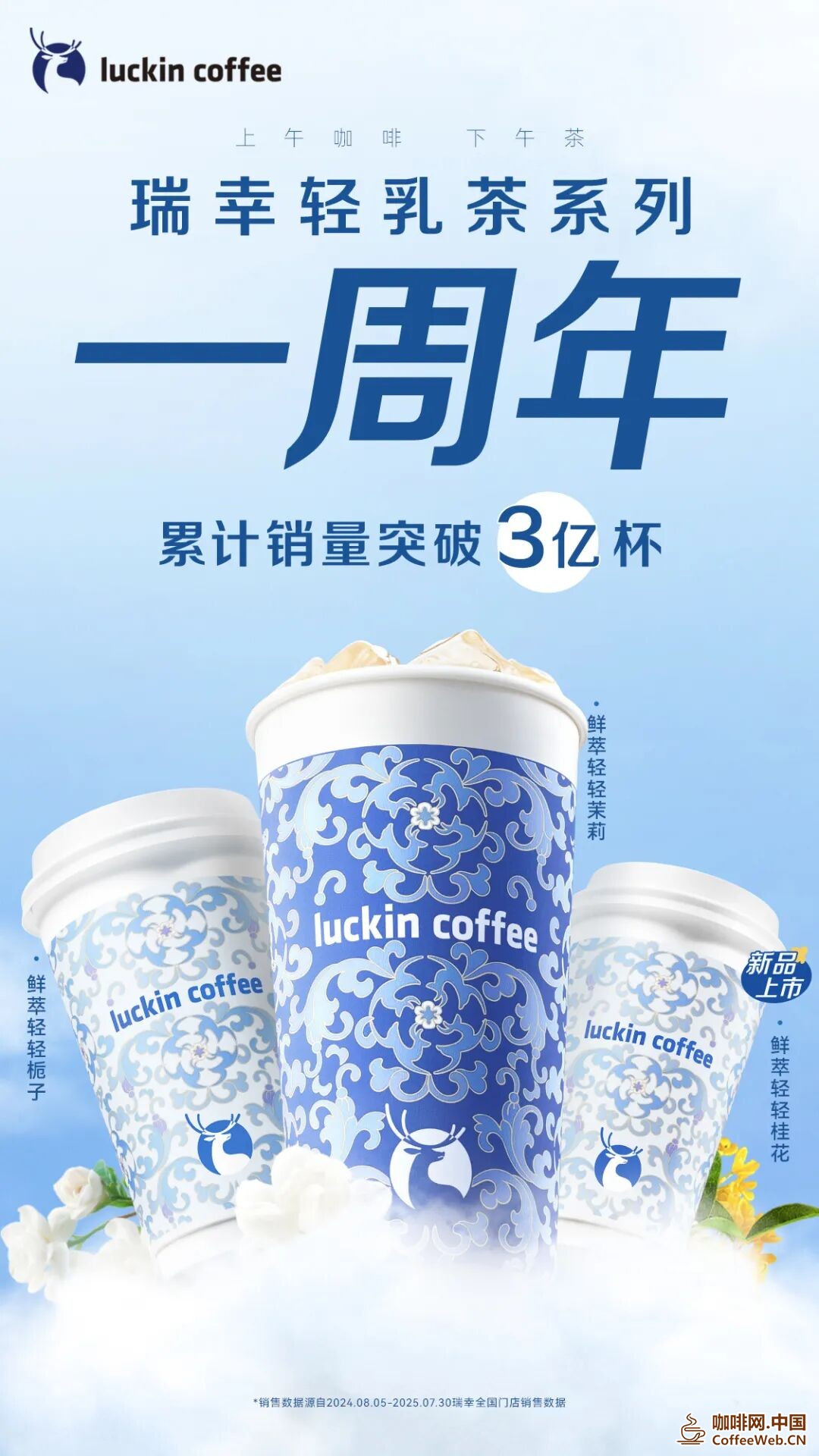
依托强有力的潮饮品牌认知与海量门店,瑞幸已成为新茶饮赛道的重量级玩家。官方数据显示,瑞幸轻轻茉莉·轻乳茶首月销量突破4400万杯。上市一周年之际,瑞幸轻乳茶累计销量突破3亿杯,平均单月销量约为2500万杯。
图源:艾媒咨询
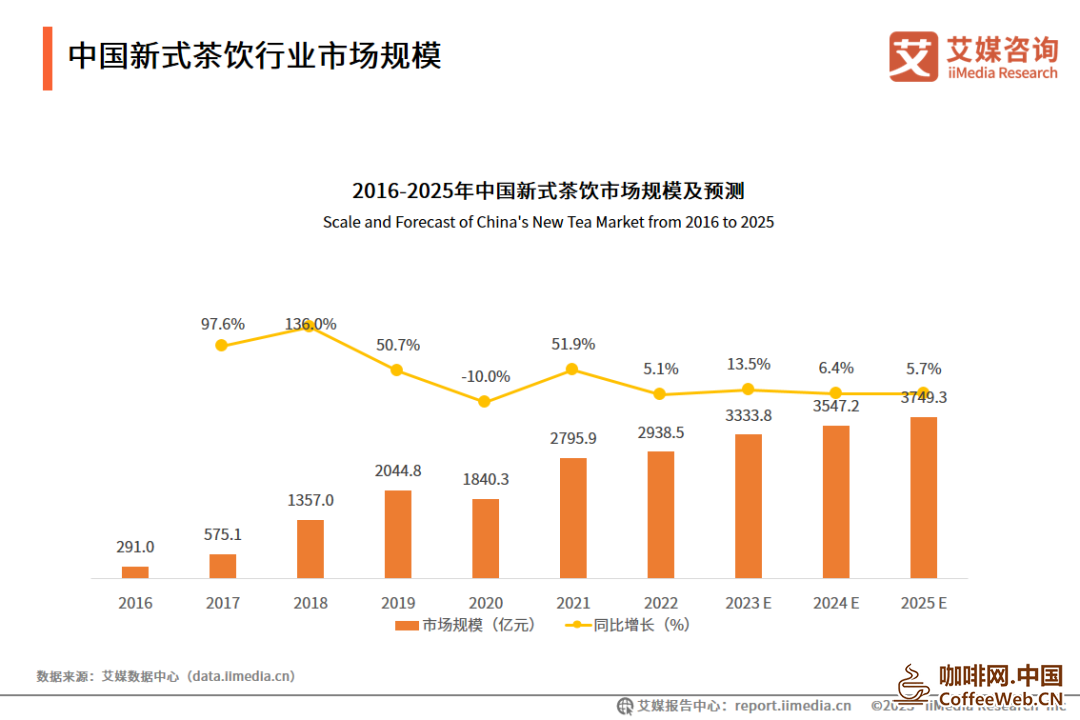
不过近年来,随着需求饱和、竞争加剧,新茶饮行业也面临增长承压的挑战。艾媒咨询披露的数据显示,预计2025年,中国新茶饮市场规模为3749.3亿元,同比仅增长5.7%,相较此前几年的双位数乃至三位数增速明显放缓。
为了摆脱成长困局,瑞幸再一次踏上多元化发展之旅,先是在2026年4月打造瓶装即饮咖啡,覆盖商超、便利店等渠道,单瓶售价6-7元;后又于近期依托现有门店,推出含酒精特调饮品,售价15.9元。
图源:TMIC
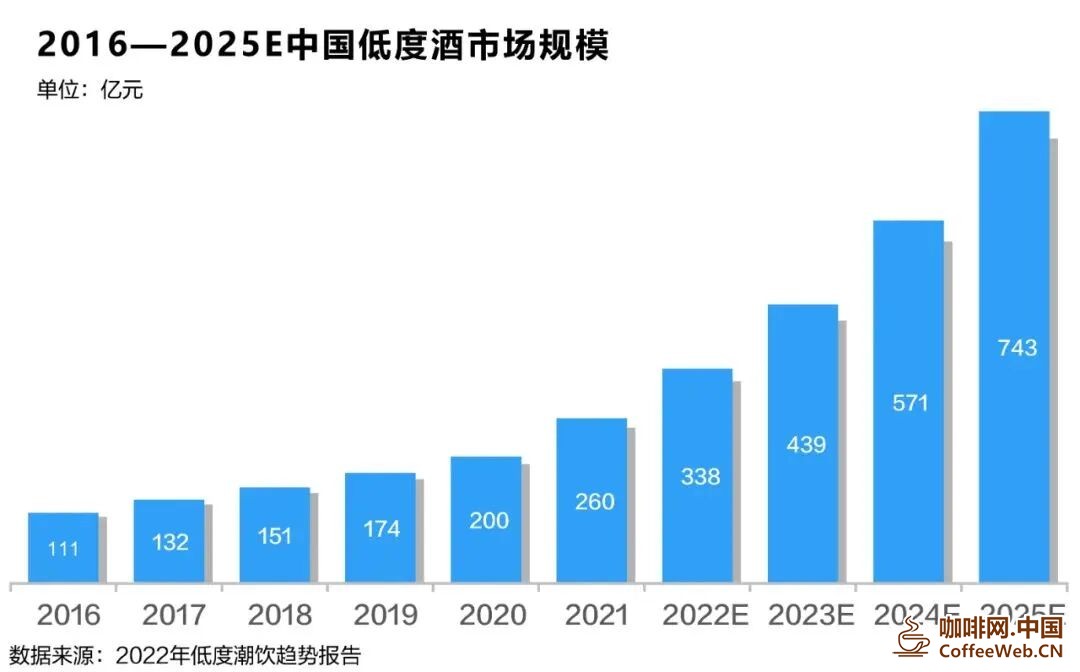
从市场维度来看,瑞幸近期布局的新业务,确实拥有广阔的发展空间。以“微醺”饮品为例,TMIC披露的数据显示,预计2025年,中国低度酒市场规模约为743亿元,同比激增30.12%,增速远超白酒行业整体水平。
正如瑞幸咖啡CEO郭谨一所言,“通过这些多元化的产品创新,我们进一步完善了产品矩阵,更好覆盖全时段、多场景的消费需求,有力支撑了新客获取与老客复购。”
梳理过去几年瑞幸的多元化举措不难发现,其并未盲目进行多元化发展,而是有一条清晰的发展主轴——依靠既有品牌、供应链、渠道资源,丰富饮品矩阵,在更多、更具成长性的消费场景中触达用户。
如今在咖啡、新茶饮之外布局“微醺”饮品,说明瑞幸希望跳脱出“办公提神”场景,满足消费者的下班居家、周末小聚等“轻社交”需求。
随着新品类俘获海量消费者,成为比肩现制咖啡的大单品,瑞幸有望随之突破单店经营效率的瓶颈,打开新的成长空间。
不过,瑞幸的“微醺”饮品如果想沉淀为长期业务,还面临不小的挑战。
茶饮与酒饮割裂严重,瑞幸当学“蜜雪”?
其实瑞幸并非含酒精特调饮品赛道的“孤勇者”。有鉴于现制茶饮红利消逝,而低度酒市场正蓬勃发展,诸多茶饮品牌早已开始积极发力“微醺”产品。
图源:爷爷不泡茶
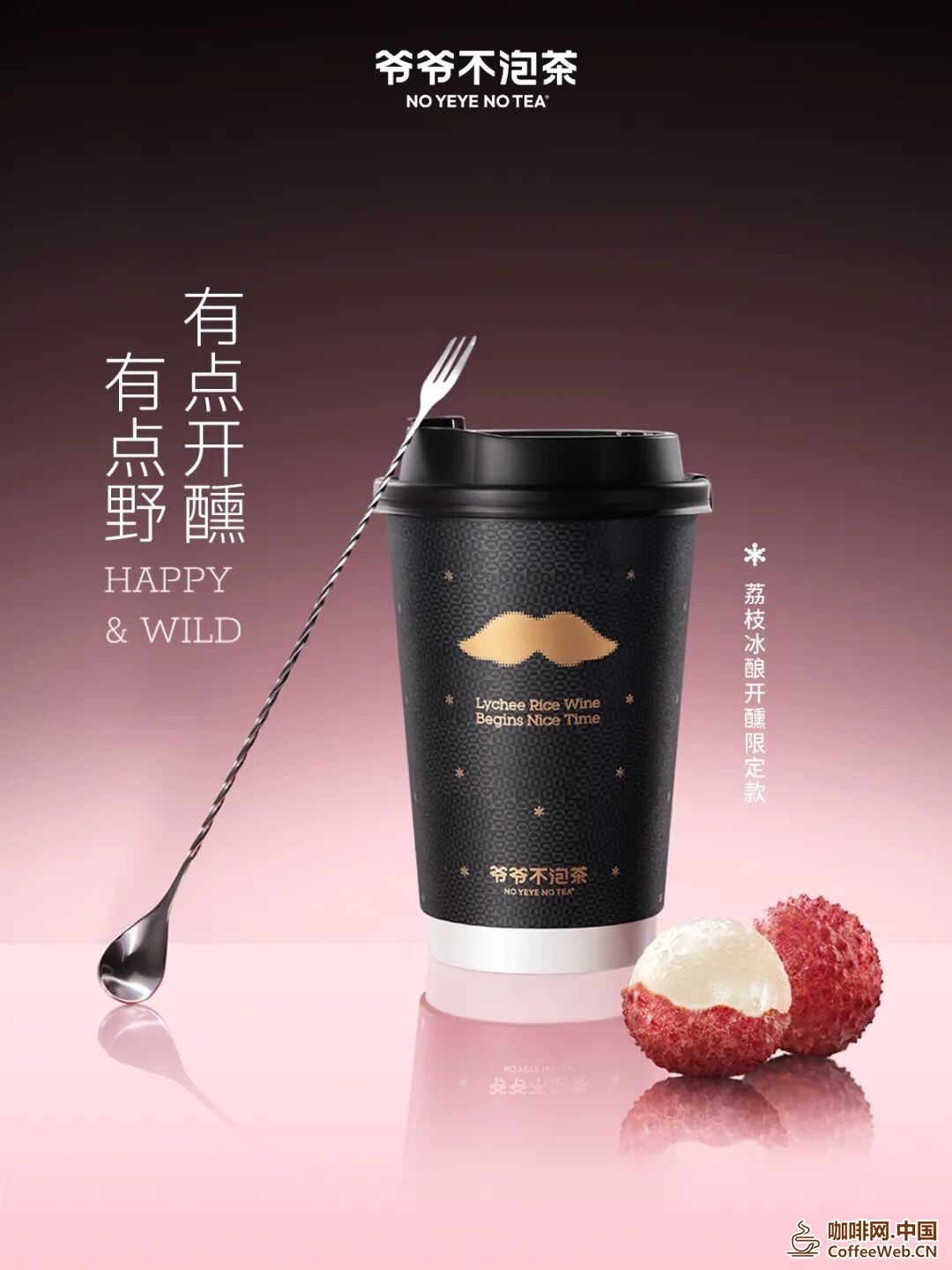
比如,2025年7月,爷爷不泡茶推出“荔枝冰酿开醺限定款”,以非遗孝感米酿为基底,采用0茶底配方,添加鲜榨米酒,酒精含量低于0.5%vol。
无独有偶,同年9月,茶百道也携手泸州老窖推出联名限定饮品“醉步上道”,主打“真白酒、直接倒”,酒精度低于0.5%vol,致力于为消费者提供新鲜、健康的微醺体验。
由于颇具新鲜感,诸多新茶饮品牌推出的“微醺”产品上市之初,均可吸引海量消费者买单。然而需要注意的是,尽管“微醺”产品不断上新,但时至今日,该市场并未像新茶饮赛道一样,涌现出生椰拿铁、多肉葡萄、手打柠檬等“常青树”。
究其原因,不仅在于含酒精饮品的运营难度更高、受众相对有限,更在于此类产品主要的消费场景、客群以及销售时段,与现制茶饮存在不小的裂痕。
此前,瑞幸的主要消费群体是白领、学生党,门店大多布局在写字楼、学校周边。反观含酒精特调饮品的主要消费场景为夜间居家或周末露营。在此背景下,瑞幸的现有门店,很难最大限度释放含酒精特调饮品的商业价值。
针对现制茶饮与酒精饮品在消费人群与场景之间的割裂感,蜜雪冰城看得相对更为透彻。
作为新茶饮行业的翘楚,蜜雪冰城也已感受到新茶饮行业天花板渐显带来的下行压力,因而积极布局酒类饮品业务。
不过蜜雪冰城并未依托现有门店孵化新业务,而是于2025年10月,斥资2.97亿元购入现打鲜啤品牌福鹿家53%股份。
图源:福鹿家
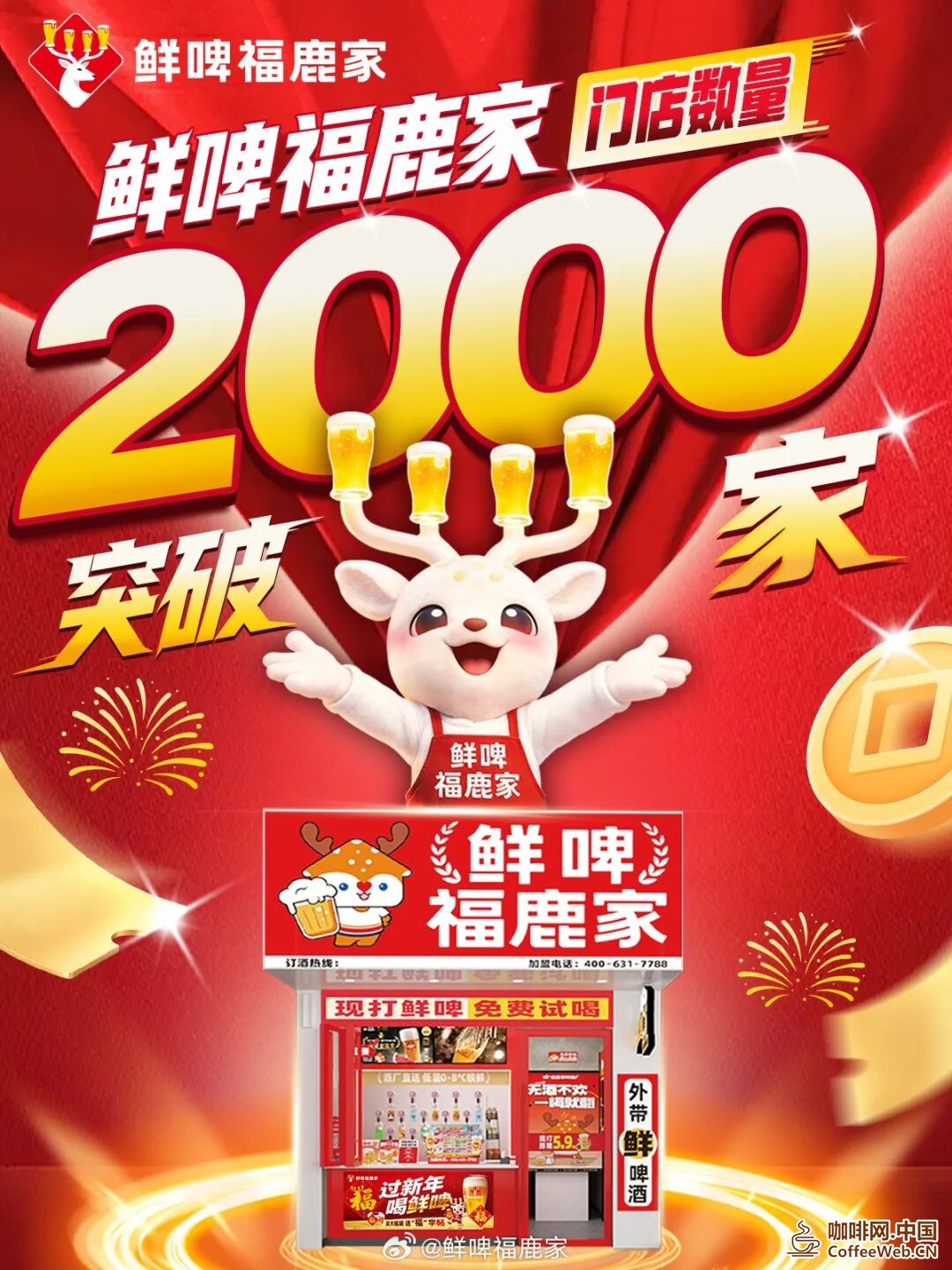
随后,蜜雪冰城以福鹿家为载体,将触手伸向“微醺”赛道。在蜜雪冰城的带动下,福鹿家凶猛成长。官方资料显示,截至2026年2月,福鹿家门店数量突破2000家,8个月时间,净增1000家门店。
总而言之,对于瑞幸而言,凭借成熟的供应链体系、雄厚的资金实力以及遍布全国的门店网络,推出“微醺”饮品并不困难。
真正的挑战在于,如何在“高频、提神”的咖啡消费逻辑,与“低频、情绪化”的微醺需求之间,建立稳定且长期的消费场景。
因为现制咖啡强调的是效率与日常刚需,而酒精饮品更依赖氛围、社交与夜间场景,两者在消费习惯、运营节奏、品牌心智等维度,都存在天然裂痕。
本质上,瑞幸布局“微醺”饮品,并非一次简单的SKU扩张,而是需要重构既有商业模型。
如果无法真正缝合上述裂痕,“微醺”饮品大概率只能停留在短期营销层面,难以沉淀为稳定的第二增长曲线,而瑞幸也无法借此突破单店经营效率的天花板。
Luckin Coffee, known as the "coffee king" in China, is not only committed to making people "sober", but also targets the "slightly tipsy" business.
Image source: Luckin Coffee
On May 18, 2026, Luckin Coffee launched two alcoholic special drinks, "Scarlet Moonlight" and "Coco Vienna", with a capacity of 355ml each. Each cup contains about 15ml of liquor stock and is priced at 15.9 yuan.
In fact, as early as September 2023, Luckin Coffee had teamed up with Maotai to create the phenomenal alcoholic coffee drink "Sauce flavored Latte". However, it should be noted that although 53 degree Feitian Maotai liquor is added to the "sauce flavored latte", the alcohol content is less than 0.5% vol, which is not an alcoholic beverage, but a coffee beverage with a "Maotai flavor".
The alcoholic beverages launched by Luckin Coffee this time are clearly labeled as having an alcohol content higher than 0.5% vol, and therefore need to be managed as alcoholic beverages. They only support offline in store pickup and are strictly prohibited from being sold to minors.
Farsight believes that although "Sauce flavored Latte" and "Scarlet Moonlight" are both alcoholic coffee drinks, due to significant differences in alcohol content and consumption scenarios, Luckin Coffee's strategic demands for launching these two types of products are not the same.
Previously, when laying out the "sauce flavored latte", Luckin Coffee was only committed to exploring the "residual value" of coffee drinks. The current layout of alcoholic beverages indicates Luckin Coffee's ambition to enter a new market.
Relying on tens of thousands of offline stores, alcoholic beverages can indeed quickly reach consumers. However, how to bridge the gap between Luckin Coffee's main freshly made coffee and alcoholic beverages will become an unavoidable issue.
The dividend of freshly brewed coffee is disappearing, and Luckin Coffee is approaching the ceiling of growth
As a coffee newcomer founded less than ten years ago, Luckin Coffee's achievements are undoubtedly commendable. Not only has it already returned to normal cash flow, but it has also shaken Starbucks' foundation in the Chinese market, putting the latter in a passive position of seeking capital integration.
Source: Luckin Coffee Q1 2026 Financial Report
However, according to the latest financial report, the quality of Luckin Coffee's operations has shown signs of deterioration. According to the financial report, in Q1 2026, Luckin Coffee's revenue was 11.995 billion yuan, a year-on-year increase of 35.3%; Net profit was 506 million yuan, a year-on-year decrease of 3.6%; The GAAP operating profit margin was 6%, a year-on-year decrease of 2.3 percentage points, indicating a problem of "increasing revenue without increasing profits".
Image source: iMedia Consulting
Looking into the reasons, as the dividends of the Chinese coffee market fade away, Luckin Coffee is inevitably hitting the ceiling of growth. According to a research report released by iMedia Consulting, it is expected that the size of China's coffee market will grow from 1 trillion yuan to 1.39 trillion yuan from 2025 to 2029, with a compound annual growth rate of only 8.52%, far lower than the previous double-digit growth rate.
In order to seize the few incremental dividends, Luckin Coffee is committed to laying more stores. As of the end of Q1 2026, the total number of Luckin stores worldwide reached 33600, a month on month increase of 8.21%.
Correspondingly, in order to capture more consumers, Luckin Coffee has invested higher costs in delivery and marketing. In Q1 of 2026, Luckin's delivery expenses amounted to 1.308 billion yuan, a year-on-year increase of 89.8%; Sales and marketing expenses amounted to 732 million yuan, a year-on-year increase of 47.5%.
More stores can indeed cover a wider consumer base, but it should be noted that with numerous brands opening stores and new players constantly entering the market, the new demand for freshly brewed coffee in China is becoming saturated. In this context, although Luckin Coffee has invested more costs in high-density stores, it is difficult to reverse the dilemma of declining single store operating efficiency.
Source: Luckin Coffee Q1 2026 Financial Report
According to the financial report, from Q2 2025 to Q1 2026, Luckin Coffee's self operated same store sales growth rates were 13.8%, 14.3%, 1.3%, and -0.1%, respectively. Not only did the growth rate gradually decline, but it even turned negative.
Huayuan Securities once pointed out in a research report that based on the per capita disposable income of urban residents in 2024, Luckin Coffee's theoretical upper limit for opening stores in the Chinese market is about 39000. Although the number of Luckin stores has not yet reached the theoretical limit at this stage, the growth rate of self operated same store sales has been declining, which largely indicates that it has reached a growth bottleneck.
Stepping out of the coffee comfort zone, Luckin Coffee wants to solve its problems through diversification
In fact, Luckin Coffee has long realized that as demand gradually saturates, it is difficult for the freshly brewed coffee beverage business to rely solely on expanding stores to achieve growth. In view of this, Luckin Coffee has chosen to focus on diversified beverages.
In August 2024, Luckin Coffee launched the "Morning Coffee and Afternoon Tea - Send You 100 Million Cups of 9.9 Yuan Afternoon Tea" campaign, gradually launching light milk tea products such as Light Jasmine, Light Oolong, and Coconut Ceylon, extending its tentacles to the field of freshly made tea drinks. Afterwards, Luckin Coffee successively launched products such as fruit tea, matcha, yogurt, etc., fully focusing on the new tea beverage business.
Image source: Luckin Coffee
Relying on a strong brand awareness of trendy beverages and a massive number of stores, Luckin Coffee has become a heavyweight player in the new tea beverage industry. Official data shows that Luckin Coffee's Light Jasmine Light Milk Tea sold over 44 million cups in its first month. On the occasion of its first anniversary on the market, Luckin Coffee's light milk tea has sold over 300 million cups, with an average monthly sales volume of about 25 million cups.
Image source: iMedia Consulting
However, in recent years, with saturated demand and intensified competition, the new tea beverage industry has also faced challenges of growth pressure. According to data disclosed by iMedia Consulting, it is expected that the size of China's new tea beverage market will reach 374.93 billion yuan by 2025, with a year-on-year growth rate of only 5.7%, which is significantly slower than the double-digit or even triple digit growth rate in previous years.
In order to overcome the growth dilemma, Luckin Coffee once again embarked on a diversified development journey. First, in April 2026, it launched bottled ready to drink coffee, covering channels such as supermarkets and convenience stores, with a single bottle price of 6-7 yuan; Later, relying on existing stores, a special alcoholic beverage was launched recently, priced at 15.9 yuan.
Image source: TMIC
From a market perspective, Luckin Coffee's recent expansion into new businesses does indeed have vast development potential. Taking "Weixun" drinks as an example, according to the data disclosed by TMIC, it is estimated that the market size of low alcohol liquor in China will be about 74.3 billion yuan in 2025, with a year-on-year surge of 30.12%, which is far higher than the overall level of the Baijiu industry.
As Guo Jinyi, CEO of Luckin Coffee, said, "Through these diversified product innovations, we have further improved our product matrix, better covering the consumption needs of all time periods and multiple scenarios, and effectively supporting the acquisition of new customers and repeat purchases of old customers
It is not difficult to find that Luckin Coffee has not blindly pursued diversified development in the past few years, but has a clear development axis - relying on existing brand, supply chain, and channel resources, enriching the beverage matrix, and reaching users in more and more growth oriented consumption scenarios.
Nowadays, in addition to coffee and new tea drinks, Luckin Coffee is also offering "slightly tipsy" drinks, indicating that it hopes to break away from the "office refreshing" scene and meet consumers' needs for "light socializing" such as work and home, weekend gatherings, etc.
With the capture of a large number of consumers by new product categories, Luckin Coffee is expected to break through the bottleneck of single store operating efficiency and open up new growth opportunities, becoming a major product comparable to freshly brewed coffee.
However, if Luckin's "slightly tipsy" drinks want to settle into long-term business, they still face significant challenges.
Tea and alcohol are severely separated, should Luckin learn from "honey snow"?
In fact, Luckin Coffee is not a "lone hero" in the field of alcoholic beverages. Given the diminishing dividends of freshly brewed tea beverages and the thriving development of the low alcohol alcohol market, many tea beverage brands have already begun actively promoting "slightly tipsy" products.
Source: Grandfather doesn't make tea
For example, in July 2025, Grandpa launched the "Litchi Ice Brewing Drunken Limited Edition" without brewing tea, using intangible cultural heritage Xiaogan rice brewing as the base, adopting a zero tea base formula, adding freshly squeezed rice wine, and an alcohol content of less than 0.5% vol.
Coincidentally, in September of the same year, Chabaidao also joined hands with Luzhou Laojiao to launch a joint limited drink, "Getting drunk", which focuses on "real Baijiu, pouring directly", with an alcohol content of less than 0.5% vol, and is committed to providing consumers with a fresh and healthy experience of mild intoxication.
Due to its novelty, many new tea drink brands have launched "slightly tipsy" products that can attract a large number of consumers to buy at the beginning of their launch. However, it should be noted that despite the continuous introduction of new "slightly tipsy" products, the market has not yet seen the emergence of "evergreen trees" such as coconut latte, succulent grape, and hand lemon, as seen in the new tea beverage market.
The reason for this is not only due to the higher operational difficulty and relatively limited audience of alcoholic beverages, but also because the main consumption scenarios, customer groups, and sales periods of such products have significant cracks compared to freshly made tea drinks.
Previously, Luckin Coffee's main consumer groups were white-collar workers and student party members, and most of its stores were located around office buildings and schools. On the other hand, the main consumption scenarios for alcoholic beverages are at home at night or camping on weekends. In this context, it is difficult for Luckin Coffee's existing stores to maximize the commercial value of alcoholic beverages.
Regarding the disconnect between freshly made tea drinks and alcoholic beverages in terms of consumer groups and scenarios, Meixue Ice City has a relatively more thorough understanding.
As a leader in the new tea beverage industry, Meixue Bingcheng has also felt the downward pressure brought by the rising ceiling of the new tea beverage industry, and therefore actively laid out its alcoholic beverage business.
However, Meixue Bingcheng did not rely on existing stores to incubate new businesses. Instead, in October 2025, it invested 297 million yuan to purchase 53% of the shares of the current fresh beer brand Fulujia.
Source: Fulu Family
Subsequently, Miyue Ice City extended its tentacles to the "Micro Drunk" track using the Fulu family as a carrier. Driven by the Milk Snow Ice City, the Fulu family grew fiercely. According to official data, as of February 2026, the number of Fulu stores has exceeded 2000, with a net increase of 1000 stores in 8 months.
In summary, for Luckin Coffee, with its mature supply chain system, strong financial strength, and nationwide store network, it is not difficult to launch "slightly tipsy" drinks.
The real challenge lies in how to establish a stable and long-term consumption scenario between the "high-frequency, refreshing" coffee consumption logic and the "low-frequency, emotional" slightly tipsy demand.
Because freshly brewed coffee emphasizes efficiency and daily necessities, while alcoholic beverages rely more on atmosphere, socialization, and nighttime scenes, there are natural cracks between the two in terms of consumption habits, operational rhythm, brand mentality, and other dimensions.
Essentially, Luckin Coffee's layout of "slightly tipsy" beverages is not a simple SKU expansion, but requires restructuring of existing business models.
If the above cracks cannot be truly stitched together, the "slightly intoxicated" beverage is likely to remain at the short-term marketing level, difficult to settle into a stable second growth curve, and Luckin Coffee cannot break through the ceiling of single store operating efficiency through this.