超10万家餐饮店杀入咖啡赛道,为啥都想当“瑞幸”?Why do over 100000 restaurants want to be Luckin Coffee as they enter the coffee market?
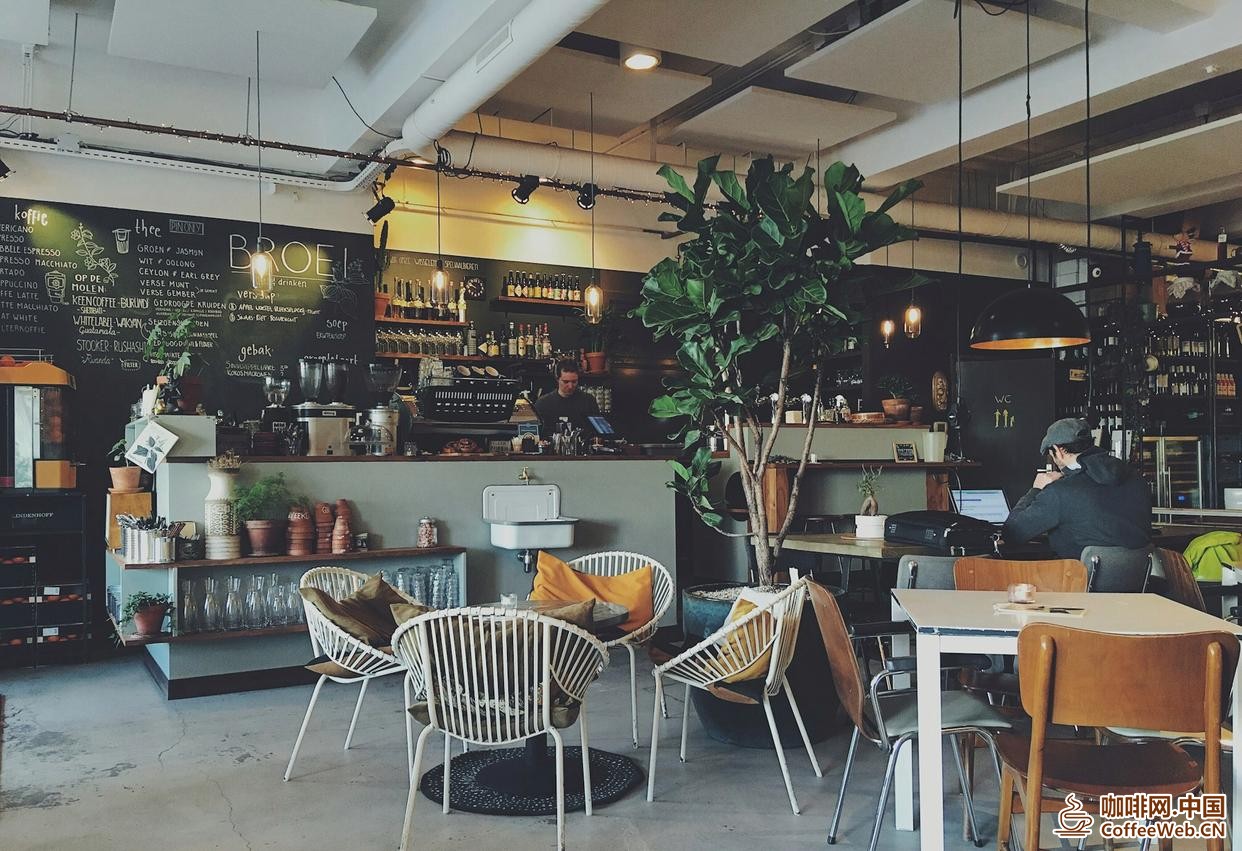
In recent years, the competition in the catering market has become increasingly fierce. In this almost close combat market, everyone is trying their best to enhance their competitiveness, and the most significant trend is to collectively enter the coffee track. So, why do catering companies want to be "Luckin Coffee"?
1、 Over 100000 restaurants enter the coffee market
According to a report by Red Restaurant Network, over 100000 restaurants are entering the coffee market at the same time. What changes will occur in the market? In the past few years, Luckin Coffee has taken coffee down from the pedestal with its "affordable coffee" and "coffee milk tea transformation", and has embarked on a new track in the Chinese market, firmly establishing its leading position.
In recent times, from top brands of new tea drinks to chain fast food giants, they have been "opening coffee shops". Their methods are exactly the same as Luckin Coffee's - "affordable coffee" and "coffee milk tea". That is to say, these catering giants holding tens of thousands of stores are not targeting Starbucks, but Luckin.
Not long ago, Jasmine Milk White launched its coffee series products "400 Yuan Yang Tai Milk" and "Needle King Apple Latte" for the first time in more than 2300 stores nationwide. According to industry media "Kemen", on the day of its launch, multiple stores across the country directly sold over 210000 cups of new products within 8 hours. Recently, products such as Vanilla Seed Vienna and Bitter Orange Latte launched by Guming have also become small bestsellers.
In 2023, KFC officially launched its independent coffee brand, Kenyue Coffee. In just over two years, it has opened more than 2600 stores and plans to expand to 5000 by the end of 2027.
In May 2024, McDonald's Coffee announced its latest data, with over 3500 stores nationwide at that time. Now, two years have passed and its scale is only expected to increase.
By the end of 2025, Wallace will install coffee machines in tens of thousands of stores across the country; Chinese rice fast food brands such as Laoxiangji and Chaoyixing have also entered the coffee business.
Starting from March this year, Meixue Ice City has successively launched coffee machines in its stores across the country, officially entering the field of freshly ground coffee. And its sub brand Lucky Coffee had already opened over 10000 stores worldwide in November last year, surpassing the vast majority of coffee brands in scale.
2、 Why do everyone want to be 'Luckin'?
Recently, the Chinese freshly made beverage market has ushered in an unprecedented "melee", with various tea and catering enterprises entering the coffee market. What does such a large-scale layout mean?
Firstly, Luckin Coffee has proven that popular coffee for the general public is a good business. Before Luckin Coffee, the Chinese coffee market had long been defined by international giants, with coffee being branded with a strong "third space" social attribute and cultural imprint of the elite class. This model was essentially a high premium, low-frequency "niche business". At that time, buying a cup of coffee was just a social currency on social media and was even defined as a kind of light luxury product. The success of Ruixing lies in that it reconstructs the industrial attribute of coffee with the flow thinking of the Internet, and forcibly pulls coffee back from the "social currency" to the original position of "functional drinks", making coffee return to the origin of the berries used by Ethiopian shepherds to refresh their minds overnight.
The popular coffee priced at 9.9 yuan may seem to squeeze profit margins, but it is actually a blow to the traditional coffee market in terms of dimensionality reduction and bottom-up harvesting. It completely broke the price threshold, pulling a large group of people who originally didn't drink coffee into the funnel of coffee consumption, achieving exponential expansion of the market. This is also why Luckin, after experiencing financial fraud and delisting crises that other brands may have already suffered, has become more resilient and even rebounded from the bottom.
When the market saw Luckin Coffee's number of stores ranking first in the world, capital and industry truly awakened: in China, large-scale civilian coffee is the real cash cow. This demonstration effect is extremely disruptive, as it makes all practitioners realize that the end of coffee is not petty bourgeois sentiment, but ultimate cost-effectiveness and massive repeat purchases.
Secondly, the marginal cost of cross-border coffee production is extremely low. Many people may not understand why brands that make milk tea can make coffee so quickly? The reason is very simple: a coffee machine costs tens of thousands of yuan, and even some low-end coffee machines such as drip coffee are cheaper. As a basic agricultural product, the commercial procurement cost of coffee beans is extremely low, and training a shop assistant to make coffee may only take a few days. Compared to investing hundreds of thousands or even millions of dollars to open a new store, adding a few coffee machines to an existing store is simply a "convenient thing".
More importantly, these brands have three things that Luckin Coffee spent a huge amount of money to build back then: a ready-made store network, a ready-made customer base, and a mature supply chain system. Meixue Ice City has over 20000 stores, each of which is a potential selling point for coffee; Guming has nearly ten thousand stores, and customers in each store have a habit of consuming beverages. You don't need to re educate the market, relocate, or rebuild the supply chain. You just need to add a SKU to your existing business.
This is a significant scope economy effect, where companies utilize existing resources and capabilities to enter new business areas at extremely low marginal costs. For these catering and tea beverage brands, coffee is not a new business, but an "increment" that can be almost zero cost grafted onto existing businesses. This cross-border cost-effectiveness is so high that it is irresistible.
Thirdly, the rapidly sinking market can be described as a high-quality blue ocean for various companies. In the past, competition in the domestic coffee market was mainly concentrated in the core business districts of first tier and new first tier cities, and the competition on the track became increasingly fierce. The market structure of top brands was basically stable, and small and medium-sized brands and latecomers found it difficult to break through in the core market. But currently, the Chinese coffee industry is in a critical stage of rapidly sinking from core cities to third - and fourth tier cities, county-level markets, and township markets. On the one hand, this market is not a novice without any foundation. In recent years, Kudi Coffee and Lucky Coffee have formed a certain market influence in the sinking market, which means that the basic work has been done well. On the other hand, the potential impact of Luckin Coffee and Starbucks on coffee culture is also very evident. The coffee consumption mentality in the sinking market is rapidly cultivating, and the demand for popular coffee continues to explode, becoming the largest source of growth for the entire industry.
At the same time, coffee consumption in the sinking market naturally adapts to the attributes of affordable, essential, and convenient consumption, which is highly compatible with Luckin Coffee's dominant mass coffee model, but completely disconnected from the traditional high-end boutique coffee format, providing excellent overtaking opportunities for small and medium-sized catering brands. Professional coffee brands sinking into the market require starting from scratch to layout stores, cultivate customer groups, and build channels. The cost of expanding stores is high, and the speed of market penetration is slow.
Local catering and tea brands that have been deeply cultivating the sinking market for many years have already completed a comprehensive store layout, rooted in various sinking scenes such as communities, streets, and county-level commercial districts, and have a strong regional market penetration rate. By relying on existing stores to quickly launch coffee business, it is possible to quickly seize the market share of sinking coffee without large-scale investment or a long cultivation period, leverage existing resources to drive incremental markets, and achieve traditional catering brands to overtake in the new track, breaking the rigid competition pattern of the original industry.
Fourthly, the urgent need to create a second growth curve is driving all parties to move forward one after another. Currently, the catering industry is facing the dilemma of severe homogenization and weak growth, while the tea beverage industry is also experiencing internal competition, with traffic dividends peaking and single store revenue growth under pressure. Finding a second growth curve has become an urgent need for enterprises. The core of Luckin's profit model lies in attracting traffic with cost-effective products, reducing costs through large-scale operations, and achieving profitability through high-frequency consumption. The key to this model lies in scale and cost control.
Catering and tea beverage enterprises can perfectly fit this logic by reusing existing resources, relying on existing stores to achieve large-scale layout, reusing supply chains to reduce operating costs, and leveraging existing customer groups to achieve high-frequency consumption conversion. This light asset, high-efficiency operating model can replicate Luckin's profit path at the lowest cost. They do not need to invest huge amounts of money to build independent systems, and can quickly form economies of scale, while controlling risks and opening up new revenue growth points.
For enterprises that are stuck in growth bottlenecks, this cross-border model relying on core resources not only reduces innovation risks, but also quickly yields results, becoming the optimal solution to solve growth anxiety and naturally becoming an opportunity for enterprises to compete for.
In the long run, the popularization of the coffee industry has become a trend, and coffee is no longer the beverage of niche elites. More and more companies are entering the coffee market across borders, which is a natural thing.
(Image source for this article: UNsplash)
Source: Beijing Number
Author: Jiang Han's Perspective