Seesaw咖啡被破产?精品咖啡的路为啥那么难走?Seesaw Coffee is bankrupt? Why is the road to premium coffee so difficult?
说起咖啡,相信不少人之前都会认为这是一种高端生活方式的代名词,去咖啡店买杯咖啡不发个朋友圈都感觉对不起这杯咖啡,也正是在这股风潮之下,精品咖啡开始在国内兴起,但是就在最近知名精品咖啡Seesaw被破产的消息传来,为啥精品咖啡的路这么难走?
一、Seesaw咖啡被破产?
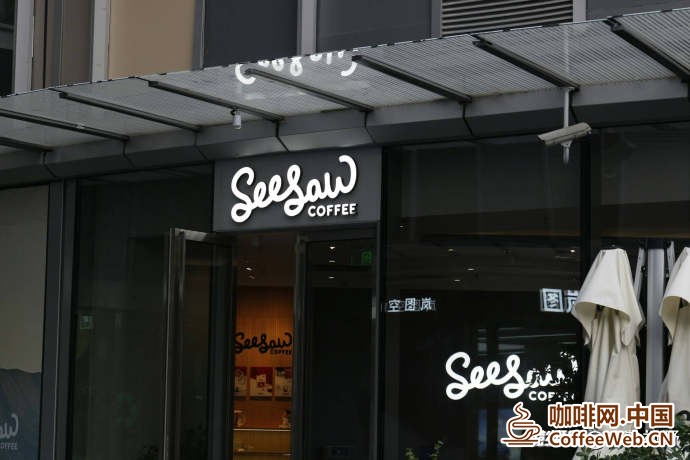
据界面新闻的报道,精品咖啡品牌Seesaw Coffee运营公司被申请破产。
企查查APP显示,Seesaw Coffee运营主体上海西舍咖啡有限公司(下称西舍咖啡)目前有多条破产审查案件,申请人分别是上海琉璃工房玻璃艺术品有限公司与上海玛露实业有限公司。申请人均以西舍咖啡不能清偿到期债务且明显缺乏清偿能力为由,向法院申请对其进行破产清算。
西舍咖啡近日还新增2条开庭公告,案由分别为运输合同纠纷和买卖合同纠纷。此外,2026年以来,西舍咖啡及其法定代表人、Seesaw Coffee创始人吴晓梅多次被限制高消费。
西舍咖啡早前就被曝经营异常。去年11月,该公司曾因通过登记的住所或者经营场所无法联系,被上海市市场监督管理局列入经营异常名录。截至目前,该公司被执行人信息有8条,被执行总额为1410.87万元;有20条历史失信被执行人信息,涉案金额为1037.99万元。
Seesaw Coffee创立于2012年。当时,国内比较有名的高端咖啡仅有星巴克,本土连锁精品咖啡的发展几乎处于空白的状态。Seesaw Coffee成立后,将“精品咖啡豆”“手冲咖啡单品”等概念展现给了国内消费者,弥补了国内咖啡市场的空缺,所以一度被誉为“精品咖啡黄埔军校”。
二、精品咖啡的路为啥那么难走?
最近,Seesaw咖啡被传出破产的消息,如同一颗石子投入平静湖面,激起层层涟漪。这背后,其实折射出的是精品咖啡在整个咖啡产业格局中,艰难求生的尴尬处境。我们到底该怎么看这件事?
首先,规模经济与精品基因的天然对立。这些年,伴随着中国咖啡市场的高速发展,以瑞幸、库迪为代表的连锁品牌已经彻底改变了行业的底层逻辑,形成了极强的规模经济效应。这种规模经济的核心在于,它们能够通过庞大的门店基数和标准化的工业流水线,有效地摊薄固定成本,从而在微利时代依然保持整体的商业运转。相比之下,精品咖啡的商业模式从基因上就决定了它的高运营成本和高人力成本。
精品咖啡讲究“一店一色”的空间美学,讲究专业咖啡师的萃取手艺,这就意味着它无法像工业咖啡那样实现极致的标准化和去人工化。当一家精品咖啡店试图用高昂的租金、精致的装修和稀缺的专业人才去支撑一个单店模型时,它的盈利模型其实是非常脆弱的。一旦客流量或者客单价出现波动,高昂的固定成本就会像大山一样压垮企业的现金流,这也是为什么我们看到很多精品咖啡品牌在扩张期看似光鲜,一旦遇到市场逆风,资金链断裂往往就在一瞬间。
其次,九块九价格战重塑大众消费心智。瑞幸、库迪掀起的 9.9 元价格战,不是短期营销手段,而是彻底重塑了中国消费者对咖啡的价格认知和消费预期。对于绝大多数普通消费者而言,咖啡的核心价值是 “提神”,而非 “品鉴”,早上赶时间买一杯,下午困了喝一杯,需求简单直接,价格敏感度极高,对价格的波动反应极大,反而对咖啡的风味差异毫不在意。这种需求下,消费者不会为 “瑰夏的果香”“曼特宁的醇厚” 买单,只会纠结 “9.9 元还是 12.9 元”。
价格战的长期洗礼,让大众形成了 “咖啡就该十几块钱” 的固化认知,一旦价格超过 20 元,就会被贴上 “贵” 的标签。而 Seesaw 的客单价长期维持在 30 元左右,这个价格在大众市场看来,完全是 “溢价”,性价比远不如瑞幸、库迪。更无奈的是,价格战不仅拉低了价格上限,还压缩了精品咖啡的降价空间 ,Seesaw 如果降价到 20 元以内,单杯成本都覆盖不了,只会亏得更多;维持原价,又会失去大众消费者,陷入 “不降价没客流、降价就亏损” 的两难境地。这种被价格战锁死的生存空间,让精品咖啡很难在大众市场站稳脚跟,只能困在小众圈层里,难以突破增长瓶颈。
第三,资本催化让管理极易变形。类似于Seesaw这样的品牌,在早期凭借差异化定位获得关注后,不可避免地会引入资本。但资本的本性是逐利的,是要求回报周期的,它没有耐心等你慢慢熬一个完美的单店模型。在资本的裹挟下,为了满足扩张的要求和对赌协议,精品咖啡往往会选择最危险的一条路,激进扩张。
从一线城市的核心商圈往下沉市场走,从几十家店突然干到几百家店。这种扩张必然带来管理的变形。你的品控跟不上了,你找不到足够多合格的精品咖啡师了,你的SOP在高速扩张中形同虚设。结果就是,为了开店而开店,为了出杯量而妥协品质,最终既丢失了原本的核心老客,又没能抢下大众市场的价格敏感型用户,两头不讨好。这种规模与品质的撕裂,几乎是所有被资本催熟的精品咖啡的通病。
第四,大众咖啡认知的局限性注定了精品咖啡是小众生意。我们得认清一个残酷但真实的消费现状,那就是大多数普通消费者对于咖啡的认知,依然是非常初级的。这没有什么好避讳的,这是产业发展的必经阶段。你随便在街头拉一个买九块九咖啡的人,他大概率是喝不出来瑰夏的柑橘茉莉和曼特宁的草本醇苦到底有什么本质区别的。在大多数人的味蕾里,咖啡就是苦的,加点奶加点糖就是甜的。这种认知壁垒,让精品咖啡的高端化之路走得极其艰难。因为你的高溢价,需要有对等的认知能力来承接。当消费者无法感知你的差异化价值时,你的“精品”标签在人家眼里就是“智商税”。
所以,我们要清醒地认识到,精品咖啡从骨子里就注定是属于少数精英的一个垂直小众市场。它就像高级定制服装,是有生存空间的,但这个空间极其有限。只要你有野心,试图把精品打造成类似瑞幸那样的工业咖啡流水线,试图把小众的高端审美强制拉通成大众的平价消费,往往都会面临巨大的困局。因为这是商业模式底层的冲突,是违背产业规律的反噬。
Speaking of coffee, I believe many people used to think that it was synonymous with a high-end lifestyle. If you go to a coffee shop to buy a cup of coffee without posting it on your social media, you feel sorry for this cup of coffee. It is precisely under this trend that boutique coffee has begun to rise in China. However, with the recent news of the bankruptcy of the well-known boutique coffee Seesaw, why is the path of boutique coffee so difficult to take?
1、 Seesaw Coffee is bankrupt?
According to Interface News, the operating company of boutique coffee brand Seesaw Coffee has filed for bankruptcy.
According to the Qichacha APP, Seesaw Coffee's operating entity, Shanghai Xishe Coffee Co., Ltd. (hereinafter referred to as Xishe Coffee), currently has multiple bankruptcy review cases, with the applicants being Shanghai Liuli Workshop Glass Art Co., Ltd. and Shanghai Malu Industrial Co., Ltd. The applicant has applied to the court for bankruptcy liquidation of Xishe Coffee on the grounds that it is unable to repay its due debts and clearly lacks the ability to repay.
Xishe Coffee has recently added two new court announcements, one for disputes over transportation contracts and the other for disputes over sales contracts. In addition, since 2026, Xishe Coffee and its legal representative, Seesaw Coffee founder Wu Xiaomei, have been repeatedly restricted from high consumption.
Xishe Coffee was previously exposed for abnormal business operations. In November last year, the company was listed in the list of abnormal operations by the Shanghai Municipal Administration for Market Regulation due to the inability to contact its registered residence or business premises. As of now, the company has 8 pieces of executed person information, with a total executed amount of 14.1087 million yuan; There are 20 records of dishonest individuals who have been executed, with a total amount of 10.3799 million yuan involved in the case.
Seesaw Coffee was founded in 2012. At that time, the only well-known high-end coffee in China was Starbucks, and the development of local chain specialty coffee was almost in a blank state. After its establishment, Seesaw Coffee presented concepts such as "premium coffee beans" and "hand brewed coffee items" to domestic consumers, filling the gap in the domestic coffee market. Therefore, it was once known as the "Huangpu Military Academy of Premium Coffee".
2、 Why is the road to premium coffee so difficult?
Recently, news of Seesaw Coffee's bankruptcy has spread like a stone thrown into a calm lake, causing ripples to form. Behind this, it actually reflects the awkward situation of boutique coffee struggling to survive in the entire coffee industry landscape. How should we view this matter?
Firstly, there is a natural opposition between economies of scale and premium genes. In recent years, with the rapid development of the Chinese coffee market, chain brands represented by Luckin Coffee and Kudi have completely changed the underlying logic of the industry, forming strong economies of scale. The core of such economies of scale lies in their ability to effectively reduce fixed costs through a large number of stores and standardized industrial assembly lines, thereby maintaining overall commercial operations in the era of low profits. In contrast, the business model of specialty coffee is genetically determined by its high operating and labor costs.
Premium coffee emphasizes the spatial aesthetics of "one shop, one color" and the extraction skills of professional baristas, which means it cannot achieve ultimate standardization and de artificiality like industrial coffee. When a boutique coffee shop tries to support a single store model with high rent, exquisite decoration, and scarce professional talent, its profit model is actually very fragile. Once there is a fluctuation in customer flow or unit price, high fixed costs can crush a company's cash flow like a mountain. This is also why we see many boutique coffee brands appearing glamorous during their expansion period, but once they encounter market headwinds, their funding chains often break in an instant.
Secondly, the price war of 9.9 yuan reshapes the consumer mentality of the masses. The 9.9 yuan price war sparked by Luckin Coffee and Kudi is not a short-term marketing strategy, but a complete reshaping of Chinese consumers' perception and consumption expectations of coffee prices. For the vast majority of ordinary consumers, the core value of coffee is "refreshing" rather than "tasting". They rush to buy a cup in the morning and have a drink in the afternoon when they are tired. Their demand is simple and direct, and their price sensitivity is extremely high. They react greatly to price fluctuations and are indifferent to differences in coffee flavor. Under this demand, consumers will not be willing to pay for the "fruity aroma of Guixia" or the richness of Mantine, but will only be torn between "9.9 yuan or 12.9 yuan".
The long-term baptism of price wars has led to a fixed perception among the public that "coffee should cost more than ten yuan". Once the price exceeds 20 yuan, it will be labeled as "expensive". However, Seesaw's average customer price has remained around 30 yuan for a long time, which is considered a "premium" in the mass market and far less cost-effective than Luckin and Kudi. What's even more frustrating is that the price war not only lowers the price ceiling, but also compresses the price reduction space for premium coffee. If Seesaw reduces the price to less than 20 yuan, the cost of a single cup cannot be covered, and it will only lose even more; Maintaining the original price will result in losing the majority of consumers and falling into a dilemma of "no price reduction, no customer flow, or loss if the price is reduced". This survival space locked by price wars makes it difficult for specialty coffee to establish a foothold in the mass market, and can only be trapped in niche circles, making it difficult to break through growth bottlenecks.
Thirdly, capital catalysis makes management highly susceptible to deformation. Brands like Seesaw, after gaining attention through differentiated positioning in the early stages, inevitably introduce capital. But the nature of capital is profit driven and requires a return cycle. It doesn't have the patience to wait for you to slowly develop a perfect single store model. Under the influence of capital, in order to meet the requirements of expansion and gambling agreements, specialty coffee often chooses the most dangerous path, aggressive expansion.
From the core business district of first tier cities to the sinking market, suddenly from dozens of stores to hundreds of stores. This expansion will inevitably bring about changes in management. Your quality control cannot keep up, you cannot find enough qualified boutique baristas, and your SOP is virtually non-existent in the rapid expansion. The result is that opening a store for the sake of quantity and compromising on quality, ultimately losing the original core loyal customers and failing to capture the price sensitive users in the mass market, both ends are not pleasing. This kind of tearing between scale and quality is almost a common problem for all premium coffee that has been matured by capital.
Fourthly, the limitations of public perception of coffee have destined that specialty coffee is a niche business. We need to recognize a cruel but real consumption situation, which is that most ordinary consumers still have a very basic understanding of coffee. There's nothing to avoid about this, it's a necessary stage in the development of the industry. If you randomly pull someone on the street to buy a 9.9 yuan coffee, they are unlikely to be able to taste the essential difference between Guixia's citrus jasmine and Mantine's herbal mellow bitterness. In most people's taste buds, coffee is bitter, and adding milk and sugar is sweet. This cognitive barrier makes the road to high-end boutique coffee extremely difficult. Because of your high premium, you need to have equivalent cognitive ability to undertake it. When consumers cannot perceive your differentiated value, your "boutique" label is seen as an "intelligence tax" in their eyes.
So, we need to be aware that boutique coffee is inherently destined to be a niche vertical market belonging to a few elites. It's like high-end custom clothing, it has a living space, but this space is extremely limited. As long as you have ambition and try to turn boutique products into industrial coffee assembly lines like Luckin Coffee, or try to force niche high-end aesthetics into affordable consumption for the masses, you often face huge difficulties. Because this is a conflict at the bottom of the business model, a backlash against the laws of the industry.