贵阳咖啡进化小史A Brief History of Coffee Evolution in Guiyang
上世纪40年代贵阳的一则餐饮广告便是佐证——广告中的“广寒宫”是当时贵阳中华中路的一家知名的糕点品牌,除了“肠旺粉”等本地美食,广告中也出现了“罐头糖果”“银耳咖啡”等字样。虽然不清楚“银耳咖啡”的做法和卖相,但可以看出咖啡已成为时髦和畅销的品类。
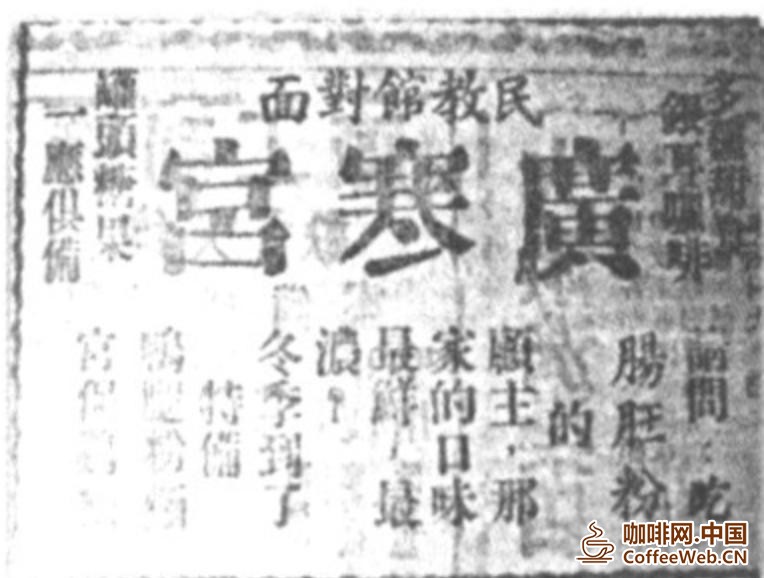
广寒宫的广告,有“银耳咖啡”的字样
1942年,作家叶圣陶为处理开明书店事宜由成都前往桂林,中途被迫滞留贵阳,期间会见过谢六逸、李青崖等人,在其《蓉桂往返日记》中曾记录下贵阳咖啡馆的体验:“三时散,共至梅园咖啡店。此店新开,陈设绝精,如上海法租界中之店。元善之友于永滋君作东,五六人吃咖啡点心,共花百元,亦太浪费矣。”
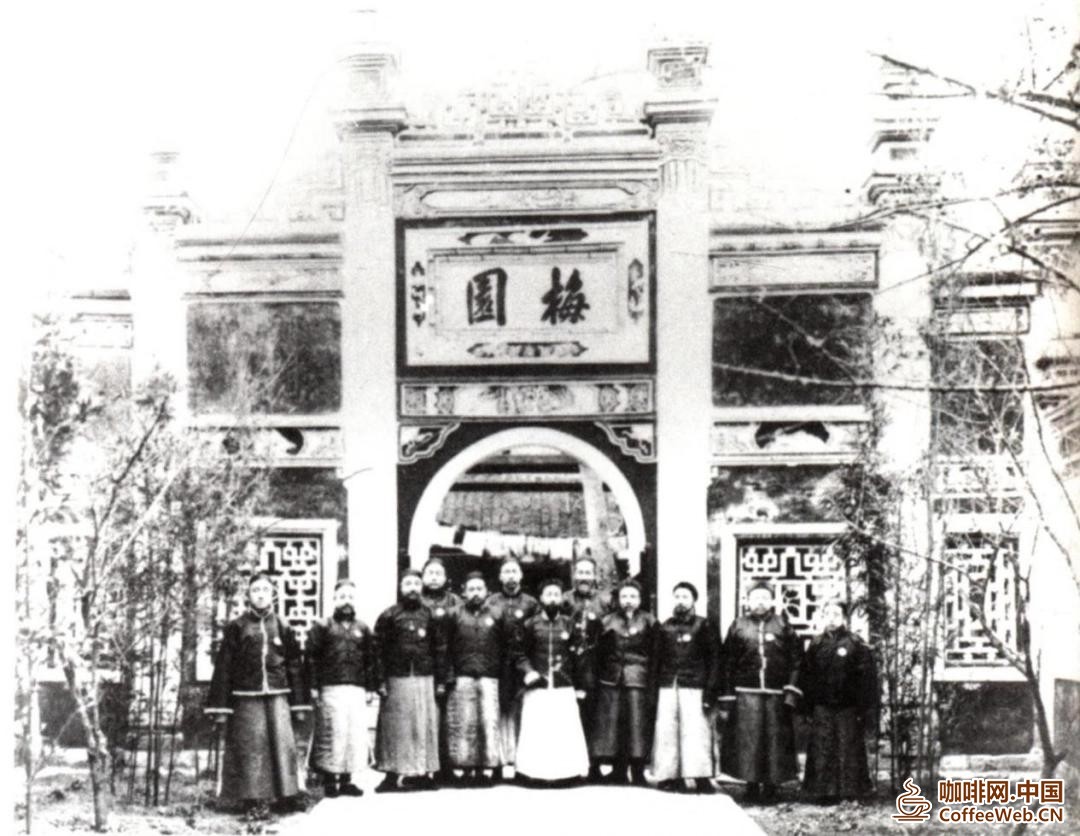
梅园
贵阳籍学者乐黛云,在她的回忆录《透过历史的烟尘》中也提到过,她1946年就读于贵州中学时,学校附近驻扎着美军,而“堆成小山的咖啡渣发出诱人的香味”,同时提到父亲乐森玮1927年回到贵阳后,教英文、穿洋装、喝咖啡,是个十足的洋派人物。
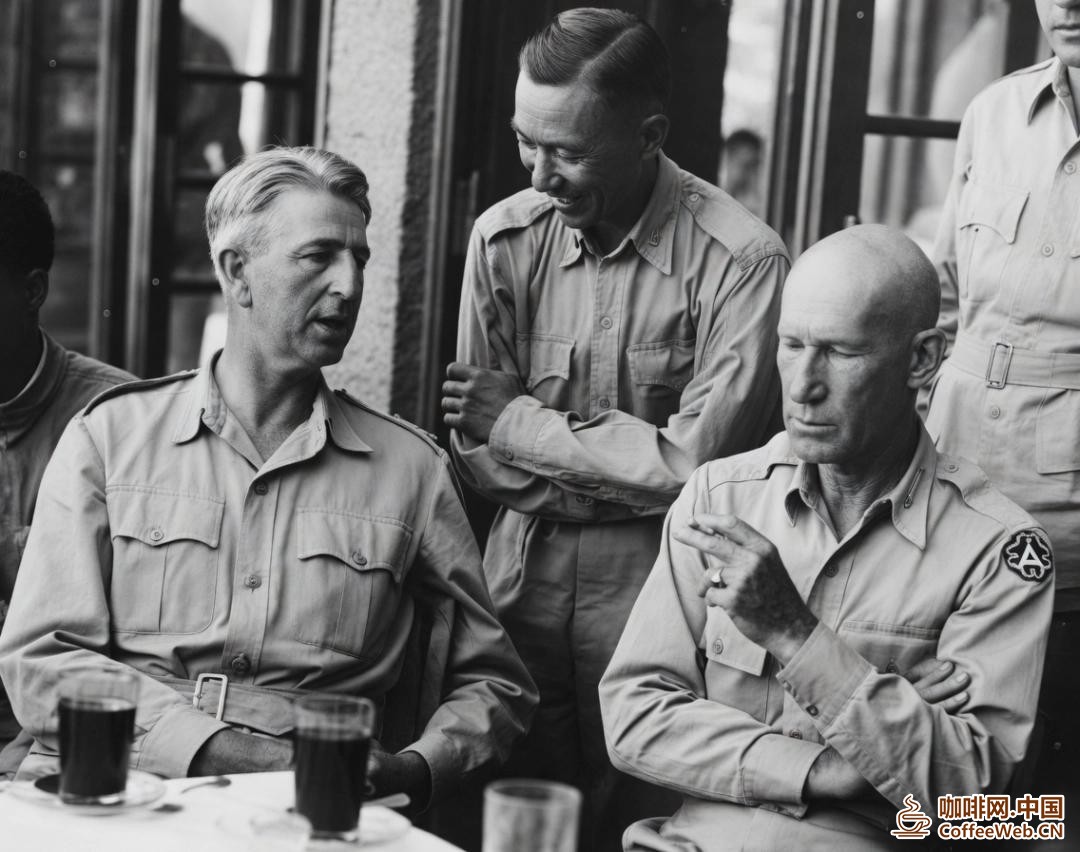
1945年7月,驻扎贵阳花溪美军475步兵团,魏德迈将军(左)陪同辛普森将军(右)出席贵州地方官员的招待宴会,桌上饮用的即是咖啡。美国国家档案馆图片
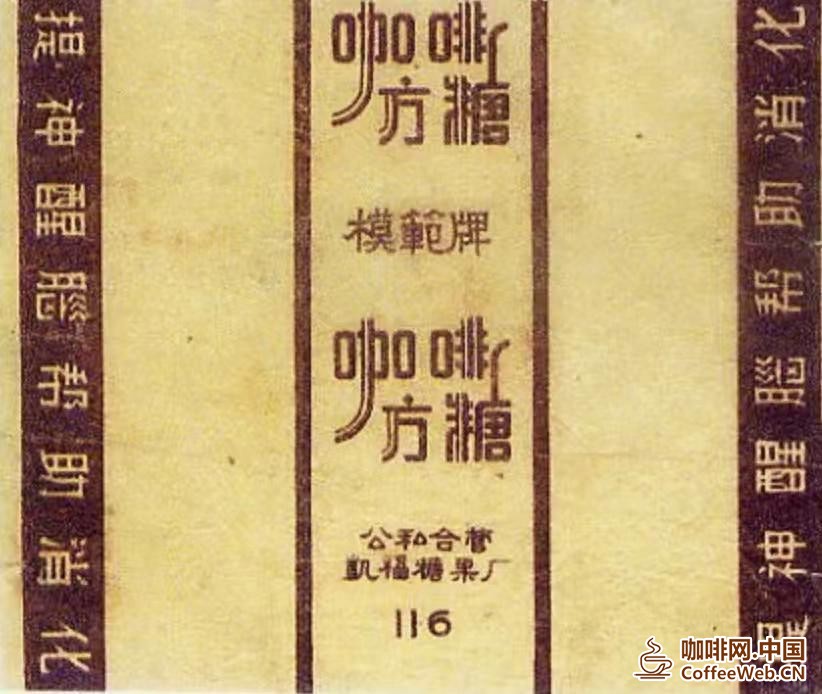
同一时期,本地企业也尝试创新:花溪酒厂推出“咖啡糯米酒”“花溪咖啡酒”,凯福糖果食品厂则生产咖啡方糖,并对外销售。
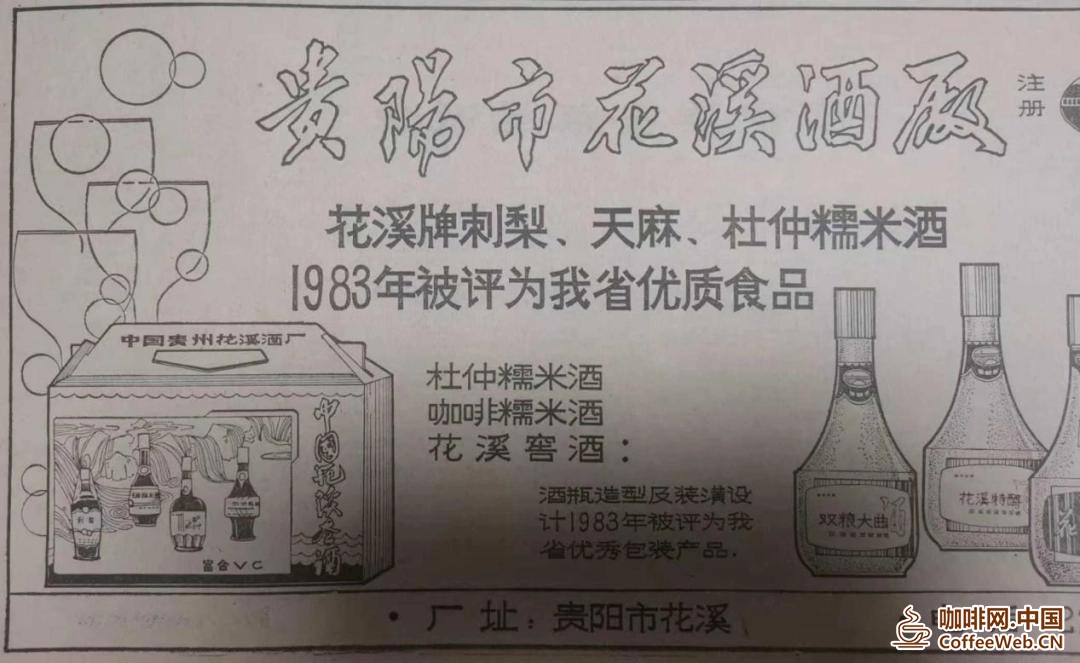
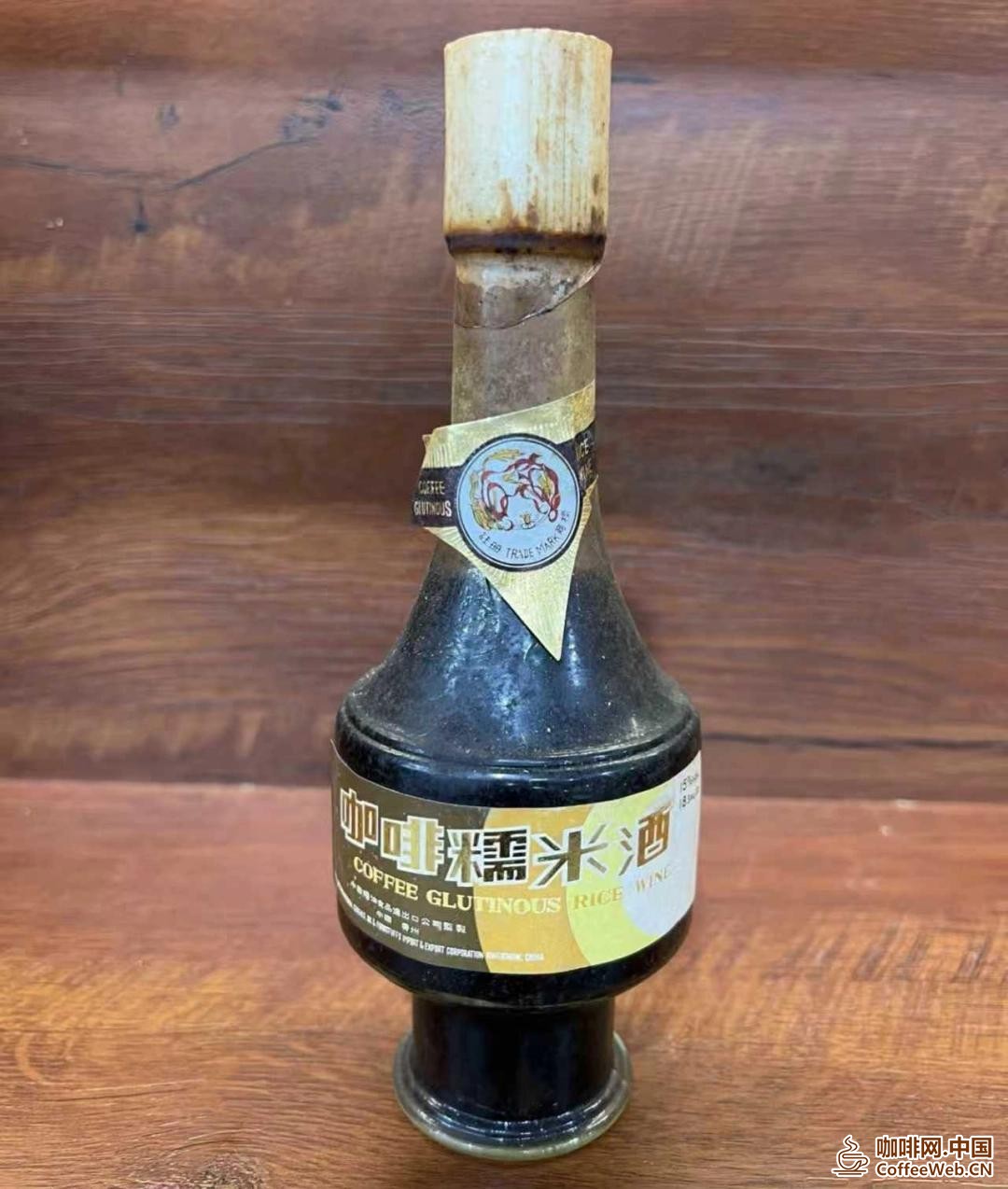
花溪酒厂推出的咖啡糯米酒
胡颖
彭近洋
三审 胡丽华
Why is Guiyang coffee famous
This is a hot topic that has been constantly discussed on social media in recent years, intertwined with various emotions such as doubt, confusion, curiosity, and admiration. After all, Guiyang does not produce coffee, but is known as the "City of Coffee".
Two widely circulated sets of "incomplete" statistical data have become the origin of the nickname "Coffee City". Firstly, Guiyang has a permanent population of about 6.6 million and over 3000 coffee shops, surpassing Shanghai, which is known for its coffee culture, in terms of per capita coffee shop density. Secondly, Guiyang has produced the most coffee champions in China, with baristas from Guiyang frequently standing on the podium, nurturing a unique "champion gene".
This summer, many coffee enthusiasts flock to Guiyang to check-in, experience, and share various "immortal" experiences in the "Coffee City". On the other hand, Guiyang, which does not produce coffee, is also trying to find a satisfactory answer to this question.
During the Republic of China era, Guiyang did not produce coffee, but their connection was not too late
The earliest term "coffee" appeared in the "Chinese Dictionary" (Zhonghua Book Company, 1915) in the early years of the Republic of China, defined as "coffee, a Western beverage such as tea in China, English for coffee. ”
During the Republic of China period, coffee was introduced to China as a novel "foreign product", mainly popular in coffee shops and Western restaurants in trading ports and coastal cities, but it was not widely popularized and was more of a fresh experience.
At that time, although Guiyang's economic development was relatively slow, it was active in the fields of political ideology and culture: from the Reform Movement, to the Xinhai Revolution, the National Protection Movement, and the May Fourth Movement, there were people from Guiyang. It was this gene of progressive thinking, openness, and inclusiveness that laid the foundation for Guiyang's widespread acceptance of foreign cultures and new things.
After the outbreak of the War of Resistance Against Japan, the political, economic, and cultural center of the country shifted to the southwest. Guiyang, located in the rear area, experienced unprecedented economic prosperity during the war due to the influx of funds, equipment, technology, and talent. During this period, imported goods such as Western cuisine, Japanese cuisine, beer, coffee, and soda emerged one after another.
A catering advertisement in Guiyang in the 1940s is evidence - the "Guanghan Palace" in the advertisement was a well-known pastry brand on Zhonghua Middle Road in Guiyang at that time. In addition to local delicacies such as "Changwang Fen", the advertisement also featured words such as "canned candy" and "Tremella fuciformis coffee". Although the recipe and appearance of "Tremella Coffee" are unclear, it can be seen that coffee has become a trendy and popular category.
The advertisement of Guanghan Palace has the words' Silver Ear Coffee '
In 1942, the writer Ye Shengtao went to Guilin from Chengdu to deal with the Kaiming Bookstore, and was forced to stay in Guiyang on the way. During this time, he met Xie Liuyi, Li Qingya and others. In his "Journey to and from Chengdu and Guangxi", he recorded the experience of the Guiyang coffee shop: "We went to Meiyuan Coffee Shop after three hours. This shop is newly opened and has excellent furnishings, such as a shop in the French Concession of Shanghai. The friend of Yuan Shanjun is working in Yongzi, and five or six people eat coffee Dim sum. It costs a total of 100 yuan, which is too wasteful."
Plum Garden
Meiyuan, which was once the location of the Great Han Military Government in Guizhou, is located at the Guishan Hotel at the intersection of the provincial capital today. It is mostly frequented by government departments and upper class cultural figures, indicating that at that time, Guiyang had already seen the emergence of new-style cafes with exquisite environments "comparable to Shanghai" and expensive prices.
According to the recollection of a historian from Guiyang in "Qian Shuo · Cheng Ji", after the Anti Japanese War, American soldiers driving jeeps were commonly seen on the streets of Guiyang. They often distributed bread or chewing gum to children, as well as iron cans of different shapes. Some cans contained black powder, which was bitter and unbearable to drink. Later, it was discovered that it was coffee.
Guiyang based scholar Le Daiyun also mentioned in her memoir "Through the Dust of History" that when she was studying at Guizhou Middle School in 1946, there were American troops stationed near the school, and "the coffee grounds piled up on a small hill emitted a tempting aroma". At the same time, she mentioned that her father Le Senwei, who returned to Guiyang in 1927, taught English, dressed in Western clothing, and drank coffee, and was a fully Westernized figure.
In July 1945, General Wei Demai (left) accompanied General Simpson (right) to attend a reception banquet for local officials in Guizhou, stationed at the 475th Infantry Division of the US Army in Huaxi, Guiyang. Coffee was served on the table. Images from the National Archives of the United States
From scattered historical materials and personal memories, we can piece together the social landscape of Guiyang at that time: although it was not a bustling metropolis, it became a key town in the southwest during the war. The influx of population and culture made the city unprecedentedly prosperous, and coffee gradually entered daily life, confirming the inclusiveness and openness inherent in this city.
After the Reform and Opening Up: Instant, Auxiliary Materials, and Initial Impressions of Coffee
After liberation, due to restrictions on foreign trade and the fact that coffee was once considered a typical product of the "petty bourgeoisie", it almost disappeared from the market. Until the 1980s, coffee re entered the lives of people in Guiyang in different forms.
According to food writer An Shi's recollection, in the mid to late 1980s, there were already vendors selling coffee on both sides of the entrance of Riverside Park. But at that time, there was no mention of filtration technology or brewing techniques. Most coffee grounds were wrapped in gauze and boiled directly in steel pots or other containers. After the coffee grounds settled, they were scooped up and sold, and tasted like murky "pot water", becoming a painful memory.
On the contrary, some Guiyang people's initial impression of coffee is that it is a fresh, sweet and delicious drink. The reason is that some shrewd vendors began to mix coffee in the later stage: using coffee powder, saccharin, and milk powder to brew, forming the initial so-called "rich and mellow" taste.
Compared to ordinary vendors, people who value their quality of life have other options. From the late 1980s to the mid-1990s, some foreign-related hotels in Guiyang, such as Guizhou Hotel and Jinqiao Hotel, opened coffee shops in the "administrative corridor", paired with bread, desserts, nuts, etc., to meet high-end social and leisure needs.
This direct trend has driven the emergence of business coffee shops, such as Yesterday's Reappearance, Shangdao Coffee, Cross Strait Coffee, Victoria and other brands entering Guiyang. Western names such as "Blue Mountain", "Brazil", "Mocha" and "Mantin" are appearing on the menu, and shops are gradually using Mocha pots and siphon pots to brew coffee, emphasizing the differences in bean origin and flavor, and greatly improving the sense of form and fashion.
For household consumption, instant coffee has emerged. In 1989, Nestl é's slogan "Delicious" became popular nationwide through television, sparking a coffee consumption craze. Afterwards, Nestle 3-in-1, Maxwell's, and Hainan coffee powder became in high demand in department stores and supermarkets in Guiyang. Many families would buy two pounds of coffee powder, boil it, add milk powder and sugar to drink. Even on the Guiyang Beijing flight, coffee was included in the beverage supply list.
During the same period, local enterprises also attempted innovation: Huaxi Distillery launched "Coffee Glutinous Rice Wine" and "Huaxi Coffee Wine", while Kaifu Candy and Food Factory produced coffee cubes and sold them to the outside world.
Huaxi Distillery launches coffee glutinous rice wine
Coffee cube produced by Guiyang Kaifu Candy Food Factory
Throughout the 1980s and 1990s, coffee remained a niche consumer product in Guiyang, mainly favored by artistic youth, international students, business people, and overseas returnees. But with the adventurous and tolerant personality of Guiyang people, coffee has been widely accepted and gradually integrated into urban life. The coffee shop naturally became the most western-style "third space" in Guiyang at that time.
Golden 20 Years: Guiyang swept by the third wave of boutique coffee wave
According to the common definition of the global coffee industry, coffee has gone through three waves: the first wave was the commercialization and popularization of instant coffee, which became a daily beverage, and the second wave was large chain brands (such as Starbucks) that focused on convenience and popular taste.
The third wave that began around 2003 was the rise of coffee from industrialized raw materials to "boutique coffee" that emphasizes craftsmanship, quality, experience, and aesthetics. It is worth noting that this wave occurred almost simultaneously in Guiyang.
In 2005, a coffee shop called "Mojie Market" appeared in Humen Lane, gathering several young coffee enthusiasts to explore the market and future of boutique coffee in Guiyang, inadvertently becoming the source of the Guiyang boutique coffee wave.
Afterwards, "Mojie City" was renamed as "Soil Coffee", and together with the establishment of "Yuedu Time" at the same time, it provided many Guiyang people with the enlightenment of boutique coffee.
Liu Kaisheng, the manager of "Crossover Coffee", comes from "Mojie Market" and "Yuedu Time" Peng Jinyang, the manager of "Captain George," fell in love with coffee in a soil caf é during his high school years.
Nowadays, Liu Kaisheng has become a veteran in the coffee industry in Guiyang. His Crossover Coffee Factory, located on Dazhi Road in Huaxi District, can roast about 300 pounds of ripe beans per day and supply over a hundred coffee shops across the country.
Fang Xin, the manager of "Bu Er Coffee", once worked with Liu Kaisheng during his time at Yuedu. He is one of the earliest active netizens in the domestic "Coffee Salon" forum in Guiyang, and insists on promoting knowledge of premium coffee in the store.
Fang Xin introduced that there are significant differences between premium coffee and the previous generation of business club coffee: the previous generation of coffee often only highlighted the deep roasted aroma, while premium coffee uses light roasting, paying more attention to origin tracing and flavor diversity.
In the concept of premium coffee, coffee is no longer just a refreshing drink, but is seen as an art that can be savored in detail. A barista is no longer just a simple brewer, but a disseminator of knowledge and a skilled craftsman.
It was the collective persistence of these young baristas back then that sparked the wave of boutique coffee in Guiyang for twenty years.
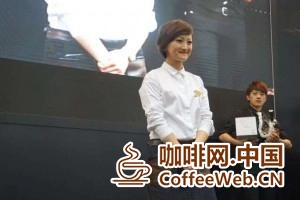
In April 2015, ten years after the establishment of "Mojie Market", Hu Ying, the manager of "Right Coffee", won the championship in the China division of the World Barista Competition, revealing the "champion gene" of Guiyang Coffee.
Hu Ying
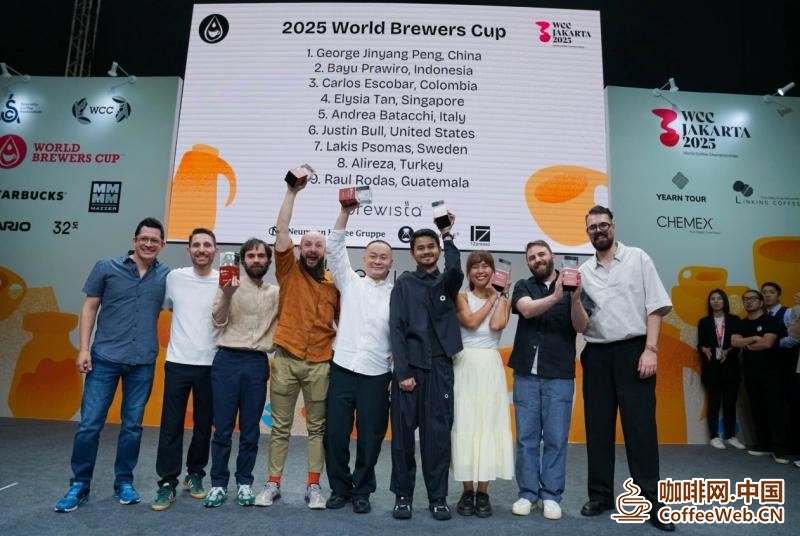
Peng Jinyang
In another ten years, in May 2025, Peng Jinyang, the organizer of "Captain George", won the world championship in the World Coffee Brewing Competition (WBrC). With the combination of media dissemination and cultural tourism boom, Guiyang became popular as the "City of Coffee".
The baristas in Guiyang not only have exquisite skills, but also have formed an industry atmosphere of common progress. Liu Kaisheng from "Crossover Coffee", Peng Jinyang from "Captain George", Qiang Hua from "Wujie Coffee", Lei Ming from "Blackstone Coffee" and others often discuss with each other and even suggest customers try products from other cafes.
From "champion stores" to community stores, from creative specialties to boutique hand brews, managers with different styles constantly try new expressions, even boldly incorporating local ingredients such as Guizhou's folded ear roots, Sichuan peppercorns, prickly pears, wood ginger, and even lamb buns into coffee, breaking the taste boundaries of traditional coffee.
Over the past twenty years, Guiyang premium coffee has grown in a way that is similar to "fermentation" - rooted in communities and streets, exploring local flavors and culture, while actively embracing trends, and finding a unique expression of "absorption, localization, fermentation, innovation, and contrast" that belongs to Guiyang coffee.
Conclusion
In another "incomplete" statistic, local coffee brands in Guiyang account for about 70% -80% of the market share. The urban coffee culture nurtured by the wave of boutique coffee has made it difficult for domestic chain brands such as Lucky Coffee, Manner, Tims, M Stand, etc. to be found in Guiyang.
It can almost be said that boutique coffee in Guiyang has formed an independent ecosystem. Under the strong learning ability and mutually promoting atmosphere, local coffee people not only adhere to the authentic flavor, but also constantly innovate locally, making it extremely difficult to be assimilated by foreign trends.
Today, in first tier cities where coffee is often ridiculed as the "energy of cows and horses", Guiyang still maintains a relaxed pace of life. Its pleasant climate and slow paced lifestyle have become the natural soil for nurturing coffee culture.
In 2024, Guiyang will add 199600 permanent residents, ranking first in the net inflow of population in the country, of which about 130000 are fresh graduates and young people. In the same year, the population aged 18 to 35 accounted for 38% of the permanent population in Guiyang, showing a clear trend of "youthfulness" among emerging cities.
The 'young' cities are also actively responding to the upward attitude of young people. In the 2025 work report of the Guiyang Municipal Government, it is explicitly stated that it will lead the construction of the entire industry chain from seeds to cups, and create a consumption atmosphere of "coming to Guiyang for a cup of coffee".
In the summer of the same year, Guiyang put forward the promotional theme "A cup of coffee, a city, a group of people with emotions", which was a direct answer to the question at the beginning of the article.
Nowadays, this young city is filling its youth's expectations for the future with a cup of coffee. The beans keep rolling, the story of coffee is still fermenting, and the young city is embracing the future.
Wen/Han Shao
Editor Luo Chang
Second instance Shen Ernst&Young
Third instance trial of Hu Lihua