即饮咖啡被东鹏反超后 , 星巴克盯上了能量饮料 ?After instant coffee was overtaken by Dongpeng, Starbucks has set its sights on energy drinks?
能量饮料赛道来了一个意料之外的选手——星巴克。
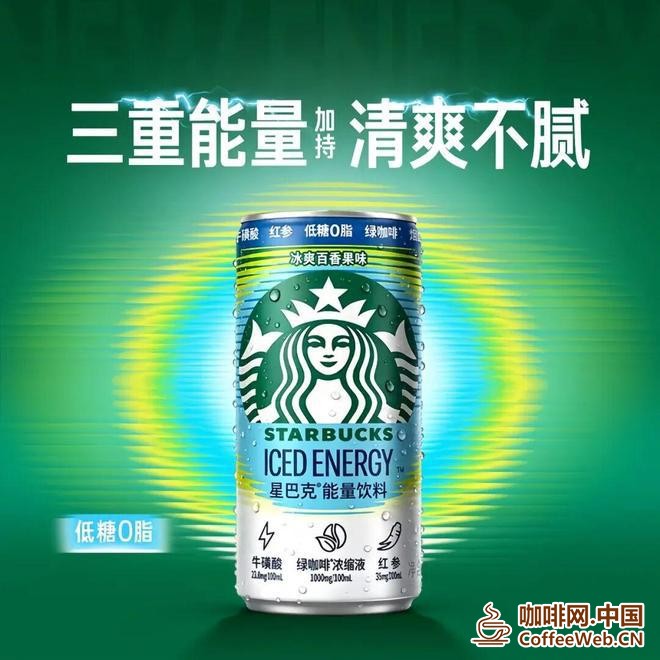
6 月初,星巴克在中国市场首次推出 " 冰爽百香果味 " 能量饮料,率先在山姆会员店上架,单罐售价约 3.8 元。上线不久,山姆 APP 便显示断货,市场反响热烈。
食品饮料绿皮书曾报道过,2026 年功能饮料赛道已是硝烟弥漫,不仅有康师傅从其经典单品 " 冰红茶 " 中划出 " 冰红茶 Energy" 产品线,以能量强化定位强势出击;更有百事饮料集团低调发力,旗下核心能量品牌 " 唤能(Sting)" 悄然登陆国内电商平台。
硝烟弥漫之下,这家咖啡连锁巨头,为何将目光转向了能量饮料?在许多中国消费者的固有印象里,星巴克的即饮产品似乎仍停留在咖啡品类,如今却突然 " 跨界 " 卖起了能量饮料,反差感不言自明。更关键的是,从目前的销售势头来看,这款新品不仅没有遇冷,反而表现不俗。那么,能量饮料能否真正成为星巴克新的增长曲线呢?
01
星巴克为什么选择卖能量饮料?
一个企业的真实处境,往往能从财报中窥见端倪。
财报显示,2026 财年第一季度星巴克净收入为 99 亿美元,同比增长 6%;全球同店销售额同比增长 4%,客流量同比增长 3%。然而,营收稳步增长的另一面,盈利指标却亮起了红灯—— GAAP 营业利润率收缩 290 个基点至 9.0%,GAAP 每股收益为 0.26 美元,较上年同期大幅下降 62%。
利润承压的背后,既有星巴克为推进 " 重返星巴克 " 战略而加大劳动力投入的因素,也受到咖啡价格上涨及关税高企带来的通胀压力影响。显然,从盈利角度看,星巴克的日子并不算宽裕,寻找新的增长曲线,已成为摆在台面上的迫切课题。
而星巴克瞄准的突破口,首先落在场景上。今年 1 月,星巴克全球高管曾明确指出一个结构性机会:品牌虽在上午占据明显优势,但正被新兴品牌蚕食份额,而下午时段仍蕴藏着巨大的增长空间。
基于这一判断,4 月,星巴克在美国正式推出 "Energy Refreshers",并将其列为常规菜单全年供应。星巴克管理层将其描述为 " 超出预期的新增长引擎 ",明确纳入 "Back to Starbucks" 战略核心,用以激活下午消费时段。
如果说下午场景的拓展是战术层面的落子,那么即饮业务的持续表现,则为星巴克提供了更直接的信心支撑。星巴克全球渠道发展业务官 David Hanson 接受媒体采访时曾表示,星巴克即饮中国业务已连续 6 年保持双位数增长。
目光拉回中国市场,星巴克、康师傅、百事今年相继加注能量饮料赛道,更关键的原因在于看中了这一品类的高增速。根据沙利文、国家统计局及中国饮料工业协会的数据显示,2025 年预计软饮料行业零售额市场规模实现 1.35 万亿元,同比增长 8%,预计 2025-2029 年 5 年 CAGR 为 5.8%,总量增速趋缓。其中,功能饮料 2025 年预计实现 1856 亿元,同比增长 11%,25-29 年 CAGR 为 10.9%,高于行业总量增速。
02
硝烟四起,星巴克靠什么破局?
高增速的赛道,必然会引来更多分食者,这一点品牌自身比谁都清楚。那么,星巴克这款能量饮料,究竟靠什么冲出重围呢?
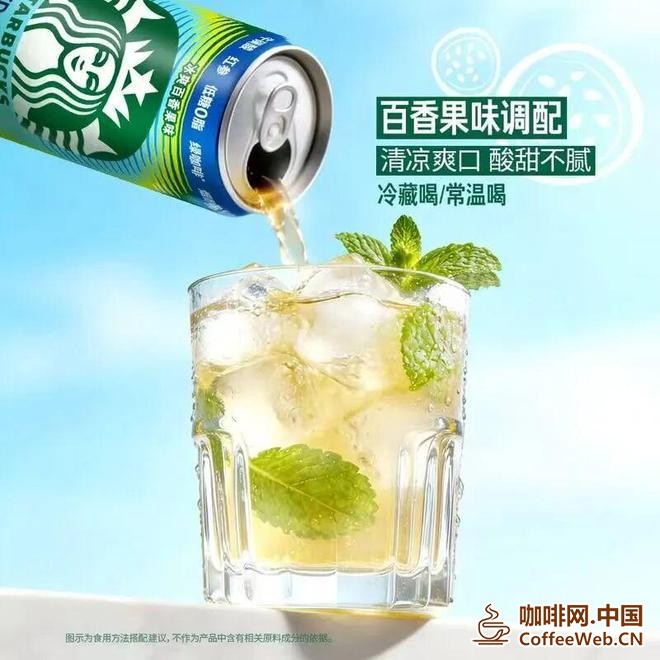
星巴克此次推出的新品,选择了 " 生咖啡 + 绿茶粉 + 红参 " 的成分组合,并叠加牛磺酸与 B 族维生素,主打低糖零脂配方,强调热量低、人工添加少、糖分负担轻,精准回应了那些对健康更敏感、又有提神需求的消费者。
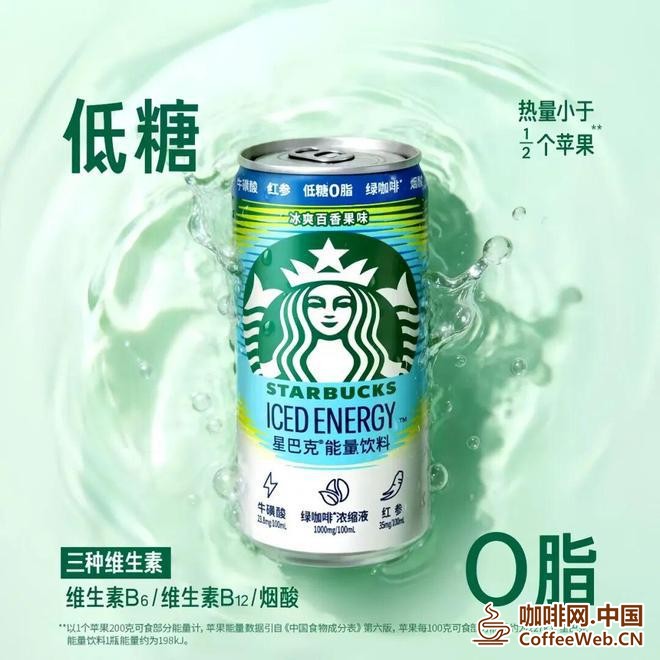
与此同时,包装设计也摒弃了能量饮料常见的厚重力量感,转而采用更清新的视觉语言,在货架上形成鲜明的区隔。
在目标人群的锁定上,星巴克与头部品牌东鹏特饮也有着明显区别。新品首发渠道选择山姆会员店,本身就是最直接的信号。
东鹏特饮的基本盘长期锁定在高强度体力劳动者、长途司机和熬夜游戏人群,而山姆所代表的中产家庭、都市白领和品质消费群体,恰恰与星巴克长期积累的核心客群高度重合。不难看出,星巴克走的仍是中高端路线。
可以说,从产品成分、包装到人群定位,星巴克都与市面主流产品形成了清晰的差异化路径,而非要与东鹏特饮正面硬刚。
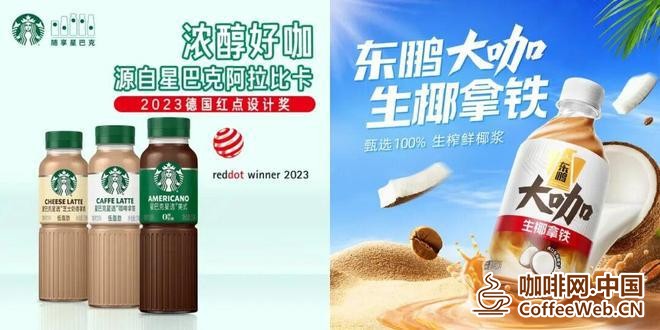
颇具戏剧性的是,就在星巴克入局能量饮料之前,后院却已悄然失守。马上赢数据显示,东鹏大咖以 14.69% 的销售额份额首次超越星巴克即饮咖啡(14.39%),跃居行业第二。不过这也说明,即饮饮品赛道虽竞争激烈,但只要找准突破口,后来居上并非难事。
事实上,整个即饮市场的品类边界正在加速消融。奈雪的茶 5 月推出电解质水,瑞幸咖啡 4 月底上线即饮咖啡,古茗年初正式推出 HPP 鲜活果汁系列……茶饮品牌做功能水,咖啡品牌做即饮,没有人再安守自己的阵地。
可以预见,未来或许会有更多茶饮咖饮品牌盯上这条赛道。对于星巴克而言,想要在这场混战中突出重围,仍有很长一段路要走。
图片来源品牌官方
An unexpected contestant has arrived on the energy drink track - Starbucks.
In early June, Starbucks launched its first "refreshing passion fruit flavored" energy drink in the Chinese market, which was first available at Sam's Club and sold for about 3.8 yuan per can. Shortly after its launch, the Sam's Club app showed out of stock, and the market response was enthusiastic.
The Green Book on Food and Beverage has reported that by 2026, the functional beverage market will be filled with gunpowder. Not only will Kangshifu draw the "Ice Black Tea Energy" product line from its classic product "Ice Black Tea", but it will also launch a strong attack with an energy strengthening positioning; PepsiCo Beverages Group has quietly launched its core energy brand "Sting" on domestic e-commerce platforms.
Amidst the smoke of gunpowder, why did this coffee chain giant turn its attention to energy drinks? In the inherent impression of many Chinese consumers, Starbucks' ready to drink products seem to still remain in the coffee category, but now they suddenly "cross over" to sell energy drinks, and the contrast is self-evident. More importantly, judging from the current sales momentum, this new product not only did not encounter a cold reception, but also performed well. So, can energy drinks truly become Starbucks' new growth curve?
01
Why does Starbucks choose to sell energy drinks?
The true situation of a company can often be glimpsed from its financial reports.
According to the financial report, Starbucks' net revenue for the first quarter of fiscal year 2026 was $9.9 billion, a year-on-year increase of 6%; Global same store sales increased by 4% year-on-year, and customer traffic increased by 3% year-on-year. However, on the other hand of steady revenue growth, the profit indicator has shown a red light - GAAP operating profit margin shrank by 290 basis points to 9.0%, and GAAP earnings per share were $0.26, a significant decrease of 62% from the same period last year.
Behind the pressure on profits, there are factors such as Starbucks increasing labor input to promote its "return to Starbucks" strategy, as well as inflationary pressures brought about by rising coffee prices and high tariffs. Obviously, from a profit perspective, Starbucks' days are not prosperous, and finding a new growth curve has become an urgent issue on the table.
The breakthrough point targeted by Starbucks first falls on the scene. In January of this year, Starbucks' global executives clearly identified a structural opportunity: although the brand had a clear advantage in the morning, it was being eroded by emerging brands, while there was still huge growth potential in the afternoon.
Based on this judgment, in April, Starbucks officially launched "Energy Refreshers" in the United States and listed it as a regular menu for year-round supply. Starbucks management describes it as a "new growth engine that exceeds expectations" and explicitly incorporates it into the core of the "Back to Starbucks" strategy to activate the afternoon consumption period.
If the expansion of the afternoon scene is a tactical drop, then the sustained performance of the ready to drink business provides more direct confidence support for Starbucks. David Hanson, Global Channel Development Officer at Starbucks, stated in a media interview that Starbucks' ready to drink business in China has maintained double-digit growth for six consecutive years.
Looking back at the Chinese market, Starbucks, Kangshifu, and Pepsi have successively entered the energy drink market this year, and the more crucial reason is that they have set their sights on the high growth rate of this category. According to data from Sullivan, the National Bureau of Statistics, and the China Beverage Industry Association, it is expected that the retail market size of the soft drink industry will reach 1.35 trillion yuan by 2025, a year-on-year increase of 8%. It is expected that the five-year CAGR from 2025 to 2029 will be 5.8%, and the overall growth rate will slow down. Among them, functional beverages are expected to achieve 185.6 billion yuan by 2025, a year-on-year increase of 11%, with a CAGR of 10.9% from 2025 to 2029, higher than the industry's total growth rate.
02
Amidst the smoke of gunpowder, how did Starbucks break through?
The high-speed track will inevitably attract more foodies, and the brand itself knows this better than anyone else. So, how did Starbucks break through the encirclement with this energy drink?
The new product launched by Starbucks this time uses a combination of "raw coffee+green tea powder+red ginseng" ingredients, combined with taurine and B vitamins, and focuses on a low sugar and zero fat formula, emphasizing low calories, minimal artificial additives, and light sugar burden, accurately responding to consumers who are more sensitive to health and have a need for alertness.
At the same time, packaging design has also abandoned the common sense of heaviness and strength in energy drinks, and instead adopted a fresher visual language to create distinct divisions on the shelves.
In terms of target audience targeting, Starbucks also has significant differences from the top brand Dongpeng Special Drink. Choosing Sam's Club as the channel for the launch of new products is already the most direct signal.
The basic market of Dongpeng Special Drink has long been focused on high-intensity physical laborers, long-distance drivers, and people who stay up late playing games, while the middle-class families, urban white-collar workers, and quality consumer groups represented by Sam's exactly overlap with Starbucks' core customer base that has been accumulated for a long time. It is not difficult to see that Starbucks is still following the mid to high end route.
It can be said that Starbucks has formed a clear differentiation path from mainstream products in the market in terms of product ingredients, packaging, and audience positioning, rather than being rigid with Dongpeng Special Drink.
It is quite dramatic that just before Starbucks entered the energy drink market, the backyard had quietly fallen. According to instant data, Dongpeng Coffee has surpassed Starbucks ready to drink coffee (14.39%) for the first time with a sales share of 14.69%, jumping to the second place in the industry. However, this also indicates that although the competition in the ready to drink beverage market is fierce, as long as we find the right breakthrough, it is not difficult to catch up from behind.
In fact, the category boundaries of the entire ready to drink market are accelerating to dissolve. Nayuki's tea launched electrolyte water in May, Luckin Coffee launched ready to drink coffee at the end of April, and Guming officially launched the HPP fresh juice series at the beginning of the year... Tea brands make functional water, coffee brands make ready to drink, and no one is defending their own position anymore.
It can be foreseen that in the future, more tea and coffee brands may set their sights on this track. For Starbucks, there is still a long way to go in order to stand out from this fierce competition.
Image source: Official brand