


咖啡+茶更续命!每天饮用3杯茶,抗衰效果最好Coffee and tea prolong life! Drinking 3 cups of tea every day has the best anti-aging effect
原创 Swagpp 梅斯医学
茶与咖啡,是全世界消费最广泛的饮料之二——
茶是世界上仅次于水、消费量第二大的饮料,全球约有30亿人喜欢喝茶,基本上每3人中便有1人爱喝茶;至于大家有多爱喝咖啡?顶刊Science的数据统计显示,全世界平均每天要消耗22.5亿杯咖啡,杯子连起来简直能绕地球7.5圈啊!
含有咖啡因、儿茶素多酚和黄酮类化合物的茶,具有神经保护作用,起到抗氧化应激、抗炎症、抗凋亡等效果。而咖啡含咖啡因,也是抗氧化剂和生物活性化合物的丰富来源。相比于奶茶、果汁、含糖饮料等等,咖啡和茶这两种健康饮品自然成为大众的优选。
对于打工“狗”而言,上午咖啡下午茶,真的是为了“续命”。但你有没有想过,在提神醒脑的同时,或许咖啡和茶真真正正地在帮你续命!
川大华西最新研究:
每天饮用3杯茶,或6-8g茶叶
抗衰老效果最为明显
茶叶中含有多种生物活性物质,而其中最受关注的莫过于「茶多酚」。先前的研究显示,茶多酚具有抗氧化、抗炎、抑制细胞凋亡以及调节表观遗传变化的作用,进而延缓衰老的发生。同时,动物实验表明,茶叶中富含的黄酮类多酚能够延长蠕虫、果蝇以及小鼠的寿命。
那么,多饮茶的人是否能够更长寿呢?
近日,来自四川大学华西公共卫生学院的研究团队发现,适度饮茶能够延缓人类生物年龄的增长。其中,每天饮用3杯茶左右,或6-8g茶叶,抗衰老的效果尤为明显。该研究发表在柳叶刀子刊Lancet Regional Health-Western Pacific上。
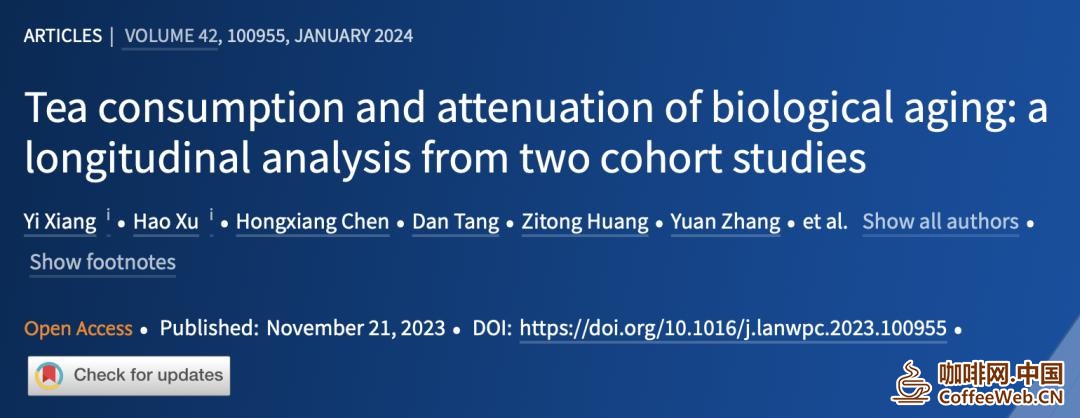 https://doi.org/10.1016/j.lanwpc.2023.100955
研究者从中国多民族队列(CMEC)研究和英国生物数据库(UKB)的纵向队列中分别招募到7931名和5998名参与者,利用复合生物标志物和Klemera Doubal方法(KDM)估算了他们的生物年龄(BA)。
KDM-BA加速度是个什么概念呢?多变量调整模型显示,KDM-BA加速度每增加1年,死亡风险便会增加56%。此外,KDM-BA加速度在预测大多数老年相关疾病,比如心血管疾病、糖尿病以及虚弱等方面有着良好表现。
本次调查中覆盖的茶叶种类很多,包括绿茶、花茶、黑茶、甜茶、红茶、乌龙茶、黄茶和白茶等。根据不同的饮茶频率,参与者被分为目前不饮用、1-2天/周、3-5天/周以及几乎每天;并按照每200ml为一个标准杯,计算出参与者的每日饮茶量。
很有新意的点在于,中国人饮茶时,茶叶往往是散装的而非袋装的。于是,研究者在收集数据时特别测量了茶叶的量(以克为单位)。
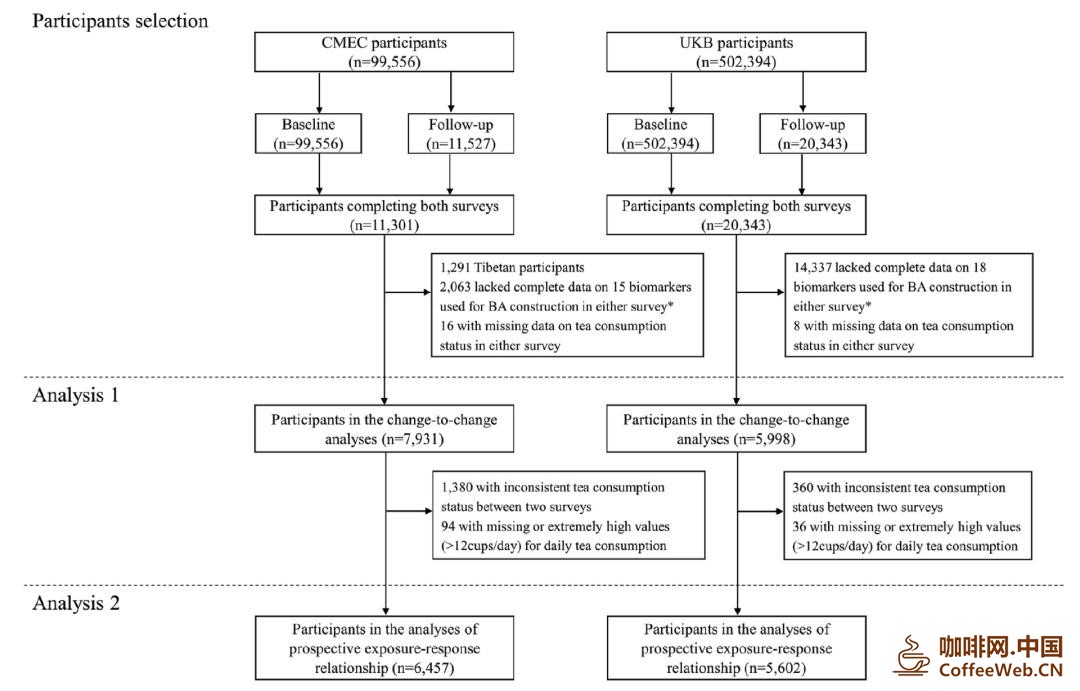 研究流程图
研究流程图
在整个队列中,坚持饮茶的参与者有着更低的衰老速度。
具体来说,与一直不饮茶的相比,从不饮茶转变为饮茶的以及坚持饮茶习惯的参与者,有着更缓慢的KDM-BA加速度的增加,简单来说就是“老得更慢”。
在CMEC队列中观察到,从不饮茶转变为饮茶的参与者比没有饮茶习惯的人有着更低的KDM-BA加速度(β = −0.319, 95% CI: −0.620到−0.017年)。
而反过来说,与一直有饮茶习惯的相比,从原本饮茶转变为不饮茶的参与者的KDM-BA加速度增幅更大,即衰老得更快。
从收集的基础信息来看,坚持饮茶的参与者多为男性,更爱喝酒,且会保持更健康的饮食习惯。此外,这部分参与者出现失眠、抑郁和焦虑症状的几率更低,尤其是CMEC中。
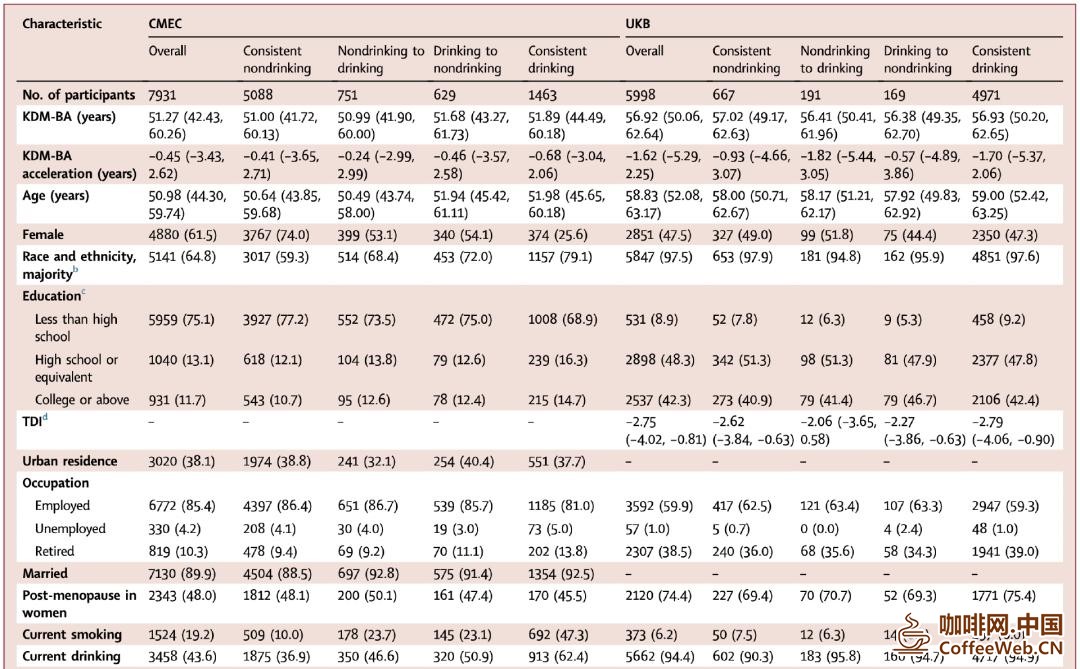 参与者的基础信息
为了得到更具实际参考价值的结论,研究者评估了饮茶与生物年龄之间的前瞻性暴露-反应关系。限制性立方样条显示,随着每日饮茶量的增加,KDM-BA加速度的曲线不断下降,直到3杯/天趋于平缓。
换句话说,与不喝茶的相比,每天坚持饮用2-3杯茶的参与者,有着最低的KDM-BA加速度。当以茶叶量作为CMEC的暴露量时,每日饮用6-8g茶叶表现出最强的相关性,即此时的衰老速度最低。
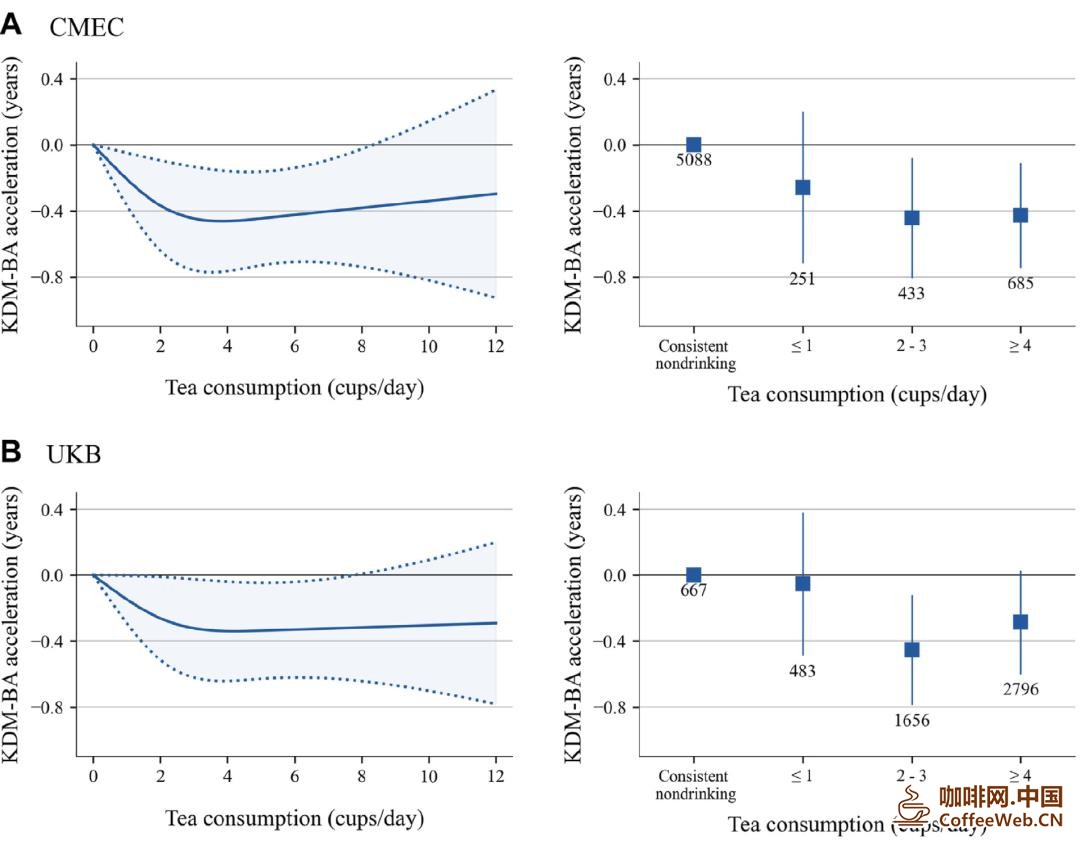 饮茶量与KDM-BA加速度之间的关联性
综上所述,饮茶与KDM-BA测量的生物衰老加速度的下降之间有着紧密联系——剂量-反应关系表明,每天饮用3杯茶或者6-8g茶叶,能够将抗衰老的益处最大化。
第一次有研究这么贴心地点明了每日饮用茶叶应该使用的克数!还不快快喝起来?!
每天喝0.5-3杯咖啡
全因死亡率下降12%
但速溶咖啡真不行...
咖啡的好处无需多言。除了提神醒脑之外,经常饮用咖啡对降低癌症和2型糖尿病发病风险、控制体重、改善抑郁、预防帕金森病及阿尔兹海默症等均有益处;不仅如此,最近有研究显示,咖啡还能降低死亡风险,从而实现寿命的延长!
发表于《欧洲预防心脏病学杂志》的研究指出:每天喝0.5-3杯咖啡,与全因死亡率下降12%,心血管病死亡率下降17%有关。相比不喝咖啡的人,咖啡星人心血管健康状况更优;但好处都是无咖啡因咖啡和研磨咖啡的,和速溶咖啡半毛钱关系都没有…...
 doi:10.1093/eurjpc/zwac008
研究招募了468629名来自英国生物银行的志愿者,这些志愿者们此前没有任何心血管疾病史,平均年龄在56.2±8.1岁,男性占比为44.2%,平均随访年限为11(10-12)年。
近47万名志愿者中,有22.1%的人没有喝咖啡的习惯,58.4%的人平均每天要喝0.5-3杯咖啡,19.5%的人平均每天要喝3杯以上的咖啡。
多变量Cox比例风险回归模型的分析显示,和不喝咖啡的人相比,每天喝0.5-3杯咖啡的人全因死亡风险下降了12%;心血管病死亡风险下降了17%,中风发作风险下降了21%。
不过,每天喝3杯以上咖啡的人和没有喝咖啡习惯的人相比,上述方面改善并不明显。换言之,虽然常饮咖啡有益健康,但也不是多多益善,每天0.5-3杯是咖啡续命的最佳剂量。
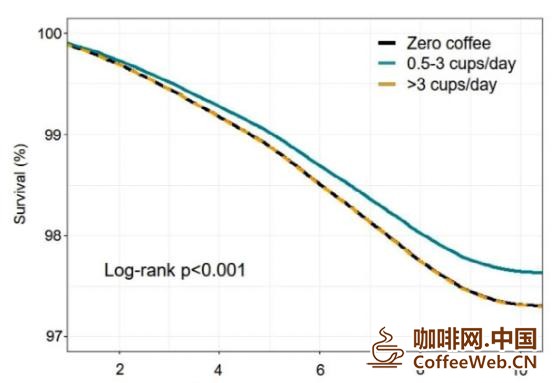 咖啡饮用量与死亡风险之间的关系
接下来,本研究的亮点来了——研究人员特意区分了不同种类的咖啡对健康的影响。
所有喝咖啡的志愿者中,有19.5%的人习惯喝无咖啡因咖啡,23.3%的人习惯喝研磨咖啡,55.1%的人习惯喝速溶咖啡。在调整了可能存在的混杂因素后,研究人员发现,和不喝咖啡的人相比:
每天喝0.5-3杯无因咖啡的人全因死亡风险下降了16%(P=0.001);
每天3杯以上无因咖啡,全因死亡风险下降17%(P=0.022);
每天0.5-3杯研磨咖啡,全因死亡风险下降25%,心血管病死亡风险下降25%(P<0.001);
更令人震惊的是,每天3杯以上的研磨咖啡,竟与心血管病死亡风险下降49%相关(P=0.008)!
和不喝咖啡的人相比,饮用无因咖啡和研磨咖啡的志愿者们的多项心功能参数均得到改善。但遗憾的是,研究人员并没有发现长期饮用速溶咖啡能够提高心血管健康的证据。
不同种类的咖啡之所以对健康影响有所差异,可能源于它们经历了不同的加工过程,所含的化学成分也不尽相同。比如,无因咖啡虽然不含咖啡因,但饮用无因咖啡同样有助于提高心血管健康,降低死亡风险,说明在咖啡因之外的其他咖啡成分也对健康有益。
综上所述,本研究证实了每天0.5-3杯咖啡,有助于提高心血管健康,降低心血管病死亡风险及全因死亡风险。有条件的话,可以选择无咖啡因咖啡和研磨咖啡哦!
咖啡+茶,效果翻倍
喝够这个量
死亡风险降低22%
对于大部分人来说,喝茶或是咖啡并不是单一的,而是两者兼有。那么,茶与咖啡共饮,又会碰撞出怎样的火花?
来自天津医科大学的学者们对这一困扰人们许久的问题进行了解答,他们发现每日适量饮用咖啡和茶能够降低死亡风险。与既不喝咖啡也不喝茶的人相比,每天喝2~4杯茶和<1~2杯咖啡的参与者具有更低的全因死亡、心血管疾病死亡和呼吸系统疾病死亡风险。
 (图片来源:BMC Medicine)
这项研究使用了来自英国生物银行近50万人群的纵向队列数据,分析了咖啡和茶单独或组合饮用与总死亡率和特定原因死亡率(包括心血管疾病、呼吸系统疾病和消化系统疾病)的关联。
首先,研究人员对每天只喝咖啡或茶与死亡率的关联进行了调查。令人惊讶的是,只喝咖啡或茶与死亡率呈现非线性关系。其中,只喝咖啡与全因、心血管疾病和呼吸系统疾病死亡率间存在J型关联,只喝茶却与全因和心血管疾病死亡率间呈反J型关联;只喝咖啡或茶与消化系统疾病死亡率间一致地存在反J型关联。
具体来说,每天饮用1杯咖啡或者3杯茶具有最低的全因死亡风险,而每天饮用约5杯咖啡或6杯茶可具有最低的消化系统疾病死亡风险。
*小编谷歌得知,英国1 cup=250 mL
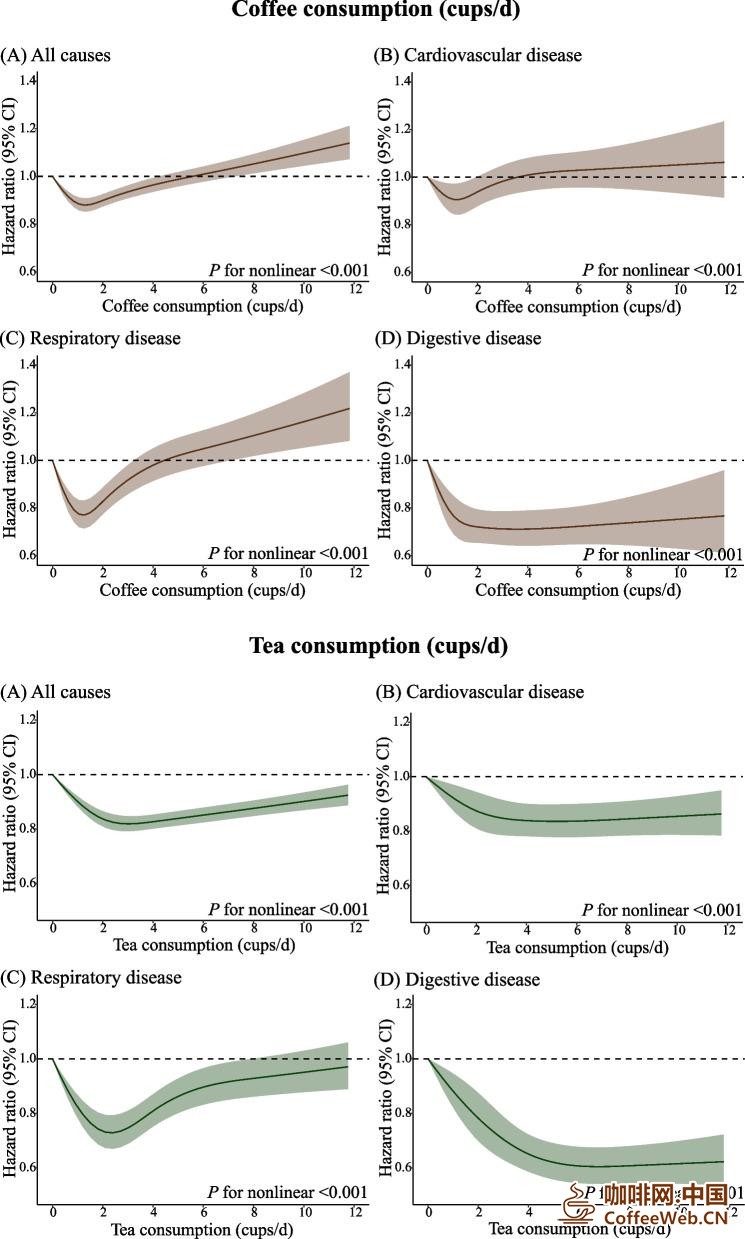 饮用咖啡或茶与全因死亡率和特定原因死亡率的关联曲线
(图片来源:BMC Medicine)
紧接着,作者进一步量化了咖啡和茶的饮用量与死亡率之间的关系大小。将参与者按照咖啡摄入量(无、< 1~2、3~4和≥5杯/天)和茶摄入量(无、< 1~1、2~4和≥5杯/天)进行分组,并对其全因死亡率和特定原因死亡率进行统计。
分析结果显示,与同组不同饮用量的参与者相比,每天喝2~4杯茶或<1~2杯咖啡的参与者的全因、心血管疾病和呼吸系统疾病死亡率最低。
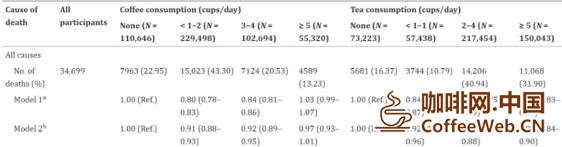 饮用咖啡或茶的全因死亡率(图片来源:BMC Medicine)
太好啦,看来喝咖啡或茶的好处又双叒叕实锤,居然可以降低死亡率!咖星人和茶星人表示甚是满意。不仅如此,研究人员还“人性化”地考虑到了热爱“中西合璧”的小伙伴们,对咖啡和茶联合饮用进行了分析。
那么,咖啡和茶一起喝,究竟是“快乐起飞”还是“伤害满满”呢?
令人惊喜的是,结果表明咖啡和茶的共饮与全因死亡率之间存在显著的相互作用。每天喝少量咖啡的人,其全因死亡率的增加随着茶叶摄入量的增加而增加,而对于每天喝大量咖啡的人,这种关系却是U形的。但是,对于每天喝茶的人来说,不论其喝茶量的多少,其咖啡摄入量的增加都与全因死亡率呈U形相关。
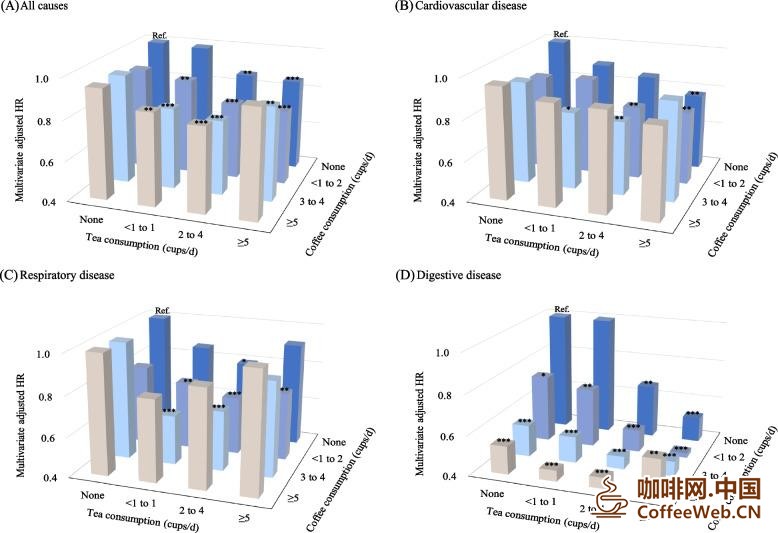 饮用咖啡和茶与全因和特定原因死亡率相结合
(图片来源:BMC Medicine)
由此,研究者得出了一个足以让广大打工人“双厨狂喜”的数据结论:与不喝咖啡和茶的人相比,每天喝<1~2杯咖啡+2~4杯茶可以使人们的全因死亡风险降低22%,CVD风险降低24%,呼吸系统疾病死亡风险降低31%!
那么,在座的各位,暖暖冬日,你会选择诗意的茶,还是有情调的咖啡呢?不如两者一起喝吧!
参考资料:
[1]Simon J, Fung K, Raisi-Estabragh Z, et al. Light to moderate coffee consumption is associated with lower risk of death: a UK Biobank study. Eur J Prev Cardiol. 2022;29(6):982-991. doi:10.1093/eurjpc/zwac008
[2]Xiang Y, Xu H, Chen H, Tang D, Huang Z, Zhang Y, Wang Z, Wang Z, Yangla, Han M, Yin J, Xiao X, Zhao X. Tea consumption and attenuation of biological aging: a longitudinal analysis from two cohort studies. Lancet Reg Health West Pac. 2023 Nov 22;42:100955. doi: 10.1016/j.lanwpc.2023.100955. PMID: 38075587; PMCID: PMC10700389.
[3] Chen Y, Zhang Y, Zhang M, Yang H, Wang Y. Consumption of coffee and tea with all-cause and cause-specific mortality: a prospective cohort study. BMC Med. 2022 Nov 18;20(1):449. doi: 10.1186/s12916-022-02636-2. PMID: 36397104; PMCID: PMC9673438.
撰文 | Swagpp
编辑 | Swagpp
● ● ● 版权说明:梅斯医学(MedSci)是国内领先的医学科研与学术服务平台,致力于医疗质量的改进,为临床实践提供智慧、精准的决策支持,让医生与患者受益。欢迎个人转发至朋友圈,谢绝媒体或机构未经授权以任何形式转载至其他平台。
原标题:《咖啡+茶更续命!川大华西最新:每天饮用3杯茶,抗衰效果最好!同饮咖啡死亡风险下降22%》
Original Swagpp Metz Medical
Tea and coffee are two of the most widely consumed beverages in the world——
Tea is the second most consumed beverage in the world, second only to water. Approximately 3 billion people worldwide enjoy drinking tea, with almost 1 in 3 people enjoying it; How much do people love drinking coffee? According to data from the top journal Science, the world consumes an average of 2.25 billion cups of coffee per day, which can circle the Earth 7.5 times when connected together!
Tea containing caffeine, catechins, polyphenols, and flavonoids has neuroprotective effects, such as antioxidant stress, anti-inflammatory, and anti apoptotic effects. And coffee contains caffeine, which is also a rich source of antioxidants and bioactive compounds. Compared to milk tea, fruit juice, sugary drinks, and so on, coffee and tea, these two healthy drinks, have naturally become the preferred choices for the public.
For working dogs, morning coffee and afternoon tea are really meant to 'prolong their lives'. But have you ever thought that while refreshing your mind, perhaps coffee and tea are truly helping you prolong your life!
Latest research from West China University of Sichuan:
Drink 3 cups of tea or 6-8 grams of tea leaves per day
The anti-aging effect is most obvious
Tea contains various bioactive substances, among which the most concerned is undoubtedly 'tea polyphenols'. Previous studies have shown that tea polyphenols have antioxidant, anti-inflammatory, anti apoptotic, and regulatory effects on epigenetic changes, thereby delaying the occurrence of aging. Meanwhile, animal experiments have shown that the flavonoids and polyphenols rich in tea can prolong the lifespan of worms, fruit flies, and mice.
So, can people who drink more tea live longer?
Recently, a research team from the West China School of Public Health at Sichuan University found that moderate tea consumption can delay the growth of human biological age. Among them, drinking about 3 cups of tea or 6-8 grams of tea per day has a particularly significant anti-aging effect. The study was published in the Lancet Regional Health Western Pacific.
https://doi.org/10.1016/j.lanwpc.2023.100955
Researchers recruited 7931 and 5998 participants from the longitudinal cohorts of the China Multiethnic Cohort (CMEC) study and the UK Biobank (UKB), respectively, and estimated their biological age (BA) using composite biomarkers and the Klemera Doubal method (KDM).
What is the concept of KDM-BA acceleration? The multivariate adjustment model shows that for every year of increase in KDM-BA acceleration, the risk of death increases by 56%. In addition, KDM-BA acceleration has a good performance in predicting most age-related diseases, such as cardiovascular disease, diabetes and weakness.
There are many types of tea covered in this survey, including green tea, flower tea, black tea, sweet tea, black tea, oolong tea, yellow tea, and white tea. According to different tea drinking frequencies, participants were divided into those who currently do not drink, those who drink 1-2 days/week, those who drink 3-5 days/week, and those who drink almost every day; And calculate the daily tea consumption of the participants based on a standard cup of 200ml.
A very innovative point is that when Chinese people drink tea, the tea leaves are often loose rather than bagged. So, the researchers specifically measured the amount of tea leaves (in grams) when collecting data.
Research flowchart
In the entire queue, participants who consistently drank tea had a lower rate of aging.
Specifically, compared to those who never drink tea, participants who transitioned from not drinking tea to drinking tea and maintained the habit of drinking tea had a slower increase in KDM-BA acceleration, which can be simply described as' aging slower '.
In the CMEC cohort, it was observed that participants who switched from not drinking tea to drinking tea had lower KDM-BA acceleration (β=-0.319, 95% CI: -0.620 to -0.017 years) compared to those who did not have a tea drinking habit.
On the other hand, compared to those who have always had a habit of drinking tea, participants who switched from drinking tea to not drinking tea showed a greater increase in KDM-BA acceleration, indicating faster aging.
Based on the collected basic information, participants who persist in drinking tea are mostly male, who enjoy drinking more and maintain healthier eating habits. In addition, this group of participants has a lower likelihood of experiencing insomnia, depression, and anxiety symptoms, especially in CMEC.
Basic information of participants
In order to obtain more practical reference value, researchers evaluated the prospective exposure response relationship between tea drinking and biological age. Restrictive cubic spline analysis shows that as the daily tea consumption increases, the acceleration curve of KDM-BA continuously decreases until 3 cups/day tends to flatten out.
In other words, participants who consistently drink 2-3 cups of tea per day have the lowest KDM-BA acceleration compared to those who do not drink tea. When the amount of tea leaves is used as the exposure level for CMEC, daily consumption of 6-8 grams of tea shows the strongest correlation, indicating the lowest aging rate at this time.
The correlation between tea consumption and KDM-BA acceleration
In summary, there is a close relationship between drinking tea and the decrease in biological aging acceleration measured by KDM-BA - the dose-response relationship indicates that drinking 3 cups of tea or 6-8 grams of tea per day can maximize the anti-aging benefits.
For the first time, there has been a thoughtful study that clearly indicates the amount of grams of tea that should be consumed daily! Hurry up and start drinking?!
Drink 0.5-3 cups of coffee every day
The all-cause mortality rate has decreased by 12%
But instant coffee is really not good ..
The benefits of coffee are self-evident. In addition to refreshing and refreshing, regular coffee drinking can reduce the risk of cancer and type 2 diabetes, control weight, improve depression, and prevent Parkinson's disease and Alzheimer's disease; Not only that, recent studies have shown that coffee can also reduce the risk of death, thereby extending lifespan!
A study published in the European Journal of Preventive Cardiology suggests that drinking 0.5-3 cups of coffee per day is associated with a 12% decrease in all-cause mortality and a 17% decrease in cardiovascular disease mortality. Compared to non coffee drinkers, coffee stars have better cardiovascular health; But the benefits are both decaffeinated coffee and ground coffee, and have nothing to do with instant coffee ..
doi:10.1093/eurjpc/zwac008
The study recruited 468629 volunteers from the UK Biobank, who had no prior history of cardiovascular disease, with an average age of 56.2 ± 8.1 years and a male proportion of 44.2%. The average follow-up period was 11 (10-12) years.
Among nearly 470000 volunteers, 22.1% have no habit of drinking coffee, 58.4% drink an average of 0.5-3 cups of coffee per day, and 19.5% drink an average of 3 or more cups of coffee per day.
The analysis of the multivariate Cox proportional hazards regression model shows that compared with those who do not drink coffee, those who drink 0.5-3 cups of coffee per day have a 12% lower risk of all-cause mortality; The risk of death from cardiovascular disease decreased by 17%, and the risk of stroke onset decreased by 21%.
However, compared to those who do not have the habit of drinking coffee, those who drink 3 or more cups of coffee per day do not show significant improvement in the above aspects. In other words, although regular coffee consumption is beneficial to health, it is not necessarily the more the better. 0.5-3 cups per day is the optimal dosage for coffee to prolong life.
The relationship between coffee consumption and mortality risk
Next, the highlight of this study is that the researchers specifically distinguished the impact of different types of coffee on health.
Among all the volunteers who drink coffee, 19.5% of them prefer decaffeinated coffee, 23.3% prefer ground coffee, and 55.1% prefer instant coffee. After adjusting for possible confounding factors, researchers found that compared to those who did not drink coffee:
People who drink 0.5-3 cups of coffee without cause per day have a 16% reduced risk of all-cause mortality (P=0.001);
Drinking 3 or more cups of coffee without cause per day reduces the risk of all-cause mortality by 17% (P=0.022);
0.5-3 cups of ground coffee per day reduced the risk of all-cause mortality by 25% and cardiovascular disease mortality by 25% (P<0.001);
Even more shocking is that consuming 3 or more cups of ground coffee per day is associated with a 49% decrease in the risk of cardiovascular disease mortality (P=0.008)!
Compared with those who do not drink coffee, volunteers who drink coffee without cause and ground coffee have improved multiple cardiac function parameters. Unfortunately, researchers have not found evidence that long-term consumption of instant coffee can improve cardiovascular health.
The reason why different types of coffee have different health effects may be due to their different processing processes and varying chemical compositions. For example, although decaffeinated coffee does not contain caffeine, drinking it can also help improve cardiovascular health and reduce the risk of death, indicating that other coffee ingredients besides caffeine are also beneficial to health.
In summary, this study confirms that 0.5-3 cups of coffee per day can help improve cardiovascular health, reduce the risk of cardiovascular disease mortality and all-cause mortality. If possible, you can choose decaffeinated coffee and ground coffee!
Coffee and tea double the effect
Drink enough of this amount
Reduced risk of death by 22%
For most people, drinking tea or coffee is not singular, but rather a combination of both. So, what kind of sparks will collide when tea and coffee are consumed together?
Scholars from Tianjin Medical University have answered this long-standing question and found that moderate daily consumption of coffee and tea can reduce the risk of death. Compared to those who neither drink coffee nor tea, participants who drink 2-4 cups of tea and<1-2 cups of coffee per day have a lower risk of all-cause mortality, cardiovascular disease mortality, and respiratory disease mortality.
(Image source: BMC Medicine)
This study used longitudinal cohort data from nearly 500000 people in the UK Biobank to analyze the association between coffee and tea consumption alone or in combination with overall mortality and cause specific mortality (including cardiovascular disease, respiratory disease, and digestive disease).
Firstly, researchers investigated the association between daily consumption of only coffee or tea and mortality rates. Surprisingly, there is a non-linear relationship between drinking only coffee or tea and mortality rate. Among them, there is a J-shaped association between drinking coffee alone and mortality rates from all causes, cardiovascular disease, and respiratory disease, while drinking tea alone shows an inverse J-shaped association with mortality rates from all causes and cardiovascular disease; There is a consistent inverse J-type association between drinking only coffee or tea and mortality from digestive system diseases.
Specifically, drinking 1 cup of coffee or 3 cups of tea per day has the lowest risk of all-cause mortality, while drinking approximately 5 cups of coffee or 6 cups of tea per day has the lowest risk of mortality from digestive system diseases.
*Google learned that 1 cup in the UK equals 250 mL
The correlation curve between coffee or tea consumption and all-cause mortality rate and specific cause mortality rate
(Image source: BMC Medicine)
Subsequently, the author further quantified the relationship between coffee and tea consumption and mortality rate. Participants were grouped according to their coffee intake (none,<1-2, 3-4, and ≥ 5 cups/day) and tea intake (none,<1-1, 2-4, and ≥ 5 cups/day), and their all-cause mortality rate and specific cause mortality rate were statistically analyzed.
The analysis results showed that compared with participants in the same group who consumed different amounts of tea, participants who drank 2-4 cups of tea or<1-2 cups of coffee per day had the lowest all-cause, cardiovascular disease, and respiratory disease mortality rates.
The all-cause mortality rate of coffee or tea consumption (Image source: BMC Medicine)
Great! It seems that the benefits of drinking coffee or tea can actually reduce the death rate by means of double trust companies! Coffee and tea stars expressed great satisfaction. Not only that, the researchers also "humanized" the analysis of the combination of coffee and tea for those who love the combination of Chinese and Western cultures.
So, drinking coffee and tea together, is it "happy takeoff" or "full of harm"?
Surprisingly, the results showed a significant interaction between co drinking coffee and tea and all-cause mortality. The all-cause mortality rate of people who drink a small amount of coffee every day increases with the increase of tea intake, while for people who drink a large amount of coffee every day, this relationship is U-shaped. However, for people who drink tea every day, regardless of the amount of tea consumed, an increase in coffee intake is associated with a U-shaped correlation with all-cause mortality.
Combining coffee and tea consumption with all-cause and specific cause mortality rates
(Image source: BMC Medicine)
Therefore, researchers have come to a data conclusion that is enough to make the majority of working people "ecstatic": compared with those who do not drink coffee and tea, drinking<1-2 cups of coffee+2-4 cups of tea per day can reduce people's risk of all-cause mortality by 22%, CVD risk by 24%, and respiratory disease mortality risk by 31%!
So, everyone present, on a warm winter day, would you choose poetic tea or romantic coffee? Why don't we drink together!
reference material:
[1]Simon J, Fung K, Raisi-Estabragh Z, et al. Light to moderate coffee consumption is associated with lower risk of death: a UK Biobank study. Eur J Prev Cardiol. 2022; 29(6):982-991. doi:10.1093/eurjpc/zwac008
[2]Xiang Y, Xu H, Chen H, Tang D, Huang Z, Zhang Y, Wang Z, Wang Z, Yangla, Han M, Yin J, Xiao X, Zhao X. Tea consumption and attenuation of biological aging: a longitudinal analysis from two cohort studies. Lancet Reg Health West Pac. 2023 Nov 22; 42:100955. doi: 10.1016/j.lanwpc.2023.100955. PMID: 38075587; PMCID: PMC10700389.
[3] Chen Y, Zhang Y, Zhang M, Yang H, Wang Y. Consumption of coffee and tea with all-cause and cause-specific mortality: a prospective cohort study. BMC Med. 2022 Nov 18; 20(1):449. doi: 10.1186/s12916-022-02636-2. PMID: 36397104; PMCID: PMC9673438.
Writing | Swagpp
Edit | Swagpp
Copyright Notice: MedSci is a leading medical research and academic service platform in China, dedicated to improving medical quality and providing intelligent and accurate decision support for clinical practice, benefiting doctors and patients. Welcome individuals to share on their Moments. Unauthorized media or organizations are prohibited from reposting to other platforms in any form.
Original title: "Coffee and tea prolong life! Sichuan University Huaxi Latest: Drinking 3 cups of tea a day has the best anti-aging effect! Drinking coffee together reduces the risk of death by 22%"