用空间换客流?咖啡店做起了粉丝生意Exchange space for passenger flow? The coffee shop has started a fan business
生咖,是未经烘焙的生豆萃取出的咖啡;但在粉丝文化中,生咖是一个空间,也是一场仪式。
作为空间,它是被装饰成关于某人生日主题的咖啡厅;作为仪式,则是一场“你生日,我们快乐”的粉丝聚会。
在五月,我体验过一次:《也是去过生咖的人了,想知道什么都可以问》,尽管完全不认识身边的任何人,但也很充实地从下午两点玩到了六点。
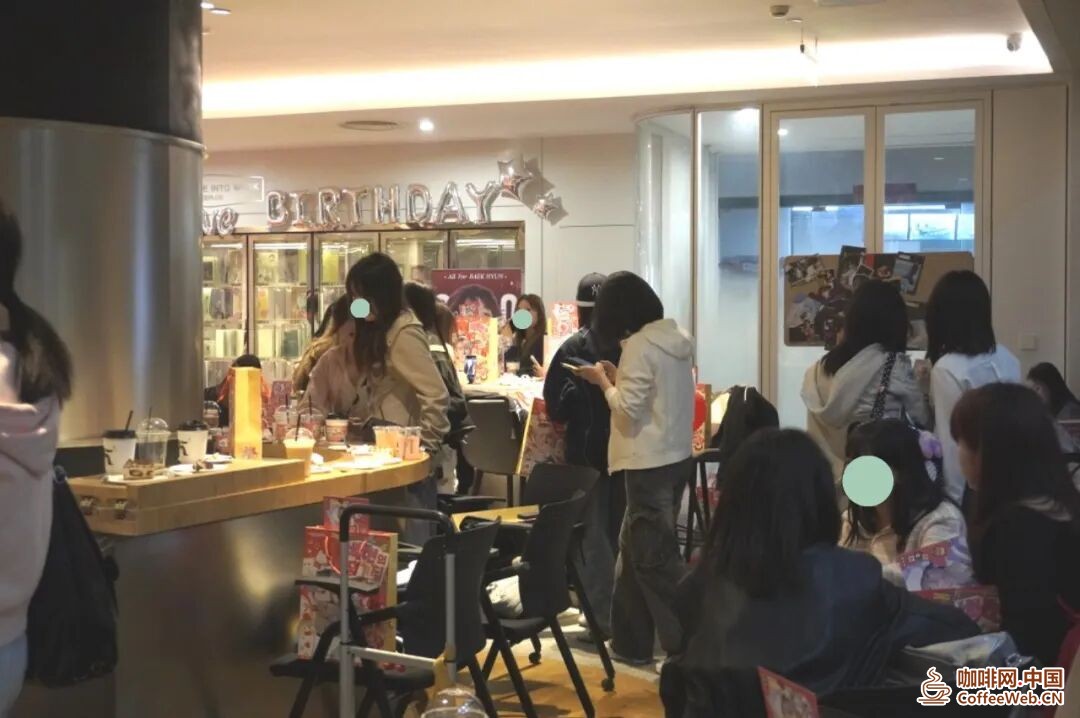
在成都,像这样的活动几乎每个周末都有,每场活动的参与者数量从十几人到几百人不等。将咖啡店包给粉丝去给偶像过生日,似乎成了一种现象级趋势。那么生咖的风到底是如何吹起来的?又将咖啡店吹成了什么模样呢?
生咖:
接住“给偶像过生”的需求
当一群人因为喜欢同一个偶像,在TA生日这天特意打扮一番,带着礼物和好心情走进同一家咖啡店,打卡、互换应援物、认识新朋友时,生咖的本质便也显影了:它是一场关于“喜欢”的仪式,大家能在快乐的狂欢中互相给予认同感与陪伴感。
而追溯生咖的源头时,那必绕不开Kpop文化。近二十年来,韩国娱乐产业逐渐成熟,与之伴生的应援模式也在不断演变,生咖就是在这样的土壤中生长出来的。在韩国,同一天可能有数十个偶像过生日,而同一人的生咖数量甚至可以达到几十个。
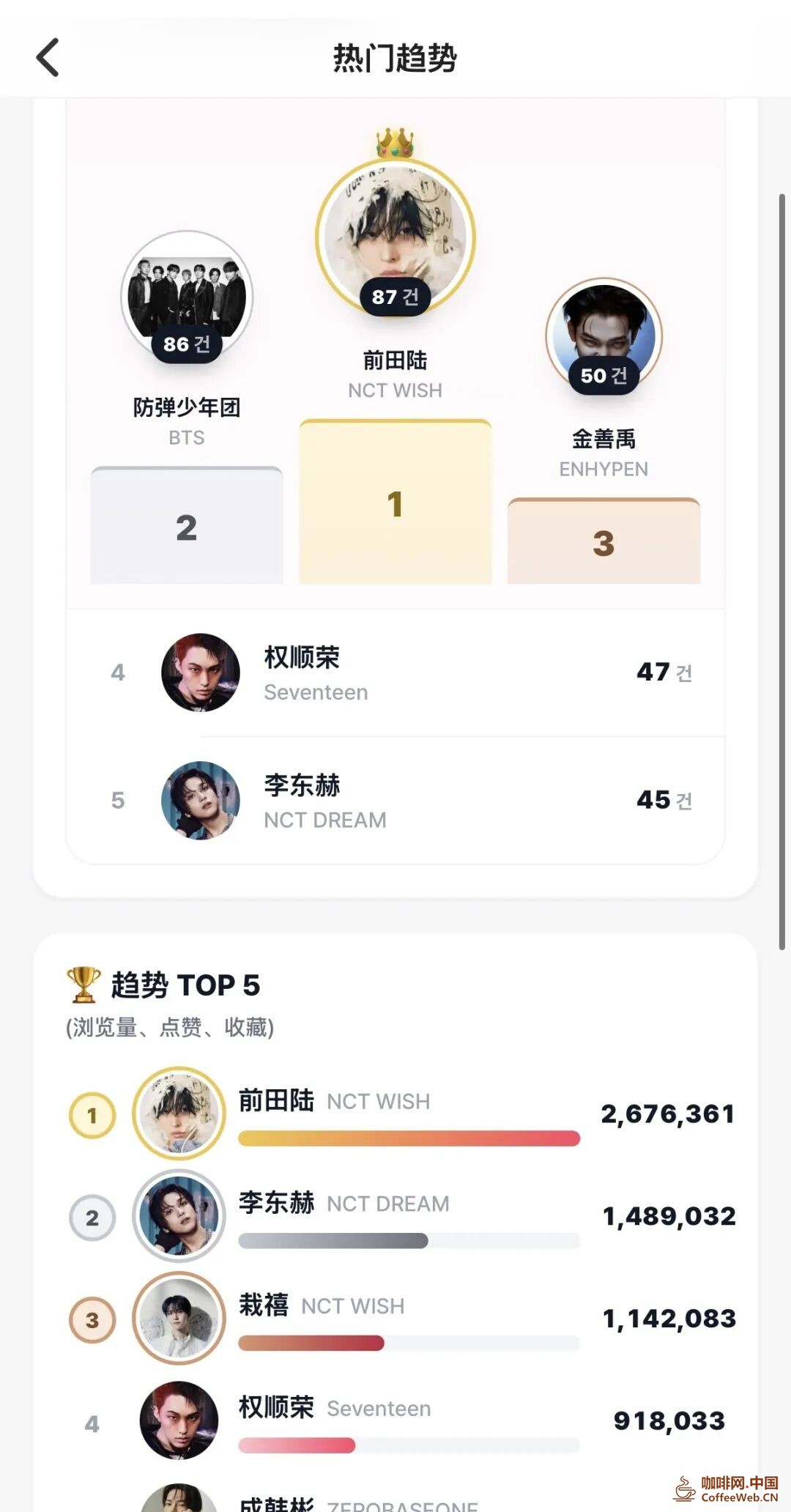
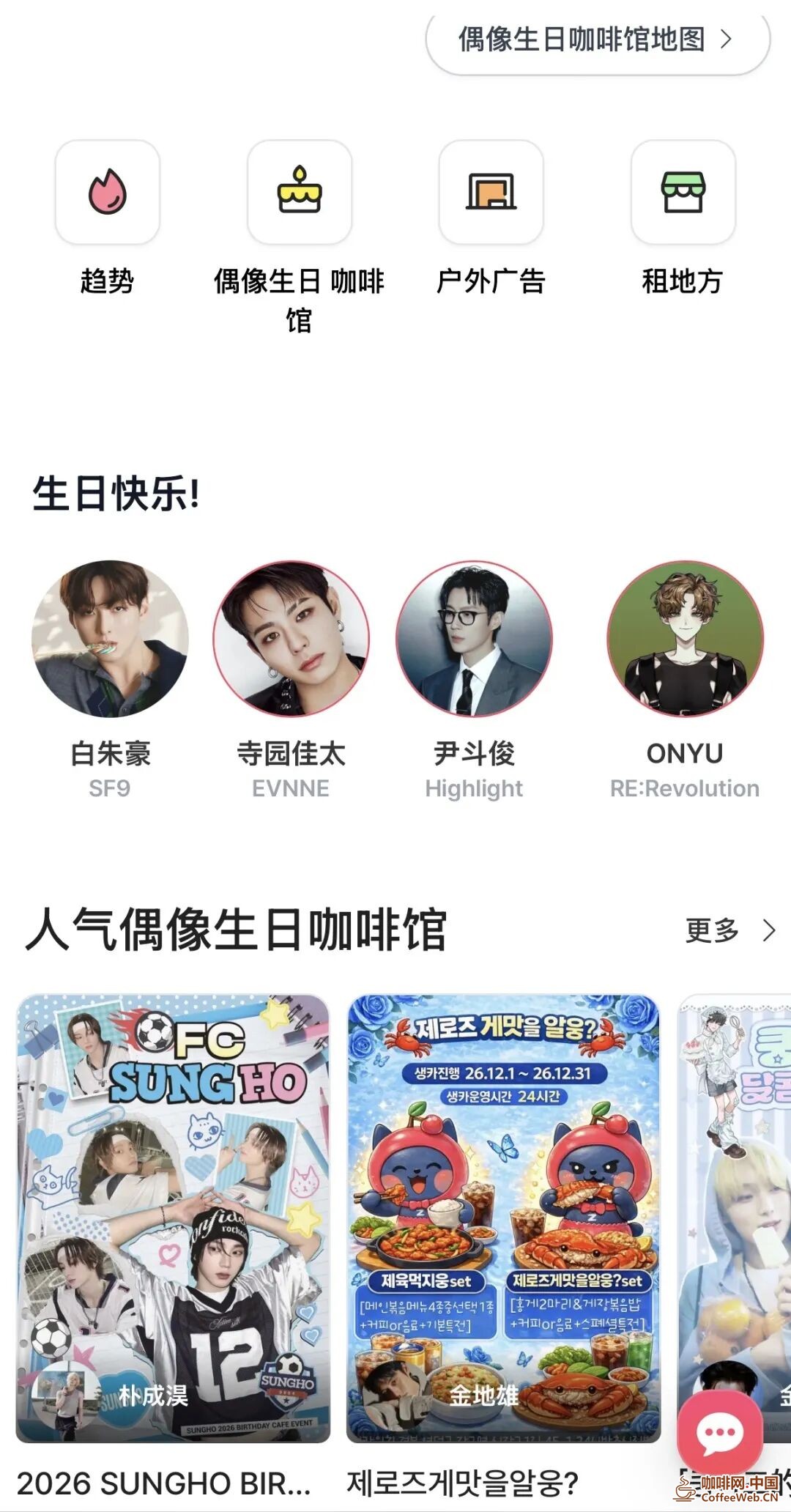
其相关产业链也愈发完善,韩国甚至有专门服务生咖活动的APP:粉丝可以从中了解相关时间、地址等信息,也能在其中完成场地租赁、广告投放。
根据自己的体验以及在韩留学朋友的分享发现,韩国生咖的本质更接近“打卡点”,大多以“打卡拍照、领应援物、抽奖”为主。
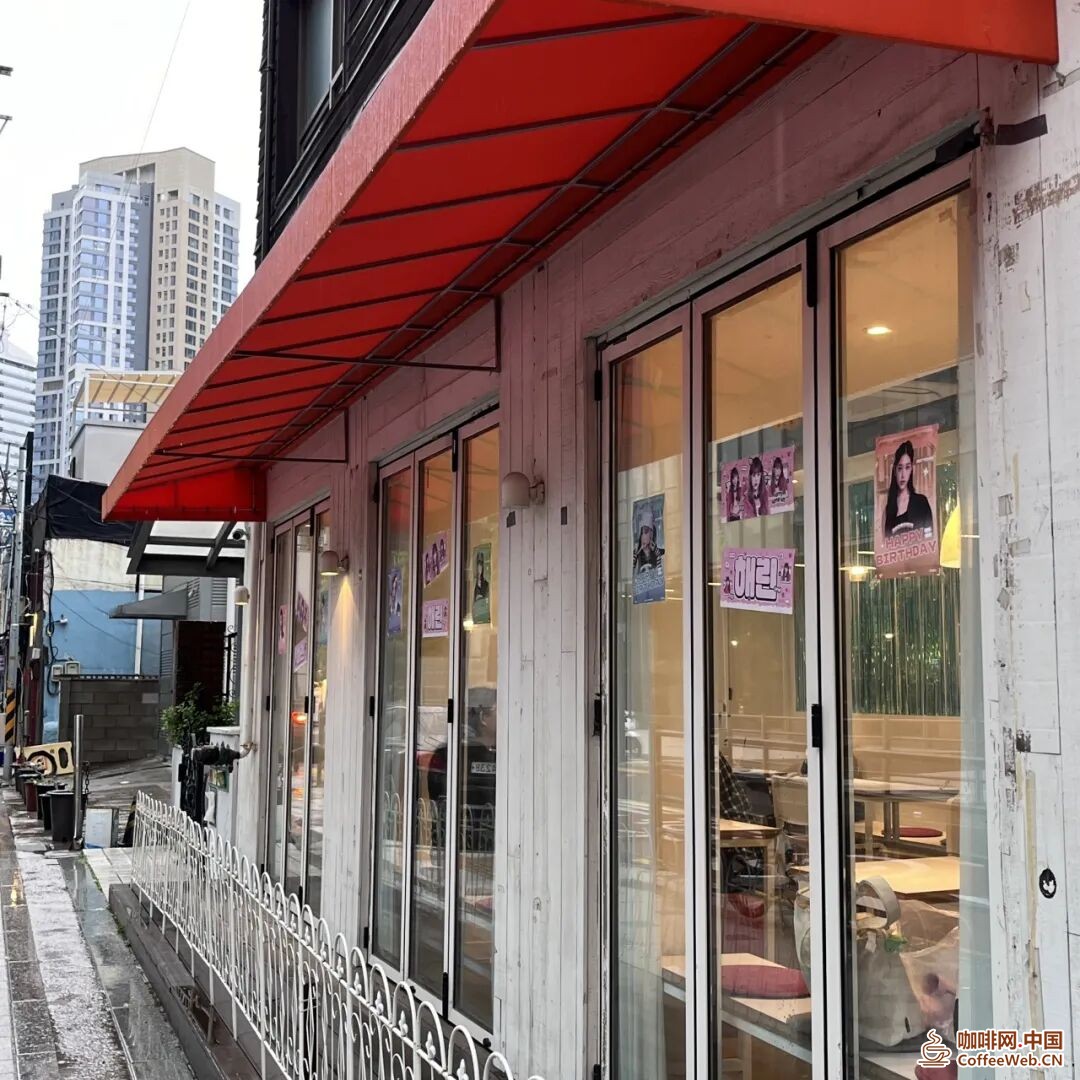
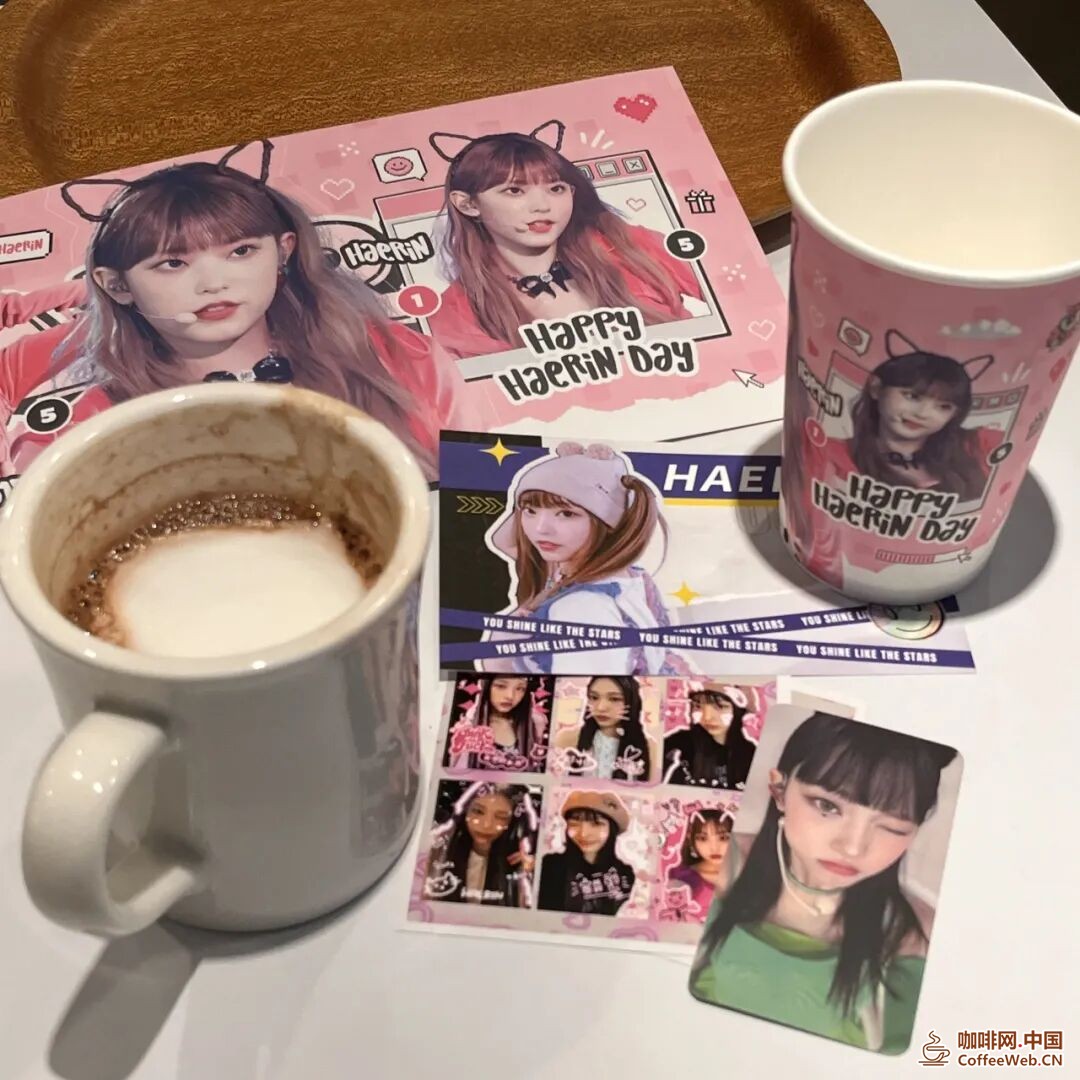
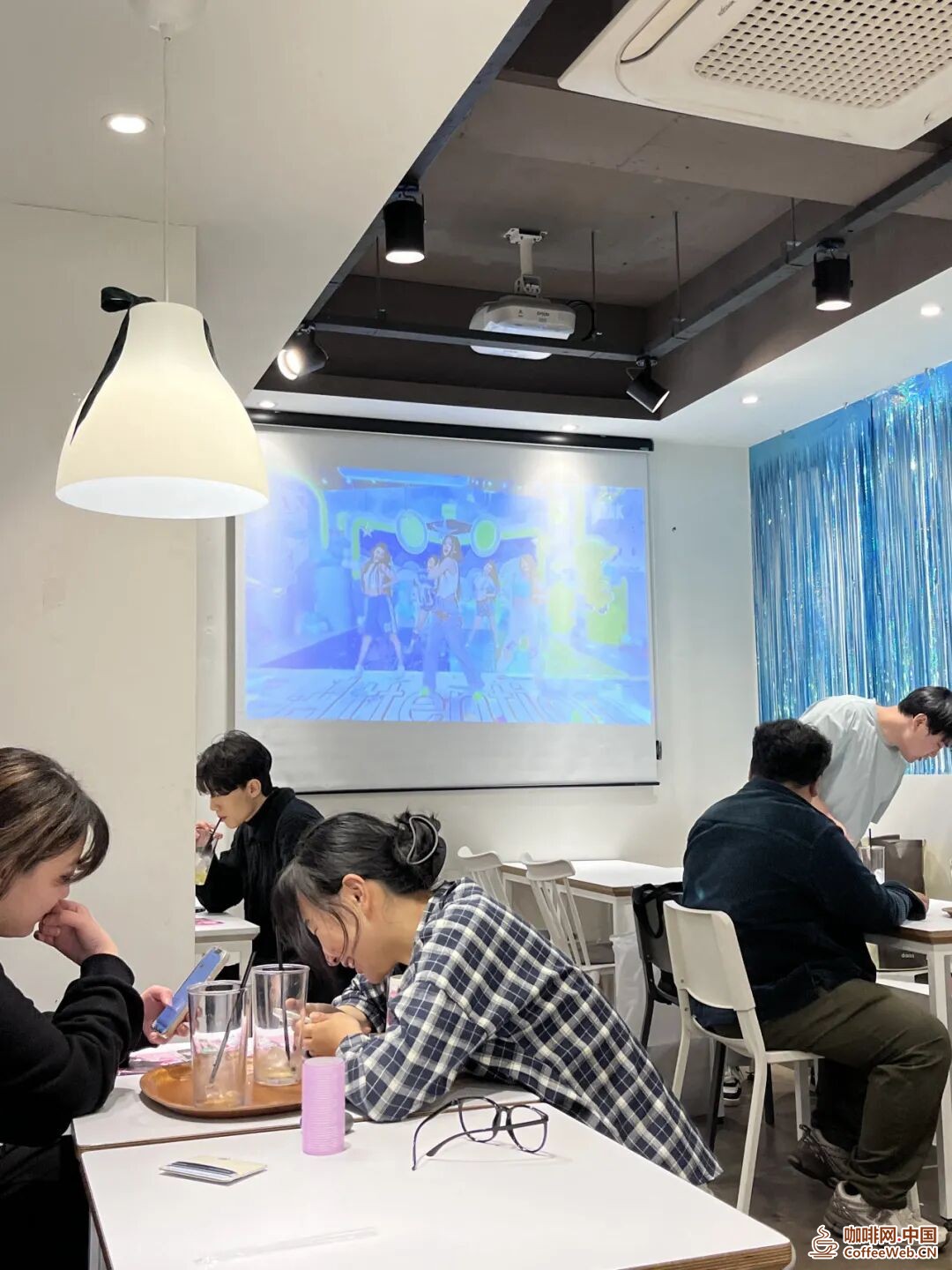
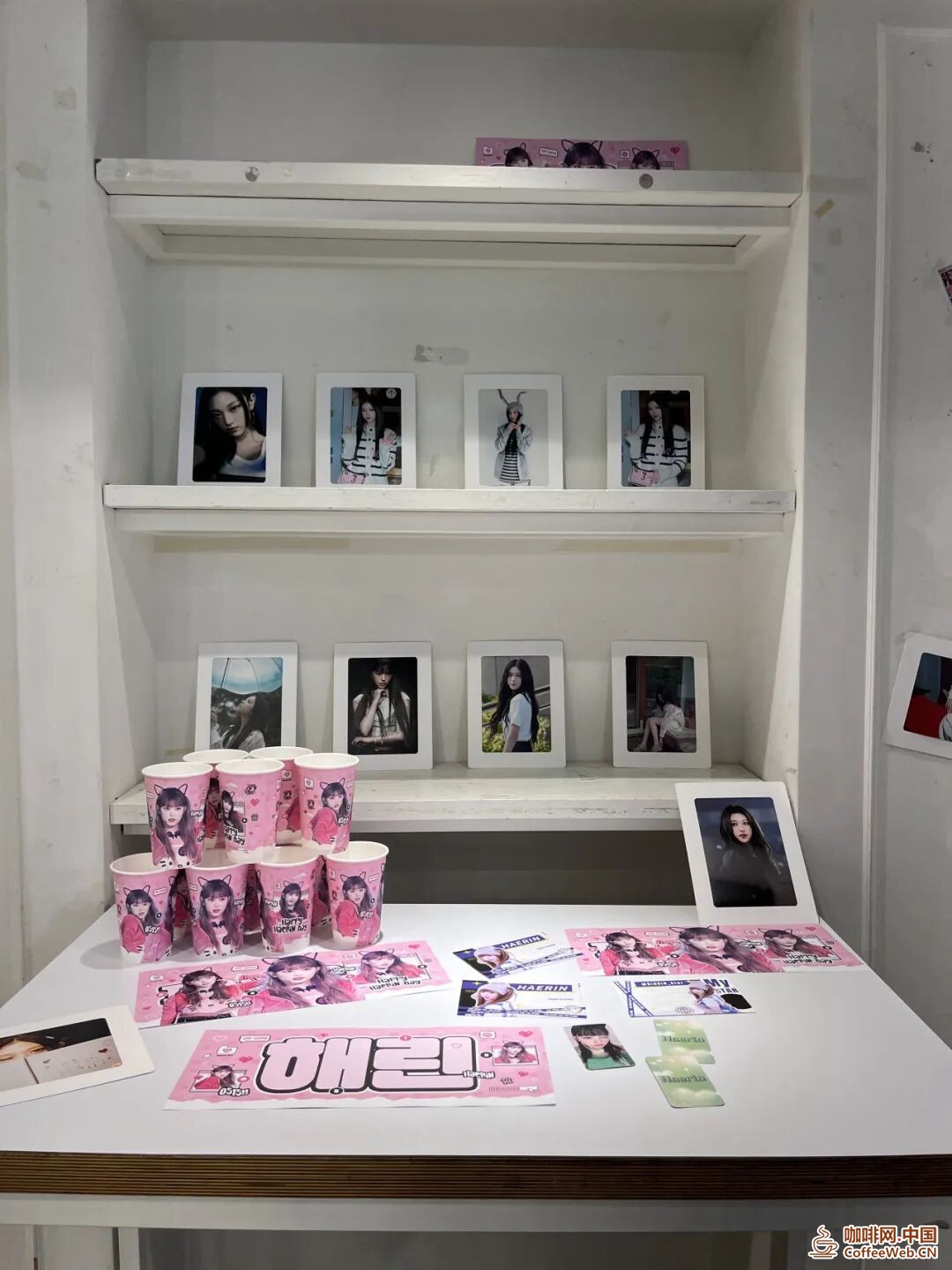
一次首尔行,我在娱乐公司楼下偶遇了NewJeans成员的生咖,店里投影循环播放着她的舞蹈视频,柜子上摆着她的照片,桌子上铺着应援物料,比如杯套、手幅,只需点一杯饮品就可以领取。来的粉丝男女皆有,但大家多是独自点了饮品,拍了照,领完礼物便离开了。
这与国内生咖有形式上的区别。
相比之下,国内生咖可被视为一场粉丝聚会。除了基础的打卡和社交,主办方更会组织观影、合唱、比赛,以及一些随机舞蹈、唱生日歌、切蛋糕等具有集体性和参与感的活动。来之时,很多人之间可能根本不认识,但一场活动下来,不仅加上了联系方式,还相约明年生咖再见。
虽说生咖是近几年才逐渐流行起来的,但粉丝自行聚会为偶像过生日,在成都早已不是新鲜事,甚至在二十年前就登上过报纸。
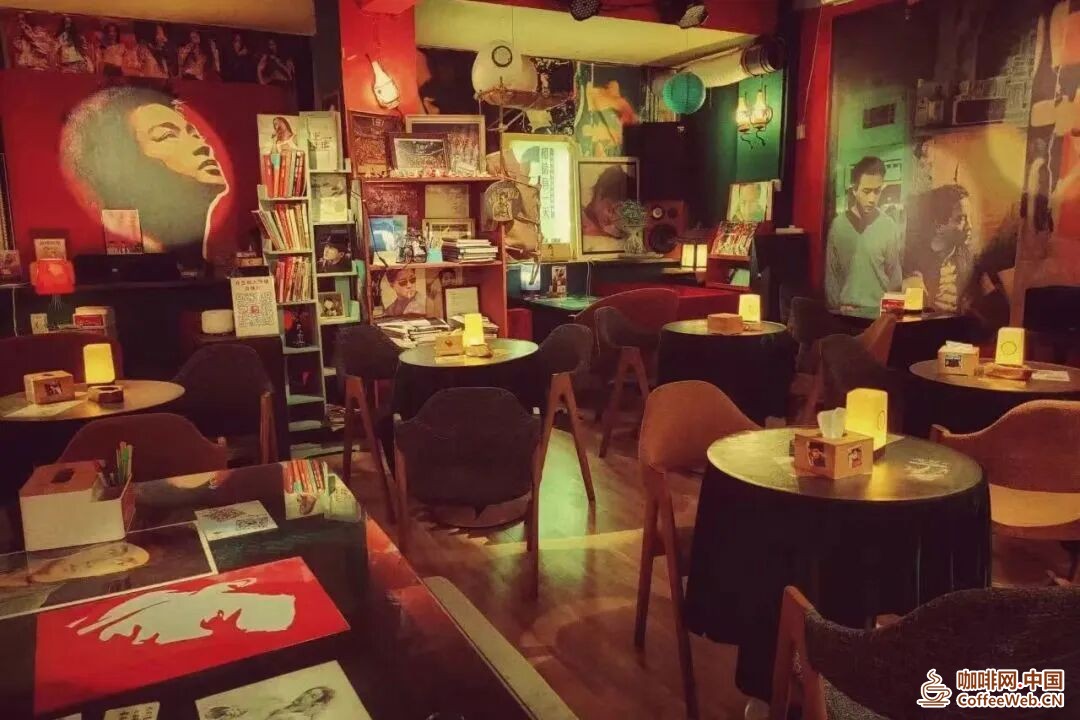
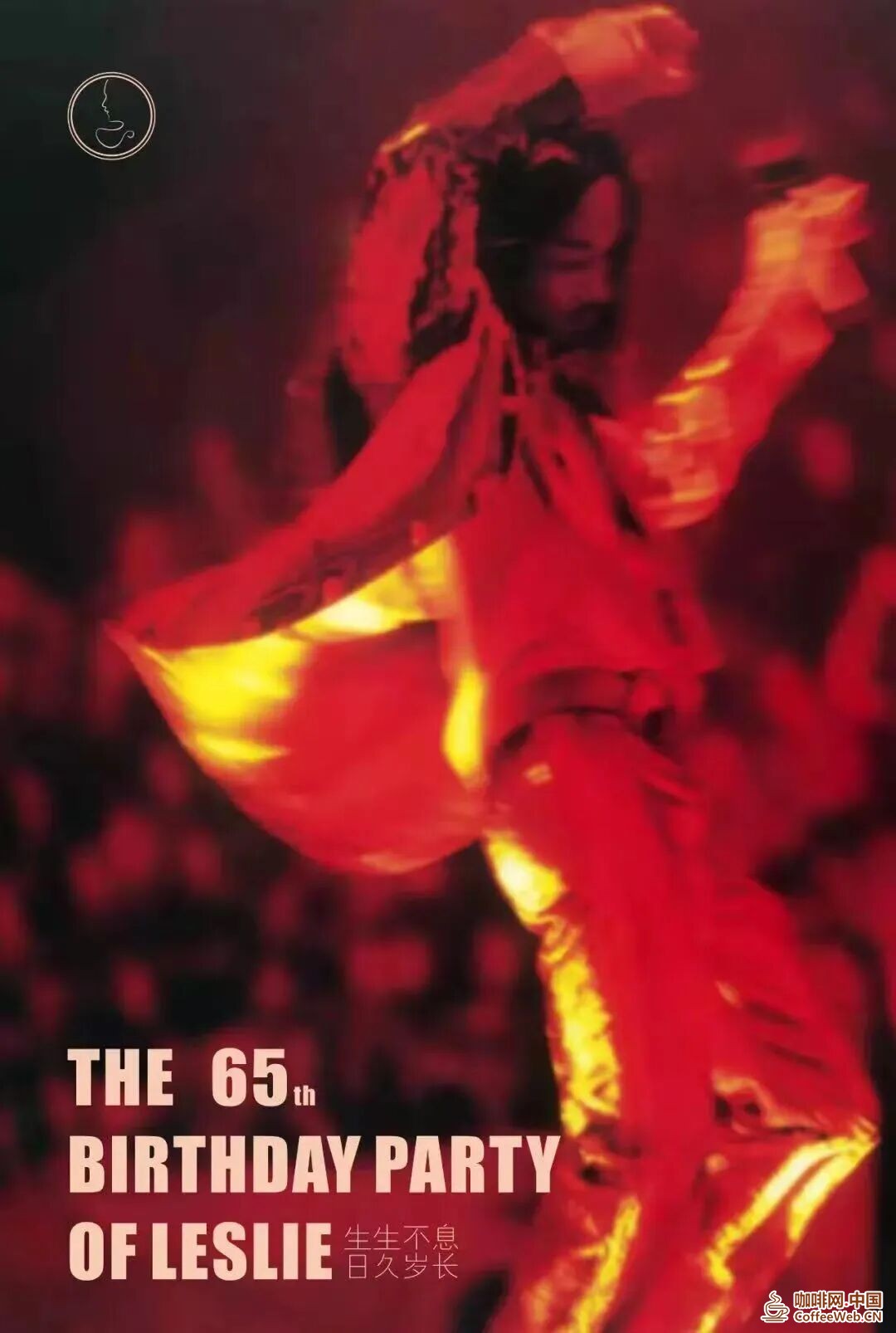
2007年,一位张国荣的粉丝在春熙路开了家主题咖啡店,店内陈设着很多与张国荣相关的收藏品,被客人称为“荣迷的小世界”,每逢纪念日、生日,店里还会举办特别的活动。而老板一坚持便是近二十年。
同样在2007年,8月的一个晚上,九眼桥的一家酒吧里聚集着迈克尔·杰克逊的粉丝,大家模仿他的妆造、唱他的歌、跳他的舞,一起庆祝他49岁的生日。
2010年5月,王力宏的成都歌迷在壹购潮流广场上组织了场“爱心生日会”,歌迷们分头去福利院慰问、无偿献血,用做公益来为偶像庆生。
但为何如今的生日应援逐渐向独立咖啡店转移?
一方面自然是受到韩国生咖文化的影响,另一方面也是因为咖啡馆能更好接住国内粉丝的新需求。
现在热衷于给偶像庆生的人,年龄跨度越来越大,年纪稍大的可能是带娃的爸妈,年纪小的就还是中小学生。相比酒吧等场所,咖啡店显然更适合不同年龄层的粉丝参加。
且生日聚会的重心也悄悄发生了转变。过去,生日应援很强调“让更多路人看到偶像”,如今,粉丝很多时候只想丰盈自己的体验,比起在室外的公共场合向外展示,大家更在意粉丝内部的交流和互动。
再落到更具体的问题上,一场生咖往往有观影、玩游戏等环节,停留时间至少为两三小时;生咖也是一种“出片”机会,背景、灯光、布置等空间细节也是粉丝朋友所需要的。
而这些需求,咖啡店几乎都能满足。
成都何以被生咖选中?
大多数情况下,粉丝举办生咖需要一定的资格认证:或先经全国粉丝投票,选取举办生咖的几个城市,再由粉丝后援会招募主办方;或者由主办方向后援会申请,达到标准才可承办,比如该城市有意向参与活动的粉丝必须达到一定数量。
而成都为何总是被选中,常成为可举办生咖的城市之一?
答案或许可以先从成都的粉丝社群经济说起。得益于成都的包容,无论在多小、多冷的圈子里,都几乎能在这座城市里找到同好;那些看似小众的爱好,在这里往往都能长出自己的社群,而生咖恰恰与粉丝社群经济接轨。
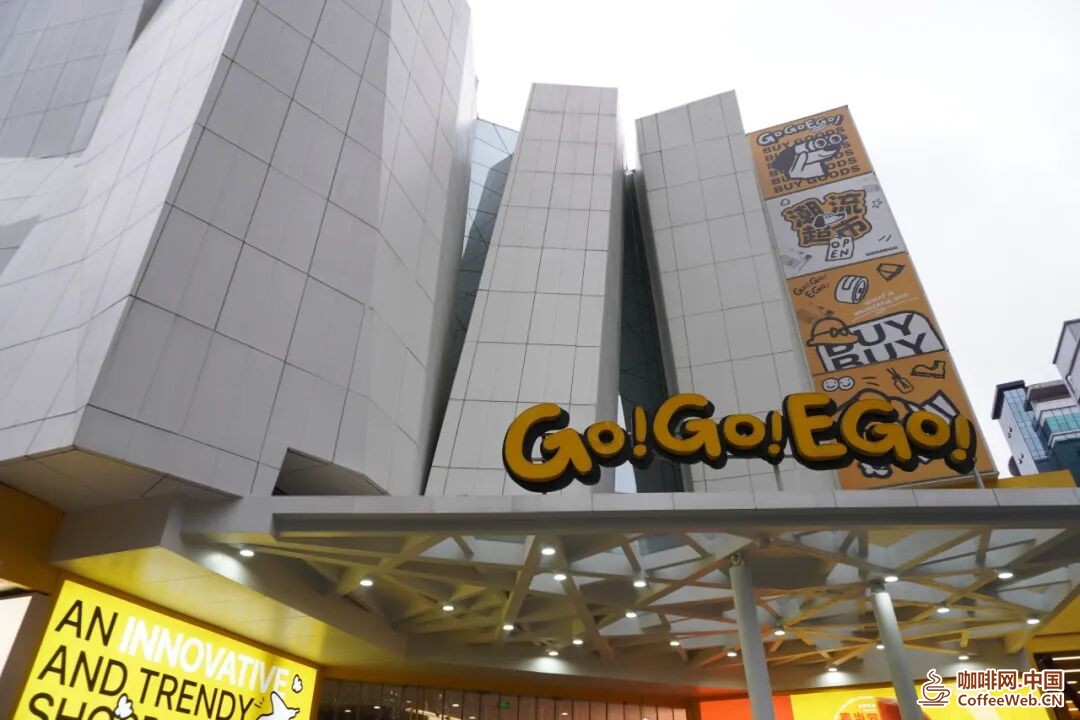
尽管无法直接统计成都有多少个粉丝社群,但GOGO EGO、天府红这些商业体的转型或许可以当一个注脚;演唱会市场的数据也可以给我们一个观察切片,2025年,成都举办了134场大型演唱会,带动了63亿元的综合消费。
而在演唱会前后,商场里也会同步出现应援活动,这便不难提到背后透射出来的应援文化。
·2026年汪苏泷演唱会东郊记忆打卡点
虽说“应援”这个词语是近年来流行起来的,但相似的行为早在成都街头出现了,当时是被称为“给某人扎起”。
不得不提的是2005年“超女”爆火的那个夏天。太升南路、春熙路、中山广场,都出现过粉丝替自己支持的选手拉票,又是拉横幅、举海报,又是用喇叭喊口号。
2015年李宇春的演唱会前,粉丝自行出钱为她做宣传:登了《成都晚报》的整版广告、写着“全球玉米预祝演唱会成功”的画面在天府广场远东百货LED大屏上连播七天、富力天汇里的LED也播着她以往十年内演唱会的经典画面,持续到演唱会当天。
以上是属于“Y世代”的应援方式,而对“Z世代”而言,应援文化有了形式上的变化。
除了延续传统户外大屏应援的方式,他们还会以立牌、易拉宝等等装置在偶像生日的那几天去装饰一个商城,将其变为谁的“痛楼”。
因此在成都这样一个应援文化活跃的城市之中,往往不缺参加生咖的人,也不缺愿意站出来组织生咖的人。
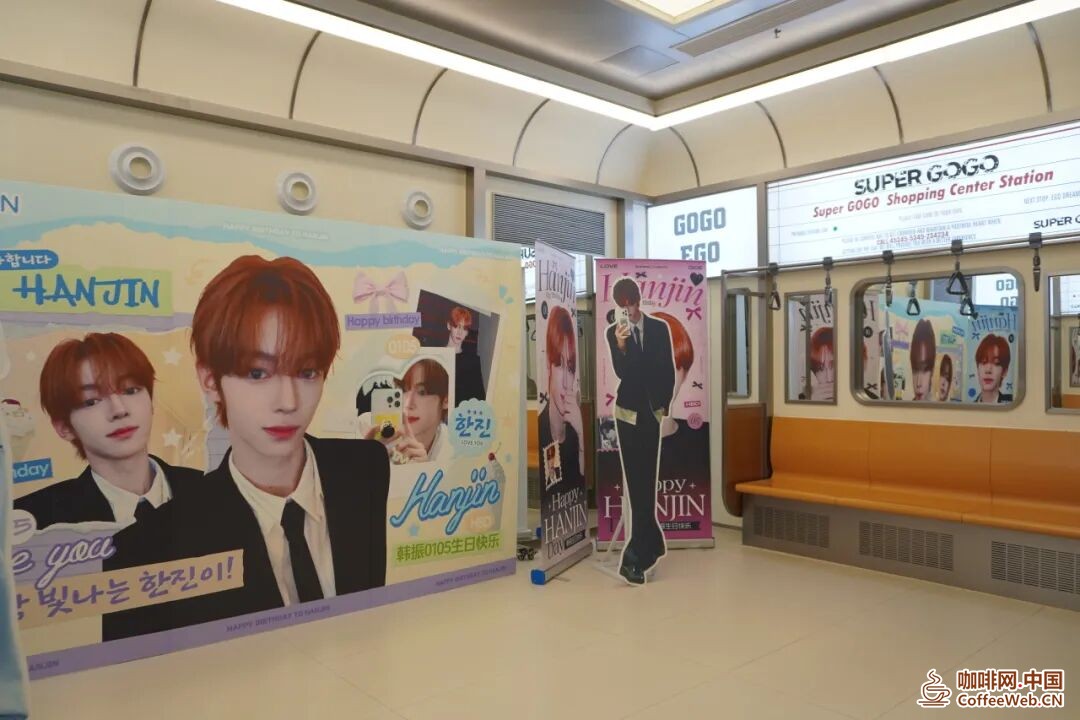
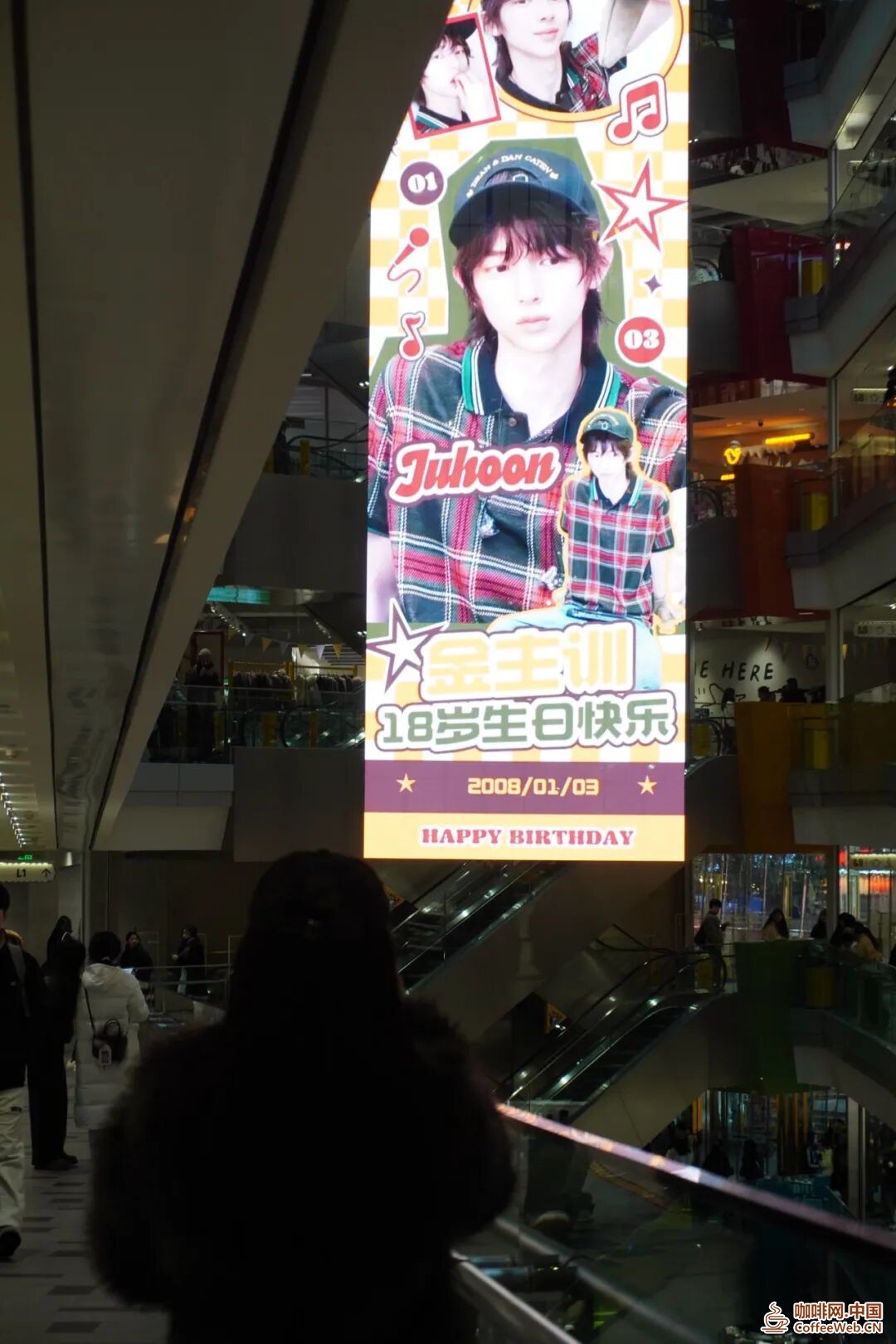
如果说粉丝经济和应援文化能从情感维度解释成都生咖存在的理由,那么成都成熟的咖啡店生态,则能在现实维度说明生咖存在的原因。
生咖脱离于天府红、GOGO EGO这些次元商业体,因为它更需要一个可坐、可办活动且较为封闭的场地,因此生咖一般都是散布在成都各区各地。
数据显示,2025年成都咖啡店的数量超过了7000家;独立咖啡店中,有超一半咖啡店的面积都在40平米以上,而120平米以上的店的占比为7.41%,这刚好满足粉丝聚会最基础的空间需求。
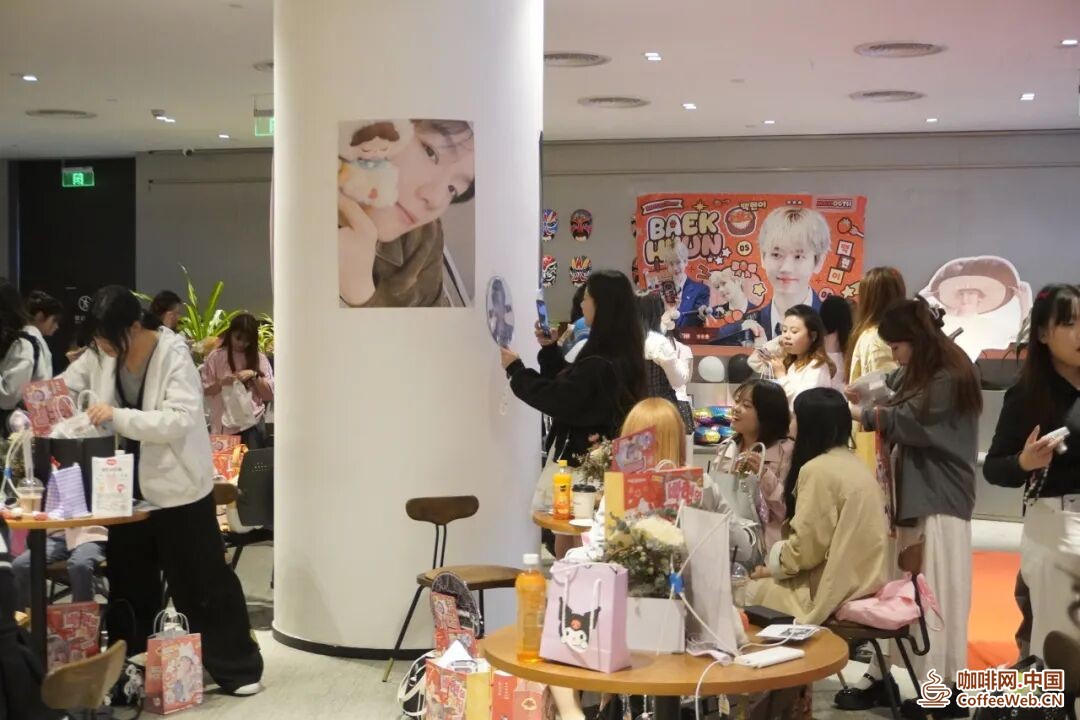
越来越多的咖啡店开始主动承接生咖活动,这既源于主理人们的商业嗅觉,又出自他们的个人爱好。
如今不少咖啡店主理人都拥有多元的爱好,他们理解应援社交的魅力,理解粉丝文化,甚至自己也是其中一员,既然自己有实体空间,自然也愿意让其他粉丝朋友把自己的喜爱填进来。
此外,在生咖中,重要的环节除了社交,还有“物料交换”,即粉丝间互相交换自己做的应援物,这背后便衍射出生咖产业中另一个行动者。
以往,应援物往往需要数量达到几百上千才可起订,而随着印制产业的发展,如今的周边生产已能支持个人少量定制,像钥匙扣、挂件这些商品,10件便可起订,48小时内就能产出并发货。粉丝可直接购买厂商生产好的产品,也可以自行设计,再找工厂制作。
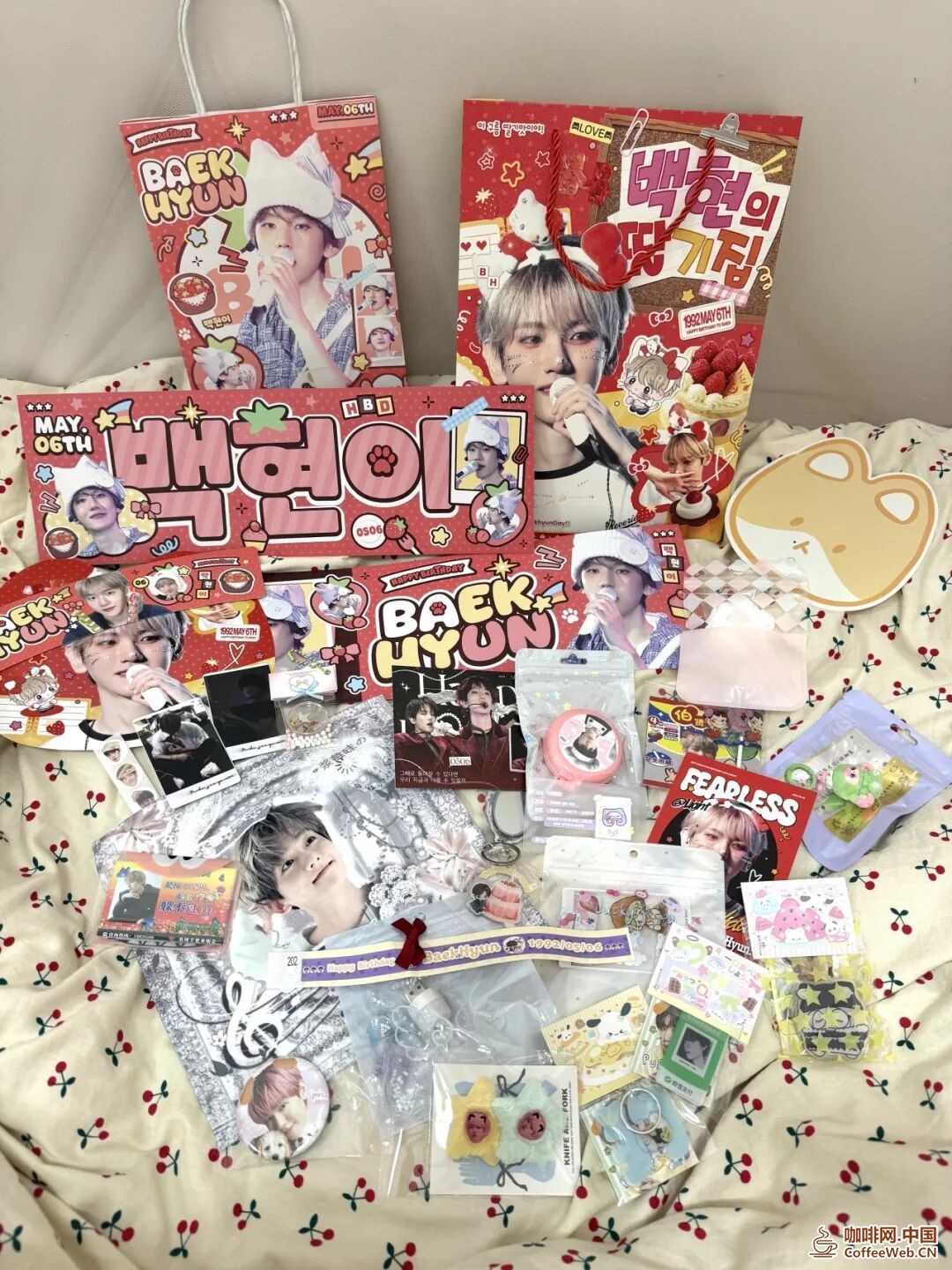
印制产业也在不断专业化、精细化,除了能生产常见的小卡、手幅、海报等基础应援周边,还能制作定制的梳子、小夜灯、洗澡巾……好像只有想不到的,没有做不了的。
光是在淘宝上搜索“应援物制作”,把发货地设为成都,界面都很难拉到底。成都本地拥有成熟的印制供应链,也让当地粉丝的小批量定制变得更方便。
也因此,生咖的每个参与者都有机会体验“物料交换”。这些礼物虽不昂贵,但在交换过程中,大家可以一面增加对偶像的情感投射,一面又在与他人的互动中获得陪伴与满足感,基于承载着双方都认同的符号,来共同构建起集体记忆。
咖啡店:
从“卖饮品”到“卖情感”
聚会不是新需求,其实租个酒店宴会厅、汇演厅,就可以组织起来了,但如果同时考量人数、预算以及氛围,那咖啡店才是最适合生咖的空间。
它不用太大,能容纳几十或上百个人即可,更不用太正式,咖啡店的轻松氛围才更支持生咖的“狂欢”。
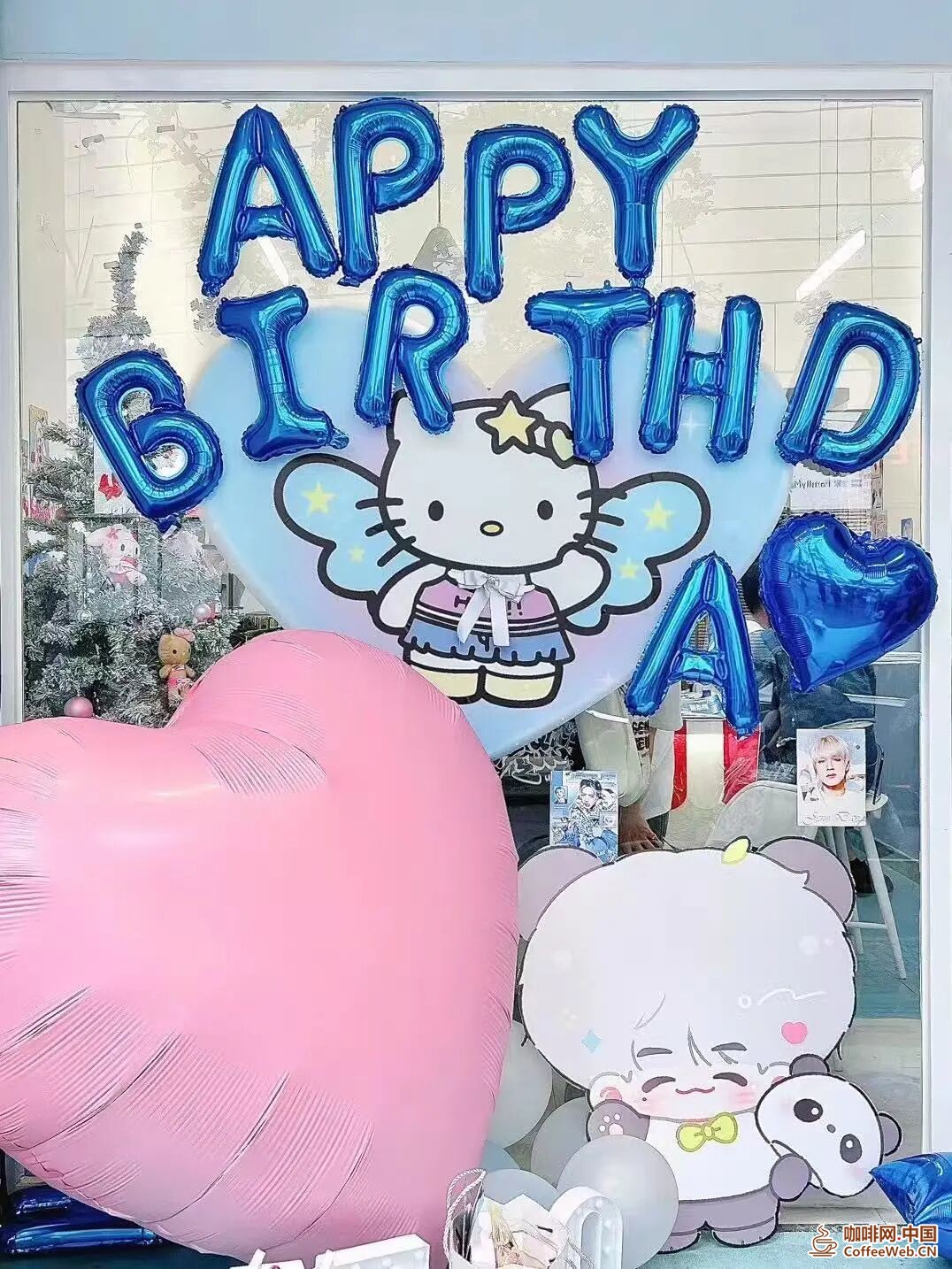
更重要的一点,粉丝群体与咖啡店的合作模式多为“抵消”:咖啡店免费提供场地,粉丝群体则按原价或生咖套餐消费饮品和甜品。
对于主办方而言,这是一种“0元包场”的方案。
一位生咖主办方@焦糖时针 告诉我:“上次我们办得比较豪华,花了4000,一般2000就能搞定。”这些钱花费在定做物料、约稿、现场布置上,由几位主办方AA,完全属于“为爱发电”。对于需要自行承担其他成本的主办方来说,免场地费无疑大幅度降低了他们的经济压力。
这个合作模式同时也是与咖啡店互利的。
如今咖啡店行业的竞争只增不减,不少咖啡店都在做生态叠加,找寻新的可能,比如和文创品牌合作做寄售、卖唱片做起音乐空间,而生咖同样也是一种新的尝试方向。
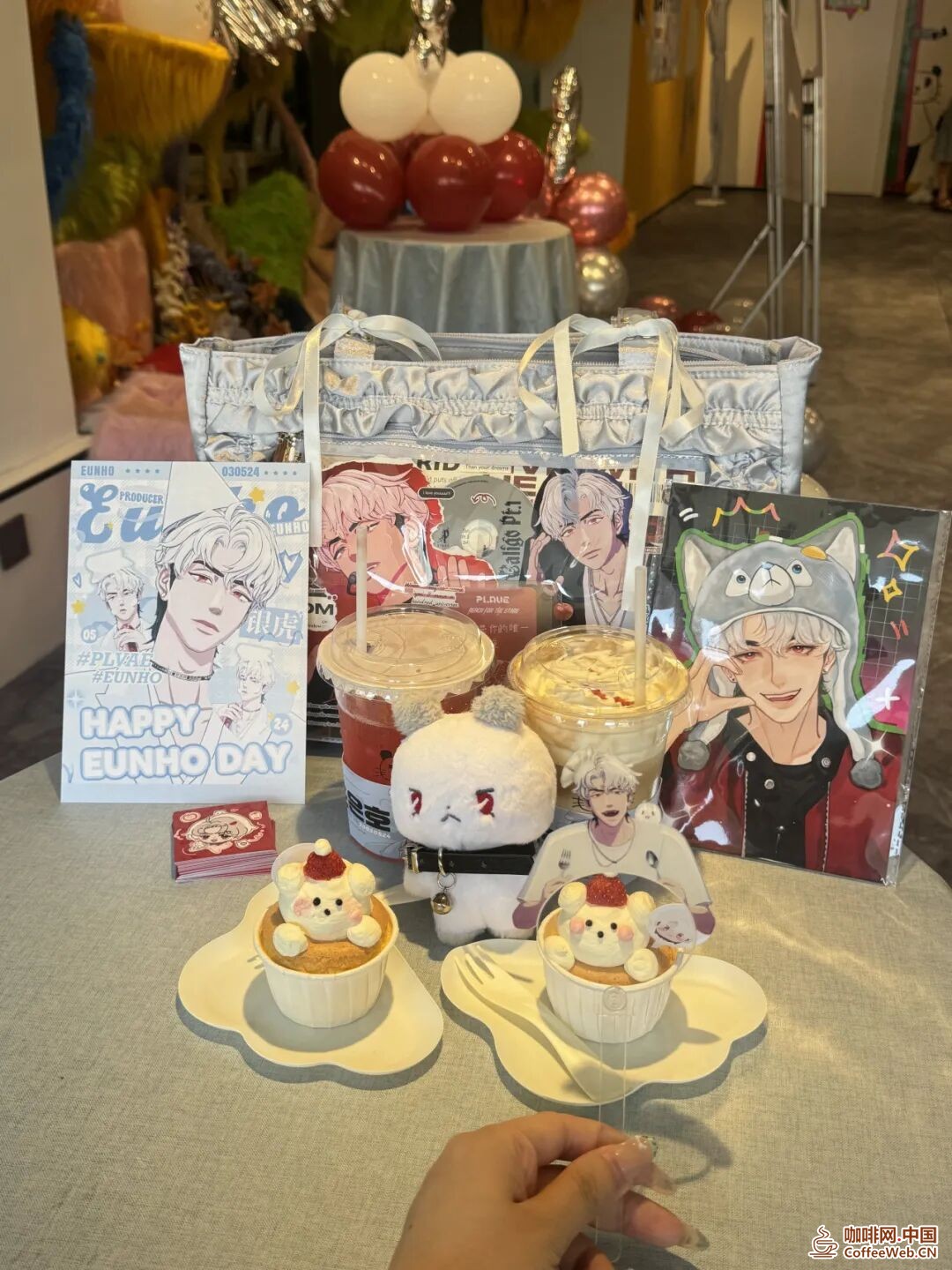
承接生咖虽然占用了半天的营业时间,却带来了稳定的客流、消费以及曝光。比如位于金科北路的“交子&BEEPLUS COFFEE”,在工作日是写字楼员工的咖啡店,到了周末便承接生咖活动。由于空间有一千平米,足够宽敞,吸纳来的粉丝数量动辄上百,套餐50元/人,可以想象最后的营业额能达到多少。
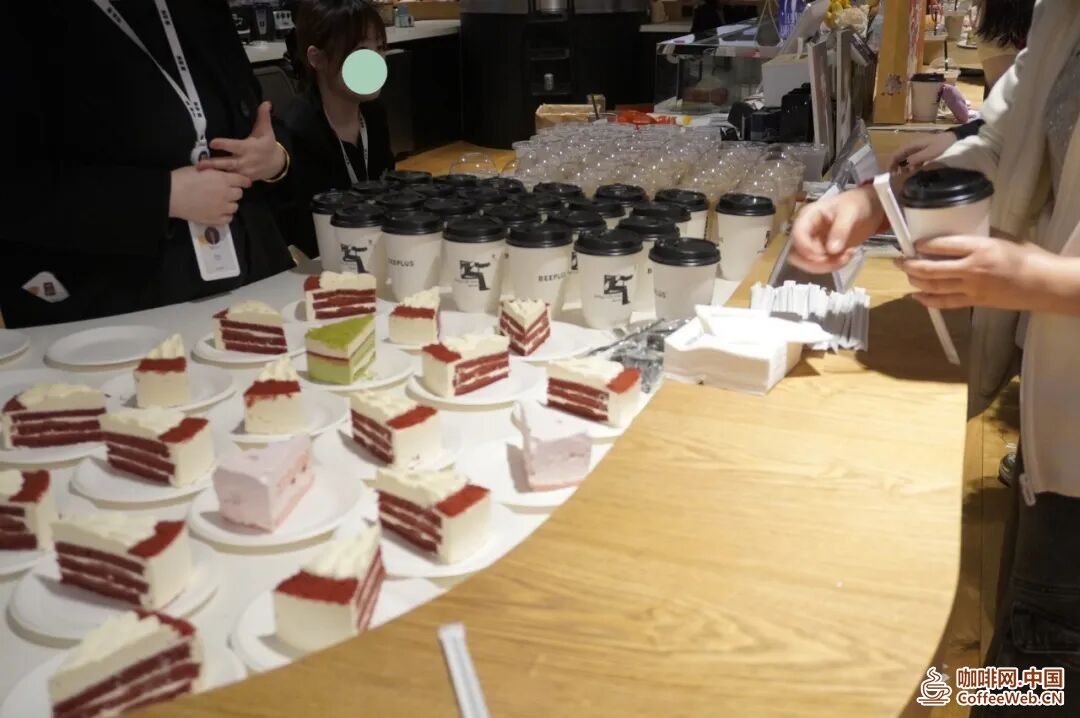
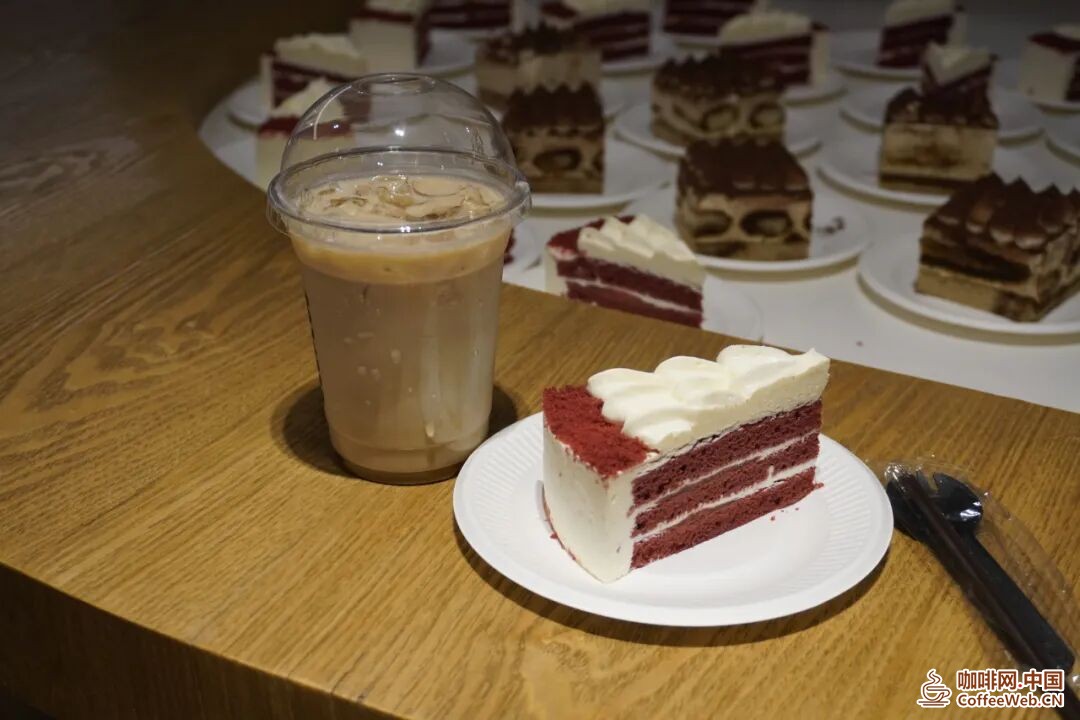
生咖主角的影响力还可以扩大咖啡店自身的传播度,当参与者将照片发布至社交平台,评论区总有人会问:“在哪里”“我想去”。
于是,有越来越多的咖啡店开始主动宣传自己可承接“生咖”。
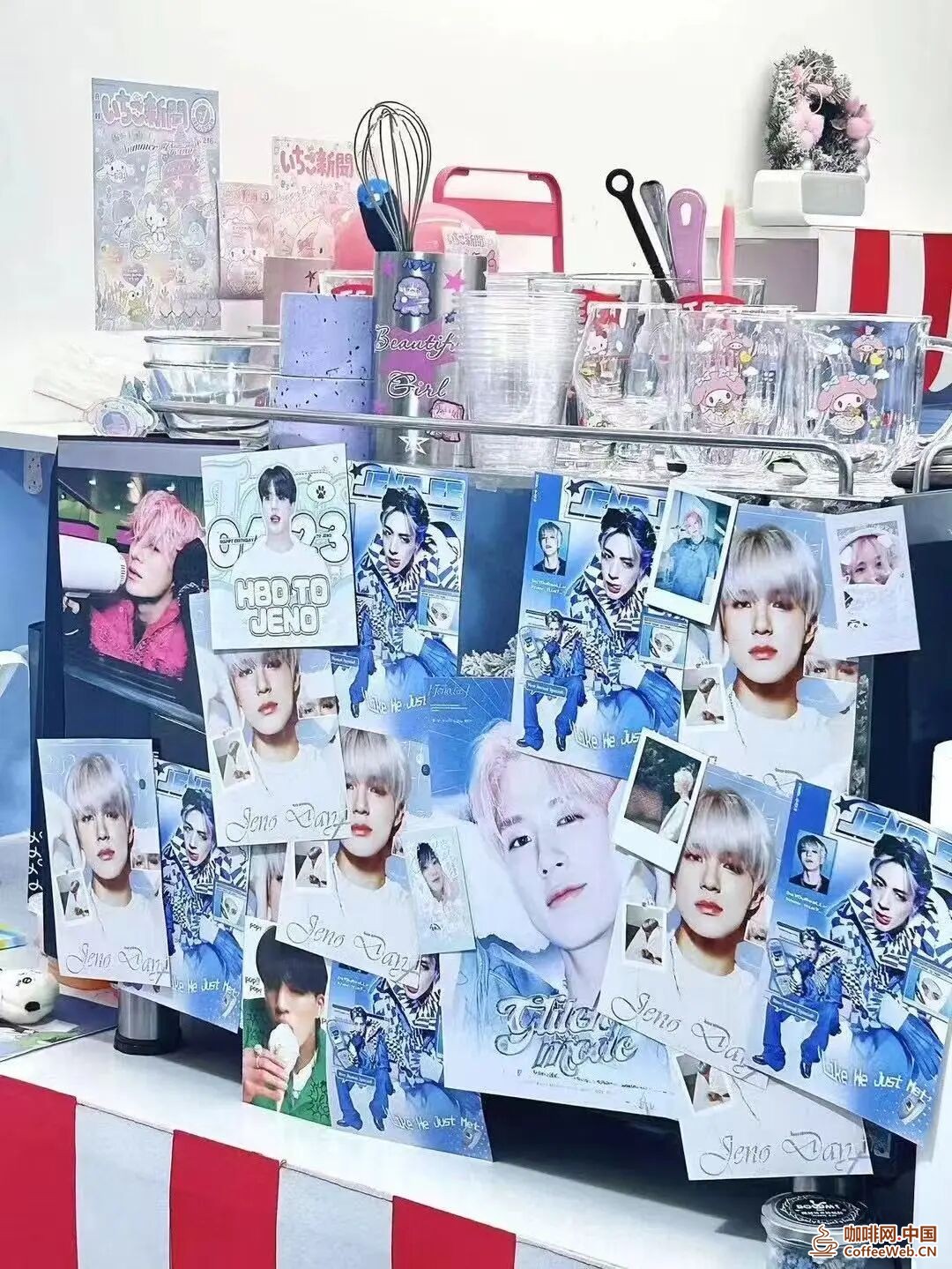
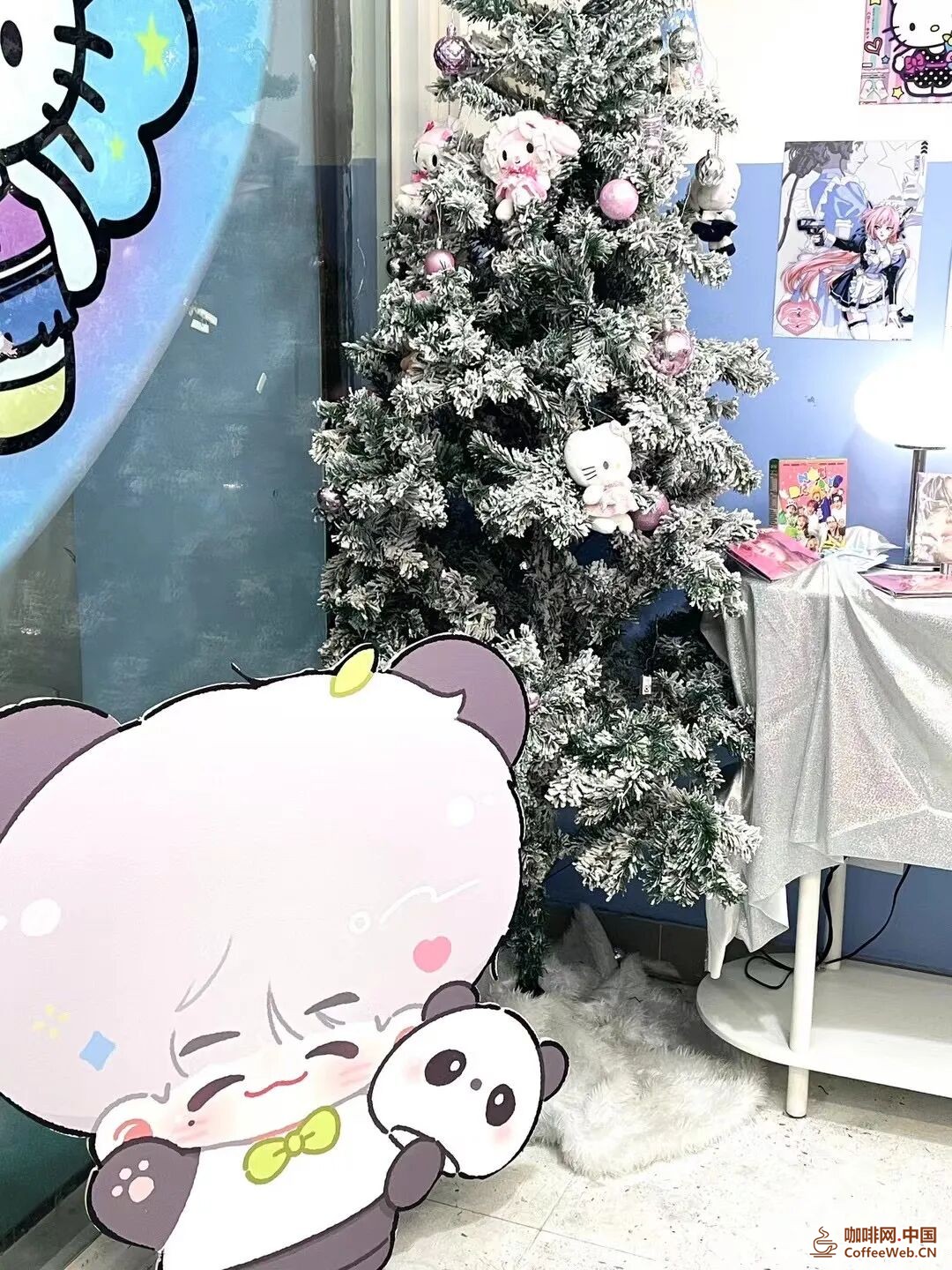
一场生咖开始之前,咖啡店都会经历一次快闪式的大型改造。主办方可以在店内自由布置自己准备的装饰品,对咖啡店的风格、功能区重新加以规划和诠释,让咖啡馆构筑起情感的维度。
比如用大海报将咖啡店原有的墙饰遮挡起来,在门口摆上桌子做一个签到区,在空地里放上装置做打卡区,可容纳多人站立的地方是社交区,桌椅处则是休息区……
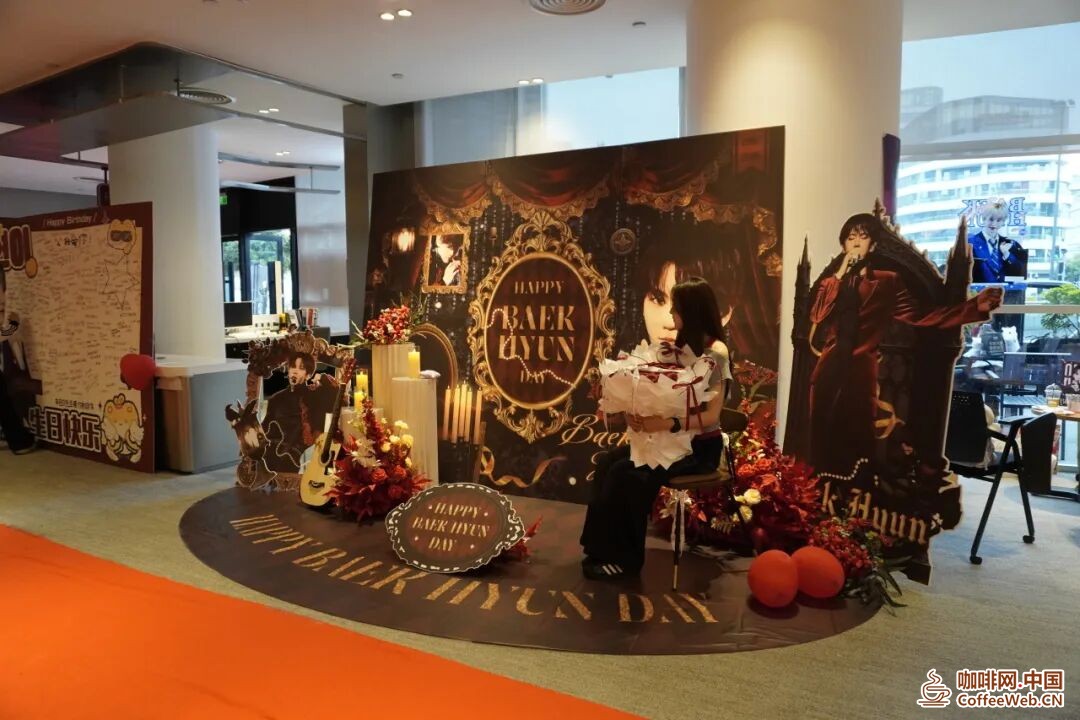
咖啡店提供的是空间,而粉丝填进去的是内容与情感,同家咖啡店可以因为不同的生日主角,而成为完全相异的样子。
对大部分主办和粉丝而言,生咖中饮品的味道其实是最后考虑的事,场地和服务反而排在更前面,因此,咖啡店也在努力提升自己这方面的竞争力。
例如承接过多场生咖的“召集地cafe”在包场指南里就表明了他们可以提供投影、音响、话筒等设备;店内负责人有策划经验,还能帮助主办组织活动;而店址靠近购次元K88,其户外大屏也算得上一个可利用的资源。
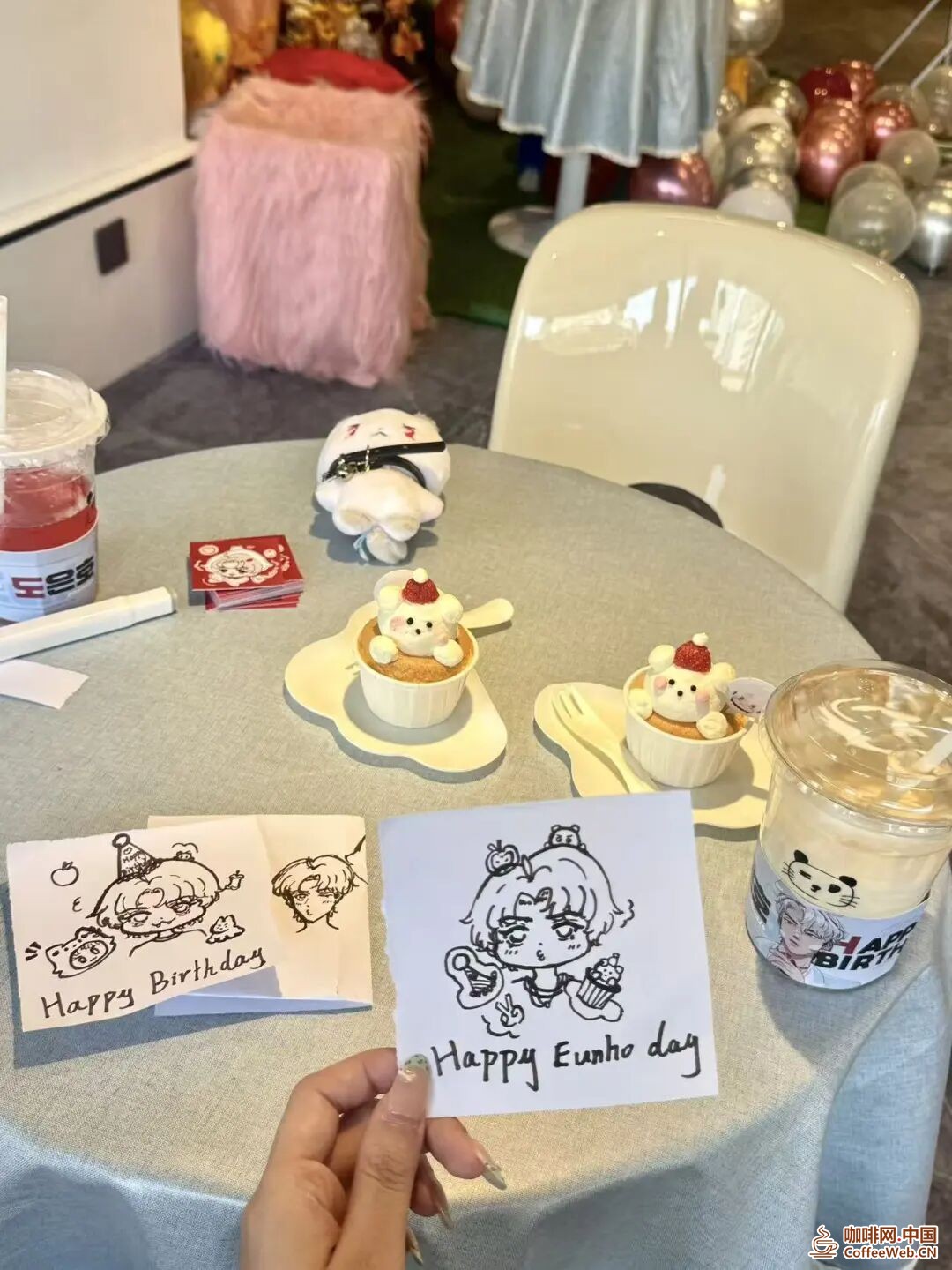
由此可见,二者的需求是相互契合的:粉丝需要一个能承载情感的空间,而咖啡店需要持续吸引人的内容;消费由粉丝社群驱动,而咖啡店就主动为活动提供保障,这才能达到合作模式的最优解。
而这个模式还是可持续、可复制的,因为总有偶像过生日,也总有给偶像庆生的粉丝,一场生咖刚结束,就可能要迅速为第二天别的生咖腾空间,还常常有排期冲突的情况出现;而今天来参加A偶像生咖的人,也可能是B偶像的粉丝,下次,若他成为主办,可能也会考虑选择此处。
于是生咖的风就这么吹起来了,一边内部循环,一边向外蔓延。
生咖将公共空间变为情感空间,将网络中的“超话广场”搬至线下,也再释了咖啡店的“第三空间”价值。
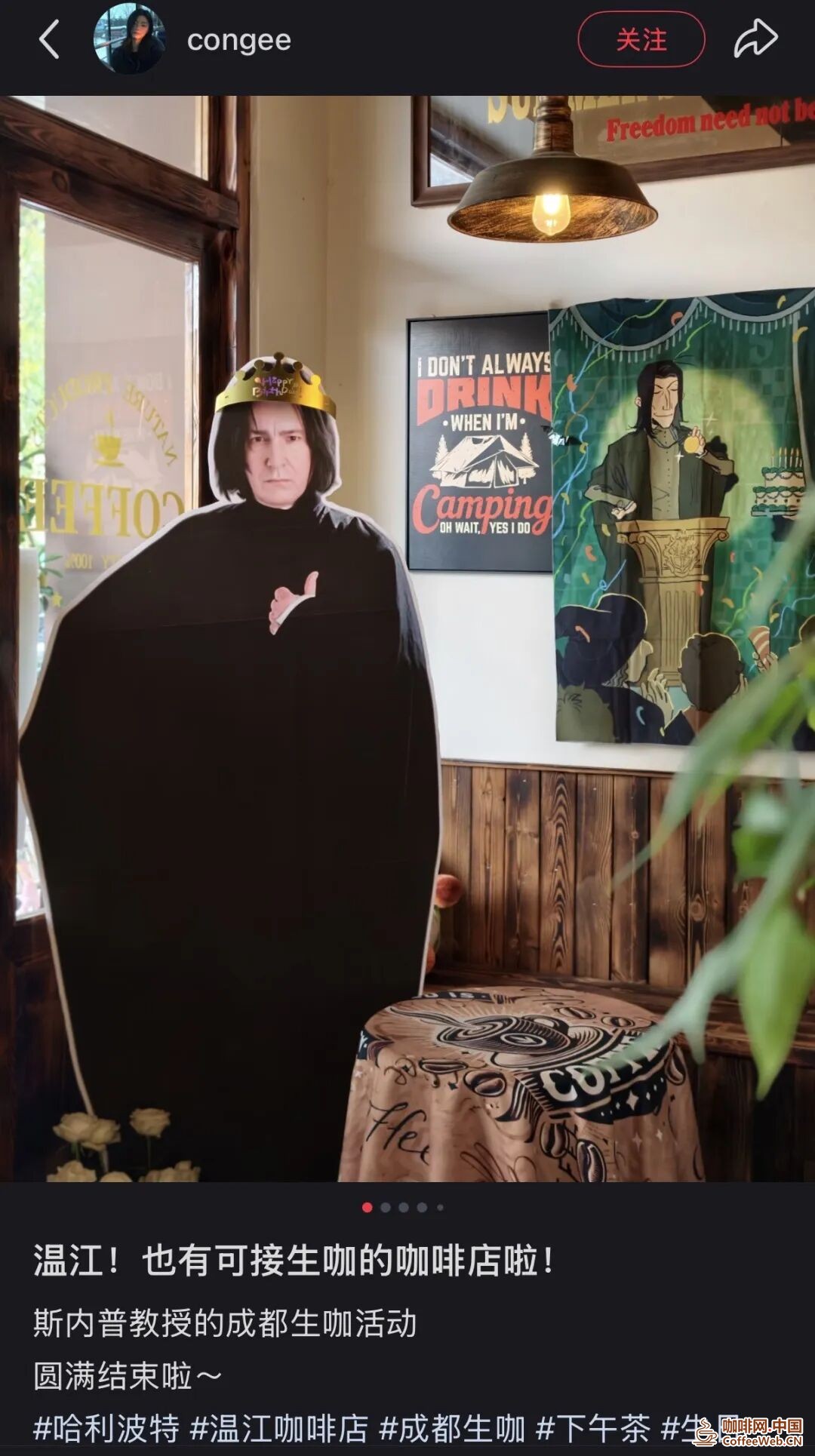
而“生咖”一词的外延也在不断延拓。“生”不再止是生日,也可以是周年纪念日、出道纪念日;主角甚至可以不是真人,还可能是一个游戏或动漫IP角色,也可以是某个剧集、剧中某个角色,比如就有人曾在温江的一家咖啡店里给《哈利·波特》的斯内普庆祝过生日。
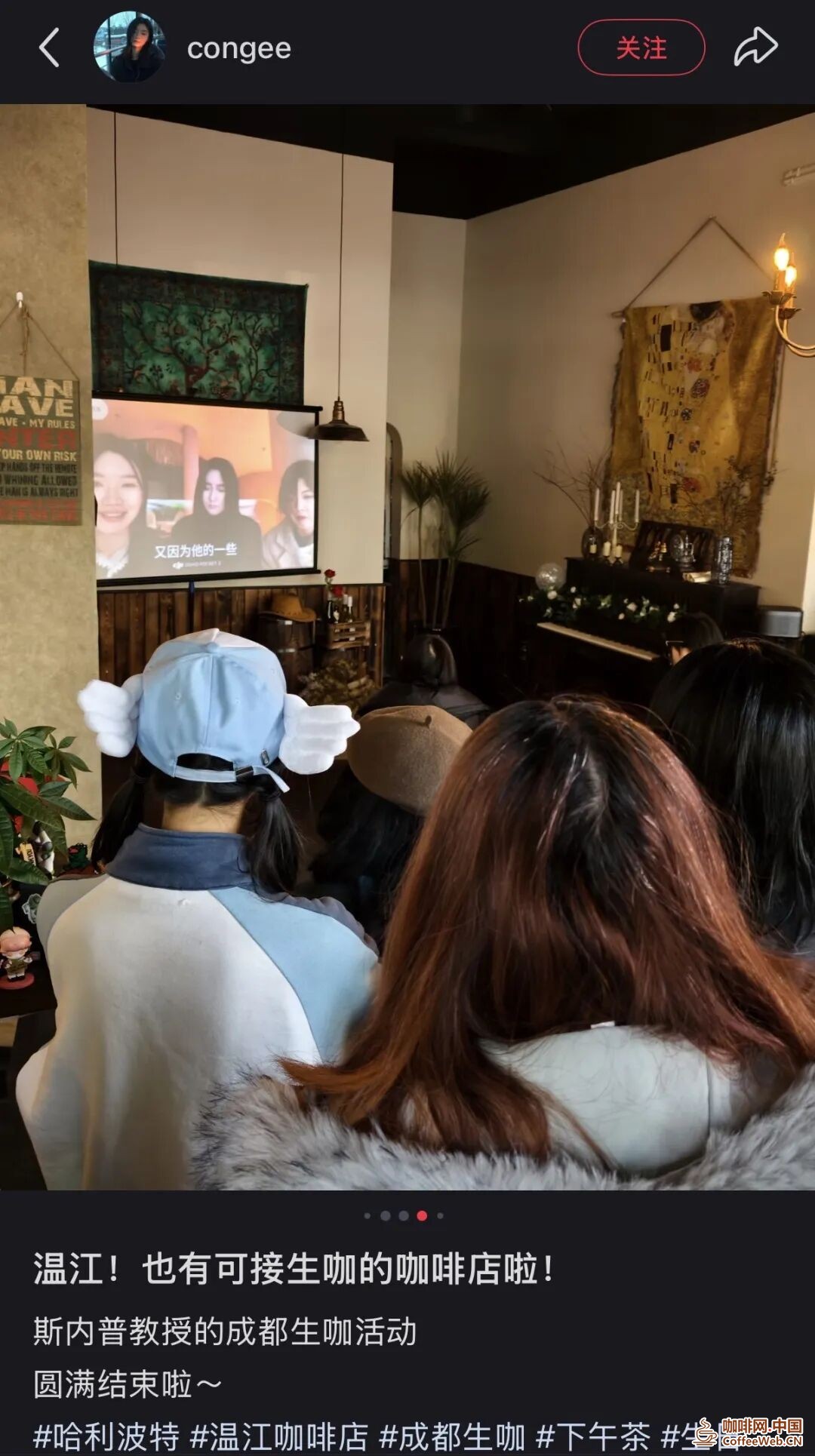
“咖”也不在只局限于咖啡店,花艺店、甜品店、麦当劳……只要是能提供场地和服务的空间,都有可能成为下一场生咖的举办地 。
说到底,粉丝朋友们并不是为了偶像生日而去寻找一杯咖啡,而是找一个可以安心分享彼此情绪的地方。
今天,它恰好是咖啡店,明天,又会有新的可能。
撰文 / 小雨
图源 / 小雨、Roxy、roesi
原标题:《用空间换客流?咖啡店做起了「粉丝生意」》
Raw coffee refers to coffee extracted from unpasteurized beans; But in fan culture, live coffee is a space and a ceremony.
As a space, it is decorated as a caf é themed around someone's birthday; As a ceremony, it is a fan gathering of "Happy Birthday to You".
In May, I had an experience with 'Being someone who has been to a coffee shop before, you can ask anything you want to know'. Although I didn't know anyone around me at all, I still had a fulfilling time playing from 2pm to 6pm.
In Chengdu, events like this are held almost every weekend, with the number of participants ranging from a dozen to several hundred. Offering coffee shops to fans to celebrate their idols' birthdays seems to have become a phenomenal trend. So how does the fresh coffee wind blow? What did the coffee shop look like again?
Fresh coffee:
Catch the demand for 'living for idols'
When a group of people dress up specially on their idol's birthday, bring gifts and good mood, and walk into the same coffee shop to check in, exchange gifts, and meet new friends, the essence of live coffee is also revealed: it is a ceremony about "liking", where everyone can give each other a sense of identity and companionship in a happy carnival.
When tracing the origin of raw coffee, we cannot avoid the Kpop culture. In the past two decades, the entertainment industry in South Korea has gradually matured, and the accompanying support model has also been constantly evolving. Fresh coffee has grown in such soil. In South Korea, there may be dozens of idols celebrating their birthdays on the same day, and the number of celebrities for the same person can even reach dozens.
The related industry chain is also becoming increasingly complete, and South Korea even has an APP dedicated to serving student caf é activities: fans can learn about relevant time, address, and other information from it, as well as complete venue leasing and advertising placement.
Based on my own experience and sharing with friends studying abroad in South Korea, I have found that the essence of Korean student cafes is closer to "check-in points", mostly focusing on "check-in and photo taking, receiving aid supplies, and lucky draws".
During a trip to Seoul, I ran into a member of NewJeans' caf é downstairs from an entertainment company. Her dance videos were projected and played in a loop in the store, her photos were placed on the cabinet, and supporting materials such as cup covers and banners were spread on the table. Simply order a drink to receive them. Both men and women came as fans, but most of them left alone after ordering drinks, taking photos, and receiving gifts.
This has a formal difference from domestic coffee shops.
In contrast, domestic coffee shops can be seen as a fan gathering. In addition to basic check-in and socializing, the organizers will also organize activities such as movie watching, choir singing, competitions, as well as random dances, birthday song singing, cake cutting, and other collective and participatory activities. At the time of arrival, many people may not even know each other, but after an event, not only did they add their contact information, but they also made plans to meet again next year.
Although live streaming cafes have only become popular in recent years, it is no longer a novelty for fans to gather and celebrate their idols' birthdays on their own in Chengdu, and even appeared in newspapers twenty years ago.
In 2007, a fan of Leslie Cheung opened a themed coffee shop on Chunxi Road, which displayed many collections related to Leslie Cheung and was known as the "little world of fans" by customers. On anniversaries and birthdays, the shop also held special events. And the boss persisted for nearly twenty years.
On a night in August 2007, a bar in the Nine Eyed Bridge gathered fans of Michael Jackson, imitating his makeup, singing his songs, dancing his dances, and celebrating his 49th birthday together.
In May 2010, Wang Leehom's Chengdu fans organized a "Love Birthday Party" at Yigou Fashion Square. The fans went to the welfare home to express their condolences and donated blood for free, using it for public welfare to celebrate their idol's birthday.
But why is birthday support gradually shifting towards independent coffee shops nowadays?
On the one hand, it is naturally influenced by South Korean coffee culture, and on the other hand, it is also because coffee shops can better meet the new demands of domestic fans.
Nowadays, people who are enthusiastic about celebrating their idols' birthdays have an increasing age range. Those who are slightly older may be parents with children, while those who are younger are still primary and secondary school students. Compared to bars and other places, coffee shops are obviously more suitable for fans of different age groups to participate.
And the focus of the birthday party has quietly shifted. In the past, birthday endorsements emphasized "letting more passersby see idols". Nowadays, many fans only want to enrich their own experiences, and instead of showcasing them in outdoor public places, they care more about internal communication and interaction among fans.
Moving on to more specific issues, a live streaming event often involves watching movies, playing games, and other activities, with a minimum stay time of two to three hours; Fresh coffee is also an opportunity for "release", and spatial details such as background, lighting, and layout are also needed by fans and friends.
And almost all of these needs can be met by coffee shops.
Why was Chengdu chosen by the coffee industry?
In most cases, fans holding live events require certain qualification certification: or first, a nationwide fan vote is conducted to select several cities for hosting live events, and then fan support groups recruit organizers; Alternatively, the organizer can apply to the fan club to meet the standards before the event can be held, such as a certain number of fans in the city who are interested in participating in the event.
Why is Chengdu always chosen as one of the cities that can host live cafes?
The answer may start with the fan community economy in Chengdu. Thanks to Chengdu's tolerance, no matter how small or cold the circle is, one can almost find like-minded people in this city; Those seemingly niche hobbies can often grow their own communities here, and Shengka is precisely in line with the fan community economy.
Although it is not possible to directly count how many fan communities there are in Chengdu, the transformation of commercial entities such as GOGO EGO and Tianfu Red may serve as a footnote; The data of the concert market can also provide us with an observation slice. In 2025, Chengdu held 134 large-scale concerts, driving a comprehensive consumption of 6.3 billion yuan.
And before and after the concert, there will also be support activities in the mall, which is not difficult to mention the support culture reflected behind it.
·2026 Wang Sulong Concert Eastern Suburban Memory Check in Point
Although the term 'support' has become popular in recent years, similar behavior has long appeared on the streets of Chengdu, which was then known as' giving someone a stab '.
It is worth mentioning the summer of 2005 when "Super Girl" became popular. Fans have appeared on Taisheng South Road, Chunxi Road, and Zhongshan Square campaigning for their supported contestants, using banners, posters, and loudspeakers to shout slogans.
Before Li Yuchun's concert in 2015, fans paid for her own promotion: they placed a full page advertisement in the Chengdu Evening News, and the image of "Global Corn Wishing the Concert Success" was broadcasted continuously on the LED screen of Far East Department Store in Tianfu Square for seven days. The LED in R&F Tianhui also played her classic concert scenes from the past decade, which continued until the day of the concert.
The above are the support methods belonging to Generation Y, while for Generation Z, the support culture has undergone formal changes.
In addition to continuing the traditional outdoor large screen support method, they will also decorate a shopping mall on the days of their idol's birthday with signs, pull-up banners, and other installations, turning it into someone's "pain tower".
Therefore, in a city as culturally active as Chengdu, there is often no shortage of people who participate in and are willing to step forward to organize the event.
If the fan economy and support culture can explain the reason for the existence of Chengdu Shengka from an emotional perspective, then the mature coffee shop ecology in Chengdu can explain the reason for the existence of Shengka from a practical perspective.
Shengka is separated from dimensional commercial entities such as Tianfu Red and GOGO EGO, as it requires a more enclosed venue for seating, organizing activities, and is therefore generally scattered throughout various districts and regions of Chengdu.
Data shows that by 2025, the number of coffee shops in Chengdu will exceed 7000; More than half of independent coffee shops have an area of over 40 square meters, while 7.41% of shops with an area of over 120 square meters meet the basic space requirements for fan gatherings.
More and more coffee shops are taking the initiative to host coffee events, which stems from both the business acumen of the hosts and their personal hobbies.
Nowadays, many coffee shop owners have diverse hobbies. They understand the charm of social support, fan culture, and even themselves are one of them. Since they have physical space, they are naturally willing to let other fans and friends fill in their love.
In addition, in the coffee industry, besides socializing, there is also an important aspect of "material exchange", where fans exchange their own souvenirs with each other, which in turn reveals another actor in the coffee industry.
In the past, the minimum order quantity for aid items was often several hundred or even thousands. However, with the development of the printing industry, today's peripheral production can now support individual small-scale customization. For products such as keychains and pendants, a minimum order quantity of 10 pieces can be made, and they can be produced and shipped within 48 hours. Fans can directly purchase products produced by manufacturers, or they can design their own products and then find factories to make them.
The printing industry is also constantly professionalizing and refining. In addition to producing common small cards, banners, posters and other basic supporting peripherals, it can also produce customized combs, night lights, bath towels... It seems that there is nothing that cannot be done without imagination.
Just searching for "aid production" on Taobao and setting the shipping location as Chengdu makes it difficult to pull the interface to the end. Chengdu has a mature printing supply chain locally, which also makes small batch customization for local fans more convenient.
Therefore, every participant in Shengka has the opportunity to experience "material exchange". Although these gifts are not expensive, during the exchange process, everyone can increase their emotional projection towards their idols while also gaining companionship and satisfaction in their interactions with others. Based on symbols that both parties recognize, they can jointly construct a collective memory.
coffee shop:
From 'selling drinks' to' selling emotions'
Gathering is not a new demand, in fact, renting a hotel banquet hall or performance hall can organize it. However, if we consider the number of people, budget, and atmosphere at the same time, then a coffee shop is the most suitable space for beginners.
It doesn't need to be too big, it can accommodate dozens or hundreds of people, and it doesn't need to be too formal. The relaxed atmosphere of the coffee shop is more supportive of the "carnival" of raw coffee.
More importantly, the cooperation model between fan groups and coffee shops is often "offset": coffee shops provide free venues, while fan groups consume drinks and desserts at the original price or raw coffee set meals.
For the organizers, this is a "zero yuan reservation" plan.
A live coffee organizer @ Caramel Clock told me, 'Last time we had a more luxurious event, spending 4000 yuan. Usually, we could get it done with 2000 yuan.' This money was spent on customized materials, commissioned articles, and on-site decoration, and was fully attributed to 'generating electricity for love' by several organizers AA. For organizers who need to bear other costs themselves, waiving venue fees undoubtedly greatly reduces their economic pressure.
This cooperation model is also mutually beneficial with coffee shops.
Nowadays, the competition in the coffee shop industry is only increasing and not decreasing. Many coffee shops are doing ecological stacking and searching for new possibilities, such as cooperating with cultural and creative brands for consignment sales, selling records as music spaces, and fresh coffee is also a new direction for experimentation.
Although taking up half a day of business hours, it brought stable customer flow, consumption, and exposure. For example, "Jiaozi&BEEPLUS COFFEE" located on Jinke North Road is a coffee shop for office building employees on weekdays, but on weekends it hosts coffee events. Due to the spacious space of 1000 square meters, the number of fans attracted can easily reach hundreds, and the package price is 50 yuan per person. It can be imagined how much revenue can be achieved in the end.
The influence of the protagonist can also expand the spread of the coffee shop itself. When participants post photos on social media, there will always be people in the comment section asking, "Where is it?" or "I want to go.
As a result, more and more coffee shops are actively promoting their ability to handle "raw coffee".
Before a coffee shop starts, it undergoes a large-scale pop-up renovation. The organizer can freely arrange their own decorations in the store, re plan and interpret the style and functional areas of the coffee shop, and create an emotional dimension for the coffee shop.
For example, using a large poster to cover up the original wall decorations of a coffee shop, setting up a table at the entrance as a check-in area, placing a device in the open space as a check-in area, a social area that can accommodate multiple people standing, and a resting area at the table and chairs
Coffee shops provide space, while fans fill in content and emotions. The same coffee shop can become completely different due to different birthday protagonists.
For most hosts and fans, the taste of the drinks in the coffee shop is actually the last consideration, with the venue and service ranking higher. Therefore, coffee shops are also striving to enhance their competitiveness in this area.
For example, the "Gathering Place Cafe" that has hosted multiple live coffee shows indicates in their booking guide that they can provide equipment such as projectors, speakers, and microphones; The store manager has planning experience and can also assist in organizing events; And the store location is close to the shopping dimension K88, and its outdoor large screen can also be considered a usable resource.
From this, it can be seen that the needs of the two are mutually compatible: fans need a space that can carry emotions, while coffee shops need continuously attractive content; Consumption is driven by fan communities, and coffee shops actively provide guarantees for activities, which is the optimal solution for the cooperation model.
And this model is still sustainable and replicable, because there are always idols celebrating their birthdays, and there are always fans who celebrate their birthdays. As soon as a birthday party is over, it may be necessary to quickly make space for other birthday parties the next day, and there are often scheduling conflicts; And the person who came to participate in A Idol's live coffee today may also be a fan of B Idol. Next time, if he becomes the host, he may also consider choosing this place.
So the wind of raw coffee began to blow, circulating internally while spreading outward.
Sheng Ka has transformed public spaces into emotional spaces, bringing the online "Super Talk Square" offline and further demonstrating the "third space" value of coffee shops.
The extension of the term 'shengka' is also constantly expanding. Birth is no longer just a birthday, it can also be an anniversary or debut anniversary; The protagonist may not even be a real person, but could be a game or anime IP character, or a character from a certain series or drama. For example, someone once celebrated Snape's birthday in a coffee shop in Wenjiang for Harry Potter.
Coffee "is not limited to coffee shops, flower arrangement shops, dessert shops, McDonald's... any space that can provide venues and services can become the next venue for hosting fresh coffee events.
Ultimately, fans and friends are not looking for a cup of coffee just for their idol's birthday, but for a place where they can share their emotions with each other in peace.
Today, it happens to be a coffee shop, and tomorrow, there will be new possibilities.
Writing/Xiaoyu
Image source/Xiaoyu Roxy、roesi