前小米副总卖咖啡机器人,融资数亿Former Xiaomi vice president sells coffee robots, raises billions in financing
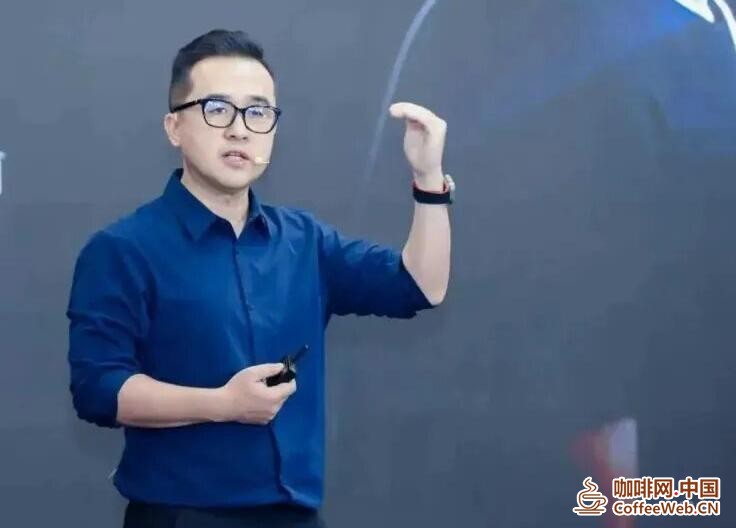
近日,通用餐饮具身机器人公司影智 XBOT宣布连续完成数亿元两轮融资。其中,A轮2亿元融资由香港简坤资本GPTX出资;B 轮融资为3至5亿元人民币,由多支政府基金、美元基金和产业投资方共同参与出资。
掌舵人唐沐,是一位不折不扣的产品老兵。2003 年加入腾讯,在此后十年间主导组建了腾讯用户研究与体验设计中心(CDC),亲手打造过QQ经典头像,也被媒体称为“QQ头像之父”。
2013 年,唐沐选择加入正处于高速成长期的小米,完成了从软件交互到智能硬件的关键一跃。在小米,他历任智能产品部总经理、生态链副总裁,主导了小米路由器和小爱智能音箱两条亿级产品线的从零到一。
2022 年,唐沐离开小米体系独立创业,11月创立北京影智科技有限公司。他的核心判断是,用消费电子产品的思路来做通用餐饮机器人,把机器人从实验室里的"展品"变成商业场景里可量产、可盈利的"产品"。
影智 XBOT的团队配置不同于典型的机器人公司,更像是一家成熟消费品公司与AI公司的结合。机器人技术板块由王嘉力主导,这位哈工大机电工程博士曾任航天科工、三一集团、新松机器人等企业高管。运营板块则由瑞幸系班底组成,包含曾负责大区超高体量门店连锁运营、品牌标准化体系搭建的曹锐锟、于涛等人。
创业之初,唐沐获得了腾讯高级副总裁张小龙、小米联合创始人黎万强等好友的天使轮投资。截至目前,影智 XBOT的咖啡机器人已在全球100多个城市落地超过1000台,累计产出咖啡超过400万杯,2025年,营收已突破 1 亿元。
唐沐透露,2026 年公司手握的订单金额已接近3至5亿元。
以下为对话全文,略有删减:
智客ZhiKer:2022 年决定创业时,您思考了哪些根本性问题?
唐沐:当时我反复思考了三个问题。
第一个问题:创新还是跟随。 在中国,创新特别难,你好不容易想到一个点子,大厂一跟进就把你拍死在沙滩上。但完全跟随,等于彻底没有机会。所以我选择了创新。
第二个问题:通用还是专用。 大家都在做人形机器人,但一个全知全能的人形机器人要产业化落地非常困难。历史上很少存在一个产品是完全通用的,你不能把冰箱做成洗衣机又做成烤箱。所以我选择做专用。
第三个问题:To VC 还是To C。To VC可以快速拿到钱,但那是短的钱、快的钱,也可能是债。所以我选择To C,哪怕一开始有些困难,只要产品在真实场景满足真实需求,就能走得很远。
智客ZhiKer:为什么最终选择了咖啡机器人这个品类?
唐沐:第一,民以食为天,无论经济如何,人总要吃总要喝。咖啡是一个在中国快速增长的大市场,即使有瑞幸、库迪,中国人均年度咖啡消费杯数仍远低于发达国家。
第二,效率革命的机会。咖啡师从早做到晚,连去洗手间的时间都没有,还要面对顾客的各种要求。我们希望用机器人来解放这些人,而不是取代他们。
第三,也是最关键的咖啡的标准化程度足够高。一杯拿铁的变量相对可控,萃取时间、奶泡温度、拉花动作,这些可以被结构化、被数据化。相比中餐炒菜,咖啡更适合机器人先切入。
智客ZhiKer:你们是希望替代咖啡师?
唐沐:我们的客户主要是非咖啡连锁的异业客户,奢侈品店、家居店、4S店、文博场馆。这些场景本来没有咖啡服务,或者咖啡只是配套服务,它们需要的是用咖啡留住客户,而不是用咖啡赚钱。
另外,影智XBOT的客户包括京东七鲜咖啡、菲柯机器人(FICO咖啡)、吉旅控股(吉林冰雪文旅)、博物天行(文博场馆)等,并与拥有四千多家门店的亚洲咖啡品牌共同探索海外市场。
对这些客户来说,机器人不是替代一个咖啡师,而是创造了一个新的服务触点。这个逻辑和当年小米做IoT一样,不是替代传统家电,而是用新场景重新定义需求。
智客ZhiKer:从软件到智能硬件,这段经历对做机器人最大的帮助是什么?
唐沐:所有经历教会我一件事,在真实的场景里做有真实用户需求的产品,核心是满足用户的真实需求。无论你在做什么类型的产品,传统软件、互联网软件、智能硬件、机器人,只要抓住这一点,大方向就不会偏。
智客ZhiKer:机器人行业的主流创始人是技术出身,您会不会觉得自己是"异类"?
唐沐:确实,这个时代风口浪尖上的机器人公司,很多创始人来自技术、工程领域,我一个做产品的人有点像异类。但我一直在想:如果把具身智能跨越鸿沟进入商业场景,这究竟是一个技术问题,还是产品问题?
我的答案是,它有可能是一个产品问题。技术永远在不断发展,我们看到很多高精尖的技术一雪藏就是一二十年,因为找不到商业路径。要把具身智能变成一门生意,核心要解决的还是产品问题。
智客ZhiKer:您一直在强调“用消费电子的方式做机器人”,这具体意味着什么?
唐沐:现在的机器人基本都是偏实验室、偏展示、偏秀的方式。目前我们的XBOTC3咖啡机器人是一台工业级 6 轴机械臂机器人,能够左右双臂异步做两杯咖啡,10分钟可以做10杯咖啡,整个咖啡店微缩在2.5平方的机器人Box里。
在小米时定义一款成功的消费电子产品的标志是出货百万台,因为只有量产时会遇见挑战,产线是否完备、产业工人是否经过培训、机器人有没有经过各种使用场景的验证、有没有经过安全认证和 3C 认证,2025 年,我们迈出了这一步。
消费电子的方式更多是指产品思维,极致性价比、快速迭代、用户体验优先。比如我们的AI印花咖啡,用户上传照片,机器人在咖啡上做出专属印花。消费者拿到后本能反应是拍照发朋友圈,这种情绪价值带来的免费流量,是传统咖啡设备不会考虑的。
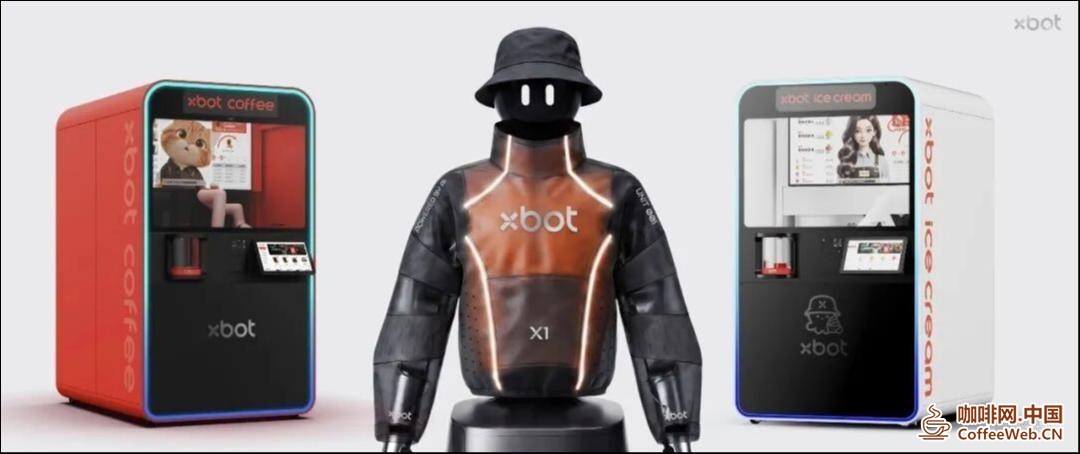
在咖啡机器人的基础上,我们泛化出了三款产品:
XBOT I3冰淇淋机器人,只花了一个月就做出来,售价 17.9 万元,每小时能做 60 杯冰淇淋。一台冰淇淋机器人的设计寿命是 25 万杯,按均价 10 元计算,250万的营收是它自身价值的近 20 倍。
XBOT X1通用餐饮人形机器人,配备双臂七轴结构,本地算力500 TOPS,断网状态下可稳定作业,覆盖取餐、制作、递送全流程,可完成煮面、调饮等多类操作,预计2026年底批量生产和销售。
XBOT CUBE机器人快餐车,搭载20度电池,占地8平方米,支持咖啡、冰淇淋、调酒及烤肠等功能,上市时间待定。
智客ZhiKer:1000台机器人落地的过程中,有哪些让您印象深刻的场景?
唐沐:第一台进入天安门的机器人,是在2024年国庆前夕,天安门管委会的领导通过视频号看到我们的机器人,找到我们说马上国庆需要在广场为游客提供咖啡。
另一个是香港的第一台机器人,是廉政公署买的,从小看 TVB 电视剧,里面常说,廉政公署请你喝一杯咖啡,现在廉政公署的咖啡服务就是我们的 XBOT 提供的。
智客ZhiKer:为什么通用餐饮机器人XBOT X1没有腿?
唐沐:坚决不做腿。 在餐饮行业吧台下面长个腿别人也看不见,腿本身要消耗多余的算力和电量才能站稳。我们用底座加万向轮完成移动,存储仓作为下半身,做完东西直接放在存储仓里运送到顾客面前。
智客ZhiKer:你们为XBOT X1设计了衣服?
唐沐:给机器人穿衣服。 我们可能是全球第一个认真对待这个问题的公司。人形机器人如果真的要进入各种工作场景,不穿衣服是不可能的,会脏、会溅油、电路需要保护、食品安全需要保障。我们找到了北京服装学院的设计师(米兰冬奥会中国代表团入场方案的设计师),为每个工种设计了不同的工作服,咖啡师、调酒师、甜品师、面点师各有专属服饰。
智客ZhiKer:在数据采集和训练方面,影智XBOT的做法有什么不同?
唐沐:我们把1000台机器人落地的真实点位变成数据采集器,直接在商业现场采集数据。以战养战,既能更好地做数据采集和产品优化,又不需要多花冤枉钱去请人做遥操控制。
我们经历了三个阶段,第一阶段只花了200小时的数据收集,就让机器人从0到1学会了做咖啡。我们请顶级咖啡师到实验室,用 16 组摄像头记录他们的动作,用像素级复刻的方式让机械臂学会拉花。
第二阶段,1000台机器人落地、400万杯数据反哺回来。
第三阶段,我们用人类偏好对齐(RLHF)技术,基于人类反馈不断强化大模型和机器人。
智客ZhiKer:除了硬件,影智XBOT的核心竞争力是什么?
唐沐:我们叫做“一脑多形,万店统治”。
自研XOS 3.0“一脑多形”技术架构,可实现跨本体技能迁移,学过的操作能力在更换机器人形态后依然可以复用,真正做到“一次研发、万形复用”。
另外一个是AI Agent品牌“爱宝店长”。如果说XOS 3.0是负责学习与进化的“大脑”,爱宝店长就是这颗大脑走到用户面前的“那个人”。既负责前端用户交互,又负责后端运营管理。一个运营过1000家店的店长,认识数万个熟客,这样的店长你可能根本请不到。但我们可以把店长蒸馏出来,提供给每一位拥有我们机器人的合作伙伴。
智客ZhiKer:商业模式是一次性售卖吗?
唐沐:推行RaaS模式(Robot as a Service,机器人即服务),合作伙伴可以低成本获得机器人,按照月度支付物料费用和 AI 店长辅助运营的订阅费,而不是一开始就支付高昂的机器人购买费用。
其中包含AI 连锁运营系统,用AI重构了新零售连锁选址,传统选址像看风水,现在用大模型跑出来的点位数据,与人现场勘测结果的吻合度达到 97% 以上。同时,我们还用 AI 重构了智慧门店系统,持续学习门店运营习惯,全程提供建议。
(本文首发钛媒体APP,文 | 智客Zhiker,作者|郭虹妘,编辑|杨林 )
更多精彩内容,关注钛媒体微信号(ID:taimeiti),或者下载钛媒体App
Recently, General Catering Equipment Robot Company Yingzhi XBOT announced the completion of two consecutive rounds of financing worth hundreds of millions of yuan. Among them, the Series A financing of 200 million yuan was contributed by Hong Kong Jiankun Capital GPTX; The B-round financing is 300 million to 500 million yuan, jointly contributed by multiple government funds, US dollar funds, and industry investors.
The helmsman Tang Mu is a true product veteran. In 2003, he joined Tencent and led the establishment of the Tencent User Research and Experience Design Center (CDC) over the next decade. He personally created classic QQ avatars and is also known as the "father of QQ avatars" by the media.
In 2013, Tang Mu chose to join Xiaomi, which was in a period of rapid growth, completing a crucial leap from software interaction to intelligent hardware. At Xiaomi, he served as the General Manager of the Intelligent Products Department and Vice President of the Ecological Chain, leading the development of two billion dollar product lines, Xiaomi Router and Xiaoai Smart Speaker, from scratch.
In 2022, Tang Mu left the Xiaomi system to start an independent business and founded Beijing Yingzhi Technology Co., Ltd. in November. His core judgment is to use the concept of consumer electronics products to create a universal catering robot, transforming the robot from an "exhibit" in the laboratory into a mass-produced and profitable "product" in commercial scenarios.
The team configuration of Yingzhi XBOT is different from typical robotics companies, more like a combination of a mature consumer goods company and an AI company. The robotics technology sector is led by Wang Jiali, a Ph.D. in mechanical and electrical engineering from Harbin Institute of Technology who has served as a senior executive in companies such as Aerospace Science and Technology, Sany Group, and Xinsong Robotics. The operation sector is composed of the Luckin team, including Cao Ruikun, Yu Tao, and others who have been responsible for the operation of large-scale store chains and the establishment of brand standardization systems in the region.
At the beginning of his entrepreneurship, Tang Mu received angel round investments from friends such as Zhang Xiaolong, Senior Vice President of Tencent, and Li Wanqiang, co-founder of Xiaomi. As of now, the coffee robots of Yingzhi XBOT have been deployed in over 100 cities worldwide, producing over 4 million cups of coffee. By 2025, the revenue has exceeded 100 million yuan.
Tang Mu revealed that the company's order amount in 2026 has approached 300 to 500 million yuan.
The following is the full text of the dialogue, with slight deletions:
Zhike ZhiKer: What fundamental questions did you consider when deciding to start a business in 2022?
Tang Mu: At that time, I pondered three questions repeatedly.
The first question is whether to innovate or follow. In China, innovation is particularly difficult, and it's not easy to come up with an idea that big companies will kill you on the beach as soon as they follow up. But completely following is equivalent to having no chance at all. So I chose innovation.
The second question: general or specific. Everyone is making humanoid robots, but it is very difficult to industrialize a fully intelligent and versatile humanoid robot. Rarely in history has a product been completely universal, you can't turn a refrigerator into a washing machine and an oven. So I chose to specialize.
The third question: To VC or To C. To VC can quickly get money, but that's short money, fast money, or it could be debt. So I choose To C, even if it's a bit difficult at the beginning, as long as the product meets real needs in real scenarios, it can go far.
Zhike ZhiKer: Why did you ultimately choose the coffee robot category?
Tang Mu: Firstly, food is of paramount importance to the people. Regardless of the economic situation, people must eat and drink. Coffee is a rapidly growing market in China, and even with Luckin Coffee and Kudi, the per capita annual coffee consumption in China is still much lower than in developed countries.
Secondly, there is an opportunity for an efficiency revolution. The barista works from morning till night, without even having time to go to the bathroom, and has to face various demands from customers. We hope to use robots to liberate these people, not replace them.
Thirdly, and most importantly, the standardization level of coffee is sufficiently high. The variables of a latte are relatively controllable, including extraction time, milk froth temperature, and latte action, which can be structured and digitized. Compared to Chinese stir frying, coffee is more suitable for robots to enter first.
Zhike ZhiKer: Do you want to replace baristas?
Tang Mu: Our customers are mainly non coffee chain cross industry customers, including luxury stores, home furnishing stores, 4S stores, and cultural and museum venues. These scenarios originally did not have coffee services, or coffee was just a supporting service. What they need is to use coffee to retain customers, not to make money with coffee.
In addition, the clients of Yingzhi XBOT include JD Seven Fresh Coffee, FICO Robot (FICO Coffee), Jilv Holdings (Jilin Ice and Snow Culture and Tourism), Museum Tianxing (Cultural and Expo Venue), etc., and jointly explore overseas markets with Asian coffee brands that have more than 4000 stores.
For these customers, robots are not replacing a barista, but creating a new service touchpoint. This logic is similar to Xiaomi's approach to IoT back then, which is not to replace traditional home appliances, but to redefine demand with new scenarios.
Zhike ZhiKer: What is the biggest help for making robots from software to intelligent hardware?
Tang Mu: All my experiences have taught me one thing: to make products with real user needs in real scenarios, the core is to meet the real needs of users. No matter what type of products you are working on, traditional software, Internet software, intelligent hardware, robots, as long as you grasp this point, the general direction will not be biased.
Zhike ZhiKer: The mainstream founders of the robotics industry have a technical background. Do you feel like you are an "outsider"?
Tang Mu: Indeed, many founders of robotics companies at the forefront of this era come from the fields of technology and engineering. As someone who makes products, I feel a bit like an outsider. But I have been thinking: if embodied intelligence crosses the gap and enters the commercial scene, is this a technical issue or a product issue?
My answer is that it could be a product issue. Technology is always evolving, and we see many high-precision and cutting-edge technologies that can be stored for a decade or two because we cannot find a commercial path. To turn embodied intelligence into a business, the core issue to be solved is still the product problem.
Zhike ZhiKer: You have been emphasizing "making robots in a consumer electronics way", what does this specifically mean?
Tang Mu: Nowadays, robots are mostly in a laboratory oriented, exhibition oriented, and showcase oriented way. At present, our XBOTC3 coffee robot is an industrial grade 6-axis robotic arm robot that can asynchronously make two cups of coffee with its left and right arms. It can make 10 cups of coffee in 10 minutes, and the entire coffee shop is miniaturized in a 2.5-square robot box.
At Xiaomi, the hallmark of a successful consumer electronics product was the shipment of millions of units, as only mass production would face challenges such as whether the production line was complete, whether industrial workers had been trained, whether robots had been validated in various usage scenarios, and whether they had undergone safety certification and 3C certification. In 2025, we took this step forward.
The way of consumer electronics refers more to product thinking, ultimate cost-effectiveness, rapid iteration, and prioritizing user experience. For example, our AI printed coffee allows users to upload photos and robots to create exclusive prints on the coffee. The instinctive reaction of consumers after receiving it is to take photos and post them on social media. The free traffic brought by this emotional value is something that traditional coffee equipment will not consider.
Based on the coffee robot, we have generalized three products:
The XBOT I3 ice cream robot was made in just one month, priced at 179000 yuan, and can make 60 cups of ice cream per hour. The design lifespan of an ice cream robot is 250000 cups. Calculated at an average price of 10 yuan, the revenue of 2.5 million yuan is nearly 20 times its own value.
The XBOT X1 universal catering humanoid robot is equipped with a dual arm seven axis structure and a local computing power of 500 TOPS. It can operate stably in a disconnected state, covering the entire process of food collection, production, and delivery. It can complete various operations such as cooking noodles and mixing drinks. It is expected to be mass-produced and sold by the end of 2026.
The XBOT CUBE robot fast food truck is equipped with a 20 degree battery and covers an area of 8 square meters. It supports functions such as coffee, ice cream, cocktails, and sausages. The launch date is yet to be determined.
Zhike ZhiKer: What were the impressive scenes during the landing of 1000 robots?
Tang Mu: The first robot to enter Tiananmen Square was on the eve of National Day in 2024. The leaders of the Tiananmen Management Committee saw our robot through a video account and told us that they needed to provide coffee for tourists in the square for National Day.
The other one is the first robot in Hong Kong, bought by the Independent Commission Against Corruption. I have been watching TVB TV dramas since I was young, and they often say, 'The Independent Commission Against Corruption invites you to have a cup of coffee.' Now, the Independent Commission Against Corruption's coffee service is provided by our XBOT.
Zhike ZhiKer: Why doesn't the universal food robot XBOT X1 have legs?
Tang Mu: Resolutely refrain from doing leg exercises. Legs under the bar counter in the catering industry are invisible to others, and the legs themselves require extra computing power and electricity to stand firm. We use a base and swivel wheels to complete the movement, and the storage compartment serves as the lower body. After completing the task, we directly place it in the storage compartment and transport it to the customer.
Zhike ZhiKer: Did you design clothes for XBOT X1?
Tang Mu: Dress the robot. We may be the first company in the world to take this issue seriously. If humanoid robots really want to enter various work scenarios, it is impossible to do so without wearing clothes. They will get dirty, splash oil, need to protect their circuits, and ensure food safety. We have found a designer from Beijing Institute of Fashion Technology (the designer of the entry plan for the Chinese delegation to the Milan Winter Olympics) to design different work uniforms for each profession, with baristas, bartenders, dessert chefs, and pastry chefs each having their own exclusive clothing.
Zhike ZhiKer: What are the differences in data collection and training practices of Yingzhi XBOT?
Tang Mu: We turned the real landing points of 1000 robots into data collectors and collected data directly at commercial sites. Using war to sustain war not only enables better data collection and product optimization, but also eliminates the need to spend extra money on hiring remote control personnel.
We went through three stages, and in the first stage, it only took 200 hours of data collection for the robot to learn how to make coffee from scratch. We invited top baristas to the laboratory and recorded their movements with 16 sets of cameras, using pixel level replication to teach the robotic arm how to pull flowers.
In the second stage, 1000 robots will land and 4 million cups of data will be fed back.
In the third stage, we use Human Preference Alignment (RLHF) technology to continuously strengthen the large model and robot based on human feedback.
Zhike ZhiKer: Apart from hardware, what is the core competitiveness of Yingzhi XBOT?
Tang Mu: We call it 'One Brain with Multiple Forms, Dominated by Ten Thousand Stores'.
The self-developed XOS 3.0 "One Brain Multi Form" technology architecture enables cross ontology skill transfer, and the learned operational abilities can still be reused after changing the robot form, truly achieving "one-time research and development, versatile reuse".
Another one is the AI Agent brand "Aibao Store Manager". If XOS 3.0 is the "brain" responsible for learning and evolution, the store manager of Aibao is the "person" who brings this brain to the front of users. Responsible for both front-end user interaction and back-end operational management. A store manager who has operated 1000 stores and knows tens of thousands of loyal customers may not be able to hire such a manager at all. But we can distill the store manager and provide it to every partner who owns our robots.
Zhike ZhiKer: Is the business model a one-time sale?
Tang Mu: Implement the RaaS model (Robot as a Service), where partners can obtain robots at low cost and pay monthly material fees and AI store manager assisted operation subscription fees, instead of paying high robot purchase fees from the beginning.
This includes an AI chain operation system, which has reconstructed the location selection of new retail chains using AI. Traditional location selection is like looking at feng shui, but now the point data generated by large models has a consistency rate of over 97% with on-site survey results. At the same time, we have also reconstructed the smart store system with AI, continuously learning store operation habits and providing suggestions throughout the process.
(This article is the first release of the Titanium Media APP, written by Zhike Zhiker, author Guo Hongyun, editor Yang Lin)
For more exciting content, follow the Titanium Media WeChat account (ID: taimeiti), or download the Titanium Media App