茶饮咖啡,决战“最后三公里”Drinking tea and coffee, battling the 'last three kilometers'
茶咖不分家后,输赢都在最后3公里。
茶饮和咖啡,本质上争的都是“最后3公里”。
两类门店的产品越做越像,价格越贴越近,品类标签逐渐失效,消费者不再拘泥于进哪家店、该买什么。
到最后,竞争不再是茶饮对茶饮、咖啡对咖啡,也不是茶饮对咖啡,而是所有饮品业态,争夺3公里内同一个消费者有限的支出。
客群重合度达80%,咖啡奶茶“不分家”
2020年11月,奈雪的茶首家PRO店开业,菜单里多了6款咖啡。彼时,奈雪方面公开表示,“茶和咖啡不是对立的,而是共存的需求。”据新京报报道,奈雪的消费者在喝茶和喝咖啡的需求重合度上达到80%。
这是整个行业的普遍现象,客群的高度重合,让茶饮和咖啡相互渗透得越来越深。
一批茶饮品牌不断加大在咖啡业务上的投入,尤其是对具有一定规模的玩家来说,做咖啡已经成为势必要拿下的第二增长曲线,谁也不愿落后。
今年5月,古茗宣布将再投4亿元发力咖啡品类,计划把咖啡的营收占比从现在的10%-15%提升到20%-25%。截至2025年底,古茗全国超过1.2万家门店已配备咖啡机,覆盖率接近9成。
茶百道的咖啡门店数已经从年初约200家扩至超2700家,菜单中咖啡饮品数占总SKU的3成左右;蜜雪冰城豪掷10亿元补贴加盟商引入全自动咖啡机,从滴漏升级为现磨;截至去年年底,沪上阿姨也有超6000家门店完成了咖啡设备升级。
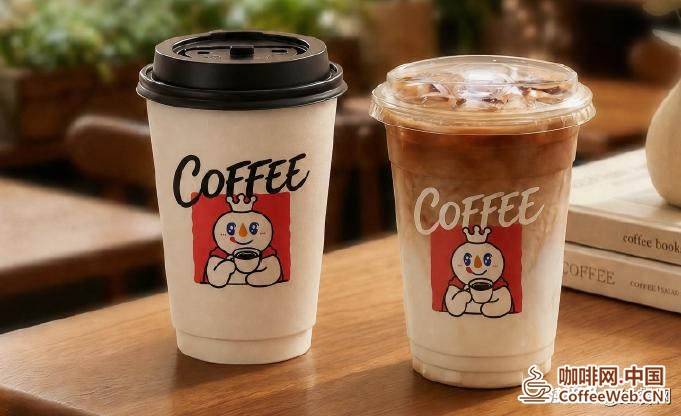
△图片来源:蜜雪冰城官方小红书
面对茶饮来势汹汹的攻势,咖啡品牌也不甘示弱,纷纷加码茶饮。
2024年,瑞幸推出的茶饮新品“轻轻茉莉”上市即爆火,首月杯量突破4400万杯。随后又接连上新果茶、抹茶、酸奶昔、果蔬汁等产品。截至今年5月,瑞幸的非咖产品累计销售额超过200亿元,这早已不是“副业”两个字能概括的体量。
去年6月,星巴克宣布发力非咖啡饮品市场,并对星冰乐、冰摇茶和茶拿铁三大王牌品类进行调价,平均降幅达5元;库迪上新咖啡新品时也会搭配非咖产品,比如近期围绕桃子元素,同步上线桃桃美式、奶昔、气泡水三款产品,同时满足消费者对咖啡和茶饮的需求。
一来二去的双向跨界,让茶饮和咖啡的重合度越来越高,原本泾渭分明的两个行业,现在彻底成了同台竞争的对手。
茶咖的最终决战,为何落在了“最后3公里”?
品类边界消失后,消费者的选择面变得更宽了,想喝一杯咖啡或奶茶时,两类门店都能满足需求。茶饮和咖啡这两个赛道竞争,就都落在了“最后3公里”。
“3公里生活圈”是零售圈的概念——以消费者为圆心,在半径为3公里的区域内,配齐能够满足日常购物、餐饮、休闲等高频需求的各类业态。如今,大多数人的消费行为主要出现在这个范围之内,就连点外卖,平台也会优先推送3公里内的门店。
反过来,这同样决定了门店覆盖能力的上限,餐饮做的主要是周边生意,无论是开在商场里的门店,还是社区底商的小店,大家守的是同一片地盘,争的是同一拨人。
特别是茶饮和咖啡这种高频即饮的品类,消费者的决策半径本来就短,很少有人会为了一杯奶茶或美式专程跨越半个城区,更多是顺路或就近解决。
而在茶咖不分家的当下,消费者想喝咖啡,茶饮店里就能满足;想喝奶茶,咖啡店里同样能买到。两类门店越来越像“全能饮品店”,和便利店一样,最后比的是谁更能吸引3公里内的消费者。
这意味着,茶饮、咖啡品类的竞争将变得更加激烈。以广州琶洲保利广场为例,周边聚集了大量写字楼,片区内上班族的饮品消费需求旺盛,是各大品牌的必争之地。据不完全统计,这座商场内共有19家茶饮、咖啡门店,其中,不少门店的菜单都涵盖了另一个品类的产品。
这些门店要争夺的,是附近3公里内同一批消费者的每一次选择。同一时段,消费者的胃容量和预算都是有限的,茶饮和咖啡只会二选一,同一个场景下可能有人喝奶茶、有人喝咖啡,但基本不会有人左右一杯咖啡右手一杯奶茶。
光靠加品类,还赢不了3公里的局
在这场“3公里的战争”中,除了在菜单上多加几款咖啡或奶茶,茶饮、咖啡店们还在想尽办法,增加被选择的机会、覆盖更多消费场景。
在有限的区域内,门店数量直接决定了品牌被看见的概率,万店规模的品牌在这场竞赛中占尽先机。这类玩家本身就具有密集的点位布局,无论是社区、学校,还是写字楼、交通枢纽,但凡有人流的地方,基本都能看到它们的影子,触达消费者的能力远非中小品牌可比。
举个例子,依旧以琶洲保利广场为中心,在大众点评上搜索,附近3公里内就有超过10家蜜雪冰城。这意味着,不管消费者往哪个方向走,或者打开外卖软件,“雪王”都会高频出现。
After tea and coffee are not divided, the winner or loser is in the last 3 kilometers.
Tea and coffee essentially compete for the 'last 3 kilometers'.
The products of the two types of stores become more and more similar, the prices are closer and closer, the category labels are gradually becoming invalid, and consumers are no longer confined to which store to enter or what to buy.
In the end, competition is no longer about tea drinks for tea drinks, coffee for coffee, or tea drinks for coffee, but about all beverage formats competing for the limited spending of the same consumer within 3 kilometers.
The customer group overlap rate reaches 80%, and coffee and milk tea are not separated
In November 2020, Nayuki Tea's first PRO store opened, with six more coffee options added to the menu. At that time, Nayuki publicly stated that "tea and coffee are not opposing, but coexisting needs." According to the New Beijing News, Nayuki's consumers had an 80% overlap in their demand for tea and coffee.
This is a common phenomenon in the entire industry, where the high overlap of customer groups allows tea drinks and coffee to penetrate deeper and deeper into each other.
A group of tea beverage brands are continuously increasing their investment in the coffee business, especially for players with a certain scale. Making coffee has become the second growth curve that must be won, and no one wants to fall behind.
In May of this year, Guming announced that it would invest another 400 million yuan in the coffee category, planning to increase the revenue share of coffee from the current 10% -15% to 20% -25%. By the end of 2025, over 12000 stores of Guming nationwide have been equipped with coffee machines, with a coverage rate of nearly 90%.
The number of coffee shops in Chabaidao has expanded from about 200 at the beginning of the year to over 2700, with coffee beverages accounting for about 30% of the total SKUs in the menu; Meixue Ice City has generously invested 1 billion yuan to subsidize franchisees to introduce fully automatic coffee machines, upgrading from drip machines to freshly ground ones; As of the end of last year, more than 6000 stores of Shanghai Auntie have completed coffee equipment upgrades.
△ Image source: Official Little Red Book of Meixue Ice City
Faced with the fierce attack of tea drinks, coffee brands are not to be outdone and have increased their investment in tea drinks.
In 2024, Luckin Coffee's new tea drink "Gentle Jasmine" was launched and immediately became popular, with a cup volume exceeding 44 million in the first month. Subsequently, new fruit tea, matcha, yogurt smoothie, fruit and vegetable juice and other products were successively introduced. As of May this year, Luckin Coffee's non coffee products have accumulated sales of over 20 billion yuan, which is no longer a scale that can be summarized by the words "side business".
In June last year, Starbucks announced its efforts in the non coffee beverage market and adjusted prices for its three flagship categories, including Starbucks Frappuccino, Iced Shake Tea, and Tea Latte, with an average reduction of 5 yuan; When introducing new coffee products, Kudi will also pair them with non coffee products. For example, recently, with a focus on peach elements, Kudi has launched three products simultaneously: Peach American, milkshake, and sparkling water, while meeting consumers' needs for coffee and tea drinks.
The two-way cross-border competition of back and forth has made the overlap between tea drinks and coffee increasingly high. The two industries, which were originally distinct, have now completely become competitors on the same stage.
Why did the final battle of tea cafes fall on the "last 3 kilometers"?
After the disappearance of category boundaries, consumers have a wider range of choices. When they want to have a cup of coffee or milk tea, both types of stores can meet their needs. The competition between tea drinks and coffee has fallen to the "last 3 kilometers".
The "3-kilometer living circle" is the concept of the retail circle - centered around consumers, within a radius of 3 kilometers, equipped with various formats that can meet high-frequency needs such as daily shopping, dining, and leisure. Nowadays, most people's consumption behavior mainly occurs within this range, even when ordering takeout, the platform will prioritize pushing stores within 3 kilometers.
On the other hand, this also determines the upper limit of store coverage. Catering mainly engages in peripheral business, whether it is stores opened in shopping malls or small shops in community stores. Everyone is guarding the same territory and competing for the same group of people.
Especially for high-frequency ready to drink categories such as tea and coffee, consumers' decision-making radius is already short. Few people would cross half a city area specifically for a cup of milk tea or American style tea, and more often solve problems along the way or nearby.
In the current era where tea and coffee are not separated, consumers who want to drink coffee can be satisfied in tea shops; If you want to drink milk tea, you can also buy it in coffee shops. The two types of stores are becoming more and more like "all-in-one beverage stores", like convenience stores, ultimately competing over who can attract consumers within 3 kilometers.
This means that competition in the tea and coffee categories will become even more intense. Taking Poly Plaza in Pazhou, Guangzhou as an example, there are a large number of office buildings gathered around the area, and the demand for beverages among office workers in the area is strong, making it a must win place for major brands. According to incomplete statistics, there are a total of 19 tea and coffee shops in this shopping mall, many of which have menus covering products from another category.
These stores are competing for every choice made by the same group of consumers within a 3-kilometer radius. At the same time, consumers' stomach capacity and budget are limited, and they only choose between tea and coffee. In the same scenario, there may be people drinking milk tea or coffee, but basically no one will have a cup of coffee and a cup of milk tea in their right hand.
Just by adding categories, we can't win the 3-kilometer race
In this "3-kilometer war", in addition to adding more coffee or milk tea to the menu, tea drinks and coffee shops are also trying their best to increase the chances of being selected and cover more consumption scenarios.
In a limited area, the number of stores directly determines the probability of a brand being seen, and brands with a scale of ten thousand stores have the upper hand in this competition. These players themselves have a dense layout of locations, whether it's communities, schools, office buildings, or transportation hubs. Their presence can be seen in almost any place with foot traffic, and their ability to reach consumers is far beyond that of small and medium-sized brands.
For example, still centered around Pazhou Poly Plaza, searching on Dianping, there are over 10 Meixue Ice Cities within 3 kilometers nearby. This means that no matter which direction consumers go or open food delivery apps, "Snow King" will appear frequently.