小米前高管押注的咖啡机器人赛道,要用10万家门店PK瑞幸们?Is Xiaomi's former executive betting on the coffee robot race to use 100000 stores to compete with Luckin Coffee?
(本文作者为 创业最前线,钛媒体经授权发布)文 | 创业最前线
未来的咖啡厅是什么样子?一千个人心中会有一千种答案,但多数人脑海中都会有一个元素,那就是机器人。
7月29日,在“影智XBOT具身商业机器人”项目线上峰会上,影智XBOT创始人、CEO唐沐给出了“未来三年,国内将至少涌现10万家机器人咖啡小店”的预估,这一数字是瑞幸与库迪国内在营门店数量总和的两倍。
在此之前,影智XBOT已正式推出自营连锁咖啡品牌XBOT COFFEE与首家旗舰体验店XBOT Lab,二者的核心元素并非真人咖啡师,而是一台台咖啡机器人。
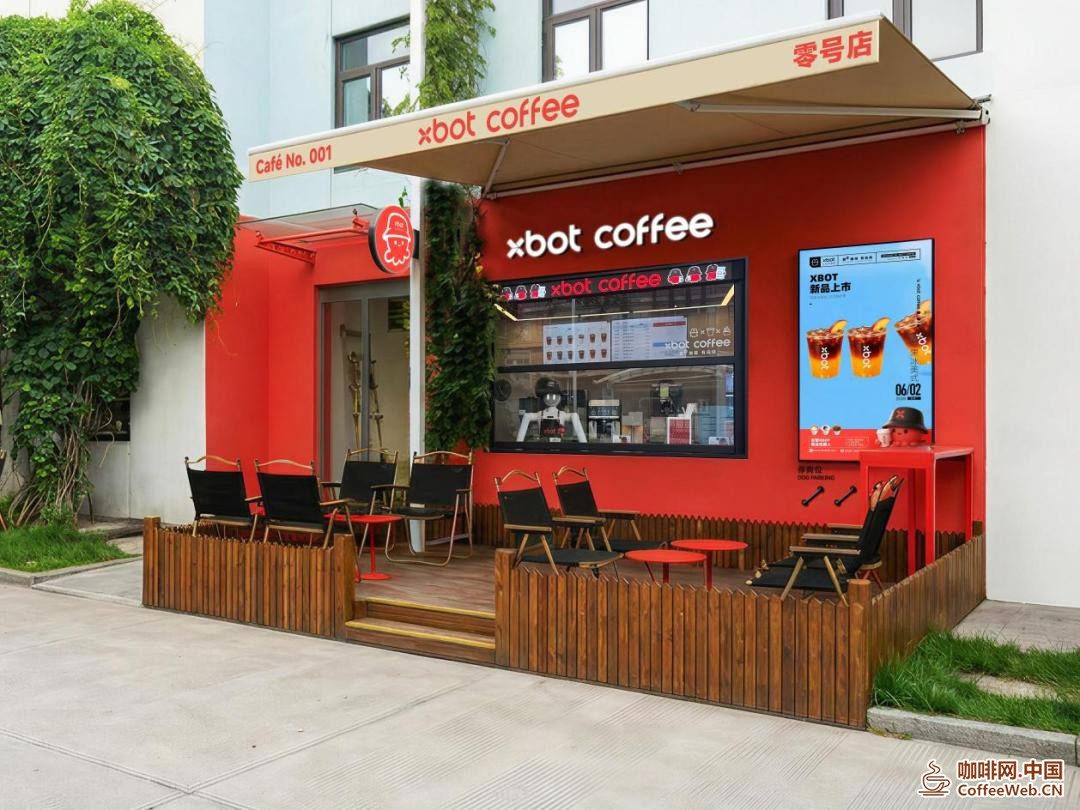
图 / 人机协作模式的XBOT Lab(图源:影智XBOT)
「创业最前线」现场体验发现,影智XBOT推出的XBOT C3咖啡机器人主要由机械臂进行咖啡的制作,除了常规的美式拿铁外,还可以定制拉花。而XBOT Lab的定位则是“人机协作”,即机器人负责咖啡的稳定出品,人类店员则负责打包、补料、日常维护等协作环节。
业界普遍关注的问题是:咖啡机器人投放市场的盈利方式是什么?它的普及,将与瑞幸、库迪等连锁现制咖啡品牌形成何种生态?
咖啡机器人or自动咖啡机?
影智XBOT推出的XBOT C3咖啡机器人,即将一家咖啡店浓缩进一个占地约2平方米的机器中,机器内含咖啡机、奶泡机、制冰机、印花机等,机械臂负责“手握”杯子串联在各个设备之间。
硬件之外,XBOT C3搭配影智自研XOS 3.0系统,让机器人同时具备“能看、能理解、能执行”的全链路能力,交互屏上,身着围裙、提醒用户取餐的爱宝店长Agent正是该系统的体现。
据悉,该系统可实现跨本体的技能迁移——学过一次的操作能力,在更换机器人形态后依然可以复用。
图 / XBOT C3咖啡机器人
与人形机器人不同,部分消费者见到咖啡机器人时,会更多地把它当作一台设备。
“我仔细观察了XBOT C3这台机器,感觉就是机械臂+自动咖啡机的组合。”有消费者表示。
影智XBOT创始人、CEO唐沐在接受「创业最前线」访问时,详细解释了选择机械臂而非人形机器人的原因。
他表示,一方面,在制作咖啡的过程中,咖啡师更多的是利用手腕和小臂,而手指的主要作用是抓取杯具,采用机械臂抓夹的形式就可以完成对咖啡师绝大多数动作的复刻。
另一方面,机械臂抓夹相较于仿人类的手指关节设计可以节省成本,为后续的商业化推广打下基础。
但在实际的商业应用中,为了保证安全性及稳定性,XBOT C3咖啡机器人砍掉了部分互动性。
例如,唐沐告诉我们,原先的咖啡机器人的机械臂是裸露在外的,消费者可以更近距离地观看咖啡制作过程,也有消费者在机械臂递过咖啡的过程中会摸一摸它形成互动。
“但在后续商业化应用的过程中,我们发现该场景存在卫生隐患,所以将其罩在了玻璃罩中。”唐沐表示。
这种对产品商业化落地的执着,与唐沐此前的从业经历有关。在创立影智XBOT之前,唐沐曾在腾讯CDC、小米探索实验室等核心团队任职,主导QQ系列产品体验设计,打造过小爱音箱、小米路由器等产品。
唐沐向我们表示,这些就业经历让他深刻认识到,过于强调产品科技的“高大上”,拒消费者于千里之外是无法获得商业上的成功的。
“咖啡机器人本身就是一个‘朴素’的名字,它的定位是真正进入消费者的生活。因此,比起强调机器人的概念,我更关心它能否呈现给消费者一杯好的咖啡。”唐沐说。
天眼查显示,影智XBOT成立于2022年11月,目前已推出的产品包括咖啡机器人、冰淇淋机器人、通用餐饮人形机器人等。
另据36氪此前报道,影智XBOT已完成两轮数亿元融资——其中,A轮的2亿元融资由香港简坤资本GPTX出资,B轮融资为3-5亿元,由多支政府基金、美元基金和产业投资方共同参与出资。
投放规模方面,XBOT咖啡机器人全球落地超1000台,遍布在100座城市中,累计制作咖啡超400万杯。「创业最前线」通过XBOT COFFEE小程序搜索发现,该机器在北京地区的投放地点主要集中在办公楼、景区和商场内。
同时,为进一步扩大规模,XBOT COFFEE已开放加盟并于今年7月中旬在京东上架咖啡机器人进行设备售卖,其中XBOT C3售价21.9万元,Lite版售价23.99万元。「创业最前线」咨询得知,二者的主要区别为Lite版为双臂协同运作,XBOT C3则为单臂运作,且实际价格会随京东渠道活动有所浮动。
另据影智XBOT销售负责人表示,目前XBOT有XBOT ROBOT解决方案销售和XBOT COFFEE饮品品牌加盟两种商业模式。在解决方案销售模式下,客户购买设备后可以自主定制DIY机身涂装、选择自有品牌LOGO和使用自有咖啡辅料供应商,但无法使用XBOT品牌标识以及对应该品牌下的食安资质。
直营加盟模式下,合作双方受咖啡品牌运营约束,XBOT COFFEE面向加盟合伙人提供运营、运维等服务。除设备采购,另需遵循品牌合作、物料直采等规范和要求。
“比起开实体咖啡店,这个项目的主要优势是节省房租及人力成本,如果平均每天做100杯,回本周期大概是半年。”该销售负责人表示。
那么,不断落地的咖啡机器人,会与现存的“瑞幸库迪们”形成怎样的市场格局?
咖啡师的“效率革命”?
《2026中国城市咖啡发展报告》显示,2025年,全国咖啡产业规模达3549亿元,同比增长率13.3%。全国人均咖啡消费达28.57杯,相比2024年的22.24杯、2023年的16.74杯有所提升。
国人对于咖啡不断提高的需求以及标准化的生产流程,是唐沐看到的入场商机之一。
「创业最前线」访问发现,目前咖啡师们对咖啡机器人的态度不尽相同:在库迪、瑞幸等连锁品牌中工作的咖啡师,认为自身制作咖啡的过程与机器人类似;而另一种出品精品咖啡的“咖啡主理人”则认为自己的工作中存在机器人无法代替的部分。
在瑞幸工作一年半的小孔告诉我们,出餐高峰期时自己一天要做200杯咖啡,需要连轴转四、五个小时,而这个制作过程是非常固定和机械的。
“例如制作一杯生椰拿铁,椰浆、咖啡液加入的毫升是标准的,咖啡液通过机器的固定程序萃取,能产生变量的也就是控制糖度、温度,更换奶基或者咖啡豆种类。”小孔表示,自己重复那些机械性的动作,成就感很低,经常想有没有一个机器人可以代替自己工作。
另一位在库迪工作的咖啡师也向我们表示,因为饮品制作的流程较为标准化,按照配方制作,熟悉个一两天就可以上手操作了。
上述咖啡师告诉我们,自己制作一杯咖啡的时间在30秒至一分钟不等,而XBOT咖啡机器人的产品线包含美式/奶咖/印花系列等,制作一杯非印花款式咖啡的时间大约在45秒,每小时可输出80杯,且可以24小时运行,效率更加稳定持久。
但小孔也表示,比起咖啡机器人,真人店员具有更高的灵活性,“比如客人发现下错单了或者对口味有什么个性化需求,我们可以及时响应调整。但咖啡机器人如果‘无人化’,响应的速度就会比较慢。”
另一位在星巴克臻选店工作的员工向我们介绍,尽管咖啡的生产流程是标准化的,但她的成就感在于和顾客互动,“我喜欢拉花完一杯咖啡,被顾客拍照夸赞的感觉,另外我会向顾客介绍咖啡豆的原产地、星巴克的采购渠道等。”
该员工还表示,星巴克很注重与顾客的连接交流,“我们店的客流量属于平均水平,我会尽量做到为客人介绍咖啡,我认为只有人做的咖啡才更有温度。”
事实上,在一些私人咖啡厅或者精品咖啡店,咖啡师对咖啡有自己的理解和追求,他们普遍认为,与顾客的交流介绍以及不依靠机器的手冲咖啡等品类,都是咖啡机器人无法代替的部分。
这些场景延伸出的讨论是:咖啡机器人的功能边界在哪里?除独立运营外,它与咖啡师可以形成的合作模式是什么?
唐沐向我们表示,在他的构想中,咖啡机器人负责从事重复、标准化的咖啡出品工作,人类咖啡师负责与顾客沟通交流、进行新品研发等工作。
这一设想场景与挪瓦咖啡运营总监邵步云在此前对外的表述类似,而今年4月,挪瓦咖啡与擎朗智能在上海联合打造“机器人咖啡馆”快闪店,实现全球首次人形机器人品牌与咖啡连锁品牌联名。
图 / “机器人咖啡馆”快闪店中,擎朗人形机器人正在为消费者制作咖啡(图源:擎朗机器人小红书账号)
在活动现场,消费者通过语音或平板下单,擎朗人形机器人自主完成咖啡制作全流程。那么,非人形的XBOT咖啡机器人与连锁咖啡品牌的合作情况如何?
唐沐向我们透露,部分现制咖啡连锁品牌与自身对于咖啡机器人的定位存在较大差异。
“我们认为咖啡机器人是一种员工的形式,咖啡机器人体验店是未来咖啡门店的一种模式,但在一些连锁现制咖啡品牌看来,咖啡机器人只是一种机器。这种认知偏差导致双方在促谈合作的过程中,XBOT咖啡机器人会被当作供应链中设备的一环被压价,不能充分展示我们在用户体验、门店运营的优势。”唐沐说。
他进一步向我们补充道,商业竞争就是效率革命,一些希望借助咖啡机器人快速扩店、提高市占率的咖啡品牌与XBOT咖啡机器人存在较大的合作机会。
而在过去一年,受电商平台补贴及外卖大战影响,咖啡在外卖渠道经历了大幅降价。
《2026中国城市咖啡发展报告》显示,2025年,咖啡外卖订单平均客单价从29.42元降至14.30元,尤其在第三季度(Q3)补贴战高峰期,单价一度跌至11.88元,其中10元以下的低价订单已经占据市场近半数份额。
在XBOT COFFEE小程序里,我们看到在售产品的价格区间集中在6.9-18.9元不等,与瑞幸、库迪、幸运咖等品牌处于同一价格区间。
唐沐向我们介绍,XBOT咖啡均价在十多块钱,但并非统一售价,如在景区、博物馆等合作点位可能会配合渠道方适当提价。
不过,咖啡机器人落地的难点并非价格定位。
绕不开的劲敌
据窄门餐眼数据,截至2026年7月,瑞幸在营门店数量超过3.4万家,库迪在营门店数量达到1.6万家。而当下XBOT咖啡机器人投放落地的数量,仅为头部现制咖啡连锁品牌的零头。
这意味着,咖啡机器人的投放点位,需要更多深入到城市“毛细血管”中。
消费者颖颖告诉我们,自己使用咖啡机器人,并不是因为单位周边没有瑞幸,而是因为咖啡机器人离自己更近。
“夏天走路到咖啡店要经过一段没有树荫的路,会觉得比较热,点外卖到手的咖啡温度又不合适,正好单位食堂门口放置了咖啡机器人,会觉得方便许多。”颖颖说。
事实上,XBOT咖啡机器人对比瑞幸库迪,主要是补齐消费者的“最后一公里”,如在封闭的、外卖无法通行的办公园区,或者高校教学楼、食堂内从而以更近的距离贴近消费者。
尽管如此,受现制咖啡品牌门店密度影响,留给咖啡机器人的渗透空间在不断减少。
我们咨询多位写字楼运营商,均被告知写字楼附近存在瑞幸,暂无引进咖啡机器人的打算,也有写字楼运营告诉我们,瑞幸直接开在了写字楼一层,已经足够便捷。
有业内人士向我们指出,虽然国人对咖啡的需求量在不断扩大,但每人每天饮用的咖啡杯数仍有限额,咖啡机器人作为比现制咖啡品牌后入场的商业形态,如果想争夺市场份额,需要成为瑞幸库迪的“平替”而非“候补者”。
伴随着后续咖啡机器人的持续发展,与现制咖啡品牌的正面交锋在所难免。
此外,作为一种新的商业模式,消费者对于咖啡机器人的认知还在培养教育阶段。
一些投放进景区的咖啡机器人,可以通过推出景区定制印花吸引消费者打卡尝鲜;但投放进写字楼、校园场景的机器更多需要考虑复购率的问题。
这意味着,咖啡机器人需要有足够的口味保证及上新频率持续吸引消费者。
我们注意到,市面上不少咖啡机器人品牌正在逐步形成自己的口味体系。
例如,COFE+咖啡机器人推出“各国王牌”咖啡系列,让消费者足不出户品尝全球风味;“富友咖啡”咖啡机器人打出地方口味标签,通过添加广东地区特色中药材成分丰富咖啡风味;XBOT咖啡机器人则在原料上下功夫,通过自研咖啡豆、黄金奶源等原料提升口感。
但目前,对比瑞幸库迪,咖啡机器人并没有形成足够的口味统治力,更有消费者向我们直言,如果咖啡机器人做不到比瑞幸低的价格,自己为何不选择瑞幸?
我们发现,XBOT咖啡机器人确实在通过更低的消费折扣持续吸引消费者购买,例如在XBOT COFFEE社群,消费者可以通过签到获取优惠福利,连续签到3天3.8折、签到5天为1.8折、签到7天可以免费喝咖啡。
但该策略能否成为促进消费者复购的有效手段,仍有待市场验证。
而从加盟商的角度来看,市面上售卖的不同品牌、不同型号的咖啡机器人价格在13-40万不等,除XBOT外,另有多家咖啡机器人品牌向我们透露的回本周期同样为6-8个月。
这也意味着,XBOT咖啡机器人能在千亿咖啡市场中讲出哪些新故事,不仅是消费者的兴趣点,也将会是加盟商重点关注的问题。
从当前的发展来看,效率是咖啡机器人的“重要武器”,但还算不上“王牌”。它确实填补了传统连锁品牌覆盖不到的消费场景,用无人化撕开平价咖啡的新增量并降低经营成本,但口味壁垒、复购运营、品牌认知或是横亘在众多咖啡机器人企业眼前的三道难关。
更重要的是,机器人不会取代咖啡师,只会重塑咖啡行业分工:机器承接重复标准化劳作,人聚焦沟通、研发与服务。科技只是服务消费者的手段,而非目的。
当科技带来的便捷叠加高复购率的产品、成熟的用户运营,咖啡机器人才能从短期风口,变成长期可持续的商业业态。而这场由机械臂引发的咖啡“效率革命”,才算真正落地。
更多精彩内容,关注钛媒体微信号(ID:taimeiti),或者下载钛媒体App
(The author of this article is Entrepreneurial Frontline, authorized by Titanium Media) Article | Entrepreneurial Frontline
What will the future coffee shop look like? There will be a thousand answers in the minds of a thousand people, but most people will have one element in their minds, which is robots.
On July 29th, at the online summit of the "Yingzhi XBOT embodied commercial robot" project, Tang Mu, founder and CEO of Yingzhi XBOT, gave an estimate that "in the next three years, there will be at least 100000 robot coffee shops emerging in China", which is twice the total number of operating stores of Luckin Coffee and Kudi in China.
Prior to this, Yingzhi XBOT had officially launched its self operated chain coffee brand XBOT COFFEE and its first flagship experience store XBOT Lab. The core elements of both are not real baristas, but rather coffee robots.
XBOT Lab for Image/Human Computer Collaboration Mode (Image source: Yingzhi XBOT)
During the on-site experience of "Entrepreneurial Frontline", it was found that the XBOT C3 coffee robot launched by Yingzhi XBOT mainly uses a robotic arm to make coffee. In addition to the conventional American latte, it can also customize latte art. The positioning of XBOT Lab is "human-machine collaboration", where robots are responsible for stable coffee production, while human shop assistants are responsible for collaborative processes such as packaging, refilling, and daily maintenance.
The common concern in the industry is: What is the profit model for coffee robots to be put into the market? What kind of ecosystem will its popularity form with chain coffee brands such as Luckin Coffee and Kudi?
Coffee robot or automatic coffee machine?
The XBOT C3 coffee robot launched by Yingzhi XBOT condenses a coffee shop into a machine that covers an area of about 2 square meters. The machine includes a coffee machine, a milk frother, an ice maker, a printing machine, etc. The robotic arm is responsible for "holding" the cup and connecting it between various devices.
In addition to hardware, the XBOT C3 is paired with the self-developed XOS 3.0 system by Yingzhi, allowing the robot to have full chain capabilities of "seeing, understanding, and executing" simultaneously. On the interactive screen, the Aibao store manager Agent wearing an apron and reminding users to pick up food is a reflection of this system.
It is reported that the system can achieve cross ontology skill transfer - the operational ability learned once can still be reused after changing the robot form.
Image/XBOT C3 Coffee Robot
Unlike humanoid robots, some consumers see coffee robots more as a device.
I carefully observed the XBOT C3 machine and felt that it was a combination of a robotic arm and an automatic coffee machine. ”Consumers have expressed.
Tang Mu, founder and CEO of Yingzhi XBOT, explained in detail the reasons for choosing a robotic arm over a humanoid robot during an interview with "Entrepreneurial Frontline".
He said that on the one hand, in the process of making coffee, baristas rely more on their wrists and forearm, while the main function of their fingers is to grab the cup. By using a mechanical arm gripper, they can replicate most of the barista's movements.
On the other hand, compared to the human like finger joint design, the robotic arm gripper can save costs and lay the foundation for subsequent commercial promotion.
But in practical commercial applications, in order to ensure safety and stability, the XBOT C3 coffee robot has cut off some interactivity.
For example, Tang Mu told us that the robotic arm of the original coffee robot was exposed, allowing consumers to observe the coffee making process up close. Some consumers also touch the robotic arm during the coffee delivery process to form interaction.
But in the subsequent commercial application process, we found that there were hygiene hazards in this scene, so we covered it with a glass cover, "Tang Mu said.
This persistence in commercializing products is related to Tang Mu's previous work experience. Before founding Yingzhi XBOT, Tang Mu worked in core teams such as Tencent CDC and Xiaomi Exploration Lab, leading the experience design of QQ series products and creating products such as Xiaoai speakers and Xiaomi routers.
Tang Mu told us that these employment experiences have made him deeply realize that overemphasizing the "high-end" of product technology and excluding consumers from thousands of miles away cannot achieve commercial success.
The coffee robot itself is a 'simple' name, and its positioning is to truly enter consumers' lives. Therefore, rather than emphasizing the concept of robots, I am more concerned about whether it can present consumers with a good cup of coffee, "said Tang Mu.
Tianyancha shows that Yingzhi XBOT was established in November 2022, and currently has launched products including coffee robots, ice cream robots, and general catering humanoid robots.
According to previous reports from 36Kr, Yingzhi XBOT has completed two rounds of financing worth hundreds of millions of yuan. The A round of financing worth 200 million yuan was contributed by Hong Kong Jiankun Capital GPTX, while the B round of financing was worth 300-500 million yuan, jointly funded by multiple government funds, US dollar funds, and industry investors.
In terms of deployment scale, XBOT coffee robots have landed over 1000 units worldwide, covering 100 cities and producing over 4 million cups of coffee. The "Frontline of Entrepreneurship" found through the XBOT COFFEE mini program that the machine's deployment locations in Beijing are mainly concentrated in office buildings, scenic spots, and shopping malls.
At the same time, in order to further expand its scale, XBOT COFFEE has opened up franchise and launched coffee robots for device sales on JD.com in mid July this year. The XBOT C3 is priced at 219000 yuan, and the Lite version is priced at 239900 yuan. According to the consultation of "Entrepreneurial Frontline", the main difference between the two is that the Lite version operates in dual arm collaboration, while the XBOT C3 operates in single arm collaboration, and the actual price may fluctuate with JD channel activities.
According to the sales manager of Yingzhi XBOT, there are currently two business models for XBOT: XBOT ROBOT solution sales and XBOT COFFEE beverage brand franchise. In the solution sales model, customers can customize DIY body coating, choose their own brand logo, and use their own coffee accessory suppliers after purchasing equipment, but cannot use the XBOT brand logo or corresponding food safety qualifications under the brand.
Under the direct franchise model, both parties are constrained by the operation of the coffee brand, and XBOT COFFEE provides operation, maintenance, and other services to franchise partners. In addition to equipment procurement, it is also necessary to follow standards and requirements such as brand cooperation and direct material procurement.
Compared to opening a physical coffee shop, the main advantage of this project is to save on rent and labor costs. If we make an average of 100 cups per day, the payback period is about six months, "said the sales manager.
So, what kind of market pattern will the constantly landing coffee robots form with the existing "Luckin Kudi"?
Coffee Master's' Efficiency Revolution '?
The 2026 China Urban Coffee Development Report shows that by 2025, the scale of the national coffee industry will reach 354.9 billion yuan, with a year-on-year growth rate of 13.3%. The per capita coffee consumption in China has reached 28.57 cups, an increase from 22.24 cups in 2024 and 16.74 cups in 2023.
The increasing demand for coffee among Chinese people and standardized production processes is one of the business opportunities Tang Mu sees entering the market.
According to the "Frontline of Entrepreneurship" interview, baristas currently have different attitudes towards coffee robots: baristas working in chain brands such as Kudi and Luckin Coffee believe that their process of making coffee is similar to that of robots; However, another type of coffee manager who produces premium coffee believes that there are parts of their work that robots cannot replace.
Xiao Xiao, who has been working at Luckin Coffee for a year and a half, told us that during peak meal times, he needs to make 200 cups of coffee a day, which requires four to five hours of continuous rotation, and this production process is very fixed and mechanical.
For example, when making a raw coconut latte, the milliliters of coconut milk and coffee liquid added are standard, and the coffee liquid is extracted through a fixed program of the machine, which can generate variables such as controlling the sugar content, temperature, and changing the milk base or coffee bean type. Xiaokong said that repeating those mechanical actions has a low sense of achievement, and often wonders if there is a robot that can replace her work.
Another barista working at Kudi also told us that because the process of making beverages is relatively standardized, following the recipe can be mastered in just one or two days.
The above-mentioned barista told us that the time to make a cup of coffee varies from 30 seconds to one minute, while the XBOT coffee robot's product line includes American/milk coffee/printed series, etc. It takes about 45 seconds to make a cup of non printed coffee, can output 80 cups per hour, and can run for 24 hours, with more stable and long-lasting efficiency.
But Xiao Xiao also stated that compared to coffee robots, human shop assistants have higher flexibility. "For example, if customers find that they have placed the wrong order or have personalized taste requirements, we can respond and adjust in a timely manner. However, if coffee robots are 'unmanned', the response speed will be slower
Another employee working at Starbucks Select told us that although the coffee production process is standardized, her sense of achievement lies in interacting with customers. "I like the feeling of being photographed and praised by customers after finishing a cup of coffee, and I also introduce customers to the origin of coffee beans, Starbucks' procurement channels, and so on
The employee also stated that Starbucks places great emphasis on connecting and communicating with customers. "Our store's foot traffic is average, and I will try my best to introduce coffee to customers. I believe that only coffee made by people is more warm
In fact, in some private coffee shops or boutique coffee shops, baristas have their own understanding and pursuit of coffee. They generally believe that communication and introductions with customers, as well as categories such as hand brewed coffee that do not rely on machines, are parts that coffee robots cannot replace.
The discussion that extends from these scenarios is: Where are the functional boundaries of coffee robots? What cooperation model can it form with baristas besides independent operation?
Tang Mu told us that in his vision, coffee robots are responsible for repetitive and standardized coffee production work, while human baristas are responsible for communicating with customers and conducting new product development.
This scenario is similar to the previous statement made by Shao Buyun, the Operations Director of Novacoffee. In April of this year, Novacoffee and Qinglang Intelligence jointly built a "Robot Cafe" pop-up store in Shanghai, achieving the world's first joint venture between a humanoid robot brand and a coffee chain brand.
Image/"Robot Cafe" pop-up store, Qinglang humanoid robot is making coffee for consumers (Image source: Qinglang Robot Xiaohongshu account)
At the event, consumers placed orders through voice or tablet, and the Qinglang humanoid robot independently completed the entire coffee making process. So, how is the cooperation between non humanoid XBOT coffee robots and chain coffee brands?
Tang Mu revealed to us that some freshly made coffee chain brands have significant differences in their positioning of coffee robots compared to themselves.
We believe that coffee robots are a form of employee, and coffee robot experience stores are a model for future coffee shops. However, in the eyes of some chain freshly made coffee brands, coffee robots are just machines. This cognitive bias leads to both parties being undervalued as a part of the supply chain equipment in the process of promoting cooperation, and cannot fully demonstrate our advantages in user experience and store operation. ”Tang Mu said.
He further added to us that business competition is an efficiency revolution, and some coffee brands that hope to use coffee robots to quickly expand their stores and increase market share have great opportunities for cooperation with XBOT coffee robots.
In the past year, influenced by subsidies from e-commerce platforms and the food delivery war, coffee has experienced significant price reductions in the food delivery channel.
The 2026 China Urban Coffee Development Report shows that by 2025, the average unit price of coffee takeaway orders will decrease from 29.42 yuan to 14.30 yuan, especially during the peak of the subsidy war in the third quarter (Q3), when the unit price dropped to 11.88 yuan. Low price orders below 10 yuan have already occupied nearly half of the market share.
In the XBOT COFFEE mini program, we see that the price range of products on sale is concentrated between 6.9-18.9 yuan, which is in the same price range as brands such as Luckin, Kudi, and Lucky Coffee.
Tang Mu introduced to us that the average price of XBOT coffee is around ten yuan, but it is not a uniform price. For example, in cooperation points such as scenic spots and museums, the channel may cooperate to increase the price appropriately.
However, the difficulty in landing coffee robots is not price positioning.
A formidable opponent that cannot be avoided
According to data from Narrow Gate Restaurant, as of July 2026, Luckin Coffee has over 34000 operating stores, while Kudi has 16000 operating stores. At present, the number of XBOT coffee robots deployed is only a fraction of the top freshly made coffee chain brands.
This means that the placement points of coffee robots need to penetrate more deeply into the "capillaries" of the city.
Consumer Yingying told us that she uses a coffee robot not because there is no Luckin around her workplace, but because the coffee robot is closer to her.
In summer, walking to a coffee shop requires passing through a path without any shade of trees, which makes it feel hot. The temperature of the coffee that comes with ordering takeout is also not suitable. Fortunately, a coffee robot has been placed at the entrance of the unit cafeteria, which makes it much more convenient, "said Yingying.
In fact, compared to Luckin Coffee, XBOT coffee robots mainly fill the "last mile" of consumers, such as in closed office parks where takeout cannot pass, or in university teaching buildings and canteens, in order to get closer to consumers.
However, due to the density of freshly made coffee brand stores, the penetration space left for coffee robots is constantly decreasing.
We consulted multiple office building operators and were informed that Luckin Coffee is located near the office building and has no plans to introduce coffee robots. Some office building operators also told us that Luckin Coffee is located directly on the first floor of the office building, which is already convenient enough.
Industry insiders have pointed out to us that although the demand for coffee in China is constantly expanding, there is still a limit on the number of coffee cups per person per day. As a commercial form that entered the market after freshly made coffee brands, coffee robots need to become "substitutes" for Luckin Coffee rather than "candidates" if they want to compete for market share.
With the continuous development of coffee robots, it is inevitable to have a direct confrontation with freshly made coffee brands.
In addition, as a new business model, consumers' awareness of coffee robots is still in the education stage of cultivation.
Some coffee robots placed in scenic spots can attract consumers to check in and try out by launching customized prints for the scenic area; But the machines deployed in office buildings and campus scenes need to consider the issue of repurchase rate more.
This means that coffee robots need to have sufficient flavor assurance and a continuous frequency of updates to attract consumers.
We have noticed that many coffee robot brands on the market are gradually forming their own taste systems.
For example, COFE+coffee robots have launched the "Ace of Nations" coffee series, allowing consumers to taste global flavors without leaving their homes; The "Fuyou Coffee" coffee robot generates local flavor labels and enriches the coffee flavor by adding Guangdong's characteristic Chinese medicinal ingredients; The XBOT coffee robot puts effort into the raw materials, improving the taste through self-developed coffee beans, golden milk sources, and other ingredients.
But currently, compared to Luckin Coffee, coffee robots have not formed enough flavor dominance, and some consumers have bluntly told us that if coffee robots cannot achieve lower prices than Luckin Coffee, why not choose Luckin Coffee?
We have found that XBOT coffee robots are indeed continuously attracting consumers to purchase through lower consumption discounts. For example, in the XBOT COFFEE community, consumers can obtain preferential benefits by checking in, with 3 days of continuous check-in at a discount of 3.8%, 5 days of check-in at a discount of 1.8%, and 7 days of check-in for free coffee.
However, whether this strategy can become an effective means to promote consumer repurchase still needs to be verified by the market.
From the perspective of franchisees, the prices of different brands and models of coffee robots sold on the market range from 130000 to 400000 yuan. In addition to XBOT, several other coffee robot brands have also revealed to us a payback period of 6-8 months.
This also means that the new stories that XBOT coffee robots can tell in the billion dollar coffee market will not only be of interest to consumers, but also a key concern for franchisees.
From the current development perspective, efficiency is an "important weapon" for coffee robots, but it cannot be considered a "trump card". It has indeed filled the consumption scenarios that traditional chain brands cannot cover, by using unmanned technology to break through the new volume of affordable coffee and reduce operating costs. However, taste barriers, repurchase operations, and brand awareness are the three difficulties that stand in front of many coffee robot companies.
More importantly, robots will not replace baristas, but will reshape the division of labor in the coffee industry: machines undertake repetitive standardized labor, while humans focus on communication, research and development, and service. Technology is only a means to serve consumers, not an end in itself.
When the convenience brought by technology is combined with high repurchase rate products and mature user operations, coffee robots can transform from short-term trends to long-term sustainable commercial formats. And this coffee "efficiency revolution" triggered by robotic arms is the real landing.
For more exciting content, follow the Titanium Media WeChat account (ID: taimeiti), or download the Titanium Media App