
测评30款现制咖啡!奶咖能量高,果咖暗藏“甜蜜陷阱”Review 30 freshly made coffees! Milk coffee has high energy, while fruit coffee hides a 'sweet trap'
日前
浙江省消费者权益保护委员会
委托浙江公正检验中心有限公司
对市售现制咖啡开展了比较试验
结果发现
不同品类咖啡的健康指标差异悬殊
选对品类比选对品牌更重要
本次比较试验在杭州23家实体门店采集了30款样品,涵盖黑咖、奶咖、果咖三大主流品类,涉及星巴克、瑞幸、库迪、古茗等19个品牌。为确保客观性,所有样品均统一选择冷饮规格,并在可选范围内优先选取“不另外加糖”或最低糖度选项。
黑咖提神最强
果咖奶咖口感温和
比较试验结果显示,30款样品的咖啡因含量在171mg(毫克)/kg(公斤)至702mg/kg之间,折算成体积浓度为17.6mg/100mL(毫升) 至 70.6mg/100mL,整体呈现黑咖>奶咖>果咖的阶梯分布。黑咖浓度最高,是提神首选;奶咖和果咖因添加了牛奶、水果及果味糖浆等配料,口感更温和。
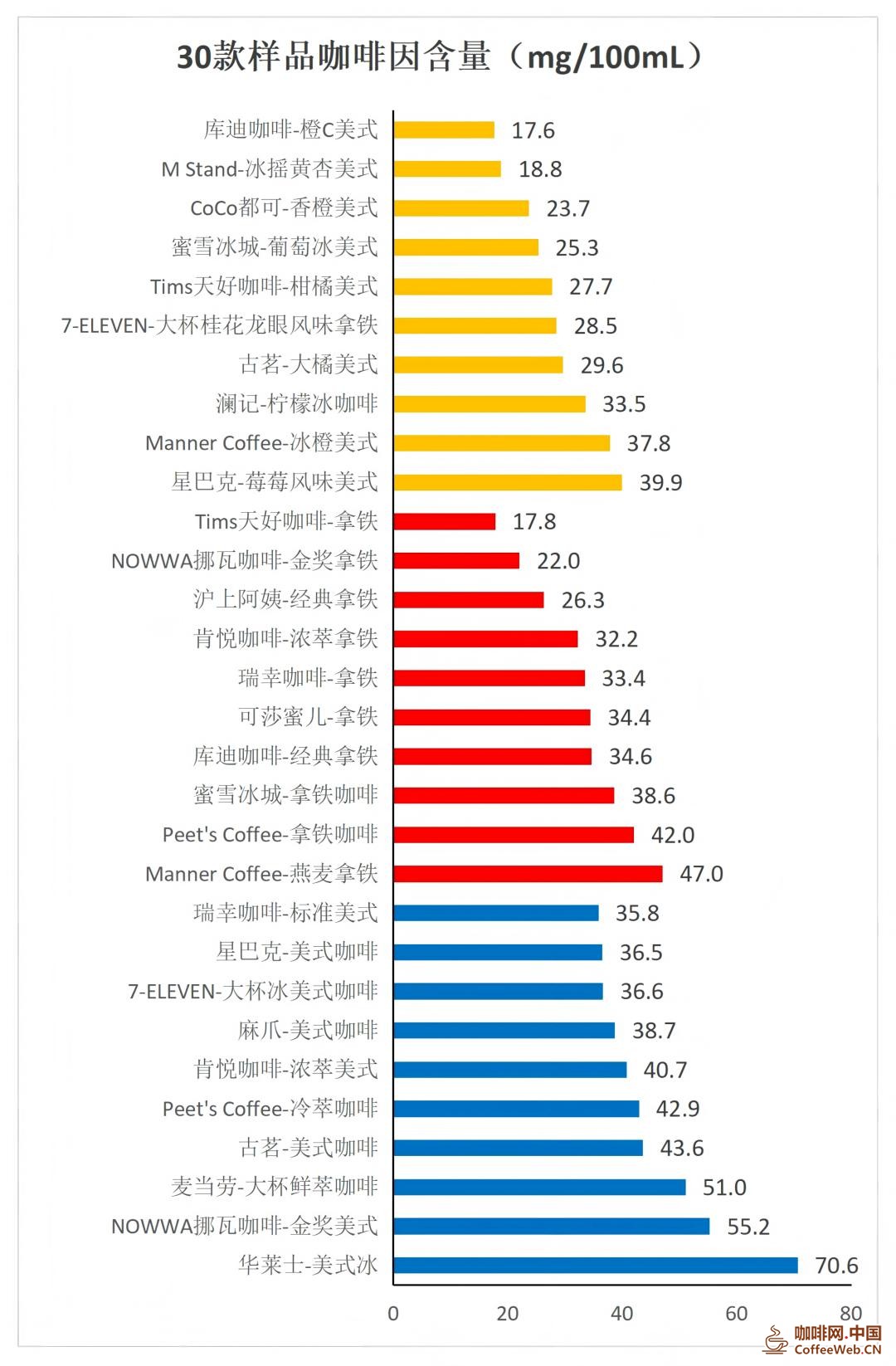
值得注意的是,由于目前还没有现制咖啡对应的专项标准,因此,此次比较试验参考GB/T30767—2014《咖啡类饮料》对咖啡饮料和浓咖啡饮料的咖啡因含量≥200mg/kg的规定,有3款样品低于该参考值。
中国疾病预防控制中心营养与健康所等5家机构联合发布的《咖啡与健康的相关科学共识(2024)》建议,健康成年人每日咖啡因摄入量不超过400mg。对照本次比较试验结果,以350mL常规标准杯或450mL常规大杯折算,30款样品的单杯咖啡因含量均在该限值范围内。
警惕果咖隐藏糖分
比较试验结果显示,10款黑咖样品糖含量(果糖、葡萄糖、蔗糖、麦芽糖、乳糖5种糖含量之和)均未检出;10款奶咖样品糖含量在1.6g(克)/100mL至4.0g/100mL之间,除燕麦拿铁外,其糖分主要来源于牛奶中的乳糖;10款果咖样品中,除1款星巴克莓莓风味美式咖啡糖含量未检出外,其余9款样品糖含量在3.2g/100mL至7.7g/100mL之间。
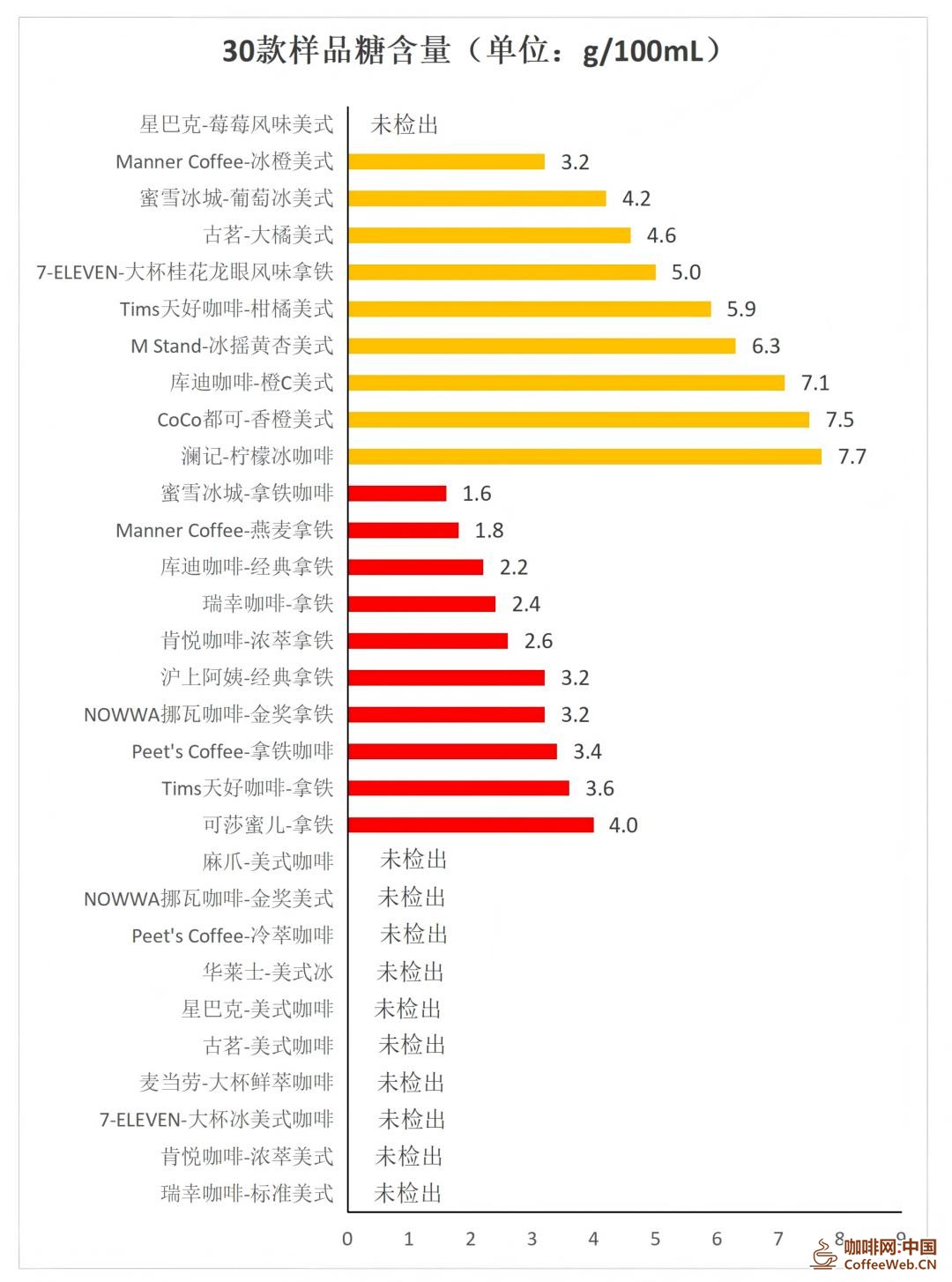
《中国居民膳食指南(2022)》建议成年人每日添加糖摄入量不超过50g,最好控制在25g以下。根据比较试验结果,若以350mL常规标准杯折算,单杯果咖样品平均糖含量为18g,有2款样品超过25g,最高达27g;若以450mL常规大杯折算,单杯果咖样品平均糖含量为23.2g,有5款样品超过25g,最高达34.7g。
除1款以拿铁为基底的果咖样品外,其余19款黑咖和果咖样品的脂肪含量均≤0.1g/100mL,低于预包装食品“无或不含脂肪”的界限值(≤0.5g/100mL);奶咖样品因牛奶、燕麦奶的加入,脂肪平均含量达2.26g/100mL。
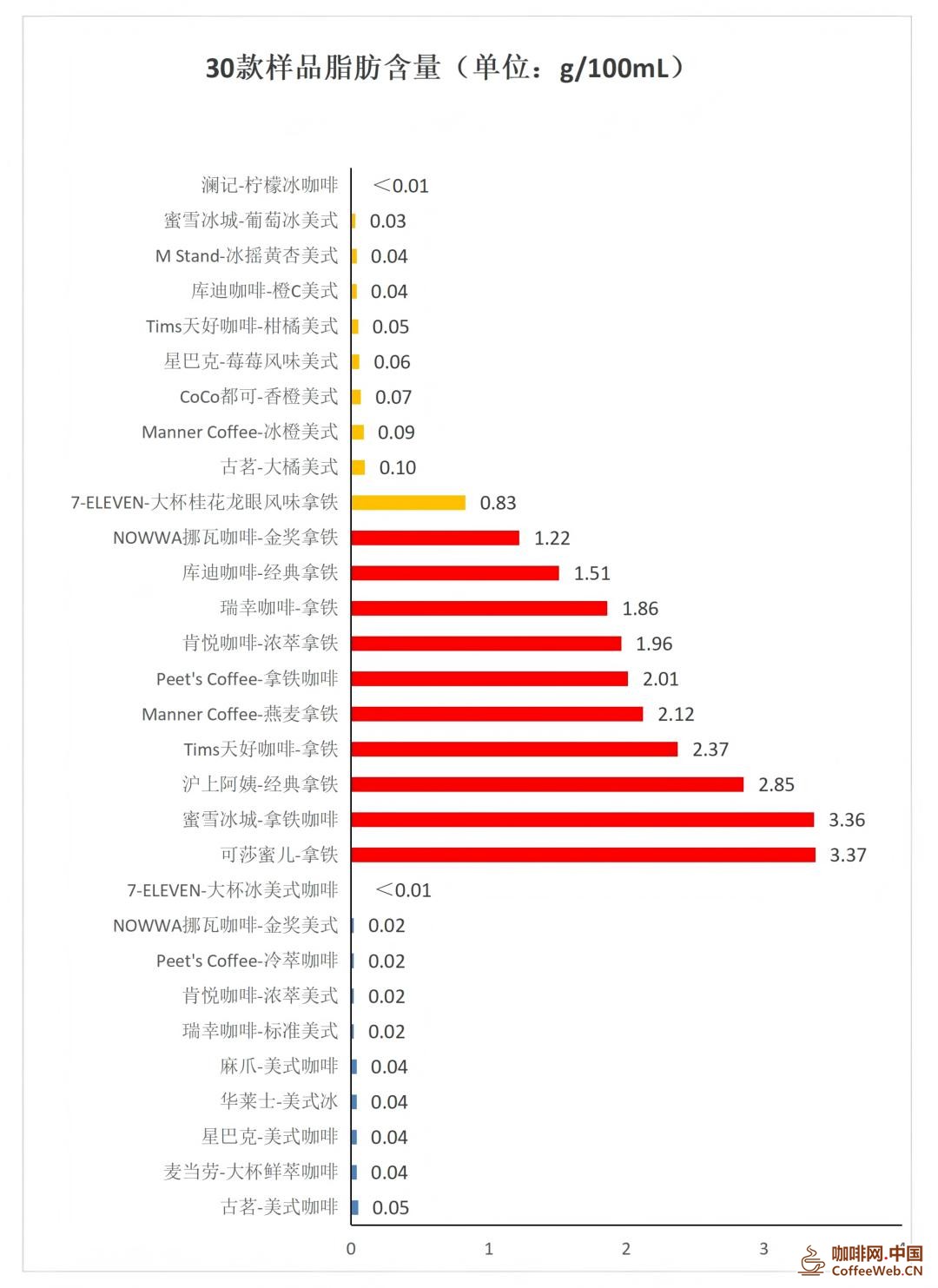
在能量方面,3类咖啡样品整体表现为黑咖<果咖<奶咖。10款黑咖样品的能量范围为14kJ(千焦)/ 100mL至30kJ/100mL,10款果咖样品的能量范围为24kJ/100mL至206kJ/100mL,10款奶咖样品的能量范围为162kJ/100mL至305kJ/ 100mL。
以每杯350mL至450mL计算,单杯黑咖样品的平均能量值约为18kcal(千卡)至23kcal,单杯果咖样品约为126kcal至162kcal,单杯奶咖样品约为183kcal至235kcal。
recently
Zhejiang Consumer Rights Protection Committee
Entrusting Zhejiang Fair Inspection Center Co., Ltd
A comparative experiment was conducted on freshly brewed coffee available on the market
It turns out that
The health indicators of different types of coffee vary greatly
Choosing the right category is more important than choosing the right brand
Sample details
This comparative experiment collected 30 samples from 23 physical stores in Hangzhou, covering the three mainstream categories of black coffee, milk coffee, and fruit coffee, involving 19 brands such as Starbucks, Luckin Coffee, Kudi, and Guming. To ensure objectivity, all samples are uniformly selected with cold drink specifications, and the option of "no additional sugar" or the lowest sugar content is given priority within the optional range.
Regarding caffeine
Black coffee is the most refreshing
Fruit and milk coffee have a mild taste
The comparative test results show that the caffeine content of the 30 samples ranges from 171mg/kg to 702mg/kg, which is equivalent to a volume concentration of 17.6mg/100mL to 70.6mg/100mL. The overall distribution shows a step distribution of black coffee>milk coffee>fruit coffee. Black coffee has the highest concentration and is the first choice for refreshing; Milk coffee and fruit coffee have a milder taste due to the addition of ingredients such as milk, fruit, and fruit syrup.
Image keywords
It is worth noting that there is currently no specific standard for freshly brewed coffee. Therefore, this comparative experiment refers to the GB/T30767-2014 "Coffee Beverages" standard for coffee and espresso beverages with a caffeine content of ≥ 200mg/kg. Three samples are below this reference value.
The "Scientific Consensus on Coffee and Health (2024)" jointly released by the Institute of Nutrition and Health of the Chinese Center for Disease Control and Prevention and five other institutions suggests that the daily caffeine intake of healthy adults should not exceed 400mg. Compared with the results of this comparative experiment, the caffeine content in a single cup of 30 samples is within this limit range, calculated based on 350mL standard cup or 450mL large cup.
In terms of sugar content
No additional sugar added ≠ no sugar
Beware of hidden sugar in fruit and coffee
The comparative test results showed that the sugar content (the sum of fructose, glucose, sucrose, maltose, and lactose) of the 10 black coffee samples was not detected; The sugar content of 10 milk coffee samples ranges from 1.6g/100mL to 4.0g/100mL. Except for oat latte, the sugar mainly comes from lactose in milk; Among the 10 fruit coffee samples, except for one Starbucks raspberry flavored Americano coffee with undetectable sugar content, the sugar content of the other 9 samples ranged from 3.2g/100mL to 7.7g/100mL.
Image keywords
The Chinese Dietary Guidelines for Residents (2022) recommend that adults should not exceed a daily intake of 50g of added sugar, preferably controlled below 25g. According to the comparative test results, if converted to a 350mL standard cup, the average sugar content of a single cup of fruit coffee sample is 18g, with 2 samples exceeding 25g and the highest reaching 27g; if converted to a 450mL standard cup, the average sugar content of a single cup of fruit coffee sample is 23.2g, with 5 samples exceeding 25g and the highest reaching 34.7g.
In terms of fat energy
Black coffee<Fruit coffee<Milk coffee
Except for one latte based fruit coffee sample, the fat content of the other 19 black coffee and fruit coffee samples is ≤ 0.1g/100mL, which is lower than the threshold value of "no or no fat" for pre packaged foods (≤ 0.5g/100mL); The average fat content of the milk coffee sample reached 2.26g/100mL due to the addition of milk and oat milk.
Image keywords
In terms of energy, the overall performance of the three types of coffee samples is black coffee<fruit coffee<milk coffee. The energy range of 10 black coffee samples is 14kJ/100mL to 30kJ/100mL, the energy range of 10 fruit coffee samples is 24kJ/100mL to 206kJ/100mL, and the energy range of 10 milk coffee samples is 162kJ/100mL to 305kJ/100mL.
Calculated at 350mL to 450mL per cup, the average energy value of a single cup of black coffee sample is approximately 18kcal to 23kcal, a single cup of fruit coffee sample is approximately 126kcal to 162kcal, and a single cup of milk coffee sample is approximately 183kcal to 235kcal.
Drinking Tips
Control the total intake. It is recommended to control the daily caffeine intake of healthy adults within 400mg, and it is more safe to drink no more than 2 cups of coffee per day.
Be wary of high sugar in fruit and coffee. The content of fruit coffee sugar is relatively high and should not be consumed in excess. It is recommended to choose products that do not add extra sugar. Especially for people who are sensitive to blood sugar and need to control their weight, it is recommended to prioritize choosing sugar free black coffee.
Grasp the drinking time. Caffeine has a certain central nervous system excitatory effect, and its impact on sleep varies greatly among individuals. For people who are sensitive to caffeine, it is recommended to avoid consuming coffee after lunch.
Special populations should drink with caution. Some special groups, such as children, adolescents, pregnant and lactating women, are not recommended to drink coffee.