云南普洱:一颗咖啡果的“加法”Yunnan Pu'er: The 'Addition' of a Coffee Fruit
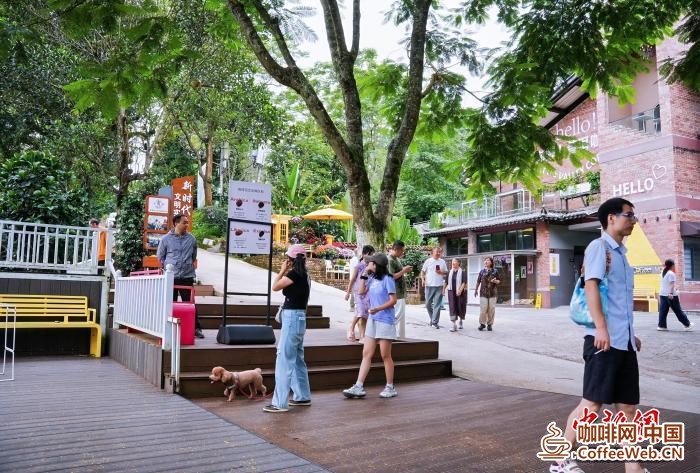
图为游客在位于云南省普洱市的小凹子咖啡庄园游览。杨开林 摄
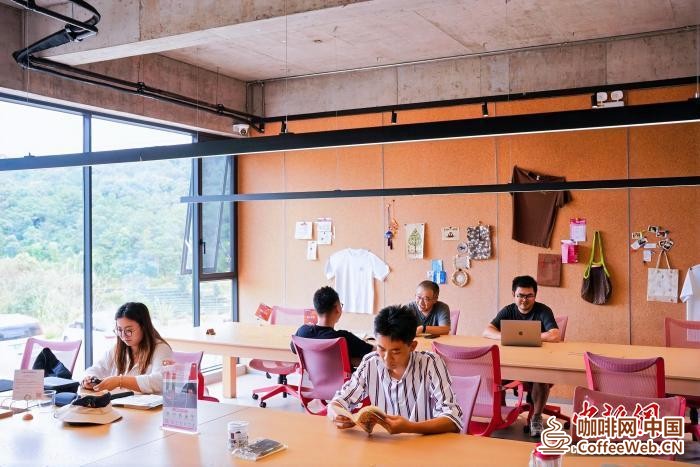
图为游客在位于云南省普洱市的“土星计划”数字游民社区内休闲交流。杨开林 摄
Pu'er, Yunnan: The "Addition" of a Coffee Fruit
Author Lu Xicheng
Pu'er City in Yunnan Province, renowned for its Pu'er tea, is now thriving and attracting customers due to its coffee industry.
At present, the coffee planting area in the city is 734000 mu, with a coffee output of 84000 tons and a comprehensive output value of 10.746 billion yuan. 64 tea and coffee plantations and more than 300 new-style tea and coffee spaces have been built and operated.
Recently, in Nanping Town, Simao District, Pu'er City, Xiao'aozi Coffee Plantation is covered in greenery, and tourists follow the guide to learn coffee knowledge and taste hand brewed coffee. During holidays, an average of three to four hundred people are received every day, and there are three lectures per day, "said Liao Hongwen, the manager of the estate.
The picture shows tourists visiting the Xiao'aozi Coffee Plantation located in Pu'er City, Yunnan Province. Photo by Yang Kailin
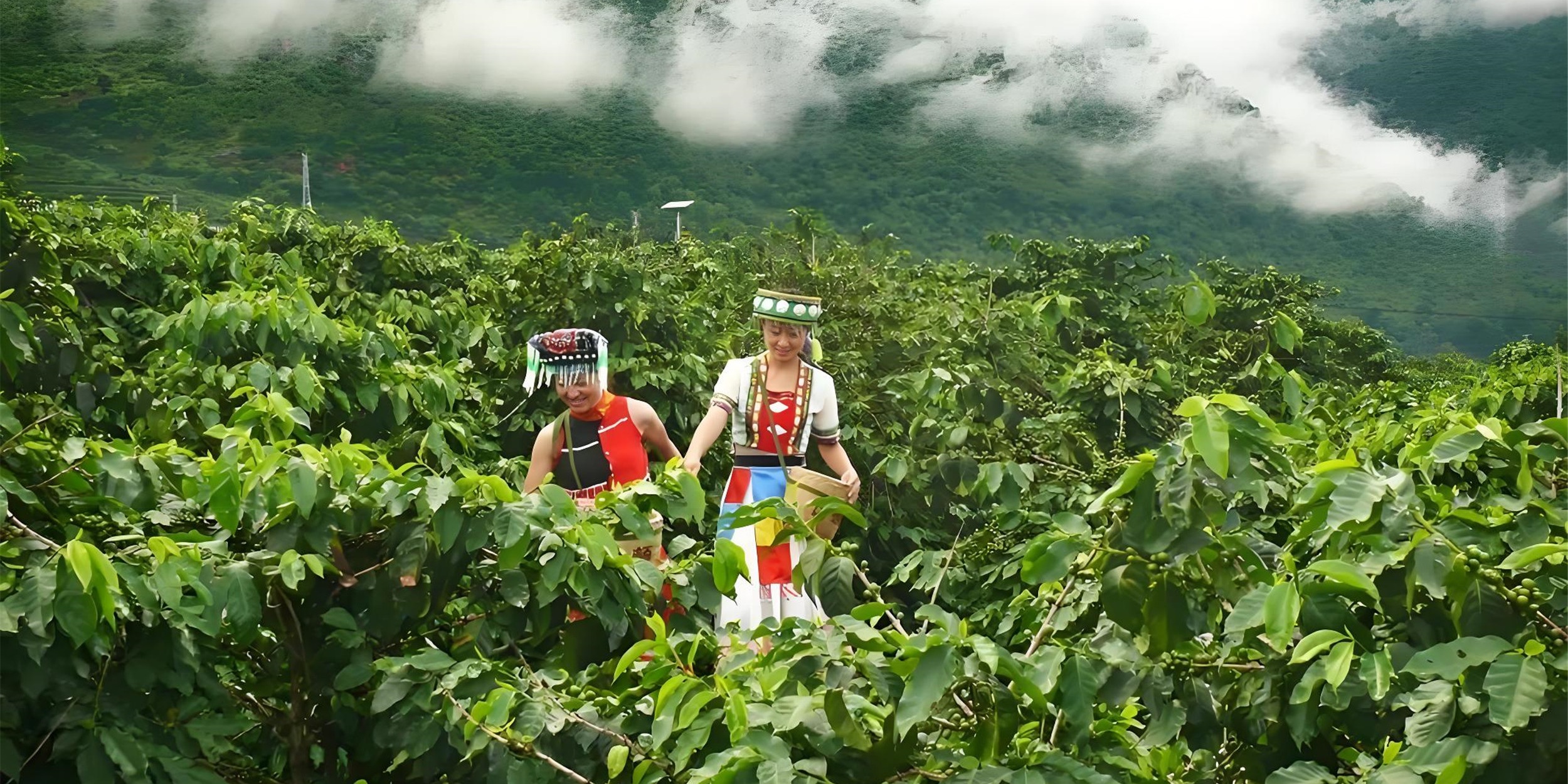
This used to be a barren slope. In 1997, Liao Hongwen's father, Liao Xiugui, who studied tropical crop cultivation, contracted land here to grow coffee. He had previously discovered during the promotion of planting techniques that some coffee plantations had completely cleared the original vegetation in order to expand the planting area, and the growth of coffee seedlings required shade.
In the following years, Liao Xiugui restored vegetation, replanted shade trees, and gradually developed an ecological coffee plantation on about 300 acres of mountainous land through artificial insect catching and biodiversity control.
Coffee grown well may not necessarily sell well. Previously, the estate mainly sold coffee raw materials, and prices were greatly affected by the international futures market, "said Liao Hongwen.
In 2018, the estate began searching for a new path, starting with the local weekend economy and attempting "coffee+cultural tourism". With the gradual expansion of the Chinese coffee market and the rise of local cultural tourism, the number of visitors to the estate has gradually increased, and coffee tasting, designated lectures, camping, study tours, and accommodation have also been added, and efforts have been made to develop coffee peel beverages.
The way the estate is taken care of has also changed accordingly. In recent years, the meteorological department of Pu'er City and China Mobile Pu'er Branch have successively established coffee meteorological service stations here, equipped with field sensors, video surveillance, intelligent guest rooms and other facilities.
Field sensors collect soil moisture, acidity, and other indicators, and cooperate with artificial intelligence to analyze, identify, and warn of pests and diseases; The passenger flow and room system are used to assess the flow of tourists, arrange explanations, and receive guests.
"The past is based on experience, but now the data is the final say." Liao Hongwen said that the construction of digital facilities not only makes the field management more accurate, but also makes tourists more visible and perceptible to the process of coffee growth, ecological management and protection.
Walking into the residents' group of Laozhuqing in Simao District, Pu'er City, amidst the mountains, waters, and countryside, coffee is adding a new flavor to a group of new villagers.
Wang Xia, the secretary of the Party branch of the Laozhaoqing residents' group and the initiator of the cultural and tourism cooperative, introduced that Laozhaoqing used to mainly rely on traditional agriculture such as tea planting. Many young and middle-aged people went out to work, and many houses and courtyards in the village were idle for a long time.
In recent years, with the improvement of living environment and infrastructure such as roads, water conservancy, and networks, returning young people and foreign tourism entrepreneurs have come here to rent vacant courtyards, giving rise to a group of characteristic "village cafes".
Guo Zijin, a young man who returned to his hometown, opened Ziyuan Rice Field Coffee, which moved tables and chairs into the rice fields and integrated kiln baked dining, tea brewing, farming experience, and handcrafted learning into coffee consumption; Kou Jianwen, a travel entrepreneur who previously worked as a variety show director in Beijing, founded the "Saturn Plan" digital homeless community, which integrates coffee spaces, shared offices, and residential life, allowing rural courtyards to not only retain guests but also carry work and entrepreneurship.
The picture shows tourists relaxing and communicating in the "Saturn Plan" digital nomad community located in Pu'er City, Yunnan Province. Photo by Yang Kailin
At present, Laozhuqing has become a provincial-level entrepreneurial village that receives over 100000 visitors annually.
And a larger 'addition' is written in the city's planning.
Yang Zhongxing, Deputy Mayor of Pu'er City, stated at a previous press conference that during the "15th Five Year Plan" period, efforts will continue to be made in coffee cultivation, processing, and market: promoting high-quality varieties, increasing the rate of high-quality raw beans, developing refined processed products such as concentrated liquids, freeze-drying, and cold extraction, and expanding consumption scenarios through coffee plantations, theme blocks, events, festivals, etc., to promote the continuous extension of Pu'er coffee from "seeds to cups". By 2026, the comprehensive output value of the city's coffee industry is expected to reach around 12.5 billion yuan. (End)