一杯好咖啡是怎样“炼”成的 记者探访岛城优质咖啡企业 十余道工序解锁醇香奥秘How is a good cup of coffee "refined"? Reporters visit high-quality coffee companies in Qingdao to unlock the mystery of aroma through more than ten processes
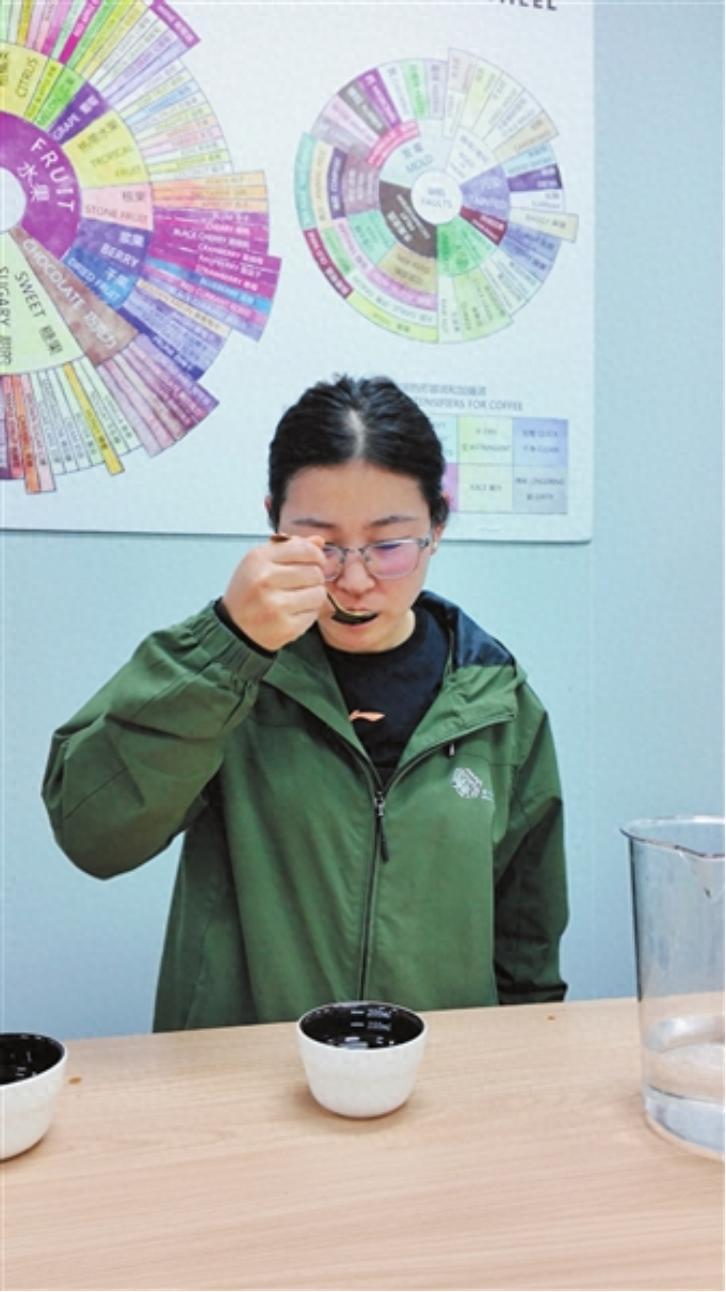
陈淑敏在品鉴咖啡。

海东东咖啡节吸引大量游客。资料图片
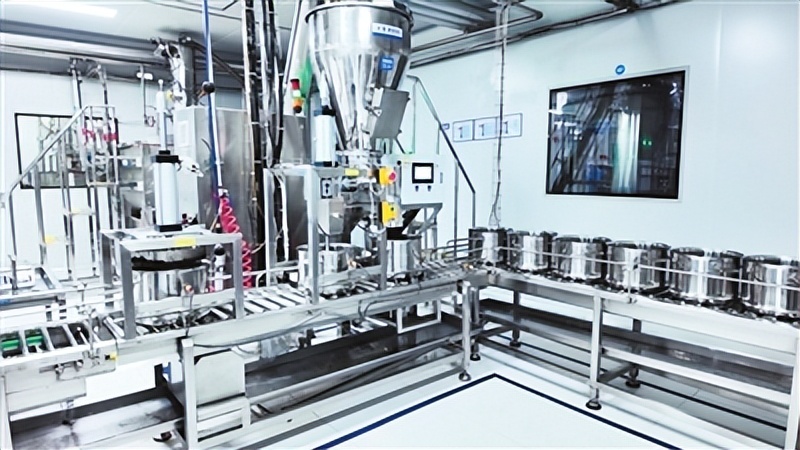
魔饮咖啡城阳工厂的萃取车间。
在青岛市城阳区有一座“年轻”的工厂,2024年才正式投产,却在短短两年内成为规模以上企业,还入选了2025年度青岛市雏鹰企业名单。公司生产的产品远销美国、韩国、沙特等国家,与多家咖啡品牌、商超连锁、电商平台创建合作。它就是魔饮咖啡(青岛)有限公司(以下简称魔饮咖啡)的城阳工厂。近日,记者穿上防尘服,走进这座工厂,跟随生产动线,揭秘一杯好咖啡是怎么从咖啡豆变成消费者手中饮品的。
十余道工序解锁风味
在十万级洁净车间内,机械有序运转,咖啡香气萦绕。在厂长李明的带领下,记者观摩了咖啡生产全流程,从咖啡豆原料到成品出货,历经研磨、萃取、调配、酶解、灭酶、离心、灌装、巴氏杀菌、包装成品、出货等十余道工序。
“原料处理是咖啡品质的第一道关卡。”李明介绍,生产初期,工作人员要先对咖啡外包装材料进行杀菌处理,随后将烘焙完成的咖啡熟豆倒入料槽,依托真空发生器,将咖啡豆自动吸附至研磨机终端完成精细化研磨。自动化物料传送设备全程封闭作业,能有效隔绝外界污染,同时精准控制咖啡粉研磨粗细度,为后续萃取打下良好基础。
研磨完成后,咖啡粉被送入专属萃取车间,这也是决定咖啡原液口感的关键环节。李明介绍,车间内萃取咖啡设备的上方配备电磁阀控制的喷淋水龙头,采用间断式喷洒萃取工艺萃取出咖啡液。“这种工艺模拟人工手冲咖啡的原理,缓慢均匀萃取咖啡精华,能最大程度提炼咖啡的风味。”李明说,萃取后的咖啡原液统一汇集至原液罐,通过密闭管道输送至调配车间。
进入调配环节,技术人员会结合市场需求与客户定制要求,精准配比咖啡原液,调整饮品香气与甜度。天然咖啡豆中含有微量蛋白质、咖啡果胶等物质,这类成分容易破坏咖啡液的口感,导致风味杂乱。为此,工厂采用生物酶解技术,先分解杂质成分,再激活改良风味的活性物质,完成酶解后进行灭酶处理。“这套工艺能够大幅提升咖啡液的稳定性,优化口感层次,让咖啡的香气更醇厚持久。”李明说。
酶解灭酶完成后,咖啡液中会产生少量固形物,工作人员利用离心机快速分离杂质,得到清澈优质的咖啡原液。后续还要依次完成自动化灌装、巴氏杀菌、密封包装等程序,全程低温杀菌,在保留口感的同时延长饮品保质期。经过多重质检筛查,合格成品统一入库,最终批量出货,送往消费市场。
品鉴师为咖啡醇香把关
标准化的工业生产催生了一个新职业——咖啡品鉴师。他们的工作可不仅仅是品尝咖啡的好坏以评定等级,很多创新口味的咖啡都是他们一手打造的。闻香、注水、破渣、啜吸……在魔饮咖啡城阳工厂,记者还见到了咖啡品鉴师陈淑敏。
陈淑敏站在品鉴台前,面前整齐摆放着不同批次、不同口味的咖啡原液。她采用行业专业的啜饮品鉴法,小口吸入咖啡液,让液体均匀充满口腔,充分感受咖啡的酸度、苦度、醇厚感,同时细致辨别香气层次,随后缓慢吞咽,记录每一款咖啡的品鉴数据。“啜饮能让咖啡液与空气充分融合,最大化释放风味,精准捕捉细微的口感差异。”陈淑敏向记者讲解品鉴技巧。
作为企业专职品鉴师,陈淑敏每日需完成数十次咖啡样品检测,涵盖原料豆、萃取原液、成品饮品等不同阶段样品。她的工作内容包含风味测评、瑕疵筛查、口感调试、新品研发品鉴等,既要排查酸涩、杂味、异味等品质问题,也要配合研发团队优化风味配比,平衡咖啡甜度、苦度与香气。除此之外,她还会定期比对市场同类产品,优化本企业咖啡口感,贴合大众饮用口味。
记者了解到,和普通的咖啡师相比,咖啡品鉴师的职业门槛要高出许多。一名合格的咖啡品鉴师除了要有硬性的资格认证和工作经验,还要有涉及感官能力、专业知识等专业素养。仅资格认证这一项,就要通过生豆分级、香气辨识、味觉测试等20余项严苛测试。通常来说,从一名咖啡师升级到一名咖啡品鉴师,至少需要3年以上的行业从业经验。目前,我国注册咖啡品鉴师约3000名。
打造本土优质咖啡企业
魔饮咖啡实控人李阳日介绍,魔饮咖啡是一家专注精品速溶咖啡工业化解决方案的供应链企业,为咖啡品牌、商超连锁、电商平台等提供包括咖啡烘焙、研磨、萃取、冻干等定制化供应链支持。
“公司拥有15名Q-Grader认证品鉴师和30余名专业研发人员,围绕萃取工艺、冻干咖啡块等申请了65项专利,其中城阳工厂申请专利19项。”李阳日介绍,公司在青岛城阳、即墨和昆山、南京、厦门建起五大工厂生产网络,可实现熟豆年产量10000吨、冷萃取液年产量8400吨、热萃取液年产量1800吨、冻干咖啡年产量2亿颗。其中城阳工厂可实现年产能小异形袋1.2亿袋、小条包/方杯6000万条、自立袋1亿袋。
记者了解到,魔饮咖啡的客户群体涵盖国内外知名咖啡品牌、新兴精品咖啡店、主流电商平台、大型商超、知名连锁酒店等。产品在HOST2025米兰国际酒店用品展、2025年韩国首尔咖啡与烘焙展览会等国际展会亮相,出口至美国、韩国、沙特等国家,并在美国、马来西亚、新加坡、中国香港等国家和地区申请了注册商标保护。
2025年度,魔饮咖啡研发费用达170万元,占营收比例的5.69%。李阳日表示,未来,公司将持续加大研发投入,通过更高效、更坚韧、更深厚的供应链能力,实现高质平价产品的高效供应。
/ 新闻延伸 /
咖啡节燃起城市新烟火
5月14日,一场在小麦岛草坪上举办的咖啡节热闹非凡,再次印证了岛城消费者对于咖啡的热情。作为“北方咖啡第二城”的青岛,正用一杯杯小小的咖啡撬动城市消费版图。
海东东咖啡节、尚小咖咖啡季、大草坪咖啡节、粉嘟噜咖啡节……近年来,青岛的咖啡节从零星点缀走向遍地开花,一个个带有鲜明青岛印记的IP轮番登场。以海东东咖啡节为例,2021年,首届青岛海东东咖啡节一亮相就迅速点燃了人们的消费热情,活动一度因为人数过载临时限流而叫停。
去年在城阳区举办的尚小咖咖啡季,3天吸引了5万余人打卡,其中韩国游客约2万人,带动园区内店铺销售额超300万元,60个展位销售额达200万元。
数字背后,是城市消费力的集中释放。一杯咖啡的价值远不止其标价本身。有数据显示,咖啡节上每卖出一杯咖啡,消费者往往会在周边的餐饮、停车、文创乃至住宿等环节投入数倍乃至十数倍的花费。如海东东咖啡节带动了崂山区酒店预订量增长30%,周边露营装备租赁业务量翻倍。
咖啡节同样为各地商家提供了“破圈”的舞台。岛城一家本土咖啡品牌主理人感叹:“以前在老城区开独立咖啡馆,一个月最多接待2000人,这次咖啡节3天就接待了5000多位客人,还接到了3个企业团建的订单。”来自外地的商家同样收获满满。北京1/4咖啡主理人张艳连续5年来青岛参加咖啡节,她告诉记者,青岛的顾客很懂咖啡,不仅年轻人喜欢喝,很多中老年人也会购买挂耳咖啡和咖啡豆,每次参展都能收获大量回头客。
更值得深思的是,青岛并未止步于节会的热闹,而是将一杯咖啡转化为串联多元消费场景的纽带。针对不同的消费群体,青岛将咖啡业态导入婚恋消费、情绪消费和夜间消费等场景,让一杯咖啡持续“烘”出城市烟火气。
以在浮山森林公园大草坪举办的节庆活动为例,现场云集了防空洞咖啡、本土精酿等“咖啡+”品类,市民游客在天然的休憩空间里品饮,流连于市集、演出与交友互动区,在放松休闲的同时,大大提高了日后的参节意愿。
与此同时,青岛将咖啡的消费场景从城市商圈延伸至山海之间,率先提出“村咖”品牌,将传统茶产业与新兴村咖相结合,打造出“土洋结合”的消费新场景。目前仅崂山区就拥有170余家乡村咖啡馆,北宅街道依托山林资源打造“庭院咖啡群落”,王哥庄街道借海景打造“观海咖啡带”,沙子口街道融合渔港文化形成特色点位……
乡村的咖啡店飘着咖啡香气,滨海地带的咖啡节挤满人群,商业园区摆起春日咖啡雅集……一杯咖啡,就这样不声不响地串起了青岛的商业生态、文旅场景与社区日常,它撬动的将远不止百倍消费,还有整座城市的活力与未来。
本版撰稿摄影(除署名外)
青岛早报/观海新闻记者 于倢
Chen Shumin is tasting coffee.
The Haidongdong Coffee Festival attracts a large number of tourists. reference image
The extraction workshop of Moyin Coffee Chengyang Factory.
There is a "young" factory in Chengyang District, Qingdao City, which will not officially start production until 2024. However, it has become a large-scale enterprise in just two years and has been selected as one of the "Young Eagle Enterprises" in Qingdao City for 2025. The products produced by the company are exported to countries such as the United States, South Korea, and Saudi Arabia, and have established partnerships with multiple coffee brands, supermarket chains, and e-commerce platforms. It is the Chengyang factory of Moyin Coffee (Qingdao) Co., Ltd. (hereinafter referred to as Moyin Coffee). Recently, reporters put on dust-proof clothing and walked into this factory, following the production line to reveal how a good cup of coffee goes from coffee beans to a beverage in the hands of consumers.
More than ten processes unlock flavors
In the 100000 level clean workshop, the machinery operates in an orderly manner, and the aroma of coffee lingers. Under the leadership of factory director Li Ming, the reporter observed the entire process of coffee production, from coffee bean raw materials to finished product shipment, going through more than ten processes including grinding, extraction, blending, enzymatic hydrolysis, enzyme inactivation, centrifugation, filling, pasteurization, packaging of finished products, and shipment.
Raw material processing is the first level of coffee quality, "Li Ming explained. In the early stages of production, staff must first sterilize the coffee packaging materials, then pour the roasted coffee beans into the hopper. With the help of a vacuum generator, the coffee beans are automatically adsorbed to the grinding machine terminal for fine grinding. The fully enclosed operation of automated material conveying equipment can effectively isolate external pollution, while accurately controlling the fineness of coffee powder grinding, laying a good foundation for subsequent extraction.
After grinding, the coffee powder is sent to a dedicated extraction workshop, which is also a key step in determining the taste of the coffee concentrate. Li Ming introduced that there is a spray faucet controlled by an electromagnetic valve above the coffee extraction equipment in the workshop, which uses an intermittent spray extraction process to extract coffee liquid. "This process simulates the principle of manual coffee brewing, and slowly and evenly extracts the essence of coffee, so as to extract the flavor of coffee to the greatest extent." Li Ming said that the extracted coffee stock solution will be collected into the stock solution tank and transported to the blending workshop through closed pipes.
In the blending process, technicians will combine market demand and customer customization requirements to accurately mix coffee concentrate and adjust the aroma and sweetness of the beverage. Natural coffee beans contain trace amounts of protein, coffee pectin, and other substances, which can easily disrupt the taste of coffee and lead to a chaotic flavor. To this end, the factory adopts biological enzymatic hydrolysis technology, which first decomposes impurity components, then activates active substances that improve flavor, and completes enzymatic hydrolysis before performing enzyme inactivation treatment. This process can significantly improve the stability of coffee, optimize the taste hierarchy, and make the aroma of coffee more mellow and long-lasting, "said Li Ming.
After enzymatic hydrolysis is completed, a small amount of solids will be produced in the coffee liquid. The staff uses a centrifuge to quickly separate impurities and obtain clear and high-quality coffee concentrate. Subsequently, automated filling, pasteurization, sealed packaging and other procedures need to be completed in sequence, with low-temperature sterilization throughout the process to extend the shelf life of the beverage while preserving its taste. After multiple quality inspections and screenings, qualified finished products are uniformly stored and ultimately shipped in bulk to the consumer market.
The taster checks the richness and aroma of coffee
Standardized industrial production has given birth to a new profession - coffee taster. Their job is not just to taste the quality of coffee and grade it, they create many innovative flavors of coffee by themselves. Smelling the aroma, pouring water, breaking the residue, sipping... At the Moyin Coffee Chengyang factory, the reporter also met coffee taster Chen Shumin.
Chen Shumin stood in front of the tasting table, neatly arranged with different batches and flavors of coffee concentrate. She adopts the industry's professional sipping and tasting method, taking small sips of coffee to evenly fill her mouth, fully experiencing the acidity, bitterness, and richness of the coffee. At the same time, she carefully identifies the aroma levels and then slowly swallows, recording the tasting data of each coffee. Sipping can fully blend coffee liquid with air, maximize flavor release, and accurately capture subtle taste differences, "Chen Shumin explained to reporters about tasting techniques.
As a full-time taster for the enterprise, Chen Shumin needs to complete dozens of coffee sample tests every day, covering different stages of samples such as raw beans, extraction solutions, and finished beverages. Her job responsibilities include flavor evaluation, defect screening, taste adjustment, new product development and tasting. She not only needs to identify quality issues such as sourness, impurities, and odors, but also needs to cooperate with the R&D team to optimize flavor ratios, balance coffee sweetness, bitterness, and aroma. In addition, she will regularly compare similar products in the market, optimize the taste of our company's coffee, and cater to the public's drinking preferences.
The reporter learned that compared to ordinary baristas, the professional threshold for coffee tasters is much higher. A qualified coffee taster should not only have mandatory qualifications and work experience, but also possess professional qualities such as sensory ability and professional knowledge. For qualification certification alone, more than 20 rigorous tests such as raw bean grading, aroma recognition, and taste testing must be passed. Generally speaking, upgrading from a barista to a coffee taster requires at least 3 years of industry experience. At present, there are about 3000 registered coffee tasters in China.
Build a local high-quality coffee enterprise
Li Yangri, the actual controller of Moyin Coffee, introduced that Moyin Coffee is a supply chain enterprise specializing in industrial solutions for high-quality instant coffee. It provides customized supply chain support for coffee brands, supermarket chains, e-commerce platforms, etc., including coffee roasting, grinding, extraction, freeze-drying, etc.
The company has 15 Q-Grader certified tasters and over 30 professional R&D personnel. It has applied for 65 patents related to extraction processes, freeze-drying coffee cubes, etc., including 19 patents applied for by the Chengyang factory. ”Li Yangri introduced that the company has established five production networks in Qingdao Chengyang, Jimo, Kunshan, Nanjing, and Xiamen, which can achieve an annual output of 10000 tons of ripe beans, 8400 tons of cold extraction liquid, 1800 tons of hot extraction liquid, and 200 million pieces of freeze-dried coffee. The Chengyang factory can achieve an annual production capacity of 120 million small irregular bags, 60 million small strip bags/square cups, and 100 million self-supporting bags.
The reporter learned that the customer base of Moyin Coffee includes well-known coffee brands at home and abroad, emerging boutique coffee shops, mainstream e-commerce platforms, large supermarkets, well-known chain hotels, etc. The product was showcased at international exhibitions such as HOST2025 Milan International Hotel Supplies Exhibition and 2025 Seoul Coffee and Baking Exhibition in South Korea, and exported to countries such as the United States, South Korea, and Saudi Arabia. It has also applied for trademark protection in countries and regions such as the United States, Malaysia, Singapore, and Hong Kong, China.
In 2025, the research and development expenses of Moyin Coffee reached 1.7 million yuan, accounting for 5.69% of the revenue. Li Yangri stated that in the future, the company will continue to increase its research and development investment, and achieve efficient supply of high-quality and affordable products through more efficient, resilient, and profound supply chain capabilities.
/News Extension/
Coffee Festival ignites new fireworks in the city
On May 14th, a lively coffee festival was held on the lawn of Wheat Island, once again confirming the enthusiasm of island city consumers for coffee. As the "second coffee city in the north", Qingdao is using small cups of coffee to leverage the city's consumption map.
In recent years, Qingdao's coffee festivals have gone from sporadic embellishments to blooming everywhere, with IP featuring distinct Qingdao imprints appearing one after another. Taking the Haidongdong Coffee Festival as an example, in 2021, the first Qingdao Haidongdong Coffee Festival quickly ignited people's consumption enthusiasm upon its debut, and the event was temporarily suspended due to overcrowding and flow restrictions.
Last year, the Shangxiaoka Coffee Season held in Chengyang District attracted over 50000 visitors in three days, including about 20000 Korean tourists, driving sales of over 3 million yuan in the park's stores and 2 million yuan in sales from 60 booths.
Behind the numbers lies the concentrated release of urban consumption power. The value of a cup of coffee goes far beyond its price itself. Data shows that for every cup of coffee sold at a coffee festival, consumers often invest several times or even ten times more in surrounding areas such as dining, parking, cultural and creative industries, and even accommodation. The Haidongdong Coffee Festival has driven a 30% increase in hotel bookings in Laoshan District and doubled the rental business of camping equipment in the surrounding area.
The coffee festival also provides a stage for businesses from all over the world to break through barriers. The owner of a local coffee brand in Shimacheng exclaimed, "In the past, opening an independent coffee shop in the old city area could accommodate up to 2000 people per month. However, this coffee festival received more than 5000 customers in just three days and also received orders for three corporate team building projects." Merchants from other places also gained a lot. Zhang Yan, the manager of 1/4 coffee in Beijing, has been attending the coffee festival in Qingdao for five consecutive years. She told reporters that customers in Qingdao are very knowledgeable about coffee, not only young people like to drink it, but also many middle-aged and elderly people buy hanging ear coffee and coffee beans. Every time they participate in the exhibition, they can receive a large number of repeat customers.
More thought-provoking is that Qingdao has not stopped at the excitement of festivals, but has transformed a cup of coffee into a link connecting diverse consumption scenarios. Targeting different consumer groups, Qingdao has introduced the coffee industry into scenarios such as marriage and love consumption, emotional consumption, and nighttime consumption, allowing a cup of coffee to continuously "roast" the city's fireworks.
Taking the festival held on the large lawn of Fushan Forest Park as an example, the venue gathered "coffee+" categories such as air raid shelter coffee and local craft beer. Citizens and tourists enjoyed their drinks in the natural leisure space, lingered in the market, performance and social interaction area, and greatly increased their willingness to participate in the festival in the future while relaxing and relaxing.
At the same time, Qingdao has extended the consumption scene of coffee from urban commercial districts to between mountains and seas, taking the lead in proposing the "village coffee" brand, combining traditional tea industry with emerging village coffee, and creating a new consumption scene of "combining local and foreign". At present, there are more than 170 rural cafes in Laoshan District alone. Beizhai Street relies on forest resources to create a "courtyard coffee community", Wanggezhuang Street uses the sea view to create a "sea view coffee belt", and Shazikou Street integrates fishing port culture to form a characteristic location
Coffee shops in rural areas are filled with the aroma of coffee, coffee festivals in coastal areas are crowded with people, and spring coffee gatherings are set up in commercial parks... A cup of coffee quietly connects Qingdao's commercial ecology, cultural and tourism scenes, and community daily life. It will not only boost consumer spending a hundred times, but also the vitality and future of the entire city.
Photography for this edition (excluding authorship)
Qingdao Morning Post/Guanhai News reporter Yu Xie