咖啡最早传入中国内地,竟源自黄埔?揭秘一段“舌尖上”的味蕾史Coffee was first introduced to mainland China and actually originated from Huangpu? Unveiling a taste buds history on the tip of the tongue
2026广州咖啡季余温未散,黄埔长洲岛仍氤氲着咖啡醇香。
在黄埔区市民学院长洲咖襄分院,两位学者的研究揭开了中国咖啡史鲜为人知的一页:早在1812年,咖啡豆就已作为礼品出现在黄埔商人的往来信函中。
这不仅意味着,学术发现上,咖啡传入中国内地的时间提前了至少二十年,更重新定义了黄埔在世界饮料版图上的坐标——咖啡、美酒、冷饮在此完成了一场舌尖上的邂逅。近日,羊城晚报记者专访广州大学人文学院教授冷东,以及广州大学人文学院特聘副研究员沈晓鸣,揭开这段被海风吹来的风味记忆。
从黄埔登岸:一封1812年的信
“我总是喜欢用‘芝麻开门’来形容新发现带来的喜悦。”冷东教授的开场带着学者对于学术果实的欣喜与热忱。他所说的“新发现”,正是一封藏于剑桥大学图书馆的中文信函。
1812年,广州十三行行商潘长耀给英国商馆大班埃尔芬斯通写信。信中提到,他收到了对方赠送的八条咸鱼,重达三十六斤;作为回赠,他送给对方一包“玄”字号的咖啡豆,净重二十四斤。这封信,如今被确认为咖啡传入并流行中国内地的最早文献实证。
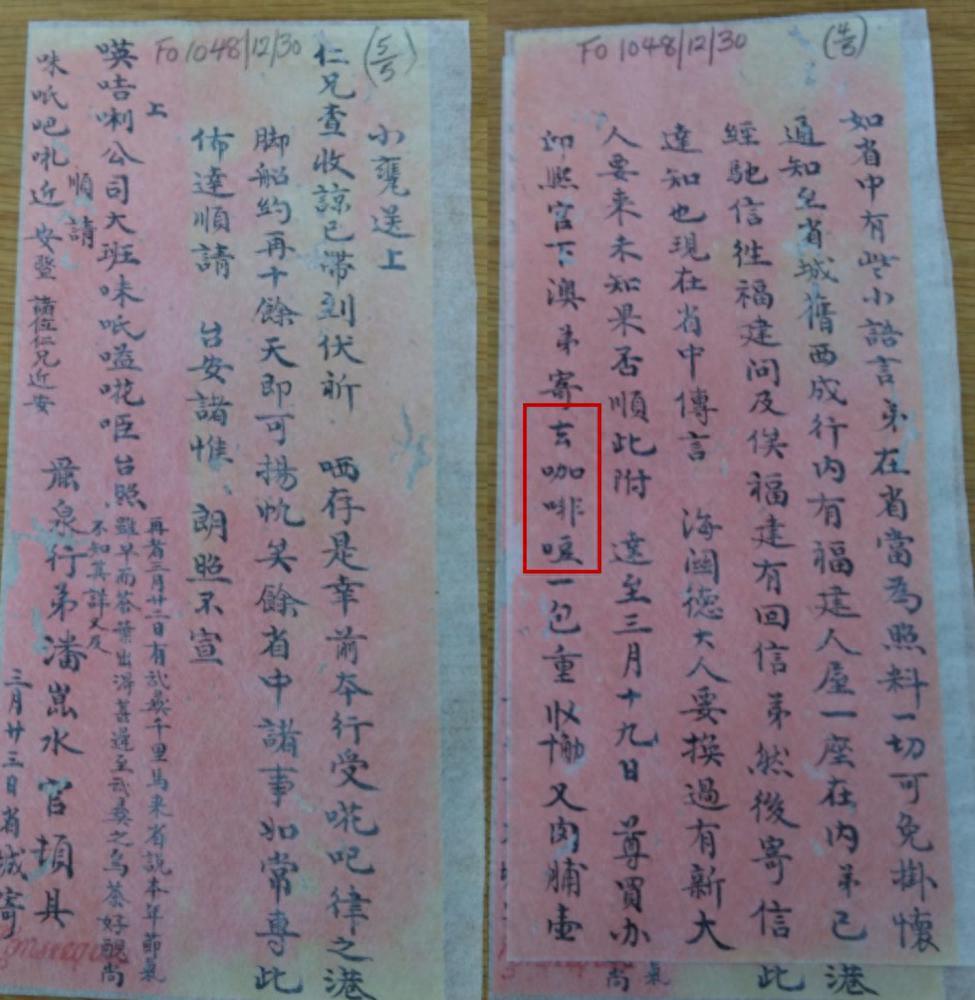
潘长耀给英国商馆大班埃尔芬斯通的书信
“一口通商”时期,朝廷明令,载有洋货的外国商船必须先下锚黄埔。外国商人在黄埔办理卸转货物、缴纳税款等手续,进口货物由专用船只接驳,运往十三行进行交易。由此可以推断,潘长耀所赠与的咖啡豆,必先经由彼时的黄埔登岸。

广州城、黄埔村、长洲岛、深井岛和小谷围岛示意图
沈晓鸣补充说,这次赠礼透露的信息远不止一个时间节点。“数量之大、品种之别,说明当时的黄埔已经具备了完整的咖啡加工、烹制工艺。”他指出的“玄”字,意味着咖啡豆已有等级或种类之分。“何况这并非初识,而是流行——合理的推论是,咖啡进入黄埔的时间还要更早。”

英国剑桥大学图书馆怡和洋行档案室
传统的学术观点认为,咖啡于道光年间经澳门传入,同治年间随上海开埠才渐渐普及。冷东教授坦言,这项研究的突破,得益于暨南大学澳门研究院金国平教授的前期成果。“我们在前人研究的基础上往前走,让‘从哪里来’的问题有了更确切的答案。”
有趣的是,这一历史瞬间的姿态颇为耐人寻味:咖啡豆是十三行商人赠予西方商人的礼品。“它一登场就不是陌生的舶来品,而是东方主人待客的心意。”冷东教授说,这种反向流转,恰恰折射出黄埔当年作为贸易枢纽的吞吐气象。

黄埔当年作为贸易枢纽的吞吐气象 图由AI辅助生成
不只咖啡的盛宴:冰水与美酒“缘聚”长洲
如果将1812年的咖啡豆视为一颗种籽,那么咸丰年间的一批货单,则展示了一片已然繁茂的味觉丛林。
沈晓鸣在剑桥大学图书馆翻检怡和洋行档案时,发现了四十五份“长洲怡生源记货单”。这些约1855至1856年间的收据,记录着一家黄埔商号与英国商人之间的真实交易。货单上商品琳琅:茶油、火腿、饼干之余,赫然列着啤酒、金酒与冰水。
“啤酒有五单,一共十九桶;金酒一单,五箱。”沈晓鸣如数家珍,仿佛正翻看着当日的账本。他说,啤酒因煮沸杀菌而成为当时英国人眼中比水更安全的饮品,是远航的必需品;金酒则因调制成本低,在英国穷人中广受欢迎。而在1835年广州出版的《广州纪事报》上,已经刊有淡色艾尔啤酒、葡萄牙马德拉酒乃至苏打水的广告。这些现象表明,鸦片战争之前,西方的食品饮料已自黄埔渗入广州的日常。

1835年《广州纪事报》刊登多种酒类广告
最令研究者兴奋的,是货单上两宗冰水记录:一宗六加仑,一宗九加仑,每加仑单价高于茶油。“广州属亚热带季风气候,终年无雪,却在1855年就有了冰水交易,这本身就令人遐想。”冷东教授说得投入,话头一转,引出一位“冰王”。

长洲怡生源记货单
这位“冰王”叫弗雷德里克·丢杜,波士顿商人,是十九世纪国际冰贸易的先驱。他从1806年起开采北美湖泊的天然冰块,贩运到加勒比海岛,1830年代打入印度市场,1845年将分公司开到了香港,冰库就设在今天的雪厂街。“冰块的路线很清晰:从北美湖泊采割,经改良的冷链系统运至香港,再辗转至黄埔。”沈晓鸣解释道。
“在既没有电力也没有制冷设备的年代,能让冰块跨越半个地球来到长洲岛,这本身就是海上丝绸之路繁荣兴盛的有力佐证。”冷东教授说,在当时条件有限的年代,“冰块”的存储,从来是贵族的特权。在黄埔,冰水却能走进村庄交易,意义完全不同。
让“广货”历史,酿造未来醇香
追溯这段往事的现实用意何在?两位学者的答案颇为一致:给今天的黄埔以“文化之根”与走向世界的底气。
沈晓鸣认为,黄埔握着一张独一无二的文化名片。“咖啡传入中国内地的首站,这个身份本身就是稀缺的文化资源。可以用它为产业赋能,也可以打造专属的文旅IP。”他列举三个方向:一是以历史底蕴确立文化辨识度;二是以开放包容的精神进行口味创新,创造具有岭南特色的“广式咖啡”;三是以广州咖啡季为基础,搭建国际化的交流与贸易平台,“让当年的‘洋货’,变成今日行销天下的‘广货’”。
冷东教授则表示,这些发现使“食在广州”有了更具体的内涵。“既然能在最基层的长洲岛实现如此丰富多元的饮食文化交流,足以看到这片土地的蓬勃生命力。”他提出“饮在黄埔”的说法,认为恰好与“食在广州”形成互补。“十三行时期,远航商船的目的地都写着‘驶向黄埔’,黄埔,就是当时世界认知中国的窗口。”

“黄埔云帆”万千气象 图由AI辅助生成
这话自有其力量。昔日的黄埔港,帆樯如云,茶叶、瓷器、丝绸由此出海,咖啡、美酒、冰块迎风上岸。2025年“羊城八景”评选中,“黄埔云帆”成为广州千年商贸文化中独树一帜的标杆。冷东教授用“美妙邂逅”来形容东西方饮料在黄埔的相遇——中国的茶叶、广东的凉茶向外传播,西方的咖啡、啤酒、冰水纷至沓来,在杯盏交错间,完成了一次“文明之约”。
若要从纷繁的史料中,推选一件最能代表黄埔饮品文化的实物与文献,答案会是什么?冷东教授沉吟片刻,将手指向史料影印件:“就是这四十五份货单,以及潘长耀的那几封信。”他说,这些流散海外的文献,记录的不仅是商品交易,更是黄埔作为中国与世界交汇枢纽的生动细节。他恳切呼吁,让这些珍贵史料以恰当的形式早日“回到娘家”。
窗外天色渐暗,咖襄分院里仍灯光明亮,学员们正练习手冲技法,水汽氤氲。一百多年前,咖啡豆曾在这里叩门;一百多年后,咖啡香依然在此飘散。

咖襄烘焙学院 李剑锋 摄

咖襄烘焙学院 李剑锋 摄
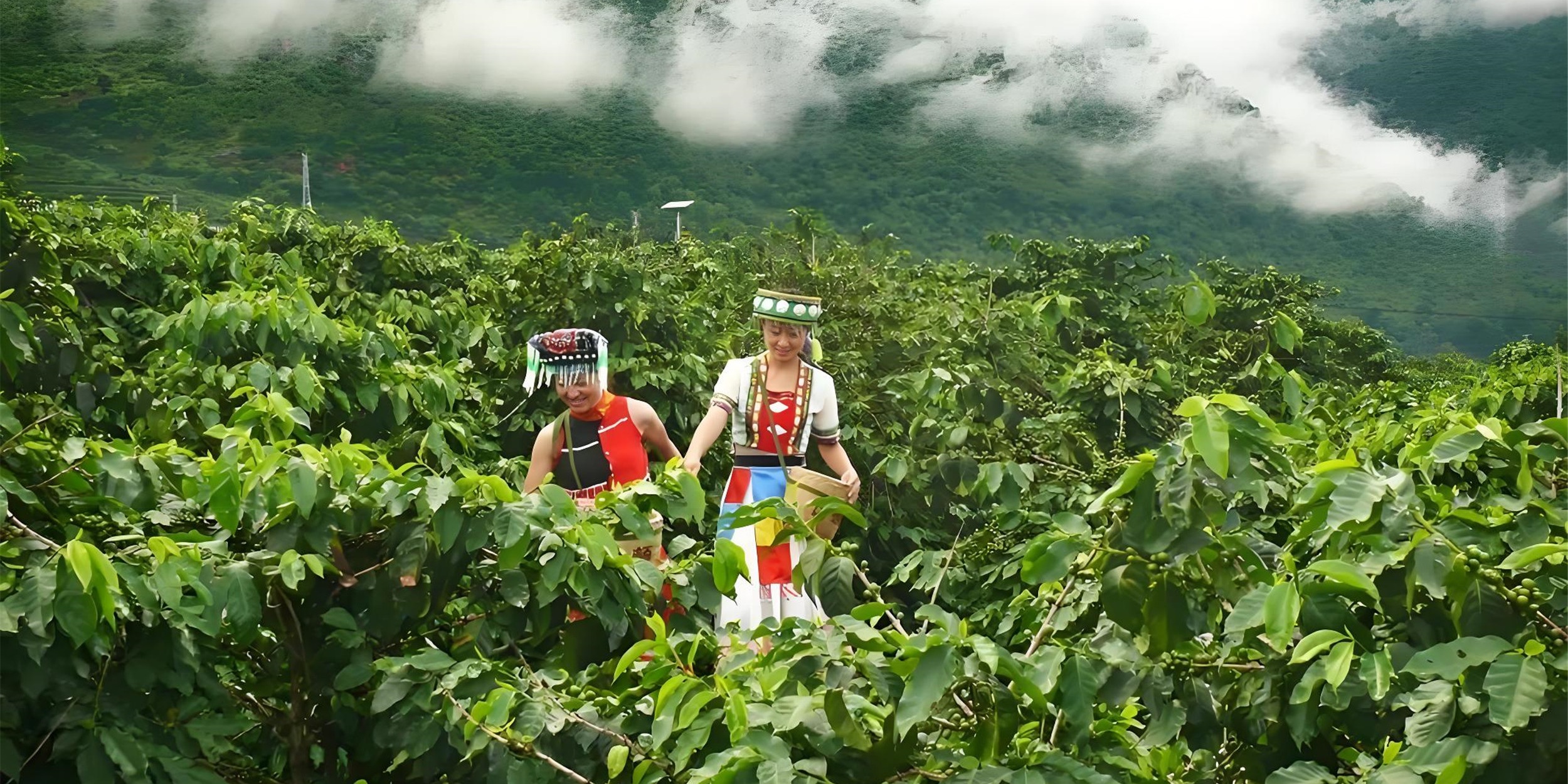
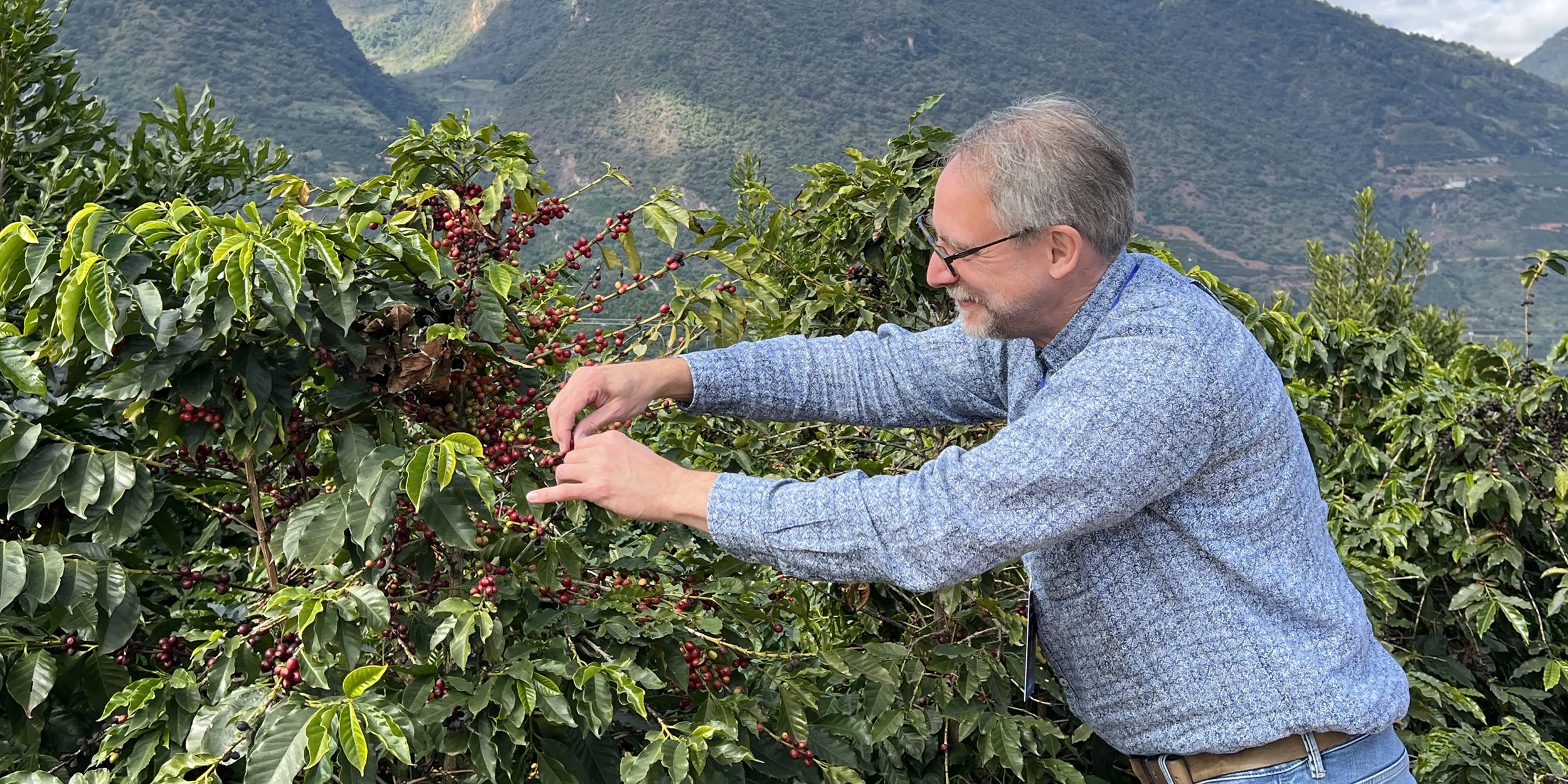
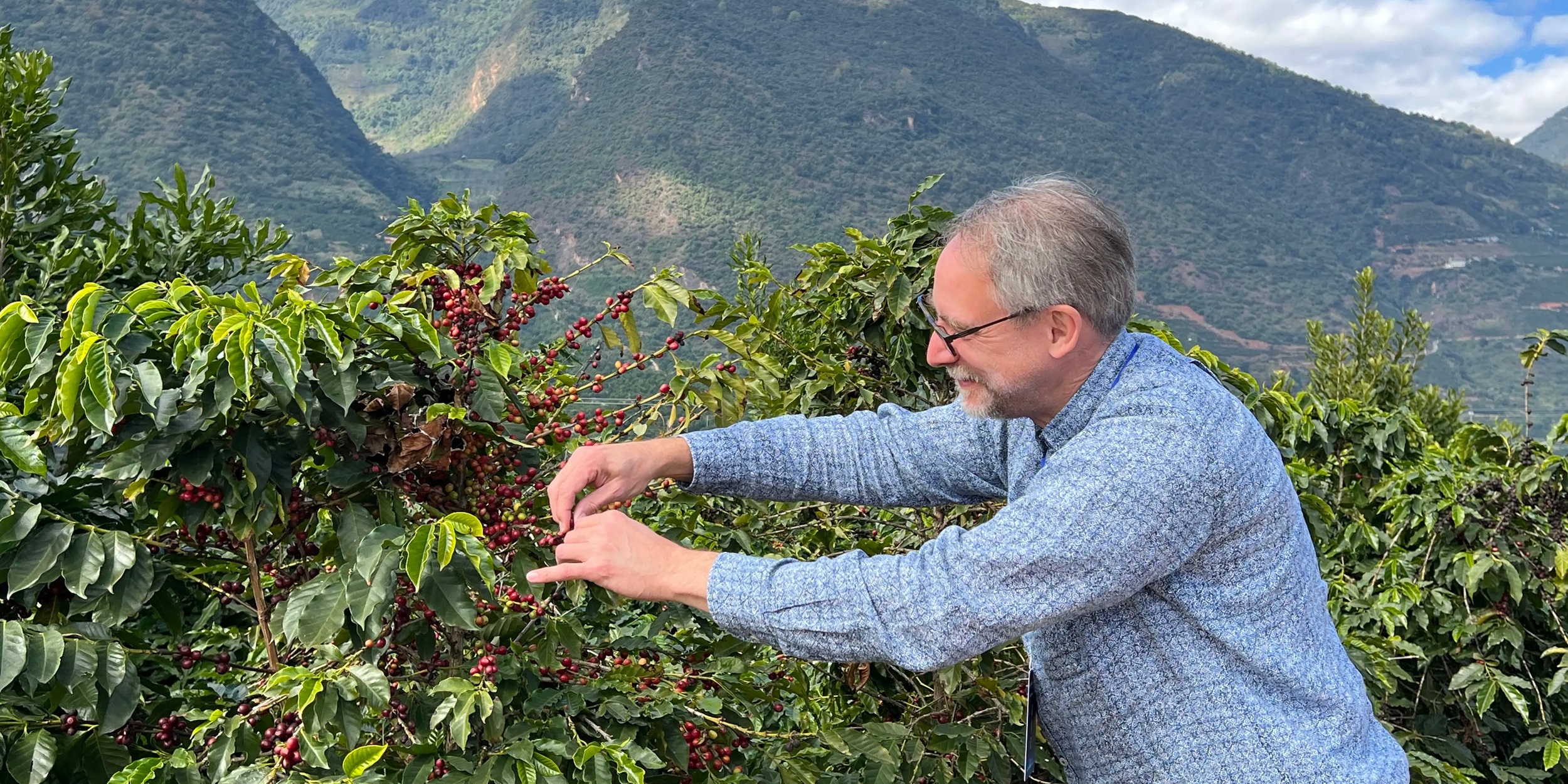
开放、吸收、创新,是“广货”骨子里的精神。放眼当下,黄埔咖啡产业链已蔚然成势:到货量、种植面积均居全市之首,45亩生态咖啡园引育近20个品种;本土品牌多点开花,智能装备远销全球110国;人才培育基地落户长洲岛,从种子到杯子的全链条在此贯通。
咖啡、美酒、冰水,这些曾从万里之外舶来的“洋货”,经岭南人一双手、一方水土的转化,便褪去了陌生面孔,染上了广府的温度,而属于黄埔、属于广州的饮食故事,也正在续写新的篇章。

策划|刘云 骆苹 董华海
执行|冼颖樱 卢佳圳
文、视频|记者 卢佳圳
图|受访者提供
责编:康琦悦
校对:周勇
审签:梁泽铭
The lingering heat of the 2026 Guangzhou coffee season still lingers, and Huangpu Changzhou Island is still filled with the rich aroma of coffee.
At the Changzhou Coffee Branch of Huangpu District Civic College, the research of two scholars has uncovered a little-known page in the history of Chinese coffee: as early as 1812, coffee beans had already appeared as gifts in the correspondence of Huangpu merchants.
This not only means that in terms of academic discovery, coffee was introduced to mainland China at least 20 years earlier, but also redefines Huangpu's position on the world beverage map - coffee, fine wine, and cold drinks have completed a tongue to tongue encounter here. Recently, a reporter from Yangcheng Evening News interviewed Professor Leng Dong from the School of Humanities at Guangzhou University, as well as Shen Xiaoming, a specially appointed associate researcher from the School of Humanities at Guangzhou University, to uncover this flavor memory that was blown by the sea breeze.
Landing from Huangpu: A Letter from 1812
I always like to use 'sesame seeds open the door' to describe the joy brought by new discoveries. Professor Leng Dong's opening was filled with scholars' joy and enthusiasm for academic achievements. The 'new discovery' he referred to is a Chinese letter hidden in the Cambridge University Library.
In 1812, Pan Changyao, a merchant from the Thirteen Factories in Guangzhou, wrote a letter to Elfinstone, the head of the British Chamber of Commerce. The letter mentioned that he received eight salted fish, weighing 36 pounds, as a gift from the other party; As a gift, he gave the other party a pack of coffee beans with the "Xuan" brand, with a net weight of 24 pounds. This letter has now been confirmed as the earliest documented evidence of the introduction and popularity of coffee in mainland China.
The letter from Pan Changyao to the senior staff of the British Chamber of Commerce, Elfenstone
During the period of "One Port Trade", the court issued a decree that foreign merchant ships carrying foreign goods must first anchor at Huangpu. Foreign merchants handle procedures such as unloading and transferring goods, paying taxes, etc. in Huangpu, and imported goods are transported by specialized ships to the Thirteen Factories for trading. It can be inferred that the coffee beans gifted by Pan Changyao must have first landed at Huangpu at that time.
Schematic diagram of Guangzhou City, Huangpu Village, Changzhou Island, Shenjing Island, and Xiaoguwei Island
Shen Xiaoming added that the information revealed by this gift goes far beyond one time point. The large quantity and variety indicate that Huangpu already had a complete coffee processing and cooking technology at that time. The "Xuan" character he pointed out means that coffee beans have already been classified into grades or types. Moreover, this is not a new acquaintance, but a trend - a reasonable inference is that coffee entered Huangpu even earlier
Jardine Matheson Archives, Cambridge University Library, UK
The traditional academic view holds that coffee was introduced through Macau during the Daoguang period and gradually became popular during the Tongzhi period with the opening of Shanghai as a port. Professor Leng Dong admitted that the breakthrough of this research is due to the early achievements of Professor Jin Guoping from the Macau Research Institute of Jinan University. We have moved forward on the basis of previous research, providing a more accurate answer to the question of 'where did it come from'
It is interesting that the posture of this historical moment is quite intriguing: coffee beans were gifts given by the Thirteen Factories merchants to Western merchants. When it first appeared, it was not an unfamiliar foreign product, but the hospitality of the Eastern host, "said Professor Leng Dong. This reverse flow precisely reflects the throughput atmosphere of Huangpu as a trade hub back then.
The throughput meteorological map of Huangpu, which was once a trade hub, was generated with the assistance of AI
Not just a feast of coffee: Ice water and fine wine 'meet' in Cheung Chau
If we consider coffee beans from 1812 as a seed, then a batch of invoices from the Xianfeng period showcases a thriving taste forest.
When Shen Xiaoming searched through the archives of Jardine Matheson in the Cambridge University Library, he found 45 copies of the "Changzhou Yi Sheng Yuan Record Form". These receipts, dating back to around 1855 to 1856, record the true transactions between a Huangpu trading house and British merchants. On the bill of lading, in addition to tea oil, ham, and biscuits, beer, gin, and ice water are prominently listed.
There are five orders of beer, a total of nineteen barrels; one order of gin, five boxes, "Shen Xiaoming said, as if flipping through the ledger of the day. He said that beer became a safer drink than water in the eyes of the British at that time due to boiling and sterilization, and was a necessity for long-distance travel; Gin, on the other hand, is widely popular among poor people in the UK due to its low blending cost. In the Guangzhou Chronicle published in 1835, there were already advertisements for pale ale beer, Portuguese Madeira wine, and even soda water. These phenomena indicate that before the Opium War, Western food and beverages had already infiltrated the daily life of Guangzhou from Huangpu.
In 1835, the Guangzhou Chronicle published various advertisements for alcoholic beverages
The most exciting thing for researchers is the two ice water records on the manifest: one is six gallons and the other is nine gallons, with a higher unit price per gallon than tea oil. Guangzhou has a subtropical monsoon climate with no snow all year round, but there was ice water trading in 1855, which is already intriguing, "said Professor Leng Dong with great enthusiasm. Turning the conversation, he introduced a" Ice King ".
Changzhou Yiyuan Student Registration Form
This' Ice King 'is named Frederick Durdu, a Boston businessman who was a pioneer in international ice trade in the 19th century. He began extracting natural ice from North American lakes in 1806 and trafficking it to Caribbean islands. In the 1830s, he entered the Indian market and in 1845, he opened his branch to Hong Kong, with the ice storage facility located on today's Snow Factory Street. The route of the ice block is very clear: it is harvested from North American lakes, transported to Hong Kong through an improved cold chain system, and then transferred to Huangpu, "explained Shen Xiaoming.
In an era without electricity or refrigeration equipment, being able to transport ice across half the world to Cheung Chau Island was a powerful proof of the prosperity of the Maritime Silk Road. Professor Leng Dong said that in the era of limited conditions, the storage of "ice" was always a privilege of the noble race. In Huangpu, ice water can enter villages for trading, which has a completely different meaning.
Let the history of 'Guanghuo' brew the future fragrance
What is the practical purpose of tracing back this past event? The answers of the two scholars are quite consistent: to give Huangpu today the "cultural roots" and the confidence to go global.
Shen Xiaoming believes that Huangpu holds a unique cultural calling card. The first stop for coffee to enter mainland China is itself a scarce cultural resource. It can be used to empower the industry or create exclusive cultural and tourism IPs. He listed three directions: first, to establish cultural identity based on historical heritage; The second is to innovate flavors with an open and inclusive spirit, creating a "Cantonese style coffee" with Lingnan characteristics; The third is to build an international communication and trade platform based on the Guangzhou coffee season, "turning the 'foreign goods' of the past into the' Guangzhou goods' that are marketed worldwide today".
Professor Leng Dong stated that these findings have given "eating in Guangzhou" a more specific meaning. Since such rich and diverse food and cultural exchanges can be achieved on the most basic level of Changzhou Island, it is enough to see the vigorous vitality of this land. "He proposed the idea of" drinking in Huangpu ", believing that it complements" eating in Guangzhou "perfectly. During the Thirteen Elements period, the destinations of long-distance merchant ships were all written as' heading towards Huangpu ', which was the window for the world to understand China at that time
The "Huangpu Cloud Sail" weather map is generated with AI assistance
This statement has its own power. In the past, Huangpu Port was like a cloud with sails and masts, where tea, porcelain, and silk sailed out to sea, while coffee, wine, and ice landed in the wind. In the 2025 "Eight Scenic Spots of Guangzhou" selection, "Huangpu Yunfan" has become a unique benchmark in Guangzhou's millennium commercial culture. Professor Leng Dong used the term "wonderful encounter" to describe the encounter of Eastern and Western beverages in Huangpu - Chinese tea and Guangdong herbal tea spread outward, while Western coffee, beer, and ice water poured in, completing a "civilized agreement" between the cups and glasses.
What would be the answer to selecting the most representative physical object and document of Huangpu's beverage culture from the diverse historical materials? Professor Leng Dong pondered for a moment and pointed his finger towards the photocopies of historical materials: 'These are the forty-five bills of lading, as well as the letters from Pan Changyao.' He said that these scattered overseas documents not only record commodity transactions, but also vividly detail Huangpu as a hub of China and the world. He earnestly called for these precious historical materials to be returned to their parents' home in an appropriate form as soon as possible.
The sky outside the window is gradually darkening, but the lights in the Coffee Branch are still bright. The students are practicing hand punching techniques, and the water vapor is misty. More than a hundred years ago, coffee beans knocked on the door here; More than a hundred years later, the aroma of coffee still lingers here.
Photo by Li Jianfeng from Kaoxiang Baking Academy
Photo by Li Jianfeng from Kaoxiang Baking Academy
Openness, absorption, and innovation are the inherent spirit of 'Guanghuo'. Looking at the current situation, the Huangpu coffee industry chain has gained momentum: both the quantity of arrivals and the planting area rank first in the city, and the 45 acre ecological coffee plantation has introduced nearly 20 varieties; Local brands bloom in multiple locations, and intelligent equipment is exported to 110 countries worldwide; The talent cultivation base has settled on Changzhou Island, connecting the entire chain from seeds to cups here.
Coffee, fine wine, and ice water, these "foreign goods" that were once imported from thousands of miles away, have shed their unfamiliar faces and been infused with the warmth of Guangzhou through the transformation of Lingnan people's hands and soil. The food stories that belong to Huangpu and Guangzhou are also continuing to write a new chapter.
Planning | Liu Yun, Luo Ping, Dong Huahai
Execution | Xian Yingying Ying Lu Jiazhen
Article and Video | Reporter Lu Jiazhen
Image | Provided by the interviewee
Editor in Chief: Kang Qiyue
Proofreading: Zhou Yong
Signature review: Liang Zemin