云南保山:国产咖啡出圈记Baoshan, Yunnan: The Rise of Domestic Coffee in the Industry
人民日报记者 杨文明
徒弟一声锣响,师傅“咖叔”李金合登场。
“一二三,开火!”喷枪灼烧虹吸壶,游客纷纷掏出手机,靠着独一无二的喷枪煮咖啡和满满仪式感,位于云南省保山市隆阳区潞江坝的“路边咖啡馆”成了网红打卡点。
当地人路过,踩一脚刹车前来品尝,自驾滇西北的游客专程来体验,沉寂已久的茶马古道双虹桥,因为这个咖啡摊再次热闹起来。自打去年国庆假期爆火出圈,咖叔就没闲下来。烧烤、冷饮、土特产……周边农户也纷纷出摊;为了服务游客,政府专门配建了停车场、公厕。

靠着独特的喷枪煮咖啡,“路边咖啡馆”成了网红打卡点。
咖叔一个人,带火了一条街。
搭凉棚,咖叔也就花了3000元。有咖啡庄园业主调侃,自己建庄园前前后后投了3000万元,还不如咖叔花3000元带来的人流。
“需要冰块得自取,论服务,咱这路边咖啡摊跟城里的咖啡馆、山上的咖啡庄园可没法比!”给记者倒上咖啡,咖叔接着分析,“自己种的咖啡味道确实不错,但更关键的是用喷枪煮咖啡,视觉冲击力特别强,适合互联网。”咖叔不无自豪地告诉记者,自己种了百亩咖啡,但能卖出去不止千亩咖啡。
“一壶咖啡也就三四十块钱,但现在日进斗金。”咖叔介绍,自己喂过猪、养过蜂,一直在一产打转,没想到真正让自己赚到钱的,却是三产。
咖叔的“路边咖啡馆”,是保山咖啡产业坚定走精品咖啡之路的一个缩影。一颗咖啡豆,如今正在保山撬动文旅、物流、培训、金融、康养等多种服务业态。

村民在晾晒咖啡鲜果。
一颗豆子,决定产业的成色
过去,保山咖啡主要作为商品豆销售。商品豆跟着期货价格走,前几年价格低迷时,一公斤鲜果只能卖两元钱左右,不少咖农选择弃管甚至砍树。
有没有办法减少期货价格的影响?保山市咖啡专班成员李廷金的回答很干脆:“咖啡馆里的咖啡价格跟期货市场关系不大。少做商品豆、专做精品豆,才能卖上好价格。”
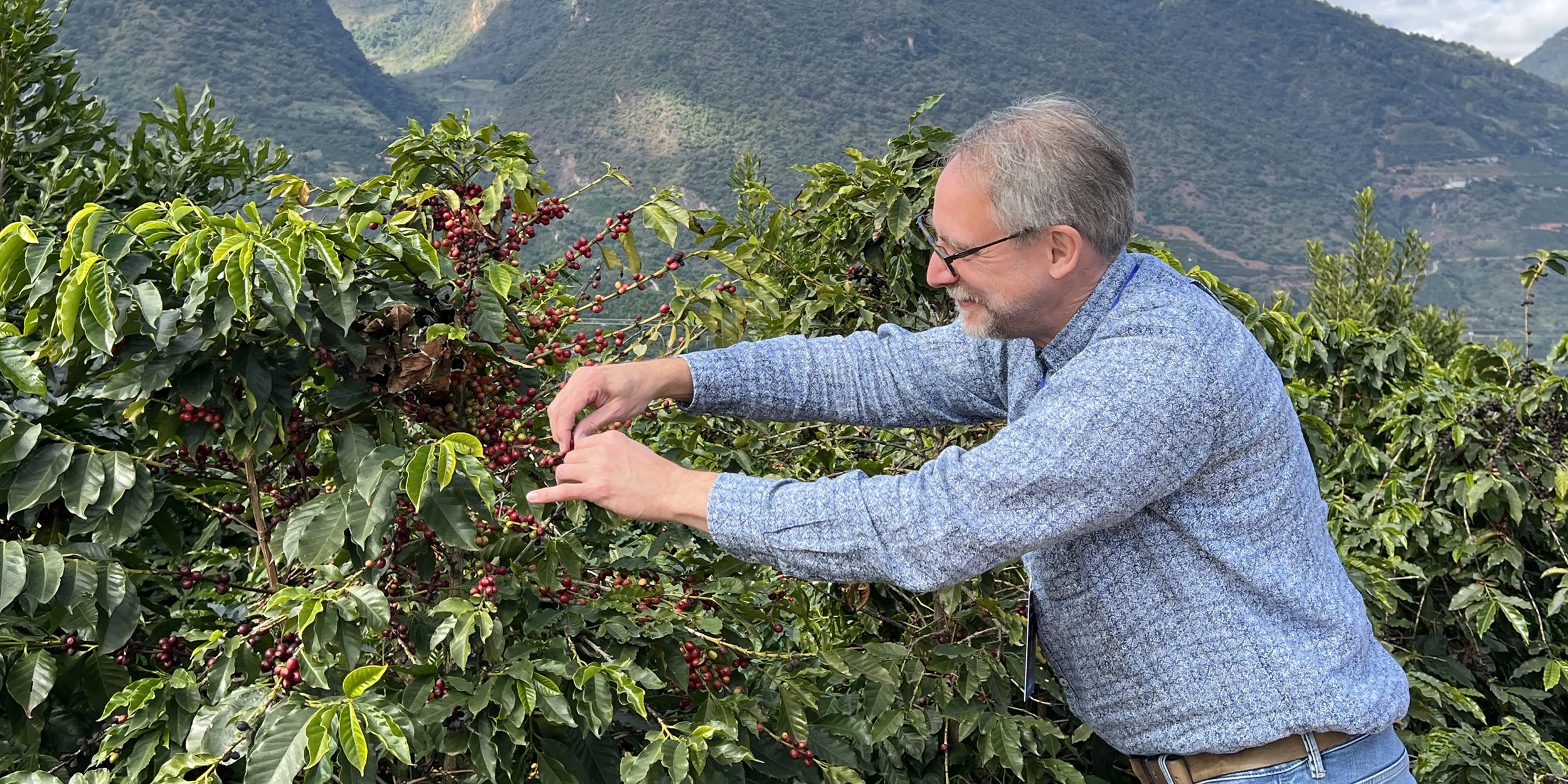
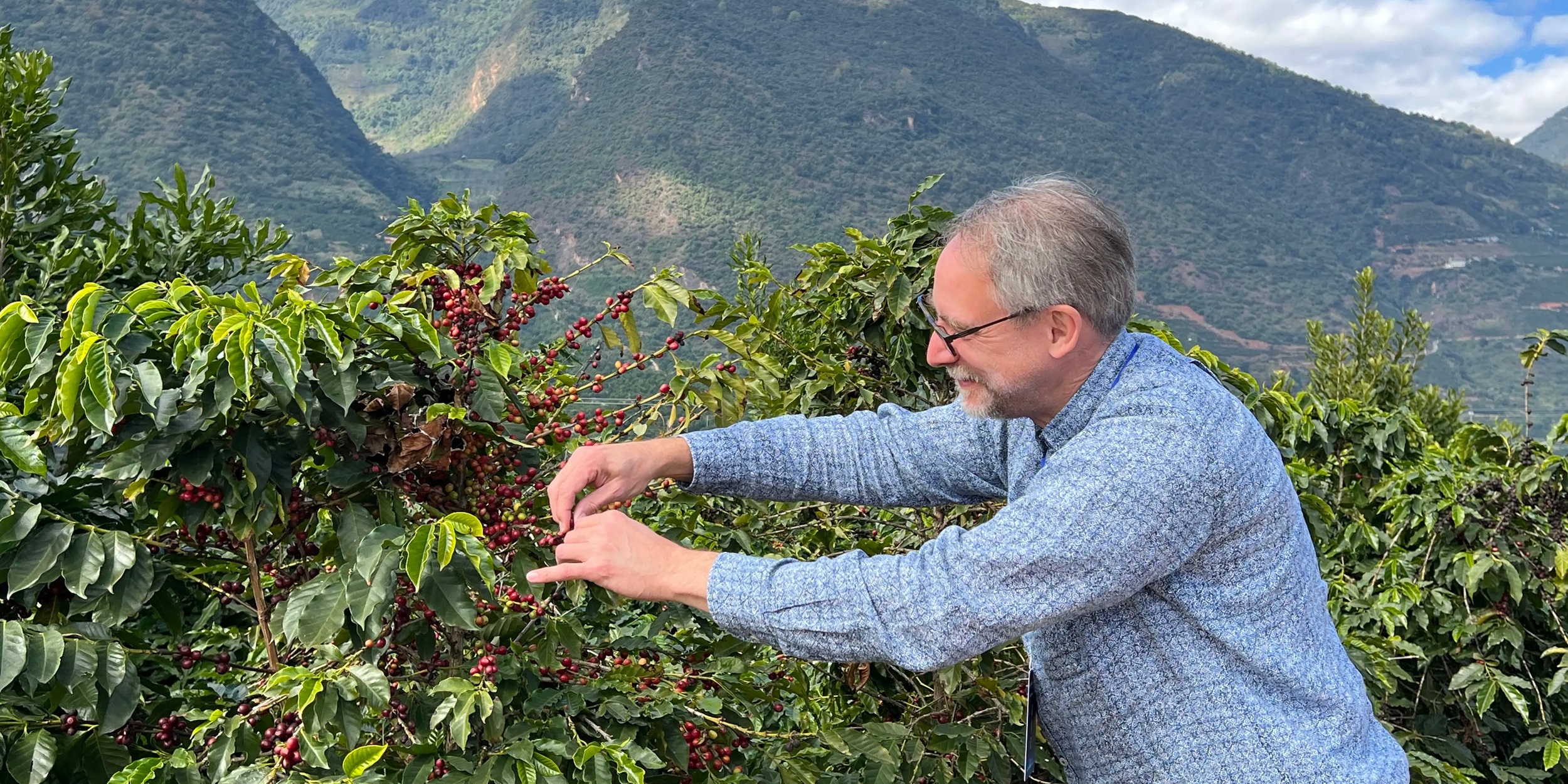
从商品豆到精品豆,必须在种植源头做出改变。以茶类比,商品豆如同袋泡茶原料,可以用机械剪;精品豆则似西湖龙井、武夷山岩茶,需要人工采摘。过去,很多咖农习惯了“一串撸”:红果、黄果、绿果混在一起,省时省力。但熟果、生果一起采摘,影响口感。
要做精品豆,离不开农事培训服务。为了引导农户改变习惯,比顿咖啡庄园负责人赵琴香没少往田间地头跑。“有农户说,豆都一样大,为啥不收?”她耐心解释,“绿豆会苦、黄豆会涩、红豆才甜。都是橘子,没熟透的酸,熟透了才甜,咖啡豆也是这般。”
光靠嘴上劝还不够,还得让农户亲身感受出区别。政府提供专家资源,庄园报销交通费用,组织咖农开展系统培训。培训第一课,不是先讲理论,而是让大家先品尝不同成熟度的咖啡豆。一次次培训,不少咖农开始明白,精品咖啡的价值,不只在于树上的果实,更在于采摘、分拣和处理的每一道细节。
低纬高原、干热河谷,为保山小粒咖啡提供了先天的自然条件优势。但自然禀赋不能直接转化为精品品质。品种怎么选,种苗怎么育,水肥怎么管,病虫害怎么防,都决定着咖啡豆的最终品质。
在辛家山千亩精品咖啡示范基地,土壤温湿度传感器、小型气象站、AI巡检无人机接入咖啡园,根据咖啡树不同生长期给出精准水肥方案。“银龄专家团”深入田间地头,把种植培训课堂搬到咖啡树下。“保山咖啡师”作为省级劳务品牌,培育了从种植到销售的全链条技能人才。
与此同时,保山根据不同海拔、气候和市场需求,持续推进优质品种选育与推广,自主研发“云咖一号”“云咖二号”,深耕瑰夏种苗繁育及栽种技术。更多品种落地生长,让保山咖啡有了更丰富的风味表达,走向精品化的广阔天地。

游客在咖啡庄园享受休闲时光。
一杯咖啡,带来文旅新机遇
吸引游客的,不只是咖叔的摊,还有咖啡庄园。对保山来说,咖啡豆不只在地里和工厂之间流动,而是开始在更广阔的服务业空间里生长。
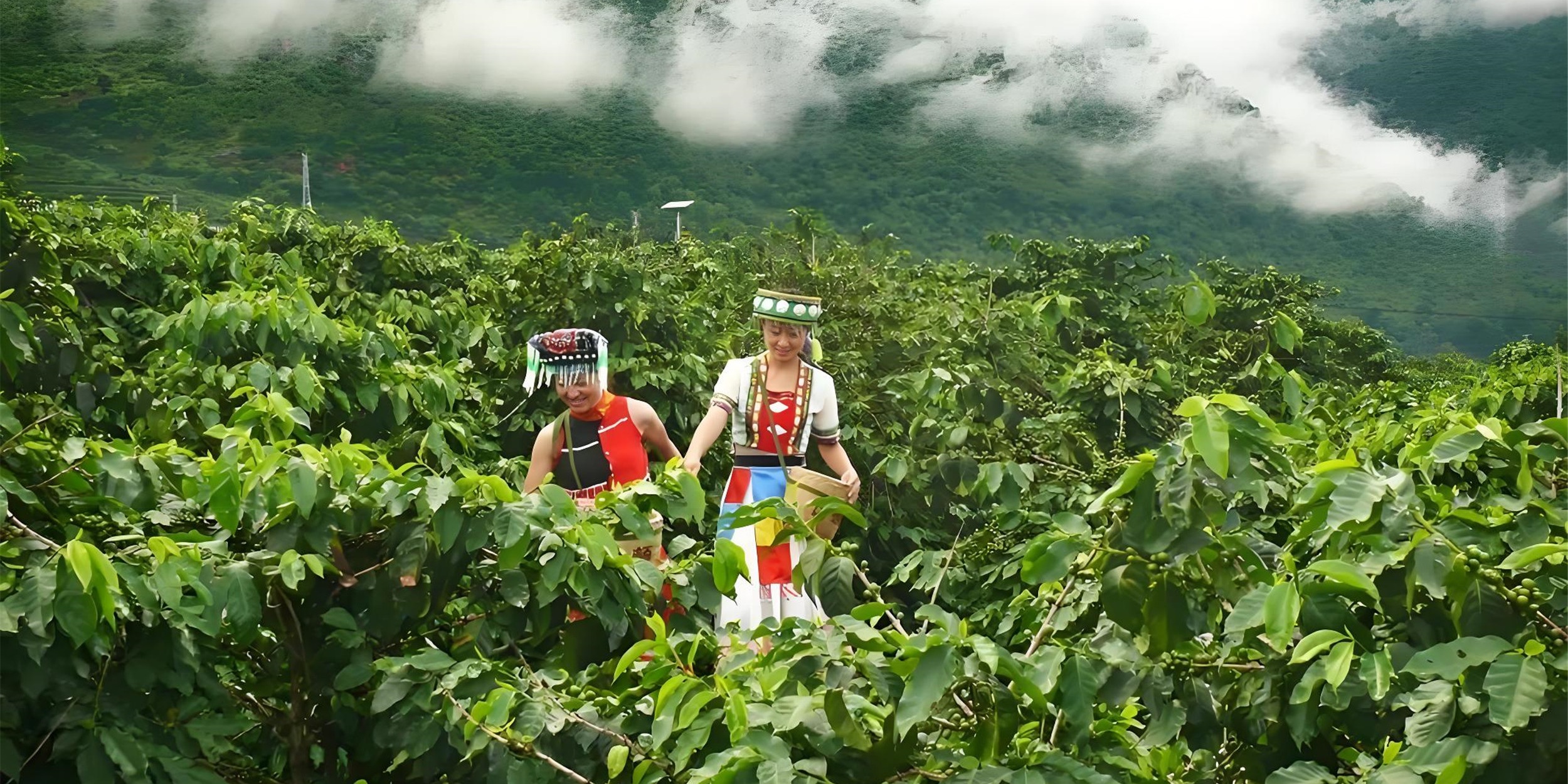
位于“中国咖啡第一村”新寨村的贡江咖啡庄园,前两年种下的咖啡还没到盛果期,庄园主何文俊就赚到了第一笔收入——漫步高黎贡山、俯瞰怒江大峡谷,树下品一杯咖啡,或者亲手种下一棵咖啡树,成了游客最喜欢的庄园体验项目。
咖啡串联起一二三产业,何文俊说:“在保山,咖啡不仅是产品,也是文化。”
近年来,保山市引导“咖啡庄园化、庄园景区化、景区特色化”,推动“以咖为景、以景带咖”,让一颗豆子从田间走向街头、庄园和旅居空间。
万亩咖啡园层层铺展,咖啡庄园、主题小院、咖啡馆星星点点散布其间。游客可以“住在咖啡里、玩在咖啡中”:白天参与采摘、晾晒、烘焙等农事活动;夜晚围坐篝火旁,品尝现煮的“火塘咖啡”。
一些旅居项目还将咖啡元素嵌入建筑风格和康养体验,咖啡博物馆、咖啡理疗工坊、咖啡温泉等新场景不断涌现,成为游客感知保山的一种方式。
用传统土陶烘烤咖啡豆、用竹编器具手冲咖啡、购买一份印着傣族织锦纹样的咖啡伴手礼,或是在咖啡博物馆里观赏一台老式脱壳机……这些体验让一杯咖啡不只是饮品,更是一段可以触摸的文化旅程。
与城市咖啡馆截然不同,在沉浸式体验中,游客品尝到的不只是咖啡,还有它背后的土地、气候和人文气息。

“中国咖啡第一村”新寨村
有咖啡爱好者,专程飞越3000公里来到新寨村。这里的吸引力,恰恰在于可体验性。在庄园,可以看到咖啡树种植、果实采收、咖啡豆处理,完整体验一杯咖啡从种子到杯子的全过程。咖旅融合降低了咖啡文化的认知门槛,有效助力本土咖啡产业的推广。
从想要过暖冬的旅居客,到想开一家自己的咖啡馆的义工,越来越多的人因为咖啡来到保山。
目前,保山全市打造咖啡庄园34个,创成多个A级咖啡主题景区。
一杯咖啡带来的,早已不只是消费产品本身,更是业态的汇聚。

保山通过咖啡产业撬动文旅、物流、培训、康养等多种服务业态。图为保山举办咖啡马拉松活动。
一条服务链,托起国产咖啡出圈
咖叔坦言,自己赶上了好时候。“喝咖啡的人多了,才有了咱们这咖啡摊;没有网络,咱这小摊靠啥出圈?”
如果说雀巢三合一让中国人知道了咖啡,星巴克让一线城市白领品上了咖啡,那么瑞幸、库迪等本土咖啡连锁品牌,则让咖啡走进了中国人的日常生活,特别是自带文化自信的“90后”“00后”,他们更愿意为一杯中国本土精品咖啡买单,中国从咖啡净出口国成为净进口国。
市场打开了,好咖啡何以走出深山?好豆子缺的是被看见、被定价、被认可。因此,产地品牌和企业品牌建设变得越来越重要。
“保山小粒咖啡”地理标志,正是这样一张身份证。从种植到加工,从品质到宣传,获准使用的企业都要接受规范管理。它不仅为产区品质提供了统一背书,也让消费者拥有了更多确定感。中咖等本地企业将咖啡做深,从生豆延伸到冻干、挂耳、冷萃等多种产品形态,也把小粒咖啡推向更大的市场。
“人来,需要交通、住宿、餐饮;货走,离不开快递、包装、仓储。这些都能带动地方经济。”李廷金介绍。2024至2025年产季,咖农户均收入超10万元;寄递业务突破1000万件,销售额近6亿元;金融保险机构累计发放“咖啡贷”等产品6.5亿元。就连一些闲置楼盘、烂尾项目,也被盘活改造为咖啡庄园和旅居空间。
截至2025年底,保山全市咖啡产业综合产值突破223亿元。从数量走向质量,从产品输出走向文化输出,保山咖啡已进入外事场合、走进大学校园。
这条不断延伸的服务链,正把保山咖啡与更多人、更多场景、更多生活方式连接起来。
(实习生门静然、宋奇岳参与稿件采写)
原标题:《(引题)云南保山咖啡产业从卖原料到卖产品、卖文化(主题) 国产咖啡出圈记》
原文刊载于2026年第10期 5月11日出版的《民生周刊》杂志
People's Daily reporter Yang Wenming
The disciple sounded a gong, and the master "Uncle Ka" Li Jinhe appeared.
One, two, three, fire! "The spray gun burned the siphon pot, and tourists took out their phones one after another, relying on the unique spray gun to brew coffee and a sense of ceremony. The" roadside caf é "located in Lujiangba, Longyang District, Baoshan City, Yunnan Province has become a popular check-in spot for internet celebrities.
Local people pass by and step on the brake to taste it, while tourists who drive in northwest Yunnan come specifically to experience it. The long silent Tea Horse Ancient Road Shuanghong Bridge has once again become lively because of this coffee stall. Since last year's National Day holiday, Uncle Ka has been popular and has not been idle. Barbecue, cold drinks, local specialties... Surrounding farmers have also set up stalls; In order to serve tourists, the government has specially built parking lots and public toilets.
By relying on unique spray guns to brew coffee, "roadside cafes" have become popular check-in spots for internet celebrities.
Uncle Ka, alone, ignited a street.
Setting up a pergola, Uncle Ka only spent 3000 yuan. A coffee plantation owner joked that investing 30 million yuan in building their own estate was not as good as Uncle Coffee spending 3000 yuan to bring in more people.
"If you need ice, you have to take it yourself. In terms of service, our roadside coffee stands are incomparable with coffee shops in the city and coffee plantations in the mountains!" After pouring coffee to the reporter, Uncle Coffee went on to analyze, "The coffee you grow is really delicious, but the more important thing is that you brew coffee with a spray gun, which has a strong visual impact and is suitable for the Internet." Uncle Coffee proudly told the reporter that he has grown 100 acres of coffee, but can sell more than 1000 acres of coffee.
A pot of coffee is only thirty or forty yuan, but now it's making a lot of money every day, "Uncle Ka introduced. He had fed pigs and raised bees, and had been working in the primary industry, but he didn't expect that it was the tertiary industry that really made him money.
Uncle Ka's "roadside caf é" is a microcosm of Baoshan's coffee industry's firm commitment to the path of boutique coffee. A coffee bean is now leveraging various service formats such as cultural tourism, logistics, training, finance, and health care in Baoshan.
Villagers are drying fresh coffee fruits.
A single bean determines the quality of an industry
In the past, Baoshan coffee was mainly sold as commodity beans. Commodity beans follow futures prices. In the past few years, when prices were low, one kilogram of fresh fruit could only be sold for about two yuan, and many coffee farmers chose to abandon management or even cut down trees.
Is there any way to reduce the impact of futures prices? Li Tingjin, a member of the coffee specialty team in Baoshan City, gave a straightforward answer: "The price of coffee in coffee shops has little to do with the futures market. Only by producing fewer commodity beans and specializing in high-quality beans can we sell at a good price
From commodity beans to premium beans, changes must be made at the source of cultivation. Analogous to tea, commercial beans are like raw materials for tea bags and can be mechanically cut; Boutique beans, like Longjing Tea in West Lake and Mount Wuyi Rock Tea, need to be picked manually. In the past, many coffee farmers used to mix red, yellow, and green fruits together to save time and effort. But picking ripe fruits and vegetables together can affect the taste.
To produce high-quality beans, agricultural training services are indispensable. In order to guide farmers to change their habits, Zhao Qinxiang, the head of Bitun Coffee Farm, has been running to the fields. Some farmers say that the beans are all the same size, why not harvest them? "She patiently explained." Green beans are bitter, soybeans are astringent, and red beans are sweet. They are all oranges, sour when they are not fully ripe, sweet when they are fully ripe, and the same goes for coffee beans
Just verbal persuasion is not enough, farmers need to experience the difference firsthand. The government provides expert resources, the estate reimburses transportation expenses, and organizes systematic training for coffee farmers. The first lesson of the training is not about theoretical knowledge, but about letting everyone taste coffee beans of different maturity levels first. Through repeated training sessions, many coffee farmers have come to understand that the value of premium coffee lies not only in the fruits on the tree, but also in every detail of picking, sorting, and processing.
The low latitude plateau and dry hot valley provide innate natural advantages for Baoshan small grain coffee. But natural endowments cannot be directly transformed into high-quality products. The selection of varieties, cultivation of seedlings, management of water and fertilizer, and prevention of pests and diseases all determine the final quality of coffee beans.
At the Xinjiashan thousand acre premium coffee demonstration base, soil temperature and humidity sensors, small weather stations, and AI inspection drones are connected to the coffee garden to provide accurate water and fertilizer solutions based on the different growth stages of coffee trees. The "Silver Age Expert Team" went deep into the fields and moved the planting training classroom to under the coffee trees. As a provincial-level labor service brand, "Baoshan Coffee Master" has cultivated skilled talents throughout the entire chain from planting to sales.
At the same time, Baoshan continues to promote the breeding and promotion of high-quality varieties based on different altitudes, climates, and market demands. It independently develops "Yunka No.1" and "Yunka No.2" and deeply cultivates the breeding and planting technology of summer seedlings for roses. More varieties have landed and grown, giving Baoshan coffee a richer expression of flavor and moving towards a broad world of refinement.
Tourists enjoy leisure time at the coffee plantation.
A cup of coffee brings new opportunities for cultural tourism
It's not just Uncle Coffee's stall that attracts tourists, but also the coffee plantation. For Baoshan, coffee beans not only flow between the fields and factories, but also begin to grow in a broader service industry space.
Gongjiang Coffee Plantation, located in Xinzhai Village, known as the "Number One Coffee Village in China", earned its first income before the coffee it planted reached its peak in the first two years. The owner, He Wenjun, took a stroll through Gaoligong Mountain, overlooking the Nujiang Grand Canyon, enjoying a cup of coffee under a tree, or planting a coffee tree himself, becoming a favorite experience for tourists at the plantation.
Coffee connects the primary, secondary, and tertiary industries. He Wenjun said, "In Baoshan, coffee is not only a product, but also a culture
In recent years, Baoshan City has guided the transformation of coffee plantations, estate scenic areas, and scenic areas into distinctive features, promoting the concept of "using coffee as a scenery, and using scenery to bring coffee", allowing a bean to move from the fields to the streets, estates, and living spaces.
Thousands of acres of coffee gardens are spread out layer by layer, with coffee estates, themed courtyards, and cafes scattered among them. Tourists can "live and play in coffee": participate in agricultural activities such as picking, drying, and baking during the day; Sitting around the campfire at night, tasting freshly brewed 'fire pit coffee'.
Some travel projects also incorporate coffee elements into architectural styles and wellness experiences. New scenes such as coffee museums, coffee therapy workshops, and coffee hot springs continue to emerge, becoming a way for tourists to perceive Baoshan.
Baking coffee beans with traditional earthenware, hand brewing coffee with bamboo weaving tools, purchasing a coffee souvenir printed with Dai brocade patterns, or admiring an old-fashioned huller in a coffee museum... These experiences make a cup of coffee not just a beverage, but also a touchable cultural journey.
Unlike urban cafes, in an immersive experience, visitors not only taste coffee, but also the land, climate, and cultural atmosphere behind it.
Xinzhai Village, known as the "First Coffee Village in China"
There are coffee enthusiasts who flew 3000 kilometers to Xinzhai Village. The attraction here lies precisely in the experientiality. At the estate, you can see coffee tree planting, fruit harvesting, and coffee bean processing, experiencing the entire process of a cup of coffee from seed to cup. The integration of coffee and tourism has lowered the cognitive threshold of coffee culture, effectively promoting the local coffee industry.
From travelers who want a warm winter to volunteers who want to open their own coffee shop, more and more people are coming to Baoshan because of coffee.
At present, Baoshan City has built 34 coffee estates and created multiple A-level coffee themed scenic spots.
A cup of coffee brings not only consumer products themselves, but also a convergence of business formats.
Baoshan leverages various service formats such as cultural tourism, logistics, training, and health preservation through the coffee industry. The picture shows Baoshan holding a coffee marathon event.
A service chain that supports the popularity of domestic coffee
Uncle Ka admitted that he had caught a good time. There were more people drinking coffee, which led to our coffee stall; without the internet, how did our small stall make a name for itself
If Nestle's three in one has made coffee known to Chinese people, Starbucks has made coffee a popular choice for white-collar workers in first tier cities, then local coffee chain brands such as Luckin Coffee and Kudi have brought coffee into the daily lives of Chinese people, especially those born in the 1990s and 2000s who have cultural confidence. They are more willing to pay for a cup of Chinese local specialty coffee, and China has become a net importer of coffee from a net exporter.
The market has opened up, how can good coffee go out of the deep mountains? Good beans lack being seen, priced, and recognized. Therefore, the construction of origin brands and corporate brands has become increasingly important.
The geographical indication of "Baoshan Small Grain Coffee" is precisely such an ID card. From planting to processing, from quality to promotion, enterprises approved for use must accept standardized management. It not only provides a unified endorsement for the quality of the production area, but also gives consumers a greater sense of certainty. Local enterprises such as Zhongka have deepened the coffee industry, extending it from raw beans to various product forms such as freeze-drying, hanging ear, and cold extraction, and also pushing small grain coffee to a larger market.
When people come, they need transportation, accommodation, and catering; when goods leave, they cannot do without express delivery, packaging, and warehousing. All of these can drive the local economy, "said Li Tingjin. From 2024 to 2025, the average household income of coffee farmers will exceed 100000 yuan; The delivery business has exceeded 10 million items, with sales of nearly 600 million yuan; Financial and insurance institutions have issued a total of 650 million yuan in products such as "coffee loans". Even some idle real estate and abandoned projects have been revitalized and transformed into coffee plantations and living spaces.
By the end of 2025, the comprehensive output value of the coffee industry in Baoshan City will exceed 22.3 billion yuan. From quantity to quality, from product output to cultural output, Baoshan Coffee has entered foreign affairs occasions and university campuses.
This constantly extending service chain is connecting Baoshan Coffee with more people, more scenarios, and more lifestyles.
(Interns Men Jingran and Song Qiyue participate in the manuscript collection and writing)
Original title: "Introduction: The coffee industry in Baoshan, Yunnan, from selling raw materials to selling products and culture (theme): The rise of domestic coffee in the circle"
The original article was published in the 10th issue of May 11, 2026 of the "Minsheng Weekly" magazine