城中村变身为精品咖啡街区 厦门如何“养”出咖啡文化?How can Xiamen cultivate coffee culture by transforming urban villages into boutique coffee districts?
湖里钟宅,曾与“城中村”“旧改”紧密相连。如今,“凤凰里”开放式街区在此开街,瞄准的是年轻人喜爱的精品咖啡。周末午后,街区里几家风格各异的咖啡馆自然聚拢,没有统一招牌,却成了厦门精品咖啡版图上的一处新地标。
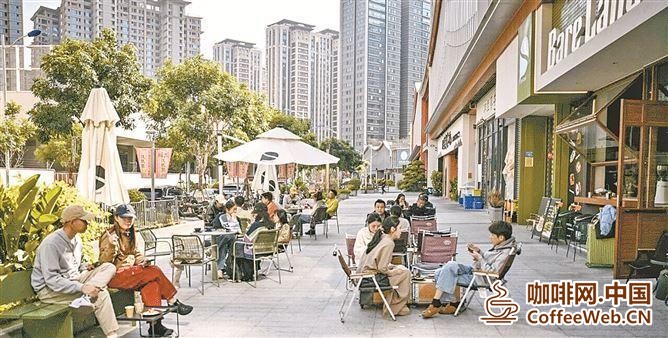 “凤凰里”街区
这或许是一种趋势:厦门精品咖啡版图,正从鼓浪屿、鹭江道向岛内东部和岛外延伸。连锁品牌完成“咖啡普及”的使命后,精品咖啡正让咖啡从“提神饮料”变成“生活方式”,为厦门打造千亿级咖啡产业集群提供人才、审美与场景支撑。
嵌入城市的“生活方式”
厦门为何具有浓厚咖啡氛围?答案就在城市文化里。
民盟厦门市委相关课题负责人介绍,百年前,归国华侨从南洋带回喝咖啡的习惯,与闽南茶文化杂糅共生,形成独特的“双栖生活”:上午泡茶,下午喝咖啡。
文化,在这座城市沉淀下来——一杯咖啡、一方空间,都是一种生活。相关数据显示:厦门岛平均每平方公里有逾12家咖啡馆,咖啡消费人群占比位居全国第四,仅次于上海、杭州、北京。
厦门的咖啡氛围不仅打动本地人,也吸引外地游客。民盟课题组成员介绍,不少知名旅游媒体制作厦门精品咖啡地图向全国推荐。“可以看出厦门的精品咖啡文化已形成跨城市吸引力”。
比较精品咖啡与连锁咖啡,课题组认为二者的鲜明区别在于“品位”与“产值”。民盟厦门市委专职副主委林涛把精品咖啡比作红酒:工业化连锁咖啡满足日常便利,精品咖啡承载生活方式与审美追求。厦门一百多年的咖啡历史、茶咖共生的生活方式、高密度的独立咖啡馆,都是“养”出来的。民盟厦门市委已连续三年将咖啡作为重点课题,目标是“让咖啡成为又一张城市名片”。在他们看来,厦门为精品咖啡提供了生长的土壤,精品咖啡又折射出这座城市的气质。
人才储备成了“软基建”
2010年,台胞林秋宜在厦门创办香投精品咖啡学院,这是大陆首个获得美国精品咖啡协会认证的教学实验室。“那时候全国想学咖啡、想考证的人,都得飞来厦门。”众乐乐咖啡艺术节创始人陈志回忆,瑞幸、库迪等品牌的关键岗位人员,很多出自厦门。十多年来,香投学院为咖啡行业发展播下又一“专业火种”。
在集美工业职业学院,一间由咖啡社团成员运营七年的校园咖啡馆里,一届届学生从磨豆、拉花到运营,练成行业抢手的新人。蔡火灿老师介绍,社团培养的人才大多进入咖啡行业,不少已在精品咖啡馆担任重要角色。学院还在酝酿申报咖啡生态产业学院。
正是这些人才沉淀,构成了厦门咖啡产业的“软基建”——链主企业容易招募到技术骨干,连锁咖啡品牌愿意把总部和工厂落在厦门,城市形象也愈加凸显。
精品咖啡的“乘数效应”
精品咖啡还在另一维度释放能量——文旅流量。2022年,陈志和伙伴自掏腰包创办众乐乐咖啡节,前两届咖啡节亏了80多万元;到2025年,单场客流量达15万-20万人次,多平台话题浏览超800万次,来自40个城市的近100个品牌参与,70%为厦门首秀。今年更有墨尔本、中国台北等地的世界冠军坐镇冲煮吧台。业内人士称,“五岁”的众乐乐已是圈内公认必去的咖啡节。
一个数据尤为亮眼:每年众乐乐咖啡节期间,鹭江道周边酒店早早订满,仅参展团队就带来数百间客房预订,“为了一杯咖啡专程来厦”的外地咖啡爱好者群体快速增长。众乐乐咖啡节活动主办方介绍,根据往年经验,一届活动可以带动约12万人次流量,撬动文旅商消费约800万元。
不过,精品咖啡商户多为小微企业,办活动往往需要自行垫资、四处找赞助。民盟厦门市委在报告中建议政府将活动支持的端口前移——这一建议在集美咖啡季中得到采纳,相关部门参与主办,减轻了商户压力。同时推动行业规范,严格筛选参展品牌,要求有实体店、证件齐全、口碑可信。
凤凰里开街当天,街区负责人说,未来还要落户宠物友好小公园、花鸟小市场,“让咖啡真正成为社区的生活枢纽”。
(厦门日报记者 庄筱婧 陆晓凤)
Huli Zhongzhai was once closely connected to the "urban village" and "old renovation". Nowadays, the "Phoenix Lane" open street district is open here, targeting the boutique coffee that young people love. On weekend afternoons, several coffee shops with different styles naturally gathered in the neighborhood, without a unified sign, but became a new landmark on the map of Xiamen's boutique coffee industry.
Phoenix neighborhood
This may be a trend: Xiamen's premium coffee market is extending from Gulangyu and Lujiang Road to the eastern and outer parts of the island. After completing the mission of "popularizing coffee" for chain brands, premium coffee is transforming coffee from a "refreshing beverage" to a "lifestyle", providing talent, aesthetic and scene support for Xiamen to build a billion dollar coffee industry cluster.
The 'lifestyle' embedded in the city
Why does Xiamen have a strong coffee atmosphere? The answer lies in urban culture.
The person in charge of the relevant project of the Xiamen Municipal Committee of the Chinese Democratic League introduced that a hundred years ago, overseas Chinese who returned to China brought back the habit of drinking coffee from Southeast Asia and blended and coexisted with the Minnan tea culture, forming a unique "dual life": brewing tea in the morning and drinking coffee in the afternoon.
Culture has settled in this city - a cup of coffee, a square of space, are all forms of life. According to relevant data, Xiamen Island has an average of over 12 coffee shops per square kilometer, and the proportion of coffee consumers ranks fourth in the country, second only to Shanghai, Hangzhou, and Beijing.
The coffee atmosphere in Xiamen not only impresses locals, but also attracts tourists from other places. Members of the Democratic League research group introduced that many well-known tourism media have produced maps of Xiamen's premium coffee and recommended them to the whole country. It can be seen that Xiamen's premium coffee culture has formed a cross city attraction.
The research team believes that the distinct difference between boutique coffee and chain coffee lies in "taste" and "output value". Lin Tao, the full-time vice chairman of the Xiamen Municipal Committee of the China Democratic League, compared premium coffee to red wine: industrialized chain coffee satisfies daily convenience, while premium coffee carries lifestyle and aesthetic pursuits. Xiamen's over a hundred years of coffee history, tea coffee symbiotic lifestyle, and high-density independent coffee shops are all "nurtured". The Xiamen Municipal Committee of the Democratic League has made coffee a key topic for three consecutive years, with the goal of "making coffee another city card". In their view, Xiamen provides the soil for the growth of specialty coffee, which in turn reflects the temperament of the city.
Talent reserve has become a 'soft infrastructure'
In 2010, Taiwanese compatriot Lin Qiuyi founded the Xiangtou Fine Coffee Academy in Xiamen, which was the first teaching laboratory in mainland China to obtain certification from the American Fine Coffee Association. At that time, people from all over the country who wanted to learn coffee and obtain certification had to fly to Xiamen, "recalled Chen Zhi, founder of the Zhongle Le Coffee Art Festival. Many key personnel from brands such as Luckin Coffee and Kudi came from Xiamen. For over a decade, Xiangtou Academy has planted another "professional spark" for the development of the coffee industry.
At Jimei Industrial Vocational College, a campus caf é operated by members of a coffee club for seven years, successive generations of students have trained to become popular newcomers in the industry from grinding beans, pulling flowers to operation. Teacher Cai Huocan introduced that most of the talents cultivated by the club have entered the coffee industry, and many have already played important roles in boutique cafes. The college is still considering applying for the Coffee Ecological Industry College.
It is precisely these talents who have accumulated and formed the "soft infrastructure" of Xiamen's coffee industry - chain owners are easy to recruit technical backbone, chain coffee brands are willing to set up their headquarters and factories in Xiamen, and the city's image is becoming more prominent.
The 'multiplier effect' of premium coffee
Premium coffee is also unleashing energy in another dimension - cultural and tourism traffic. In 2022, Chen Zhi and his partners self funded the establishment of the Zhongle Le Coffee Festival, and the first two coffee festivals lost over 800000 yuan; By 2025, the single event traffic will reach 150000 to 200000 people, with over 8 million topic views across multiple platforms. Nearly 100 brands from 40 cities will participate, with 70% of them making their debut in Xiamen. This year, world champions from Melbourne, Chinese Taipei, and other places are sitting at the brewing bar. Industry insiders say that "five-year-old" Zhongle Le is widely recognized as a must attend coffee festival in the industry.
One particularly impressive data is that during the annual Zhongle Le Coffee Festival, hotels around Lujiang Road are fully booked early, and the participating teams alone bring hundreds of room bookings. The group of out of town coffee enthusiasts who come to Xiamen specifically for a cup of coffee is growing rapidly. According to the organizer of the Zhongle Le Coffee Festival, based on previous experience, one event can drive about 120000 foot traffic and stimulate cultural and tourism businesses to consume about 8 million yuan.
However, many boutique coffee merchants are small and micro enterprises, and organizing events often requires self financing and seeking sponsorship from various sources. The Xiamen Municipal Committee of the Democratic League suggested in the report that the government move the port of activity support forward - this suggestion was adopted during the Jimei Coffee Season, and relevant departments participated in the hosting, reducing the pressure on merchants. At the same time, promote industry standards, strictly screen participating brands, require physical stores, complete documents, and a trustworthy reputation.
On the day of the opening of Fenghuangli Street, the block manager said that in the future, they will also settle in pet friendly parks and flower and bird markets, "making coffee truly the hub of community life".
(Xiamen Daily reporters Zhuang Xiaojing and Lu Xiaofeng)