云南咖啡,向上突围Yunnan Coffee, breaking through upwards
编者按
我们从三个角度诠释了咖啡这桩生意——这种从15世纪开始逐渐征服人类味蕾的饮料,现在又激发出新的商业想象力。
记者 | 文思敏
编辑 | 倪妮
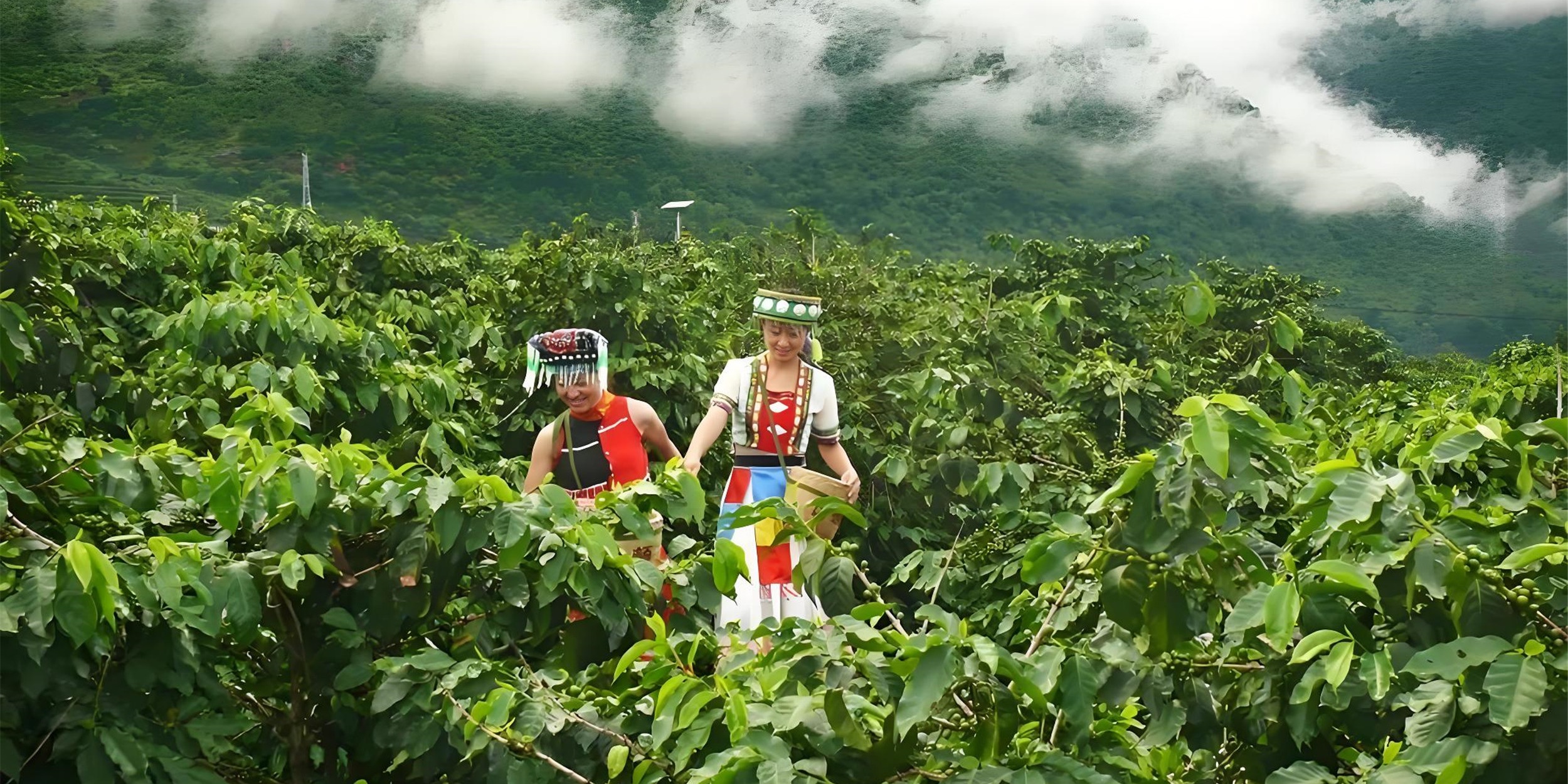
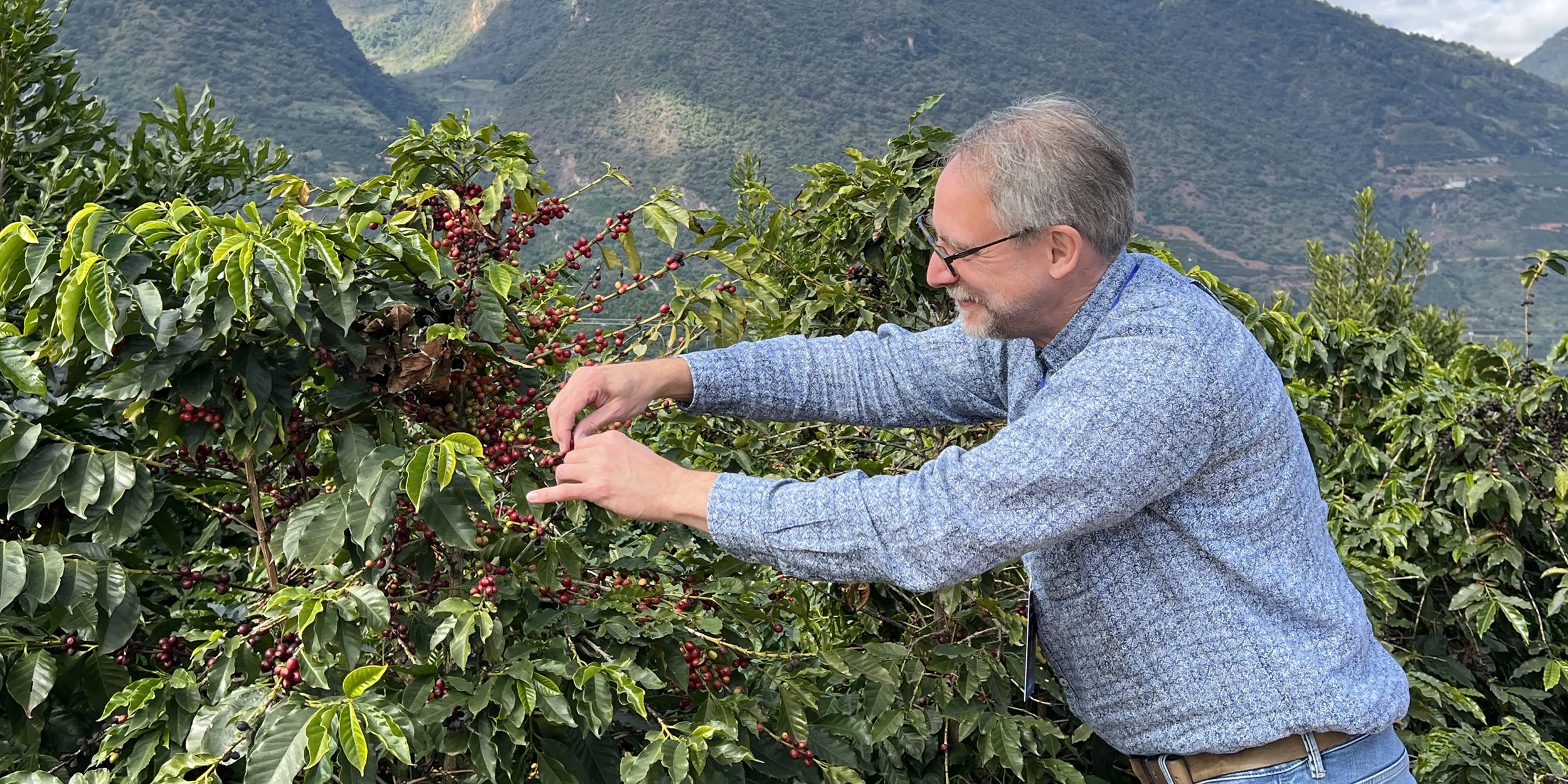
1月的云南山头,空气里混杂着咖啡果成熟的甜味。在孟连、保山、怒江的山坡上,咖农们背着竹篓穿行在树丛间,快速捻下红色果实。这两三个月,是他们一年中最忙碌的时刻——云南咖啡的采摘季开始了。
距离云南首届卓越杯(CoE)试点赛落下帷幕已近一年——已有27年历史的CoE是目前全球最知名、最权威的精品咖啡生豆比赛。在去年这场赛事上,冠军由云南秋珀庄园的一支水洗巴天摘得。
这批生豆随后通过现场拍卖以超过1万元/公斤的价格被评委以及国内的烘焙商购入,并迅速出现在上海精品咖啡馆的豆单上。云南这场试点赛由此也被业内视为一个标志性事件——云南咖啡正在进入全球精品咖啡评价体系。
过去,云南咖啡的叙事大多围绕雀巢、星巴克等国际巨头展开。那是一段属于大宗贸易的时代,云南种植者更多专注于提供高性价比的咖啡豆原料,品种单一且保守。
精品咖啡品牌Blue Bottle的首席烘焙师余清几乎每年都要去云南产区考察。“现在,我们看到云南越来越多地引进了波旁、SL系列、萨奇姆等优质品种,而且培育非常快。”余清对《第一财经》YiMagazine说,“与此同时,云南的咖农也增加了对诸如水分测定仪等精密硬件设施的投入,并对日晒、蜜处理、厌氧发酵等处理法有了更深的理解。”

Blue Bottle团队在云南考察咖啡庄园。从2022年开始,该品牌几乎每年上新一款云南豆。
01
告别原料时代
根据《2024年云南省咖啡产业发展报告》,2023/2024年产季,云南咖啡总产量达15.02万吨,咖啡精品率从2021年的不足8%,跃升至31.6%。
其实2019年冬天,秋珀庄园主理人赛敏就意识到,依赖纽约交易所定价的老路,已经不太走得通了。当年,国际咖啡期货的谷底价格跌到了86.35美分/磅,折合人民币不到15元/公斤。
赛敏进入咖啡行业后,最初做的正是云南咖啡的出口。那几年,她看到行情一年比一年冷。从2014年起,国际期货价格持续下行,而国内既无期货工具,也没有套保机制,咖啡豆的出口商只能被动地看盘吃饭,价格有时低到连成本都难以覆盖。面对亏损,彼时,大量咖农选择砍掉咖啡树,改种茶叶、玉米等经济作物。
这轮“弃种潮”也促成了当地庄园和企业精品意识的觉醒。在赛敏看来,云南咖啡要摆脱大宗期货的宿命,其中一条出路就是精品化——不单是换个标签讲故事,而是进入一套由风味和标准定义的新价值体系中。
她决定不再只做中间商,而是要成为真正“懂咖啡的人”。2018年,赛敏考取了国际咖啡品鉴师证书(Q Grader),同年又拿下美国精品咖啡协会(SCA)的专业烘焙师证 书。
某种程度上,赛敏的个人转型正是第三轮咖啡浪潮席卷全球的一个缩影。
咖啡行业的发展通常被划分为3次浪潮:第一次始于20世纪中期,以雀巢等品牌推动的速溶和罐装咖啡为代表,核心是大众消费和便利性,让咖啡变为一种日常饮品;第二次从1970年代兴起,由星巴克等连锁品牌引领,强调的是意式咖啡体验与品牌文化,让咖啡成为一种生活方式;第三次则是2000年代以来,咖啡重新被定义为一种具有风土特征的农产品,这一浪潮的核心在于“精品化”。人们开始狂热追逐单一产地、独特品种、精细的处理法以及可追溯性,并倾向于通过浅烘焙来展现咖啡豆的地域风味——云南咖啡近十来年的探索,可以说正是尝试在这股浪潮中寻找自己的位置。
在这股浪潮的推动下,“精品咖啡”有了官方定义。根据SCA的定义,精品咖啡是指生豆杯测分数达到80分以上(满分100分),且在种植、处理和烘焙等环节符合相关质量标准的咖啡——比如咖啡豆风味干净、瑕疵极少,并能体现明确的产地特色。

CoE及其管理方美国精品咖啡联盟(ACE)的东亚顾问苏程程向《第一财经》YiMagazine提到,早在2011年,原云南咖啡厂厂长董志华就提出以“重质量而非产量”作为发展方向,但真正系统性的精品化进程还要等到几年后。2015年,云南国际咖啡交易中心聘请全球精品咖啡泰斗Ted Lingle担任高级顾问,并联合国际咖啡品质学会(CQI)启动“示范农场”项目。
同一时间段内,一场由精品咖啡浪潮推动的采购革命正在全球发生。像旧金山Blue Bottle这样的精品咖啡品牌,会直接深入产地,向埃塞俄比亚、巴拿马等产区的庄园采购单一产地豆。崛起于东京的% Arabica则在社交平台上以极简美学和单一产地的标签来吸引年轻的消费者。传统巨头也在加速转向——2017年,星巴克推出“单一产区臻选”系列,雀巢则收购了Blue Bottle,试图切入精品咖啡赛道。
这些趋势让赛敏更加确定自己的判断:云南需要精品咖啡产品。当时赛敏已经从事临沧和普洱产区的咖啡出口业务多年,与当地种植户和加工厂有紧密联系。2018年前后,她与几位熟悉种植和生产的同行商议,以合伙形式启动秋珀庄园这一新项目,自己来种植和加工咖啡豆——当时,云南真正以庄园模式运营的咖啡基地并不多,“庄园”这一概念也还未普及。
秋珀庄园创立初期,资金由赛敏和几位合伙人共同投入,选址落在临沧沧源,地块紧邻国家4A级景区“沧源天坑”。团队一开始就计划将咖啡种植和体验相结合,赋予基地一定的文旅属性,以探索可持续的经营模式,毗邻景区的选址有助于带来稳定客流。

秋珀庄园紧邻国家4A级景区“沧源天坑”,团队将咖啡种植和体验结合,使得庄园具有一定的文旅属 性。
有了团队打底,第二步便是从种植品种的“根”上动刀。彼时,云南90%以上的产地,种植的都是卡蒂姆品种。卡蒂姆虽然高产,但基因决定了它拥有略带草本和泥土味道的“魔鬼尾韵”,难以跨越杯测80分的精品咖啡质量门槛。
秋珀庄园放弃了卡蒂姆,引进瑰夏、波旁、卡斯蒂略等传统或改良品种,去年在CoE试点赛中获奖的巴天也是在那时种下的。这些品种产量低、抗病能力弱、管理成本高,但在高海拔而且昼夜温差大的临沧山区,却能展现出明亮的果酸和突出的甜感,并且拥有复杂风味和余韵——这正是精品咖啡市场看重的地域之味。
2020年到2021年,云南掀起一股“重发酵”风潮,庄园们争相做出大酱味、腐乳感甚至酒香等“猎奇风味”,但赛敏没有选择跟风。2023年,定向处理法流行时,她依然坚持自己的路线,只做水洗、日晒等传统处理法,不做重发酵或添加处理。她认为,云南咖啡真正的优势,不在于模仿非洲或中美洲的奔放果香,而在于高海拔带来的明亮酸质、干净口感与甜感。
这种坚持,除了有个人饮用偏好的原因,还来自于赛敏做咖啡豆贸易时期的经验,以及对全球市场的观察。“云南咖啡不是孤立的,它是全球精品体系的一部分。”她对《第一财经》YIMagazine说,“如果只盯着本地热点追风口,反而会失去在更广阔市场中的辨识度。”
02
把云南精品豆卖出去
对云南咖农而言,种出好咖啡豆只是第一步,真正的挑战在于,如何让全世界知道,并愿意为此买单。
秋珀庄园创立之初,赛敏就面临着一个最现实的困境:咖啡树从种下到稳定产果至少要3年,这期间只有投入,没有收入。对资金有限的新农人来说,这足以压垮创业热 情。
秋珀庄园的解法,按赛敏的话说叫“小步快跑,现金流先行”。庄园没有一次性种满全部土地,而是分三批推进。第一批20亩先行栽种,同时利用已有少量老树产出的鲜果,小批量加工、烘焙,在微信小程序上架,也在本地市集试水销售。这些早期产品尚未达到理想状态,但足以支撑日常运营开支,更重要的是,让她在等待新树结果的漫长过程中,能够持续获得市场反馈。
当然,要真正进入精品赛道,仅靠小范围的销售远远不够。品牌需要能被专业买家“看见”的通道。于是,赛敏锁定了两个专业赛事:云南咖啡生豆大赛和CoE。
前者是国内精品咖啡圈的风向标,后者被誉为“咖啡界奥斯卡”。他们的评委都不是普通消费者,而是烘焙商、生豆贸易商和咖啡品鉴师。除了评出获胜者,这些人更重要的工作就是寻找下一年的采购标的。
所以,拿奖就是最高效率的B2B营销渠道。2021年,秋珀庄园首次送豆参加云南生豆大赛就拿到了水洗组冠军。2022年,又斩获总冠军。这些荣誉迅速为庄园打开知名度,吸引了来自上海、深圳等一线城市的精品烘焙商主动接洽试样。此后几年,秋珀庄园又多次拿奖,沉淀了不少优质的B端客户。
更重大的机遇则是2025年CoE试点赛落地云南。
为了这场试点赛,苏程程准备了4年。苏程程毕业后第一份工作就在云南国际咖啡交易中心,此后的工作也一直围绕着云南咖啡豆。在2021年至2024年间,她共向ACE递交过来自云南的106支生豆样品。
到2024年10月,正值ACE为2025年全球拍卖日程做规划的节点——如果错过,云南又要再等一年。苏程程直接联系了ACE的创始人Susie Spindler。3天后,她收到对方的回信:“如果云南咖啡的品质真的到位了,我们可以探讨一下参赛的可能性。我个人认为,云南或许可以做一次CoE试点赛。”
几轮沟通后,ACE内部达成初步共识:2025年,云南CoE试点赛可以启动——中国台湾在有权举办CoE正式赛前,曾经历多届私藏竞拍和一次试点赛,整个过程耗时数年。如果云南地区能直接跳过私拍阶段,从试点赛起步,将大大缩短举办正式赛的进 程。
在云南CoE试点赛中,苏程程最终收到了来自云南的144份参赛豆,涵盖卡蒂姆、瑰夏、萨奇姆、铁皮卡及巴天等多个品种。多轮盲测后,秋珀庄园的巴天以89.96分夺得冠军。值得注意的是,第三名由一支卡蒂姆获得。“卡蒂姆是云南种植面积最大的品种,它拿到第三名也给了很多咖农希望:大众品种也是有得奖的可能性的。”苏程程说。

2025年的云南CoE试点赛,最终收到了来自云南的144份参赛豆。
这次试点赛,让苏程程惊喜的还有参赛名单中出现了大量她从未听过的庄园和咖农的名字。作为一名入行超过10年,且长期深耕云南产区、频繁走访各地农场的从业者,苏程程自认对云南本地的咖啡产业相当了解。这些陌生面孔的集中出现让苏程程意识到一个积极趋势:云南精品咖啡的种植正在以飞快的速度扩张。新进入者的涌入,意味着有更多人愿意投入时间与资源探索品质提升。
事实上,CoE赛事的价值之一正是挖掘并推广那些原本默默无闻却潜力巨大的产区与品种。比如危地马拉的薇薇特南果和洪都拉斯的圣塔芭芭拉,这两个产区之前几乎无人知晓,正是通过CoE赛事才逐渐崭露头角,成为国际知名的精品咖啡产区。
Blue Bottle对云南豆的尝试则始于2022年。那一年,他们在上海的烘焙厂刚建厂不久,急需寻找能体现在地性又符合全球品质标准的单品。团队从合作供应商处收了几十份样品,以卡蒂姆为主,也有少量瑰夏、波旁。杯测后,一支来自云南孟连的双重厌氧卡蒂姆胜出:干净、有热带水果调,酸质明亮,综合得分在85分以上。于是,它成了Blue Bottle在中国推出的首款云南单品。
此后3年,Blue Bottle几乎每年上新一款云南豆。2024年的第二款选的是全红果厌氧发酵;2025年则是一款融合了佤族酿酒工艺、发酵21天的日晒豆。它们的定价和该品牌的其他单一产地进口咖啡豆持平,200克的售价为148元,比拼配豆略高,并没有因“国产”打折。
Blue Bottle推出“云南系列”其实有些无心插柳。“在推第一款产品的时候,我们没太想到接下来会有后面这几款产品。”Blue Bottle市场部人员成尚之对《第一财经》YIMagazine说。“云南系列”虽非一个严格定义的长线固定单品,却意外地形成了年度回归概念——消费者开始期待,在每一年同一个时间段都有一款云南的产品,Blue Bottle也会刻意挖掘云南的在地元素,尝试每年呈现不同的风味。
2026年,Blue Bottle的市场部对社交账号内容的风格也做了系统性调整,开始给消费者提供高信息密度的云南产区叙事,更加聚焦“谁种的”和“怎么处理”等具体维度。
而对于连锁品牌而言,开发云南产区像是一种更务实的供应链选择。相比从美国进口生豆再烘焙,直接从本地采购云南豆,再在本地烘焙,省去了海运、清关和库存周转成本。虽然目前只在中国市场销售,但响应速度更快,品质更可控——一旦某批豆子杯测不合格,下架更换也比从海外调货快得 多。
03
“精品”标签下的冷与热
2022年,原本在华东地区做咖啡设备和熟豆供应的英力咖啡贸易创始人李沛东,突然接到大量来自云南的订单。客户大多是新开的咖啡馆,分布在大理、丽江等旅游地,他们不仅采购咖啡机、磨豆机等设备,也直接订购咖啡熟豆,原因很简单:本地供应链跟不上门店扩张的速度——有店开出来,却找不到靠谱的设备服务商或稳定的豆子供应商。
订单激增让李沛东意识到云南市场的变化。同年,他在昆明设立办公室,开始频繁走访云南产区,从普洱、保山、德宏到怒江,一路看下来,他的基本判断是:云南的生豆品质确实在快速提升,但“好豆子被糟蹋”仍是普遍现象。

一位资深烘焙师也对《第一财经》YIMagazine表示,他曾在一个“硬件还不错”的云南咖啡庄园拿到的样品风味平庸,烘焙瑕疵明显,几乎没什么亮点。但当他和一位海外烘焙师当场用同一支生豆重新烘焙,调整曲线后,干净度、甜感和果酸层次立刻显现出来。连该庄园的庄园主也感到惊讶,“我们的豆子能这么好喝?”
在上述烘焙师看来,云南的许多咖啡庄园实际上都已经具备十分优秀的精品能力。很多时候,不是云南咖啡豆不行,而是本地缺乏把豆子“表达出来”的能力。这种技术和认知上的错位,让大量潜力豆在最后一公里折损。
YSCC云南精品咖啡社群负责人陈单奇在2025《咖啡年刊》中则指出,外界热议的云南咖啡巨变,实际上仅局限于占比5%的头部知名庄园,“剩余的95%,与过去10年20年并无不同。”这意味着,尽管头部光芒耀眼,但整个产业的基座仍面临着停滞不前的挑 战。
基础品质的打磨遇到瓶颈的同时,市场上还曾流行过一种“捷径”:采用增味处理,让豆子能呈现桃子味、草莓味、荔枝味等等香气,豆子一开袋就香气扑鼻。
这种做法也确实有人买单:对于有些刚接触精品咖啡的消费者而言,具象的水果香比抽象的干净度或酸质平衡更容易感知。部分庄园发现,与其花时间改进处理工艺,不如直接加香精,以此掩盖生豆本身的瑕疵——不仅风味更抓人,价格还能翻倍。
而当市场更认香气强度,久而久之,认真做基础品质的咖农,很可能就竞争不过靠科技博眼球的对手。
在从业者们看来,真正的问题或许不在于增味技术本身,而在于是否透明:消费者是否有权知道自己喝到的“蜜桃风味”是来自于风土,还是来自技术的处理?包装上的标注是否清楚?如果生豆底子干净、品质扎实,在此基础上用可控的方式强化风味,确实能做出更有层次的产品。所以对产区发展而言,增味技术成了一把典型的双刃剑。用得好,是锦上添花,用不好,则很可能让整个产区陷入劣币驱逐良币的困境。
喧嚣了一两年后,好在风向也在悄悄变化。越来越多比赛开始区分“增味组”与“非增味组”,一些品牌也会避免使用“特殊处理”这类模糊的话术,转而明确标注是否使用外源添加物。虽然“科技增味”短期内不会消失,但至少市场已经在要求:可以做风味创新,但不能假装它是自然的。
除了风味表达的失真外,贸易商们关心的另一个问题是风味的稳定性。李沛东提到,国际市场买咖啡,往往不是冲着某一支惊艳的小样或者微批次来的,而是想知道,明年、后年,甚至5年后,是不是还能得到同样优质的产品。“但现实往往是,某一个很优秀的批次,实际上能种的地方很少,根本就交不出那么多鲜果和生豆大货。”李沛东对《第一财经》YIMagazine说,“种植条件比较有限,所以我们需要从最上游的部分整改。”
苏程程也认为,现在就谈CoE给云南带来的实质性改变还为时过早——毕竟,目前云南仅举办过一次试点赛,何时能举办正式赛还是未知数。不过3位来自日本和韩国的评委去年曾在现场表示,之前对云南咖啡的印象停留在“商业豆”“风味粗糙”,而这次杯测扭转了他们的刻板认知。
同样的故事也发生在Blue Bottle。去年,余清和Blue Bottle的全球咖啡创新总监及摄影师一起深入云南咖啡庄园,试图通过真实的影像记录,把云南咖啡的故事带回美国。12月,其中国团队又在上海举办了一场云南咖啡专场杯测会,现场的风味表现让美国总部的同事和咖啡产品负责人都感到惊讶。目前,他们正将这批云南咖啡送至美国,准备为那里的咖啡师举办一场品鉴会。
回头看那些已经连续多年参与CoE的产区,从无人问津到被全球买家争相追逐,往往也始于一场比赛。这种“被看见”的机会,如果能持续下去,不仅能带来合理溢价,也能激发整个产区对于投入的良性循环。
云南或许正站在类似的起点上:它仍处于脆弱、充满诱惑与歧路的阶段。要真正进入全球精品咖啡体系,云南还要跨越诸多关卡:比如从30公斤的样品走向300公斤以上可稳定交付的大货,从本地拍卖接入全球竞拍平台,从一次性的交易到稳固的合作关系……这些都不是一届比赛能解决的,而是需要长期积累。
不过,可以确定的是,云南CoE试点赛2026年还会继续举办。
本文版权归第一财经所有
Editor's Note
We have interpreted the coffee business from three perspectives - this beverage that has gradually conquered human taste buds since the 15th century, and now inspires new commercial imagination.
Reporter | Wen Simin
Editor | Ni Ni
In the mountains of Yunnan in January, the air is mixed with the sweet taste of ripe coffee fruits. On the slopes of Menglian, Baoshan, and Nujiang, coffee farmers carry bamboo baskets and walk through the trees, quickly twisting down red fruits. These two or three months are the busiest time of the year for them - the picking season for Yunnan coffee has begun.
It has been almost a year since the first Yunnan Cup of Excellence (CoE) pilot competition came to an end - with a history of 27 years, CoE is currently the most well-known and authoritative boutique coffee green bean competition in the world. In last year's competition, the champion was won by a washed Ba Tian from Yunnan Qiupo Manor.
This batch of raw beans was subsequently purchased by judges and domestic roasters at a price of over 10000 yuan/kg through on-site auction, and quickly appeared on the bean list of Shanghai boutique cafes. This pilot competition in Yunnan is also regarded as a landmark event in the industry - Yunnan coffee is entering the global premium coffee evaluation system.
In the past, the narrative of Yunnan coffee mostly revolved around international giants such as Nestle and Starbucks. That was an era of bulk trade, where Yunnan growers focused more on providing cost-effective coffee bean raw materials, with a single and conservative variety.
Yu Qing, the chief roaster of the boutique coffee brand Blue Bottle, almost goes to Yunnan production area for inspection every year. Now, we see that Yunnan is introducing more and more high-quality varieties such as Bourbon, SL series, and Sachim, and the cultivation is very fast. ”At the same time, coffee farmers in Yunnan have increased their investment in precision hardware facilities such as moisture meters, and have gained a deeper understanding of treatment methods such as sun exposure, honey treatment, and anaerobic fermentation, "Yu Qing told YiMagazine
The Blue Bottle team is inspecting coffee plantations in Yunnan. Starting from 2022, the brand will release a new Yunnan bean almost every year.
01
Say goodbye to the era of raw materials
According to the "2024 Yunnan Coffee Industry Development Report", in the 2023/2024 season, the total coffee production in Yunnan reached 150200 tons, and the coffee premium rate jumped from less than 8% in 2021 to 31.6%.
In fact, in the winter of 2019, Saimin, the owner of Qiupo Manor, realized that the old path of relying on New York Stock Exchange pricing was no longer feasible. At that time, the bottom price of international coffee futures fell to 86.35 cents per pound, equivalent to less than 15 yuan per kilogram in Chinese yuan.
After entering the coffee industry, Saimin initially focused on exporting Yunnan coffee. In those years, she saw that the market was getting colder year by year. Since 2014, international futures prices have continued to decline, and there are no futures instruments or hedging mechanisms in China. Exporters of coffee beans can only passively watch the market and eat, with prices sometimes so low that it is difficult to cover costs. Faced with losses, a large number of coffee farmers chose to cut down coffee trees and plant economic crops such as tea and corn instead.
This wave of 'abandoning planting' has also led to the awakening of local estates and enterprises' awareness of boutique products. In Saimin's view, one way for Yunnan coffee to break free from the fate of bulk futures is through refinement - not just by changing labels and telling stories, but by entering a new value system defined by flavor and standards.
She decided not to just be a middleman, but to become a true 'coffee lover'. In 2018, Saimin obtained the International Coffee Appraiser Certificate (Q Grader) and the Professional Baking Certificate from the Specialty Coffee Association (SCA) of the United States.
To some extent, Saimin's personal transformation is a microcosm of the third wave of coffee sweeping the globe.
The development of the coffee industry is usually divided into three waves: the first wave began in the mid-20th century, represented by instant and canned coffee promoted by brands such as Nestle, with the core being mass consumption and convenience, making coffee a daily beverage; The second wave emerged in the 1970s, led by chain brands such as Starbucks, emphasizing the Italian coffee experience and brand culture, making coffee a way of life; The third time was since the 2000s, when coffee was redefined as an agricultural product with local characteristics, and the core of this wave was "refinement". People have begun to fervently pursue single origin, unique varieties, sophisticated processing methods, and traceability, and tend to showcase the regional flavor of coffee beans through light roasting - Yunnan Coffee's exploration in the past decade can be said to be an attempt to find its own place in this wave.
Driven by this wave, "boutique coffee" has an official definition. According to SCA's definition, premium coffee refers to coffee with a green bean cup test score of 80 or above (out of 100 points), and that meets relevant quality standards in planting, processing, and roasting - such as clean flavor, minimal defects, and clear origin characteristics.
According to Su Chengcheng, East Asia consultant of CoE and its management, the American Specialty Coffee Alliance (ACE), to YiMagazine, as early as 2011, Dong Zhihua, former director of Yunnan Coffee Factory, proposed to focus on "quality rather than output" as the development direction. However, the truly systematic refinement process will not be achieved until a few years later. In 2015, Yunnan International Coffee Trading Center hired global boutique coffee expert Ted Lingle as a senior consultant and collaborated with the International Coffee Quality Institute (CQI) to launch the "Demonstration Farm" project.
At the same time, a procurement revolution driven by the wave of specialty coffee is happening globally. Specialty coffee brands like Blue Bottle in San Francisco will directly enter their production areas and purchase single origin beans from estates in Ethiopia, Panama, and other regions. % Arabica, which rose in Tokyo, attracts young consumers on social media with its minimalist aesthetics and single origin label. Traditional giants are also accelerating their shift - in 2017, Starbucks launched the "Single Origin Selection" series, while Nestle acquired Blue Bottle in an attempt to enter the specialty coffee market.
These trends have made Saimin more certain of her judgment: Yunnan needs premium coffee products. At that time, Saimin had been engaged in coffee export business in Lincang and Pu'er production areas for many years, and had close connections with local growers and processing plants. Around 2018, she discussed with several colleagues familiar with planting and production to launch the new project of Qiupo Manor in partnership, planting and processing coffee beans herself. At that time, there were not many coffee bases in Yunnan that operated in a manor model, and the concept of "manor" had not yet been popularized.
In the early days of the establishment of Qiupo Manor, funds were jointly invested by Saimin and several partners, and the site was located in Cangyuan, Lincang, adjacent to the national 4A level scenic spot "Cangyuan Tiankeng". The team initially planned to combine coffee cultivation and experience, endowing the base with certain cultural and tourism attributes, in order to explore sustainable business models. The location adjacent to the scenic area will help bring stable passenger flow.
Qiupo Manor is located adjacent to the national 4A level scenic spot "Cangyuan Tiankeng". The team combines coffee cultivation and experience, giving the manor a certain cultural and tourism attribute.
With a team as the foundation, the second step is to start cutting from the roots of the planted variety. At that time, over 90% of the production areas in Yunnan were planted with the Katim variety. Although Katim is high-yield, its genes determine that it has a "devil's tail" with a slightly herbal and earthy taste, and it is difficult to cross the quality threshold of 80 points of fine coffee.
Qiupo Manor abandoned Katim and introduced traditional or improved varieties such as Guixia, Bourbon, Castile, etc. Last year, Batian, who won the CoE pilot competition, was also planted at that time. These varieties have low yields, weak disease resistance, and high management costs, but in the high-altitude and large temperature difference between day and night mountainous areas of Lincang, they can exhibit bright fruit acids and prominent sweetness, as well as complex flavors and aftertaste - this is exactly the regional flavor that the premium coffee market values.
From 2020 to 2021, there was a trend of "re fermentation" in Yunnan, where manors competed to create "curious flavor" such as sauce flavor, Fermented bean curd flavor and even wine flavor, but Saimin did not choose to follow suit. In 2023, when the targeted treatment method became popular, she still insisted on her own path, only doing traditional treatment methods such as washing and sun exposure, and not doing heavy fermentation or additive treatment. She believes that the true advantage of Yunnan coffee lies not in imitating the exuberant fruit aroma of Africa or Central America, but in the bright acidity, clean taste, and sweetness brought by high altitude.
This persistence is not only due to personal drinking preferences, but also to Semin's experience in coffee bean trading and observation of the global market. Yunnan coffee is not isolated, it is part of the global premium system, "she told YI Magazine," If we only focus on local hotspots and trends, we will lose our recognition in a broader market
02
Sell Yunnan's premium beans
For Yunnan coffee farmers, growing good coffee beans is just the first step, the real challenge is how to make the world aware and willing to pay for it.
At the beginning of the establishment of Qiupo Manor, Saimin faced the most realistic dilemma: the coffee tree took at least 3 years from planting to stable fruit production, during which there was only investment and no income. For new farmers with limited funds, this is enough to crush their entrepreneurial enthusiasm.
The solution of Qiupo Manor, as Saimin said, is "take small steps and run fast, cash flow comes first". The estate did not plant all the land at once, but was promoted in three batches. The first batch of 20 acres will be planted first, and at the same time, a small amount of fresh fruit produced from old trees will be used for small-scale processing and baking. It will be listed on WeChat mini programs and also tested for sale in local markets. These early products have not yet reached the ideal state, but they are sufficient to support daily operating expenses, and more importantly, enable her to continuously receive market feedback while waiting for the results of the new tree.
Of course, to truly enter the boutique track, relying solely on small-scale sales is far from enough. Brands need channels that can be seen by professional buyers. So, Saimin locked in two professional competitions: Yunnan Coffee Green Bean Competition and CoE.
The former is the benchmark of the domestic boutique coffee industry, while the latter is known as the "Oscar of the coffee industry". Their judges are not ordinary consumers, but bakers, green bean traders, and coffee tasters. In addition to selecting the winners, the more important job for these people is to search for the next year's procurement targets.
So, winning awards is the most efficient B2B marketing channel. In 2021, Qiupo Manor won the championship in the washing category for the first time by sending beans to participate in the Yunnan Green Bean Competition. In 2022, he won the championship again. These honors quickly opened up the reputation of the estate, attracting boutique bakers from first tier cities such as Shanghai and Shenzhen to actively negotiate samples. In the following years, Qiupo Manor won awards multiple times and accumulated many high-quality B-end customers.
A more significant opportunity is the landing of the CoE pilot competition in Yunnan in 2025.
Su Chengcheng has been preparing for this pilot competition for 4 years. Su Chengcheng's first job after graduation was at Yunnan International Coffee Trading Center, and his subsequent work has been focused on Yunnan coffee beans. Between 2021 and 2024, she submitted a total of 106 green bean samples from Yunnan to ACE.
By October 2024, it is the milestone for ACE to plan the global auction schedule for 2025- if missed, Yunnan will have to wait another year. Su Chengcheng directly contacted Susie Spindler, the founder of ACE. Three days later, she received a reply from the other party: 'If the quality of Yunnan coffee is really up to par, we can explore the possibility of participating. Personally, I think Yunnan may be able to hold a CoE pilot competition.'. ”
After several rounds of communication, ACE reached a preliminary consensus internally: in 2025, the Yunnan CoE pilot contest could be launched - Taiwan, China, China, had experienced several private auctions and a pilot contest before having the right to hold the official CoE contest, and the whole process took several years. If Yunnan region can directly skip the private shooting stage and start from the pilot competition, it will greatly shorten the process of holding the official competition.
In the Yunnan CoE pilot competition, Su Chengcheng finally received 144 entries from Yunnan, covering multiple varieties such as Katim, Guixia, Sachim, Tiepika, and Batian. After multiple rounds of blind testing, Ba Tian from Qiupo Manor won the championship with a score of 89.96. It is worth noting that the third place was won by a Katim team. Katim is the variety with the largest planting area in Yunnan, and its third place also gives many coffee farmers hope that popular varieties also have the possibility of winning awards, "said Su Chengcheng.
What surprised Su Chengcheng in this pilot competition was that the list of participants included a large number of names of estates and coffee farmers that she had never heard of before. As a practitioner who has been in the industry for over 10 years and has been deeply involved in Yunnan's production areas for a long time, frequently visiting farms in various places, Su Chengcheng believes that he has a good understanding of the local coffee industry in Yunnan. The concentrated appearance of these unfamiliar faces made Su Chengcheng realize a positive trend: the cultivation of Yunnan specialty coffee is expanding at a rapid pace. The influx of new entrants means that more people are willing to invest time and resources in exploring quality improvement.
In fact, one of the values of CoE competitions is to explore and promote regions and varieties that were previously unknown but have enormous potential. For example, Vivitenango in Guatemala and Santa Barbara in Honduras, two coffee producing regions that were previously almost unknown, gradually emerged as internationally renowned boutique coffee producing areas through the Coe competition.
Blue Bottle's attempt on Yunnan beans began in 2022. That year, shortly after the establishment of their baking factory in Shanghai, they urgently needed to find products that could reflect local characteristics and meet global quality standards. The team received dozens of samples from cooperative suppliers, mainly including Katim, as well as a small amount of Guixia and Bourbon. After the cup test, a dual anaerobic Katim from Menglian, Yunnan won: clean, with a tropical fruit flavor, bright acidity, and a comprehensive score of over 85 points. So, it became the first Yunnan item launched by Blue Bottle in China.
In the following three years, Blue Bottle released a new Yunnan bean almost every year. The second option for 2024 is anaerobic fermentation of all red fruits; In 2025, it will be a sun dried bean that integrates Wa ethnic brewing techniques and undergoes 21 days of fermentation. Their pricing is on par with other single origin imported coffee beans of the brand, with a price of 148 yuan for 200 grams, slightly higher than blended beans, and there is no discount due to "domestic" production.
The launch of the 'Yunnan Series' by Blue Bottle was actually a bit unintentional. When we were promoting the first product, we didn't expect to have the following products, "said Cheng Shangzhi, a marketing staff member at Blue Bottle, to YI Magazine of First Financial News. Although the "Yunnan series" is not a strictly defined long-term fixed product, it unexpectedly forms the concept of annual return - consumers begin to expect that there will be a Yunnan product at the same time every year, and Blue Bottle will deliberately explore local elements of Yunnan and try to present different flavors every year.
In 2026, Blue Bottle's marketing department also made systematic adjustments to the style of social media content, starting to provide consumers with high information density narratives of Yunnan production areas, focusing more on specific dimensions such as "who planted it" and "how to handle it".
For chain brands, developing Yunnan production areas is like a more pragmatic supply chain choice. Compared to importing raw beans from the United States and baking them locally, purchasing Yunnan beans directly and baking them locally saves on shipping, customs clearance, and inventory turnover costs. Although currently only sold in the Chinese market, the response speed is faster and the quality is more controllable - once a batch of bean cups fails the test, they can be removed and replaced much faster than transferring goods from overseas.
03
Cold and Hot under the "Boutique" Label
In 2022, Li Peidong, the founder of Yingli Coffee Trading, who was originally engaged in coffee equipment and cooked bean supply in East China, suddenly received a large number of orders from Yunnan. Most of the customers are newly opened coffee shops located in tourist destinations such as Dali and Lijiang. They not only purchase equipment such as coffee machines and grinders, but also directly order coffee beans. The reason is simple: the local supply chain cannot keep up with the speed of store expansion - some stores have opened, but they cannot find reliable equipment service providers or stable bean suppliers.
The surge in orders made Li Peidong aware of the changes in the Yunnan market. In the same year, he set up an office in Kunming and began frequent visits to Yunnan's production areas, from Pu'er, Baoshan, Dehong to Nujiang. Throughout the journey, his basic judgment was that the quality of Yunnan's raw beans was indeed rapidly improving, but "good beans being wasted" was still a common phenomenon.
A senior roaster also told YI Magazine that the samples he received from a Yunnan coffee plantation with "decent hardware" had mediocre flavors, obvious baking flaws, and almost no highlights. But when he and an overseas baker re baked the same raw beans on the spot and adjusted the curve, the cleanliness, sweetness, and acidity levels immediately became apparent. Even the owner of the estate was surprised, 'Can our beans taste so good?'
In the opinion of the roasters mentioned above, many coffee plantations in Yunnan actually have excellent boutique capabilities. Many times, it's not that Yunnan coffee beans are not good, but rather that the local area lacks the ability to "express" the beans. This technological and cognitive mismatch causes a large number of potential beans to be lost on the last mile.
Chen Danqi, the head of YSCC Yunnan Fine Coffee Community, pointed out in the 2025 Coffee Yearbook that the widely discussed changes in Yunnan coffee are actually limited to the top 5% of well-known estates, and "the remaining 95% is no different from the past 10 or 20 years." This means that although the industry is shining brightly, the foundation of the entire industry still faces the challenge of stagnation.
While the polishing of basic quality has encountered bottlenecks, there has also been a popular "shortcut" in the market: using flavor enhancement treatment to make beans present aromas such as peach, strawberry, lychee, etc. The aroma of beans is overwhelming as soon as the bag is opened.
Some people do pay for this approach: for some consumers who are new to premium coffee, the tangible fruit aroma is easier to perceive than abstract cleanliness or acidity balance. Some manors found that instead of taking time to improve the processing technology, it is better to add essence directly to cover up the defects of raw beans - not only the flavor is more attractive, but also the price can be doubled.
And as the market becomes more aware of aroma intensity, over time, coffee farmers who focus on basic quality may not be able to compete with competitors who rely on technology to attract attention.
In the eyes of practitioners, the real issue may not lie in the flavor enhancement technology itself, but in whether it is transparent: do consumers have the right to know whether the "peach flavor" they drink comes from the terroir or from technological processing? Is the labeling on the packaging clear? If the raw bean base is clean and of solid quality, and the flavor is enhanced in a controllable way on this basis, a more layered product can indeed be made. So for the development of production areas, flavor enhancement technology has become a typical double-edged sword. Using it well is icing on the cake, while using it poorly may lead the entire production area into a dilemma of bad currency driving out good currency.
After a year or two of hustle and bustle, fortunately the wind direction is also quietly changing. More and more competitions are starting to distinguish between the "flavor enhancing group" and the "non flavor enhancing group", and some brands will also avoid using vague language such as "special treatment" and instead clearly indicate whether external additives are used. Although "technology enhanced flavor" will not disappear in the short term, at least the market is demanding that flavor innovation can be done, but it cannot be pretended to be natural.
In addition to the distortion of flavor expression, another concern for traders is the stability of flavor. Li Peidong mentioned that when buying coffee in the international market, it is often not for a stunning sample or micro batch, but to know if the same high-quality product can still be obtained next year, the year after, or even five years later. But the reality is often that there are very few places where a certain excellent batch can actually be planted, and it is impossible to produce so many fresh fruits and beans in bulk, "Li Peidong told YI Magazine," The planting conditions are relatively limited, so we need to rectify from the upstream part
Su Chengcheng also believes that it is too early to talk about the substantial changes brought by CoE to Yunnan - after all, Yunnan has only held one pilot competition so far, and it is still unknown when the official competition can be held. However, three judges from Japan and South Korea stated on site last year that their previous impression of Yunnan coffee was limited to "commercial beans" and "rough flavor," but this cup test has reversed their stereotypical perception.
The same story also happened at Blue Bottle. Last year, Yu Qing and Blue Bottle's Global Coffee Innovation Director and photographer went deep into Yunnan coffee plantations, attempting to bring the story of Yunnan coffee back to the United States through authentic imaging. In December, its Chinese team held another Yunnan coffee cup testing event in Shanghai, and the flavor performance on site surprised colleagues and coffee product managers at the US headquarters. At present, they are sending this batch of Yunnan coffee to the United States, preparing to hold a tasting event for the baristas there.
Looking back at the production areas that have been participating in CoE for many years, from being ignored to being chased by global buyers, it often began with a competition. If this opportunity to be seen can be sustained, it can not only bring a reasonable premium, but also stimulate a virtuous cycle of investment in the entire production area.
Yunnan may be standing at a similar starting point: it is still in a fragile, tempting, and divergent stage. To truly enter the global premium coffee system, Yunnan still needs to overcome many obstacles, such as moving from a 30 kilogram sample to a stable delivery of over 300 kilograms of bulk goods, connecting from local auctions to global bidding platforms, from one-time transactions to stable cooperative relationships... These are not something that can be solved in one competition, but require long-term accumulation.
However, it can be confirmed that the Yunnan CoE pilot competition will continue to be held in 2026.
This article is copyrighted by First Financial