从咖啡香到药草香:国家会议中心里的健康议题升维From Coffee Fragrance to Herbal Fragrance: Enhancing Health Issues in the National Convention Center
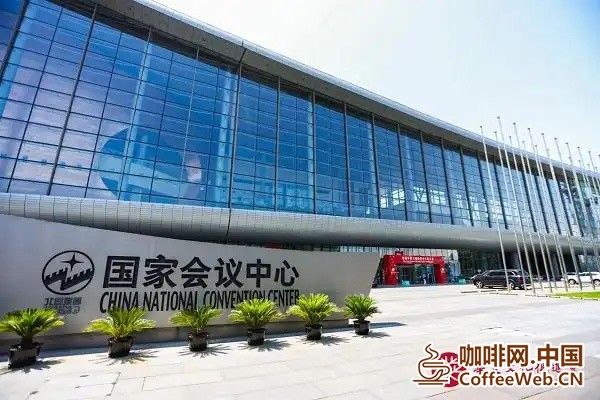
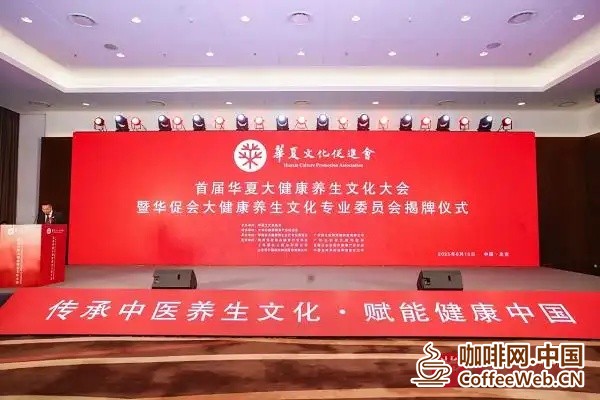
北京国家会议中心。走进大堂的人们闻到了一股与往常不同的气味——空气中弥漫的不再是这栋建筑惯有的咖啡醇香,而是一缕淡雅的草本药香。2025年6月,这个细微的变化,恰好成为当天在此举办的“首届华夏大健康养生文化大会”一个颇具意味的注脚。
咖啡象征商务效率与快节奏的现代生活,药香则指向调养、平衡的东方养生哲学。在这里,两种气味的“交接”,隐喻着一场更深层次的转变:健康议题正从个人的生活偏好走向国家战略与产业发展的核心议程。
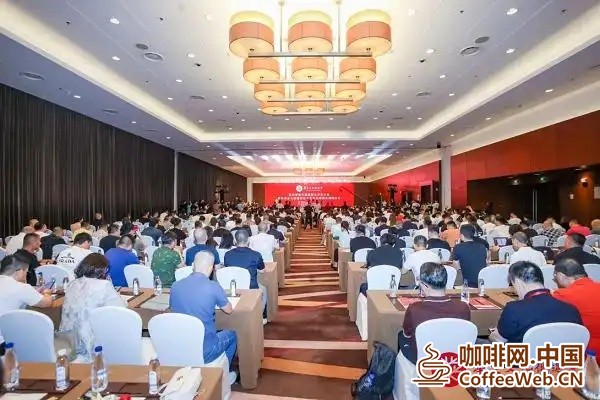
这场大会被视为《“健康中国2030”规划纲要》与《中医药振兴发展重大工程实施方案》在实践层面的首次深度交汇。前者布局了全生命周期的健康服务体系,后者为中医药的现代化提供了具体路径。过去,这两条主线往往各自推进——一边是公共卫生体系建设与医保改革,另一边是中医馆下沉与非遗传承。而在国家会议中心这个见证了无数国际商务对话的场所,政策制定、学术研究、产业转化与大众传播第一次坐到了同一张圆桌前。
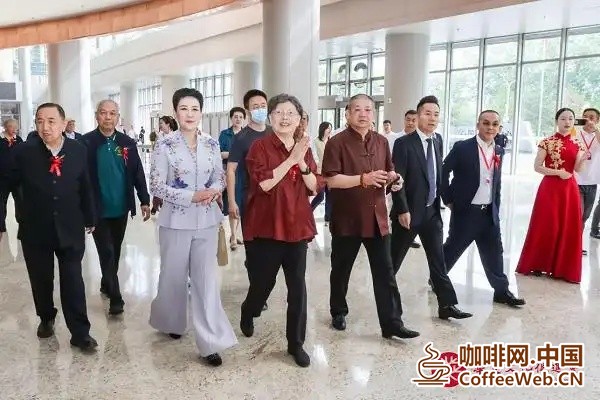
参会者的构成清晰地展现了这一生态链条。国医大师唐祖宣、李佃贵、王世民三位学术权威的集体亮相,则将经典理论与现代应用相衔接。唐祖宣关于“药食同源产业化路径”的报告引发了产业界代表的浓厚兴趣;李佃贵系统阐述的“浊毒理论”在会场内外被反复讨论。与此同时,歌唱家杨洪基、前央视主持人张宏民、演员张光北等公众人物以“健康大使”身份跨界加入,推动了养生话题从专业圈层向大众传播的延伸。当这些来自不同领域的人士站上同一张合影台时,有参会者称之为“健康中国2030的预览图”——它预示着未来中国健康生态的演进,必然是顶层设计、学术支撑、产业力量与大众文化的深度融合。
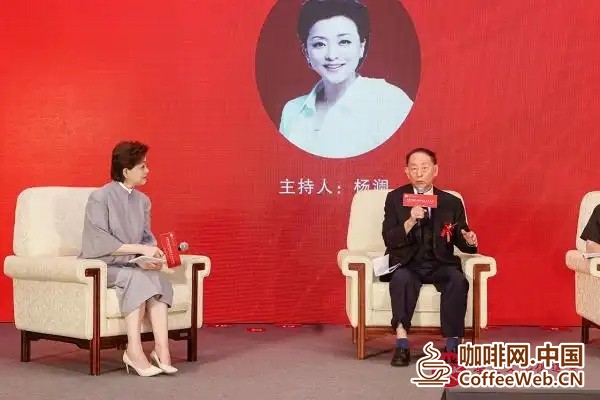
大会的核心议题之一,是健康逻辑从“治病”向“养命”的转换。高强在发言中指出,过去谈健康重心在治病,今天应当转向养护。这一观点得到多位专家的呼应。国医大师唐祖宣在分论坛上分享道:“健康是大家共同的心愿,如何帮助更多的人实现健康,是所有中医人必须思考的问题。”多位产业界代表表示,政策信号已经明确指向“预防为主、关口前移”,这正在改变大健康产业的投资逻辑——从健康管理到功能性食品,从中医智能设备到养生服务连锁,资本与技术的关注点正向“养护前端”迁移。
正是在这一背景下,一档健康科普栏目《京医求经》在大会上举行了启动仪式。该栏目由《中国中医药报》社打造,国医大师唐祖宣受聘担任首席顾问,天津市名中医李平院长为常驻嘉宾,演员张光北出任健康大使。栏目定位为“互联网时代下让国医触手可及”,聚焦中医药知识的通俗化转化,内容涵盖四季养生、慢病调治、家庭实用方剂等,计划借助短视频、直播等新媒体形式进行传播。它的出现,旨在回应公众对权威、实用养生信息的需求,填补专业中医知识与大众认知之间的信息鸿沟。在整场大会的宏大叙事中,这档栏目的启动只是一个具体而微的实践注脚——它试图将国家战略层面的讨论,转化为普通家庭能够接触到的日常知识。
实际上,从咖啡香到药草香的转变,并非某个具体人物的“金句”所能概括,而是整场大会传递出的集体信号。参会者带走的不是对某个细节的记忆,而是一个清晰的判断:健康议题在国家议事层级中的权重正在显著提升。在为期一天的密集讨论中,政策制定者、学术权威与产业代表反复提到同一个关键词——“前置”。健康管理的重心正在从疾病治疗向风险干预和日常养护迁移,而中医药恰恰在这一环节拥有独特的工具优势和认知基础。大会现场展示的数据显示,中国大健康产业规模已突破12万亿元,其中与中医养生直接相关的服务与产品年复合增长率连续三年超过15%。这些数字比任何感性的细节都更能说明问题。
《京医求经》栏目的启动,正是这一趋势在传播层面的具体落子。它不承担宏大叙事的任务,而是试图解决一个现实问题:当越来越多的人开始关注中医养生,他们能否获得权威、清晰、可操作的信息?答案尚需时间检验,但至少,一个由国家权威媒体牵头、国医大师把关、新媒体渠道分发的内容体系已经起步。
香气会散去,会议也会结束。但国家会议中心这场“气味更替”所折射的方向性变化——健康议题从边缘走向中心、从个人偏好上升为公共政策、从传统智慧转化为现代产业——正在以更实在的方式进入人们的生活。
Beijing National Convention Center. The people who walked into the lobby smelled a different scent than usual - the air was no longer filled with the typical coffee aroma of this building, but with a subtle herbal fragrance. In June 2025, this subtle change happened to be a significant footnote to the "First Huaxia Health Culture Conference" held here on that day.
Coffee symbolizes business efficiency and fast-paced modern life, while medicinal aroma points to the Eastern philosophy of health preservation and balance. Here, the "handover" of two odors symbolizes a deeper transformation: health issues are moving from individual life preferences to the core agenda of national strategy and industrial development.
This conference is regarded as the first in-depth intersection of the "Healthy China 2030" planning outline and the "Implementation Plan for the Major Project of Traditional Chinese Medicine Revitalization and Development" at the practical level. The former lays out a health service system throughout the entire life cycle, while the latter provides a specific path for the modernization of traditional Chinese medicine. In the past, these two main lines often went their separate ways - one was the construction of the public health system and medical insurance reform, and the other was the sinking of traditional Chinese medicine clinics and the inheritance of intangible cultural heritage. At the National Convention Center, a venue that has witnessed countless international business dialogues, policy-making, academic research, industrial transformation, and mass communication have all sat at the same round table for the first time.
The composition of the attendees clearly demonstrates this ecological chain. The collective appearance of three academic authorities, Tang Zuxuan, Li Diangui, and Wang Shimin, who are masters of traditional Chinese medicine, connects classic theories with modern applications. Tang Zuxuan's report on the "industrialization path of medicine and food homology" has aroused strong interest from industry representatives; The "theory of turbidity and toxicity" systematically expounded by Li Diangui was repeatedly discussed both inside and outside the venue. At the same time, public figures such as singer Yang Hongji, former CCTV host Zhang Hongmin, and actor Zhang Guangbei have joined as "health ambassadors", promoting the extension of health topics from professional circles to the public. When these people from different fields stand on the same photo platform, some attendees call it the "Preview of Healthy China 2030" - it heralds the evolution of China's healthy ecology in the future, which will inevitably involve a deep integration of top-level design, academic support, industrial strength, and popular culture.
One of the core topics of the conference is the shift of health logic from "treating diseases" to "nurturing life". Gao Qiang pointed out in his speech that in the past, the focus of discussing health was on treating diseases, but today it should shift towards maintenance. This viewpoint has been echoed by multiple experts. Tang Zuxuan, a master of traditional Chinese medicine, shared on a sub forum that "health is a common wish for everyone, and how to help more people achieve health is a question that all traditional Chinese medicine practitioners must consider." Several industry representatives stated that policy signals have clearly pointed to "prevention first, shifting the focus forward", which is changing the investment logic of the big health industry - from health management to functional foods, from traditional Chinese medicine intelligent equipment to health service chains, the focus of capital and technology is shifting towards "maintenance front-end".
It is in this context that a health science popularization program called "Jing Yi Qiu Jing" held its launch ceremony at the conference. This column is created by the China Journal of Traditional Chinese Medicine, with Tang Zuxuan, a master of Chinese medicine, appointed as the chief consultant, Li Ping, a renowned traditional Chinese medicine practitioner in Tianjin, as the resident guest, and actor Zhang Guangbei as the health ambassador. The column is positioned as "making Chinese medicine accessible in the Internet era", focusing on the popularization of Chinese medicine knowledge, covering four seasons health care, treatment of chronic diseases, practical prescriptions for families, etc. It is planned to spread through new media forms such as short videos and live broadcast. Its emergence aims to respond to the public's demand for authoritative and practical health information, and fill the information gap between professional traditional Chinese medicine knowledge and public perception. In the grand narrative of the entire conference, the launch of this column is just a concrete and subtle practical footnote - it attempts to transform discussions at the national strategic level into everyday knowledge that ordinary families can access.
In fact, the transition from coffee aroma to herbal aroma cannot be summarized by a specific person's "golden sentence", but rather the collective signal conveyed by the entire conference. What attendees take away is not a memory of a particular detail, but a clear judgment: the weight of health issues in the national legislative hierarchy is significantly increasing. During a day of intensive discussions, policy makers, academic authorities, and industry representatives repeatedly mentioned the same keyword - "pre positioning". The focus of health management is shifting from disease treatment to risk intervention and daily maintenance, and traditional Chinese medicine has unique tool advantages and cognitive foundations in this regard. The data presented at the conference shows that the scale of China's big health industry has exceeded 12 trillion yuan, with the annual compound growth rate of services and products directly related to traditional Chinese medicine health preservation exceeding 15% for three consecutive years. These numbers are more indicative than any emotional details.
The launch of the "Jing Yi Qiu Jing" column is a concrete manifestation of this trend in terms of dissemination. It does not undertake the task of grand narrative, but attempts to solve a practical problem: as more and more people begin to pay attention to traditional Chinese medicine health preservation, can they obtain authoritative, clear, and actionable information? The answer still needs time to test, but at least a content system led by national authoritative media, supervised by national medical masters, and distributed through new media channels has begun.
The fragrance will dissipate and the meeting will come to an end. But the directional changes reflected by the "odor replacement" at the National Convention Center - health issues moving from the periphery to the center, from personal preferences to public policies, and from traditional wisdom to modern industries - are entering people's lives in more tangible ways.