


这场科学咖啡馆活动破局数据孤岛,勾勒AI医疗落地新图景This science caf é event breaks through data silos and outlines a new landscape for the implementation of AI healthcare
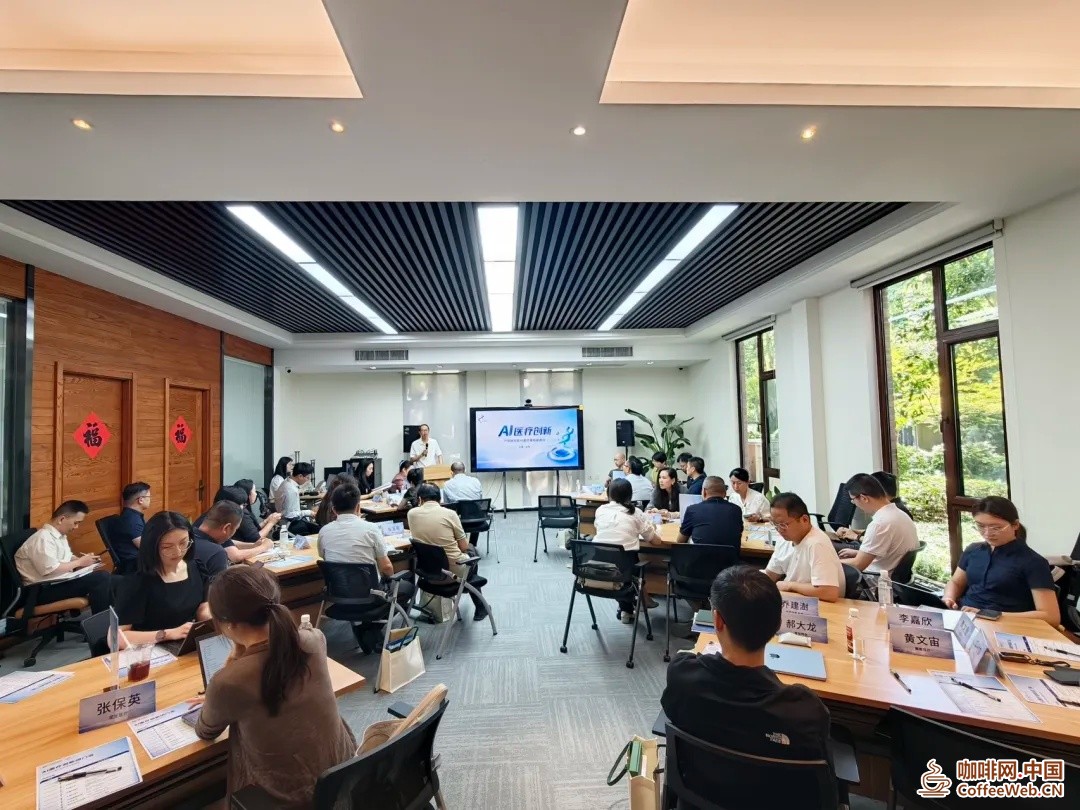
7月10日,一场以“AI医疗落地新路径”为主题的科学咖啡馆活动落地浙江省新时代产融协同创新研究院。本次活动紧扣“AI加速研发”“用多云架构保障合规”两大核心主线,定向邀约行业专家、医疗企业创始人、数据基建技术负责人齐聚,聚焦智慧诊疗、模拟医学、中医数字化、医疗数据底座四大方向展开深度交流,搭建“产业+金融+科技”常态化协同交流平台,打通AI医疗技术从实验室走向产业应用的落地壁垒。
省人工智能学会理事长胡华以全球顶尖意识障碍评估专家运用AI技术的行业案例为切入点,指出AI在癌症早筛、病理识别等场景中已展现出显著应用价值。他提出,医疗是AI落地最具长期价值的赛道,横跨生物、化学、精密仪器、人工智能等多学科,只要守住医疗伦理底线,产业创新空间广阔。同时,他鼓励青年创业者深耕AI医疗细分赛道,通过跨领域思想碰撞催生落地成果。
浙一教学部副主任、骨科副主任医师王权带来AI+模拟医学的前沿探索。模拟医学以高仿真手段培育青年医师,避免新手直接在患者身上实操带来的医疗安全隐患,是规范化临床教学的核心支撑,当前已深度融合VR/AR、3D打印、力反馈设备、动作捕捉与AI技术。他预判,短期AI无法完全替代医师人文诊疗环节,但标准化、重复性临床操作工作或将逐步实现人机协同,而从长期来看,高仿真模拟技术有望直接通过系统化实训培养专家型医师。当前,国内相关硬件设备正加速推进国产替代,摆脱海外设备依赖。
糖吉医疗创始人左玉星分享了企业在代谢疾病领域的AI落地应用。团队聚焦肥胖、糖尿病、脂肪肝等代谢病,依托消化道介入技术,搭建“饮食-运动-药物-器械/手术”全链条数字化管理体系。他强调,AI的定位是辅助医生而非替代医生,这也是产品能够顺利落地医院、推进临床合作的核心逻辑。目前,企业相关数字疗法器械已取得全国独有的医疗器械注册证,但受政策编码限制,仍无法顺利完成医保准入与医院系统对接,是数字疗法规模化推广核心瓶颈。
八脉科技创始人金建新介绍AI赋能中医标准化转型实践。团队深耕中医数字化十余年,基于Transformer架构自研“大企灵枢”、“大企灵运”两款垂直行业模型,通过舌象、脉象、语音多维度硬件采集中医体征数据,将传统模糊化的 “望闻问切”诊疗经验转化为结构化诊断建议。他认为,AI不会颠覆中医体系,而是数字化留存名老中医诊疗思维,通过软硬件结合补齐中医数据采集短板。行业人才缺口集中在“懂中医+懂AI”复合型从业者,只有这样的人才能打通技术与临床之间的壁垒。
数新智能创始人陈廷梁(王贲)则直击行业核心关切的医疗数据孤岛问题,跨机构数据不通、隐私合规门槛高、数据权属难以保障等,极大制约AI模型训练与多中心临床科研落地。针对痛点,他完整拆解了混合云架构在医疗数据流通场景中的技术方案与落地经验,为医疗数据合规应用、安全共享提供了清晰的技术路径。他坦言,纯编码、通用AI应用从业者受大模型迭代冲击焦虑感最强,而纯医疗数据驱动的应用因体系尚不完善,短期内被替代的风险较低,但一旦全域数据打通,行业将迎来深度智能化改造。
在自由圆桌研讨环节,参会企业家、投资机构、技术专家围绕数据真实性、医疗AI项目量化评估、初创企业政策试点等难点充分交换观点,共同探讨可行解决方案,挖掘多方协同合作新机遇。研讨尾声,主办方为分享嘉宾颁发科学咖啡馆荣誉证书。
在自由交流环节中,嘉宾们进一步对接合作意向,探讨协同机会,为后续的产业联动埋下伏笔。
本次活动由浙江省科协指导,专精特新企业培育基地(杭州)数字化中心、《浙商》杂志联合主办,以小而精的深度交流形式,跳出单向宣讲模式,兼顾学术理论、临床实操与产业商业化视角。
On July 10th, a scientific caf é event with the theme of "New Path of AI Medical Implementation" landed at Zhejiang New Era Industry Finance Collaborative Innovation Research Institute. This event focuses on the two core themes of "AI accelerated research and development" and "ensuring compliance with multi cloud architecture". Industry experts, medical enterprise founders, and data infrastructure technology leaders are invited to gather in a targeted manner, focusing on four directions of intelligent diagnosis and treatment, simulated medicine, digitalization of traditional Chinese medicine, and medical data base for in-depth exchanges. A normalized collaborative exchange platform of "industry+finance+technology" is built to break down the barriers to the landing of AI medical technology from laboratories to industrial applications.
Hu Hua, Chairman of the Provincial Artificial Intelligence Society, pointed out that AI has shown significant application value in scenarios such as cancer early screening and pathological recognition, using industry cases of top global experts in assessing consciousness disorders using AI technology as a starting point. He proposed that healthcare is the track with the most long-term value for AI implementation, spanning multiple disciplines such as biology, chemistry, precision instruments, and artificial intelligence. As long as the bottom line of medical ethics is upheld, there is vast space for industrial innovation. At the same time, he encourages young entrepreneurs to delve deeper into the AI medical niche and generate practical results through cross disciplinary ideological collisions.
Wang Quan, Deputy Director of the Teaching Department and Deputy Chief Physician of Orthopedics at Zhejiang University, brings cutting-edge exploration of AI+simulation medicine. Simulation medicine cultivates young physicians with high simulation methods to avoid medical safety hazards caused by novice practitioners directly practicing on patients. It is the core support of standardized clinical teaching and has deeply integrated VR/AR, 3D printing, force feedback equipment, motion capture, and AI technology. He predicts that AI cannot completely replace the humanistic diagnosis and treatment process of physicians in the short term, but standardized and repetitive clinical operations may gradually achieve human-machine collaboration. In the long run, high simulation technology is expected to directly train expert physicians through systematic training. Currently, domestic hardware equipment is accelerating the promotion of domestic substitution and getting rid of dependence on overseas equipment.
Left Yuxing, founder of Tangji Medical, shared the company's AI landing application in the field of metabolic diseases. The team focused on obesity, diabetes, fatty liver and other metabolic diseases, and relied on digestive tract intervention technology to build a full chain digital management system of "diet exercise medicine equipment/surgery". He emphasized that the positioning of AI is to assist doctors rather than replace them, which is also the core logic for products to be successfully implemented in hospitals and promote clinical cooperation. At present, enterprise related digital therapy devices have obtained a unique national medical device registration certificate, but due to policy coding restrictions, they still cannot smoothly complete the integration of medical insurance access and hospital systems, which is the core bottleneck for the large-scale promotion of digital therapy.
Founder of Bamai Technology, Jin Jianxin, introduces the practice of AI empowering the standardization transformation of traditional Chinese medicine. The team has been deeply involved in the digitalization of traditional Chinese medicine for more than ten years. Based on the Transformer architecture, they have independently developed two vertical industry models, "Big Enterprise Lingshu" and "Big Enterprise Lingyun". Through multi-dimensional hardware collection of traditional Chinese medicine physical sign data such as tongue image, pulse, and voice, they have transformed the traditional fuzzy diagnosis and treatment experience of "observation, hearing, questioning, and cutting" into structured diagnostic recommendations. He believes that AI will not disrupt the traditional Chinese medicine system, but rather digitize the diagnostic and treatment thinking of renowned TCM practitioners, and fill the gaps in TCM data collection through the combination of software and hardware. The talent gap in the industry is concentrated in composite practitioners who understand both traditional Chinese medicine and AI. Only such individuals can break through the barriers between technology and clinical practice.
Chen Tingliang (Wang Ben), founder of Shuxin Intelligence, directly addresses the core concern of the industry regarding the issue of medical data silos. Cross institutional data barriers, high privacy compliance thresholds, and difficulty in ensuring data ownership greatly constrain the training of AI models and the implementation of multi center clinical research. In response to the pain points, he completely dismantled the technical solutions and implementation experience of hybrid cloud architecture in medical data circulation scenarios, providing a clear technical path for compliant application and secure sharing of medical data. He admitted that practitioners of pure coding and general AI applications are most anxious about the impact of large model iterations, while pure medical data-driven applications have a lower risk of being replaced in the short term due to their incomplete system. However, once the global data is connected, the industry will usher in a deep intelligent transformation.
In the free roundtable discussion session, attending entrepreneurs, investment institutions, and technical experts fully exchanged views on difficulties such as data authenticity, quantitative evaluation of medical AI projects, and pilot policies for startups, jointly exploring feasible solutions and exploring new opportunities for multi-party collaboration. At the end of the seminar, the organizer presented the Science Cafe Honor Certificate to the guest speakers.
In the free exchange session, guests further discussed their cooperation intentions, explored opportunities for collaboration, and laid the groundwork for future industrial linkage.
This event is guided by the Zhejiang Association for Science and Technology, jointly organized by the Digital Center of the Specialized and Innovative Enterprise Cultivation Base (Hangzhou) and the Zhejiang Business Magazine. It is a small yet sophisticated form of in-depth communication, breaking away from the one-way preaching mode and taking into account academic theory, clinical practice, and industrial commercialization perspectives.