印尼街头,快被中国奶茶和咖啡占领了?Are the streets of Indonesia being dominated by Chinese milk tea and coffee?
在中国餐饮品牌的东南亚版图上,新加坡更像一扇橱窗,印尼则更像一座真正的考场。
市场成熟、商业规则清晰、华人消费者集中,使新加坡长期成为中国餐饮品牌试水海外、建立国际形象时优先考虑的市场之一。
但如果企业希望获得更大的门店规模、更广泛的消费者覆盖,并验证一套能够复制到其他新兴市场的经营模式,仅仅进入新加坡显然还不够。
于是,越来越多中国餐饮品牌开始把资源投向印尼。
蜜雪冰城在印尼的门店一度超过2600家,使其成为集团最重要的海外市场之一;库迪咖啡持续拓展当地门店和加盟网络;霸王茶姬于2025年4月在雅加达开出印尼首店,此后进入Plaza Indonesia等核心商业项目;瑞幸咖啡虽然尚未在印尼大规模开店,却已率先布局椰子原料供应链,希望将印尼纳入全球采购体系......
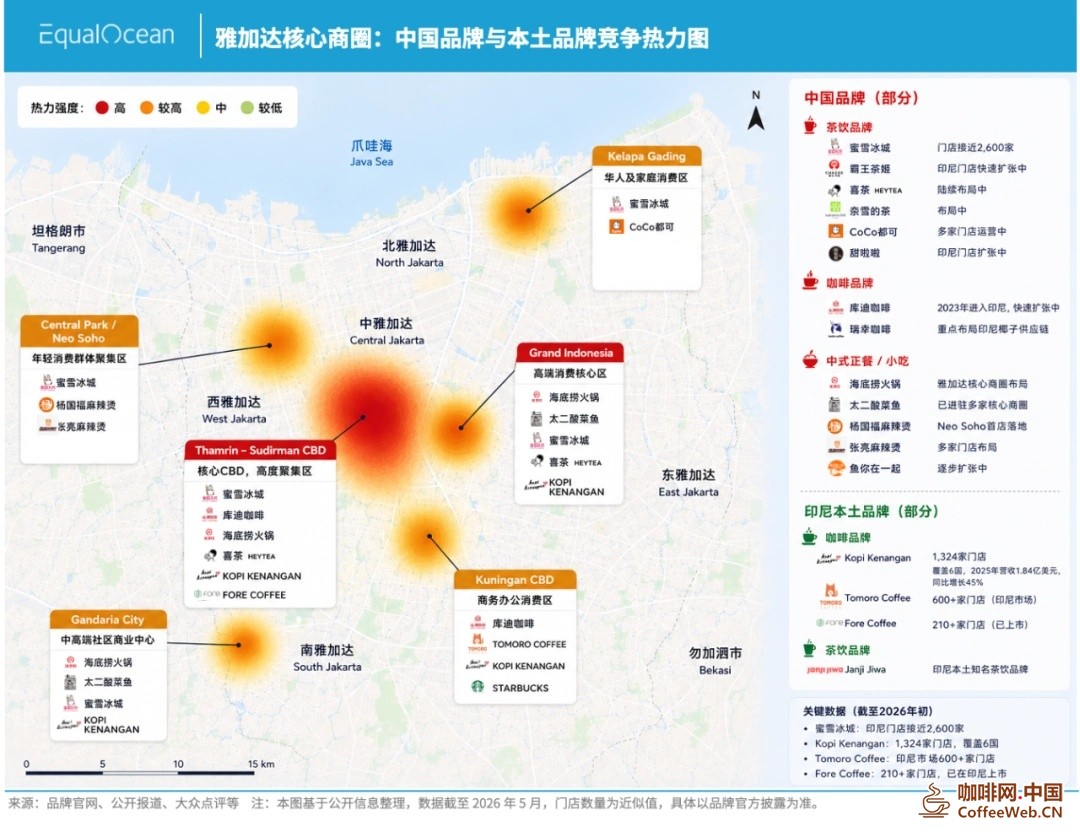
有人开店,有人做加盟,有人进入核心商场,也有人先从上游原料切入。这些看似不同的动作指向同一趋势:对于中国餐饮企业而言,印尼已经不只是销售奶茶、咖啡和火锅的海外市场,而是一个同时检验价格体系、供应链、本地组织和门店模型的战略节点。
更值得注意的是,中国品牌在印尼的竞争正在进入下一阶段。
蜜雪集团在2025年年报中披露,印尼和越南的门店数量有所下降,公司现阶段将重点放在优化存量门店运营、提升网络长期稳定性上。换句话说,在经历快速开店后,企业面对的问题已经从“能不能把店开出来”,转向“这些店能不能持续赚钱”。
印尼仍然充满机会,但这里已经不再是一场单纯比拼开店速度的竞赛。
01 印尼为什么成为中餐出海战略要地?
谈到印尼市场,最容易被提及的是人口。
世界银行数据显示,2025年印尼人口约为2.86亿,是东南亚人口最多的国家;同年经济增长约5.1%,在全球经济不确定性上升的背景下,仍保持了相对稳定的发展。
但人口规模不会自动转化为餐饮品牌的增长。
印度、巴西和尼日利亚同样拥有庞大人口,却没有在同一时期吸引如此密集的中国现制饮品和连锁餐饮品牌。印尼真正特别的地方,在于人口结构、消费价格带、数字基础设施和餐饮连锁化进程共同形成了一个窗口期。
首先,印尼是一个高频但高度价格敏感的消费市场。
印尼经济仍在增长,但消费升级并非单向上升。根据印尼中央统计局基于居民消费支出的分类,印尼中产阶层人口由2019年的5733万下降至2024年3月的4785万,占总人口的比例也由21.45%降至17.13%。大量消费者愿意尝试新品牌,却仍然关注价格、折扣和便利性。
因此,在印尼更容易形成规模的,未必是强调高客单价和精致体验的品牌,而是能够在价格、品质和便利性之间取得平衡的企业。
蜜雪冰城能够快速进入社区和大众商业区,与其低价格、高频率的产品结构密切相关。库迪和TOMORO等品牌同样强调平价咖啡,希望把咖啡从偶发消费转变为更日常的消费习惯。
其次,印尼已经形成相对成熟的线上餐饮基础设施。
Momentum Works估算,2025年印尼线上外卖市场GMV达到64亿美元,同比增长约18%。GrabFood、GoFood和ShopeeFood分别占据46%、31%和23%的市场份额。
从优惠券、外卖套餐和会员积分,到短视频营销和私域运营,中国餐饮企业已经在国内经历过多轮数字化竞争。进入印尼后,它们不需要重新培养消费者线上点单和外卖配送的习惯,而可以把既有经验接入TikTok、WhatsApp和本地外卖平台。
第三,印尼餐饮市场仍然保留着较大的连锁化空间。
加拿大农业和农业食品部对印尼餐饮市场的研究显示,2024年当地独立经营的正餐门店和咖啡馆销售额仍高于连锁门店;连锁品牌的优势主要集中在快餐等有限服务餐饮领域。
这意味着,印尼并不是一个没有竞争的空白市场,但市场格局也远未完全固化。数量庞大的独立咖啡店、街边餐厅和传统小店构成了丰富的餐饮生态,同时也为具备供应链、数字化运营和跨区域扩张能力的连锁品牌留下了空间。
吸引中国品牌的并不是“2.8亿人口”这个数字本身,而是一个更具体的机会:大量年轻消费者已经形成数字化消费习惯,但现代供应链和全国性连锁网络仍处于扩张过程中。
02 为什么是中国品牌在领跑?
过去很多人谈到餐饮出海时,关注的重点往往是产品是否符合当地消费者口味。但在印尼这一轮竞争中,中国品牌真正输出的并不仅仅是一杯奶茶、一碗麻辣烫或者一杯咖啡,而是一整套已经在中国市场反复验证过的连锁餐饮运营体系。
过去十多年,中国餐饮市场经历了全球范围内少有的激烈竞争。无论是新式茶饮、咖啡、火锅还是快餐赛道,都在高速扩张过程中完成了高度标准化训练。从中央厨房、冷链配送到加盟管理、门店培训,从会员运营到外卖体系、短视频营销,中国餐饮企业几乎把连锁经营的每一个环节都打磨到了极致。
当这些能力被带到印尼市场时,中国品牌获得的竞争优势往往不来自单个产品,而来自整套运营体系。
供应链是最先体现差异的环节。蜜雪冰城在当地布局椰子采购和冷链体系,瑞幸则推动咖啡烘焙和椰子加工能力建设,希望将印尼纳入全球原料供应网络。相比单纯依赖进口,本地采购和本地加工不仅能够降低运输成本,也有助于提高供应稳定性,更好应对原材料价格波动。
加盟体系则决定了扩张速度。与许多仍以直营模式为主的国际品牌相比,中国品牌经过国内数千甚至上万家门店的运营实践,已经形成成熟的加盟管理、培训和标准化运营体系。这使其能够在进入新市场后更快复制门店网络,并保持相对一致的产品和服务质量。
数字化运营则进一步放大了这种优势。从会员体系到线上点单,从私域运营到外卖平台协同,中国餐饮企业已经积累了丰富经验。当这些能力与印尼的TikTok、WhatsApp、GrabFood和GoFood结合后,品牌往往能够以更低成本完成用户获取,并持续提升复购率和门店经营效率。
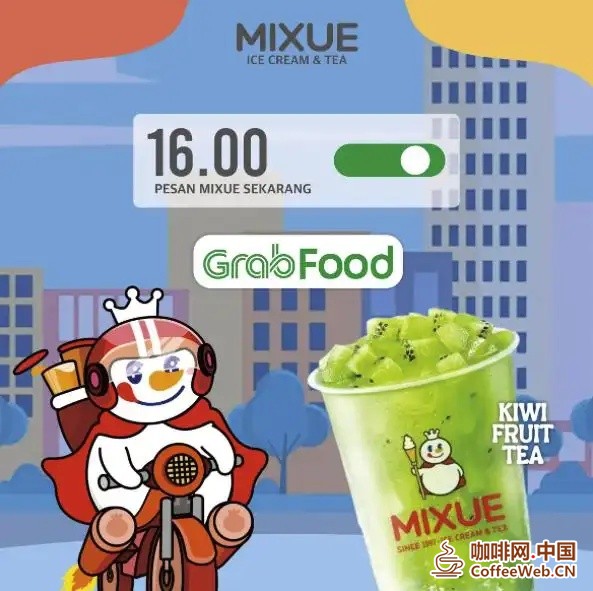
以蜜雪冰城为例,其印尼门店已经将GrabFood纳入日常营销体系,通过线上促销和外卖配送触达消费者。对于中国品牌而言,这种成熟的本地平台生态意味着大量在国内积累的数字化运营经验能够快速迁移,而无需重新培养用户习惯。
不过,工业化能力并不意味着简单复制中国模式。口味偏好、价格体系、清真认证、本地采购以及团队管理等方面,仍然需要根据当地市场进行调整。真正成功的品牌,往往不是把中国经验原封不动搬到海外,而是在标准化体系与本地化运营之间找到平衡。
03 本土品牌强势反击:市场红利充足,但竞争绝非一边倒
印尼存在市场窗口,并不意味着中国品牌可以一路平推。
在咖啡和现制饮品领域,印尼本土企业已经建立起很强的竞争力。
Kopi Kenangan在印尼经营接近1300家门店,并已向多个海外市场扩张;Fore Coffee截至2025年底拥有316家门店,2025年收入同比增长44%,净利润增长55%。
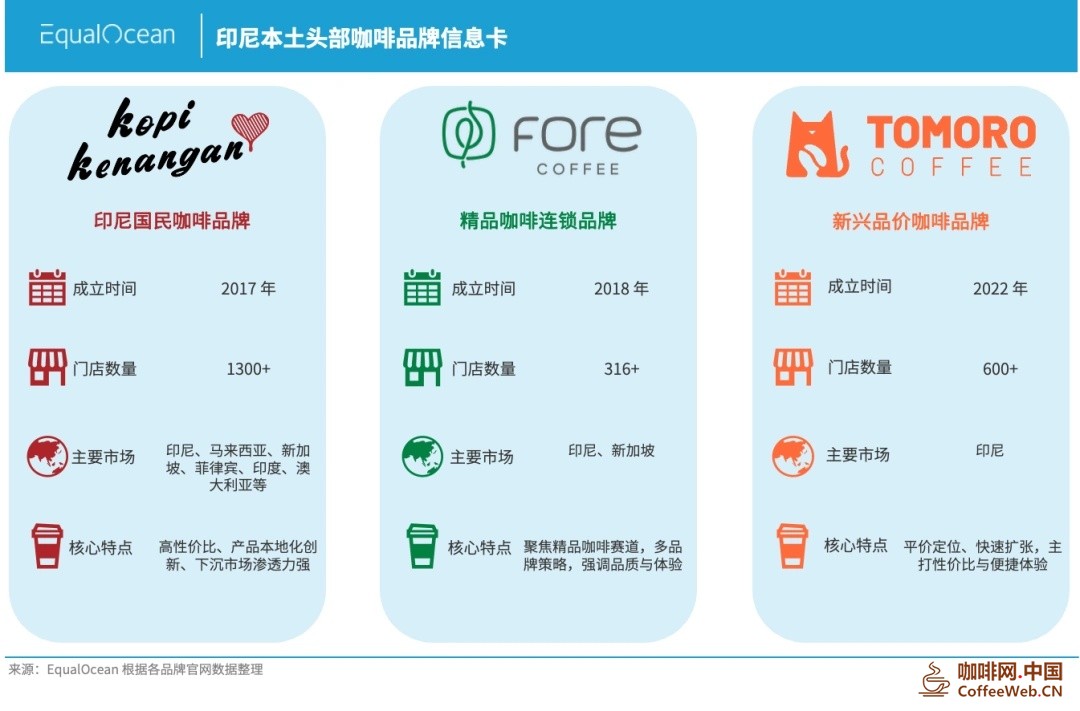
这些企业并不缺乏数字化和规模化能力。Kopi Kenangan拥有会员体系、自有应用和外卖业务,也在尝试将印尼特色的棕榈糖咖啡带向其他市场;Fore Coffee已经登陆印尼资本市场,并计划借助融资继续扩张门店网络。
TOMORO Coffee则处在一个更特殊的位置。
TOMORO在印尼注册、起步并完成主要市场扩张,但其创始人袁星伟曾在OPPO任职,具有中国科技和互联网行业背景。与其将TOMORO简单归类为印尼本土品牌,不如把它视为一家由中国创业团队在印尼孵化、从成立之初便面向东南亚市场的跨境品牌。
这也说明,中国企业在印尼面对的竞争已经不是泾渭分明的“中国品牌对阵本土品牌”。中国创业者、印尼团队、本地资本和国际供应链正在相互交织,品牌身份和竞争边界变得越来越模糊。
本土企业最明显的优势,是对当地消费语境的理解。
产品应该采用什么甜度,棕榈糖和椰子如何融入菜单,什么价格能够形成日常复购,消费者更愿意在写字楼、商场还是社区购买,这些细节都会直接影响单店表现。
清真合规也是所有品牌必须面对的问题。
对于进入印尼的中国餐饮品牌而言,进口食品、饮料及相关原料的清真认证过渡安排最晚将于2026年10月17日结束。这意味着,企业不仅需要调整菜单,还要提前梳理原料采购、生产加工、仓储运输和供应商认证等环节。
在中国市场,一家企业可以依靠总部集中管理数千家门店;进入印尼后,总部必须学会与本地团队、合作伙伴、加盟商、供应商和监管机构共同经营。
因此,门店数量已经不足以衡量一家品牌的海外表现。随着竞争加剧,企业更需要关注单店收入、加盟商回本周期、关店率、本地采购比例和消费者复购。
真正的考验不是把店开出来,而是让门店在促销结束后仍然能够赚钱。
04 下一波中国品牌,谁最有机会?
对于中国餐饮企业而言,印尼的战略价值已经超出单一消费市场。
这里既是东南亚最大的经济体,也是咖啡、椰子等原料的重要产地;既拥有活跃的数字消费平台,又存在复杂的地区差异、价格分层和宗教合规要求。
这些因素共同使印尼成为一场具有代表性的全球化压力测试。
真正有机会长期发展的企业,通常需要同时完成几件事:产品价格符合当地购买力,门店模型能够让合作伙伴赚钱,供应链逐步实现本地化,总部标准又能与本地团队的判断相互兼容。
这也是不同品牌采取不同路径的原因。
蜜雪冰城正在从追求门店规模转向改善运营质量;库迪继续验证平价咖啡和加盟网络;霸王茶姬从核心商场切入,强调产品和品牌体验;瑞幸则暂时绕过前端门店,先将印尼接入全球原料供应体系。
它们并不是在争夺同一杯饮品,而是在探索同一个问题:一家在中国市场成长起来的餐饮企业,应该如何在海外重新搭建经营体系?
谁能够在印尼处理好本地供应链、清真认证、合作伙伴管理、数字运营和单店盈利,谁才更有可能进入马来西亚、中东乃至更多穆斯林人口占比较高的新兴市场。
这些市场当然不能简单复制。消费者口味、收入结构和商业规则各不相同。但印尼可以帮助中国品牌建立一种此前并不熟悉的能力:不再只是依靠中国总部向外输出产品和资源,而是让海外市场真正拥有采购、运营和组织能力。
从这个角度看,印尼不是中国餐饮出海的终点,也不只是一个能够贡献数千家门店的大市场。
在新加坡,一家品牌可以证明自己会出海。
在印尼,它必须证明自己真正会经营海外。
联系作者

更多阅读
行业洞察:
人物专访:
On the Southeast Asian map of Chinese catering brands, Singapore is more like a showcase, while Indonesia is more like a real testing ground.
The mature market, clear business rules, and concentration of Chinese consumers have made Singapore one of the priority markets for Chinese catering brands to explore overseas and establish international image in the long run.
But if companies want to achieve larger store sizes, wider consumer coverage, and validate a business model that can be replicated in other emerging markets, simply entering Singapore is clearly not enough.
So, more and more Chinese catering brands are beginning to invest their resources in Indonesia.
At one point, Meixue Ice City had over 2600 stores in Indonesia, making it one of the most important overseas markets for the group; Kudi Coffee continues to expand its local stores and franchise network; Bawang Tea Lady opened its first store in Jakarta, Indonesia in April 2025, and subsequently entered core commercial projects such as Plaza Indonesia; Although Luckin Coffee has not yet opened a large-scale store in Indonesia, it has taken the lead in laying out the coconut raw material supply chain and hopes to include Indonesia in the global procurement system .....
Some people open stores, some become franchisees, some enter core shopping malls, and some start with upstream raw materials. These seemingly different actions point to the same trend: for Chinese catering companies, Indonesia is no longer just an overseas market for selling milk tea, coffee, and hotpot, but a strategic node that simultaneously tests price systems, supply chains, local organizations, and store models.
More noteworthy is that Chinese brands are entering the next stage of competition in Indonesia.
Meixue Group disclosed in its 2025 annual report that the number of stores in Indonesia and Vietnam has decreased, and the company is currently focusing on optimizing the operation of existing stores and improving long-term network stability. In other words, after experiencing rapid store opening, the problem faced by enterprises has shifted from "whether they can open stores" to "whether these stores can continue to make money".
Indonesia is still full of opportunities, but it is no longer a simple competition for store opening speed.
Why has Indonesia become a strategic location for Chinese cuisine going global?
When it comes to the Indonesian market, the most easily mentioned is population.
According to World Bank data, Indonesia's population will be approximately 286 million in 2025, making it the most populous country in Southeast Asia; In the same year, the economy grew by about 5.1%, maintaining relatively stable development against the backdrop of rising global economic uncertainty.
But population size does not automatically translate into growth in food and beverage brands.
India, Brazil, and Nigeria also have large populations, but they did not attract such a dense concentration of Chinese made beverages and chain restaurant brands during the same period. The truly unique aspect of Indonesia lies in the combination of population structure, consumer price bands, digital infrastructure, and the process of restaurant chain operation, which have formed a window period.
Firstly, Indonesia is a high-frequency but highly price sensitive consumer market.
The Indonesian economy is still growing, but consumption upgrading is not a one-way increase. According to the classification based on household consumption expenditure by the Indonesian Central Bureau of Statistics, the middle-class population in Indonesia has decreased from 57.33 million in 2019 to 47.85 million in March 2024, and the proportion of the total population has also decreased from 21.45% to 17.13%. A large number of consumers are willing to try new brands, but still focus on price, discounts, and convenience.
Therefore, in Indonesia, it is not necessarily brands that emphasize high customer value and exquisite experience that are more likely to form a scale, but rather companies that can strike a balance between price, quality, and convenience.
The rapid entry of Meixue Ice City into communities and public commercial areas is closely related to its low price and high-frequency product structure. Brands such as Kudi and TOMORO also emphasize affordable coffee, hoping to transform coffee from occasional consumption to more daily consumption habits.
Secondly, Indonesia has established a relatively mature online catering infrastructure.
Momentum Works estimates that the GMV of Indonesia's online food delivery market will reach $6.4 billion by 2025, a year-on-year increase of approximately 18%. GrabFood, GoFood, and ShopeeFood hold market shares of 46%, 31%, and 23%, respectively.
From coupons, takeaway packages, and membership points, to short video marketing and private domain operations, Chinese catering enterprises have experienced multiple rounds of digital competition in China. After entering Indonesia, they do not need to retrain consumers' habits of online ordering and food delivery, but can integrate their existing experience into TikTok, WhatsApp, and local food delivery platforms.
Thirdly, the Indonesian catering market still retains significant potential for chain operations.
A study by the Canadian Department of Agriculture and Agri Food on the Indonesian food and beverage market shows that in 2024, sales of locally independent dining establishments and cafes will still be higher than those of chain stores; The advantages of chain brands are mainly concentrated in the limited service catering field such as fast food.
This means that Indonesia is not a blank market without competition, but the market structure is far from fully solidified. The large number of independent coffee shops, street side restaurants, and traditional small shops constitute a rich catering ecosystem, while also leaving space for chain brands with supply chain, digital operation, and cross regional expansion capabilities.
What attracts Chinese brands is not the number of "280 million people" itself, but a more specific opportunity: a large number of young consumers have formed digital consumption habits, but modern supply chains and nationwide chain networks are still in the process of expansion.
Why are Chinese brands leading the way?
In the past, when many people talked about catering going global, the focus was often on whether the products met the taste of local consumers. But in this round of competition in Indonesia, what Chinese brands really export is not just a cup of milk tea, a bowl of Spicy Hot Pot or a cup of coffee, but a set of chain catering operation system that has been repeatedly verified in the Chinese market.
Over the past decade, the Chinese catering market has experienced rare and intense competition on a global scale. Whether it's new-style tea drinks, coffee, hotpot, or fast food chains, they have all undergone highly standardized training during the rapid expansion process. From central kitchens and cold chain delivery to franchise management and store training, from membership operations to takeaway systems and short video marketing, Chinese catering companies have almost polished every aspect of chain operations to the extreme.
When these capabilities are brought to the Indonesian market, the competitive advantage gained by Chinese brands often comes not from individual products, but from the entire operational system.
The supply chain is the first link that reflects differences. Honey Snow Ice City is laying out coconut procurement and cold chain systems locally, while Luckin Coffee is promoting the construction of coffee roasting and coconut processing capabilities, hoping to integrate Indonesia into the global raw material supply network. Compared to relying solely on imports, local procurement and processing can not only reduce transportation costs, but also help improve supply stability and better cope with fluctuations in raw material prices.
The franchise system determines the speed of expansion. Compared with many international brands that still rely on direct sales models, Chinese brands have formed mature franchise management, training, and standardized operation systems through the operation practice of thousands or even tens of thousands of stores in China. This enables it to quickly replicate its store network and maintain relatively consistent product and service quality after entering new markets.
Digital operations further amplify this advantage. From membership system to online ordering, from private domain operation to collaborative delivery platforms, Chinese catering enterprises have accumulated rich experience. When these capabilities are combined with TikTok, WhatsApp, GrabFood, and GoFood in Indonesia, brands are often able to acquire users at lower costs and continuously improve repeat purchase rates and store operational efficiency.
Taking Meixue Ice City as an example, its Indonesian stores have incorporated GrabFood into their daily marketing system, reaching consumers through online promotions and food delivery. For Chinese brands, this mature local platform ecosystem means that a large amount of digital operation experience accumulated domestically can be quickly transferred without the need to retrain user habits.
However, industrialization capability does not mean simply replicating the Chinese model. Taste preferences, pricing system, halal certification, local procurement, and team management still need to be adjusted according to the local market. Truly successful brands often find a balance between standardized systems and localized operations, rather than simply transferring Chinese experience to overseas markets.
03 Local brand strong counterattack: market dividends are abundant, but competition is not one-sided
The existence of a market window in Indonesia does not mean that Chinese brands can be promoted smoothly.
In the fields of coffee and freshly made beverages, Indonesian local enterprises have established strong competitiveness.
Kopi Kenangan operates nearly 1300 stores in Indonesia and has expanded into multiple overseas markets; Fore Coffee will have 316 stores by the end of 2025, with a year-on-year revenue growth of 44% and a net profit growth of 55%.
These enterprises do not lack digital and scaling capabilities. Kopi Kenangan has a membership system, proprietary applications, and food delivery business, and is also trying to bring Indonesian specialty palm sugar coffee to other markets; Fore Coffee has entered the Indonesian capital market and plans to continue expanding its store network through financing.
TOMORO Coffee is in a more unique position.
TOMORO was registered in Indonesia, started and completed its main market expansion, but its founder Yuan Xingwei once worked in OPPO, with a background in China's technology and Internet industries. Rather than simply categorizing TOMORO as a local Indonesian brand, it is better to view it as a cross-border brand incubated by a Chinese entrepreneurial team in Indonesia and aimed at the Southeast Asian market from its inception.
This also indicates that the competition faced by Chinese companies in Indonesia is no longer a clear-cut "Chinese brand versus local brand". Chinese entrepreneurs, Indonesian teams, local capital, and international supply chains are intertwined, and brand identity and competitive boundaries are becoming increasingly blurred.
The most obvious advantage of local enterprises is their understanding of the local consumer context.
What sweetness level should be used for the product, how palm sugar and coconut should be integrated into the menu, what price can form daily repeat purchases, and whether consumers prefer to purchase in office buildings, shopping malls, or communities, all of these details will directly affect the performance of individual stores.
Halal compliance is also a problem that all brands must face.
For Chinese catering brands entering Indonesia, the transition arrangement for halal certification of imported food, beverages, and related raw materials will end no later than October 17, 2026. This means that companies not only need to adjust their menus, but also need to proactively streamline processes such as raw material procurement, production and processing, warehousing and transportation, and supplier certification.
In the Chinese market, a company can rely on its headquarters to centrally manage thousands of stores; After entering Indonesia, the headquarters must learn to operate together with local teams, partners, franchisees, suppliers, and regulatory agencies.
Therefore, the number of stores is no longer sufficient to measure a brand's overseas performance. As competition intensifies, companies need to pay more attention to single store revenue, franchisee payback period, store closure rate, local procurement ratio, and consumer repeat purchases.
The real test is not to open a store, but to ensure that the store can still make money after the promotion ends.
Who has the greatest opportunity for the next wave of Chinese brands?
For Chinese catering enterprises, Indonesia's strategic value has surpassed a single consumer market.
This is not only the largest economy in Southeast Asia, but also an important source of raw materials such as coffee and coconut; It has both an active digital consumption platform and complex regional differences, price stratification, and religious compliance requirements.
These factors collectively make Indonesia a representative global stress test.
Enterprises that truly have the opportunity for long-term development usually need to accomplish several things simultaneously: product prices that meet local purchasing power, store models that enable partners to make money, supply chains that gradually localize, and headquarters standards that are compatible with local team judgments.
This is also the reason why different brands adopt different paths.
Meixue Ice City is shifting from pursuing store scale to improving operational quality; Kudi continues to verify affordable coffee and franchise networks; Bawang Tea Lady starts from the core shopping mall, emphasizing product and brand experience; Luckin temporarily bypassed front-end stores and first connected Indonesia to the global raw material supply system.
They are not competing for the same drink, but exploring the same question: how should a catering enterprise that has grown up in the Chinese market rebuild its business system overseas?
Whoever can handle local supply chain, halal certification, partner management, digital operations, and single store profitability in Indonesia is more likely to enter emerging markets with high Muslim populations in Malaysia, the Middle East, and even more.
These markets cannot be simply replicated. Consumer tastes, income structures, and business rules vary. But Indonesia can help Chinese brands establish a previously unfamiliar ability: no longer relying solely on Chinese headquarters to export products and resources, but allowing overseas markets to truly have purchasing, operational, and organizational capabilities.
From this perspective, Indonesia is not the end point for Chinese catering to go global, nor is it just a large market that can contribute thousands of stores.
In Singapore, a brand can prove that it can go global.
In Indonesia, it must prove that it truly knows how to operate overseas.
Contact the author
Read more
Industry Insights:
Who is relying on the exit to prolong their life? Car companies' overseas performance report for the first half of the year released
In 1000 stores, there are hidden winners and losers of JD's overseas expansion
Starting today, your Claude may really need to 'brush his face'
The top ten provinces and cities in foreign trade from January to May have been announced. What is your ranking?
Personal Interview:
Exclusive Interview with EqualOcean | Kazakhstan AIFC
Interview with Fosun Ruizheng Liu Fangwei: Why does India have a window of opportunity despite being "difficult, slow, and heavy"?
Interview with NAVEE GOLF: Starting from intelligent ball chartering, creating an intelligent ecosystem for golf
Interview with Zhifang: embodied intelligence is stuck, not only AI, but also scenarios