从三万店到“智萃生态圈”:瑞幸如何用AI重新定义中国咖啡From 30000 stores to the 'Smart Extraction Ecological Circle': How Luckin Coffee redefines Chinese coffee with AI
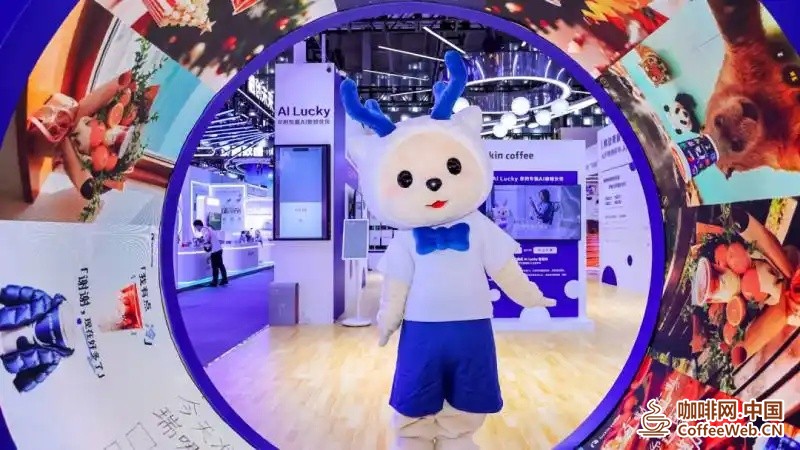
你能想到吗,2026世界人工智能大会的展馆里,最忙的不是机器人,也不是大模型,而是一家快闪咖啡店。
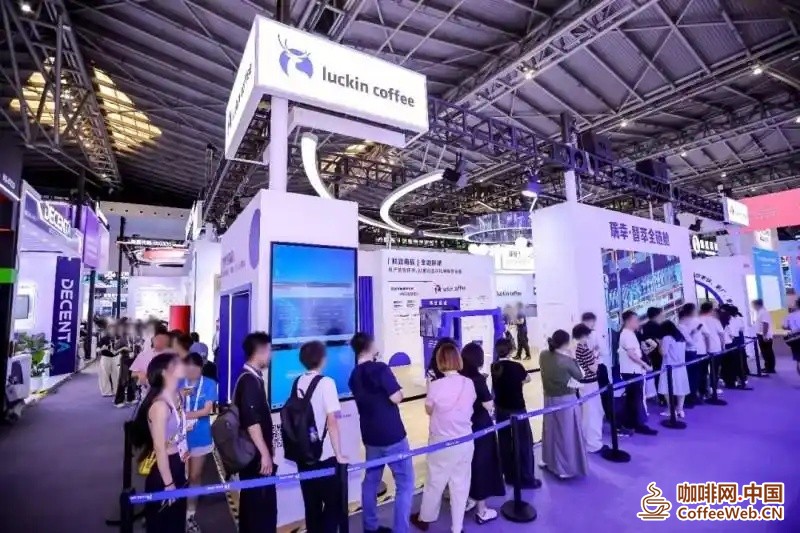
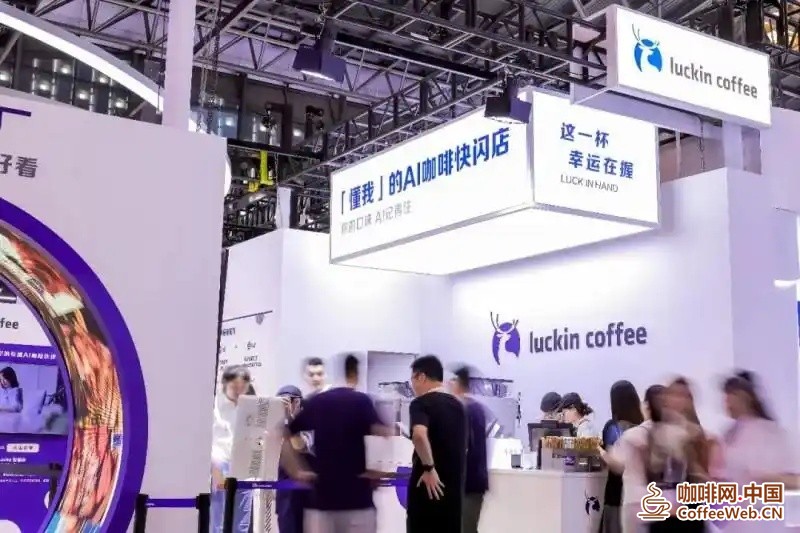
顶着1100多家企业、3000多项AI产品的同台竞技,瑞幸的“智萃全链舱”依然收获了展会现场的超高人气,从观众到工作人员排着队体验“动动嘴点咖啡”,对话、领券、下单、出杯,一气呵成。
一个咖啡品牌,为什么能站上全球顶级AI盛会的舞台?
答案,藏在一个更大的时代背景里。
“十五五”规划纲要明确提出,深化拓展“人工智能+”,促进生产方式深层次变革和生产力革命性跃迁;近日政府批复的《扩大消费“十五五”规划》,也明确深入推进“人工智能+消费”、拓展智能体应用场景。
政策密集落子的背后,是一个清晰的趋势:
“人工智能”正从理想走向现实,进入实践落地的蓬勃发展期。
但方向指明之后,路还是要靠企业自己走。当AI从“参数竞赛”转向“场景落地”,当用AI重构消费数智化全链路成为头部品牌的共识,关键时刻,行业迫切需要先行者“打样”。
瑞幸此次亮相WAIC,就是这样的一次“亮剑”。
过去提起瑞幸,最熟悉的标签是“中国门店最多的连锁咖啡品牌”,但规模只是它贡献的一小部分,真正关键的是,它正用数字化和智能化,重新定义这门生意的底层逻辑,这不仅仅是一个品牌的叙事,同样也是中国连锁咖啡产业走向现代化的缩影。
AI原生底座:瑞幸稳步推进全链路数智化建设
“人工智能+”写进规划,趋势人人都知道,但具体到经营环节,AI怎么用、用到哪里、谁来用?
瑞幸的答案是:把AI“沉”进“人、货、场”的每一个环节。
在人的维度,瑞幸借助用户反馈、市场分析、上市时机、口味趋势的四维数据模型,让更多爆款不用“押”,而是通过“算”。
与火山引擎联合打造的智能体“AI Lucky”,接入DeepSeek及豆包大模型,全面接入千问、微信、支付宝等超级应用生态,国内首批“支付宝AI付”也率先在瑞幸落地,消费入口,正从“人找服务”变成“服务找人”。
在货的维度,面对当前中国咖啡行业正处于“规模扩张”向“高质量发展”纵深的新周期,瑞幸以数智化供应链贯通产地制造、仓储物流、智能订货与全程质量保障,依托屏南、昆山、青岛、厦门(在建)四大烘焙基地,将筑起15.5万吨国内最大烘焙产能。
从“全球买豆”到“烘焙全国、中国标准”,瑞幸这一步,同样也是中国咖啡产业从“消费市场”迈向“产业中心”的关键一步。
在场的维度,瑞幸的AI实践,更是贯穿门店全生命周期,超七成新店位置由AI算出,一年交付9000多家店,规模与品质在科技的加持下相融共进。
纵观瑞幸的这份AI实践,有两个值得关注的底色:
一是实干主义,不喊口号,用算法、产能、数据一点点建起话语权;
二是原生价值,很多品牌谈AI是“用AI提升效率”,瑞幸谈的是“以AI重新设计产业底层架构”,并将数智红利直接转化为消费者可感知的品质提升。
当前阶段,AI技术很热闹,落地却很骨感。因为大多数企业把AI当成“能对话的工具”,而不是“重构业务和组织”;瑞幸的实践价值在于,咖啡这样高频、真实、可交付的消费场景,验证AI从“会说”走向“会办事”的产业路径,也让“数智化原生”从科技公司的专属叙事,变成消费者可以直接感知的时代红利。
智萃生态圈:共建消费产业变革新范式
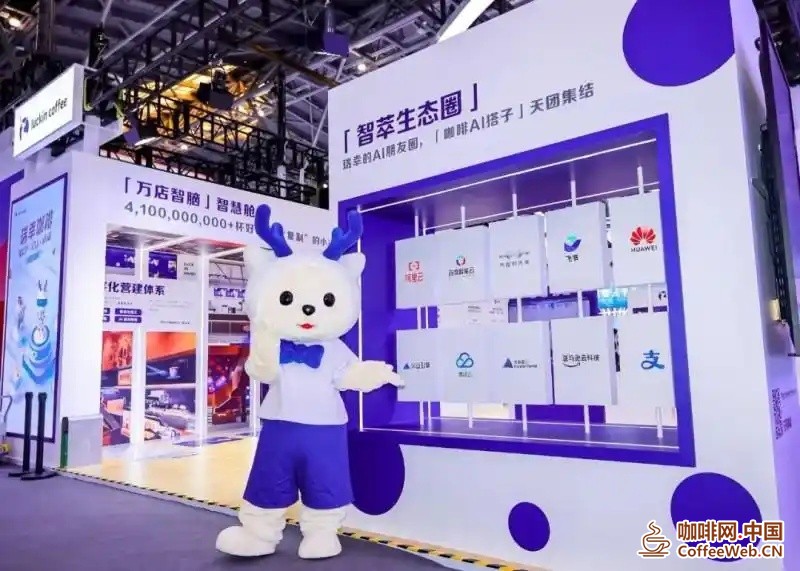
WAIC 2026现场,瑞幸携手阿里云、百度智能云、飞书、华为云、火山引擎、腾讯云、天数智芯、亚马逊云科技(AWS)等伙伴首次公开展示智萃生态圈,从云计算到大模型,从智能硬件到支付生态,几乎覆盖AI落地全链条。
为什么这么做?
这背后,藏着瑞幸对行业的两重深刻研判:
其一,消费产业的AI化,单打独斗走不通,技术迭代之快、场景之分散、基础设施投入之重,没有谁能独自覆盖;
其二,技术的每一次变迁,本质都是消费入口的迁移:PC时代入口是网站,移动时代是App,AI时代,入口正在变成智能体。谁卡住需求产生的“瞬间”,谁就赢得市场。
智萃生态圈的真正价值,就在于卡位这个瞬间。
AI Lucky串联起方程豹、华为小艺、零跑、Rokid眼镜、腾讯出行等伙伴,打通车载、穿戴、AR等场景,让咖啡服务渗透日常生活的每一处。
这不是在卖咖啡,而是在抢滩AI时代的消费入口。当AI把消费从“交易”变成“服务”,品牌竞争的逻辑也将随之改写。
中国咖啡,打开数实融合新未来
如果把中国咖啡产业的现代化比作一场长跑,瑞幸从来不只是“跑得快”的选手,更是把赛道拓宽的人。
从文艺散装小店的“审美驱动”,到数字化加持的“供应链驱动”,再到智能协同的“生态驱动”,放眼中国咖啡产业的三步跨越,瑞幸都是关键的引领者、推动者。
眺望未来,中国咖啡产业还有更大想象:
对用户来说,“喝咖啡”这件事正从“到店”变成“随处”,你的车、眼镜、智能配件,凡是能感知你的地方,都能“长出一杯咖啡”;
对行业而言,瑞幸用35000多家门店、15.5万吨烘焙产能沉淀的“中国标准”,有望随国际化步伐成为“世界语言”。
当这套标准随着瑞幸的国际化步伐走向更广阔的海外市场,它输出的就不只是“品牌”,而是一套“AI赋能产业变革、驱动消费升级”的全新范式,而中国品牌全球化的下一阶段,也将从产品出海向模式出海、标准出海、生态出海跨越。
当然,故事的主角不会只有一个。当AI真正沉进一杯咖啡的全链路,当开放协同取代闭门造车,中国咖啡产业迎来的,绝不仅仅是几家企业的跃迁,而将是一个行业从“大市场”走向“强产业”的整体进阶。眺望明天,这杯咖啡里的未来,才刚刚萃出第一缕香气。
(品牌方供图)
Can you think that in the exhibition hall of the 2026 World Artificial Intelligence Conference, the busiest thing is not robots or large models, but a pop-up coffee shop.
Despite competing with over 1100 companies and more than 3000 AI products on the same stage, Luckin Coffee's "Smart Extraction Full Chain Cabin" still gained high popularity at the exhibition site. From the audience to the staff, they lined up to experience the "mouth opening coffee" experience, chatting, receiving coupons, placing orders, and serving cups in one go.
Why can a coffee brand stand on the stage of the world's top AI event?
The answer is hidden in a larger historical context.
The outline of the 15th Five Year Plan clearly proposes to deepen and expand "artificial intelligence+", promote deep level changes in production methods and revolutionary leaps in productivity; The recently approved "15th Five Year Plan for Expanding Consumption" by the government also explicitly promotes the integration of "artificial intelligence+consumption" and expands the application scenarios of intelligent agents.
Behind the intensive policies, there is a clear trend:
Artificial intelligence is moving from ideal to reality and entering a flourishing period of practical implementation.
But after the direction is pointed out, the road still needs to be taken by the enterprise itself. When AI shifts from "parameter competition" to "scenario implementation", and when using AI to reconstruct the entire consumer intelligence chain becomes a consensus among top brands, at critical moments, the industry urgently needs pioneers to "sample".
Luckin's appearance at WAIC this time is such a "shining sword".
In the past, when it came to Luckin Coffee, the most familiar label was "the chain coffee brand with the most stores in China", but its scale was only a small part of its contribution. What really matters is that it is redefining the underlying logic of this business through digitization and intelligence. This is not just a brand narrative, but also a microcosm of China's chain coffee industry moving towards modernization.
AI native base: Luckin steadily promotes full chain digitization construction
The trend of "artificial intelligence+" is well known in planning, but when it comes to business operations, how will AI be used, where will it be used, and who will use it?
Luckin's answer is to "sink" AI into every aspect of "people, goods, and fields".
At the human level, Luckin Coffee utilizes a four-dimensional data model that incorporates user feedback, market analysis, launch timing, and taste trends to enable more popular products to be calculated without the need for "betting".
The intelligent agent "AI Lucky" jointly built with the volcanic engine is connected to DeepSeek and the big model of Doubao, and fully connected to the super application ecology of Qianwen, WeChat, Alipay, etc. The first batch of "Alipay AI Pay" in China has also taken the lead in landing in Ruixing. The consumer portal is changing from "people looking for services" to "services looking for people".
In terms of goods, facing the new cycle of "scale expansion" and "high-quality development" in the current Chinese coffee industry, Luckin Coffee will build the largest baking capacity in China of 155000 tons by leveraging its digital supply chain to connect origin manufacturing, warehousing and logistics, intelligent ordering, and full process quality assurance, relying on its four baking bases in Pingnan, Kunshan, Qingdao, and Xiamen (under construction).
From "buying beans globally" to "roasting to national and Chinese standards", Luckin Coffee's move is also a crucial step for the Chinese coffee industry to move from a "consumer market" to an "industry center".
In terms of on-site dimensions, Luckin's AI practice runs through the entire life cycle of stores, with over 70% of new store locations calculated by AI, delivering over 9000 stores per year, and integrating scale and quality with the support of technology.
Looking at Luckin's AI practice, there are two noteworthy underlying factors:
One is pragmatism, not shouting slogans, gradually building discourse power with algorithms, production capacity, and data;
The second is the intrinsic value. Many brands talk about AI as "using AI to improve efficiency", while Luckin Coffee talks about "redesigning the underlying architecture of the industry with AI" and directly transforming the benefits of digital intelligence into perceptible quality improvements for consumers.
At the current stage, AI technology is very lively, but its implementation is very impressive. Because most companies view AI as a 'conversational tool' rather than a 'restructuring of business and organization'; The practical value of Luckin Coffee lies in the high-frequency, authentic, and deliverable consumption scenarios of coffee, which validates the industrial path of AI from "being able to speak" to "being able to do things", and also transforms "digital native" from an exclusive narrative of technology companies to an era red profit that consumers can directly perceive.
Zhicui Ecological Circle: Building a New Paradigm for Consumer Industry Transformation
At the WAIC 2026 site, Ruixing joined hands with Alibaba Cloud, Baidu AI Cloud, Feishu, Huawei Cloud, Volcano Engine, Tencent Cloud, Tiantian Smart Core, Amazon Cloud Technology (AWS) and other partners to publicly display the Zhicui ecosystem for the first time, covering almost the entire AI landing chain from cloud computing to big models, from smart hardware to payment ecology.
Why did you do this?
Behind this lies Luckin's two profound judgments on the industry:
Firstly, the AI transformation of the consumer industry cannot be achieved alone. With the fast pace of technological iteration, scattered scenarios, and heavy investment in infrastructure, no one can cover it alone;
Secondly, every technological change is essentially a migration of consumer entry points: in the PC era, the entry point is a website, in the mobile era, it is an app, and in the AI era, the entry point is becoming an intelligent agent. Whoever seizes the moment when demand arises wins the market.
The true value of the Zhicui ecosystem lies in the moment of positioning.
AI Lucky connects partners such as Equation Leopard, Huawei Xiaoyi, Zero Run, Rokid Glasses, Tencent Mobility, etc., connecting in car, wearable, AR and other scenarios, allowing coffee services to penetrate every aspect of daily life.
This is not selling coffee, but seizing the consumer entrance of the AI era. When AI transforms consumption from "transactions" to "services", the logic of brand competition will also be rewritten accordingly.
Chinese coffee opens up a new future of integrating data and reality
If we compare the modernization of China's coffee industry to a long-distance race, Luckin Coffee has never been just a "fast runner", but also a person who broadens the track.
From the "aesthetic drive" of artistic bulk shops, to the "supply chain drive" empowered by digitalization, and then to the "ecological drive" of intelligent collaboration, Luckin Coffee is a key leader and promoter in the three-step leap of China's coffee industry.
Looking into the future, the Chinese coffee industry has even greater imagination:
For users, the act of "drinking coffee" is shifting from "going to the store" to "everywhere". Your car, glasses, and smart accessories, wherever they can perceive you, can "grow a cup of coffee";
For the industry, Luckin Coffee's "Chinese standard" with over 35000 stores and 155000 tons of baking capacity is expected to become a "world language" with the pace of internationalization.
As this set of standards moves towards broader overseas markets with Luckin's internationalization, it will not only output a "brand", but a new paradigm of "AI empowering industrial transformation and driving consumer upgrading". The next stage of Chinese brand globalization will also cross from product export to model export, standard export, and ecological export.
Of course, there won't be only one protagonist in the story. When AI truly sinks into the entire chain of a cup of coffee, and when open collaboration replaces closed door work, the Chinese coffee industry will not only see the leap of a few companies, but also the overall advancement of the industry from a "big market" to a "strong industry". Looking ahead to tomorrow, the future in this cup of coffee has just begun to extract its first aroma.
(Image provided by the brand)