星巴克:“披着咖啡外衣的银行”,凭何称霸全球四十年?Starbucks: A bank disguised as coffee, why has it dominated the world for forty years?
从沃尔玛、Costco,到蜜雪冰城、鸣鸣很忙、古茗、百胜中国,海豚君此前拆过的一长串公司,本质上其实都遵循一套共通的增长逻辑——越便宜越牛:极致压缩运营与供应链成本,以高性价比抢占大众市场、做大规模体量,再依托庞大体量进一步优化效率、稳固市场份额,不断强化自身的壁垒。$ 星巴克 ( SBUX.US )
而我们这次要分析的主角——星巴克则不同,一杯咖啡的生豆原料成本极低,但星巴克却能将一杯拿铁,稳稳卖出国内三四十元(高端定位)、海外五六美元 ( 高于快餐咖啡的中端定价 ) 的定价,即便常年高于行业均价,依旧客流不断、口碑稳固。
一门看似普通的咖啡生意,为什么能长出这么厚的 " 油水 " 和护城河?这正是本篇要拆的东西。
本篇作为星巴克系列的上篇,主打商业模式与核心竞争力,海豚君试图回答三个问题:
1)星巴克到底做的是一门怎样的生意——卖咖啡,还是卖空间?
2)咖啡行业同质化严重、竞争白热化,星巴克凭什么把一杯日常咖啡做成 " 可负担的小奢侈 " ——在美国靠大众精品定位收割规模、在中国靠高端心智收割溢价,穿越近四十年行业周期?
3)面对瑞幸主导的低价内卷、9.9 元普惠咖啡的冲击,星巴克为何选择出让大半中国业务股权,主动调整本土化布局?
一、星巴克是一家怎样的公司?
1、三级跳:从一间 " 第三空间 " 咖啡馆,到全球咖啡帝国
考虑到星巴克近 40 年的历程,海豚君先带大家把它的成长脉络系统梳理一遍,为后面的分析打底。整体上,星巴克的成长可以拆成清晰的三段:
第一阶段(1987 — 2008):品类定义期 —— " 第三空间 " 重塑咖啡消费
1987 年,星巴克的创始人霍华德・舒尔茨(Howard Schultz)受意大利咖啡馆文化启发,将星巴克从一家单纯售卖咖啡豆的零售小店,改造为提供意式浓缩饮品、强调社交场景的现代咖啡馆,并正式提出 " 第三空间(Third Place)" 理念 —— 即家庭与工作场所之外的社交休憩空间。1992 年纳斯达克上市后,星巴克凭标准化门店体验在北美快速扩张,把意式浓缩饮品与 " 第三空间 " 咖啡馆文化从小众推向大众,亲手把咖啡从一门下滑中的廉价商品重新做成可负担的日常仪式感,成为美国咖啡 " 第二波浪潮 " 的定义者与最大受益者。
第二阶段(2008 — 2018):全球化扩张期 —— 出海与品牌价值货币化
2008 年金融危机叠加低价咖啡抢客,舒尔茨临危回归,主动收缩本土低效门店,将全部扩张资源转向海外,中国也在这一时期成长为星巴克的 " 第二本土市场 "。2018 年星巴克完成标志性一跳:把全球 CPG 业务 ( 挂耳、胶囊、即饮咖啡等商超零售品类 ) 的经营权一次性打包授权给雀巢,换来约 71.5 亿美元一次性授权费以及长期版税分成,把沉淀多年的品牌价值一次性 " 轻资产货币化 " 为稳定现金流——开始在全球货架上 " 躺着收钱 "。
第三阶段(2018 至今):战略重构期 —— 数字化深耕与中国市场再定位
这一阶段星巴克将战略重心转向数字化建设,通过 App、会员体系与移动点单将用户流量与数据沉淀至自有阵地,提升用户粘性与运营效率。但与此同时,中国市场遭遇瑞幸等本土品牌的强势冲击,价格战与渠道下沉策略持续挤压星巴克的市场份额(星巴克中国市场份额从 2019 年的约 34% 一路滑落至 2024 年的约 14%),2025 年 11 月,公司宣布出售中国零售业务控股权,标志着其对中国市场从 " 直营重投入 " 转向 " 授权轻运营 " 的战略再定位。整体来看,星巴克正处于新一轮战略转型的关键拐点。
2、一门生意,三份钱:直营、授权、CPG 版税
理解了历史脉络,我们来看星巴克今天的收入结构,实际上,星巴克一共赚三部分的钱:
a:自营门店卖咖啡的运营钱(重资产、赚辛苦钱):门店自己开、自己雇人、自己承担租金和折旧,赚的是零售差价,需要真金白银的资本开支和运营管理,但胜在收入规模大、掌控力强,是星巴克的绝对基本盘。
b:授权门店的 " 供货 + 授权钱 "(轻资产、赚牌子钱):合作方出钱开店、承担经营风险,星巴克负责供货(咖啡豆、器材、物料)并收取品牌授权费,赚的是 " 牌子钱 ",几乎不占用自有资本。
c:把品牌授权给雀巢、在商超卖包装咖啡的 "CPG 版税钱 ":这部分自 2018 年雀巢交易后已基本变成纯版税分成,边际成本极低,是最 " 干净 " 的现金流(近乎零边际成本的躺赚钱)。
从下图可以看到,自营门店收入占比超过 80%,贡献了星巴克最大头的营收,加盟和 CPG 业务二者合计占比近 20%,因此,准确来说,星巴克是以直营重资产为主体、授权与 CPG 版税为两翼 " 的混合型咖啡平台。
3、全球最大的咖啡连锁品牌,门店分布高度集中
从门店数量上看,星巴克全球约 4 万家门店,放到全球连锁餐饮里绝对是第一梯队——与麦当劳 ( 约 4.4 万家 ) 几乎并肩,超过赛百味 ( 约 3.7 万家 ) 、肯德基 ( 逾 3 万家 ) ,仅次于靠下沉狂开的蜜雪冰城 ( 约 4.7 万家 ) 。
其中美国约 1.7 万家、中国约 8 千家,两大市场合计占全球六成以上,是公司的基本盘——但这两块的性质截然不同:
其中美国本土市场发展成熟、门店密度趋于饱和,以直营门店为主,后续增长不再依靠大规模拓店,重心转向门店体验的优化与同店销售的提升。
中国是全球唯一具备长期大规模扩张空间的增量市场,此前长期采用全直营模式、资本开支压力较大。2026 年完成与博裕资本的合资交割后,国内全部线下门店转为特许经营,由合作方承担下沉拓店资金。转为授权后,星巴克得以在保留品牌与知识产权的同时,把资本压力和拓店风险转移给更懂本地市场的合作方,从而在县级及新兴市场加速渗透。
4、强品牌溢价支撑高毛利,业务 " 减重 " 修复盈利
从盈利能力上看,星巴克的毛利率常年稳定在 68% 的高位(仅扣除产品与分销等原料成本)。这个数字直接印证了我们前面讲的品牌定价权——一杯咖啡的生豆、牛奶原料成本极低,星巴克却能卖到几十块,溢价几乎原封不动地体现在毛利上。而高毛利,也是一门好生意的起点。
但从营业利润率上看,2025 在人力与原材料成本抬升、叠加客流走弱的压力下,即便剔除门店减值、组织精简等一次性重组费用,星巴克 Non-GAAP 营业利润率仍从上年的 15.0% 大幅下滑约 5 个百分点至 9.9%。
这也解释了星巴克近年一连串 " 减重 " 动作的财务动因:用授权、CPG 版税乃至中国合资,把一部分重资产业务转成轻资产,本质上就是想抬高整体利润率的天花板、向麦当劳那套 " 轻资产高利润 " 模式靠拢。
5、现金流充沛,持续回馈股东
从股东回报上看,星巴克是一台典型的 " 现金分红机器 "。除了高周转、轻库存的零售底子外,还有一部分则藏在一个容易被忽略的地方——星礼卡储值:消费者习惯先充值、后消费,让星巴克常年沉淀着 15 亿美元以上的无息浮存金,大幅降低了它对营运资金的占用和外部融资成本。
主业盈利叠加储值现金流的加持让公司赚的钱多到花不完,星巴克便持续把利润以回购和分红的形式还给股东——近十年累计回购 + 分红约 490 亿美元 ( 见下图 ) ,力度之大,甚至把账面股东权益都 " 抹平 "、直接买成了负数 ( FY2025 末股东权益约 -81 亿美元 ) 。
也正因如此,用常规的 ROE 去衡量星巴克是失真的——分母 ( 净资产 ) 本身已被回购做成负值。因此,对于这类企业,我们应该更关注股东回报总额 ( 回购 + 分红 ) 以及这份回报的可持续性。
事实上,过去十年,星巴克光靠回购 + 分红,平均每年就给出约 5% 的股东回报收益率 ( FY2018 – 19 一度高达 11% – 12% ) ,这还没算股价本身的上涨。对一家增速温和的成熟消费龙头而言,这样一块旱涝保收的 " 现金回报底仓 ",已经相当优异。
通过上文分析,可以看到星巴克实际上是一家以直营为主体、靠品牌溢价撑起近 70% 高毛利、并能常年吐出巨额现金、甚至把自己 " 买成负权益 " 的现金分红机器。但如果再往下追一层就会发现:它所有这些亮眼的财务表现——高毛利、强现金流、高股东回报——归根到底都建立在同一个能力之上,那就是 " 高溢价 "。
于是问题就来了:凭什么星巴克能把几毛钱的生豆卖到几十块,还让全球消费者心甘情愿地反复买单? 表面看,答案是品牌与 " 第三空间 " 心智——这也是它区别于瑞幸、库迪等平价咖啡的根本。但实际上,在海豚君看来,真正把这份高溢价撑起来、又最难被对手复制的,是藏在品牌背后的两大底层能力:一套托住 " 物 " 的一致性的全球供应链,和一套托住 " 人 / 服务 " 的一致性的组织文化。
接下来,我们就沿着这两条主线,拆解星巴克到底是怎么做到的。
二、星巴克是怎么做到的?
1、供应链能力:从豆到杯,托住 " 全球同一杯咖啡 "
纵观所有连锁餐饮品牌的核心壁垒,表层看是产品、服务、品牌心智,但真正决定品牌长期稳定性、规模化能力与定价权的深层底盘,永远是供应链体系。
对于咖啡赛道而言,农产品天然存在产地、气候、季节的波动,同时终端门店人员操作水平参差不齐,极易造成产品口感、品质参差不齐。而星巴克能够实现全球万家门店口感高度统一、品质长期稳定,并且能对冲原料与人工的双重不确定性,核心依托的正是其持续重金投入、深度垂直整合的全链路供应链体系。
首先,为何非星巴克必须自建供应链?
我们先来看一下整个咖啡产业链的价值分布,从下图可以看到,价值高度集中在下游的烘焙与品牌零售,而最上游的种植环节被严重挤压。一杯咖啡的最终零售价里,烘焙环节约占 21%、品牌零售约占 22%,而处在最上游的咖啡农往往只能拿到 7%。
a:谁掌握了烘焙 + 零售,谁就掌握了利润最厚的两端——星巴克自建烘焙厂、坚持直营零售,正是牢牢占住了这两块;(国内大部分中腰部、加盟型连锁咖啡,为降低前期重资产投入、追求快速拓店扩张,普遍采用轻资产模式,将核心的烘焙环节全权外包第三方代工,仅负责产品配方设计与品牌运营,后期就容易出现跨批次、跨门店的口感波动)
b:最上游的种植端利润薄、最脆弱、也最容易断供,一旦气候或价格波动,优质豆源就会出问题。
基于上述产业链格局,星巴克给出的答案是——向下深耕中下游核心环节,自建烘焙、直营零售锁定利润池与标准化体系;并向上赋能上游种植端,通过深度绑定、技术赋能、溢价收购等方式锁定优质豆源,从根源对冲农产品供给的不确定性。
采购端:极致上游穿透,源头把控豆源供给
采购环节,星巴克采用了极致向上游的垂直穿透,一路延伸到咖农、种子和农艺三个层面:
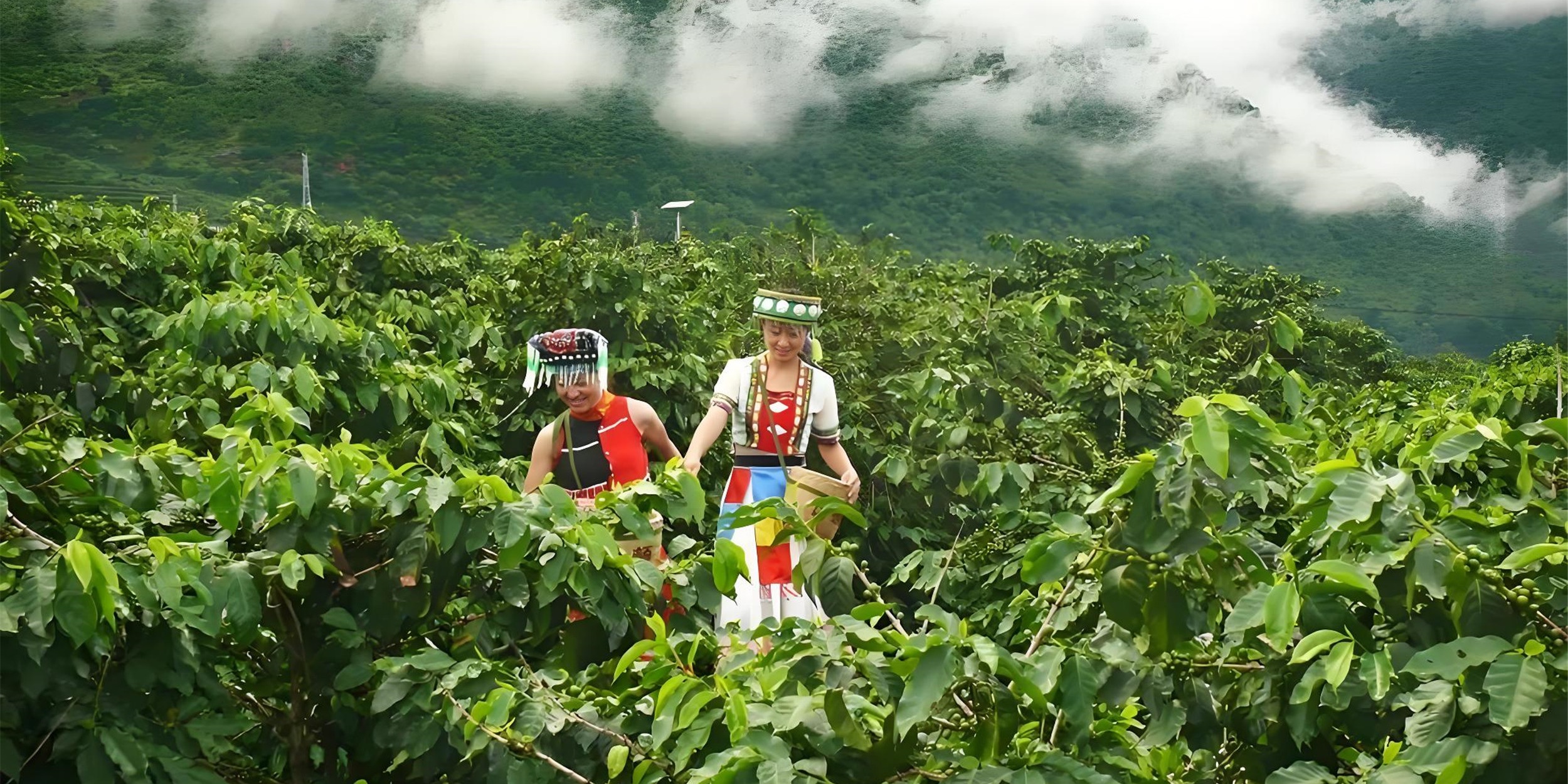
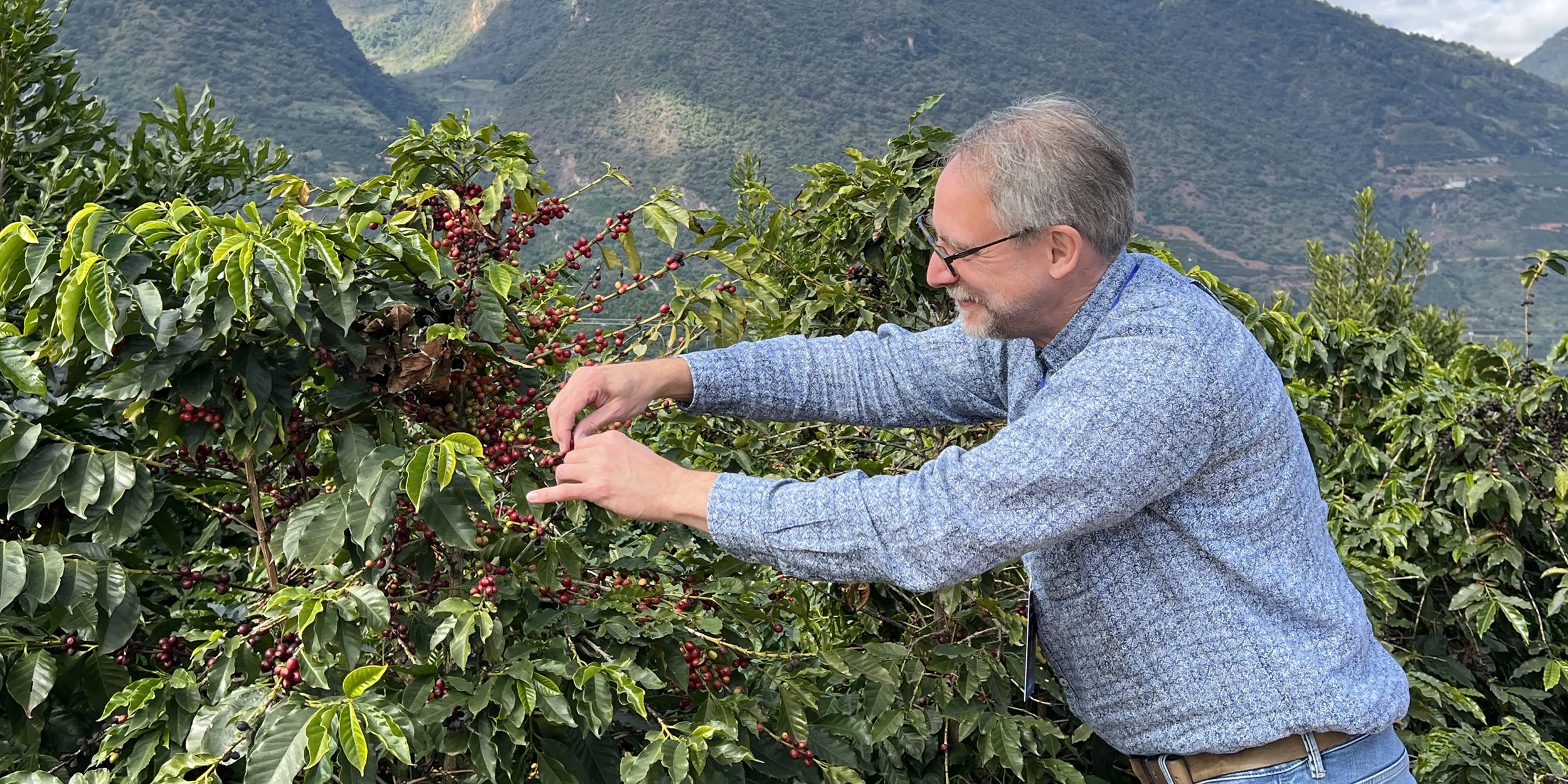
2013 年公司收购了哥斯达黎加自营农场 Hacienda Alsacia,将其打造为全球咖啡农艺研发枢纽,专注研发抗病害、高产能改良咖啡树种;培育成型后以低价甚至免费向全球超 28 万合作农户输出种苗与标准化种植方案。从育种环节切入的深度布局,让星巴克能够最大程度夯实原料供给基本盘,同步抬升全球合作豆源的产能与品质底线。
对比仅止步于生豆贸易采购的同行,星巴克在上游产业链整合深度上显然更具优势。
在海豚君看来,由于咖啡豆是唯一核心原料,供给中断会直接冲击全链条经营,因此,
采购环节的重投入,本质上是依靠上游垂直深度打造供给安全与差异化壁垒的关键。
烘焙:分布式烘焙体系,实现全球风味统一
烘焙是星巴克 " 全球同一杯咖啡 " 的技术核心——同样的生豆,通过标准化烘焙曲线,才能在全球复制稳定风味。这也是星巴克供应链中资本开支最重、护城河最深的环节。
从布局来看,星巴克在全球运营 6 座主力烘焙工厂,合计年产能超过 10 亿磅(50 万吨)咖啡,并刻意做成 " 近产地 / 近市场 " 的分布式网络,其中美国多座烘焙基地服务北美市场,荷兰阿姆斯特丹工厂辐射欧洲、中东及非洲,中国昆山产业园则作为亚太核心枢纽支撑国内及周边区域供给。这种就近布局不仅最大程度保障了全球门店风味统一,还通过缩短物流半径、降低长途海运损耗,显著提升熟豆新鲜度、压缩综合供应链成本。
经过数十年烘焙批次数据的沉淀,目前星巴克已经能驾驭浅 / 中 / 深全谱系烘焙、同时又能够匹配海外成熟咖啡市场多元化、精细化、高端化的消费需求。
相比之下,瑞幸虽近年快速自建烘焙产能、补齐供应链短板,但烘焙体系自 2021 年才起步,技术与数据积淀时间较短。当前国内烘焙矩阵以大规模量产、标准化大宗风味为主,在细分拼配逻辑、多梯度精细烘焙曲线、跨产区风味调控以及高阶微批次工艺上,与星巴克存在明显代差。
这也意味着,对于瑞幸海外门店由于缺少本地化烘焙枢纽,咖啡豆只能依赖长途跨境运输,以针对不同国家消费偏好做精细化风味调整,在北美、欧洲等咖啡成熟市场,很难撼动追求咖啡层次与新鲜度的中高端客群,品牌天然存在向上升级的供应链瓶颈。
物流:烘仓一体自动化物流,低损耗 & 低成本配送
物流履约是星巴克实现风味保鲜、降本增效的最后一环。区别于行业普遍 " 烘焙工厂 + 第三方仓储 " 的割裂模式,星巴克采用烘焙工厂与整合物流中心(IDC)一体化重资产布局,从物理链路端消除中转损耗,时效更高 & 损耗更低。
以星巴克昆山咖啡创新产业园为例,园区配套 34 米超高垂直自动化立体仓储系统,可以自动化处理 90% 以上货物,空间利用效率较传统仓库提升 6 倍。更重要的是:
新鲜出炉的熟豆可直接入恒温恒湿专属豆仓存储、分拣与全国分拨,省去跨厂区转运、二次装卸、异地仓储周转的多重环节,大幅压缩物流耗时,最大程度锁住咖啡豆油脂与新鲜风味。在此基础上,星巴克搭建全国多层级区域分拨网络,通过就近配送缩短运输半径,进一步摊薄干线物流成本,极致的链路整合,使得星巴克整体仓储 + 干线物流成本仅占营收约 2.8%,大幅低于行业 4% – 5% 的平均水平。
配送策略上,星巴克采用 " 干线自营深耕、末端履约外包 " 的轻重平衡模式,核心咖啡豆、乳制品等原料干线配送依托自有仓储体系长期合作第三方整车运输稳定供给,而标准化外卖履约则完全交由顺丰同城等外部团队承接,剥离骑手重资产投入,对冲外卖订单淡旺季运力波动。
总结一下,如果和瑞幸对比来看,星巴克与瑞幸虽都选择了自建供应链这条重活,内核却截然相反:
星巴克是全球重投入型一体化:从种子到杯、跨越三大洲,一路把品质标准、烘焙风味与物流鲜度攥在手里,换来的是全球一致的品质、品牌溢价与供应链稳定性,赢在 " 深 " 和 " 稳 "。瑞幸则是中国效率型一体化:围绕境内闭环,用规模化采购、国内最大产能烘焙和高密直配,把单杯成本与响应速度做到极致——赢在 " 快 " 与 " 省。
2、" 伙伴 " 文化 + 高效组织:把服务本身做成护城河
如果说前文分析的供应链环节保障了咖啡品质的一致性,那么真正决定品牌溢价差距、形成长期差异化壁垒的,其实是终端门店的服务体验与组织治理能力。
我们此前分析亚朵时提出,服务型消费中,一线服务人员本身就是产品核心组成。咖啡原料、制作流程、定价模式均可被竞品快速复刻,但依托员工主动创造的个性化情感体验,才是品牌溢价最难以复制的护城河。
在海豚君看来,星巴克的另一大核心竞争力之一,正是深耕多年的伙伴文化,通过系统化培训与员工激励绑定,让带有温度的人际服务能够实现标准化落地。
对一家开了 4 万家店、靠体验收溢价的公司来说,这种 " 隐形的一致性 " 显然是极其关键的:它意味着无论顾客走进纽约、上海还是伦敦的门店,都能获得大致相同水准的服务体验,而这正是品牌溢价能够在全球范围内成立的前提。
具体来说,星巴克内部拥有一套锁定一线员工服务意愿与能力的长效激励与全方位成长体系:针对基层门店伙伴推出专属 " 咖啡豆股票(Bean Stock)" 期权激励,让一线员工能够共享企业发展红利,极大提升岗位归属感与服务主观能动性;
同时携手亚利桑那州立大学(ASU)推出免费在线学位教育资源,并搭建专属 " 星巴克大学 " 专业化培训体系,系统性夯实员工服务能力与职业素养,搭配公开透明、可落地的层级晋升通道,为员工提供长期职业成长路径。这套 " 利益绑定 + 能力赋能 + 成长兜底 " 的体系,有效降低了门店人员流失率,为星巴克持续输出稳定、有温度、个性化的人文服务筑牢了核心人力根基。
组织上,星巴克跑通了跨国经营最难的 " 既要标准、又要本土 " 的难题,采用 " 总部专业赋能 + 地域自主领导 " 的双条线交叉架构——全球职能线统一把控核心产品品质、品牌核心调性、第三空间底层理念以及跨文化服务培训,守住品牌的核心底线,保证全球星巴克的品牌辨识度与体验统一性;各区域事业部则作为独立的经营主体,拥有产品创新、门店设计、供应链调配、营销运营、数字化升级、人员招聘的充分自主权。
中国区能够推出茶拿铁、节气限定甜品等大量本土化产品,通过联名营销提升客单价,并针对中国消费者的移动支付习惯把 " 专星送 " 和 " 啡快 " 数字业务占比做到超过 50% 正是 " 区域自主 " 的成果。
三、为何要出售星巴克中国的运营权 ?
理解了星巴克这套 ' 高溢价 ' 的基因,就能真正读懂它 2025 年那个让市场意外的决定——为什么在最大的增量市场,反而选择 ' 卖掉 ' 中国?" 海豚君最后也简单聊下自己的理解:
a: 破解增量市场的 " 速度瓶颈 ": 用轻资产换扩张速度:
要知道,中国是星巴克全球唯一具备长期万店级增长空间的核心市场,品牌长期目标是从现有 8000 余家门店拓展至 2 — 3 万家。
但在全直营模式下,每开一家店都要星巴克自己出资,资本开支压力巨大,在国内咖啡赛道极致内卷、本土品牌依托加盟模式快速下沉的竞争环境下,完全无法匹配中国市场的下沉速度与规模化需求。
通过出让控股权、引入博裕资本等深耕本土消费赛道、具备成熟供应链与线下渠道资源的合作方来承担下沉拓店的资金和本地资源,星巴克则可以轻装上阵、专注品牌与标准。
这本质上是把 2018 年 "CPG 授权雀巢 " 的成功方法论,复用到了中国门店业务上——把不擅长的、重投入的环节交给最合适的人,自己保留最值钱的品牌资产并持续收取版税。
b:坚守高端定位,不被拖入价格战的泥潭:
引入博裕后,双方明确表态 " 坚守高端仍是主线 "。这意味着星巴克不打算把自己变成第二个瑞幸,而是希望借助本地合作方的资源,在保持品牌调性的前提下加速渗透和本土化——用 用董事长兼 CEO Brian Niccol 的话说 "竞争对手大多只聚焦 " 便利和风味 ",而星巴克要在风味上 " 创新超越 "、数字化上 " 至少匹配 "、体验上形成真正差异化 "。换句话说,星巴克选的不是 " 在瑞幸的战场上、用瑞幸的武器打瑞幸 ",而是继续打自己最擅长的那场仗——用 " 第三空间 " 和品牌溢价,去争夺那批愿意为体验付费的中高端客群。
c:转移风险、保留上行期权:
出售 60% 控股权,让星巴克一次性兑现了中国业务的估值 ( 中国业务总估值超 130 亿美元 ) ,同时把最惨烈的价格战风险与资本压力,大部分转移给了合资方 ; 而自己保留的 40% 股权 + 长期品牌授权费,又留住了分享中国市场未来成长的 " 上行期权 "。
对一家高度重视现金流与股东回报的 " 现金分红机 " 而言,这是一笔典型的 " 落袋为安 + 保留看涨 " 的资本运作,和星巴克靠回购分红反哺股东,是同一套资本纪律。
星巴克之于咖啡,有点像亚朵之于酒店——都是在中高端价格带里,用体验和品牌把同质化产品重新做出差异化。它的护城河不在于那杯咖啡本身有多难做,而在于它用四十年时间构筑起的、由品牌心智、伙伴文化、全球供应链、数字化会员体系共同支撑的 " 高溢价能力 "。这套能力让它能把几毛钱的豆子卖到几十块,能常年吐出大量自由现金流,能像银行一样吸纳低成本预付款,也能在美国这样的成熟市场持续通过回购分红回报股东。
当然,高溢价的另一面是 " 高前提依赖 ": 一旦门店体验被稀释、或市场被瑞幸式的价格战推入红海,这套模式就会承压—— " 卖掉中国 ",也是星巴克在护城河边界处做出的务实选择。
From Wal Mart Costco, To Meixue Ice City, Mingming is very busy, Guming, and Yum China, the long list of companies that Dolphin Jun has previously dismantled essentially follow a common growth logic - the cheaper the better: the ultimate compression of operating and supply chain costs, seizing the mass market with high cost-effectiveness, expanding the scale, and further optimizing efficiency and stabilizing market share based on the huge scale, constantly strengthening their own barriers. Starbucks (SBUX. US)
The protagonist we are going to analyze this time, Starbucks, is different. The cost of raw beans for a cup of coffee is extremely low, but Starbucks can steadily sell a latte at a price of 30-40 yuan domestically (high-end positioning) and 5-6 US dollars overseas (higher than the mid-range pricing of fast food coffee). Even if it is consistently higher than the industry average price, it still has a continuous flow of customers and a stable reputation.
Why can a seemingly ordinary coffee business grow such thick "oil" and moats? This is exactly what this article is going to dismantle.
As the first installment of the Starbucks series, this article focuses on the business model and core competitiveness. Dolphin Jun attempts to answer three questions:
1) What kind of business is Starbucks doing - selling coffee or selling space?
2) The coffee industry is highly homogenized and fiercely competitive. Why does Starbucks turn a daily cup of coffee into an "affordable small luxury"? In the United States, it relies on mass market boutique positioning to harvest scale, and in China, it relies on high-end mentality to harvest premium, crossing nearly 40 years of industry cycle?
3) Why did Starbucks choose to sell off a majority of its Chinese business equity and proactively adjust its localization layout in the face of the impact of Luckin Coffee's low-priced internal competition and 9.9 yuan inclusive coffee?
1、 What kind of company is Starbucks?
1. Triple Jump: From a "Third Space" Cafe to a Global Coffee Empire
Considering Starbucks' nearly 40 year history, Dolphin Jun will first take you through its growth trajectory system to lay the foundation for the subsequent analysis. Overall, Starbucks' growth can be divided into three clear segments:
Phase One (1987-2008): Category Definition Period - Reshaping Coffee Consumption in the 'Third Space'
In 1987, Howard Schultz, the founder of Starbucks, was inspired by Italian caf é culture and transformed Starbucks from a simple retail store selling coffee beans to a modern caf é offering Italian espresso drinks and emphasizing social scenes. He officially proposed the concept of "Third Place" - a social and leisure space outside of home and workplace. After going public on NASDAQ in 1992, Starbucks rapidly expanded in North America with standardized store experiences, pushing Italian espresso and "third space" caf é culture from niche to mass market. They personally transformed coffee from a declining cheap commodity into an affordable daily ritual, becoming the definer and biggest beneficiary of the "second wave" of American coffee.
Phase 2 (2008-2018): Globalization Expansion Period - Going Global and Monetizing Brand Value
In 2008, the financial crisis combined with low-priced coffee to grab customers, and Schultz returned to the crisis by actively shrinking inefficient local stores and shifting all expansion resources overseas. China also grew into Starbucks' "second domestic market" during this period. In 2018, Starbucks made a landmark leap by licensing its global CPG business (retail categories such as ear hooks, capsules, and ready to drink coffee) to Nestle in a one-time package, in exchange for approximately $7.15 billion in one-time licensing fees and long-term royalty sharing. The brand value, which had been accumulated for many years, was monetized as a stable cash flow in a one-time "light asset" - starting to "collect money lying down" on global shelves.
Phase Three (2018 present): Strategic Restructuring Period - Digital Cultivation and Repositioning in the Chinese Market
At this stage, Starbucks will shift its strategic focus to digital construction, using apps, membership systems, and mobile ordering to consolidate user traffic and data to its own platform, enhancing user stickiness and operational efficiency. However, at the same time, the Chinese market has been strongly impacted by local brands such as Luckin Coffee, and price wars and channel sinking strategies continue to squeeze Starbucks' market share (Starbucks' market share in China has fallen from about 34% in 2019 to about 14% in 2024). In November 2025, the company announced the sale of its controlling stake in China's retail business, marking its strategic repositioning of the Chinese market from "direct operation heavy investment" to "authorization light operation". Overall, Starbucks is at a critical turning point in a new round of strategic transformation.
2. One business, three parts of money: direct sales, authorization, CPG royalties
Having understood the historical context, let's take a look at Starbucks' revenue structure today. In fact, Starbucks earned a total of three parts of the money:
a: The operating money of selling coffee in self operated stores (heavy assets, earning hard-earned money): opening the store itself, hiring employees, and bearing the rent and depreciation, earning the retail price difference, requiring real capital expenditure and operational management, but the advantage lies in the large income scale and strong control, which is Starbucks' absolute basic business.
b: Authorized stores' "supply+authorization money" (light assets, earn brand money): The partner pays for opening the store and bears the business risks, while Starbucks is responsible for supplying (coffee beans, equipment, materials) and collecting brand authorization fees, earning "brand money" and hardly occupying its own capital.
c: Granting the brand to Nestle and selling packaged coffee in supermarkets for "CPG royalty money": This part has basically become pure royalty sharing since the Nestle transaction in 2018, with extremely low marginal costs, and is the cleanest cash flow (making money with almost zero marginal costs).
From the figure below, it can be seen that self operated stores account for over 80% of Starbucks' revenue, contributing the largest portion of Starbucks' revenue. The combined proportion of franchise and CPG businesses is nearly 20%. Therefore, to be precise, Starbucks is a hybrid coffee platform with direct operated heavy assets as the main body and authorization and CPG royalties as the two wings.
3. The world's largest coffee chain brand with highly concentrated store distribution
In terms of the number of stores, Starbucks has about 40000 stores worldwide, which is definitely in the top tier among global chain restaurants - almost on par with McDonald's (about 44000), surpassing Subway (about 37000), KFC (over 30000), and second only to the underground and wildly open Meixuebingcheng (about 47000).
Among them, there are about 17000 in the United States and about 8000 in China, which together account for more than 60% of the global market and are the company's basic base - but the nature of these two areas is completely different:
The domestic market in the United States has matured and store density is becoming saturated, with direct operated stores as the main focus. Subsequent growth will no longer rely on large-scale store expansion, and the focus will shift to optimizing store experience and improving same store sales.
China is the only incremental market in the world with long-term large-scale expansion space, having previously adopted a fully direct operated model and faced significant capital expenditure pressure. After the completion of the joint venture delivery with Boyu Capital in 2026, all offline stores in China will be converted to franchise operations, and the cooperating party will bear the capital for expanding the stores. After being authorized, Starbucks is able to transfer capital pressure and store expansion risks to partners who understand the local market better while retaining its brand and intellectual property, thereby accelerating its penetration in county-level and emerging markets.
4. Strong brand premium supports high gross profit, business' weight reduction 'repairs profitability
In terms of profitability, Starbucks' gross profit margin has remained stable at a high level of 68% throughout the year (only deducting raw material costs such as product and distribution). This number directly confirms the brand pricing power we mentioned earlier - the cost of raw beans and milk for a cup of coffee is extremely low, but Starbucks can sell it for tens of yuan, and the premium is almost reflected in the gross profit. And high gross profit margin is also the starting point of a good business.
However, in terms of operating profit margin, in 2025, under the pressure of rising labor and raw material costs and weakened customer flow, even after excluding one-time restructuring expenses such as store impairment and organizational streamlining, Starbucks' Non GAAP operating profit margin still dropped significantly by about 5 percentage points from 15.0% last year to 9.9%.
This also explains the financial motivation behind Starbucks' series of "weight loss" actions in recent years: using authorization, CPG royalties, and even Chinese joint ventures to transform some heavy asset businesses into light assets, essentially aiming to raise the overall profit margin ceiling and approach McDonald's "light asset high profit" model.
5. Abundant cash flow and continuous feedback to shareholders
From the perspective of shareholder returns, Starbucks is a typical "cash dividend machine". In addition to the high turnover and light inventory retail foundation, there is also a part hidden in an easily overlooked place - the stored value of Starbucks gift cards: consumers are accustomed to recharging first and then consuming, which has allowed Starbucks to accumulate over $1.5 billion in interest free floating funds throughout the year, greatly reducing its occupation of operating funds and external financing costs.
The combination of main business profits and stored value cash flow has allowed the company to earn so much money that it cannot spend it all. Starbucks has continued to return profits to shareholders in the form of repurchases and dividends - with a cumulative repurchase and dividend of about $49 billion in the past decade (see figure below). The intensity is so great that it has even "wiped out" the book shareholders' equity and directly bought it as a negative number (shareholders' equity at the end of FY2025 is about $81 billion).
Therefore, using the conventional ROE to measure Starbucks is distorted - the denominator (net assets) itself has been repurchased and turned negative. Therefore, for such enterprises, we should pay more attention to the total shareholder return (repurchase+dividends) and the sustainability of this return.
In fact, over the past decade, Starbucks has provided an average annual shareholder return of about 5% solely through buybacks and dividends (reaching as high as 11-12% in FY2018-19), not to mention the rise in the stock price itself. For a mature consumer leader with moderate growth rate, such a "cash return bottom position" that can withstand droughts and floods is already quite excellent.
Through the analysis above, it can be seen that Starbucks is actually a cash dividend machine with direct sales as the main body, relying on brand premium to support nearly 70% of high gross profit, and can consistently release huge amounts of cash, even buying itself as negative equity. But if we delve deeper, we will find that all of its impressive financial performance - high gross profit, strong cash flow, and high shareholder returns - are ultimately built on the same ability, which is "high premium".
So the question arises: why can Starbucks sell a few cents worth of raw beans for tens of yuan and make global consumers willingly pay repeatedly? On the surface, the answer lies in the brand and the "third space" mindset - this is also the fundamental difference between it and affordable coffee brands such as Luckin Coffee and Kudi. But in reality, in Dolphin's view, the two fundamental abilities hidden behind the brand that truly support this high premium and are the most difficult for competitors to replicate are: a global supply chain that supports consistency in "things" and an organizational culture that supports consistency in "people/services".
Next, we will break down how Starbucks achieved this along these two main lines.
2、 How did Starbucks achieve this?
1. Supply Chain Capability: From Beans to Cups, Supporting the 'Global Same Cup of Coffee'
Looking at the core barriers of all chain catering brands, they may appear to be products, services, and brand mentality on the surface, but the deep foundation that truly determines the long-term stability, scalability, and pricing power of the brand is always the supply chain system.
For the coffee track, agricultural products naturally have fluctuations in origin, climate, and seasons, and the operational level of terminal store personnel varies greatly, which can easily lead to uneven product taste and quality. Starbucks is able to achieve a highly unified taste and long-term stable quality in thousands of stores worldwide, and can hedge the dual uncertainties of raw materials and labor. Its core relies on its continuous heavy investment and deep vertical integration of the entire supply chain system.
Firstly, why do non Starbucks companies have to build their own supply chain?
Let's first take a look at the value distribution of the entire coffee industry chain. As shown in the figure below, the value is highly concentrated in downstream baking and brand retail, while the upstream planting link is severely squeezed. In the final retail price of a cup of coffee, baking ring savings account for 21%, brand retail accounts for about 22%, while coffee farmers at the top often only get 7%.
a: Whoever controls baking and retail has control over the two ends with the thickest profits - Starbucks has built its own baking factory and insisted on direct retail, firmly occupying these two areas; (Most mid tier and franchise coffee chains in China generally adopt a light asset model to reduce heavy asset investment in the early stage and pursue rapid store expansion. The core roasting process is fully outsourced to third-party manufacturers, who are only responsible for product formula design and brand operation. In the later stage, there may be taste fluctuations across batches and stores.)
b: The upstream planting end has thin profits, is the most vulnerable, and is also the most prone to supply cuts. Once the climate or price fluctuates, high-quality bean sources will have problems.
Based on the above industrial chain pattern, Starbucks' answer is to deeply cultivate the core links in the middle and lower reaches, build its own baking and direct retail to lock in profit pools and standardization systems; And empower the upstream planting end upwards, lock in high-quality bean sources through deep binding, technological empowerment, premium acquisition and other methods, and hedge the uncertainty of agricultural product supply from the root.
Purchasing end: Ultimate upstream penetration, source control of bean supply
In the procurement process, Starbucks has adopted an extreme vertical penetration towards the upstream, extending all the way to the three levels of coffee farmers, seeds, and agronomy:
In 2013, the company acquired Hacienda Alsatia, a self operated farm in Costa Rica, and established it as a global coffee agricultural research and development hub, focusing on the development of disease resistant and high-yield improved coffee tree species; After cultivation, we export seedlings and standardized planting plans to over 280000 cooperative farmers worldwide at low prices or even free of charge. The deep layout from the breeding stage enables Starbucks to consolidate the basic supply of raw materials to the greatest extent possible, while simultaneously raising the production capacity and quality bottom line of global cooperative bean sources.
Compared to its peers who only focus on raw bean trade procurement, Starbucks clearly has an advantage in the depth of upstream industry chain integration.
In the view of Dolphin Lord, as coffee beans are the only core ingredient, supply interruption will directly impact the entire chain of operations. Therefore,
The heavy investment in the procurement process is essentially the key to relying on upstream vertical depth to build supply security and differentiation barriers.
Baking: Distributed Baking System, Achieving Global Flavor Unification
Baking is the core technology of Starbucks' "One Global Cup of Coffee" - the same raw beans can only replicate stable flavors globally through standardized roasting curves. This is also the most capital intensive and deeply guarded link in Starbucks' supply chain.
From a layout perspective, Starbucks operates six major roasting factories worldwide, with a total annual production capacity of over 1 billion pounds (500000 tons) of coffee, and deliberately creates a distributed network of "near origin/near market". Among them, multiple roasting bases in the United States serve the North American market, the Amsterdam factory in the Netherlands radiates Europe, the Middle East, and Africa, and the Kunshan Industrial Park in China serves as a core hub in the Asia Pacific region to support domestic and surrounding regional supply. This nearby layout not only maximizes the uniformity of global store flavors, but also significantly improves the freshness of cooked beans and compresses comprehensive supply chain costs by shortening logistics radius and reducing long-distance shipping losses.
After decades of accumulation of baking batch data, Starbucks is now able to handle the full spectrum of shallow, medium, and deep roasting, while also matching the diversified, refined, and high-end consumption needs of mature overseas coffee markets.
In contrast, although Luckin Coffee has rapidly built its own baking production capacity and filled the gaps in its supply chain in recent years, its baking system has only started in 2021, and the time for technology and data accumulation is relatively short. At present, the domestic baking matrix mainly focuses on large-scale production and standardized bulk flavors. There is a significant generation gap with Starbucks in terms of subdivision and blending logic, multi gradient fine baking curves, cross regional flavor control, and advanced micro batch processes.
This also means that for Luckin Coffee's overseas stores, due to the lack of localized roasting hubs, coffee beans can only rely on long-distance cross-border transportation to make refined flavor adjustments according to different countries' consumption preferences. In mature coffee markets such as North America and Europe, it is difficult to shake the mid to high end customer groups who pursue coffee quality and freshness, and the brand naturally faces supply chain bottlenecks for upward upgrading.
Logistics: Integrated automated logistics for drying and warehousing, low loss&low-cost distribution
Logistics fulfillment is the final step for Starbucks to achieve flavor preservation, cost reduction, and efficiency improvement. Unlike the industry's common fragmented model of "baking factories+third-party warehousing", Starbucks adopts an integrated heavy asset layout of baking factories and integrated logistics centers (IDC), eliminating transit losses from the physical link end, resulting in higher efficiency and lower losses.
Taking Starbucks Kunshan Coffee Innovation Industrial Park as an example, the park is equipped with a 34 meter ultra-high vertical automated three-dimensional warehousing system, which can automatically process more than 90% of goods and increase space utilization efficiency by 6 times compared to traditional warehouses. what's more:
Freshly baked ripe beans can be directly stored, sorted, and distributed nationwide in a temperature and humidity controlled dedicated bean warehouse, eliminating multiple links such as cross factory transportation, secondary loading and unloading, and off-site warehousing turnover, greatly reducing logistics time, and maximizing the locking of coffee bean oil and fresh flavor. On this basis, Starbucks has built a multi-level regional distribution network nationwide, shortening the transportation radius through nearby delivery, further diluting the cost of mainline logistics, and achieving extreme link integration, resulting in Starbucks' overall warehousing and mainline logistics costs accounting for only about 2.8% of revenue, significantly lower than the industry average of 4% -5%.
In terms of delivery strategy, Starbucks adopts a light heavy balance model of "deep cultivation of mainline self operation and outsourcing of end of line fulfillment". The mainline delivery of core coffee beans, dairy products and other raw materials relies on its own warehousing system for long-term cooperation with third-party vehicle transportation to ensure stable supply, while the standardized delivery fulfillment is completely undertaken by external teams such as SF Express in the same city, stripping off the heavy asset investment of riders and hedging against fluctuations in delivery order capacity during peak and off seasons.
To sum up, if compared with Luckin Coffee, although both Starbucks and Luckin Coffee have chosen the heavy task of building their own supply chains, their core values are completely opposite:
Starbucks is a globally integrated company that focuses on heavy investment: from seeds to cups, spanning three continents, it holds quality standards, baking flavors, and logistics freshness in its hands all the way, in exchange for globally consistent quality, brand premium, and supply chain stability, winning in "depth" and "stability". Luckin Coffee, on the other hand, is an efficiency oriented integration in China: focusing on the domestic closed-loop, using large-scale procurement, the largest domestic production capacity baking, and high-density direct distribution to achieve the ultimate in single cup cost and response speed - winning in "speed" and "cost saving".
2. Partner culture+efficient organization: turning service itself into a moat
If the supply chain links analyzed earlier ensure the consistency of coffee quality, then what truly determines the brand premium gap and forms long-term differentiation barriers is actually the service experience and organizational governance capabilities of end stores.
We previously analyzed that in service-oriented consumption, frontline service personnel themselves are the core components of the product. The coffee ingredients, production process, and pricing model can all be quickly replicated by competitors, but relying on the personalized emotional experience actively created by employees is the most difficult moat to replicate for brand premium.
In Dolphin's view, another core competitiveness of Starbucks is its long-standing partnership culture. Through systematic training and employee motivation, Starbucks' warm interpersonal services can be standardized and implemented.
For a company that has opened 40000 stores and relies on physical inspection premiums, this' invisible consistency 'is clearly crucial: it means that customers can receive roughly the same level of service experience regardless of whether they enter stores in New York, Shanghai, or London, and this is the prerequisite for brand premiums to be established globally.
Specifically, Starbucks has a long-term incentive and comprehensive growth system that locks in the service willingness and ability of frontline employees. It has launched exclusive "Bean Stock" option incentives for grassroots store partners, allowing frontline employees to share the benefits of the company's development, greatly enhancing their sense of job belonging and subjective initiative in service;
At the same time, we will collaborate with Arizona State University (ASU) to launch free online degree education resources and establish an exclusive "Starbucks University" specialized training system to systematically strengthen employees' service capabilities and professional qualities. With an open, transparent, and implementable hierarchical promotion channel, we will provide employees with a long-term career growth path. This system of "interest binding+capability empowerment+growth guarantee" effectively reduces the turnover rate of store personnel and lays a solid core human resource foundation for Starbucks to continuously output stable, warm, and personalized humanistic services.
In terms of organization, Starbucks has successfully overcome the most difficult challenge of cross-border operations, which is the need for both standards and local operations. It adopts a dual line cross structure of "headquarters professional empowerment+regional independent leadership" - global functional lines unify the control of core product quality, brand core tone, third space underlying concepts, and cross-cultural service training, safeguarding the core bottom line of the brand and ensuring the brand recognition and experience unity of Starbucks worldwide; Each regional business unit, as an independent operating entity, has full autonomy in product innovation, store design, supply chain allocation, marketing operations, digital upgrading, and personnel recruitment.
The ability to launch a large number of localized products such as tea latte and seasonal limited desserts in the China region, increase the average order value through joint marketing, and achieve a digital business proportion of over 50% for "Zhuanxingsong" and "Feikuai" in response to the mobile payment habits of Chinese consumers is the result of "regional autonomy".
3、 Why sell the operating rights of Starbucks China?
By understanding Starbucks' high premium genes, we can truly understand its unexpected decision in 2025- why it chose to 'sell' China in its largest incremental market? Dolphin Lord also briefly talked about his understanding in the end:
a: Cracking the 'speed bottleneck' of the incremental market: exchanging light assets for expansion speed:
It should be noted that China is the only core market in the world where Starbucks has long-term growth potential at the 10000 store level. The brand's long-term goal is to expand from its existing 8000+stores to 20000 to 30000 stores.
But in the fully direct operated model, Starbucks has to invest in every store it opens, which puts enormous pressure on capital expenditure. In the fiercely competitive environment of the domestic coffee industry and the rapid sinking of local brands relying on franchise models, it is completely unable to match the sinking speed and scale demand of the Chinese market.
By transferring its controlling stake and introducing partners such as Boyu Capital who deeply cultivate the local consumer market and have mature supply chains and offline channel resources, Starbucks can take on the funding and local resources for expanding its stores, while focusing on brand and standards.
This is essentially reusing the successful methodology of "CPG licensing Nestle" in 2018 to the business of Chinese stores - handing over the areas that are not good at and require heavy investment to the most suitable people, retaining the most valuable brand assets, and continuously collecting royalties.
b: Adhere to the high-end positioning and avoid being dragged into the quagmire of price wars:
After the introduction of Boyu, both sides clearly stated that 'adhering to high-end is still the main line'. This means that Starbucks does not intend to turn itself into a second Luckin, but hopes to leverage the resources of local partners to accelerate penetration and localization while maintaining brand tone - in the words of Chairman and CEO Brian Niccol, "most competitors only focus on" convenience and flavor ", while Starbucks needs to" innovate and surpass "in flavor," at least match "in digitalization, and form true differentiation in experience. In other words, Starbucks is not choosing to "fight Luckin with Luckin's weapons on the battlefield of Luckin", but to continue to fight its best battle - using "third space" and brand premium to compete for the group of mid to high end customers who are willing to pay for the experience.
c: Transfer risk and retain upward options:
Selling a 60% controlling stake allowed Starbucks to realize the valuation of its China business (with a total valuation of over $13 billion) in one go, while transferring most of the most intense price war risks and capital pressures to the joint venture partners; And the 40% equity and long-term brand authorization fee retained by oneself also retain the "upward option" to share the future growth of the Chinese market.
For a "cash dividend machine" that highly values cash flow and shareholder returns, this is a typical capital operation of "putting it in the bag for safety+retaining bullish", which is the same capital discipline as Starbucks' use of repurchase dividends to feed back shareholders.
Starbucks to coffee is a bit like Ato to hotels - both are in the mid to high end price range, using experience and brand to differentiate homogeneous products. Its moat is not about how difficult the coffee itself is to make, but about the "high premium capability" it has built over forty years, supported by brand mentality, partner culture, global supply chain, and digital membership system. This capability allows it to sell beans worth a few cents for tens of dollars, release a large amount of free cash flow year-round, absorb low-cost prepayments like a bank, and continue to repay shareholders through repurchase dividends in mature markets like the United States.
Of course, the other side of high premiums is "high premise dependence": once the store experience is diluted or the market is pushed into the red ocean by Luckin's price war, this model will be under pressure - "selling China" is also a pragmatic choice made by Starbucks at the boundary of the moat.