「深度观察」贵阳咖啡为什么行Why is Guiyang coffee good for 'deep observation'
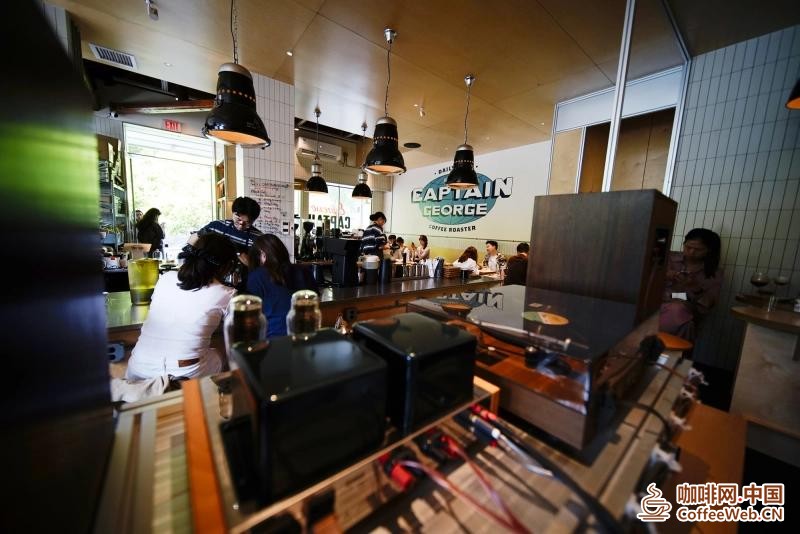
何欣 摄
资料图
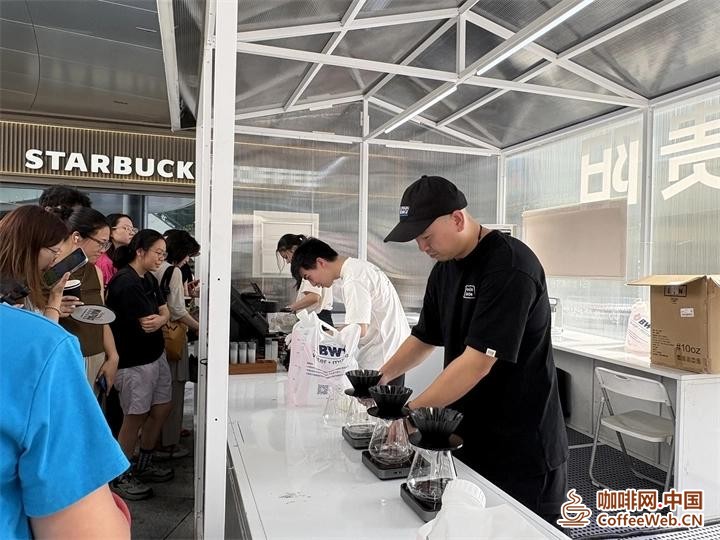
何欣 摄
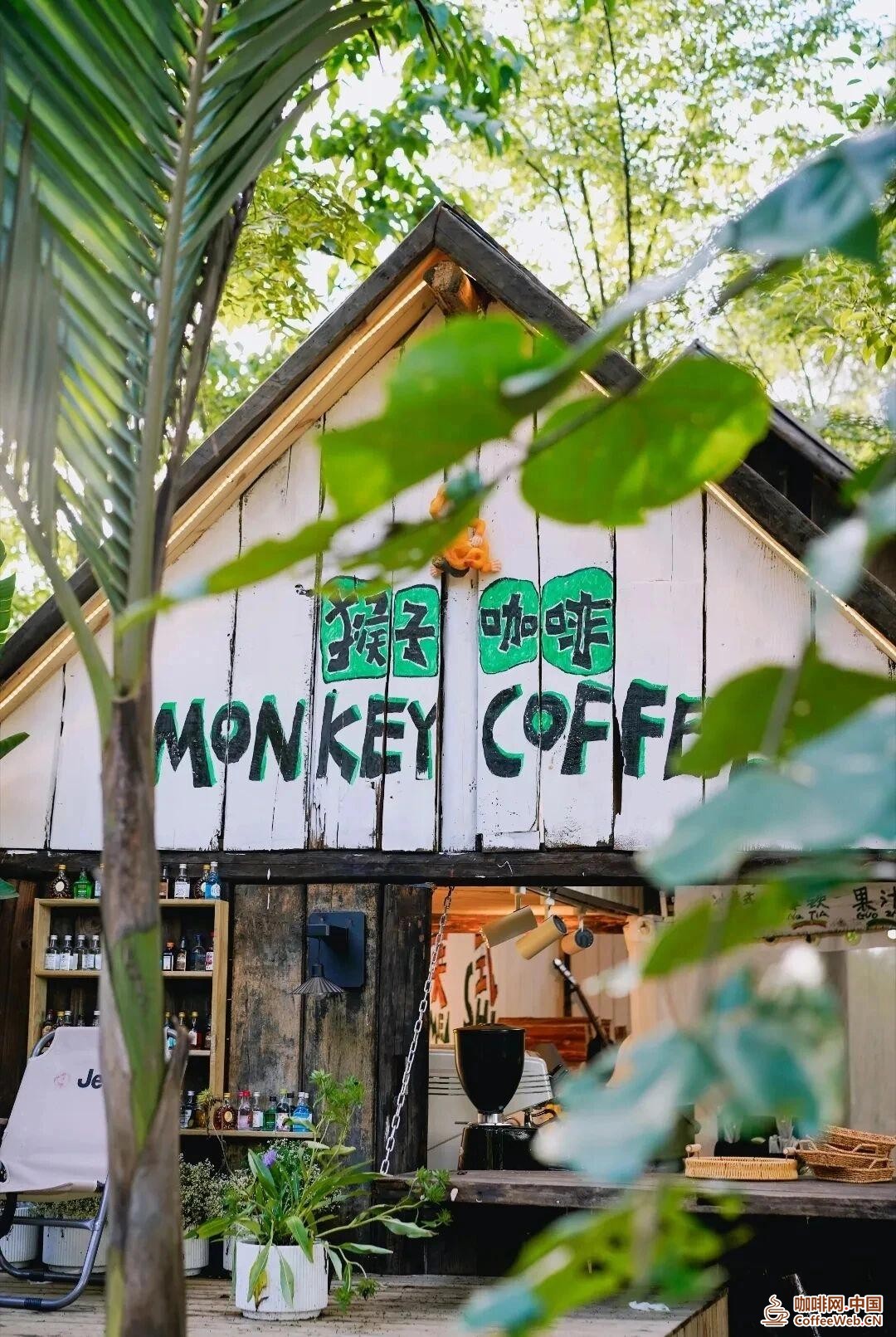
图源小红书用户@cherry_
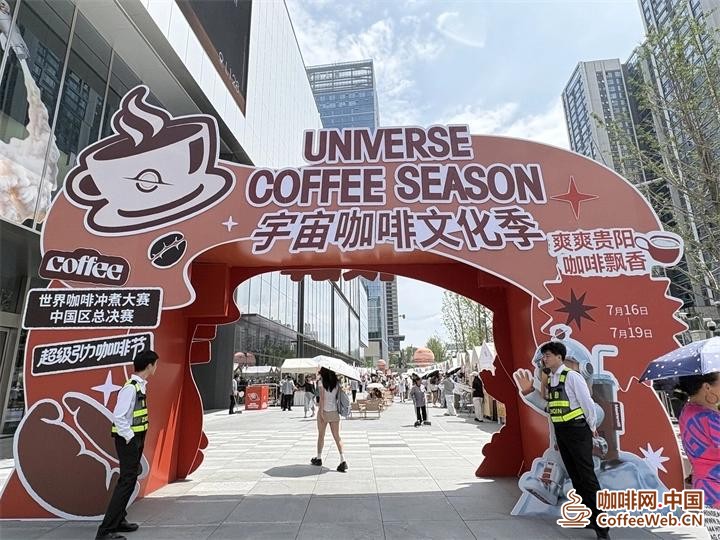
On July 20th, the China finals of the World Coffee Brewing Competition concluded in Guiyang, with 40 top players from across the country competing on the same stage. Weibo topics frequently topped the hot list. Outside the competition venue, Wang Hong, Deputy Secretary of the Guiyang Municipal Party Committee and Mayor, presided over a special symposium on "Champion in Construction, Taste of Guizhou" on the same day, where he sat around and exchanged ideas with international judges and participating coffee managers, sending a clear signal of "promoting the growth and strength of the coffee industry through full chain integration".
Compete professionally on the field and seek development in the venue - a city that does not produce a single coffee bean is embracing coffee with unimaginable enthusiasm.
A question worth asking is: under the condition that the coffee producing area is not in Guiyang and the coffee culture is not "native" to Guiyang, why has this southwestern inland city become an unavoidable coordinate on the map of China's premium coffee?
Photo by He Xin
One
The preference of Guiyang people for coffee may seem unreasonable at first glance. This city neither grows coffee beans nor is it a traditional port trading city. But carefully combing through the historical context, the answer is actually hidden in the urban genes of Guiyang.
During the Republic of China period, although Guiyang was located in the southwest inland, it was active in the fields of political ideology and culture - from the Reform Movement to the Xinhai Revolution, the National Protection Movement, and the May Fourth Movement, people from Guiyang were present. This progressive and open-minded gene has laid the foundation for Guiyang's tolerant attitude towards foreign cultures and new things. After the outbreak of the War of Resistance Against Japan, the political, economic, and cultural center of the country shifted to the southwest. Guiyang, located in the rear area, experienced unprecedented economic prosperity during the war due to the influx of funds, equipment, technology, and talent. Imported goods such as Western cuisine, beer, and coffee have successively appeared. In 1942, during his stay in Guiyang, writer Ye Shengtao recorded his experience at Meiyuan Coffee Shop in his diary - "exquisitely decorated, like a shop in the French Concession of Shanghai", indicating that at that time, Guiyang had already seen the emergence of modern coffee shops with exquisite environments and expensive prices.
After the reform and opening up, coffee re entered the lives of Guiyang people in different forms. In the 1980s, there were already vendors selling coffee on both sides of the entrance of Riverside Park; Guizhou Hotel, Jinqiao Hotel and other foreign-related hotels have opened coffee shops to meet high-end social needs. In 1989, Nestle's slogan "Delicious" swept the country, and instant coffee entered ordinary households. In 2005, a coffee shop called "Mojie Market" appeared in Humen Lane, where several young coffee enthusiasts discussed the future of specialty coffee and inadvertently became the source of the Guiyang specialty coffee wave. Afterwards, "Mojie City" was renamed "Soil Coffee", and together with "Joyful Reading Time", it provided many Guiyang people with the enlightenment of boutique coffee. It was the collective persistence of these young baristas back then that sparked the wave of boutique coffee in Guiyang for twenty years.
This historical accumulation resonates cleverly with Guiyang's unique climate endowment. Guiyang has an average summer temperature of 23 ℃ and a warm and pleasant winter, making it a well-known summer capital in China. This climate is naturally suitable for a consumption scenario - sitting down and leisurely drinking a cup of coffee. Unlike northern cities that require strong liquor to warm themselves up in winter, and unlike the unbearable heat along the southern coast that makes people only want to drink ice, Guiyang's mild climate provides year-round comfortable conditions for coffee consumption.
More importantly, the people of Guiyang inherently possess a smoky and slow paced lifestyle. As of August this year, there have been over 450 spontaneous roadside concerts held by Guiyang citizens, with more than 3 million live audiences and over 70000 citizens and tourists taking the stage of the roadside concerts. The cultural feast in Guiyang is never an unattainable art, but a daily life that flows through the streets and alleys. This pursuit of a better daily life naturally aligns with coffee culture - coffee is not just a drink, but a way of life, a lifestyle attitude of "stealing half a day's leisure in the fast pace".
In Guiyang, coffee shops are located in streets, communities, caves, and forests. From Taiping Road to Qingyun Market, from Jiuhua Road to Wenchang Pavilion, coffee has integrated into the urban fabric and become a daily accessible option for citizens. The combination of an open and inclusive urban character, comfortable conditions created by a cool climate, and a consumption mentality nourished by a slow lifestyle - these three factors constitute the profound soil for coffee consumption in Guiyang.
file photo
two
If climate and culture are the soil, then a group of leading talents are the seeds that allowed Guiyang coffee to break through the soil.
In 2024, Peng Jinyang, the founder of Captain George Coffee, won the championship of the China Coffee Brewing Competition in one fell swoop. In 2025, he represented China in the Jakarta World Cup and won the crown, allowing the national coffee circle to rediscover Guiyang - this southwestern city not only has coffee drinkers, but also top baristas competing on the world stage. Subsequently, the overwhelming publicity and reports allowed more people to understand the profound background of Guiyang's coffee industry.
At the same time, a group of local coffee enthusiasts such as Lei Ming, the manager of Blackstone Coffee, Qiang Hua, the manager of Wujie Coffee, and Liang Jiachen, the manager of Hudou Coffee, have rooted themselves in Guiyang. Their persistence and innovation have deeply rooted the concept of boutique coffee in the streets and alleys of Guiyang. At the 2026 World Coffee Brewing Competition China Finals, contestant Liang Baoyi, selected by Captain George of Guiyang, won the runner up. The champion comes from Guiyang and gathers in Guiyang, which is the best footnote to the coffee talent ecology in Guiyang.
The driving effect of a champion is not limited to the arena. Under the guidance of top coffee enthusiasts, the coffee industry in Guiyang has formed a virtuous cycle - the champion has raised the professional benchmark of the industry, attracting more young people to engage in boutique coffee, and the continuously growing group of practitioners has in turn pushed up the overall level. From the "champion store" to the community store, from creative specialty to boutique handmade tea, the managers with different styles constantly try new expressions, boldly incorporating Guizhou local ingredients such as folded ear root, prickly pear, and wood ginger into coffee, breaking the taste boundaries of traditional coffee. Guiyang coffee is not dominated by one company, but by a diverse array of options.
As a result, coffee shops in Guiyang have sprung up like mushrooms after rain. According to statistics, Guiyang has a permanent population of about 6.6 million, but has over 3000 coffee shops, surpassing Shanghai, which is known for its coffee culture, in terms of per capita coffee shop density. Behind this set of data is not a chain expansion driven by capital maturity, but a group of coffee lovers who water the urban ecology with professionalism and passion.
There is only one champion on the field, but on the streets and alleys of Guiyang, every coffee person who adheres to quality and focuses on innovation is the champion of the city's lifestyle. Their presence makes Guiyang coffee not just a gust of wind, but a river - with a source, a flow, and an endless vitality.
Photo by He Xin
three
The reason why coffee in Guiyang is thriving is also because the city has a large and constantly growing group of young consumers.
Data shows that in the past five years, Guiyang's net population growth has been about 198000 people per year, ranking second in the country in terms of youth index, only behind Shenzhen. This city, with a permanent population of 6.6689 million, is attracting young people to settle down at an astonishing speed.
Why do young people choose Guiyang? Low housing prices, favorable climate, rich food culture, and constantly emerging new consumption scenarios - these factors combine to make Guiyang a "treasure city" in the eyes of young people. And coffee is precisely one of the most representative consumption symbols in the lifestyle of young people. A cup of premium coffee priced at 20-30 yuan may not be expensive for young white-collar workers, but it is enough to sustain a period of socializing, solitude, and an afternoon of work time. This high-frequency and low threshold consumption characteristic makes coffee a natural "infrastructure" for young people's daily lives.
More noteworthy is that the young people flooding into Guiyang are not only coffee consumers, but also entrepreneurs and innovators. In Guiyang, the threshold for opening a coffee shop is not high: a 10-20 square meter storefront and a team of three to five people is a story of entrepreneurship. Entrepreneurship is employment, and one manager can drive three to five families, which is a tangible contribution to society.
Young people make coffee naturally with a keen insight into the consumption psychology of their peers. They know what kind of space is suitable for taking photos and checking in, what kind of flavor can trigger social media dissemination, and what kind of experience can make customers go from "having a drink" to "coming and sitting frequently". From "coffee+folded ear root" to "coffee+prickly pear", from "coffee+wood ginger" to "coffee+craft brewing", coffee shops in Guiyang are becoming experimental fields for integrated innovation. These seemingly "mixed and matched" combinations are a confident expression of local culture by young people and an infinite expansion of coffee consumption scenarios.
At the same time, Guiyang also receives a large number of tourists every year. These tourists and travelers from all over the country come with coffee consumption habits themselves. When they discover high-quality coffee shops on the streets and alleys of Guiyang, their willingness to consume is naturally stimulated.
The just concluded Super Gravity Coffee Festival attracted over 300000 tourists and citizens from both inside and outside the province in 4 days, driving a year-on-year increase of 137% in surrounding consumption. The cumulative passenger flow of Wanda Plaza reached 1.45 million, a year-on-year increase of 36%. Behind this set of data is not only the daily consumption of local young people, but also the incremental contribution of foreign tourists and travelers.
Wherever young people are, consumption is there, and the future is there. The vitality of Guiyang's coffee industry fundamentally comes from the city's appeal to young people and their ability to shape the city's consumption ecology.
Image source: Xiaohongshu user @ cherry_
Four
There is another factor that cannot be ignored in the success of Guiyang Coffee today: the joint efforts of the system.
At the municipal level, Guiyang has specifically issued the "Implementation Opinions on Promoting the Development of the Coffee Industry in Gui'an, Guiyang", commonly known as the "9 Articles on Coffee" in the industry. This policy document systematically deploys from multiple dimensions such as standard system construction, brand event creation, industry chain integration, talent cultivation, and financial support, providing a clear roadmap for the development of the coffee industry.
The three clear positioning of "coming to Guiyang for a cup of coffee", "refreshing Guiyang coffee fragrance", and "from seed to cup" have provided direction for the development of the industry. At the same time, Guiyang has launched the "Five Help" special action - providing policies, solving problems, finding orders, assisting financing, and reducing costs, providing tangible service support for coffee practitioners. Establish the Guiyang Coffee Industry Association and build an industry exchange platform; Clearly define the cultural and tourism department as the owner unit of the coffee industry chain, and take the lead in promoting the integration of coffee and tourism; Establish a cross departmental linkage mechanism between commerce, agriculture, municipal supervision, and various districts and counties to consolidate work forces.
The vitality of policies lies in their implementation. After the introduction of the "Coffee 9 Measures", Guiyang quickly established a collaborative promotion mechanism covering all links of the industry chain: the business department coordinated the creation of consumption scenes and brand competition attraction, the cultural and tourism department led the layout of coffee shops in scenic spots, homestays, and characteristic blocks, the agricultural and rural departments promoted the construction of local coffee planting bases, and the market supervision department led the development of Guiyang's premium coffee group standards to provide a guarantee for industry quality.
Since its establishment, the Guiyang Coffee Industry Association has developed into an important bridge connecting the government and practitioners - organizing a series of activities to promote industry exchanges and technological advancements. State owned enterprises are also making efforts to guide in areas such as planting, processing, and trade.
The "Five Gang" special action has brought services to the doorstep of practitioners - policies are delivered, problems are solved on the spot, orders are found, financing channels are available, and costs are lowered, allowing coffee managers of all sizes to focus on making coffee with peace of mind and quality.
This system linkage from policy design to market response, from government promotion to association bridging, from state-owned enterprise guidance to private enterprise innovation, has made the coffee industry in Guiyang no longer just a scale expansion of "many stores", but a full industry chain covering "seeds to cups".
Coffee beans are grown in one layer in the field, baked and processed in two layers, and tasted in three layers in the cup. Coffee is not just a beverage itself - roasting, latte art, flavor, taste, and even cups and coasters, each link is a segmented industry. Combining with competitions, exhibitions, and cultural tourism has expanded the boundaries and imaginative space of the industry.
The temperature of a cup of coffee reflects the precision of governance, depth of industry, and cultural depth of a city. The reason why Guiyang Coffee can succeed is not due to the individual efforts of a certain person or enterprise, but rather the overall presentation of the city's system capabilities. Here, there is the gift of climate, the nourishment of culture, the support of talent, and the support of systematic collaboration. Guiyang coffee, just in time.
Tianyan News reporter Wu Bing
Editor Luo Chang
Second instance Shen Ernst&Young
Third instance trial of Hu Lihua