现在出门买咖啡,都流行自带杯?Is it popular to bring your own cup when going out to buy coffee now?
来源:半月谈
一只便携咖啡杯成为都市人清晨出门的“标配单品”,“自带杯立减”正由商家促销演变为公众低碳生活共识。从省钱小技巧到环保新自觉,从个体选择到城市风尚,自带杯不再是小众行为,而是折射社会文明、新消费理念与生活态度的鲜活载体。
从“省钱实惠”到“生活风尚”
上海的清晨,总是被咖啡香唤醒。“一大早出门打咖啡,比点外卖有仪式感。”刚来上海工作不久的小沈告诉半月谈记者。在上海静安区工作的白领小张也养成了这个习惯:“每杯便宜5块钱,一周下来就是一杯免费咖啡。”
“省钱”,是消费者选择自带杯最直接的动力。目前,众多咖啡品牌都为自带杯顾客提供2至8元不等的优惠。在省钱之外,这笔账有更深的生态意义。据中国产品全生命周期温室气体排放系数库及公众环境研究中心调研数据,单次使用自带杯约可减少40克碳排放。坚持每天使用,一年累积的减碳量,相当于种下一棵树。
半月谈记者在走访中发现,自带杯消费客群正在不断扩大。在一家位于写字楼集中区域的咖啡店,店员给出了一个相当可观的数据:“我们门店每天可以出售自带杯咖啡约100杯。”
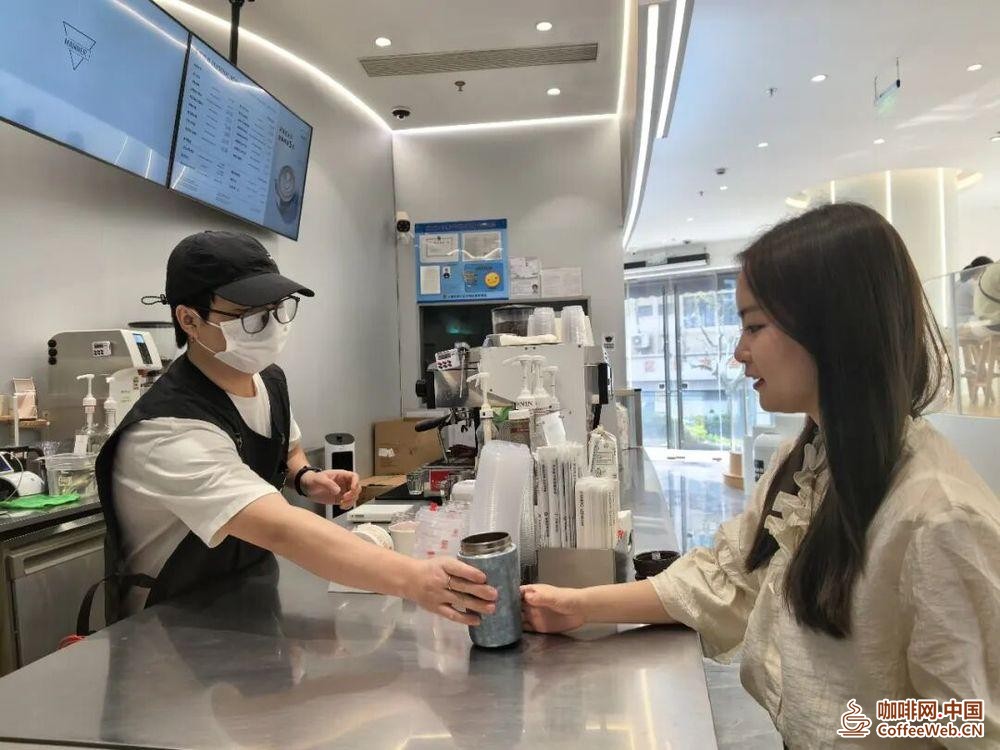
用自带杯购买咖啡 周心怡 摄
简约、环保、可循环,正是当下年轻人追求的生活美学。在社交平台上,网友竞相晒杯子、晒环保打卡、晒减碳账单。这场“自带杯运动”还从商家主导走向消费者共创,网友们晒出的自带杯五花八门——高脚杯、陶瓷碗、保温壶……“环保”正从严肃的说教,变成一场有趣的生活实验。
从“一杯咖啡”到“绿色生活链条”
不仅是一杯咖啡,绿色消费理念还进入快餐、烘焙等领域,从小众场景走向大众生活。
许多坚持自带杯的消费者,往往也会自带餐具、使用环保袋、拒绝过度包装商品。点外卖时主动勾选“无需餐具”,购物时优先选择简装产品,出行时更偏爱步行、骑行或公共交通。小小的环保行为相互串联,构成完整的绿色生活链条。
在自带咖啡杯热潮推动下,“可重复使用”逻辑向着餐盒、甜品碗等更多容器延伸。一些烘焙门店主动为自带杯或自带包装盒的顾客提供小幅度优惠;部分快餐店推出自带餐盒减费活动……
许多咖啡品牌顺势而为,及时跟进。除支持自带杯外,不少门店通过增加堂食陶瓷杯、优化回收体系、减少包装耗材等,将环保融入服务细节。
数字平台则成为绿色生活的“连接器”。美团、大众点评等主流生活服务App已开通“自带杯”搜索功能。
从“个体行动”到“社会共识”
过去,一次性杯具因便捷、廉价成为消费主流,大量纸杯、塑料杯被快速使用、快速丢弃。“全球每年使用约5000亿个一次性杯子,首尾相连可往返月球85次,其中大量最终流入环境并碎裂成微塑料,对水体、土壤乃至人体健康构成长远威胁。”环保机构“摆脱塑缚”项目经理陈艾佳说。
正因如此,自带杯的价值才引人注目:每一次重复使用,都是对资源的珍惜。
由上海自带杯引发的绿色消费风潮,正在向全国迅速扩散。据美团平台数据,全国已有超过17000家门店上线“自带杯”标签,其中上海有2200余家,位居全国第一。
除了自带杯,循环杯也为当下饮品消费提供了一种新选择。在多地咖啡节、茶饮节活动中,已出现循环杯租借服务:顾客在指定站点借用标准化循环杯,使用后无需清洗,直接归还至合作站点即可。这有效降低了参与门槛,让没时间携带、不方便清洗的消费者也能轻松加入低碳行列。
半月谈记者:周心怡 陈潇雨
原标题《自带杯:“双碳”时尚新单品》
*本文为《半月谈内部版》2026年第7期内容
Source: Half Month Talk
A portable coffee cup has become a "standard item" for urbanites to go out in the morning, and "bringing your own cup for instant reduction" is evolving from a promotion by businesses to a public consensus on low-carbon living. From saving money tips to new environmental awareness, from individual choices to urban trends, bringing one's own cup is no longer a niche behavior, but a vivid carrier reflecting social civilization, new consumption concepts, and life attitudes.
From "saving money and being affordable" to "lifestyle trends"
The morning in Shanghai is always awakened by the aroma of coffee. Going out for coffee early in the morning feels more ceremonial than ordering takeout, "Xiao Shen, who has just started working in Shanghai, told Half Moon Talk reporters. Xiao Zhang, a white-collar worker in Jing'an District, Shanghai, has also developed this habit: "Each cup is 5 yuan cheaper, and after a week, it's just a free cup of coffee
'Saving money' is the most direct motivation for consumers to choose to bring their own cups. Currently, many coffee brands offer discounts ranging from 2 to 8 yuan for customers who bring their own cups. Besides saving money, this account has deeper ecological significance. According to the greenhouse gas emission coefficient database for the entire lifecycle of Chinese products and research data from the Public Environment Research Center, a single use of the built-in cup can reduce carbon emissions by about 40 grams. Persisting in daily use, the accumulated carbon reduction in one year is equivalent to planting a tree.
Half month talk reporters found during their visits that the customer base for bringing their own cups is constantly expanding. At a coffee shop located in a concentrated area of an office building, the staff gave a fairly impressive data: "Our store can sell about 100 cups of self brought coffee every day
Buy coffee with your own cup, photographed by Zhou Xinyi
Simplicity, environmental friendliness, and recyclability are the aesthetic pursuits of young people today. On social media platforms, netizens compete to share cups, environmental punch cards, and carbon reduction bills. This' bring your own cup movement 'has shifted from being led by businesses to being co created by consumers. Netizens have posted a variety of bring your own cups - tall cups, ceramic bowls, thermos pots...' Environmental protection 'is transforming from a serious preaching to an interesting life experiment.
From 'A Cup of Coffee' to 'Green Life Chain'
Not only a cup of coffee, but also the concept of green consumption has entered the fields of fast food, baking, etc., moving from niche scenes to mass life.
Many consumers who insist on bringing their own cups often bring their own tableware, use eco-friendly bags, and refuse excessive packaging of goods. When ordering takeout, actively check "no utensils required". When shopping, prioritize plain products. When traveling, prefer walking, cycling, or public transportation. Small environmental behaviors are interconnected to form a complete green life chain.
Driven by the trend of bringing your own coffee cup, the "reusable" logic is extending towards more containers such as lunch boxes and dessert bowls. Some baking shops proactively offer small discounts to customers who bring their own cups or packaging boxes; Some fast food restaurants have launched a promotion to reduce fees by bringing their own meal boxes
Many coffee brands have taken advantage of the situation and followed up in a timely manner. In addition to supporting self brought cups, many stores have incorporated environmental protection into their service details by adding dine in ceramic cups, optimizing recycling systems, and reducing packaging consumables.
Digital platforms have become the "connectors" for green living. Mainstream lifestyle service apps such as Meituan and Dianping have opened the "Bring Your Own Cup" search function.
From 'Individual Action' to 'Social Consensus'
In the past, disposable cups became the mainstream of consumption due to their convenience and affordability, and a large number of paper cups and plastic cups were quickly used and discarded. Approximately 500 billion disposable cups are used globally each year, which can travel back and forth to the moon 85 times when connected end-to-end. A large amount of these cups eventually flow into the environment and break into microplastics, posing a long-term threat to water bodies, soil, and even human health, "said Chen Aijia, project manager of the environmental protection agency" Breaking Free from Plastic Constraints.
That's why the value of bringing your own cup is remarkable: every repeated use is a treasure of resources.
The green consumption trend triggered by Shanghai's own cup is rapidly spreading nationwide. According to data from Meituan platform, over 17000 stores across the country have launched the "Bring Your Own Cup" label, with more than 2200 in Shanghai, ranking first in the country.
In addition to the built-in cup, the reusable cup also provides a new option for current beverage consumption. In many coffee and tea festivals, circular cup rental services have emerged: customers borrow standardized circular cups at designated sites, which do not need to be cleaned after use and can be returned directly to cooperative sites. This effectively lowers the threshold for participation, allowing consumers who do not have time to carry or are inconvenient to clean to easily join the low-carbon ranks.
Half month talk reporter: Zhou Xinyi, Chen Xiaoyu
Original title: "Bring Your Own Cup: A New Fashion Item with Dual Carbon"
*This article is the content of the 7th issue of "Half Month Talk Internal Edition" in 2026