

深圳一停车场爆改超充咖啡馆,上海企业探索微更新可持续运营新路径A parking lot in Shenzhen has been transformed into a super charged coffee shop, and Shanghai enterprises are exploring a new path for sustainable operation through micro updates
(来源:上观新闻)
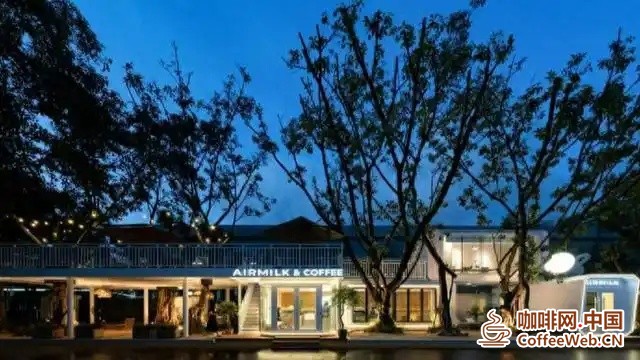
深圳一处政务停车场“爆改”成超充咖啡馆,而打造这一网红打卡点的操盘手,来自上海。不过,真正值得关注的并非改造本身,毕竟这类外表焕新谁都能做,其背后探索的社会资本参与微更新并实现可持续运营,才是更有嚼头的命题。能源管理,正在成为这条路径上的一个突破口。
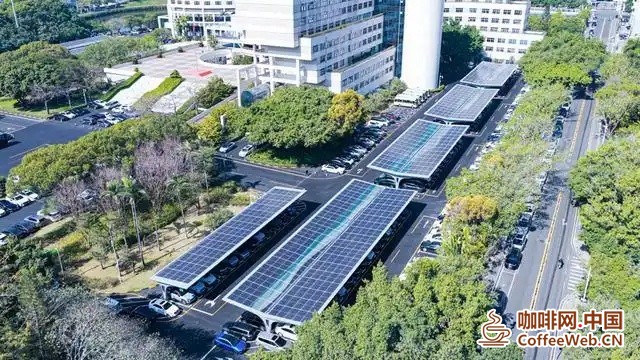
2025年6月,深圳龙岗区政务服务中心及周边光储充一体化项目启动。面对占地1800平方米的停车空间,如何改造一度成为难题。隧道股份旗下广东禾兴能源总经理刘立平坦言,事实上一开始既没有咖啡馆的设想,也没有超充站的规划,需求是一点一点“长出来”的。
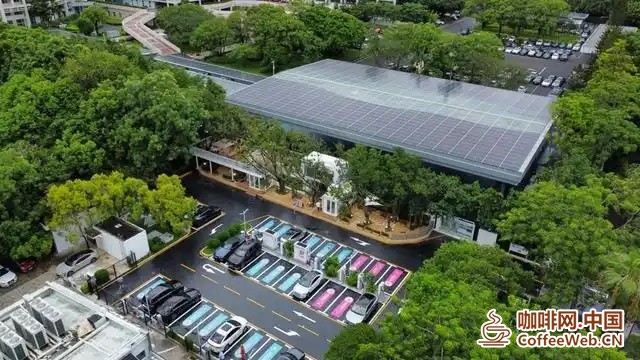
从停车场改造而来超充咖啡馆
上海城市化进程较早,现已进入内涵式发展和城市更新阶段。起初,改造团队希望把上海在公共空间微更新的理念引入深圳,把公共空间充分利用起来,叠加复合功能。但什么样的功能才是受欢迎又实用的呢?
在调研中,团队发现市民办理政务的时长,和坐下来喝一杯咖啡的时间差不多。基于这个观察,技术人员决定在政务服务中心停车场,建设一个既能让人喝杯咖啡给自己“充电”,又能给新能源座驾充电的综合补给站。
普通的充电站显然追不上政务办事的节奏,如果充电速度跟不上,对市民来说,等待反而成了一种负担。于是,建设一座能够极速补能的光储充一体站,就成了破题方向。
“隧道股份在大型光储充站点方面已经积累了丰富的经验,在长三角、粤港澳等多地已建成多套系统。”刘立平介绍,在这个项目中,团队为深圳龙岗政府大院部署了4套720千瓦的电堆式超充设备,新能源车可以实现极速补能。超充桩达到“1秒1公里”的充电速度,同时还引入了AIRMILK咖啡华南首店。市民办理业务的间隙,顺手点一杯拿铁、拍一张ins风大片,再给新能源车插上充电枪,办事、休闲、补能一次性搞定。7月份投入运营不久,这座集超充、咖啡、休闲于一体的便民“微空间”,很快吸引了周边居民和办事市民的关注。在社交媒体上,不少用户晒出了打卡体验。
但外壳只是表象。微更新这件事,最难的从来不是怎么改,而是改完之后“怎么活”。让企业参与停车场微更新,爆改超充咖啡馆,商业上是否站得住脚?
拆解项目的商业模式,会发现挑战相当具体。传统公共机构节能项目往往依赖政府全额投资,财政压力大、运维效率低、模式固化等问题突出。与此同时,项目推进还面临多重硬约束:技术上,项目既要给车辆充电,也需要日常参与电网智能调度,并确保政务关键负荷不间断供电,为机关运行筑牢安全底线;运营上,光伏设施的日常维护、储能设备的安全保障,都是绕不开的刚性要求。
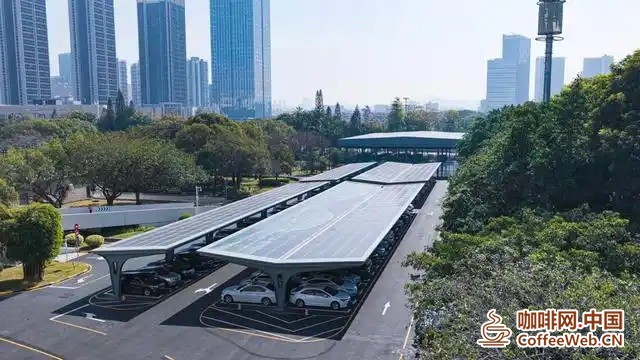
超充站
微更新看似轻巧,实则考验的是企业在技术集成、资源协调和长期运营上的综合能力,这已经远远超出了传统施工单位的能力边界。正因如此,项目选择了EMC合同能源管理模式。隧道股份承担投资、设计、建设及运营的全生命周期管理,政府无需前置投入,企业则通过充电桩服务费、储能峰谷电价差、绿色电力市场化交易等多元渠道,构建起稳定的市场化收益闭环,实现自主造血、可持续运营,实现“节能+增效”双向提升。
“这套机制已在上海金丽大厦、市检测中心等多个项目中得到成功应用,是上海公共机构既有建筑节能改造的优质示范案例。”刘立平说。
这一模式的深层逻辑在于,把政府从一次性投入中解放出来,同时让企业从单纯的工程承包方转变为长期运营服务商,利益绑定之后,运营质量才真正有了保障。它试图解决的,正是社会资本参与公共更新类项目时最核心的激励相容问题。这种“政府搭台、企业唱戏、互利共赢”的良性机制,既有效盘活了公共机构闲置空间资源,极大释放了财政压力,又激发了企业的创新活力与投资热情,为公共机构低碳项目的市场化落地提供了全新的解题思路。
在节能环保方面,项目的数据同样值得关注。“光伏总装机容量约1.9兆瓦,年均发电约160万度,可覆盖超大院全年用电量的百分之二十。”刘立平介绍,根据测算,项目全周期可生产绿电约4000万度,累计节约标准煤1.3万吨、减排二氧化碳3.55万吨,相当于种了18万棵树。
原标题:《深圳一停车场爆改超充咖啡馆,上海企业探索微更新可持续运营新路径》
栏目主编:陈玺撼
来源:作者:解放日报 戚颖璞
(Source: Shangguan News)
A government parking lot in Shenzhen has been transformed into a super charged coffee shop, and the operator who created this popular check-in point is from Shanghai. However, what is truly worth paying attention to is not the renovation itself, after all, anyone can do this kind of exterior rejuvenation. The exploration of social capital participation in micro updates and achieving sustainable operation behind it is the more challenging proposition. Energy management is becoming a breakthrough on this path.
In June 2025, the Shenzhen Longgang District Government Service Center and its surrounding integrated light storage and charging project will be launched. Faced with a parking space covering 1800 square meters, how to renovate it has become a difficult problem. Liu Liping, the general manager of Guangdong Hexing Energy, a subsidiary of Tunnel Group, admitted that in fact, there was no idea of a caf é or a plan for a supercharging station at the beginning, and the demand grew bit by bit.
Upgraded from a parking lot to a supercharging caf é.
Shanghai's urbanization process started earlier and has now entered the stage of connotative development and urban renewal. At first, the renovation team hoped to introduce Shanghai's concept of micro updating public spaces into Shenzhen, fully utilizing public spaces and adding composite functions. But what kind of features are popular and practical?
In the research, the team found that the time it takes for citizens to handle government affairs is similar to the time it takes to sit down and have a cup of coffee. Based on this observation, the technicians decided to build a comprehensive supply station in the parking lot of the government service center, which can not only allow people to have a cup of coffee to "charge" themselves, but also charge new energy vehicles.
Ordinary charging stations obviously cannot keep up with the pace of government affairs. If the charging speed cannot keep up, waiting becomes a burden for citizens. So, building a light storage and charging integrated station that can quickly replenish energy became the direction to solve the problem.
Tunnel Group has accumulated rich experience in large-scale solar energy storage and charging stations, and has built multiple systems in the Yangtze River Delta, Guangdong Hong Kong Macao and other places. Liu Liping introduced that in this project, the team deployed four sets of 720 kW stack type supercharging equipment for the Longgang Government Compound in Shenzhen, and new energy vehicles can achieve rapid energy replenishment. The supercharging station has achieved a charging speed of "1 second, 1 kilometer", and also introduced AIRMILK Coffee's first store in South China. During the intervals when citizens handle business, they casually order a latte, take an Instagram style photo, and then plug in a charging gun to the new energy vehicle, completing tasks, leisure, and energy replenishment all at once. Not long after being put into operation in July, this convenient "micro space" integrating supercharging, coffee, and leisure quickly attracted the attention of surrounding residents and business citizens. On social media, many users have shared their check-in experience.
But the shell is just a facade. The most difficult thing about micro updates is never how to make changes, but how to live after making changes. Is it commercially viable to involve companies in micro updates of parking lots and renovate supercharging coffee shops?
Breaking down the business model of a project will reveal specific challenges. Traditional public institution energy-saving projects often rely on full government investment, with prominent problems such as high financial pressure, low operation and maintenance efficiency, and fixed models. At the same time, the project still faces multiple hard constraints: technically, the project not only needs to charge vehicles, but also needs to participate in daily intelligent power grid scheduling, and ensure uninterrupted power supply for critical government loads, laying a solid safety bottom line for the operation of the agency; In terms of operation, the daily maintenance of photovoltaic facilities and the safety guarantee of energy storage equipment are rigid requirements that cannot be ignored.
Supercharging station.
Micro updates may seem lightweight, but in reality, they test the comprehensive capabilities of enterprises in technology integration, resource coordination, and long-term operation, which far exceed the capabilities of traditional construction units. That's why the project chose the EMC contract energy management mode. Tunnel Corporation is responsible for the full lifecycle management of investment, design, construction, and operation. The government does not need to invest in advance, while the enterprise builds a stable market-oriented income loop through multiple channels such as charging pile service fees, energy storage peak valley electricity price differences, and green electricity market-oriented transactions, achieving independent and sustainable operation, and achieving a two-way improvement of "energy conservation+efficiency".
This mechanism has been successfully applied in multiple projects such as Shanghai Jinli Building and the Municipal Testing Center, and is a high-quality demonstration case of energy-saving renovation of existing buildings in Shanghai's public institutions, "said Liu Liping.
The deep logic of this model is to liberate the government from one-time investment, and at the same time let enterprises transform from simple project contractors to long-term operation service providers. After the interests are bound, the operation quality is really guaranteed. It attempts to solve the core incentive compatibility problem when social capital participates in public renewal projects. This benign mechanism of "government stepping up, enterprises singing the opera, and mutual benefit and win-win" not only effectively activates idle space resources of public institutions, greatly releases financial pressure, but also stimulates the innovation vitality and investment enthusiasm of enterprises, providing a new solution for the market-oriented implementation of low-carbon projects in public institutions.
In terms of energy conservation and environmental protection, the data of the project is also worth paying attention to. The total installed capacity of photovoltaics is about 1.9 megawatts, with an average annual power generation of about 1.6 million kilowatt hours, which can cover 20% of the annual electricity consumption of the super large courtyard. According to Liu Liping's introduction, according to calculations, the project can produce about 40 million kilowatt hours of green electricity throughout its entire cycle, saving a total of 13000 tons of standard coal and reducing carbon dioxide emissions by 35500 tons, equivalent to planting 180000 trees.
Original title: "A parking lot in Shenzhen has been transformed into a super charged coffee shop, and Shanghai enterprises are exploring new paths for sustainable operation through micro updates"
Column Editor in Chief: Chen Xihong
Source: Author: Qi Yingpu from Liberation Daily